One of the seminal moments in American history, especially in the 19th Century, the gunfight at the O.K. Corral is synonymous with the wild, wild west. It was a gunfight that only lasted 15 or 20 seconds, but the men involved would became famous because of their actions. What about after the gunfight though? What happened next? That is a story that is far less well-known, but it gets a fascinating examination in a mostly forgotten 1967 western, Hour of the Gun.
It's October 26, 1881 in the Arizona silver boom-town of Tombstone. Deputy Marshal Wyatt Earp (James Garner), his two brothers, and their friend Doc Holliday (Jason Robards), are heading for a fight after a long-running, long-simmering feud with Ike Clanton (Robert Ryan) and his gang of gunmen, bandits and rustlers. A gunfight ensues with three men -- all outlaws -- killed while Wyatt's brothers are wounded. The fight does nothing to end the feud, only adding fuel to the fire. The immediate response begins in a courtroom as Wyatt, Doc and the Earp brothers are brought up on charges for their actions that led to the gunfight and then for outright murder. This won't be resolved with words though. Too much has passed between the two sides with too many deaths for it to be fixed so easily. Wyatt and Doc live by the gun as does Ike Clanton. Let the bullets fly and those who get caught in the way...so be it.
From the first time I saw 1993's Tombstone, I was fascinated not just by the gunfight at the OK Corral but what happened after it. Unless I'm missing a flick, this is the first western to dive in headfirst to the aftermath. An unofficial sequel from his film 10 years earlier, Gunfight at the OK Corral, director John Sturges turns in a dark, moody, character-driven angle of the story. There's gunplay but not a ton. The story condenses months and months of history into a tightly-packed 105-minutes but one that doesn't feel too rushed. It's a daunting extended stretch to handle but Sturges and writer Edward Anhalt do a pretty solid job condensing and tweaking and twisting here to make it more manageable.
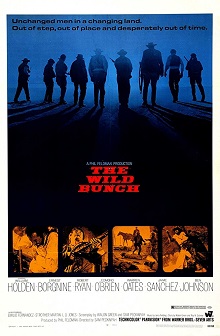
Two years later, Sam Peckinpah's The Wild Bunch would kick open the door for the western, effectively starting the genre on a path that proved to be its doom. The spaghetti westerns started it, Peckinpah continued and the revisionist westerns of the 1970's finished it off. Where's 'Hour' fit? Somewhere in between. It isn't a revisionist western. It's just a straightforward, mostly honest, not heroic interpretation of the real-life events. There aren't heroes, just less unlikable individuals. Case in point is Garner's Wyatt, not the crisp, clean, honest lawman he's often portrayed as. Here, he's a hypocrite, blinded with rage and almost completely driven by it. Towns are run by the rich, everything depends on power and money, and that power depends on backstabbing, back-shooting and all sorts of underhanded dealings. This ain't no good guys in white hats vs. bad guys in black hats. A precursor of the things to come in the western genre.
In film or on television, James Garner has a reputation as a likable presence, a sympathetic hero so....it's awesome to see him take these darker roles, like 1970's A Man Called Sledge. As we've learned, Wyatt Earp wasn't necessarily the heroic, noble lawman he's often portrayed as. 'Hour' delves right into that concept. Here, he's a revenge-seeking murderer hiding behind a marshal's badge and a warrant for arrest. It's a fascinating character and not necessarily sympathetic. Garner doesn't disappoint with this darker role. Just wish he had done more roles like this!
The key relationship in all the Earp/Tombstone movies though is between Wyatt Earp, the law officer, and Doc Holliday, the gambling dentist slowly dying of tuberculosis. All Holliday performances pale in comparison to Val Kilmer in 1993's Tombstone, but Robards is pretty damn good and belongs in close second with Dennis Quaid in the otherwise painful Wyatt Earp. Robards does what he always does. He quietly steals all his scenes to the point you don't even realize he's doing it. His chemistry with Garner is impeccable, a friendship with more of an edge than we're used to seeing. Their arguments become heated to the point of lashing out violently. Through it all though, there's an unspoken bond between them, two loners, two outsiders who have found the unlikeliest of friends. Two excellent leading performances.
Beyond Ryan, 'Hour' is light on star power, but that's not a bad thing. Ryan's Ike Clanton is probably the most exaggerated part here with the movie Clanton not resembling the actual historical Clanton. Still, it's Robert Ryan in sneering, condescending villain mode, and that ain't a bad thing. Wyatt's misfit posse includes Monte Markham, William Windom and Lonny Chapman. Their targets include Michael Tolan, Robert Philips, Steve Inhat and a very young Jon Voight. Too many familiar faces from film and television to mention, but also look for Albert Salmi, Karl Swenson and Bill Fletcher among many others.
I can't quite put my finger on it, but I liked 'Hour' much more on this second viewing than the first (it had been at six or seven years). It isn't an easy western to watch, and doesn't do much to pull you in in any sort of obvious fashion. That said, there's just something about it. Filmed in Mexico with cinematographer Lucien Ballard (one of the all-time greats), the movie looks stunning. Throw in one of Jerry Goldsmith's more underrated scores and it all adds up. Listen to the score HERE. It's a familiar story by now, that of Wyatt Earp and the OK Corral, but this adult western holds together quite well. Highly recommended.
Hour of the Gun (1967): ***/****
The Sons of Katie Elder
"First, we reunite, then find Ma and Pa's killer...then read some reviews."
Showing posts with label Robert Ryan. Show all posts
Thursday, April 7, 2016
Sunday, January 31, 2016
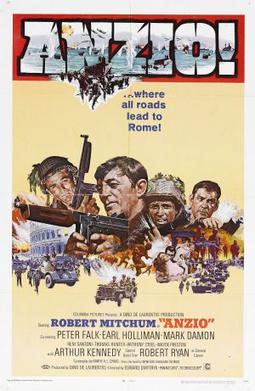
Anzio
Over the 1950's and 1960's, World War II movies were a dime a dozen hitting theaters. Even with the abundance of movies though, some theaters of war were often ignored, or at least covered less. Case in point? The Italian Campaign as Allied forces took Sicily and then Italy in horrific fighting that claimed thousands and thousands of lives in what some said/say was a waste of manpower. So while 1968's Anzio may not be a good movie, I can't help it. I'm a fan so sue me.
It's early 1944 and the fighting has dragged to a stalemate between Allied and Axis forces along the Monte Cassino line. The Allied forces are planning an invasion in Italy above the fighting as Cassino, intending to land some 70,000 troops north of the fighting at the port of Anzio. Among those landing is a war correspondent, Dick Ennis (Robert Mitchum), who will tag along with an American Ranger battalion (specially-trained infantry) as they hit the beaches. An expected hot landing is anything but...the troops hit the beaches with little to no resistance. There's no German forces for miles. On a patrol into the Italian countryside, Ennis and a corporal from the First Special Service Force, Jack Rabinoff (Peter Falk), discover just how open the countryside is. Back at the Allied beachhead though, no one on the general staff believes them. While the Allies dig in and establish a strong beachhead, the Germans take advantage, assembling a line as deadly as anything the war has seen.
If you're looking for a more detailed description of the Battle of Anzio, check out the Wikipedia page. I'm currently reading Alex Kershaw's The Liberator, an excellent read that explores the fighting in Italy in some detail. What's here in this 1968 war film is a condensed version with some embellishments and names changed. The actual battle of Anzio was a horrific miscalculation on the parts of the Allied commanders who made cautious decisions that ended up costing thousands of lives needlessly in fighting that could have been easily avoided. See? We learned something today!
'Anzio' itself is an interesting mess of a movie. It's from the 1960's, the age of the big, epic war films like The Great Escape, Battle of the Bulge, The Guns of Navarone, a trend that would continue into the 1970's. From director Edward Dmytryk (and Duilio Coletti in whatever the "Italian version" is), 'Anzio' is part of a trend of flicks dubbed Macaroni war movies (instead of spaghetti, get it?!?), films made with mostly Italian backing albeit with smaller budgets. Dino De Laurentiis produced the war film, bringing a respectable budget that's seen in landing shots where landing crafts empty of hundreds of soldiers hitting the beaches. There is a big budget feel (some of the time) as this story develops about one of the most costly battles of WWII. More detail later, but there's also truly odd moments sprinkled throughout, giving Dmytryk's film an off-balanced feel to the proceedings. More later!
Two performances here have always appealed to me, Robert Mitchum as war correspondent Dick Ennis, a character very loosely based on famed writer Ernie Pyle. Interesting tidbit? Mitchum earned an Oscar nomination for his performance in 1945's The Story of G.I. Joe, the story of Ernie Pyle in Italy! Ennis is a frontline guy, always sticking with the troops at the front even when he doesn't have to be. Mitchum treads that fine line between looking worn out and being interested, but that laconic, tired look favors Ennis well. He's sick of war, sick of stupid orders and commands that costs unnecessary lives. A good performance for Mitchum. As for Falk, it is an...interesting performance. His Jack Rabinoff is a SOLDIER. He loves fighting. He's good at it (maybe too good), and his backstory of how he ended up in the First Special Service Force is quite revealing. Again, there's some odd moments, but Falk brings a ton of energy, some humor to the part that's hard not to like.
This quasi-epic war film resorts to more familiar territory in the second half. Following a horrific German ambush, a small group of Rangers, including Ennis and Rabinoff, must get back to their own lines to report what the Allies are about to march into. If it's familiar, so be it. It's more at home. It's more comfortable. Among the survivors, look for Earl Holliman as the capable Sergeant Abe Stimmler, Reni Santoni as Pvt. Movie (always ready with an impression), an underused Mark Damon, Thomas Hunter, Giancarlo Giannini, and Joseph Walsh. In the epic vein, we also get unnecessary cameos from Robert Ryan and Arthur Kennedy with Kennedy at least getting something to do. Ryan is in two scenes, and he only speaks in one! Also look for ever the German, Wolfgang Preiss as Field Marshal Kesselring, the Allies' opposition across the line.
Where 'Anzio' falls in parts is its odd tone and general lack of epic qualities, even though it thinks it is an epic. It is NOT. It's a good, old-fashioned war flick. Simply put, it tries to cover too much ground in 117 minutes. The song that plays over the opening credits, This World is Yours (listen HERE), is awful. Truly out of place. The score itself is hit-and-miss, but when it works, I liked it a lot. As for the tone, this is a story that just refuses to pick one tone and go with it. Is it dark? Is it a light war film? While things are somewhat ironed out (not really), we get a painful scene of Falk's Rabinoff sitting in an ambulance with three prostitutes as he sings "Bye, Bye Blackbird" with them. There's another scene later where he does the same thing. What the hell is going on?!? Don't even get me started about the general combat tactics here either, highly-trained American troops charging into machine gun fire without even raising their weapons or trying to throw a grenade at the nest. Meh, run!!!
Now all that said, I've always liked this movie and held it up on my most recent reviewing. I love the Italian filming locations, especially the shots of Rome. I've always been a big fan of Mitchum and Falk, and even considering some script idiosyncrasies, they're both pretty good here, as is the whole supporting cast. Through all the general craziness and oddness, there's some...oddly charming. The action is harsh, including a late battle between our survivors and four German snipers, and from beginning to end, it is entertaining. It ain't a classic. So be it. It's very entertaining.
Anzio (1968): ***/****
Rewrite of May 2009 review
Friday, January 15, 2016
The Professionals
It's 1917 and the Mexican Revolution is still raging strong all over the country. Along the U.S./Mexico border, four men, Rico Fardan (Lee Marvin), Bill Dolworth (Burt Lancaster), Hans Ehrengard (Robert Ryan) and Jake Sharp (Woody Strode), have been brought together to perform a dangerous mission. The little group, each of them a specialist in one way or another, has been hired by rancher and oil tycoon Joe Grant (Ralph Bellamy) to ride deep into Mexico and rescue his wife, Maria (Claudia Cardinale), who's been kidnapped by a bandit and revolutionary, Jesus Raza (Jack Palance). Maria is believed to be stashed away in a hacienda in the mountains with Raza's small army standing guard. This quartet is the best of the best with few equals, but even this job seems to be too much, especially if they haven't been told the whole truth of what they're riding into. Can they pull off the job?
Aired recently on Turner Classic Movies, host Robert Osborne introduced the movie stating that director Richard Brooks deserves more of a reputation, of a following for a career that produced six Oscar nominations and plenty of good to great to classic movies, as a director, producer and writer. For me, this is easily his best work. It's one of my favorites, and I always enjoy catching up with it. Mutually appreciated by both audiences and critics, 'Professionals' is one of the best westerns of the 1960's and really, one of the best westerns of all-time. It picked up two Oscar nominations, one for Brooks' directing and one for his script. Not a flaw in sight. Sit back and enjoy this one, hopefully with a big tub of popcorn.
Let's get the boring technical stuff out of the way. Boring, but necessary. Brooks earned a Best Director nomination for blending a movie that features the technical, storytelling, characters, humor, action and visual look. With filming locations in the Valley of Fire, Death Valley, along with Nevada, California and Sonora, the visual appeal is evident. On the trail thanks to some key landmarks, you're always aware of where you are. As well, the traveling and action scenes are aided immensely by composer Maurice Jarre's score, especially the main theme. Listen HERE. Throw it all together, and you feel like you're right there with our Professionals in the sweaty, sun-baked desert where bandits and revolutionaries are there behind every rock waiting to ambush you.
The cast is pretty insane in terms of pure talent and star power, but with each repeated viewing, it always comes back to the script for me. Adapting a western novel called 'A Mule for the Marquesa,' Brooks transformed a good book into a great movie. This is a story that loves it characters, both the good and bad, and more importantly, knows them well. The script absolutely crackles, Lancaster and Marvin especially relishing delivering one memorable one-liner after another. I can't think of too many westerns that have the ability to tread that fine line between serious action and a sense of humor. Read IMDB's memorable quotes HERE. What's impressive? Even out of context, they still can put a smile on your face, give you a good laugh. When you actually see Lancaster, Marvin and Co. deliver said lines? Oh my, you're in for a treat.
I love a good men-on-a-mission movie, and this one belongs right at the top with The Magnificent Seven, The Guns of Navarone and The Dirty Dozen as my favorites. Seriously...Lancaster, Marvin, Ryan and Strode...oh, and Palance, Cardinale and Bellamy! That sound you hear is my head exploding from awesomeness. Brooks' script introduces our characters with lightning-fast ease and we get to know them in that quick flash. Marvin's Fardan is an ex-soldier, a leader, an organizer and a planner, Ryan's Ehrengard a horse wrangler, a cowboy and the very best, Strode's Jake an expert tracker and scout and specialist with bow and arrow, and last but not least, Lancaster's Dolworth is a mercenary, a philosophizing dynamite expert. That is a ridiculously talented cast with a lousy script, but combined with Brooks' script, the end result is some of the most memorable western characters ever with a story to boot. You can't pass that up now, can you?!?
When I think of Burt Lancaster and Lee Marvin working together here, it puts a smile on my face. Their Bill Dolworth and Rico Fardan are the heart of the movie, mercenaries, soldiers and adventurers who are good friends who have worked together in the past, including previously in the Mexican Revolution. They too have a history with Palance's Raza, making their job a touch more difficult. What the script and actors do so effortlessly is bring these characters to life. They're tough, rough-hewn men who live by their word and their hard-fought ability to survive. They fight because they're good at it, and maybe, just maybe, they like it a little bit. Their one-on-one scenes are some of the most memorable in the entire movie. When you throw the always reliable Robert Ryan and Woody Strode into the mix, you're in for a treat.
Okay, we need an actor in the mid 1960's to play a Mexican revolutionary....naturally, it's Jack Palance! His Raza though is an underrated character, an equal to our Professionals, a somewhat disillusioned fighter who fights on because he loves Mexico, the people, and wants those in power out. Then there is Claudia Cardinale, maybe the most beautiful woman to ever grace the screen. Her Maria has some tricks up her sleeves as we're introduced to her about halfway through. Bellamy is perfect in his part, beginning and end, as the worrying Joe Grant (or is he...). Also look for Jorge Martinez de Hoyos, Joe De Santis and Rafael Bertrand in key supporting parts. In a scene-stealing part, Marie Gomez plays Chiquita, one of Raza's soldiers who has a history with Lancaster's Bill.
What's funny about 'Professionals' is that it isn't an action-heavy story. Yes, there's gunfights, chases and some memorable sequences, but it isn't a 2-hour action scene. It's the better for it. We get to know our characters really well in quick scenes featuring Brooks' snappy dialogue. When the action does come, is it ever worth it, especially the pre-dawn attack on Raza's hacienda deep in the mountains. Loud and chaotic, it is a gem. The other action is on a smaller-scale, tightly-edited firefights in claustrophobic canyons. So if there isn't an overabundance of action, who cares? The general tone of the movie aids that cause. It's not just a western. It's also a buddy flick, a heist movie, a chase story, a love story, a history lesson of sorts, and with a bit of a twist mystery in the second half of a 117-minute feature film.
They don't come along much better than this. One of those perfect action-adventure movies, one that's hard to poke holes in. A phenomenal cast, a memorable script, and all you can ask for in a western. A true classic, for fans of the genre and even those who aren't.
The Professionals (1966): ****/****
Rewrite of a March 2011 review
Monday, December 28, 2015
The Wild Bunch
By 1969, director Sam Peckinpah had worked on several TV series and several film productions, including The Deadly Companions, Ride the High Country and Major Dundee. He was an incredibly talented director but one whose fiery personality and personal demons could potentially derail any film he worked on. But in 1969, it all came together, Peckinpah making his classic, his all-time great film, one of the best westerns ever and best films ever in general, 1969's The Wild Bunch.
It's 1913 in a small border town near the Rio Grande, and a gang of outlaws, led by the infamous Pike Bishop (William Holden), disguised as soldiers ride in to rob the bank of a rumored silver shipment. The robbery is an epic disaster as a posse of bounty hunters, led by Deke Thornton (Robert Ryan), a paroled outlaw who used to ride with Pike, is waiting in ambush. Many of Pike's gang is killed in the robbery that nets them NO money. The remaining members of the gang, including Dutch Engstrom (Ernest Borgnine), retreat into Mexico. They need a new job, a new robbery, a new chance to earn some money. Pike especially knows that time is running out, that times are changing, and their chances at surviving as outlaws is becoming ever more unlikely. It doesn't help that Deke and his bounty hunters have followed them into Mexico, looking to collect the bounties on these infamous outlaws. With time running out, what do they do?
What a movie. Every so often, each and EVERY thing involved in the making of a film comes together and forms that perfect symmetry. 'Bunch' is an all-timer, not just a movie I love but a great movie in terms of storytelling and in technical terms. Appropriate for the time it was released (the late 1960's), it is cynical, horrifically violent, brutally honest and generally downbeat. This is a western and film ahead of its time, helping set the tone where films would go in the coming years. This is Peckinpah at the top of his game. He would have other good to great to classic films, but this is his Great film. Just a gem.
There is little to nothing to criticize here. While the filming process sounds incredibly interesting (a film in itself), the choice to film in Mexico pays off huge dividends. Cinematographer Lucien Ballard shoots a beautiful movie with the Mexican countryside and desert as a backdrop. The locations are phenomenal. You feel like you're watching the actual settings of the Mexican Revolution to our story. Composer Jerry Fielding turns in quite the memorable score as well, appropriately epic at times and equally quiet and emotional as necessary in other scenes. Listen to a sample HERE. As for the story itself, Peckinpah and writer Walon Green turn in a screenplay that's just a gem. It isn't a movie in a rush, letting things breathe and allow the viewer to get to know the characters -- for good or bad -- over its 145-minute running time. Sit back and take it in. You shan't be disappointed!
Many westerns have dealt with the death of the old west, the end of an era, but none better than The Wild Bunch. It's 1913 and there's no place for these outlaws, killers and gunfighters anymore. The world is changing, and civilization (of sorts) is moving in to replace them. We follow a gang of those outlaws, robbers, killers/murderers as they try to pull off their one last job and step away, and it's a testament to the acting on display and screenplay that we feel any sympathy at all to these men. Like few movies I've ever seen, there is a doomed quality to these men who are working with limited time on their hands. They know the door is closing on them, more than likely a bloody death awaiting them if they don't figure out something soon.
Where Peckinpah's screenplay is so strong is in its characterization and its depth. There's a whole lot of acting talent on display in 'Bunch,' and for much of the cast, this is their all-time best performance or certainly one of their best. Holden's Pike Bishop is one of the most fascinating characters ever in my book, an aging outlaw who's outlived his time but doesn't know what else to do. Borgnine too is excellent as Dutch, his right-hand man who can also see the writing on the wall. Their scene together after the early botched robbery is essential, two men who potentially know what awaits them but go into things willingly because maybe that ending is what's supposed to happen. On the counter, Ryan's Deke Thornton is equally tragic. He's riding after his old partner, Bishop, and would much rather be riding with them than chasing them. But as the script relies on, your word is your word, and these men live by that coda.
One of the many things Peckinpah loved to touch on in his films was that bond of men under fire who come through while others don't. Holden's Pike is the mouthpiece for that concept, of giving your word and sticking by it even when it'd be far easier to tuck your tail and run. We see that again and again with the bunch, including Pike, Dutch, old, grizzled Sykes (Edmond O'Brien), the crass, unsavory Gorch brothers, Lyle (Warren Oates) and Tector (Ben Johnson), and Angel (Jaime Sanchez), the youngest of the group, a fiery Mexican. What's interesting is that though Pike and the bunch claim to live by this coda, they continue to fall short of actually living up to it. It's when they realize their faults in that department that the story takes a far more tragic turn toward the inevitable ending that you just knew was coming.
Because the already-mentioned star power wasn't enough, here's some more! Along with Ryan, look for scene-chewing Strother Martin and L.Q. Jones as two scummy bounty hunters with Albert Dekker as the railroad magnate "employing" them. Emilio Fernandez is perfectly slimy as Mapache, the Mexican general claiming to be some sort of freedom fighter but it seems it is all for show, for more power, with Jorge Russek and Alfonso Arau (El Guapo in Three Amigos) as his subordinate officers. Also look for Bo Hopkins, Dub Taylor and Chano Urueta in key (if small) supporting parts.
What 'Bunch' has become synonymous with over the years is its groundbreaking, sometimes horrifying portrayal of on-screen violence. It's not that Peckinpah lingers on the violence for the sake of shock value. Far from it, but instead he makes it into an art form. The idea of a 'dance of death' comes to mind in any portrayal of violence with three main set pieces (1. The opening robbery turned into a bloody shootout 2. A prolonged train robbery and 3. The final, bullet-riddled and blood-splattered gun battle). The editing is ridiculously fast and cut in with perfect uses of slow motion. Simply put, there is an art to Peckinpah's use of violence, both in the editing, in the overwhelming use of slow-motion blood squibs, and the impact of that violence we're seeing. If Bonnie and Clyde opened the door some for its own use of on-screen violence, Peckinpah's The Wild Bunch kicked that door wide open. Almost 50 years later, it still resonates, and it's clear the impact it had on hundreds and thousands of movies released since.
It all builds to maybe the most memorable action sequence of all-time. If it's not No. 1, it certainly belongs in the conversation. In a sequence that's been dubbed "The Battle of Bloody Porch," it all comes together in an extended sequence that has lost none of its edge since its release in 1969. This is a transfixing scene that is equal parts horrifying and startling but you just can't look away. There are too many great moments just in this scene alone to mention, including an improvised walk the Bunch takes on their way to a final showdown (maybe the movie's second-strongest sequence). It is followed by a quick, shocking death, and then an eerie moment of silence that hangs in the air. With one gunshot, it is on, bullets flying thick in the air. Obvious SPOILERS but you can watch it HERE. If you haven't seen the movie, I don't recommend watching the sequence out of context. Watch the movie and soak it all in as part of the whole product. Just a remarkable extended sequence with virtually no music. The focus is the characters, violence and death. Nothing more. Nothing less.
A classic in every sense of the word. I pick something new up with every viewing, and it never loses any of its impact. A film without a weakness.
The Wild Bunch (1969): ****/****
It's 1913 in a small border town near the Rio Grande, and a gang of outlaws, led by the infamous Pike Bishop (William Holden), disguised as soldiers ride in to rob the bank of a rumored silver shipment. The robbery is an epic disaster as a posse of bounty hunters, led by Deke Thornton (Robert Ryan), a paroled outlaw who used to ride with Pike, is waiting in ambush. Many of Pike's gang is killed in the robbery that nets them NO money. The remaining members of the gang, including Dutch Engstrom (Ernest Borgnine), retreat into Mexico. They need a new job, a new robbery, a new chance to earn some money. Pike especially knows that time is running out, that times are changing, and their chances at surviving as outlaws is becoming ever more unlikely. It doesn't help that Deke and his bounty hunters have followed them into Mexico, looking to collect the bounties on these infamous outlaws. With time running out, what do they do?
What a movie. Every so often, each and EVERY thing involved in the making of a film comes together and forms that perfect symmetry. 'Bunch' is an all-timer, not just a movie I love but a great movie in terms of storytelling and in technical terms. Appropriate for the time it was released (the late 1960's), it is cynical, horrifically violent, brutally honest and generally downbeat. This is a western and film ahead of its time, helping set the tone where films would go in the coming years. This is Peckinpah at the top of his game. He would have other good to great to classic films, but this is his Great film. Just a gem.
There is little to nothing to criticize here. While the filming process sounds incredibly interesting (a film in itself), the choice to film in Mexico pays off huge dividends. Cinematographer Lucien Ballard shoots a beautiful movie with the Mexican countryside and desert as a backdrop. The locations are phenomenal. You feel like you're watching the actual settings of the Mexican Revolution to our story. Composer Jerry Fielding turns in quite the memorable score as well, appropriately epic at times and equally quiet and emotional as necessary in other scenes. Listen to a sample HERE. As for the story itself, Peckinpah and writer Walon Green turn in a screenplay that's just a gem. It isn't a movie in a rush, letting things breathe and allow the viewer to get to know the characters -- for good or bad -- over its 145-minute running time. Sit back and take it in. You shan't be disappointed!
Many westerns have dealt with the death of the old west, the end of an era, but none better than The Wild Bunch. It's 1913 and there's no place for these outlaws, killers and gunfighters anymore. The world is changing, and civilization (of sorts) is moving in to replace them. We follow a gang of those outlaws, robbers, killers/murderers as they try to pull off their one last job and step away, and it's a testament to the acting on display and screenplay that we feel any sympathy at all to these men. Like few movies I've ever seen, there is a doomed quality to these men who are working with limited time on their hands. They know the door is closing on them, more than likely a bloody death awaiting them if they don't figure out something soon.
Where Peckinpah's screenplay is so strong is in its characterization and its depth. There's a whole lot of acting talent on display in 'Bunch,' and for much of the cast, this is their all-time best performance or certainly one of their best. Holden's Pike Bishop is one of the most fascinating characters ever in my book, an aging outlaw who's outlived his time but doesn't know what else to do. Borgnine too is excellent as Dutch, his right-hand man who can also see the writing on the wall. Their scene together after the early botched robbery is essential, two men who potentially know what awaits them but go into things willingly because maybe that ending is what's supposed to happen. On the counter, Ryan's Deke Thornton is equally tragic. He's riding after his old partner, Bishop, and would much rather be riding with them than chasing them. But as the script relies on, your word is your word, and these men live by that coda.
One of the many things Peckinpah loved to touch on in his films was that bond of men under fire who come through while others don't. Holden's Pike is the mouthpiece for that concept, of giving your word and sticking by it even when it'd be far easier to tuck your tail and run. We see that again and again with the bunch, including Pike, Dutch, old, grizzled Sykes (Edmond O'Brien), the crass, unsavory Gorch brothers, Lyle (Warren Oates) and Tector (Ben Johnson), and Angel (Jaime Sanchez), the youngest of the group, a fiery Mexican. What's interesting is that though Pike and the bunch claim to live by this coda, they continue to fall short of actually living up to it. It's when they realize their faults in that department that the story takes a far more tragic turn toward the inevitable ending that you just knew was coming.
Because the already-mentioned star power wasn't enough, here's some more! Along with Ryan, look for scene-chewing Strother Martin and L.Q. Jones as two scummy bounty hunters with Albert Dekker as the railroad magnate "employing" them. Emilio Fernandez is perfectly slimy as Mapache, the Mexican general claiming to be some sort of freedom fighter but it seems it is all for show, for more power, with Jorge Russek and Alfonso Arau (El Guapo in Three Amigos) as his subordinate officers. Also look for Bo Hopkins, Dub Taylor and Chano Urueta in key (if small) supporting parts.
What 'Bunch' has become synonymous with over the years is its groundbreaking, sometimes horrifying portrayal of on-screen violence. It's not that Peckinpah lingers on the violence for the sake of shock value. Far from it, but instead he makes it into an art form. The idea of a 'dance of death' comes to mind in any portrayal of violence with three main set pieces (1. The opening robbery turned into a bloody shootout 2. A prolonged train robbery and 3. The final, bullet-riddled and blood-splattered gun battle). The editing is ridiculously fast and cut in with perfect uses of slow motion. Simply put, there is an art to Peckinpah's use of violence, both in the editing, in the overwhelming use of slow-motion blood squibs, and the impact of that violence we're seeing. If Bonnie and Clyde opened the door some for its own use of on-screen violence, Peckinpah's The Wild Bunch kicked that door wide open. Almost 50 years later, it still resonates, and it's clear the impact it had on hundreds and thousands of movies released since.
It all builds to maybe the most memorable action sequence of all-time. If it's not No. 1, it certainly belongs in the conversation. In a sequence that's been dubbed "The Battle of Bloody Porch," it all comes together in an extended sequence that has lost none of its edge since its release in 1969. This is a transfixing scene that is equal parts horrifying and startling but you just can't look away. There are too many great moments just in this scene alone to mention, including an improvised walk the Bunch takes on their way to a final showdown (maybe the movie's second-strongest sequence). It is followed by a quick, shocking death, and then an eerie moment of silence that hangs in the air. With one gunshot, it is on, bullets flying thick in the air. Obvious SPOILERS but you can watch it HERE. If you haven't seen the movie, I don't recommend watching the sequence out of context. Watch the movie and soak it all in as part of the whole product. Just a remarkable extended sequence with virtually no music. The focus is the characters, violence and death. Nothing more. Nothing less.
A classic in every sense of the word. I pick something new up with every viewing, and it never loses any of its impact. A film without a weakness.
The Wild Bunch (1969): ****/****
Thursday, April 9, 2015
King of Kings
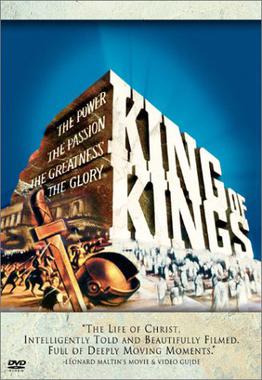
Is there a more daunting task as an actor to play a man millions of people around the world believe to be the Son of God? Sure, any portrayal of a real-life person has to be intimidating, but playing Jesus? That's gotta be on a whole other level. As I learned from the Internet, this movie was the first American film to show an actor's face portraying Jesus Christ. Here it is, a childhood favorite and one I revisited this past Easter weekend, 1961's King of Kings.
This is the story of Jesus (Jeffrey Hunter), a man who grew up in tumultuous times in Judea as Roman occupiers keep the Jewish/Hebrew people oppressed under their thumb. Revolts and rebellions rise up from year to year as Judea seeks its freedom, its independence to get away from the control of the Roman empire. Into this world, Jesus grows up into manhood ready to do his life's calling. Having worked his entire life and living in the Galilean town of Nazareth as a carpenter, Jesus in his late 20's ventures out into the world to embrace his calling as the messiah, the son of God who will teach the world how to live. It is a message that preaches peace but will no doubt send ripples throughout the Roman empire. As Jesus travels around the country with a small group of disciples, his name, his message and his words begin to spread. His followers increase, but so does the danger around him as many want nothing more than to kill him before he becomes too dangerous.
A plot description for a film about the life of Jesus Christ is pretty unnecessary, but I had to lay things out at least a little bit. In the age of the historical film epic, this entry from director Nicholas Ray has always been one of my favorites. I grew up watching it with my Mom every spring, and even years later, it holds up. If anything, I liked it more as a 29-year old viewer as opposed to a 10-year old kid. A whole lot of history is covered in 168 minutes but things never feel rushed. 'King' was filmed on-location in Spain with countless lavish sets and natural backdrops adding an incredibly authentic feel to the proceedings. The TCM print shown on Easter looked PHENOMENAL. Just a stunningly good-looking visual movie. The musical score from composer Miklos Rozsa is pretty perfect too, big and booming mixed in with softer, quieter and just as effective emotional moments. Listen to a sample HERE.
What struck me most in this 1961 epic about Jesus is that...well, it isn't just about Jesus. Ray and writer Philip Yordan use Jesus, his life and his teachings to tell a story about the times this man lived his life. Yes, the focus is on him, but it isn't exclusively focused on him. The casting is very solid with Jeffrey Hunter playing Jesus. Up there with The Searchers as his most famous, respected and recognizable role, Hunter does an excellent job here. It isn't the most human part, but that's not his fault. Hunter is sincere and likable and genuine with a script that keys in on Jesus' teachings more than getting to know the man as a person, as an individual. What works so well is the quieter moments and the impact we see as viewers that this man has on those around him, both the believers and the non-believers. Hunter never became the huge star he could have before his tragic death in 1969, but performances like this show his acting skill.
Four years later, a similarly-themed Jesus epic -- The Greatest Story Ever Told -- would set the bar for ridiculously overdone all-star casts. That ain't the case here. Ray fills out some major roles with recognizable faces and some stars, but this is even't close to being considered an all-star cast. Oh, and that's a good thing. The best supporting part goes to Ron Randell as Lucius, a Roman officer in the garrison at Jerusalem tasked with figuring out if Jesus is a threat to be dealt with. A human, questioning part, and a really good one. Next up, Irish actress Siobhan McKenna as Mary, Jesus' mother, making the character memorable with just a few quick scenes. And then there's the most recognizable face, Robert Ryan getting a meaty part as John the Baptist, a prophet more fiery than Jesus but who preaches the same peaceful message, one predicting the coming of the Son of God.
Who else to look for? If you're familiar with Jesus and the gospels, you know the names. Also in the cast are Pontius Pilate (Hurd Hatfield), Roman governor of Judea, Claudia (Viveca Lindfors), Pilate's more open-minded wife, Herod Antipas (Frank Thring), the Judean governor, his wife, Herodias (Rita Gam), and his stepdaughter, Salome (Brigid Bazlen), disciples Peter (Royal Dano) and Judas (Rip Torn), Barabbas (Harry Guardino), and Mary Magdalene (Carmen Sevilla).
Working consistently throughout the 1950s, director Ray carved a niche for himself as a director of smaller scale human dramas. A biblical epic about Jesus? Not his usual cup of tea. For all the immense scale though, it is the softer, quieter scenes that work. Quick montages of Jesus' miracles set to Rozsa's score are beautiful and effective. The sermon on the mount boasts all sorts of massive scale but is effective because of the dialogue and Hunter's acting. Certain events are glossed over more than others with a bigger focus late on the Passion and Resurrection. Obviously not nearly as graphic as the Passion of the Christ, it remains a moving finale.
King of Kings works because it doesn't try to be gigantically epic. It is content to tell a big story -- maybe history's BIGGEST story -- and to tell it well. Well worth it though, definitely worth checking out. Also listen for Ray Bradbury's uncredited narration, Orson Welles reading said narration, and future familiar face from the spaghetti western genre, Aldo Sambrell, making his screen debut.
King of Kings (1961): ****/****
This is the story of Jesus (Jeffrey Hunter), a man who grew up in tumultuous times in Judea as Roman occupiers keep the Jewish/Hebrew people oppressed under their thumb. Revolts and rebellions rise up from year to year as Judea seeks its freedom, its independence to get away from the control of the Roman empire. Into this world, Jesus grows up into manhood ready to do his life's calling. Having worked his entire life and living in the Galilean town of Nazareth as a carpenter, Jesus in his late 20's ventures out into the world to embrace his calling as the messiah, the son of God who will teach the world how to live. It is a message that preaches peace but will no doubt send ripples throughout the Roman empire. As Jesus travels around the country with a small group of disciples, his name, his message and his words begin to spread. His followers increase, but so does the danger around him as many want nothing more than to kill him before he becomes too dangerous.
A plot description for a film about the life of Jesus Christ is pretty unnecessary, but I had to lay things out at least a little bit. In the age of the historical film epic, this entry from director Nicholas Ray has always been one of my favorites. I grew up watching it with my Mom every spring, and even years later, it holds up. If anything, I liked it more as a 29-year old viewer as opposed to a 10-year old kid. A whole lot of history is covered in 168 minutes but things never feel rushed. 'King' was filmed on-location in Spain with countless lavish sets and natural backdrops adding an incredibly authentic feel to the proceedings. The TCM print shown on Easter looked PHENOMENAL. Just a stunningly good-looking visual movie. The musical score from composer Miklos Rozsa is pretty perfect too, big and booming mixed in with softer, quieter and just as effective emotional moments. Listen to a sample HERE.
What struck me most in this 1961 epic about Jesus is that...well, it isn't just about Jesus. Ray and writer Philip Yordan use Jesus, his life and his teachings to tell a story about the times this man lived his life. Yes, the focus is on him, but it isn't exclusively focused on him. The casting is very solid with Jeffrey Hunter playing Jesus. Up there with The Searchers as his most famous, respected and recognizable role, Hunter does an excellent job here. It isn't the most human part, but that's not his fault. Hunter is sincere and likable and genuine with a script that keys in on Jesus' teachings more than getting to know the man as a person, as an individual. What works so well is the quieter moments and the impact we see as viewers that this man has on those around him, both the believers and the non-believers. Hunter never became the huge star he could have before his tragic death in 1969, but performances like this show his acting skill.
Four years later, a similarly-themed Jesus epic -- The Greatest Story Ever Told -- would set the bar for ridiculously overdone all-star casts. That ain't the case here. Ray fills out some major roles with recognizable faces and some stars, but this is even't close to being considered an all-star cast. Oh, and that's a good thing. The best supporting part goes to Ron Randell as Lucius, a Roman officer in the garrison at Jerusalem tasked with figuring out if Jesus is a threat to be dealt with. A human, questioning part, and a really good one. Next up, Irish actress Siobhan McKenna as Mary, Jesus' mother, making the character memorable with just a few quick scenes. And then there's the most recognizable face, Robert Ryan getting a meaty part as John the Baptist, a prophet more fiery than Jesus but who preaches the same peaceful message, one predicting the coming of the Son of God.
Who else to look for? If you're familiar with Jesus and the gospels, you know the names. Also in the cast are Pontius Pilate (Hurd Hatfield), Roman governor of Judea, Claudia (Viveca Lindfors), Pilate's more open-minded wife, Herod Antipas (Frank Thring), the Judean governor, his wife, Herodias (Rita Gam), and his stepdaughter, Salome (Brigid Bazlen), disciples Peter (Royal Dano) and Judas (Rip Torn), Barabbas (Harry Guardino), and Mary Magdalene (Carmen Sevilla).
Working consistently throughout the 1950s, director Ray carved a niche for himself as a director of smaller scale human dramas. A biblical epic about Jesus? Not his usual cup of tea. For all the immense scale though, it is the softer, quieter scenes that work. Quick montages of Jesus' miracles set to Rozsa's score are beautiful and effective. The sermon on the mount boasts all sorts of massive scale but is effective because of the dialogue and Hunter's acting. Certain events are glossed over more than others with a bigger focus late on the Passion and Resurrection. Obviously not nearly as graphic as the Passion of the Christ, it remains a moving finale.
King of Kings works because it doesn't try to be gigantically epic. It is content to tell a big story -- maybe history's BIGGEST story -- and to tell it well. Well worth it though, definitely worth checking out. Also listen for Ray Bradbury's uncredited narration, Orson Welles reading said narration, and future familiar face from the spaghetti western genre, Aldo Sambrell, making his screen debut.
King of Kings (1961): ****/****
Tuesday, February 3, 2015
The Longest Day
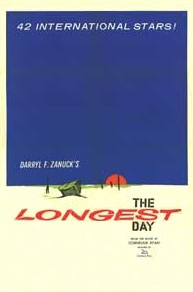
When you look back through history, certain dates hold a higher place in the history books. It can be someone's birth, someone's death, or just have an amazing historical significance in terms of impact on the world. High up on that list is June 6, 1944, the day Allied forces invaded Normandy, better known as D-Day. In the age of gigantic, sprawling epics, one of the best movies of the 1960s tackles the immense subject, 1962's The Longest Day.
A plot description wouldn't do this flick justice. It's just infeasible. The history will serve as a big enough jumping off point. After four-plus years of war, Allied forces had massed for months, all prepping for the invasion of Europe, hopefully taking back the continent from Adolf Hitler and his Nazi Third Reich. The invasion was months and years in planning, millions of men, millions of tons of equipment, thousands and thousands of ships, trucks, jeeps and tanks waiting to be unleashed at Normandy and in the French countryside. What was the mystery? The Allies tried desperately to keep the location of the invasion -- Normandy -- secret to help save lives and make the invasion smoother. The Germans similarly tried desperately to discover where the attack was coming. The war hung in the balance along with millions of lives, not just those taking part in the attack but all over the world. Not bad for historical significance, huh?
So tackling that premise in movie form seems a rather daunting task if you ask me. In the age of the epic, this one doesn't disappoint. At 178 minutes, 'Longest' covers a ridiculous amount of ground in a story that takes place over about a 36-hour time span. We see the Allies deciding the time is finally right after days of wavering while the Germans decide if this is the actual invasion or just a feint, a distraction to throw them off. Based on the book by Cornelius Ryan, it is told in docu-drama style as we meet all the participants from the high command to the soldiers, paratroopers to resistance fighters, townspeople to priests and everything and everyone in between. This isn't a movie about characters, but instead about the spectacle and immensity of what happened. If the Allied invasion on D-Day didn't work, who knows how the world would have changed?
Just a huge movie but one that never feels rushed or forced. The three-hour running time absolutely flies by. It was filmed in black and white, giving it an appropriately dated look. Maybe color takes away from what's on-screen, but the decision to film in black and white simply put, works. Ken Annakin, Andrew Marton and Bernhard Wicki combine to direct this behemoth epic and to handle it well. Technically speaking, it is a virtually flawless film. Some stock footage is sprinkled here and there, but many of the locations where the actual events took place were used as filming locations. Talk about authenticity, it can be downright eerie watching some of the scenes knowing the locations' history. The score from Maurice Jarre is used in appropriate doses with the main theme (listen HERE) a memorable piece of music that's always stuck with me.
As an epic though, one thing was required more than just about anything else. That requirement? A cast of seemingly thousands. Literally everyone in Hollywood and stars internationally were required to star in this movie. Okay, a slight exaggeration, but you get my point. Most of these parts were nothing more than cameos, but just as a taste of the ridiculous star power on display, we get John Wayne, Robert Mitchum, Robert Ryan, Henry Fonda, Richard Burton, Edmond O'Brien, Rod Steiger, even a pre-James Bond Sean Connery. Many of those parts only required an on-screen appearance of a minute or two -- some for much more -- but their presence alone...just wowza. The scary part? That's only a somewhat small taste of the depth of the cast that truly brings an international flavor to the D-Day proceedings with German, French, British, American and many more brought together.
The Longest Day is an epic, plain and simple, but for every scene where the scope and scale impresses, I loved the quieter, personal and often times, terrifyingly real scenes just as effective and memorable. I loved Richard Todd as a paratrooper commander tasked with landing in France via glider and taking a key bridge and holding until reinforcements arrive...if they can. The scene where American paratroopers, including strung-up Red Buttons, overshoot their landing zone and land in a German town is tragic and moving. One paratrooper (Sal Mineo) making a tragic decision is surprising and intensely real. I especially liked the simplicity of a late scene between Burton's RAF pilot and Richard Beymer's American paratrooper discussing the necessary evil of the day but also the lunacy of it. I think the best, most iconic moment has Hans Christian Blech's German officer finally spotting the invasion force in the English Channel when the fog clears. His face drops and he mumbles 'Die invasion,' all set to Beethoven's Fifth Symphony. Just a ton of great moments like this.
The other counter to those scenes are the BIG moments, and that's where the technical comes into play. One tremendous scene has a German fighter strafing the beaches, all of which we see from the perspective of the plane. Hundreds and thousands of extras scramble for cover underneath in a remarkable visual scene. The same later in 'Longest' when French commandos fight their way up a street in a French town, a helicopter (I think) filming all the action. As well, the scene of the paratroopers coming down on the German-held Sainte-Mere-Eglise is a horrifying scene that utilizes some very cool camerawork. Also look for a cool scene where American Rangers -- including Robert Wagner, George Segal, Paul Anka, Fabian, Tommy Sands -- scale the cliffs of Pointe de Huc, all trying to knock out a key German emplacement. Some especially memorable moments, not all of them action scenes.
Because I don't want to forget anyone but don't want to overdo it describing EVERY character, also look for Eddie Albert, Irina Demick, Mel Ferrer, Steve Forest, Gert Frobe, Leo Genn, Jeffrey Hunter, Curd Jurgens, Peter Lawford, Christian Marquand, Roddy McDowall, Kenneth More, Wolfgang Preiss, Ron Randell, Jean Servais, Norman Rossington, Tom Tryon, Peter van Eyck and Stuart Whitman. Okay, I'll take a breath now.
The Longest Day isn't the best war movie around, but it's one of my favorites. It tries to accomplish a ton and succeeds on just about every level. The history, the scale, the spectacle, the gigantic cast, the moments that resonate amongst all the epic qualities. It also serves as an excellent companion piece to the more recent Saving Private Ryan. Nowhere near as violent, but a more far-reaching story. A gem from the age of epics.
The Longest Day (1962): ****/****
A plot description wouldn't do this flick justice. It's just infeasible. The history will serve as a big enough jumping off point. After four-plus years of war, Allied forces had massed for months, all prepping for the invasion of Europe, hopefully taking back the continent from Adolf Hitler and his Nazi Third Reich. The invasion was months and years in planning, millions of men, millions of tons of equipment, thousands and thousands of ships, trucks, jeeps and tanks waiting to be unleashed at Normandy and in the French countryside. What was the mystery? The Allies tried desperately to keep the location of the invasion -- Normandy -- secret to help save lives and make the invasion smoother. The Germans similarly tried desperately to discover where the attack was coming. The war hung in the balance along with millions of lives, not just those taking part in the attack but all over the world. Not bad for historical significance, huh?
So tackling that premise in movie form seems a rather daunting task if you ask me. In the age of the epic, this one doesn't disappoint. At 178 minutes, 'Longest' covers a ridiculous amount of ground in a story that takes place over about a 36-hour time span. We see the Allies deciding the time is finally right after days of wavering while the Germans decide if this is the actual invasion or just a feint, a distraction to throw them off. Based on the book by Cornelius Ryan, it is told in docu-drama style as we meet all the participants from the high command to the soldiers, paratroopers to resistance fighters, townspeople to priests and everything and everyone in between. This isn't a movie about characters, but instead about the spectacle and immensity of what happened. If the Allied invasion on D-Day didn't work, who knows how the world would have changed?
Just a huge movie but one that never feels rushed or forced. The three-hour running time absolutely flies by. It was filmed in black and white, giving it an appropriately dated look. Maybe color takes away from what's on-screen, but the decision to film in black and white simply put, works. Ken Annakin, Andrew Marton and Bernhard Wicki combine to direct this behemoth epic and to handle it well. Technically speaking, it is a virtually flawless film. Some stock footage is sprinkled here and there, but many of the locations where the actual events took place were used as filming locations. Talk about authenticity, it can be downright eerie watching some of the scenes knowing the locations' history. The score from Maurice Jarre is used in appropriate doses with the main theme (listen HERE) a memorable piece of music that's always stuck with me.
As an epic though, one thing was required more than just about anything else. That requirement? A cast of seemingly thousands. Literally everyone in Hollywood and stars internationally were required to star in this movie. Okay, a slight exaggeration, but you get my point. Most of these parts were nothing more than cameos, but just as a taste of the ridiculous star power on display, we get John Wayne, Robert Mitchum, Robert Ryan, Henry Fonda, Richard Burton, Edmond O'Brien, Rod Steiger, even a pre-James Bond Sean Connery. Many of those parts only required an on-screen appearance of a minute or two -- some for much more -- but their presence alone...just wowza. The scary part? That's only a somewhat small taste of the depth of the cast that truly brings an international flavor to the D-Day proceedings with German, French, British, American and many more brought together.
The Longest Day is an epic, plain and simple, but for every scene where the scope and scale impresses, I loved the quieter, personal and often times, terrifyingly real scenes just as effective and memorable. I loved Richard Todd as a paratrooper commander tasked with landing in France via glider and taking a key bridge and holding until reinforcements arrive...if they can. The scene where American paratroopers, including strung-up Red Buttons, overshoot their landing zone and land in a German town is tragic and moving. One paratrooper (Sal Mineo) making a tragic decision is surprising and intensely real. I especially liked the simplicity of a late scene between Burton's RAF pilot and Richard Beymer's American paratrooper discussing the necessary evil of the day but also the lunacy of it. I think the best, most iconic moment has Hans Christian Blech's German officer finally spotting the invasion force in the English Channel when the fog clears. His face drops and he mumbles 'Die invasion,' all set to Beethoven's Fifth Symphony. Just a ton of great moments like this.
The other counter to those scenes are the BIG moments, and that's where the technical comes into play. One tremendous scene has a German fighter strafing the beaches, all of which we see from the perspective of the plane. Hundreds and thousands of extras scramble for cover underneath in a remarkable visual scene. The same later in 'Longest' when French commandos fight their way up a street in a French town, a helicopter (I think) filming all the action. As well, the scene of the paratroopers coming down on the German-held Sainte-Mere-Eglise is a horrifying scene that utilizes some very cool camerawork. Also look for a cool scene where American Rangers -- including Robert Wagner, George Segal, Paul Anka, Fabian, Tommy Sands -- scale the cliffs of Pointe de Huc, all trying to knock out a key German emplacement. Some especially memorable moments, not all of them action scenes.
Because I don't want to forget anyone but don't want to overdo it describing EVERY character, also look for Eddie Albert, Irina Demick, Mel Ferrer, Steve Forest, Gert Frobe, Leo Genn, Jeffrey Hunter, Curd Jurgens, Peter Lawford, Christian Marquand, Roddy McDowall, Kenneth More, Wolfgang Preiss, Ron Randell, Jean Servais, Norman Rossington, Tom Tryon, Peter van Eyck and Stuart Whitman. Okay, I'll take a breath now.
The Longest Day isn't the best war movie around, but it's one of my favorites. It tries to accomplish a ton and succeeds on just about every level. The history, the scale, the spectacle, the gigantic cast, the moments that resonate amongst all the epic qualities. It also serves as an excellent companion piece to the more recent Saving Private Ryan. Nowhere near as violent, but a more far-reaching story. A gem from the age of epics.
The Longest Day (1962): ****/****
Tuesday, January 6, 2015
Inferno
Your leg is broken. You have limited supplies, some water and nothing really but your wits about you. Miles from help and with no way to contact help, you are alone and isolated in the middle of the desert. What do you do? That's 1953's Inferno, an early survival flick, one of the earliest I can even think of.
Leaving a small camp and tracks all around them, a man (William Lundigan) and a woman (Rhonda Fleming) ride out of the desert back to the family ranch miles away. The ranch belongs to the woman's husband, but where is he? The man, Donald Carson (Robert Ryan), is alive if not well, alone in the desert. While riding together out in the desert with his wife, Geraldine, and friend, Duncan, Carson sustained a broken leg and because it was too risky to move him, both Geraldine and Duncan promised to ride for help. Will they? Nope, that's not the full plan. The duo are just days into an illicit affair and took advantage of the situation when Carson hurt himself. They intend to mislead search parties and any rescue effort so that Carson -- crippled and running out of food and water -- dies in the process. They planned just about everything they could except for one thing, Carson's will to live once he figures out he's been double-crossed.
Add this 1953 survival drama to a long list of movies I so politely call 'Wait...What? I've never even heard of that. Why?' From director Roy Ward Baker, 'Inferno' has the feel if a film noir was set in the desolate desert. It's got all the fixings. An anti-hero of sorts who lives fast and hard (Ryan), the sizzling femme fatale (Fleming) and the conniving scoundrel (Lundigan), all mixed up in a sordid affair. Instead of a mob betrayal or backstabbing over money, it's about a marriage with problems and the wife's way to seemingly get out of it clean. It was filmed on location the Mojave Desert, providing quite the visual backdrop for the survival story and clocks in at just 83 minutes. Why has it generally been forgotten since the 1950s? Your guess is as good as mine.
It's a good but far from great movie. The biggest positive is pretty easy to peg, and that's Robert Ryan, leg broken, beard/stubble growing quickly, and his grasp of sanity quickly fading away. What's his motivator? It doesn't take long for him to figure out his wife and business partner have left him out in the desert to die. Ryan is one of the best actors in Hollywood history thanks in great part to his ability to bounce back and forth between good guy and bad guy roles and do it well. This is the flawed anti-hero. We're rooting for him, but as we learn more about him we start to see it's not like this is one immaculate fella. He's flawed, but whatever he's done, he's been wrong. Abandoned and left to die, he's on his own.
That's the movie at its strongest. The movie is never long, but it struggles when we're away from Ryan's Carson out in the desert. It is an incredibly physical part, a man with a broken leg and no way to get out of the desert other than to start crawling his way toward safety. On his own, he's got no one to talk to so we interact with him via his voiceover. This is a man on the brink of losing it, of giving up and dying so we hear his thoughts, his plans, his rationalizations as everything comes together about his betrayal at the hands of his wife and business partner. The camera is on Ryan and Ryan alone, and this Hollywood legend doesn't disappoint. It isn't mentioned as one of his stronger performances, but it certainly belongs in the conversation.
Unfortunately, the wheels sort of come off when Ryan isn't around. Having left him to die, Fleming and Lundigan talk about their plan, about how to make sure how it could go wrong, about how things could go wrong and do so quickly. It just ain't that interesting. Things really get out of hand late in an action-packed finale that really comes out of left field. To that point, it's been all about survival and making it through so the shift in tone didn't necessarily work for me. For the rest of the cast, look for Larry Keating as Carson's lawyer who knows all the good and bad, Henry Hull as a local rancher working to track Carson, and Carl Betz and Robert Burton as two officers involved in the search. A good survival story but some big issues.
Inferno (1953): ** 1/2 /****
Leaving a small camp and tracks all around them, a man (William Lundigan) and a woman (Rhonda Fleming) ride out of the desert back to the family ranch miles away. The ranch belongs to the woman's husband, but where is he? The man, Donald Carson (Robert Ryan), is alive if not well, alone in the desert. While riding together out in the desert with his wife, Geraldine, and friend, Duncan, Carson sustained a broken leg and because it was too risky to move him, both Geraldine and Duncan promised to ride for help. Will they? Nope, that's not the full plan. The duo are just days into an illicit affair and took advantage of the situation when Carson hurt himself. They intend to mislead search parties and any rescue effort so that Carson -- crippled and running out of food and water -- dies in the process. They planned just about everything they could except for one thing, Carson's will to live once he figures out he's been double-crossed.
Add this 1953 survival drama to a long list of movies I so politely call 'Wait...What? I've never even heard of that. Why?' From director Roy Ward Baker, 'Inferno' has the feel if a film noir was set in the desolate desert. It's got all the fixings. An anti-hero of sorts who lives fast and hard (Ryan), the sizzling femme fatale (Fleming) and the conniving scoundrel (Lundigan), all mixed up in a sordid affair. Instead of a mob betrayal or backstabbing over money, it's about a marriage with problems and the wife's way to seemingly get out of it clean. It was filmed on location the Mojave Desert, providing quite the visual backdrop for the survival story and clocks in at just 83 minutes. Why has it generally been forgotten since the 1950s? Your guess is as good as mine.
It's a good but far from great movie. The biggest positive is pretty easy to peg, and that's Robert Ryan, leg broken, beard/stubble growing quickly, and his grasp of sanity quickly fading away. What's his motivator? It doesn't take long for him to figure out his wife and business partner have left him out in the desert to die. Ryan is one of the best actors in Hollywood history thanks in great part to his ability to bounce back and forth between good guy and bad guy roles and do it well. This is the flawed anti-hero. We're rooting for him, but as we learn more about him we start to see it's not like this is one immaculate fella. He's flawed, but whatever he's done, he's been wrong. Abandoned and left to die, he's on his own.
That's the movie at its strongest. The movie is never long, but it struggles when we're away from Ryan's Carson out in the desert. It is an incredibly physical part, a man with a broken leg and no way to get out of the desert other than to start crawling his way toward safety. On his own, he's got no one to talk to so we interact with him via his voiceover. This is a man on the brink of losing it, of giving up and dying so we hear his thoughts, his plans, his rationalizations as everything comes together about his betrayal at the hands of his wife and business partner. The camera is on Ryan and Ryan alone, and this Hollywood legend doesn't disappoint. It isn't mentioned as one of his stronger performances, but it certainly belongs in the conversation.
Unfortunately, the wheels sort of come off when Ryan isn't around. Having left him to die, Fleming and Lundigan talk about their plan, about how to make sure how it could go wrong, about how things could go wrong and do so quickly. It just ain't that interesting. Things really get out of hand late in an action-packed finale that really comes out of left field. To that point, it's been all about survival and making it through so the shift in tone didn't necessarily work for me. For the rest of the cast, look for Larry Keating as Carson's lawyer who knows all the good and bad, Henry Hull as a local rancher working to track Carson, and Carl Betz and Robert Burton as two officers involved in the search. A good survival story but some big issues.
Inferno (1953): ** 1/2 /****
Friday, April 19, 2013
The Proud Ones
What's the more iconic figure from the wild wild west, the sheriff/marshal or the cowboy? My first thought is the cowboy, but I'm safe picking either one. Yes, I'm the judge and jury here so deal with it. Countless westerns have dealt with both figures, some better than others, but 1956's The Proud Ones is a generally forgotten gem, the story of a small-town sheriff.
The sheriff of a small Kansas town, Cass Silver (Robert Ryan) is expecting trouble. The town has managed to avoid violence and bloodshed for years, but that's about to change. A new railroad line has made the town an important cattle depot, meaning cattle drives can now use Cass' town as a destination. The first herd is due any day now, and along with them comes Honest John Barrett (Robert Middleton), a saloon owner who has quite the checkered past with Cass as a marshal. Barrett sees the town as a gold mine, the potential for money and riches just waiting at his fingertips. His problem? Cass knows how he operates and doesn't intend to be intimidated by him. The experienced lawman braces for Barrett's plan while also weighing how much a new deputy, Thad Anderson (Jeffrey Hunter), can help. Anderson too has his own secrets, one that could doom them all.
The 1950s were packed to the gills with westerns hitting theaters from bigger budget A-level movies with smaller scale, cheaper B-movies. From director Robert D. Webb, 'Proud' is a better, more enjoyable western because it falls in between the two. It's familiar stuff, the town sheriff protecting his town, his word and his honor against a power-hungry businessman. Familiar isn't bad. There's some solid casting with some A-list names, but they're not there for the sake of star power. The story is mostly relegated to the town set which looks a lot like the set from The Ox-Bow Incident (from 13 years earlier), but the crowded streets with bars, businesses and alleys ending up being a key ingredient to the escalating situation. I also really liked Lionel Newman's score, a combination of soft and subtle -- especially Cass' whistle theme, listen HERE -- with bigger, louder outbursts in tense action scenes. It's a lot of little things again, but combined together it works out nicely.
By 1956, Robert Ryan was an established star in Hollywood, a reliable tough guy know for his villainous roles but also his ability to play flawed heroes. Playing veteran marshal Cass Silver, Ryan's part definitely falls into that second category. He's good at what he goes, but his past is checkered to say the least, thanks in great part to his history with Middleton's Honest John (Get it? It's ironic!). Silver has a tenuous relationship with saloon girl turned restaurant owner Sally (always reliable Virginia Mayo) and has a definite future with her, if he can get out of town and his job alive. In a semi-interesting but still unnecessary twist, Cass also gets knocked over the head and starts experiencing headaches that render him temporarily blind. It seems like something more worthy of a spaghetti western. Isolated and all but on his own, Cass might fight for what he believes in, what's right and upholding his word. I liked the main character a lot, and behind him, things fall into place nicely.
Presenting the town marshal as a main character in a western is nothing new, but I liked what Webb did just the same. 'Proud' had to be an influence on Howard Hawks who three years later with Rio Bravo would make a western with some similar undertones (and some less subtle connections). Cass has two deputies, Jake (Walter Brennan, basically playing the same role he'd play in Rio Bravo), the old jailer trying to keep Cass on his toes, and Jim (Arthur O'Connell), the doting father worried about his expecting wife. There's also a great dynamic between Silver and Hunter's Thad Anderson, the cowboy turned deputy. He blames Silver for his father's death, but he doesn't know all the facts. It's not quite a father-son relationship that develops -- maybe more of a brotherly relationship -- but it's fun to watch Silver keep working with the young deputy, not knowing if he'll get a bullet in his back whenever he turns away.
Rounding out the leads, Middleton is smooth and slimy as Honest John, wanting to get his way no matter what or who stands in his way. In this case, his means to an end is to hire "friends," Pike (Ken Clark) and Chico (Rodolfo Acosta), gunfighters waiting to shoot Cass in the back. In a smaller role that basically has her disappear after an early intro, Mayo fits in well as Sally, Silver's girlfriend who worries about his pride costing him his life.
Released in 1956, 'Proud' is surprisingly dark for an American western of the time. It delves into greed, backstabbing, betrayal and out and out murder. Even cynicism is evident almost from the first scene on. Trying to live up to his job and his word, Cass sees the town turn to Sodom and Gomorrah once there is any sort of money on the line, in this case lots and lots of money. The gunfights are quick and hard-hitting, and the finale in a dark, claustrophobic barn features the earliest use of blood squibs I've ever seen. One character gets shot in the face, another in the head, blood shooting out on impact. It's a western I don't hear much about, but I liked it from the start. Highly recommended.
The Proud Ones (1956): ***/****
The sheriff of a small Kansas town, Cass Silver (Robert Ryan) is expecting trouble. The town has managed to avoid violence and bloodshed for years, but that's about to change. A new railroad line has made the town an important cattle depot, meaning cattle drives can now use Cass' town as a destination. The first herd is due any day now, and along with them comes Honest John Barrett (Robert Middleton), a saloon owner who has quite the checkered past with Cass as a marshal. Barrett sees the town as a gold mine, the potential for money and riches just waiting at his fingertips. His problem? Cass knows how he operates and doesn't intend to be intimidated by him. The experienced lawman braces for Barrett's plan while also weighing how much a new deputy, Thad Anderson (Jeffrey Hunter), can help. Anderson too has his own secrets, one that could doom them all.
The 1950s were packed to the gills with westerns hitting theaters from bigger budget A-level movies with smaller scale, cheaper B-movies. From director Robert D. Webb, 'Proud' is a better, more enjoyable western because it falls in between the two. It's familiar stuff, the town sheriff protecting his town, his word and his honor against a power-hungry businessman. Familiar isn't bad. There's some solid casting with some A-list names, but they're not there for the sake of star power. The story is mostly relegated to the town set which looks a lot like the set from The Ox-Bow Incident (from 13 years earlier), but the crowded streets with bars, businesses and alleys ending up being a key ingredient to the escalating situation. I also really liked Lionel Newman's score, a combination of soft and subtle -- especially Cass' whistle theme, listen HERE -- with bigger, louder outbursts in tense action scenes. It's a lot of little things again, but combined together it works out nicely.
By 1956, Robert Ryan was an established star in Hollywood, a reliable tough guy know for his villainous roles but also his ability to play flawed heroes. Playing veteran marshal Cass Silver, Ryan's part definitely falls into that second category. He's good at what he goes, but his past is checkered to say the least, thanks in great part to his history with Middleton's Honest John (Get it? It's ironic!). Silver has a tenuous relationship with saloon girl turned restaurant owner Sally (always reliable Virginia Mayo) and has a definite future with her, if he can get out of town and his job alive. In a semi-interesting but still unnecessary twist, Cass also gets knocked over the head and starts experiencing headaches that render him temporarily blind. It seems like something more worthy of a spaghetti western. Isolated and all but on his own, Cass might fight for what he believes in, what's right and upholding his word. I liked the main character a lot, and behind him, things fall into place nicely.
Presenting the town marshal as a main character in a western is nothing new, but I liked what Webb did just the same. 'Proud' had to be an influence on Howard Hawks who three years later with Rio Bravo would make a western with some similar undertones (and some less subtle connections). Cass has two deputies, Jake (Walter Brennan, basically playing the same role he'd play in Rio Bravo), the old jailer trying to keep Cass on his toes, and Jim (Arthur O'Connell), the doting father worried about his expecting wife. There's also a great dynamic between Silver and Hunter's Thad Anderson, the cowboy turned deputy. He blames Silver for his father's death, but he doesn't know all the facts. It's not quite a father-son relationship that develops -- maybe more of a brotherly relationship -- but it's fun to watch Silver keep working with the young deputy, not knowing if he'll get a bullet in his back whenever he turns away.
Rounding out the leads, Middleton is smooth and slimy as Honest John, wanting to get his way no matter what or who stands in his way. In this case, his means to an end is to hire "friends," Pike (Ken Clark) and Chico (Rodolfo Acosta), gunfighters waiting to shoot Cass in the back. In a smaller role that basically has her disappear after an early intro, Mayo fits in well as Sally, Silver's girlfriend who worries about his pride costing him his life.
Released in 1956, 'Proud' is surprisingly dark for an American western of the time. It delves into greed, backstabbing, betrayal and out and out murder. Even cynicism is evident almost from the first scene on. Trying to live up to his job and his word, Cass sees the town turn to Sodom and Gomorrah once there is any sort of money on the line, in this case lots and lots of money. The gunfights are quick and hard-hitting, and the finale in a dark, claustrophobic barn features the earliest use of blood squibs I've ever seen. One character gets shot in the face, another in the head, blood shooting out on impact. It's a western I don't hear much about, but I liked it from the start. Highly recommended.
The Proud Ones (1956): ***/****
Saturday, November 10, 2012
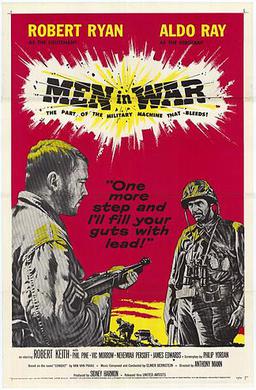
Men in War
The Korean War was unlike any war Americans had ever been involved in. The movies made about it certainly reflected that. There was nothing simple about it, no easy answer, but I suppose that applies to all wars. One of the best movies about Korea is also one that has gone criminally unrecognized over the years, 1957's Men in War.
Following a horrifically costly engagement late in 1950 in Korea, Lt. Benson (Robert Ryan) finds himself in command of the ragged remains of his rifle platoon. With just 17 men and no idea where the rest of the battalion is, Benson leads his men to a prearranged objective that he's not even sure still exists. Along the way, they run into Sgt. Montana (Aldo Ray), a stubborn and very capable soldier who's transporting by jeep his shell-shocked commanding officer, the Colonel (Robert Keith). When Benson commandeers the jeep, Montana goes along more than a little unwillingly. Together, the motley group continues to their objective, an otherwise ordinary location, simply titled Hill 465. What awaits there? None of them know.
Never even mentioned among the best war movies around, this Korean War has been criminally neglected since its 1957. From director Anthony Mann, it is a cynical, extremely dark, very realistic, and even a tad existential at times. While it is based in Korea, it really could be any war. The infantry soldiers trudge on, fighting a mostly unseen enemy, just trying to survive. We learn nothing about anyone, and there's no bigger picture of the war. These men are separated from their possibly annihilated unit and walking in heavily occupied enemy territory. The North Koreans appear as needed; in the aftermath of a firefight, two survivors talk quietly -- not really hiding either -- where seconds before bullets and grenades were raining down on them. This is war and the effect it has on the individual.
Beyond that simple story is a realistic story. I try not to use this description too much, but it was truly ahead of its time. We're introduced to Benson's platoon in the aftermath of the attack that separated his platoon from the battalion. The men look exhausted to the point of fainting. One man has been killed -- stabbed in the back with a bayonet -- by a North Korean scout, and so it starts. The cynicism is palpable. Benson mumbles 'Son of a...' before veering off. Ray's Montana shoots a surrendering North Korean, albeit one reaching for a hidden pistol. Later, a second prisoner is used for bait to see if the platoon has been spotted. Filmed in a close-up black and white, I felt like a fly on the wall as a viewer. We feel like we're right there with the foot soldiers. By no means a flashy filming style, but the story doesn't call for it. Also worth mentioning is Elmer Bernstein's eerie but spot-on musical score.
Playing on the basic notion of the unit picture, 'War' has an impressive tough guy cast. It's great to see Ryan get a good guy role. Very capable of playing a hellishly bad villain, Ryan is a perfect choice to play the beaten down officer who must buck up to get his men to safety. Ray as his counter is just as spot-on, a similarly experienced soldier but one with a simpler mission. That angle (protecting your commanding officer) would be used 20 years later in A Bridge Too Far. Benson's platoon includes Riordan (Phillip Pine), the radioman, Lewis (Nehemiah Persoff), the unhinged sergeant, Zwickley (Vic Morrow), the scared to death private, Killian (James Edwards), the mechanic, and Davis (L.Q. Jones), the medic and BAR man. Seven other soldiers are listed in the cast but under the dirt, grime and three-day stubble, it's hard to distinguish them.
For the most part here, the story is fairly familiar. Nothing crazy or out of the blue. The platoon deals with North Korean scouts trying to pick them off, bickering amongst the men, even stumbling into a minefield. Where it distinguishes itself is in the finale as Benson's men reach Hill 465. There is nothing special about the hill, just a big chunk of jagged rock....that's occupied by North Koreans. The small-scale battle has elements of the surreal. The enemy fires only occasionally, only appearing for brief close-ups. In its small scale, it is a very personal, aggressive, and uncomfortable depiction of battle. Soldiers are killed, but we barely see their faces to know who it is. The film ends on a dour note, but an effective one just the same.
A war film that deserves better. Effective message that is never overbearing, great casting, almost documentary-like feel from Mann, all amount to a film well worth watching.
Men in War <---Youtube clip (1957): *** 1/2 /****
Following a horrifically costly engagement late in 1950 in Korea, Lt. Benson (Robert Ryan) finds himself in command of the ragged remains of his rifle platoon. With just 17 men and no idea where the rest of the battalion is, Benson leads his men to a prearranged objective that he's not even sure still exists. Along the way, they run into Sgt. Montana (Aldo Ray), a stubborn and very capable soldier who's transporting by jeep his shell-shocked commanding officer, the Colonel (Robert Keith). When Benson commandeers the jeep, Montana goes along more than a little unwillingly. Together, the motley group continues to their objective, an otherwise ordinary location, simply titled Hill 465. What awaits there? None of them know.
Never even mentioned among the best war movies around, this Korean War has been criminally neglected since its 1957. From director Anthony Mann, it is a cynical, extremely dark, very realistic, and even a tad existential at times. While it is based in Korea, it really could be any war. The infantry soldiers trudge on, fighting a mostly unseen enemy, just trying to survive. We learn nothing about anyone, and there's no bigger picture of the war. These men are separated from their possibly annihilated unit and walking in heavily occupied enemy territory. The North Koreans appear as needed; in the aftermath of a firefight, two survivors talk quietly -- not really hiding either -- where seconds before bullets and grenades were raining down on them. This is war and the effect it has on the individual.
Beyond that simple story is a realistic story. I try not to use this description too much, but it was truly ahead of its time. We're introduced to Benson's platoon in the aftermath of the attack that separated his platoon from the battalion. The men look exhausted to the point of fainting. One man has been killed -- stabbed in the back with a bayonet -- by a North Korean scout, and so it starts. The cynicism is palpable. Benson mumbles 'Son of a...' before veering off. Ray's Montana shoots a surrendering North Korean, albeit one reaching for a hidden pistol. Later, a second prisoner is used for bait to see if the platoon has been spotted. Filmed in a close-up black and white, I felt like a fly on the wall as a viewer. We feel like we're right there with the foot soldiers. By no means a flashy filming style, but the story doesn't call for it. Also worth mentioning is Elmer Bernstein's eerie but spot-on musical score.
Playing on the basic notion of the unit picture, 'War' has an impressive tough guy cast. It's great to see Ryan get a good guy role. Very capable of playing a hellishly bad villain, Ryan is a perfect choice to play the beaten down officer who must buck up to get his men to safety. Ray as his counter is just as spot-on, a similarly experienced soldier but one with a simpler mission. That angle (protecting your commanding officer) would be used 20 years later in A Bridge Too Far. Benson's platoon includes Riordan (Phillip Pine), the radioman, Lewis (Nehemiah Persoff), the unhinged sergeant, Zwickley (Vic Morrow), the scared to death private, Killian (James Edwards), the mechanic, and Davis (L.Q. Jones), the medic and BAR man. Seven other soldiers are listed in the cast but under the dirt, grime and three-day stubble, it's hard to distinguish them.
For the most part here, the story is fairly familiar. Nothing crazy or out of the blue. The platoon deals with North Korean scouts trying to pick them off, bickering amongst the men, even stumbling into a minefield. Where it distinguishes itself is in the finale as Benson's men reach Hill 465. There is nothing special about the hill, just a big chunk of jagged rock....that's occupied by North Koreans. The small-scale battle has elements of the surreal. The enemy fires only occasionally, only appearing for brief close-ups. In its small scale, it is a very personal, aggressive, and uncomfortable depiction of battle. Soldiers are killed, but we barely see their faces to know who it is. The film ends on a dour note, but an effective one just the same.
A war film that deserves better. Effective message that is never overbearing, great casting, almost documentary-like feel from Mann, all amount to a film well worth watching.
Men in War <---Youtube clip (1957): *** 1/2 /****
Labels:
1950s,
Aldo Ray,
Anthony Mann,
Korean War,
L.Q. Jones,
Nehemiah Persoff,
Robert Ryan,
Vic Morrow
Monday, May 28, 2012
The Dirty Dozen
One of the all-time great tough guy casts -- if not the greatest -- in one of my favorite genres. A movie that stands the test of time that is action-packed, darkly funny and amazingly entertaining. It has taken abuse over the years by some because of its shocking ending, but it also has built up a diehard following by those who will defend it to the last (including me). One of my favorite movies ever, and a Memorial Day themed review, 1967's The Dirty Dozen.
An American army officer with a record a mile long, Major John Reisman (Lee Marvin) has been given a mission that even he doesn't believe is real. It's late spring 1944, and as the Allies prepare for the D-Day invasion, the Allied high command (including Ernest Borgnine) delivers his impossible, suicidal mission. Reisman is to take 12 prisoners either sentenced to death or years of imprisonment and hard labor, train them, and then in the days before the D-Day landing, drop them into German-occupied France. Their mission? Attack a German chateau, killing as many high ranking German officers as possible, hopefully wreaking havoc on the high command. Can Reisman get the prisoners to work together before they kill him?
This is a movie that is a perfect storm of timing, casting and story. A story of 12 convicted criminals -- rape, murder, robbery -- turned commandos who resent any sort of authority given a mission to kill enemy officers in cold blood? Could that story even remotely fly in any time other than late 1960s America? It was a time when America was changing, a darker, more cynical time in our history. Director Robert Aldrich taps into something special there. 'Dozen' has a unique look to it, interesting camera angles, a catchy theme for the Dozen -- listen HERE -- and a general feel of giving the middle finger to any sort of power or authority figure. Could there be a more perfect movie for a 1967 audience?
I could write a whole review discussing the characters and the long list of tough guy actors who play them, but I doubt many people would read 10,000 rambling words about how the cast of The Dirty Dozen is the coolest thing ever. Let's start with Lee Marvin, an all-around bad-ass who by the mid 1960s had become a major, bankable star. His Major Reisman, a sarcastic, quick-witted, smart-mouthed and brutally effective officer, is probably his most well known role, and he owns this movie. With the cast behind and around him, that's saying something. Marvin delivers brutally funny one-liners left and right, handles the action scenes flawlessly, and is believable as the cynical leader of this group of crook commandos. With those type of men behind him, you need someone like him to lead. Richard Jaeckel is a scene-stealer as Sgt. Bowren, the MP assigned to work with Reisman in training and execution of the mission. Along with Borgnine, the High Command and other Allied officers include Robert Webber, George Kennedy and Ralph Meeker. Oh, and Robert Ryan as a stiff-collared officer from the 101st. Enough for you? No?
And then there's the Dirty Dozen. The group includes Charles Bronson as Wladislaw, the former officer sentenced to hang for killing one of his own men, a medic carrying medical supplies away from battle. There's former NFL star Jim Brown as Jefferson, an African American soldier who killed in self defense but is sentenced to hang nonetheless. John Cassavetes was nominated for a Best Supporting Actor Oscar as Franko, a Chicago hood who killed a London man for $10 worth of cash. Telly Savalas is Maggot, a psychopathic Southerner convinced God works through him. Clint Walker is Posey, an Apache with rage issues, Donald Sutherland is Pinkley, a dimwitted soldier, and singer Trini Lopez plays Jiminez. Rounding out the Dozen are character actors Tom Busby, Ben Carruthers, Stuart Cooper, Colin Maitland, and Al Mancini as Bravos, the smallest of the bunch but with a mean/funny streak. The focus is Bronson, Brown, Cassavetes, Walker, Savalas and Sutherland, none of them disappointing, all of them living up to the hype, all given a chance to shine.
What has helped 'Dozen' gain its cult-like following over the years is its humor in looking at and poking some fun at war in general. Sutherland's dimwitted Pinkley is forced to inspect a crack platoon of Ryan's Col. Breed in one of the most memorable, truly funny scenes. Watch it HERE. Reisman later arranges for eight London prostitutes to visit the Dozen as their training winds down. The facial expressions exchanged back and forth are priceless. The high point comically -- however dark it is -- comes in the War Games sequence, the Dozen forced to prove their worth by capturing Col. Breed's headquarters. They resort to cheating, con jobs, stealing, and all sorts of trickery. After the extended training sequence -- which has its fair share of funny moments -- the War Games development and the eventual payoff provides some great laughs.
The portion of the movie though that tends to drive people away is the attack on the chateau. SPOILERS AHEAD SPOILERS STOP READING Here's the plan, courtesy of Reisman, which you can watch HERE. It of course, doesn't go as planned, Reisman, Bowren and the Dozen forced to improvise. Their solution is simple; throw grenades and gasoline down air chutes and burn (think napalm) the German officers to death. Heroic? No, I would say not. It's a movie though. These guys aren't portrayed as heroes. These are prototypical 1960s anti-heroes! What does work? The entire finale sequence (around 45 minutes long) is dripping with tension, and once the adrenaline starts pumping, it doesn't stop. The Dozen start to get picked off -- including two legitimate shockers -- as the bullets start flying. I've seen this movie 50 times and still root for two characters especially to make it, knowing all the while they won't. The means are brutal, but as far as an entertaining action sequence goes, it is one of the best.
I'm not sure what this says about me, but I grew up watching this movie a lot. Introduced to it via Memorial Day war movie marathons, it will be always be one of my favorites. I love its cynical, dark look at war. I love the ridiculously strong cast from top to bottom. It is funny, entertaining, action-packed, and a true example of 'They don't make them like that anymore.' A classic.
The Dirty Dozen <---trailer (1967): ****/****
An American army officer with a record a mile long, Major John Reisman (Lee Marvin) has been given a mission that even he doesn't believe is real. It's late spring 1944, and as the Allies prepare for the D-Day invasion, the Allied high command (including Ernest Borgnine) delivers his impossible, suicidal mission. Reisman is to take 12 prisoners either sentenced to death or years of imprisonment and hard labor, train them, and then in the days before the D-Day landing, drop them into German-occupied France. Their mission? Attack a German chateau, killing as many high ranking German officers as possible, hopefully wreaking havoc on the high command. Can Reisman get the prisoners to work together before they kill him?
This is a movie that is a perfect storm of timing, casting and story. A story of 12 convicted criminals -- rape, murder, robbery -- turned commandos who resent any sort of authority given a mission to kill enemy officers in cold blood? Could that story even remotely fly in any time other than late 1960s America? It was a time when America was changing, a darker, more cynical time in our history. Director Robert Aldrich taps into something special there. 'Dozen' has a unique look to it, interesting camera angles, a catchy theme for the Dozen -- listen HERE -- and a general feel of giving the middle finger to any sort of power or authority figure. Could there be a more perfect movie for a 1967 audience?
I could write a whole review discussing the characters and the long list of tough guy actors who play them, but I doubt many people would read 10,000 rambling words about how the cast of The Dirty Dozen is the coolest thing ever. Let's start with Lee Marvin, an all-around bad-ass who by the mid 1960s had become a major, bankable star. His Major Reisman, a sarcastic, quick-witted, smart-mouthed and brutally effective officer, is probably his most well known role, and he owns this movie. With the cast behind and around him, that's saying something. Marvin delivers brutally funny one-liners left and right, handles the action scenes flawlessly, and is believable as the cynical leader of this group of crook commandos. With those type of men behind him, you need someone like him to lead. Richard Jaeckel is a scene-stealer as Sgt. Bowren, the MP assigned to work with Reisman in training and execution of the mission. Along with Borgnine, the High Command and other Allied officers include Robert Webber, George Kennedy and Ralph Meeker. Oh, and Robert Ryan as a stiff-collared officer from the 101st. Enough for you? No?
And then there's the Dirty Dozen. The group includes Charles Bronson as Wladislaw, the former officer sentenced to hang for killing one of his own men, a medic carrying medical supplies away from battle. There's former NFL star Jim Brown as Jefferson, an African American soldier who killed in self defense but is sentenced to hang nonetheless. John Cassavetes was nominated for a Best Supporting Actor Oscar as Franko, a Chicago hood who killed a London man for $10 worth of cash. Telly Savalas is Maggot, a psychopathic Southerner convinced God works through him. Clint Walker is Posey, an Apache with rage issues, Donald Sutherland is Pinkley, a dimwitted soldier, and singer Trini Lopez plays Jiminez. Rounding out the Dozen are character actors Tom Busby, Ben Carruthers, Stuart Cooper, Colin Maitland, and Al Mancini as Bravos, the smallest of the bunch but with a mean/funny streak. The focus is Bronson, Brown, Cassavetes, Walker, Savalas and Sutherland, none of them disappointing, all of them living up to the hype, all given a chance to shine.
What has helped 'Dozen' gain its cult-like following over the years is its humor in looking at and poking some fun at war in general. Sutherland's dimwitted Pinkley is forced to inspect a crack platoon of Ryan's Col. Breed in one of the most memorable, truly funny scenes. Watch it HERE. Reisman later arranges for eight London prostitutes to visit the Dozen as their training winds down. The facial expressions exchanged back and forth are priceless. The high point comically -- however dark it is -- comes in the War Games sequence, the Dozen forced to prove their worth by capturing Col. Breed's headquarters. They resort to cheating, con jobs, stealing, and all sorts of trickery. After the extended training sequence -- which has its fair share of funny moments -- the War Games development and the eventual payoff provides some great laughs.
The portion of the movie though that tends to drive people away is the attack on the chateau. SPOILERS AHEAD SPOILERS STOP READING Here's the plan, courtesy of Reisman, which you can watch HERE. It of course, doesn't go as planned, Reisman, Bowren and the Dozen forced to improvise. Their solution is simple; throw grenades and gasoline down air chutes and burn (think napalm) the German officers to death. Heroic? No, I would say not. It's a movie though. These guys aren't portrayed as heroes. These are prototypical 1960s anti-heroes! What does work? The entire finale sequence (around 45 minutes long) is dripping with tension, and once the adrenaline starts pumping, it doesn't stop. The Dozen start to get picked off -- including two legitimate shockers -- as the bullets start flying. I've seen this movie 50 times and still root for two characters especially to make it, knowing all the while they won't. The means are brutal, but as far as an entertaining action sequence goes, it is one of the best.
I'm not sure what this says about me, but I grew up watching this movie a lot. Introduced to it via Memorial Day war movie marathons, it will be always be one of my favorites. I love its cynical, dark look at war. I love the ridiculously strong cast from top to bottom. It is funny, entertaining, action-packed, and a true example of 'They don't make them like that anymore.' A classic.
The Dirty Dozen <---trailer (1967): ****/****
Friday, October 28, 2011
Beware, My Lovely
Okay, for starters, I like both Robert Ryan and Ida Lupino a lot for their acting talents. When I see either of those names pop up in credits, I'm encouraged. That's basically why I was drawn into 1952's Beware, My Lovely. It's a film noir with a more psychological twist, but it ends up disappointing even with the considerable talent involved.
Running a boarding house, Helen Gordon (Lupino) does her best to keep her house in shape and her boarders living comfortably. It's 1918, and she is still recovering from the loss of her husband who was killed fighting in Europe in WWI. In hopes of helping her around the house, she hires a local handyman, Howard Wilton (Ryan), to do some odds and ends around the horse before Christmas, fast approaching on the calendar. Howard is a good worker if a little off, going about his business but constantly talking to himself and Helen. Is there something seriously wrong with the man though? Helen finds out the truth when she becomes a prisoner in her own house.
I've written reviews of over 30 film noirs to this point, and I imagine there will be plenty more of them coming down the road. This isn't your typical noir with gangsters and mobsters, betrayals and backstabbings, anti-hero gunmen and hookers and ladies of the night with a heart of gold. The tension and the mystery are there to a point, but it feels more like a stage-based play flipped into a movie. The whole story basically takes place in Gordon's boarding house as Howard's "issues" come to light. To a point, the house ends up becoming more of an interesting character than either Mrs. Gordon or the crazy Howard. That's never a good sign when an inanimate object is more interesting than...well, real people.
Chicago-born actor Robert Ryan is a personal favorite of mine. In movies like The Wild Bunch, The Professionals, The Naked Spur and so many others, he shows an innate ability to play this flawed, beaten down tough guy. Earlier in his career -- like here in 'Beware' -- he played some of his darkest roles, parts that ranged from down and out bad guys to flawed anti-heroes. Racists, killers, anything, Ryan could and did play the part. That this movie isn't very good is not Ryan's fault. He's just working with what's provided him. SPOILERS STOP READING SPOILERS Ryan's Howard is what I like to call "movie crazy." It makes little sense what happens to him, but he has to be confused as to what's going on in his head so in steps "movie crazy." I'd call it bi-polar if anything.
Just as Ryan rose to fame in so many film noirs, Ida Lupino did the same. If you needed a frail-looking, vulnerable female actor, Lupino was a great start. And just like Ryan, it's not on her shoulders that this movie bored me to tears. She's still recovering from her husband's death two years prior, and even putting herself in a dangerous situation is trying to figure out what's wrong in Howard's head, what makes him tick. It's not the actors. It's the gimmick that holds it all together that doesn't end up working.
Floating in and out of these epically violent blackouts, Howard has his moments of clarity where he's a decent person. But with a snap of his finger though, he resorts back to the aggressive, ultra-intimidating violent individual. So why doesn't Lupino's Helen just haul ass when he's coherent? Because she wants to help him? Hey, look, it's a stupid movie gimmick! There are other elements that don't work, some revolving around Howard's possible homosexuality. There are hints he may be gay, may be impotent, but nothing is ever spelled out. It's frustrating watching that. In my head, it's like the story is hinting that gay = crazy. I could be off base -- I was on my phone playing Pacman about 45 minutes in -- but that was my initial reaction.
Bored to tears with a frustrating movie that I thought sounded like it had potential. If you're going to watch this movie, I'd recommend it for Robert Ryan and Ida Lupino, but that's about it. Their performances make something out of nothing, but I still can't say you should seek this movie out.
Beware, My Lovely <---TCM trailer (1952): */****
Running a boarding house, Helen Gordon (Lupino) does her best to keep her house in shape and her boarders living comfortably. It's 1918, and she is still recovering from the loss of her husband who was killed fighting in Europe in WWI. In hopes of helping her around the house, she hires a local handyman, Howard Wilton (Ryan), to do some odds and ends around the horse before Christmas, fast approaching on the calendar. Howard is a good worker if a little off, going about his business but constantly talking to himself and Helen. Is there something seriously wrong with the man though? Helen finds out the truth when she becomes a prisoner in her own house.
I've written reviews of over 30 film noirs to this point, and I imagine there will be plenty more of them coming down the road. This isn't your typical noir with gangsters and mobsters, betrayals and backstabbings, anti-hero gunmen and hookers and ladies of the night with a heart of gold. The tension and the mystery are there to a point, but it feels more like a stage-based play flipped into a movie. The whole story basically takes place in Gordon's boarding house as Howard's "issues" come to light. To a point, the house ends up becoming more of an interesting character than either Mrs. Gordon or the crazy Howard. That's never a good sign when an inanimate object is more interesting than...well, real people.
Chicago-born actor Robert Ryan is a personal favorite of mine. In movies like The Wild Bunch, The Professionals, The Naked Spur and so many others, he shows an innate ability to play this flawed, beaten down tough guy. Earlier in his career -- like here in 'Beware' -- he played some of his darkest roles, parts that ranged from down and out bad guys to flawed anti-heroes. Racists, killers, anything, Ryan could and did play the part. That this movie isn't very good is not Ryan's fault. He's just working with what's provided him. SPOILERS STOP READING SPOILERS Ryan's Howard is what I like to call "movie crazy." It makes little sense what happens to him, but he has to be confused as to what's going on in his head so in steps "movie crazy." I'd call it bi-polar if anything.
Just as Ryan rose to fame in so many film noirs, Ida Lupino did the same. If you needed a frail-looking, vulnerable female actor, Lupino was a great start. And just like Ryan, it's not on her shoulders that this movie bored me to tears. She's still recovering from her husband's death two years prior, and even putting herself in a dangerous situation is trying to figure out what's wrong in Howard's head, what makes him tick. It's not the actors. It's the gimmick that holds it all together that doesn't end up working.
Floating in and out of these epically violent blackouts, Howard has his moments of clarity where he's a decent person. But with a snap of his finger though, he resorts back to the aggressive, ultra-intimidating violent individual. So why doesn't Lupino's Helen just haul ass when he's coherent? Because she wants to help him? Hey, look, it's a stupid movie gimmick! There are other elements that don't work, some revolving around Howard's possible homosexuality. There are hints he may be gay, may be impotent, but nothing is ever spelled out. It's frustrating watching that. In my head, it's like the story is hinting that gay = crazy. I could be off base -- I was on my phone playing Pacman about 45 minutes in -- but that was my initial reaction.
Bored to tears with a frustrating movie that I thought sounded like it had potential. If you're going to watch this movie, I'd recommend it for Robert Ryan and Ida Lupino, but that's about it. Their performances make something out of nothing, but I still can't say you should seek this movie out.
Beware, My Lovely <---TCM trailer (1952): */****
Saturday, June 25, 2011
Captain Nemo and the Underwater City
First introduced to the world in Jules Verne's classic novel 20,000 Leagues Under the Sea, Captain Nemo is one of those great mysterious characters in literature. In films and television, he's been portrayed by James Mason, Herbert Lom, Omar Sharif, Michael Caine, Patrick Stewart and in 1969's Captain Nemo and the Underwater City, he is played by Robert Ryan. The character as Verne intended it is a mysterious one to begin with, but in basically all of the castings, the character is badly (sometimes very badly) miscast. As much as I love Robert Ryan, this is one epic case of miscasting.
One of Hollywood's more underrated actors, Ryan was a legend, starring in countless classics, able to play both good and bad alike. He specialized in torn tough guys, men with checkered pasts and fiery emotions. He's one of my favorites, but having him playing Nemo was just a bad idea. For starters, there's that whole physical resemblance thing. Nemo is the son of an Indian Raja, and Ryan is very, very American-looking. None of this is meant to rip on Ryan as an actor. Far from it, mostly because this is an awful movie, and Ryan's casting is just one of many huge holes this movie has.
A ship sailing off the coast of England late in 1864 sinks, the passengers desperately trying to cling to wreckage in the rough waters. A handful of survivors, including a United States senator, Robert Fraser (Chuck Connors), are rescued by several scuba divers under the water. They're brought on-board the Nautilus, the submarine of the mysterious and highly intelligent, Captain Nemo (Ryan). Glad to be alive but confused as to Nemo's intentions, Fraser and Co. go along with the captain as he returns to an immense underwater city he's constructed on the ocean floor. Nemo insists that no one ever leaves the city, no one returning to the cruel, hypocritical world that they've left behind. Is this life so bad though? Fraser struggles with the decision, going back and forth on what to do.
I was mostly drawn to this movie -- which I'd never even heard of before seeing it at TCM's schedule -- because of the cast, but it took about 10 minutes for me to figure out this wasn't going to be a very good movie. Some money was clearly spent on the production, but director James Hill just doesn't know what he's doing here. This lavish underwater city looks ridiculous, the costumes and sets are some weird mix of futuristic and bad late 1960s style, and the script is so all over the place that the movie never gets into any rhythm. That enough for you? It's not campy enough to be so bad it's good, and it is so dull at times that you can't just go along for the ride.
No saving grace here from the cast, but I don't think it is their fault. It's hard to believe Ryan starred in The Wild Bunch the same year he did 'Nemo.' As great as he was in that movie, he's equally bad here, phoning in his performance. Connors too is miscast as the U.S. Senator on some highly important, secret and dangerous mission for the U.S. government. His hair is about 12 feet high, and he just doesn't work as a Senator. There's also Nanette Newman as Helena, one of the survivors and a single mother, the beautiful Luciana Paluzzi as Mala, a school teacher in Nemo's city, John Turner as Joab, Nemo's right-hand man, Bill Fraser and Kenneth Connors as the gold-hungry Swallow brothers, and Allan Cuthbertson as Lomax, a claustrophobic survivor looking for any way out of this paradise city.
What works against the cast (because there is talent here) is a story and a script that just doesn't know what it wants to do or where to go. A long 10-minute sequence has Nemo giving the survivors a scuba-tour of his city, pointing out fish and fauna in his best Jacques Cousteau impression. Nemo and Helena have a budding relationship as the mysterious captain possibly looks for a wife. The Swallow brothers spent most of their time looking for gold mined from the ocean floor, planning how to escape with as much as they can. Fraser falls for Mala and debates staying with her, also watching out for Joab who sees the senator as competition. There's both too much going on and not enough. I suppose none of these storylines are enough to carry a movie on their own so instead we get tidbits of all of these less than interesting stories.
Mostly though with this movie I was just bored. A movie can be really bad, but as long as it is somewhat entertaining I'll go along for the ride. Not a long movie at just 105 minutes, I found myself fast-forwarding through basically every underwater sequence. The miniatures of Nemo's city and submarine are pretty poorly handled, and the submarine chase in the finale should have been so much cooler. Instead, the movie limps over the finish line. Bad, bad and bad. Steer clear.
Captain Nemo and the Underwater City <---trailer (1969): */****
One of Hollywood's more underrated actors, Ryan was a legend, starring in countless classics, able to play both good and bad alike. He specialized in torn tough guys, men with checkered pasts and fiery emotions. He's one of my favorites, but having him playing Nemo was just a bad idea. For starters, there's that whole physical resemblance thing. Nemo is the son of an Indian Raja, and Ryan is very, very American-looking. None of this is meant to rip on Ryan as an actor. Far from it, mostly because this is an awful movie, and Ryan's casting is just one of many huge holes this movie has.
A ship sailing off the coast of England late in 1864 sinks, the passengers desperately trying to cling to wreckage in the rough waters. A handful of survivors, including a United States senator, Robert Fraser (Chuck Connors), are rescued by several scuba divers under the water. They're brought on-board the Nautilus, the submarine of the mysterious and highly intelligent, Captain Nemo (Ryan). Glad to be alive but confused as to Nemo's intentions, Fraser and Co. go along with the captain as he returns to an immense underwater city he's constructed on the ocean floor. Nemo insists that no one ever leaves the city, no one returning to the cruel, hypocritical world that they've left behind. Is this life so bad though? Fraser struggles with the decision, going back and forth on what to do.
I was mostly drawn to this movie -- which I'd never even heard of before seeing it at TCM's schedule -- because of the cast, but it took about 10 minutes for me to figure out this wasn't going to be a very good movie. Some money was clearly spent on the production, but director James Hill just doesn't know what he's doing here. This lavish underwater city looks ridiculous, the costumes and sets are some weird mix of futuristic and bad late 1960s style, and the script is so all over the place that the movie never gets into any rhythm. That enough for you? It's not campy enough to be so bad it's good, and it is so dull at times that you can't just go along for the ride.
No saving grace here from the cast, but I don't think it is their fault. It's hard to believe Ryan starred in The Wild Bunch the same year he did 'Nemo.' As great as he was in that movie, he's equally bad here, phoning in his performance. Connors too is miscast as the U.S. Senator on some highly important, secret and dangerous mission for the U.S. government. His hair is about 12 feet high, and he just doesn't work as a Senator. There's also Nanette Newman as Helena, one of the survivors and a single mother, the beautiful Luciana Paluzzi as Mala, a school teacher in Nemo's city, John Turner as Joab, Nemo's right-hand man, Bill Fraser and Kenneth Connors as the gold-hungry Swallow brothers, and Allan Cuthbertson as Lomax, a claustrophobic survivor looking for any way out of this paradise city.
What works against the cast (because there is talent here) is a story and a script that just doesn't know what it wants to do or where to go. A long 10-minute sequence has Nemo giving the survivors a scuba-tour of his city, pointing out fish and fauna in his best Jacques Cousteau impression. Nemo and Helena have a budding relationship as the mysterious captain possibly looks for a wife. The Swallow brothers spent most of their time looking for gold mined from the ocean floor, planning how to escape with as much as they can. Fraser falls for Mala and debates staying with her, also watching out for Joab who sees the senator as competition. There's both too much going on and not enough. I suppose none of these storylines are enough to carry a movie on their own so instead we get tidbits of all of these less than interesting stories.
Mostly though with this movie I was just bored. A movie can be really bad, but as long as it is somewhat entertaining I'll go along for the ride. Not a long movie at just 105 minutes, I found myself fast-forwarding through basically every underwater sequence. The miniatures of Nemo's city and submarine are pretty poorly handled, and the submarine chase in the finale should have been so much cooler. Instead, the movie limps over the finish line. Bad, bad and bad. Steer clear.
Captain Nemo and the Underwater City <---trailer (1969): */****
Friday, September 3, 2010
The Outfit
The premise of a lone gunman going after the mob is nothing new and has been done several times since 1973, including Mel Gibson in Payback and Tom Hanks in Road to Perdition among others. Payback is almost an exact reworking of the story here, but the original is still the best. If you needed to explain to someone what a 1970s crime thriller was about, The Outfit could be a blueprint for everything that is good about that type of movies. Perfect casting, exciting action, a cynical, very dark tone, a little black humor thrown in, and a gritty style that just can't be replicated.
Fresh out of prison, Earl Macklin (Robert Duvall) finds out his brother has been killed by two hit men, supposedly for a job the brothers pulled off years before on a mob bank. With a former girlfriend (Karen Black) along for the ride, Macklin survives a hit attempt on his own life and decides to go on the offensive. He enlists the help of a former partner, Cody (Joe Don Baker), and the duo goes to work. Macklin wants $250,000 for the trouble 'the outfit' has caused him, but when they don't pay up they start hitting backroom casinos and mob fronts, taking all the money in sight. But as they go up the ladder, Macklin and Cody realize they'll have to go right to the top, the big-time mobster in charge, Mailer (Robert Ryan). The mobster's waiting for them though and nobody might get out alive.
This is everything that's good about a 1970s B-movie crime thriller. No big budget, no huge scale, just two pissed off guys with nothing to lose going after the mob. Director John Flynn shoots his movie in seedy motels, back room offices and dark alleys where a story like this would actually take place. It was filmed in and around Los Angeles, the locations being one of the strong suits of the movie. You feel like you're there with Macklin and Cody. This isn't high class, high end mafiosos were talking about, just low-level thugs. Everything from the 1970s boats of cars, the bad suits, the awful style, it all works to perfection here.
I've written before about my love of character actors, and Flynn goes all out here to round out his cast. What was so great about 70s movies was that an actor would take a supporting role that might not require more than a scene or two. They'd make a quick appearance and be gone, but that's just one scene. There would be another and another until you've got all these great names filling out the story. More on the leads later, but the support is as good as it gets. Timothy Carey plays a mob go-between, Richard Jaeckel and Bill McKinney play mechanic brothers supplying cars for crooks with Sheree North along as McKinney's slutty wife, Felice Orlandi and Tom Reese as two hit men, film noir femme fatale Jane Greer as Macklin's sister-in-law, among many other recognizable faces you'll be watching out for.
Now there's the buddy cop movie, but here there is the buddy crook movie (mostly holding back on the humor). Duvall and Baker make this movie as Macklin and Cody. Duvall is basically the anti-hero of all-time. He didn't have classic good looks, he was a little pudgy, he was balding, but it all adds up nicely. He's an all-around hardass who knows what he wants and doesn't care who gets hurt in the process as long as he gets it. Baker's Cody is a little more laid back but equally capable of handling himself. Like any buddy movie, there's a bond, a link between these two men who know their chances of survival are slim but go ahead anyways. At one point, Macklin says Cody can walk out, no hard feelings. Cody answers in typical tough guy fashion "I want to see how it turns out." It doesn't get much cooler than that in true anti-hero form.
Making what amounts to an extended cameo, Robert Ryan's Mailer of course gets progressively pissed off at these two low-level hoods. That leads to the equivalent of a suicide mission as Macklin and Cody go gunning for him at his heavily guarded estate. The ending is full of tension and some great action, but there's a bit of a cop out in the last scene. No spoilers here, and honestly, it doesn't ruin the movie but I could have thought of a better ending. No DVD available, but if you stumble across this one, plant yourself in a seat, sit back and enjoy.
The Outfit <---TCM clip (1973): *** 1/2 /****
Subscribe to:
Posts (Atom)