Walt Disney was a man with ideas far ahead of his time. As television was becoming a force to be reckoned with in the 1950s, Disney's Disneyland TV series was ground-breaking and gave viewers something they'd never seen before. These were smart shows too, shows about culture, the world, nature, and maybe most memorably, history. Kids loved history (kinda still do I guess). In one of his lesser known efforts that doesn't have the reputation of his other ventures, a historical feature film, 1956's The Great Locomotive Chase.
It's 1862 and the Civil War is still in its early stages both in the east in Virginia and in the south too in Tennessee and Georgia. Among all the fighting, one man, James Andrews (Fess Parker), is making a reputation as a blockade runner, supplying the Confederate forces with much-needed supplies. In reality though, Andrews is a spy working for the Union. Now, he's been tasked with a dangerous mission. In hopes of helping a surprise Union advance, Andrews and a small detachment of men must travel deep into Georgia and try to destroy as much of a key railroad as they can so Confederate reinforcements can't reach the fighting in time. What's Andrews' plan though? Well, the odds are against him. Not too far north of Atlanta, he and his men will steal a locomotive and race up the line, destroying track, burning bridges, and ripping down telegraph wires, all the while hoping to stay ahead of pursuers. Can they do it? It's going to take some luck and some impeccable planning and timing.
This 1956 Disney historical drama is actually based on a true story from the Civil. With an obvious SPOILER warning, read about it HERE. This is a story that may seem familiar to movie fans with Buster Keaton telling the same story way back in 1926 with the classic silent film, The General (a gem if you haven't seen it). For whatever reason, it hasn't resonated with audiences since its release like so many other Disney movies of the 1950's and 1960's. The goal? At least partially replicate the success of the Davy Crockett episodes (starring Parker) that swept the country. I've seen this movie twice and like it a lot. If it isn't a classic, so be it. If it exciting stuff, especially when the locomotive chase comes along, and features a pretty cool cast of recognizable faces, if not huge star power.
Aired recently on Turner Classic Movies as part of a Disney-themed night, host Leonard Maltin made an interesting point, something I try and bring up occasionally in reviews. Way back in 1956, there was no such thing as computer-generated images. If you wanted something in your movie, you had to find some way through special and visual effects, matte paintings, tricks of the eyes to get the job done. So what's the coolest thing going here? That chase. THAT CHASE. Filmed in Georgia, 'Locomotive' used real locomotives and had them tearing up and down railroad tracks through the Georgia countryside. Shot in technicolor, director Francis D. Lyon turns in one beautiful-looking movie. The chase is incredibly exciting, edge of your seat stuff as Andrews and his Raiders run for their lives with....
Dogged pursuit unfortunately (for them). The mission actually starts off pretty successfully. What Andrews hadn't counted on was the freakishly stubborn train official, William Fuller (Jeffrey Hunter, just 30 years old), who chases them up the track with everything he has. At just 85 minutes, 'Locomotive' is a pretty quick movie, but it is at its absolute strongest in the 45-minute or so extended chase scene from beginning to end. It becomes a lightning-paced cat and mouse game as Andrews throws everything he can at Fuller while Fuller puts his head down and barrels through the obstacles. I try and avoid saying a movie is a thrill ride, but as far as chase scenes go, this is one of the best. There's too many anxious moments to count, the success or failure of the mission contingent on a second or two here, a minute or two there. The chase, the twists, the Georgia countryside, the matte paintings in the background, it's all can't miss stuff.
If you're a fan of tough guy movies from westerns to war movies to film noirs and with a good dose of Disney thrown in, you'll get a kick out of the cast here. For starters, Davy Crockett himself as Andrews is a welcome lead. A tad wooden at times, Parker is nonetheless a very likable hero, stout, resolute, loyal and willing to risk it all to accomplish his mission. Hunter isn't given much to do other than stubbornly chase after a train, but his presence is always welcome. Their few scenes together -- Parker and Hunter -- are excellent, especially one when Hunter's Fuller approaches Andrews because he believes something is up minutes before the locomotive heist. As for the rest of the cast, look for Kenneth Tobey, John Lupton, Jeff York, Harry Carey Jr., Don Megowan, Slim Pickens, Claude Jarman Jr., and Eddie Firestone. Remember, it's just 85 minutes long so little character development but a lot of familiar, welcome faces.
Not much to fault here. The post-chase fallout drags a bit only because it seems Disney and Co. didn't quite know how to wrap things up. Stick with the history (a rather dark history at that) or fudge the truth a little bit? Disney sticks with the real-life history for an ending that's pretty dark for a Disney movie. Thankfully, it goes down the Davy Crockett route and only hits at what's to happen, never showing it in what would have been graphic detail. And come on, Parker (Crockett), Tobey (Bowie) and Megowan (Travis) are back together again! With York (Mike Fink) too! How can you lose?!? An underrated winner.
The Great Locomotive Chase (1956): ***/****
The Sons of Katie Elder
"First, we reunite, then find Ma and Pa's killer...then read some reviews."
Showing posts with label Jeffrey Hunter. Show all posts
Saturday, July 25, 2015
Thursday, April 9, 2015
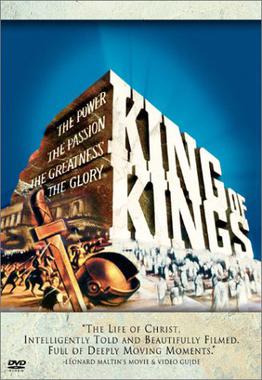
King of Kings
Is there a more daunting task as an actor to play a man millions of people around the world believe to be the Son of God? Sure, any portrayal of a real-life person has to be intimidating, but playing Jesus? That's gotta be on a whole other level. As I learned from the Internet, this movie was the first American film to show an actor's face portraying Jesus Christ. Here it is, a childhood favorite and one I revisited this past Easter weekend, 1961's King of Kings.
This is the story of Jesus (Jeffrey Hunter), a man who grew up in tumultuous times in Judea as Roman occupiers keep the Jewish/Hebrew people oppressed under their thumb. Revolts and rebellions rise up from year to year as Judea seeks its freedom, its independence to get away from the control of the Roman empire. Into this world, Jesus grows up into manhood ready to do his life's calling. Having worked his entire life and living in the Galilean town of Nazareth as a carpenter, Jesus in his late 20's ventures out into the world to embrace his calling as the messiah, the son of God who will teach the world how to live. It is a message that preaches peace but will no doubt send ripples throughout the Roman empire. As Jesus travels around the country with a small group of disciples, his name, his message and his words begin to spread. His followers increase, but so does the danger around him as many want nothing more than to kill him before he becomes too dangerous.
A plot description for a film about the life of Jesus Christ is pretty unnecessary, but I had to lay things out at least a little bit. In the age of the historical film epic, this entry from director Nicholas Ray has always been one of my favorites. I grew up watching it with my Mom every spring, and even years later, it holds up. If anything, I liked it more as a 29-year old viewer as opposed to a 10-year old kid. A whole lot of history is covered in 168 minutes but things never feel rushed. 'King' was filmed on-location in Spain with countless lavish sets and natural backdrops adding an incredibly authentic feel to the proceedings. The TCM print shown on Easter looked PHENOMENAL. Just a stunningly good-looking visual movie. The musical score from composer Miklos Rozsa is pretty perfect too, big and booming mixed in with softer, quieter and just as effective emotional moments. Listen to a sample HERE.
What struck me most in this 1961 epic about Jesus is that...well, it isn't just about Jesus. Ray and writer Philip Yordan use Jesus, his life and his teachings to tell a story about the times this man lived his life. Yes, the focus is on him, but it isn't exclusively focused on him. The casting is very solid with Jeffrey Hunter playing Jesus. Up there with The Searchers as his most famous, respected and recognizable role, Hunter does an excellent job here. It isn't the most human part, but that's not his fault. Hunter is sincere and likable and genuine with a script that keys in on Jesus' teachings more than getting to know the man as a person, as an individual. What works so well is the quieter moments and the impact we see as viewers that this man has on those around him, both the believers and the non-believers. Hunter never became the huge star he could have before his tragic death in 1969, but performances like this show his acting skill.
Four years later, a similarly-themed Jesus epic -- The Greatest Story Ever Told -- would set the bar for ridiculously overdone all-star casts. That ain't the case here. Ray fills out some major roles with recognizable faces and some stars, but this is even't close to being considered an all-star cast. Oh, and that's a good thing. The best supporting part goes to Ron Randell as Lucius, a Roman officer in the garrison at Jerusalem tasked with figuring out if Jesus is a threat to be dealt with. A human, questioning part, and a really good one. Next up, Irish actress Siobhan McKenna as Mary, Jesus' mother, making the character memorable with just a few quick scenes. And then there's the most recognizable face, Robert Ryan getting a meaty part as John the Baptist, a prophet more fiery than Jesus but who preaches the same peaceful message, one predicting the coming of the Son of God.
Who else to look for? If you're familiar with Jesus and the gospels, you know the names. Also in the cast are Pontius Pilate (Hurd Hatfield), Roman governor of Judea, Claudia (Viveca Lindfors), Pilate's more open-minded wife, Herod Antipas (Frank Thring), the Judean governor, his wife, Herodias (Rita Gam), and his stepdaughter, Salome (Brigid Bazlen), disciples Peter (Royal Dano) and Judas (Rip Torn), Barabbas (Harry Guardino), and Mary Magdalene (Carmen Sevilla).
Working consistently throughout the 1950s, director Ray carved a niche for himself as a director of smaller scale human dramas. A biblical epic about Jesus? Not his usual cup of tea. For all the immense scale though, it is the softer, quieter scenes that work. Quick montages of Jesus' miracles set to Rozsa's score are beautiful and effective. The sermon on the mount boasts all sorts of massive scale but is effective because of the dialogue and Hunter's acting. Certain events are glossed over more than others with a bigger focus late on the Passion and Resurrection. Obviously not nearly as graphic as the Passion of the Christ, it remains a moving finale.
King of Kings works because it doesn't try to be gigantically epic. It is content to tell a big story -- maybe history's BIGGEST story -- and to tell it well. Well worth it though, definitely worth checking out. Also listen for Ray Bradbury's uncredited narration, Orson Welles reading said narration, and future familiar face from the spaghetti western genre, Aldo Sambrell, making his screen debut.
King of Kings (1961): ****/****
This is the story of Jesus (Jeffrey Hunter), a man who grew up in tumultuous times in Judea as Roman occupiers keep the Jewish/Hebrew people oppressed under their thumb. Revolts and rebellions rise up from year to year as Judea seeks its freedom, its independence to get away from the control of the Roman empire. Into this world, Jesus grows up into manhood ready to do his life's calling. Having worked his entire life and living in the Galilean town of Nazareth as a carpenter, Jesus in his late 20's ventures out into the world to embrace his calling as the messiah, the son of God who will teach the world how to live. It is a message that preaches peace but will no doubt send ripples throughout the Roman empire. As Jesus travels around the country with a small group of disciples, his name, his message and his words begin to spread. His followers increase, but so does the danger around him as many want nothing more than to kill him before he becomes too dangerous.
A plot description for a film about the life of Jesus Christ is pretty unnecessary, but I had to lay things out at least a little bit. In the age of the historical film epic, this entry from director Nicholas Ray has always been one of my favorites. I grew up watching it with my Mom every spring, and even years later, it holds up. If anything, I liked it more as a 29-year old viewer as opposed to a 10-year old kid. A whole lot of history is covered in 168 minutes but things never feel rushed. 'King' was filmed on-location in Spain with countless lavish sets and natural backdrops adding an incredibly authentic feel to the proceedings. The TCM print shown on Easter looked PHENOMENAL. Just a stunningly good-looking visual movie. The musical score from composer Miklos Rozsa is pretty perfect too, big and booming mixed in with softer, quieter and just as effective emotional moments. Listen to a sample HERE.
What struck me most in this 1961 epic about Jesus is that...well, it isn't just about Jesus. Ray and writer Philip Yordan use Jesus, his life and his teachings to tell a story about the times this man lived his life. Yes, the focus is on him, but it isn't exclusively focused on him. The casting is very solid with Jeffrey Hunter playing Jesus. Up there with The Searchers as his most famous, respected and recognizable role, Hunter does an excellent job here. It isn't the most human part, but that's not his fault. Hunter is sincere and likable and genuine with a script that keys in on Jesus' teachings more than getting to know the man as a person, as an individual. What works so well is the quieter moments and the impact we see as viewers that this man has on those around him, both the believers and the non-believers. Hunter never became the huge star he could have before his tragic death in 1969, but performances like this show his acting skill.
Four years later, a similarly-themed Jesus epic -- The Greatest Story Ever Told -- would set the bar for ridiculously overdone all-star casts. That ain't the case here. Ray fills out some major roles with recognizable faces and some stars, but this is even't close to being considered an all-star cast. Oh, and that's a good thing. The best supporting part goes to Ron Randell as Lucius, a Roman officer in the garrison at Jerusalem tasked with figuring out if Jesus is a threat to be dealt with. A human, questioning part, and a really good one. Next up, Irish actress Siobhan McKenna as Mary, Jesus' mother, making the character memorable with just a few quick scenes. And then there's the most recognizable face, Robert Ryan getting a meaty part as John the Baptist, a prophet more fiery than Jesus but who preaches the same peaceful message, one predicting the coming of the Son of God.
Who else to look for? If you're familiar with Jesus and the gospels, you know the names. Also in the cast are Pontius Pilate (Hurd Hatfield), Roman governor of Judea, Claudia (Viveca Lindfors), Pilate's more open-minded wife, Herod Antipas (Frank Thring), the Judean governor, his wife, Herodias (Rita Gam), and his stepdaughter, Salome (Brigid Bazlen), disciples Peter (Royal Dano) and Judas (Rip Torn), Barabbas (Harry Guardino), and Mary Magdalene (Carmen Sevilla).
Working consistently throughout the 1950s, director Ray carved a niche for himself as a director of smaller scale human dramas. A biblical epic about Jesus? Not his usual cup of tea. For all the immense scale though, it is the softer, quieter scenes that work. Quick montages of Jesus' miracles set to Rozsa's score are beautiful and effective. The sermon on the mount boasts all sorts of massive scale but is effective because of the dialogue and Hunter's acting. Certain events are glossed over more than others with a bigger focus late on the Passion and Resurrection. Obviously not nearly as graphic as the Passion of the Christ, it remains a moving finale.
King of Kings works because it doesn't try to be gigantically epic. It is content to tell a big story -- maybe history's BIGGEST story -- and to tell it well. Well worth it though, definitely worth checking out. Also listen for Ray Bradbury's uncredited narration, Orson Welles reading said narration, and future familiar face from the spaghetti western genre, Aldo Sambrell, making his screen debut.
King of Kings (1961): ****/****
Tuesday, February 3, 2015
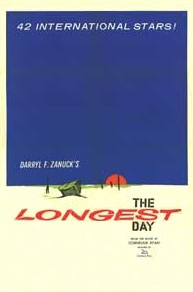
The Longest Day
When you look back through history, certain dates hold a higher place in the history books. It can be someone's birth, someone's death, or just have an amazing historical significance in terms of impact on the world. High up on that list is June 6, 1944, the day Allied forces invaded Normandy, better known as D-Day. In the age of gigantic, sprawling epics, one of the best movies of the 1960s tackles the immense subject, 1962's The Longest Day.
A plot description wouldn't do this flick justice. It's just infeasible. The history will serve as a big enough jumping off point. After four-plus years of war, Allied forces had massed for months, all prepping for the invasion of Europe, hopefully taking back the continent from Adolf Hitler and his Nazi Third Reich. The invasion was months and years in planning, millions of men, millions of tons of equipment, thousands and thousands of ships, trucks, jeeps and tanks waiting to be unleashed at Normandy and in the French countryside. What was the mystery? The Allies tried desperately to keep the location of the invasion -- Normandy -- secret to help save lives and make the invasion smoother. The Germans similarly tried desperately to discover where the attack was coming. The war hung in the balance along with millions of lives, not just those taking part in the attack but all over the world. Not bad for historical significance, huh?
So tackling that premise in movie form seems a rather daunting task if you ask me. In the age of the epic, this one doesn't disappoint. At 178 minutes, 'Longest' covers a ridiculous amount of ground in a story that takes place over about a 36-hour time span. We see the Allies deciding the time is finally right after days of wavering while the Germans decide if this is the actual invasion or just a feint, a distraction to throw them off. Based on the book by Cornelius Ryan, it is told in docu-drama style as we meet all the participants from the high command to the soldiers, paratroopers to resistance fighters, townspeople to priests and everything and everyone in between. This isn't a movie about characters, but instead about the spectacle and immensity of what happened. If the Allied invasion on D-Day didn't work, who knows how the world would have changed?
Just a huge movie but one that never feels rushed or forced. The three-hour running time absolutely flies by. It was filmed in black and white, giving it an appropriately dated look. Maybe color takes away from what's on-screen, but the decision to film in black and white simply put, works. Ken Annakin, Andrew Marton and Bernhard Wicki combine to direct this behemoth epic and to handle it well. Technically speaking, it is a virtually flawless film. Some stock footage is sprinkled here and there, but many of the locations where the actual events took place were used as filming locations. Talk about authenticity, it can be downright eerie watching some of the scenes knowing the locations' history. The score from Maurice Jarre is used in appropriate doses with the main theme (listen HERE) a memorable piece of music that's always stuck with me.
As an epic though, one thing was required more than just about anything else. That requirement? A cast of seemingly thousands. Literally everyone in Hollywood and stars internationally were required to star in this movie. Okay, a slight exaggeration, but you get my point. Most of these parts were nothing more than cameos, but just as a taste of the ridiculous star power on display, we get John Wayne, Robert Mitchum, Robert Ryan, Henry Fonda, Richard Burton, Edmond O'Brien, Rod Steiger, even a pre-James Bond Sean Connery. Many of those parts only required an on-screen appearance of a minute or two -- some for much more -- but their presence alone...just wowza. The scary part? That's only a somewhat small taste of the depth of the cast that truly brings an international flavor to the D-Day proceedings with German, French, British, American and many more brought together.
The Longest Day is an epic, plain and simple, but for every scene where the scope and scale impresses, I loved the quieter, personal and often times, terrifyingly real scenes just as effective and memorable. I loved Richard Todd as a paratrooper commander tasked with landing in France via glider and taking a key bridge and holding until reinforcements arrive...if they can. The scene where American paratroopers, including strung-up Red Buttons, overshoot their landing zone and land in a German town is tragic and moving. One paratrooper (Sal Mineo) making a tragic decision is surprising and intensely real. I especially liked the simplicity of a late scene between Burton's RAF pilot and Richard Beymer's American paratrooper discussing the necessary evil of the day but also the lunacy of it. I think the best, most iconic moment has Hans Christian Blech's German officer finally spotting the invasion force in the English Channel when the fog clears. His face drops and he mumbles 'Die invasion,' all set to Beethoven's Fifth Symphony. Just a ton of great moments like this.
The other counter to those scenes are the BIG moments, and that's where the technical comes into play. One tremendous scene has a German fighter strafing the beaches, all of which we see from the perspective of the plane. Hundreds and thousands of extras scramble for cover underneath in a remarkable visual scene. The same later in 'Longest' when French commandos fight their way up a street in a French town, a helicopter (I think) filming all the action. As well, the scene of the paratroopers coming down on the German-held Sainte-Mere-Eglise is a horrifying scene that utilizes some very cool camerawork. Also look for a cool scene where American Rangers -- including Robert Wagner, George Segal, Paul Anka, Fabian, Tommy Sands -- scale the cliffs of Pointe de Huc, all trying to knock out a key German emplacement. Some especially memorable moments, not all of them action scenes.
Because I don't want to forget anyone but don't want to overdo it describing EVERY character, also look for Eddie Albert, Irina Demick, Mel Ferrer, Steve Forest, Gert Frobe, Leo Genn, Jeffrey Hunter, Curd Jurgens, Peter Lawford, Christian Marquand, Roddy McDowall, Kenneth More, Wolfgang Preiss, Ron Randell, Jean Servais, Norman Rossington, Tom Tryon, Peter van Eyck and Stuart Whitman. Okay, I'll take a breath now.
The Longest Day isn't the best war movie around, but it's one of my favorites. It tries to accomplish a ton and succeeds on just about every level. The history, the scale, the spectacle, the gigantic cast, the moments that resonate amongst all the epic qualities. It also serves as an excellent companion piece to the more recent Saving Private Ryan. Nowhere near as violent, but a more far-reaching story. A gem from the age of epics.
The Longest Day (1962): ****/****
A plot description wouldn't do this flick justice. It's just infeasible. The history will serve as a big enough jumping off point. After four-plus years of war, Allied forces had massed for months, all prepping for the invasion of Europe, hopefully taking back the continent from Adolf Hitler and his Nazi Third Reich. The invasion was months and years in planning, millions of men, millions of tons of equipment, thousands and thousands of ships, trucks, jeeps and tanks waiting to be unleashed at Normandy and in the French countryside. What was the mystery? The Allies tried desperately to keep the location of the invasion -- Normandy -- secret to help save lives and make the invasion smoother. The Germans similarly tried desperately to discover where the attack was coming. The war hung in the balance along with millions of lives, not just those taking part in the attack but all over the world. Not bad for historical significance, huh?
So tackling that premise in movie form seems a rather daunting task if you ask me. In the age of the epic, this one doesn't disappoint. At 178 minutes, 'Longest' covers a ridiculous amount of ground in a story that takes place over about a 36-hour time span. We see the Allies deciding the time is finally right after days of wavering while the Germans decide if this is the actual invasion or just a feint, a distraction to throw them off. Based on the book by Cornelius Ryan, it is told in docu-drama style as we meet all the participants from the high command to the soldiers, paratroopers to resistance fighters, townspeople to priests and everything and everyone in between. This isn't a movie about characters, but instead about the spectacle and immensity of what happened. If the Allied invasion on D-Day didn't work, who knows how the world would have changed?
Just a huge movie but one that never feels rushed or forced. The three-hour running time absolutely flies by. It was filmed in black and white, giving it an appropriately dated look. Maybe color takes away from what's on-screen, but the decision to film in black and white simply put, works. Ken Annakin, Andrew Marton and Bernhard Wicki combine to direct this behemoth epic and to handle it well. Technically speaking, it is a virtually flawless film. Some stock footage is sprinkled here and there, but many of the locations where the actual events took place were used as filming locations. Talk about authenticity, it can be downright eerie watching some of the scenes knowing the locations' history. The score from Maurice Jarre is used in appropriate doses with the main theme (listen HERE) a memorable piece of music that's always stuck with me.
As an epic though, one thing was required more than just about anything else. That requirement? A cast of seemingly thousands. Literally everyone in Hollywood and stars internationally were required to star in this movie. Okay, a slight exaggeration, but you get my point. Most of these parts were nothing more than cameos, but just as a taste of the ridiculous star power on display, we get John Wayne, Robert Mitchum, Robert Ryan, Henry Fonda, Richard Burton, Edmond O'Brien, Rod Steiger, even a pre-James Bond Sean Connery. Many of those parts only required an on-screen appearance of a minute or two -- some for much more -- but their presence alone...just wowza. The scary part? That's only a somewhat small taste of the depth of the cast that truly brings an international flavor to the D-Day proceedings with German, French, British, American and many more brought together.
The Longest Day is an epic, plain and simple, but for every scene where the scope and scale impresses, I loved the quieter, personal and often times, terrifyingly real scenes just as effective and memorable. I loved Richard Todd as a paratrooper commander tasked with landing in France via glider and taking a key bridge and holding until reinforcements arrive...if they can. The scene where American paratroopers, including strung-up Red Buttons, overshoot their landing zone and land in a German town is tragic and moving. One paratrooper (Sal Mineo) making a tragic decision is surprising and intensely real. I especially liked the simplicity of a late scene between Burton's RAF pilot and Richard Beymer's American paratrooper discussing the necessary evil of the day but also the lunacy of it. I think the best, most iconic moment has Hans Christian Blech's German officer finally spotting the invasion force in the English Channel when the fog clears. His face drops and he mumbles 'Die invasion,' all set to Beethoven's Fifth Symphony. Just a ton of great moments like this.
The other counter to those scenes are the BIG moments, and that's where the technical comes into play. One tremendous scene has a German fighter strafing the beaches, all of which we see from the perspective of the plane. Hundreds and thousands of extras scramble for cover underneath in a remarkable visual scene. The same later in 'Longest' when French commandos fight their way up a street in a French town, a helicopter (I think) filming all the action. As well, the scene of the paratroopers coming down on the German-held Sainte-Mere-Eglise is a horrifying scene that utilizes some very cool camerawork. Also look for a cool scene where American Rangers -- including Robert Wagner, George Segal, Paul Anka, Fabian, Tommy Sands -- scale the cliffs of Pointe de Huc, all trying to knock out a key German emplacement. Some especially memorable moments, not all of them action scenes.
Because I don't want to forget anyone but don't want to overdo it describing EVERY character, also look for Eddie Albert, Irina Demick, Mel Ferrer, Steve Forest, Gert Frobe, Leo Genn, Jeffrey Hunter, Curd Jurgens, Peter Lawford, Christian Marquand, Roddy McDowall, Kenneth More, Wolfgang Preiss, Ron Randell, Jean Servais, Norman Rossington, Tom Tryon, Peter van Eyck and Stuart Whitman. Okay, I'll take a breath now.
The Longest Day isn't the best war movie around, but it's one of my favorites. It tries to accomplish a ton and succeeds on just about every level. The history, the scale, the spectacle, the gigantic cast, the moments that resonate amongst all the epic qualities. It also serves as an excellent companion piece to the more recent Saving Private Ryan. Nowhere near as violent, but a more far-reaching story. A gem from the age of epics.
The Longest Day (1962): ****/****
Friday, April 19, 2013
The Proud Ones
What's the more iconic figure from the wild wild west, the sheriff/marshal or the cowboy? My first thought is the cowboy, but I'm safe picking either one. Yes, I'm the judge and jury here so deal with it. Countless westerns have dealt with both figures, some better than others, but 1956's The Proud Ones is a generally forgotten gem, the story of a small-town sheriff.
The sheriff of a small Kansas town, Cass Silver (Robert Ryan) is expecting trouble. The town has managed to avoid violence and bloodshed for years, but that's about to change. A new railroad line has made the town an important cattle depot, meaning cattle drives can now use Cass' town as a destination. The first herd is due any day now, and along with them comes Honest John Barrett (Robert Middleton), a saloon owner who has quite the checkered past with Cass as a marshal. Barrett sees the town as a gold mine, the potential for money and riches just waiting at his fingertips. His problem? Cass knows how he operates and doesn't intend to be intimidated by him. The experienced lawman braces for Barrett's plan while also weighing how much a new deputy, Thad Anderson (Jeffrey Hunter), can help. Anderson too has his own secrets, one that could doom them all.
The 1950s were packed to the gills with westerns hitting theaters from bigger budget A-level movies with smaller scale, cheaper B-movies. From director Robert D. Webb, 'Proud' is a better, more enjoyable western because it falls in between the two. It's familiar stuff, the town sheriff protecting his town, his word and his honor against a power-hungry businessman. Familiar isn't bad. There's some solid casting with some A-list names, but they're not there for the sake of star power. The story is mostly relegated to the town set which looks a lot like the set from The Ox-Bow Incident (from 13 years earlier), but the crowded streets with bars, businesses and alleys ending up being a key ingredient to the escalating situation. I also really liked Lionel Newman's score, a combination of soft and subtle -- especially Cass' whistle theme, listen HERE -- with bigger, louder outbursts in tense action scenes. It's a lot of little things again, but combined together it works out nicely.
By 1956, Robert Ryan was an established star in Hollywood, a reliable tough guy know for his villainous roles but also his ability to play flawed heroes. Playing veteran marshal Cass Silver, Ryan's part definitely falls into that second category. He's good at what he goes, but his past is checkered to say the least, thanks in great part to his history with Middleton's Honest John (Get it? It's ironic!). Silver has a tenuous relationship with saloon girl turned restaurant owner Sally (always reliable Virginia Mayo) and has a definite future with her, if he can get out of town and his job alive. In a semi-interesting but still unnecessary twist, Cass also gets knocked over the head and starts experiencing headaches that render him temporarily blind. It seems like something more worthy of a spaghetti western. Isolated and all but on his own, Cass might fight for what he believes in, what's right and upholding his word. I liked the main character a lot, and behind him, things fall into place nicely.
Presenting the town marshal as a main character in a western is nothing new, but I liked what Webb did just the same. 'Proud' had to be an influence on Howard Hawks who three years later with Rio Bravo would make a western with some similar undertones (and some less subtle connections). Cass has two deputies, Jake (Walter Brennan, basically playing the same role he'd play in Rio Bravo), the old jailer trying to keep Cass on his toes, and Jim (Arthur O'Connell), the doting father worried about his expecting wife. There's also a great dynamic between Silver and Hunter's Thad Anderson, the cowboy turned deputy. He blames Silver for his father's death, but he doesn't know all the facts. It's not quite a father-son relationship that develops -- maybe more of a brotherly relationship -- but it's fun to watch Silver keep working with the young deputy, not knowing if he'll get a bullet in his back whenever he turns away.
Rounding out the leads, Middleton is smooth and slimy as Honest John, wanting to get his way no matter what or who stands in his way. In this case, his means to an end is to hire "friends," Pike (Ken Clark) and Chico (Rodolfo Acosta), gunfighters waiting to shoot Cass in the back. In a smaller role that basically has her disappear after an early intro, Mayo fits in well as Sally, Silver's girlfriend who worries about his pride costing him his life.
Released in 1956, 'Proud' is surprisingly dark for an American western of the time. It delves into greed, backstabbing, betrayal and out and out murder. Even cynicism is evident almost from the first scene on. Trying to live up to his job and his word, Cass sees the town turn to Sodom and Gomorrah once there is any sort of money on the line, in this case lots and lots of money. The gunfights are quick and hard-hitting, and the finale in a dark, claustrophobic barn features the earliest use of blood squibs I've ever seen. One character gets shot in the face, another in the head, blood shooting out on impact. It's a western I don't hear much about, but I liked it from the start. Highly recommended.
The Proud Ones (1956): ***/****
The sheriff of a small Kansas town, Cass Silver (Robert Ryan) is expecting trouble. The town has managed to avoid violence and bloodshed for years, but that's about to change. A new railroad line has made the town an important cattle depot, meaning cattle drives can now use Cass' town as a destination. The first herd is due any day now, and along with them comes Honest John Barrett (Robert Middleton), a saloon owner who has quite the checkered past with Cass as a marshal. Barrett sees the town as a gold mine, the potential for money and riches just waiting at his fingertips. His problem? Cass knows how he operates and doesn't intend to be intimidated by him. The experienced lawman braces for Barrett's plan while also weighing how much a new deputy, Thad Anderson (Jeffrey Hunter), can help. Anderson too has his own secrets, one that could doom them all.
The 1950s were packed to the gills with westerns hitting theaters from bigger budget A-level movies with smaller scale, cheaper B-movies. From director Robert D. Webb, 'Proud' is a better, more enjoyable western because it falls in between the two. It's familiar stuff, the town sheriff protecting his town, his word and his honor against a power-hungry businessman. Familiar isn't bad. There's some solid casting with some A-list names, but they're not there for the sake of star power. The story is mostly relegated to the town set which looks a lot like the set from The Ox-Bow Incident (from 13 years earlier), but the crowded streets with bars, businesses and alleys ending up being a key ingredient to the escalating situation. I also really liked Lionel Newman's score, a combination of soft and subtle -- especially Cass' whistle theme, listen HERE -- with bigger, louder outbursts in tense action scenes. It's a lot of little things again, but combined together it works out nicely.
By 1956, Robert Ryan was an established star in Hollywood, a reliable tough guy know for his villainous roles but also his ability to play flawed heroes. Playing veteran marshal Cass Silver, Ryan's part definitely falls into that second category. He's good at what he goes, but his past is checkered to say the least, thanks in great part to his history with Middleton's Honest John (Get it? It's ironic!). Silver has a tenuous relationship with saloon girl turned restaurant owner Sally (always reliable Virginia Mayo) and has a definite future with her, if he can get out of town and his job alive. In a semi-interesting but still unnecessary twist, Cass also gets knocked over the head and starts experiencing headaches that render him temporarily blind. It seems like something more worthy of a spaghetti western. Isolated and all but on his own, Cass might fight for what he believes in, what's right and upholding his word. I liked the main character a lot, and behind him, things fall into place nicely.
Presenting the town marshal as a main character in a western is nothing new, but I liked what Webb did just the same. 'Proud' had to be an influence on Howard Hawks who three years later with Rio Bravo would make a western with some similar undertones (and some less subtle connections). Cass has two deputies, Jake (Walter Brennan, basically playing the same role he'd play in Rio Bravo), the old jailer trying to keep Cass on his toes, and Jim (Arthur O'Connell), the doting father worried about his expecting wife. There's also a great dynamic between Silver and Hunter's Thad Anderson, the cowboy turned deputy. He blames Silver for his father's death, but he doesn't know all the facts. It's not quite a father-son relationship that develops -- maybe more of a brotherly relationship -- but it's fun to watch Silver keep working with the young deputy, not knowing if he'll get a bullet in his back whenever he turns away.
Rounding out the leads, Middleton is smooth and slimy as Honest John, wanting to get his way no matter what or who stands in his way. In this case, his means to an end is to hire "friends," Pike (Ken Clark) and Chico (Rodolfo Acosta), gunfighters waiting to shoot Cass in the back. In a smaller role that basically has her disappear after an early intro, Mayo fits in well as Sally, Silver's girlfriend who worries about his pride costing him his life.
Released in 1956, 'Proud' is surprisingly dark for an American western of the time. It delves into greed, backstabbing, betrayal and out and out murder. Even cynicism is evident almost from the first scene on. Trying to live up to his job and his word, Cass sees the town turn to Sodom and Gomorrah once there is any sort of money on the line, in this case lots and lots of money. The gunfights are quick and hard-hitting, and the finale in a dark, claustrophobic barn features the earliest use of blood squibs I've ever seen. One character gets shot in the face, another in the head, blood shooting out on impact. It's a western I don't hear much about, but I liked it from the start. Highly recommended.
The Proud Ones (1956): ***/****
Thursday, June 2, 2011
Seven Angry Men
One of the most controversial people in American history was a driven, even obsessed abolitionist who made a name for himself in the years before the Civil War, John Brown. I have always been fascinated by Brown mostly because his belief that all men should be free. The only problem was his extreme execution of these beliefs. His actions were those of an extremist, an individual who was going to get what he wanted no matter the cost. His reasoning was sound, but his actions bordered on the insane.
Complete hogwash in terms of historical accuracy, 1940's Santa Fe Trail is the only movie I can even think of that has Brown playing a major role. He played a huge role in starting the Civil War -- the bloodiest conflict in American history -- but has generally been forgotten in the pages of history books over the last 150-plus years. At the height of his popularity, actor Raymond Massey played the infamous abolitionist in a movie that while entertaining, is about as accurate as saying that the sun is green and the moon is made of cheese. It is a performance that is downright terrifying at times. Some 14 years later, once again bearing a striking resemblance to the real-life Brown, Massey reprised the role of John Brown in 1955's Seven Angry Men.
It's 1856 and brothers Owen (Jeffrey Hunter) and Oliver (Larry Pennell) are traveling to Kansas to work with their father, John Brown (Massey), in his efforts to help the territory enter the United States as a free state. Four other Brown brothers are already waiting as the family is reunited, all in hopes of making Kansas a place where slaves are illegal. Their father, John, though is willing to do anything necessary to ensure that with the coming vote. Sticking with his father through thick and thin -- even going against his wife, Elizabeth (Debra Paget), and her intentions -- Owen quickly realizes how obsessed the man really is. John has bigger, grander plans than just Kansas though. He has his sites set on Harpers Ferry, Virginia, and the U.S. Military arsenal there where he hopes to arm an army of freed and escaped slaves.
The Civil War is one of the most interesting times in American history, but the build-up to the bloodiest war ever fought on American soil is just as interesting. In the five years before the war, Kansas was dubbed 'Bleeding Kansas' as abolitionists fought pro-slavers over the future of the state, whether it would enter the United States as a free or slave state. Brown's raid on Harpers Ferry (read about it HERE) is similarly one of the most fascinating chapters in American history (to me at least). However miserably the raid failed, Brown's intentions are amazing when you think about it. The topic can be a touchy one (Kansas and Harpers Ferry) so it's easy to understand why movies have generally steered clear of it, but the history is incredibly interesting.
The tone of the two movies -- Santa Fe Trail and Seven Angry Men -- are basically polar opposites, but the positive you can take from both movies is Raymond Massey's acting performances as John Brown. As I mentioned earlier, he bears a striking resemblance to the real-life Brown. His acting though is so much more, bringing this obsessed, completely and blindly driven man to life. His intentions were genuine -- all men should be free regardless of color -- but his actions were deplorable, believing in an Old Testament form of justice. Making him more interesting/believable/frightening is that Brown (an ultra religious man) believes God is using him as his vessel on Earth to do what he needs to get accomplished. Scary much?
So director Charles Marquis Warren has those two great things working for him -- interesting history, more interesting historical person -- and what does he focus his story on? The budding relationship of Brown's son, Owen, his right hand man, and a fellow abolitionist, Elizabeth, who believes John's actions are despicable. Do you think there's a chance they might put their differences aside and get hitched? They talk about these problems a lot, and then share some very passionate 1950s movie kisses and some scandalous embraces. Because of that, Massey's John Brown gets pushed to the background far too often. In the rest of the cast is Dennis Weaver, James Best, John Smith and Pennell as the brothers who actually make an impression. Also look for James Edwards as Green, a freed black man fighting with the Browns, and Leo Gordon in heavy mode as pro-slaver leader gunning for Brown.
I wanted to like this movie more than I did, but it just has so many things working against it. A B-movie or even an A-level movie on a smallish budget can overcome a lot with some basic things; avoid overacting, don't get too exaggerated, keep the music in a non-blaring mode. 'Angry' misses on all counts. Carl Brandt's score is painfully obvious, almost willing you to feel certain emotions. The love story is equally bad, and I can't decide if that's on the actors, the script or the director. Maybe worst of all is that the movie just doesn't know what it wants to say. Is John Brown a hero or a traitor? The ending has the Battle Hymn of the Republic playing over Brown's execution just minutes after vilifying the man. Which one is it? Massey is great, and the relatively forgotten history is interesting, but otherwise this one is worth passing on.
Seven Angry Men <--- TCM clips (1955): **/****
Complete hogwash in terms of historical accuracy, 1940's Santa Fe Trail is the only movie I can even think of that has Brown playing a major role. He played a huge role in starting the Civil War -- the bloodiest conflict in American history -- but has generally been forgotten in the pages of history books over the last 150-plus years. At the height of his popularity, actor Raymond Massey played the infamous abolitionist in a movie that while entertaining, is about as accurate as saying that the sun is green and the moon is made of cheese. It is a performance that is downright terrifying at times. Some 14 years later, once again bearing a striking resemblance to the real-life Brown, Massey reprised the role of John Brown in 1955's Seven Angry Men.
It's 1856 and brothers Owen (Jeffrey Hunter) and Oliver (Larry Pennell) are traveling to Kansas to work with their father, John Brown (Massey), in his efforts to help the territory enter the United States as a free state. Four other Brown brothers are already waiting as the family is reunited, all in hopes of making Kansas a place where slaves are illegal. Their father, John, though is willing to do anything necessary to ensure that with the coming vote. Sticking with his father through thick and thin -- even going against his wife, Elizabeth (Debra Paget), and her intentions -- Owen quickly realizes how obsessed the man really is. John has bigger, grander plans than just Kansas though. He has his sites set on Harpers Ferry, Virginia, and the U.S. Military arsenal there where he hopes to arm an army of freed and escaped slaves.
The Civil War is one of the most interesting times in American history, but the build-up to the bloodiest war ever fought on American soil is just as interesting. In the five years before the war, Kansas was dubbed 'Bleeding Kansas' as abolitionists fought pro-slavers over the future of the state, whether it would enter the United States as a free or slave state. Brown's raid on Harpers Ferry (read about it HERE) is similarly one of the most fascinating chapters in American history (to me at least). However miserably the raid failed, Brown's intentions are amazing when you think about it. The topic can be a touchy one (Kansas and Harpers Ferry) so it's easy to understand why movies have generally steered clear of it, but the history is incredibly interesting.
The tone of the two movies -- Santa Fe Trail and Seven Angry Men -- are basically polar opposites, but the positive you can take from both movies is Raymond Massey's acting performances as John Brown. As I mentioned earlier, he bears a striking resemblance to the real-life Brown. His acting though is so much more, bringing this obsessed, completely and blindly driven man to life. His intentions were genuine -- all men should be free regardless of color -- but his actions were deplorable, believing in an Old Testament form of justice. Making him more interesting/believable/frightening is that Brown (an ultra religious man) believes God is using him as his vessel on Earth to do what he needs to get accomplished. Scary much?
So director Charles Marquis Warren has those two great things working for him -- interesting history, more interesting historical person -- and what does he focus his story on? The budding relationship of Brown's son, Owen, his right hand man, and a fellow abolitionist, Elizabeth, who believes John's actions are despicable. Do you think there's a chance they might put their differences aside and get hitched? They talk about these problems a lot, and then share some very passionate 1950s movie kisses and some scandalous embraces. Because of that, Massey's John Brown gets pushed to the background far too often. In the rest of the cast is Dennis Weaver, James Best, John Smith and Pennell as the brothers who actually make an impression. Also look for James Edwards as Green, a freed black man fighting with the Browns, and Leo Gordon in heavy mode as pro-slaver leader gunning for Brown.
I wanted to like this movie more than I did, but it just has so many things working against it. A B-movie or even an A-level movie on a smallish budget can overcome a lot with some basic things; avoid overacting, don't get too exaggerated, keep the music in a non-blaring mode. 'Angry' misses on all counts. Carl Brandt's score is painfully obvious, almost willing you to feel certain emotions. The love story is equally bad, and I can't decide if that's on the actors, the script or the director. Maybe worst of all is that the movie just doesn't know what it wants to say. Is John Brown a hero or a traitor? The ending has the Battle Hymn of the Republic playing over Brown's execution just minutes after vilifying the man. Which one is it? Massey is great, and the relatively forgotten history is interesting, but otherwise this one is worth passing on.
Seven Angry Men <--- TCM clips (1955): **/****
Labels:
1950s,
Dennis Weaver,
James Best,
Jeffrey Hunter,
Leo Gordon,
Raymond Massey,
The Civil War
Wednesday, July 28, 2010
Sergeant Rutledge
Movie credits before a film starts wouldn't seem like something that would be upsetting, but this one bothered me. And maybe upsetting isn't the right word, but here goes. An actor stars in a movie with the key role, the most important of all the cast, and even has the movie named after that character. Where do you think he should be billed? If you guessed fourth, well, you're nuts. So goes Woody Strode and his performance in 1960's Sergeant Rutledge.
Since I saw him in Spartacus as Kirk Douglas' sparring partner in the gladiator ring, I've been a fan of Woody Strode. An imposing physical presence, the former UCLA football star turned to movies and made a career out of playing roles that typically needed him to be large and imposing while forsaking his actual acting ability. Strode shows off that ability in a career-best performance in this John Ford directed western and somehow gets fourth billing. Maybe it was because he wasn't the biggest star or name actor, but I think it's ridiculous that he's hidden below in the credit sequence at the beginning of the movie. Credits be damned, the performance is a keeper.
For seven years, Lt. Tom Cantrell (Jeffrey Hunter) has served as an officer with the 9th Cavalry on the American frontier, including working often with First Sergeant Braxton Rutledge (Strode), the top soldier in the outfit. Now, Cantrell finds himself defending Rutledge in a trial with a rape and two murder charges pinned against him. But the Lt. knows this man too well to believe what's being said about him, but now he has to prove the man's innocence against a rabid prosecutor (Carleton Young) and the presiding army judge (Willis Bouchey). With everything stacked against him, Cantrell does his best to present the truth through a series of witnesses and flashbacks that show what really happened.
This is quite a departure for Ford that saw movies later in his career try to deliver more of a message about the old west, racism here, myth and legend in 'Liberty Valance,' and Indian mistreatment in Cheyenne Autumn. On top of that, this isn't a typical Ford cavalry western. He takes a crack at doing a courtroom drama with some mixed results, but overall it works. He uses a handful of lighting techniques while shooting the trial, lots of light and pitch-black dark, as the story morphs into flashbacks which split time in some studio sets and Ford's stomping ground, Monument Valley. Of course, it is a Ford movie, and he gets a couple 'Ford-isms' in, like a group of tittering, tottering old ladies led by Billie Burke and then Judson Pratt's drinking, card shark of an officer filling in not so admirably for the recently passed Victor McLaglen. Little things like that are annoying, but not a movie killer.
In terms of story, this is one of Ford's better ventures. He blends the flashback of Rutledge's arrest and the patrol getting him back to the fort with the actual courtroom testimony. The patrol flashback is Ford hitting a home run, scenes where you expect John Wayne to ride in off the horizon. Working with Ford for a third time, Hunter is excellent as Lt. Cantrell, an officer who must balance his personal beliefs with what the army is telling him. Leading the patrol, Cantrell wavers over whether to let Rutledge just ride away rather than face a trial. Constance Towers is along as Mary Beecher, a young woman coming back to visit her father only to find she's traveled into an Apache uprising. Cantrell's patrol includes a fair share of uncredited actors playing the black cavalry troopers -- they're not listed ANYWHERE -- with Juano Hernandez's Sgt. Skidmore the only representative, a good part as a former slave turned cavalry trooper.
Not quite as comfortable as the outdoor patrol scenes is the courtroom drama. For most of the movie, these quick snippets serve as nothing more than a way to get at the patrol storyline. But every so often, we get that Ford humor which drives me nuts, the group of sophisticated older women who gasp and sigh at every other thing said, or Pratt's Lt. character hamming it up as part of the review board. Bouchey's Colonel Fosgate does his best to remain order in a nice supporting part, and Young goes to town as Capt. Shattuck, the possibly racist prosecutor. The last act comes together a little too quickly for my liking -- the reveal of the real killer is almost a throwaway -- as Cantrell pieces it all together. But that's almost gravy, you're sure from the start Strode's Sgt. Rutledge DID NOT kill his commanding officer and rape a white woman.
He's Woody Strode, of course he didn't do those things. Usually relegated to background characters, Strode hits all the right notes here with a part that allows him to show off his skills -- and not just physically. His first introduction is of a rough but capable trooper trying to save Towers' life from two marauding Apache warriors. When questioned in the field, he refuses to cooperate, thinking the noose is waiting for him no matter what he says. The highlight of the performance is Rutledge on the witness stand as the sergeant explains why he comes back. It is a quick outburst but a very moving one. Strode was never better than he was here, his performance making up for any other issues I may have with this western. He certainly delivered higher billing, even if it was only ahead of Burke's annoying performance.
Sergeant Rutledge <----TCM trailer (1960): ***/****
Since I saw him in Spartacus as Kirk Douglas' sparring partner in the gladiator ring, I've been a fan of Woody Strode. An imposing physical presence, the former UCLA football star turned to movies and made a career out of playing roles that typically needed him to be large and imposing while forsaking his actual acting ability. Strode shows off that ability in a career-best performance in this John Ford directed western and somehow gets fourth billing. Maybe it was because he wasn't the biggest star or name actor, but I think it's ridiculous that he's hidden below in the credit sequence at the beginning of the movie. Credits be damned, the performance is a keeper.
For seven years, Lt. Tom Cantrell (Jeffrey Hunter) has served as an officer with the 9th Cavalry on the American frontier, including working often with First Sergeant Braxton Rutledge (Strode), the top soldier in the outfit. Now, Cantrell finds himself defending Rutledge in a trial with a rape and two murder charges pinned against him. But the Lt. knows this man too well to believe what's being said about him, but now he has to prove the man's innocence against a rabid prosecutor (Carleton Young) and the presiding army judge (Willis Bouchey). With everything stacked against him, Cantrell does his best to present the truth through a series of witnesses and flashbacks that show what really happened.
This is quite a departure for Ford that saw movies later in his career try to deliver more of a message about the old west, racism here, myth and legend in 'Liberty Valance,' and Indian mistreatment in Cheyenne Autumn. On top of that, this isn't a typical Ford cavalry western. He takes a crack at doing a courtroom drama with some mixed results, but overall it works. He uses a handful of lighting techniques while shooting the trial, lots of light and pitch-black dark, as the story morphs into flashbacks which split time in some studio sets and Ford's stomping ground, Monument Valley. Of course, it is a Ford movie, and he gets a couple 'Ford-isms' in, like a group of tittering, tottering old ladies led by Billie Burke and then Judson Pratt's drinking, card shark of an officer filling in not so admirably for the recently passed Victor McLaglen. Little things like that are annoying, but not a movie killer.
In terms of story, this is one of Ford's better ventures. He blends the flashback of Rutledge's arrest and the patrol getting him back to the fort with the actual courtroom testimony. The patrol flashback is Ford hitting a home run, scenes where you expect John Wayne to ride in off the horizon. Working with Ford for a third time, Hunter is excellent as Lt. Cantrell, an officer who must balance his personal beliefs with what the army is telling him. Leading the patrol, Cantrell wavers over whether to let Rutledge just ride away rather than face a trial. Constance Towers is along as Mary Beecher, a young woman coming back to visit her father only to find she's traveled into an Apache uprising. Cantrell's patrol includes a fair share of uncredited actors playing the black cavalry troopers -- they're not listed ANYWHERE -- with Juano Hernandez's Sgt. Skidmore the only representative, a good part as a former slave turned cavalry trooper.
Not quite as comfortable as the outdoor patrol scenes is the courtroom drama. For most of the movie, these quick snippets serve as nothing more than a way to get at the patrol storyline. But every so often, we get that Ford humor which drives me nuts, the group of sophisticated older women who gasp and sigh at every other thing said, or Pratt's Lt. character hamming it up as part of the review board. Bouchey's Colonel Fosgate does his best to remain order in a nice supporting part, and Young goes to town as Capt. Shattuck, the possibly racist prosecutor. The last act comes together a little too quickly for my liking -- the reveal of the real killer is almost a throwaway -- as Cantrell pieces it all together. But that's almost gravy, you're sure from the start Strode's Sgt. Rutledge DID NOT kill his commanding officer and rape a white woman.
He's Woody Strode, of course he didn't do those things. Usually relegated to background characters, Strode hits all the right notes here with a part that allows him to show off his skills -- and not just physically. His first introduction is of a rough but capable trooper trying to save Towers' life from two marauding Apache warriors. When questioned in the field, he refuses to cooperate, thinking the noose is waiting for him no matter what he says. The highlight of the performance is Rutledge on the witness stand as the sergeant explains why he comes back. It is a quick outburst but a very moving one. Strode was never better than he was here, his performance making up for any other issues I may have with this western. He certainly delivered higher billing, even if it was only ahead of Burke's annoying performance.
Sergeant Rutledge <----TCM trailer (1960): ***/****
Labels:
1960s,
Constance Towers,
Jeffrey Hunter,
John Ford,
Juano Hernandez,
westerns,
Woody Strode
Sunday, November 8, 2009
Fourteen Hours
Combining a documentary-like filming style and an impressive list of character actors given a chance to step into the limelight, 'Fourteen' tries to do a lot of things. The premise -- a man standing on a ledge on the 15th floor of a New York hotel and ready to jump -- doesn't seem to bode well for a feature-length film. But that's for later because I've got some complaints about that man out on the ledge.
Delivering breakfast to a 15th floor room at the Rodney Hotel, a waiter (Frank Faylen) loses track of where the hotel guest is in the room. Looking around, he notices the curtains blowing all over the room. Sticking his head out the window, he sees the guest (Richard Basehart) standing on the window ledge. Far down below on the empty New York streets, traffic cop Charlie Dunnigan (Paul Douglas) spots the man on the ledge and races inside the hotel to try and help. So starts a day-long media event as Dunnigan and seemingly all of the NY police force try to talk the man down, first trying to find the man's name and then looking into his background.
That sort of storyline opens the door for a long list of possibilities. At the heart of the movie is Basehart's man on the ledge and Douglas' flat-footed traffic cop, the only man Basehart will talk to. But feet away in the hotel room and the adjacent hallway is a throng of people, cops, reporters, hanger-ons trying to help or hurt the situation. Far below on the streets, NY turns into gridlock as crowds gather to see whether the man will jump to his death. A group of cab drivers place bets on which hour he will jump while waiting for the traffic to clear. Additions like that reminded me of 'Ace' in its cynicism of human nature, but 'Fourteen' balances that out with a love story between two strangers, Jeffrey Hunter's Danny and Debra Paget's Ruth.
As the man on the ledge and the average Joe cop trying to talk him down, Basehart and Douglas dominate the screentime, but that doesn't mean a long list of varying characters is left behind. Agnes Morehead and Robert Keith play the man's overbearing mother and the father who abandoned his family, Howard Da Silva as police commander Moskar who leads the rescue effort from the hotel room, Martin Gabel as Dr. Strauss, a psychiatrist trying to figure out Basehart's background and mental make-up, Grace Kelly in her screen debut as a divorcee watching the proceedings from a nearby building, and Ossie Davis and Harvey Lembeck as two on-looking cab drivers looking to make a buck.
The premise -- as interesting and tense as it is -- has some holes that probably needed to be dealt with. First, the biggie, Basehart gets out on that ledge early in the morning and stands there for (like the title says) 14 hours. But once Douglas' cop shows up, the man starts asking for cigarettes, glasses of water and coffee. Whenever any effort is made to bring him down from the ledge, he starts freaking out, screaming 'Get back or I'll jump!' Basically, that's my problem with the character who, credit going to Basehart, comes across a whiny, shrill, not mentally all there individual. I'm not sure what it says about me, but after the fifth or sixth freakout at seeing a cop or net, I was rooting for him to jump. And on the reality meter, he's up there 14 hours and drinking water and coffee. The dude's gonna have to use the bathroom at some point. Come on now.
My complaints aren't enough to not recommend this movie, just enough to detract overall from a worthy story and bring down an above average movie to an average flick. Great cast, some very cool uses of New York as the story's backdrop, and an interesting premise that for the most part delivers. Look for 14 Hours, but also track down Wilder's Ace in the Hole, a forgotten classic from a great director.
Fourteen Hours <---- typically overdramatic 1950s trailer (1951): **/****
Subscribe to:
Posts (Atom)