I like crime thrillers. Could you tell? If movies have taught us anything about the criminal underworld in all its glory, it's that it is easy to get into crime but not so easy to get out. You could do a whole sub-genre of films where an aging, veteran crook (a safecracker, a killer, a gun runner) is trying to walk away but someone or something ain't letting him. I stumbled across 1971's The Last Run years ago, and it definitely applies. Kudos to Turner Classic Movies for airing this hard-to-find flick!
Living in a small, quiet fishing village in southern Portugal, Harry Garmes (George C. Scott) leads a day-to-day life that's almost monk-like. He used to be one of the best drivers around, getting the job done no matter what but through some personal and family drama, he ended up in Portugal alone. It's been nine years since he's taken a job...until now. Garmes cuts a deal to be at a certain place at a certain time and drive someone out of harm's way and into France. The plan goes off without a hitch as Garmes picks up young, cocky Rickard (Tony Musante) after a highway prison bus escape, Rickard making him stop in a nearby town for his girlfriend, Claudie (Trish Van Devere). Even though Rickard rubs him the wrong way, Garmes has taken a contract and he intends to keep it, but what exactly is going on? What was Rickard put away for and is someone else on their trail? The border and relative safety can't come quick enough.
I first heard of this 1971 crime story a few years back courtesy of Warner's DVD-on-Demand offer where a disc was burned and sent to you instead of mass-producing it. The price was a little steep so patient movie review guy kicked in, and finally TCM obliged! Reviews were encouraging, a low-key, almost artsy crime drama that seemed to have touches of so many solid French new wave crime movies. Oh, and George C. Scott. That's almost never a bad thing. Well, the movie is okay but nothing special. Filming and production was beset by one thing after another from director John Huston bailing because he fought with Scott non-stop, and also Scott falling in love with Van Devere during filming....and his then-wife was in the movie at the time.
Good formula for success, huh? I don't know how much the production issues came into play, but 'Run' is a tad uneven. Director Richard Fleischer replaced Scott and took the helm, directing a crime drama that is straight forward, underplayed, no-nonsense and boasting all sorts of potential. It does have that Euro-feel of being almost minimalist in its development. The music is kept to a minimum, the focus is kept on the actors, and...well, I don't know. There just isn't much to it. Yeah, there is a sense of impending doom gathering on the horizon, but you've got a pretty good idea of where this is going pretty quick. I was curious to see the twists you know are coming, what exactly Scott's Garmes has gotten himself into, but the twists and payoffs weren't anything special unfortunately. Lots of potential -- but I say it too much -- but you've got to do something with that potential and not stand pat.
Scott was always a huge personality, and as I've learned reading about this production, that wasn't only on-screen but off. He fell in love with Van Devere during filming (and was eventually married) but his then-wife Colleen Dewhurst was actually in the film (playing a prostitute) as well. Fun, huh? Oh, and he chased Huston off apparently. His performance is an interesting one. His Harry Garmes is the definition of a doomed anti-hero. His life has retreated in on itself and thrust back into his past life -- being a hell of a getaway driver -- he sees that what he'd been doing wasn't really living at all. It is a quiet, imposing part with some typical Scott bursts of fire and rage and intimidation. What I'm looking for (usually) in my doomed anti-hero is some sort of sentiment and that wasn't necessarily on display here. I wasn't rooting for him to pull the job off, to get out alive, to get the girl, whatever the case may be. Scott or the script? Your call, but I guess it's both.
Musante and Van Devere are the only other cast members given much screentime. Musante does what he does best as a smooth (probably too smooth) crook who you can never get a read on. Is he telling you the truth or getting ready to stab you in the back? The future Mrs. Scott, Van Devere is okay in a similarly odd part just because it's never quite clear what she's up to. The whole subplot with Garmes and Claudie is forced and doesn't have much chemistry. Along with Dewhurt, look for spaghetti western regular Aldo Sambrell in a quick part.
I wanted to like this one a lot more, but I keep thinking they were trying to be something, trying to do this, trying too hard. When the twist comes as Musante reveals what's up, I had no idea what he was talking about. Then when the chases start and the bullets start to fly....yeah, still no idea. That can be a problem if you like following the story. 'Run' instead seems content to have you know that those guys are bad guys, and that's all. Any back story is unnecessary unfortunately. There are positives, the Spanish/Portuguese/French locations providing a beautiful visual backdrop and a couple car chases dotting the 99-minute running time. A disappointment unfortunately, but man, am I glad I didn't buy it!
The Last Run (1971): **/****
The Sons of Katie Elder

"First, we reunite, then find Ma and Pa's killer...then read some reviews."
Showing posts with label Aldo Sambrell. Show all posts
Showing posts with label Aldo Sambrell. Show all posts
Monday, September 14, 2015

Thursday, April 9, 2015
King of Kings
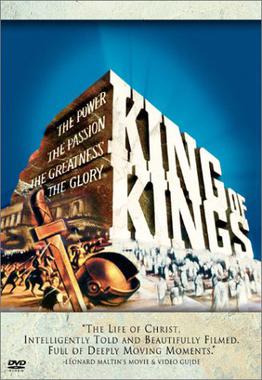
This is the story of Jesus (Jeffrey Hunter), a man who grew up in tumultuous times in Judea as Roman occupiers keep the Jewish/Hebrew people oppressed under their thumb. Revolts and rebellions rise up from year to year as Judea seeks its freedom, its independence to get away from the control of the Roman empire. Into this world, Jesus grows up into manhood ready to do his life's calling. Having worked his entire life and living in the Galilean town of Nazareth as a carpenter, Jesus in his late 20's ventures out into the world to embrace his calling as the messiah, the son of God who will teach the world how to live. It is a message that preaches peace but will no doubt send ripples throughout the Roman empire. As Jesus travels around the country with a small group of disciples, his name, his message and his words begin to spread. His followers increase, but so does the danger around him as many want nothing more than to kill him before he becomes too dangerous.
A plot description for a film about the life of Jesus Christ is pretty unnecessary, but I had to lay things out at least a little bit. In the age of the historical film epic, this entry from director Nicholas Ray has always been one of my favorites. I grew up watching it with my Mom every spring, and even years later, it holds up. If anything, I liked it more as a 29-year old viewer as opposed to a 10-year old kid. A whole lot of history is covered in 168 minutes but things never feel rushed. 'King' was filmed on-location in Spain with countless lavish sets and natural backdrops adding an incredibly authentic feel to the proceedings. The TCM print shown on Easter looked PHENOMENAL. Just a stunningly good-looking visual movie. The musical score from composer Miklos Rozsa is pretty perfect too, big and booming mixed in with softer, quieter and just as effective emotional moments. Listen to a sample HERE.
What struck me most in this 1961 epic about Jesus is that...well, it isn't just about Jesus. Ray and writer Philip Yordan use Jesus, his life and his teachings to tell a story about the times this man lived his life. Yes, the focus is on him, but it isn't exclusively focused on him. The casting is very solid with Jeffrey Hunter playing Jesus. Up there with The Searchers as his most famous, respected and recognizable role, Hunter does an excellent job here. It isn't the most human part, but that's not his fault. Hunter is sincere and likable and genuine with a script that keys in on Jesus' teachings more than getting to know the man as a person, as an individual. What works so well is the quieter moments and the impact we see as viewers that this man has on those around him, both the believers and the non-believers. Hunter never became the huge star he could have before his tragic death in 1969, but performances like this show his acting skill.
Four years later, a similarly-themed Jesus epic -- The Greatest Story Ever Told -- would set the bar for ridiculously overdone all-star casts. That ain't the case here. Ray fills out some major roles with recognizable faces and some stars, but this is even't close to being considered an all-star cast. Oh, and that's a good thing. The best supporting part goes to Ron Randell as Lucius, a Roman officer in the garrison at Jerusalem tasked with figuring out if Jesus is a threat to be dealt with. A human, questioning part, and a really good one. Next up, Irish actress Siobhan McKenna as Mary, Jesus' mother, making the character memorable with just a few quick scenes. And then there's the most recognizable face, Robert Ryan getting a meaty part as John the Baptist, a prophet more fiery than Jesus but who preaches the same peaceful message, one predicting the coming of the Son of God.
Who else to look for? If you're familiar with Jesus and the gospels, you know the names. Also in the cast are Pontius Pilate (Hurd Hatfield), Roman governor of Judea, Claudia (Viveca Lindfors), Pilate's more open-minded wife, Herod Antipas (Frank Thring), the Judean governor, his wife, Herodias (Rita Gam), and his stepdaughter, Salome (Brigid Bazlen), disciples Peter (Royal Dano) and Judas (Rip Torn), Barabbas (Harry Guardino), and Mary Magdalene (Carmen Sevilla).
Working consistently throughout the 1950s, director Ray carved a niche for himself as a director of smaller scale human dramas. A biblical epic about Jesus? Not his usual cup of tea. For all the immense scale though, it is the softer, quieter scenes that work. Quick montages of Jesus' miracles set to Rozsa's score are beautiful and effective. The sermon on the mount boasts all sorts of massive scale but is effective because of the dialogue and Hunter's acting. Certain events are glossed over more than others with a bigger focus late on the Passion and Resurrection. Obviously not nearly as graphic as the Passion of the Christ, it remains a moving finale.
King of Kings works because it doesn't try to be gigantically epic. It is content to tell a big story -- maybe history's BIGGEST story -- and to tell it well. Well worth it though, definitely worth checking out. Also listen for Ray Bradbury's uncredited narration, Orson Welles reading said narration, and future familiar face from the spaghetti western genre, Aldo Sambrell, making his screen debut.
King of Kings (1961): ****/****
Wednesday, July 23, 2014
100 Rifles
.jpg)
It's 1912 somewhere south of the Rio Grande in Mexico, and an Arizona lawman, Lyedecker (Jim Brown), has no idea what he's ridden into. Looking to keep his sheriff position on a permanent basis, Lyedecker has been tasked with arresting and bringing back an outlaw who stole some $6,000 from an Arizona bank. He actually finds the outlaw, a Mexican-half breed, Yaqui Joe (Burt Reynolds), in a small town but quickly finds out that Joe is wanted by the Mexican army as well. Now, Lyedecker finds himself working with the man he's supposed to arrest, but desperate times call for desperate measures. With an ethnic-cleansing minded general, Verdugo (Fernando Lamas), on their trail, Lyedecker and Joe race across the frontier. The key to them getting away? It may be a fiery Mexican girl, Sarita (Raquel Welch), fighting with the revolutionaries against Verdugo's forces.
Okay, let's get this out of the way. This is an entertaining, always interesting quasi-spaghetti western, but that doesn't necessarily mean it's good. The story drifts along with a series of episodic showdowns and some cool characters over a 110-minute running time. Any criticisms aside though, this is an excellent, action-packed shoot 'em up that western and action fans will certainly enjoy. Filming on location in Almeria, spaghetti western fans will no doubt recognize some of the on-location shooting. Maybe the best thing you can take away from '100' is the score from composer Jerry Goldsmith. Listen to an extended sample HERE, the best part of the theme kicking in about 40 seconds in and then again at 1:55. It's an underrated score, one of my favorites, a great whistle-worthy theme. The score was recycled seven years later in the 1976 western The Last Hard Men.
Nothing flashy but always enjoyable, '100' is a good example of a Zapata western, westerns with similar themes and stories involving the Mexican Revolution. We get all the familiar faces, genre archetypes you get used to seeing with enough viewing. The Mexican bandit/fighter is Yaqui Joe, the outsider, usually an American thrust into the fighting, Lyedecker, the fiery revolutionary, Sarita, the evil general, Verdugo, the German military adviser, Lt. Franz Von Klemme (Eric Braeden), and the American businessman working with the developing railroad, Grimes (Dan O'Herlihy). Like the better Zapata westerns, '100' covers a lot of ground with plenty of interesting characters. They're drawn in broad strokes, the good if flawed (Lyedecker, Joe, Sarita), the bad (Verdugo) and the messy gray middle ground (Von Klemme, Grimes). It is all familiar, but it is fun.
What ends up being the best part of '100' is the buddy dynamic between Jim Brown's stubborn sheriff and Burt Reynolds' fun-loving, live on the edge bandito. They don't like each other in the least, but their constant arguing, the never-ending bitching and moaning is pitch perfect, especially when they're thrown right in the mix of all the fighting. Yaqui Joe (half-American, half-Indian) actually used his stolen $6,000 to buy 100 rifles for the revolution, but Lydecker still intends to bring him back for trial. The only way to do it? Help Joe escape from the Mexican army. The rest of the cast is okay to bad. The worst? Welch, sporting a stereotypically heavy Mexican accent as Sarita. She's given any number of chances to undress or wear little -- including one shower scene while wearing clothes -- but this wasn't her best work. Lamas evils it up in impeccable fashion, thick mustache, constant sneer and pearl-handled pistols completing the look.
Who else to look for? Braeden is underused as Lt. Von Klemme, a military adviser who sees the mistakes Verdugo is making with each passing day. O'Herlihy is solid too as the greedy American businessman, interested in making the railroad money and keeping his locomotive intact. Also look for Michael Forest as Humara, Sarita's muscle-bound enforcer who doesn't speak a word, and spaghetti western regular Aldo Sambrell as Sgt. Paletes, Verdugo's trustworthy non-commissioned officer.
Onto the action! And let me tell you, there's plenty of it. The story drifts along at times, a series of quick dialogue scenes broken up by said action scenes. Lots of gunplay, some good chases, all of it handled well with only an occasional slow-motion death here and there. We get the small-scale like Brown and Reynolds having a good knock-down fight about halfway through. On the far bigger scale, we see an ambush of a heavily guarded train in a seemingly empty desert, all of it leading to the epic final showdown in another well-guarded town. Is this a great movie? Far from it, but I'm always entertained, and Reynolds especially makes it worthwhile. He commits himself to the fun, and it always looks like he's actually having fun. A good, solid almost spaghetti western.
100 Rifles (1969): ***/****
Friday, May 9, 2014
A Fistful of Dollars

In the small, south of the border town of San Miguel, a nameless gunfighter (Clint Eastwood) rides into town and promptly catches the attention of three gunfighters. He callously shoots them down in the street and heads to the saloon. There he meets the saloon owner, Silvanito (Jose Calvo), who fills him in on the town and its background. Things are run by two warring families, the Rojos, three brothers led by the maniacal, Ramon (Gian Maria Volonte), and the Baxters, led by the town sheriff, John (Wolfgang Lukschy). The two families are always going at it, and the mysterious gunfighter sits directly in the middle. Seeing a chance to make some serious money, the gunman pits the two families against each other, his job made that much easier when a troop of Mexican cavalry rides into San Miguel transporting a gold shipment headed for the U.S.
Wow, what a movie from director Sergio Leone as he kicks off his Dollars trilogy. A director with a handful of films to his name -- some credited, some not -- Leone put his name on the map with this western. This is unlike just about any western that came before it. Leave it to an Italian director working in Spain with an international cast and crew to rewrite the most American of genres. Tweaking Akira Kurosaw's Yojimbo, this is dark, dirty, brutally sadistic and cynical from the characters to the story and everything in between. There aren't so much good guys and bad guys, just less bad guys. No one is safe. The violence is aggressive, stylish and in your face. 'Fistful' helped propel the western into a new age, Leone's For a Few Dollars More and The Good, the Bad and the Ugly hitting theaters in the two years following. It all started here, and it starts in a big way.
A recognizable face from TV's Rawhide, Clint Eastwood was far from a star in 1964. He was a definite TV star and had some supporting parts in films, but in 1964, he signed on to star in this Euro-western with a director he knew little about. What a wise decision it was, Eastwood propelling to international stardom thanks in great part to the Leone westerns. This is the definition of a western anti-hero. He isn't typically interested in what's right or living up to his word. He's looking to survive, make some money and move on. He earned the nickname the Man with No Name -- he's called Joe here, Manco and Blondie in the other Dollars movies -- for these movies, a gunfighter and drifter who moves from job to job. For the most part, he's a man of few words, typically letting his six-shooter do his talking. He squints and stares, sometimes revealing that "I'm up to something" smirk.
Much of the character is in the visual. Eastwood's Man with No Name wears a hat pulled down tight on his head, a long poncho over his frame, a calfskin vest and denim shirt, tight blue jeans, and plain boots with his gunbelt worn low on his hip. His face is covered in a short beard, almost a five-o'clock shadow. Talk about doing a 180 from the typical white hat-wearing western hero. That's a big part of the spaghettis appeal, credit going to Leone in general. The west was hot, dirty and sweaty, and it reflects in the look of the movie. The Almeria locations, the wardrobes, the town sets, all these little things add up to the success of the movie. Oh, and there's that composer, Ennio Morricone, turning in a memorable score that he would top with the next two movies. A good score, but he would set the bar high with each passing movie. Listen to an extended sample HERE. It's all those little things that add up from the look to the style to soundtrack to the stylish opening credits, and they all add up here nicely.
Working again with Leone a year later as the villain in For a Few Dollars More, Volonte became one of the all-time great western villains as the psychotic, pot-smoking Indio. It took that crazy performance to keep this performance in the background. Volonte delivers a gem of a part as Ramon Rojo, the fiery leader of the Rojo family. He's a brutal, calculating killer who's a dead-shot with a rifle. In Eastwood's Joe, he sees an expert gunman who can cause problems. Snake-like, sinister and creepy, a great lead performance. His brothers include Sieghardt Rupp and Antonio Prieto Puerto, his gang including spaghetti regulars Benito Stefanelli, Aldo Sambrell and Mario Brega. Along with Lukschy as the Baxter patriarch, look for Margarita Lozano as his wife and Bruno Carotenuto as their oldest son, Antonio.
In a lot of ways, 'Fistful' feels like a dry run for what's to come. The cynicism, the style, the characters, the shootouts, Leone would improve on it all over the next two movies. The gunfights are quick and harsh, and the finale as Joe stands down Ramon, his brothers and their gang shows that style that would become iconic in 'FAFDM' and 'GBU.' The close-ups, sometimes extreme close-ups of faces and eyes, the violent fanning of the gun for rapid fire effect. It's all there. Is it a great movie? No, but it's really good. A modern comparison is easy, Christopher Nolan's Batman trilogy. Batman Begins is a really good movie, but the next two movies are simply better. That said, the first one had to lay out the groundwork for what was to come. An excellent movie, a huge turning point for where westerns would go in the mid to late 1960s.
A Fistful of Dollars (1964): ***/****
Wednesday, March 28, 2012
Navajo Joe

At the head of a gang of bloodthirsty cutthroats and murdering scalphunters, a bandit named Duncan (Aldo Sambrell) leads a vicious attack on a peaceful Navajo village. Men, women and children are massacred, their scalps taken for $1 bounty each. Duncan's gang moves on, working with a corrupt town official, Dr. Lynne (Pierre Cressoy) to rob a train and his own town of over $500,000. The job seems simple enough, but a survivor of the massacre remains, one warrior named Joe (Reynolds), who appears and disappears around the gang, killing one, two and three men with each of his attacks. Duncan becomes obsessed with killing him, especially with all that money on the line.
As Reynolds has claimed, is this his worst part? No, there's much worse out there, but as a movie, this wouldn't be a great introduction to spaghetti westerns. Stick with the Sergio Leone movies first, and then move on to lesser known entries like this. From director Sergio Corbucci (the "Other Sergio"), 'Joe' is rougher, cynical, aggressively in your face, and brutal. Corbucci was a shoot from the hip kind of director, rogue-like behind the camera with touches of an amateur. His camera is always moving, the shooting angles are always a tad off, and they never have (his earlier films at least) the polish of the Leone films. None of that's a bad thing, just know what to expect from Mr. Corbucci. With Django, The Mercenary, Companeros, The Hellbenders, and The Great Silence, he's responsible for some of the best spaghetti westerns around so he's not a talent-less schlub behind the camera.
So how about Reynolds as a Navajo warrior dispatching a gang of scalphunters? It is far from his worst work, but it ain't a great performance either. It's far from his fault. The script for 'Joe' isn't exactly the most well-written thing around, with plot holes and jumps in story all over the place. The 30-year old actor does his best though, and to his credit he commits. It's more of a physical performance than real acting (although thankfully he doesn't try to pull off an Indian "accent"). He leaps all over the screen, shooting, stabbing, jumping, strangling Duncan's gang. There are some unintentionally funny lines -- not just Reynolds, the whole cast -- but above all else, Reynolds looks comfortable. Looking to avenge his wife's death amongst the massacre, Joe is not going to be slowed up, no matter the odds.
As his opponent, familiar spaghetti western face Aldo Sambrell doesn't disappoint as the vicious half-breed, Duncan. Usually relegated to supporting parts, filling out gangs or playing a sheriff or bounty hunter, Sambrell does not disappoint when he jumps into a starring role. His Duncan is a great spaghetti baddie, on the brink of lunacy with past demons threatening to tear him apart. His gang seems to fluctuate as needed -- anywhere between 20-50 guys -- all of them ending up being characters without names, mostly because of their personal, unique and eccentric looks. Some include Jeffrey (Lucio Rosato), Duncan's half-brother, Robledo (Lorenzo Robledo), the quick-draw, trick-shot specialist, Sancho (Alvaro de Luna), the knife fighter, and Monkey (Simon Arriaga), the former Confederate soldier, among many others. Also look for Fernando Rey as what else? A Mexican priest, a role he played fairly often in the spaghetti era. Nicoletta Machiavelli plays Estella, a half-breed woman (Mexican/Indian), who sides with Joe in his efforts.
Besides Reynolds in the starring role, the thing that has helped 'Joe' live on some 40-plus years later is Ennio Morricone's musical score. It is one of the more unique, quirky scores Morricone ever did, and that's saying something considering how many unique, quirky scores he did in spaghetti westerns. The main theme especially stands out, a woman chanting (seemingly in some sort of pain) before a male choir and instruments kick in. Give it a listen HERE. One of the best things going for the movie on its own, it's received a rebirth thanks to 1999's Election. A young Reese Witherspoon is running for her high school's student body president and in the voting process, tears down all her opponent's posters. What music is playing? Morricone's chanting choir score. Spot-on use of his music too. Watch one example HERE.
So watching this movie for the first time in five years or so, I didn't like it as much as I remembered. It's still good in that guilty pleasure sense, but it's not a classic. The selling point will be the action, and it's particularly brutal. Shooting, stabbing, even a death by scalpel. Navajo Joe alone takes out 26 -- by my count, it's probably light -- of Duncan's gang, who also have over 10 guys killed attacking a heavily guarded train. We see some uses of squibs, and with Corbucci's touch, it is fairly graphic. It isn't a great movie overall, but it is a fun movie, best to watch with some friends and have some laughs.
Navajo Joe <---trailer (1966): ** 1/2 /****
Subscribe to:
Posts (Atom)