One of those great Hollywood tough guys, Jack Palance was without a doubt, one of the best heavies around in film. He was great in those tough, can't keep down parts that ranged from heroes to dastardly villains, especially in 1953's Shane where he played one of the western genre's all-time great villains. So in the 1950s as he played a lot of anti-heroes, a lot of out-and-out bad guys, it's cool to see him in a well-told, somber western from 1957, The Lonely Man.
In a quiet, dusty western town, a man with quite the reputation, Jacob Wade (Palance), rides up the street looking to find someone. His reputation leans heavily toward the wrong side of the law, Wade gaining notoriety as a gunfighter, a killer, a bandit, and wherever he goes, that name precedes him. He finds the man he's looking for, Riley (Anthony Perkins), a young man, a bit of a loafer around town who goes about his own business quietly. Who is he? He's Wade's son, the son he hasn't seen in over 15 years since leaving him and the boy's mother, hitting the outlaw trail of sorts. After all those years apart though, Wade wants to do right by his son, setting him up with a ranch, some cattle. It will be small at first, but with some hard work, it can flourish....if Riley wants anything to do with his long-lost father's help. It's more than that though. Men from Wade's past are on his trail, men looking to exact revenge on the infamous gunslinger.
Well, here we sit. It is movies like this that make me such a huge fan of the western. There's nothing particularly out of this world unique, nothing you probably haven't seen in other, more well-known westerns over the years. And you know what? There's nothing wrong with that. From director Henry Levin, 'Lonely' is a well-told, old-fashioned story that I liked from the beginning. It gets to the core of what can be so right about westerns. Ultimately, it's about doing what's right, even if it'd be easier to turn and ride out. It's about living up to your word, standing by a friend when he's in trouble, and doing your damnedest to live up to what you should be whether it's loyal, honest or hard-working. As Davy Crockett said, 'Know you're right and go ahead.' In story terms, it doesn't get more straightforward than that.
We get that perspective that would be dealt with years later in movies like Ride the High Country, The Magnificent Seven and The Wild Bunch through the eyes of Palance's Jacob Wade (apparently not related to THIS Jake Wade). His outlaw is trying to put that outlaw past behind him, but that past may not allow it. He regrets the things he's done, the men he's killed, those he's put at risk. It may be too late to save himself, but in his son, there remains some sort of hope for a better future. Palance could be a gem at chewing the scenery, but he was at his best here when he underplays everything. He keeps it inside, the emotions brewing and waiting for an outburst. It is a part that brims with intensity, but it never comes over the top. The chemistry between Palance and Perkins is excellent, a father who wants to help the son he abandoned (supposedly), a son who wants nothing to do with the offer of help. The father-son dynamic works across most genres, and that's no different in the western.
Now that supporting cast. Yikes, just yikes. Some of those familiar faces would go onto bigger and better in the coming years, but that's our benefit. There's a very deep cast that western fans will definitely appreciate from top to bottom. Neville Brand gets the lead villain part as King Fisher, a former saloon owner who has a bullet he carries with Wade's name on it, some of the lead still in his leg. His gang includes Lee Van Cleef, Elisha Cook Jr., and Adam Williams. Robert Middleton has a strong, key supporting part as Ben Ryerson, a former member of Wade's gang, now riding with him trying to put the boy on the right track. There's also a quick part for Claude Akins, a former gang member looking for some "help" with John Doucette riding by his side. Even look for Denver Pyle in an early appearance as a sheriff who knows Wade's reputation.
There's some issues here, but nothing huge. The story is a tad slow, even at 88 minutes dragging in bits and pieces. The subplot with Elaine Aiken's Ada, a saloon girl who rode with Wade and wanted to settle down with him, doesn't develop as much as it could have. When Perkins' Riley shows some interest, I'd had about enough with that part of the story. For the most part though, things work and they work well. A somber, soft score permeates the emotionally-charged family story, and the locations in the Alabama Hills in California are a gorgeous backdrop to the developments across the board. It isn't a perfect western, but it is a really good one that genre fans will definitely enjoy. You pretty much know where it's building early on, but getting to the finale was part of the fun. An easy western to recommend.
The Lonely Man (1957): ***/****
The Sons of Katie Elder
"First, we reunite, then find Ma and Pa's killer...then read some reviews."
Showing posts with label Robert Middleton. Show all posts
Sunday, July 13, 2014
Wednesday, October 30, 2013
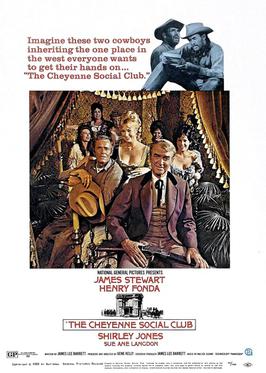
The Cheyenne Social Club
Two of Hollywood's most legendary stars, James Stewart and Henry Fonda starred together in 1968's Firecreek, a pretty solid western that pitted the two legends against each other as adversaries. Friends off the screen, the duo didn't wait long to team up again, working together on 1970's The Cheyenne Social Club.
It's 1867 in Texas and two cowboys, John O'Hanlan (Stewart) and Harley Sullivan (Fonda), are doing what they do best, punching cows on a cattle ranch, when John receives a long overdue telegram. His brother has died and has left him his business, an establishment called the Cheyenne Social Club in Wyoming. The cowboys saddle up and head north to see what's up, but they're in for a surprise. Upon arrival, they meet Jenny (Shirley Jones) at the club and quickly realize that the Cheyenne Social Club is actually a whorehouse. John had been dead set on being a property owner, but now he faces an ethical situation. Does he continue on as owner or does he switch things up, turn it into a boarding house? The city of Cheyenne may have something to say about that.
Considering the year this flick was released -- 1970 -- it's a bit of an oddity. Spaghetti westerns were still very popular in Europe, and in America a trend toward revisionist westerns with a darker tone was on the upward swing. How then does a fairly light, sexually suggestive story fit in? Surprisingly well. Oh, and the director is dancer/actor Gene Kelly?!? It's a weird, pretty out there formula that just works. It doesn't rewrite the genre, and it has its funny moments with some sexually suggestive dialogue. The tone is appropriate (light) with some darker moments late. It's been generally forgotten since its release in 1970, but it's a solid American western from an era where there just weren't many solid American westerns.
It doesn't take a nuclear scientist to figure out the main appeal here. The chemistry between Stewart and Fonda is on display here from the opening scene. Stewart does what he does best, a sort of prickly, high-voiced cowboy with some eccentricities. Mostly though, he'd just like to have something of his own in terms of property, a business, some land. Fonda's Harley reminded me of his part in The Rounders (with Glenn Ford), an easy-going, even laconic cowboy who goes with the wind. He's talkative, rambling on almost incessantly, completely oblivious that he's even doing it. His Harley just enjoys life for the little things and goes with the flow. Their cowboy partnership working cattle drives and ranches together goes back 10 years (apparently they avoided the Civil War entirely), a history that's hinted at more than directly addressed. It's two pros doing their thing perfectly and carrying a movie in the process.
I liked the dynamic between the two veteran cowboys and their surprise gaggle of high-class hookers. A pre-Partridge Family Shirley Jones is excellent as Jenny, the head girl at the Social Club who ends up going toe-to-toe with Stewart's John. Her girls of the night include Opal Ann (Sue Ane Langdon), who takes a shining to Harley, Pauline (Elaine Devry), Carrie Virginia (Jackie Russell), Annie Jo (Jackie Joseph), and Sara Jean (Sharon DeBord). Also look for Robert Middleton as an amiable and angry bartender, Arch Johnson as Cheyenne's sheriff, Robert J. Wilke as a revenge-seeking gunslinger and Dabbs Greer as John's lawyer.
As a western, I liked the message 'Club' goes for. Stewart's John begins to question what he really wants to do with his life. He delivers a good monologue late laying it all out. The longtime friendship comes under fire late when John goes after the wrong man in town, setting his family down on Cheyenne and the Social Club. That's really the only action on display in the 102-minute movie, but it's an enjoyable action set piece. It's a good movie I'm having trouble analyzing. Maybe it's not meant to be. If you like westerns, James Stewart and Henry Fonda, you'll like this one.
The Cheyenne Social Club (1970): ***/****
It's 1867 in Texas and two cowboys, John O'Hanlan (Stewart) and Harley Sullivan (Fonda), are doing what they do best, punching cows on a cattle ranch, when John receives a long overdue telegram. His brother has died and has left him his business, an establishment called the Cheyenne Social Club in Wyoming. The cowboys saddle up and head north to see what's up, but they're in for a surprise. Upon arrival, they meet Jenny (Shirley Jones) at the club and quickly realize that the Cheyenne Social Club is actually a whorehouse. John had been dead set on being a property owner, but now he faces an ethical situation. Does he continue on as owner or does he switch things up, turn it into a boarding house? The city of Cheyenne may have something to say about that.
Considering the year this flick was released -- 1970 -- it's a bit of an oddity. Spaghetti westerns were still very popular in Europe, and in America a trend toward revisionist westerns with a darker tone was on the upward swing. How then does a fairly light, sexually suggestive story fit in? Surprisingly well. Oh, and the director is dancer/actor Gene Kelly?!? It's a weird, pretty out there formula that just works. It doesn't rewrite the genre, and it has its funny moments with some sexually suggestive dialogue. The tone is appropriate (light) with some darker moments late. It's been generally forgotten since its release in 1970, but it's a solid American western from an era where there just weren't many solid American westerns.
It doesn't take a nuclear scientist to figure out the main appeal here. The chemistry between Stewart and Fonda is on display here from the opening scene. Stewart does what he does best, a sort of prickly, high-voiced cowboy with some eccentricities. Mostly though, he'd just like to have something of his own in terms of property, a business, some land. Fonda's Harley reminded me of his part in The Rounders (with Glenn Ford), an easy-going, even laconic cowboy who goes with the wind. He's talkative, rambling on almost incessantly, completely oblivious that he's even doing it. His Harley just enjoys life for the little things and goes with the flow. Their cowboy partnership working cattle drives and ranches together goes back 10 years (apparently they avoided the Civil War entirely), a history that's hinted at more than directly addressed. It's two pros doing their thing perfectly and carrying a movie in the process.
I liked the dynamic between the two veteran cowboys and their surprise gaggle of high-class hookers. A pre-Partridge Family Shirley Jones is excellent as Jenny, the head girl at the Social Club who ends up going toe-to-toe with Stewart's John. Her girls of the night include Opal Ann (Sue Ane Langdon), who takes a shining to Harley, Pauline (Elaine Devry), Carrie Virginia (Jackie Russell), Annie Jo (Jackie Joseph), and Sara Jean (Sharon DeBord). Also look for Robert Middleton as an amiable and angry bartender, Arch Johnson as Cheyenne's sheriff, Robert J. Wilke as a revenge-seeking gunslinger and Dabbs Greer as John's lawyer.
As a western, I liked the message 'Club' goes for. Stewart's John begins to question what he really wants to do with his life. He delivers a good monologue late laying it all out. The longtime friendship comes under fire late when John goes after the wrong man in town, setting his family down on Cheyenne and the Social Club. That's really the only action on display in the 102-minute movie, but it's an enjoyable action set piece. It's a good movie I'm having trouble analyzing. Maybe it's not meant to be. If you like westerns, James Stewart and Henry Fonda, you'll like this one.
The Cheyenne Social Club (1970): ***/****
Labels:
1970s,
Gene Kelly,
Henry Fonda,
James Stewart,
Robert J. Wilke,
Robert Middleton,
westerns
Friday, April 19, 2013
The Proud Ones
What's the more iconic figure from the wild wild west, the sheriff/marshal or the cowboy? My first thought is the cowboy, but I'm safe picking either one. Yes, I'm the judge and jury here so deal with it. Countless westerns have dealt with both figures, some better than others, but 1956's The Proud Ones is a generally forgotten gem, the story of a small-town sheriff.
The sheriff of a small Kansas town, Cass Silver (Robert Ryan) is expecting trouble. The town has managed to avoid violence and bloodshed for years, but that's about to change. A new railroad line has made the town an important cattle depot, meaning cattle drives can now use Cass' town as a destination. The first herd is due any day now, and along with them comes Honest John Barrett (Robert Middleton), a saloon owner who has quite the checkered past with Cass as a marshal. Barrett sees the town as a gold mine, the potential for money and riches just waiting at his fingertips. His problem? Cass knows how he operates and doesn't intend to be intimidated by him. The experienced lawman braces for Barrett's plan while also weighing how much a new deputy, Thad Anderson (Jeffrey Hunter), can help. Anderson too has his own secrets, one that could doom them all.
The 1950s were packed to the gills with westerns hitting theaters from bigger budget A-level movies with smaller scale, cheaper B-movies. From director Robert D. Webb, 'Proud' is a better, more enjoyable western because it falls in between the two. It's familiar stuff, the town sheriff protecting his town, his word and his honor against a power-hungry businessman. Familiar isn't bad. There's some solid casting with some A-list names, but they're not there for the sake of star power. The story is mostly relegated to the town set which looks a lot like the set from The Ox-Bow Incident (from 13 years earlier), but the crowded streets with bars, businesses and alleys ending up being a key ingredient to the escalating situation. I also really liked Lionel Newman's score, a combination of soft and subtle -- especially Cass' whistle theme, listen HERE -- with bigger, louder outbursts in tense action scenes. It's a lot of little things again, but combined together it works out nicely.
By 1956, Robert Ryan was an established star in Hollywood, a reliable tough guy know for his villainous roles but also his ability to play flawed heroes. Playing veteran marshal Cass Silver, Ryan's part definitely falls into that second category. He's good at what he goes, but his past is checkered to say the least, thanks in great part to his history with Middleton's Honest John (Get it? It's ironic!). Silver has a tenuous relationship with saloon girl turned restaurant owner Sally (always reliable Virginia Mayo) and has a definite future with her, if he can get out of town and his job alive. In a semi-interesting but still unnecessary twist, Cass also gets knocked over the head and starts experiencing headaches that render him temporarily blind. It seems like something more worthy of a spaghetti western. Isolated and all but on his own, Cass might fight for what he believes in, what's right and upholding his word. I liked the main character a lot, and behind him, things fall into place nicely.
Presenting the town marshal as a main character in a western is nothing new, but I liked what Webb did just the same. 'Proud' had to be an influence on Howard Hawks who three years later with Rio Bravo would make a western with some similar undertones (and some less subtle connections). Cass has two deputies, Jake (Walter Brennan, basically playing the same role he'd play in Rio Bravo), the old jailer trying to keep Cass on his toes, and Jim (Arthur O'Connell), the doting father worried about his expecting wife. There's also a great dynamic between Silver and Hunter's Thad Anderson, the cowboy turned deputy. He blames Silver for his father's death, but he doesn't know all the facts. It's not quite a father-son relationship that develops -- maybe more of a brotherly relationship -- but it's fun to watch Silver keep working with the young deputy, not knowing if he'll get a bullet in his back whenever he turns away.
Rounding out the leads, Middleton is smooth and slimy as Honest John, wanting to get his way no matter what or who stands in his way. In this case, his means to an end is to hire "friends," Pike (Ken Clark) and Chico (Rodolfo Acosta), gunfighters waiting to shoot Cass in the back. In a smaller role that basically has her disappear after an early intro, Mayo fits in well as Sally, Silver's girlfriend who worries about his pride costing him his life.
Released in 1956, 'Proud' is surprisingly dark for an American western of the time. It delves into greed, backstabbing, betrayal and out and out murder. Even cynicism is evident almost from the first scene on. Trying to live up to his job and his word, Cass sees the town turn to Sodom and Gomorrah once there is any sort of money on the line, in this case lots and lots of money. The gunfights are quick and hard-hitting, and the finale in a dark, claustrophobic barn features the earliest use of blood squibs I've ever seen. One character gets shot in the face, another in the head, blood shooting out on impact. It's a western I don't hear much about, but I liked it from the start. Highly recommended.
The Proud Ones (1956): ***/****
The sheriff of a small Kansas town, Cass Silver (Robert Ryan) is expecting trouble. The town has managed to avoid violence and bloodshed for years, but that's about to change. A new railroad line has made the town an important cattle depot, meaning cattle drives can now use Cass' town as a destination. The first herd is due any day now, and along with them comes Honest John Barrett (Robert Middleton), a saloon owner who has quite the checkered past with Cass as a marshal. Barrett sees the town as a gold mine, the potential for money and riches just waiting at his fingertips. His problem? Cass knows how he operates and doesn't intend to be intimidated by him. The experienced lawman braces for Barrett's plan while also weighing how much a new deputy, Thad Anderson (Jeffrey Hunter), can help. Anderson too has his own secrets, one that could doom them all.
The 1950s were packed to the gills with westerns hitting theaters from bigger budget A-level movies with smaller scale, cheaper B-movies. From director Robert D. Webb, 'Proud' is a better, more enjoyable western because it falls in between the two. It's familiar stuff, the town sheriff protecting his town, his word and his honor against a power-hungry businessman. Familiar isn't bad. There's some solid casting with some A-list names, but they're not there for the sake of star power. The story is mostly relegated to the town set which looks a lot like the set from The Ox-Bow Incident (from 13 years earlier), but the crowded streets with bars, businesses and alleys ending up being a key ingredient to the escalating situation. I also really liked Lionel Newman's score, a combination of soft and subtle -- especially Cass' whistle theme, listen HERE -- with bigger, louder outbursts in tense action scenes. It's a lot of little things again, but combined together it works out nicely.
By 1956, Robert Ryan was an established star in Hollywood, a reliable tough guy know for his villainous roles but also his ability to play flawed heroes. Playing veteran marshal Cass Silver, Ryan's part definitely falls into that second category. He's good at what he goes, but his past is checkered to say the least, thanks in great part to his history with Middleton's Honest John (Get it? It's ironic!). Silver has a tenuous relationship with saloon girl turned restaurant owner Sally (always reliable Virginia Mayo) and has a definite future with her, if he can get out of town and his job alive. In a semi-interesting but still unnecessary twist, Cass also gets knocked over the head and starts experiencing headaches that render him temporarily blind. It seems like something more worthy of a spaghetti western. Isolated and all but on his own, Cass might fight for what he believes in, what's right and upholding his word. I liked the main character a lot, and behind him, things fall into place nicely.
Presenting the town marshal as a main character in a western is nothing new, but I liked what Webb did just the same. 'Proud' had to be an influence on Howard Hawks who three years later with Rio Bravo would make a western with some similar undertones (and some less subtle connections). Cass has two deputies, Jake (Walter Brennan, basically playing the same role he'd play in Rio Bravo), the old jailer trying to keep Cass on his toes, and Jim (Arthur O'Connell), the doting father worried about his expecting wife. There's also a great dynamic between Silver and Hunter's Thad Anderson, the cowboy turned deputy. He blames Silver for his father's death, but he doesn't know all the facts. It's not quite a father-son relationship that develops -- maybe more of a brotherly relationship -- but it's fun to watch Silver keep working with the young deputy, not knowing if he'll get a bullet in his back whenever he turns away.
Rounding out the leads, Middleton is smooth and slimy as Honest John, wanting to get his way no matter what or who stands in his way. In this case, his means to an end is to hire "friends," Pike (Ken Clark) and Chico (Rodolfo Acosta), gunfighters waiting to shoot Cass in the back. In a smaller role that basically has her disappear after an early intro, Mayo fits in well as Sally, Silver's girlfriend who worries about his pride costing him his life.
Released in 1956, 'Proud' is surprisingly dark for an American western of the time. It delves into greed, backstabbing, betrayal and out and out murder. Even cynicism is evident almost from the first scene on. Trying to live up to his job and his word, Cass sees the town turn to Sodom and Gomorrah once there is any sort of money on the line, in this case lots and lots of money. The gunfights are quick and hard-hitting, and the finale in a dark, claustrophobic barn features the earliest use of blood squibs I've ever seen. One character gets shot in the face, another in the head, blood shooting out on impact. It's a western I don't hear much about, but I liked it from the start. Highly recommended.
The Proud Ones (1956): ***/****
Sunday, August 19, 2012
Trial
The system at its purest should always work. Yes, a pretentious "message" lede that I apologize for, but I've got nothing else. Government, politics and and the right to a fair trial are all ideal in their execution. It's when the human element is added that things get tricky, like 1955's Trial, a solid if somewhat meandering look at not only a courtroom case, but the sinister, sniveling grab for power in the background far from the court.
A law professor at a California university, David Blake (Glenn Ford) is in a jam. He's never actually had a court case so his superiors demand that if he wants to keep his job he must get some actual courtroom experience. Every lawyer and firm in town slams a door in his face except one, that of Barney Castle (Arthur Kennedy) who takes him on for an upcoming controversial murder case. A Mexican teenager, Angel Chavez (Rafael Campos), has been accused of murdering a white teenage girl, and things don't look good. Looking for experience and genuinely believing in the boy's innocence, David takes the case only to discover there's much more to the judicial system than knowing a law book.
What impressed me most about this Mark Robson-directed courtroom drama is that for much of its 105-minute running time, 'Trial' is less than interested in whether or not Angel actually committed the crime. His guilt or innocence is almost secondary. This is a story about the inner-workings of the system, how things get done not by what's right, but by who is able to tweak the system to their advantage. While obviously dealing with different subjects, 'Trial' reminds me in tone of Billy Wilder's Ace in the Hole. Not quite as dark -- especially in the ending here -- it still has a cynical, dark and jaded look at the people involved, at the individual and how simple and easy it is to manipulate the system.
Maybe in 2012, none of this should come as a surprise, but Robson's film is at its most effective in those very moments. When we meet Kennedy's Barney, he seems like a genuinely good guy willing to fight for the underdog and give this inexperienced lawyer a shot. Yeah, not even close. Everything in this world is a selfish, me-first type attitude. Robert Middleton's A.A. 'Fat Stamps, the county sheriff, will say and do anything that helps him get re-elected. Supremacist groups make the possible murder into a race riot, not a simple encounter gone wrong. Barney stirs up the masses wherever he goes, almost making Angel into a martyr before his guilt is decided. He manipulates Angel's mother (Katy Jurado) to embrace her Mexican culture for a sympathetic plea. The actual guilt or innocence steps to the forefront late, but the movie is at its best leading up to that.
Unfortunately a little more than halfway through 'Trial,' a big old curveball is thrown at us as an audience. It's timely for 1955, but overbearing and heavy-handed now. Yes, you guessed it. COMMUNISM!!!!! I won't go into specifics here as to how communism is involved, but there are ulterior motives working all over the place, all of them hamstringing an otherwise very solid courtroom drama. The last 45 minutes are slowed down significantly as communism rears its ugly head. We get it, Red Scare, Stalin, evil Russkies, but it feels overly forced here. On top of that, the ending forces a nice, happy conclusion on us, one that seems far-fetched for the story and out of left field.
Thankfully through all that craziness, the cast is uniformly above average. Chalk up another positive part for Glenn Ford, his David Blake an idealist who believes and has faith in the judicial system. When he sees it for what it really is? He's not naive anymore, just pissed. Like most of his roles, it comes across naturally, a tortured individual weighing all his options. His relationship with Barney's assistant, Abbe (Dorothy McGuire), is a bright spot too. Kennedy does what he does best, sneers and snivels and is generally as slimy as humanly possible. John Hodiak is Armstrong, the district attorney primed for bigger and better things down the road, making the most of a smaller, one-note performance. Along with Jurado and Middleton in supporting parts, Juano Hernandez is a scene-stealer as Judge Motley, an African American judge presiding over the case who must deal with prejudices and assumptions of everyone around him, especially on a racially charged case like this.
I've got mixed emotions about this movie. The parts I did like, I really liked. Ford and a deep cast are very watchable are solid throughout, even the portions of the movie that are too timely for their own good. In the end, the negatives prevent it from reaching its potential. Still a very worthwhile movie to seek out, but it never quite reaches the heights it could and should have.
Trial <---TCM clips (1955): ** 1/2 /****
A law professor at a California university, David Blake (Glenn Ford) is in a jam. He's never actually had a court case so his superiors demand that if he wants to keep his job he must get some actual courtroom experience. Every lawyer and firm in town slams a door in his face except one, that of Barney Castle (Arthur Kennedy) who takes him on for an upcoming controversial murder case. A Mexican teenager, Angel Chavez (Rafael Campos), has been accused of murdering a white teenage girl, and things don't look good. Looking for experience and genuinely believing in the boy's innocence, David takes the case only to discover there's much more to the judicial system than knowing a law book.
What impressed me most about this Mark Robson-directed courtroom drama is that for much of its 105-minute running time, 'Trial' is less than interested in whether or not Angel actually committed the crime. His guilt or innocence is almost secondary. This is a story about the inner-workings of the system, how things get done not by what's right, but by who is able to tweak the system to their advantage. While obviously dealing with different subjects, 'Trial' reminds me in tone of Billy Wilder's Ace in the Hole. Not quite as dark -- especially in the ending here -- it still has a cynical, dark and jaded look at the people involved, at the individual and how simple and easy it is to manipulate the system.
Maybe in 2012, none of this should come as a surprise, but Robson's film is at its most effective in those very moments. When we meet Kennedy's Barney, he seems like a genuinely good guy willing to fight for the underdog and give this inexperienced lawyer a shot. Yeah, not even close. Everything in this world is a selfish, me-first type attitude. Robert Middleton's A.A. 'Fat Stamps, the county sheriff, will say and do anything that helps him get re-elected. Supremacist groups make the possible murder into a race riot, not a simple encounter gone wrong. Barney stirs up the masses wherever he goes, almost making Angel into a martyr before his guilt is decided. He manipulates Angel's mother (Katy Jurado) to embrace her Mexican culture for a sympathetic plea. The actual guilt or innocence steps to the forefront late, but the movie is at its best leading up to that.
Unfortunately a little more than halfway through 'Trial,' a big old curveball is thrown at us as an audience. It's timely for 1955, but overbearing and heavy-handed now. Yes, you guessed it. COMMUNISM!!!!! I won't go into specifics here as to how communism is involved, but there are ulterior motives working all over the place, all of them hamstringing an otherwise very solid courtroom drama. The last 45 minutes are slowed down significantly as communism rears its ugly head. We get it, Red Scare, Stalin, evil Russkies, but it feels overly forced here. On top of that, the ending forces a nice, happy conclusion on us, one that seems far-fetched for the story and out of left field.
Thankfully through all that craziness, the cast is uniformly above average. Chalk up another positive part for Glenn Ford, his David Blake an idealist who believes and has faith in the judicial system. When he sees it for what it really is? He's not naive anymore, just pissed. Like most of his roles, it comes across naturally, a tortured individual weighing all his options. His relationship with Barney's assistant, Abbe (Dorothy McGuire), is a bright spot too. Kennedy does what he does best, sneers and snivels and is generally as slimy as humanly possible. John Hodiak is Armstrong, the district attorney primed for bigger and better things down the road, making the most of a smaller, one-note performance. Along with Jurado and Middleton in supporting parts, Juano Hernandez is a scene-stealer as Judge Motley, an African American judge presiding over the case who must deal with prejudices and assumptions of everyone around him, especially on a racially charged case like this.
I've got mixed emotions about this movie. The parts I did like, I really liked. Ford and a deep cast are very watchable are solid throughout, even the portions of the movie that are too timely for their own good. In the end, the negatives prevent it from reaching its potential. Still a very worthwhile movie to seek out, but it never quite reaches the heights it could and should have.
Trial <---TCM clips (1955): ** 1/2 /****
Wednesday, February 22, 2012
Gold of the Seven Saints
For better or worse, when I hear the name Roger Moore, I think of James Bond. To be fair, I do that with all the actors to play 007. Unfortunately typecast -- like Connery, Dalton and possibly Craig -- for one part, it's easy to forget that Moore was a solid actor before and after his Bond days. As a fan of Moore no matter the part, I was pleasantly surprised to stumble across a western he starred in, 1961's Gold of the Seven Saints.
Partners in trapping furs for three-plus years, Jim Rainbolt (Clint Walker) and Shawn Garrett (Moore) have hit it big, finding a gold vein in a creek that produced over 250 pounds of gold dust and nuggets. Trying to get the gold to a town, the partners are in trouble. Shawn gets caught stealing a horse to help carry the gold and is forced to buy that horse...with a gold nugget. Now people in this little western town know gold is in the area. Racing across the desert, Jim and Shawn must keep ahead of a murdering gang led by McCracken (Gene Evans). They pick up a third partner along the way, a drunken doctor, Gates (Chill Wills), and find themselves with little water and supplies, the gang drawing ever closer.
Thanks to Turner Classic Movies I found this western by accident recently, and am I glad I did. From underrated director Gordon Douglas, 'Gold' is a hidden gem lost in a sea of bad westerns from the 1950s and 1960s. It is shot on location in Dead Horse Point State Park (along the Colorado River), Arches National Park, and Red Rock Canyon State Park and offers some of the most stunning views I've ever seen in a western. Filmed in black and white, it looks amazing, but I can't help but wonder what it would have looked like in color. The story though is what sets it apart, and not for the reasons you'd think. For all the twisting and turning so many movies offer, 'Gold' is on the straight and narrow, good vs. bad to a point but more so survival and greed.
Throw large amounts of gold into any equation, and you can sit back and watch the fireworks go off. Treasure of the Sierra Madre showed that the best, greed can make men do a lot of bad things. 'Gold' early on though is as simplistic as they come (and for the better), an extended chase as Jim and Shawn desperately try to make a getaway with their hard-earned treasure. Evans' McCracken is a particularly nasty opponent, willing to dispatch anyone in his way, and even Jim's old friend, Gondora (Robert Middleton), a bandit turned "respectable" rancher, has his eyes set on the gold. There isn't anything flashy about the story and how it develops, we know eventually Jim and Shawn will have to defend their gold, but getting there can be a lot of fun. It isn't just good and bad as I mentioned before. 'Gold' has just enough of a darker, more cynical side to help it rise above the rest.
One of the key character elements to come out of the western maybe more than any other genre is the two partners, the sidekicks, the friends who back each other through thick and thin. Nearing the end of his run on TV's Cheyenne, Walker paired with a very young-looking Moore (he was 34 at the time) is a great pair in the vein of any number of western buddies. Yes, it's the buddy western relationship. At first glance, the pairing of Walker -- built like an NFL linebacker -- and the very-British Moore wouldn't seem to work, but it does. They're partners and friends first and foremost, arguing and talking like two people who have worked together for several years. They bitch and moan at each other, poking fun, but mostly they look out and back each other when the chips are down. And there's just a bit...a bit...of tension to keep things interesting, especially when a woman (curvy Leticia Roman) is involved.
I was a little worried when Middleton's Gondora arrived in the story, but it adds another dimension in the second half of this 88-minute flick. The last half hour is the darker part of the story, all the different individuals coming together to fight it out for many lifetime's worth of gold. The ending has a surprising twist of fate, but not a cruel one, the movie ending on a still positive note. The supporting performances are good, Wills hamming it up as the drunken doctor (he did this part a lot and excelled at it), Middleton the larger than life bandit who loves money, killing and women, and Evans is the sneering, murdering gunslinger. I really liked this movie and came away impressed. It deserves more recognition. Not a classic, but an above average, highly entertaining western.
Gold of the Seven Saints <---Youtube clips (1961): ***/****
Partners in trapping furs for three-plus years, Jim Rainbolt (Clint Walker) and Shawn Garrett (Moore) have hit it big, finding a gold vein in a creek that produced over 250 pounds of gold dust and nuggets. Trying to get the gold to a town, the partners are in trouble. Shawn gets caught stealing a horse to help carry the gold and is forced to buy that horse...with a gold nugget. Now people in this little western town know gold is in the area. Racing across the desert, Jim and Shawn must keep ahead of a murdering gang led by McCracken (Gene Evans). They pick up a third partner along the way, a drunken doctor, Gates (Chill Wills), and find themselves with little water and supplies, the gang drawing ever closer.
Thanks to Turner Classic Movies I found this western by accident recently, and am I glad I did. From underrated director Gordon Douglas, 'Gold' is a hidden gem lost in a sea of bad westerns from the 1950s and 1960s. It is shot on location in Dead Horse Point State Park (along the Colorado River), Arches National Park, and Red Rock Canyon State Park and offers some of the most stunning views I've ever seen in a western. Filmed in black and white, it looks amazing, but I can't help but wonder what it would have looked like in color. The story though is what sets it apart, and not for the reasons you'd think. For all the twisting and turning so many movies offer, 'Gold' is on the straight and narrow, good vs. bad to a point but more so survival and greed.
Throw large amounts of gold into any equation, and you can sit back and watch the fireworks go off. Treasure of the Sierra Madre showed that the best, greed can make men do a lot of bad things. 'Gold' early on though is as simplistic as they come (and for the better), an extended chase as Jim and Shawn desperately try to make a getaway with their hard-earned treasure. Evans' McCracken is a particularly nasty opponent, willing to dispatch anyone in his way, and even Jim's old friend, Gondora (Robert Middleton), a bandit turned "respectable" rancher, has his eyes set on the gold. There isn't anything flashy about the story and how it develops, we know eventually Jim and Shawn will have to defend their gold, but getting there can be a lot of fun. It isn't just good and bad as I mentioned before. 'Gold' has just enough of a darker, more cynical side to help it rise above the rest.
One of the key character elements to come out of the western maybe more than any other genre is the two partners, the sidekicks, the friends who back each other through thick and thin. Nearing the end of his run on TV's Cheyenne, Walker paired with a very young-looking Moore (he was 34 at the time) is a great pair in the vein of any number of western buddies. Yes, it's the buddy western relationship. At first glance, the pairing of Walker -- built like an NFL linebacker -- and the very-British Moore wouldn't seem to work, but it does. They're partners and friends first and foremost, arguing and talking like two people who have worked together for several years. They bitch and moan at each other, poking fun, but mostly they look out and back each other when the chips are down. And there's just a bit...a bit...of tension to keep things interesting, especially when a woman (curvy Leticia Roman) is involved.
I was a little worried when Middleton's Gondora arrived in the story, but it adds another dimension in the second half of this 88-minute flick. The last half hour is the darker part of the story, all the different individuals coming together to fight it out for many lifetime's worth of gold. The ending has a surprising twist of fate, but not a cruel one, the movie ending on a still positive note. The supporting performances are good, Wills hamming it up as the drunken doctor (he did this part a lot and excelled at it), Middleton the larger than life bandit who loves money, killing and women, and Evans is the sneering, murdering gunslinger. I really liked this movie and came away impressed. It deserves more recognition. Not a classic, but an above average, highly entertaining western.
Gold of the Seven Saints <---Youtube clips (1961): ***/****
Labels:
1960s,
Chill Wills,
Clint Walker,
Gene Evans,
Gordon Douglas,
Robert Middleton,
Roger Moore,
westerns
Monday, May 17, 2010
The Law and Jake Wade
Rising to fame in the late 1940s and early 1950s, Richard Widmark made a name for himself for one big reason. Anybody can play the angelic good guy, but what about the devilish, laughing at death bad guy? From his screen debut in Kiss of Death as a psychotic killer, Widmark was typecast to a certain point early in his career as the villain. Why not really? He was the perfect bad guy. In the late 1950s though, he started to get more offers for leading roles, the good guys instead.
One of the last true villains Widmark played -- he took on some characters that lived in that gray area between good and bad -- was in 1958's The Law and Jake Wade. In this John Sturges western, Widmark isn't required to go crazy villain on the viewer, but just enough to be both charming and intimidating at the same time. Okay, maybe a little crazy, but not too much. Sturges is right in his comfort zone with this western and makes the most of a small-scale and most likely small budget in this above average western. With Widmark and a strong cast around him, 'Jake Wade' is better than it should have been.
After years of living on the outlaw trail, Jake Wade (Robert Taylor) has become a respectable marshal in a small New Mexico town -- apparently he formed a new identity. But before he can marry his sweetheart, Peggy (Patricia Owens), Wade feels he has one thing he has to do. He rides to a town several days ride away and busts out Clint Hollister (Widmark), his old partner, who's rotting away in a jail cell awaiting sentencing. Wade gets him out and sets him free, claiming they're even now. A few days pass though and Hollister shows up with his gang. He's not done with his old partner yet, wanting Wade to lead them to the $20,000 he hid years before after a robbery. Hollister kidnaps Peggy to force Wade to go along so they set off into the wilderness to get the money back.
As far as westerns go, this is pretty typical of many 1950s entries, but it handles everything so well it's elevated above so many others. Sturges keeps the story tight at under 90 minutes and the cast comes in at just eight key characters with little else to distract from the story at hand. As a director, he specialized in 'guy movies' where large casts of tough guy actors worked together and dealt with ideas of loyalty, honor, and betrayal. Some of those ideas were used to an even better point a year later in The Magnificent Seven. It's to the point, entertaining, and improves all the way to an exciting finale.
The only part that lags a bit is the midsection as Hollinger's gang -- with kidnappees -- head out into the desert to the spot where Wade buried $20,000 in cash years before. What makes this part tolerable is Widmark's part here in several campfire dialogue scenes as he explains the history he has with Wade. It's scenes like that brimming with tension and testosterone that make the middle portions anything but boring. Of course, there are too many long shots of riders on the horizon with the California locations in the background.
Widmark is the main reason I'd recommend this western, but the rest of the cast is nothing to sneeze at. Taylor is solid if not spectacular as Jake Wade, a outlaw turned peace officer trying to put his violent past behind him. Midway through the movie it looks like Taylor realizes he's being overshadowed by Widmark's villain and saves his energy for the finale. Wise choice, Rob, wise choice. Owens looks worried and screams when needed as her character requires little else. Hollister's gang includes Rennie (Henry Silva), Wexler (DeForest Kelley), Ortero (Robert Middleton) and Burke (Eddie Firestone), Silva as the nutty gunfighter and Middleton as the wavering bandit standing out from the rest in strong parts.
Sturges saves his best for last here as the gang reaches the sand-swept, windy ghost town where the money is buried. Arriving about the same time as the gang? A Comanche war party looking for scalps. Sturges and cinematographer Robert Surtees do an incredible job of filming this ghost town as if it was in the middle of a vast empty. This feeling of being trapped in a wide open space makes the shootout a great sequence as the Comanches close in. This ending would have been good on its own, but then we've got the inevitable Wade vs. Hollister showdown which doesn't disappoint either. An empty town and two men looking for revenge is always a good combination in a western. Solid ending to an overall above average western.
The Law and Jake Wade <----TCM trailer (1959): ***/****
Labels:
1950s,
Henry Silva,
John Sturges,
Richard Widmark,
Robert Middleton,
Robert Taylor,
westerns
Saturday, May 15, 2010
Cattle King
TCM's star of the month in April was Robert Taylor if you couldn't tell from the large amount of reviews recently with him starring front and center. I've never been a huge fan of him as an actor, but I'm coming around some. In a long career, he was in a lot of tough guy movies, westerns, war, noir, all types of movies that I seek out whenever I can. Some of those movies TCM aired were his classics, some the in-between average flicks, and others when he was slumming late in his career.
By the early 1960s, Taylor's popularity had begun to wane, and he was forced to do roles that weren't typical of his previous star power. He starred in a detective show on TV, guest starred in other shows, went to Europe for a movie, and God forbid, even made a B-western, 1963's Cattle King. It's not a particulary good western, and Taylor is certainly showing the age and effects of lung cancer. But it does have a couple things worth mentioning in its own unpretentious way.
Running his ranch with partners Johnny Quatro (Robert Loggia) and foreman Ed Winters (Ray Teal), rancher Sam Brassfield (Taylor) finds himself going up against a large opposition as to what should be done with the grazing land. Brassfield only fences land in he owns, but the local cattle association wants all the land to be open to cattle -- anyone's cattle -- and have even gone as far as having legislation passed on the matter. At the head of the association, Clay Matthews (Robert Middleton) takes more extreme matters, hiring a killer from Texas, Vince Bodine (Richard Devon), to help convince the other ranchers. The two sides seem poised for a confrontation, even more so when a rumored visit from President Chester A. Arthurh looms.
That is the B-western's plot at its most basic, range wars, with two sides fighting over grazing land. Really though, that's just the start of it all. Brassfield is engaged to Sharleen Travers (Joan Caulfield), the sister of a land owner (William Windom) who goes along with Matthews, mostly out of fear more than anything else. Oh no, more confrontation! There's also an old angry sheepherder who thinks Brassfield is out to get him when really his neighbor is trying to help him. Then, the President actually does arrive in a weird series of scenes that come out of left field. Lots going on here, and not necessarily for the better.
Certain things are working against the success of this B-western, starting with that script. There's just too many characters, most of them being left by the side of the road. Taylor's background has a ton of potential, but it is dealt with in one quick monologue -- he adopted his dead sister's two children, both now grown up -- but the teenage girl needs to shriek and "cry" early and then disappears to the background, while the teenage boy is more annoying than interesting. Too many elements where humor is attempted fall short, and one death scene is so laughable I had to rewind to make sure I saw it right.
Most of the positives come from the strengths in the cast. Taylor is solid without much to go with as the tough ranch owner trying to protect his land from outsiders. Loggia is a welcome surprise -- if a bit unlikely -- as Quatro, Brassfield's Mexican partner and ranch hand. Middleton isn't in the movie enough, but when he is onscreen is a worthy villain. Teal made a boatload of westerns in his career, and just by being part of a below-average flick like this lends it some credibility. Other than the cast, there's not much to recommend here.
Watching the movie, I kept thinking that it was reminding me of something, and it took until the last scene for it to come to me. The end has four main characters riding away from the camera off to work the ranch again after everything has been righted. So basically, the beginning of Bonanza, but in the opposite direction. That's what Cattle King is closest to, an extended, not so good episode of Bonanza. Recommended only for diehard western fans.
Cattle King (1963): **/****
By the early 1960s, Taylor's popularity had begun to wane, and he was forced to do roles that weren't typical of his previous star power. He starred in a detective show on TV, guest starred in other shows, went to Europe for a movie, and God forbid, even made a B-western, 1963's Cattle King. It's not a particulary good western, and Taylor is certainly showing the age and effects of lung cancer. But it does have a couple things worth mentioning in its own unpretentious way.
Running his ranch with partners Johnny Quatro (Robert Loggia) and foreman Ed Winters (Ray Teal), rancher Sam Brassfield (Taylor) finds himself going up against a large opposition as to what should be done with the grazing land. Brassfield only fences land in he owns, but the local cattle association wants all the land to be open to cattle -- anyone's cattle -- and have even gone as far as having legislation passed on the matter. At the head of the association, Clay Matthews (Robert Middleton) takes more extreme matters, hiring a killer from Texas, Vince Bodine (Richard Devon), to help convince the other ranchers. The two sides seem poised for a confrontation, even more so when a rumored visit from President Chester A. Arthurh looms.
That is the B-western's plot at its most basic, range wars, with two sides fighting over grazing land. Really though, that's just the start of it all. Brassfield is engaged to Sharleen Travers (Joan Caulfield), the sister of a land owner (William Windom) who goes along with Matthews, mostly out of fear more than anything else. Oh no, more confrontation! There's also an old angry sheepherder who thinks Brassfield is out to get him when really his neighbor is trying to help him. Then, the President actually does arrive in a weird series of scenes that come out of left field. Lots going on here, and not necessarily for the better.
Certain things are working against the success of this B-western, starting with that script. There's just too many characters, most of them being left by the side of the road. Taylor's background has a ton of potential, but it is dealt with in one quick monologue -- he adopted his dead sister's two children, both now grown up -- but the teenage girl needs to shriek and "cry" early and then disappears to the background, while the teenage boy is more annoying than interesting. Too many elements where humor is attempted fall short, and one death scene is so laughable I had to rewind to make sure I saw it right.
Most of the positives come from the strengths in the cast. Taylor is solid without much to go with as the tough ranch owner trying to protect his land from outsiders. Loggia is a welcome surprise -- if a bit unlikely -- as Quatro, Brassfield's Mexican partner and ranch hand. Middleton isn't in the movie enough, but when he is onscreen is a worthy villain. Teal made a boatload of westerns in his career, and just by being part of a below-average flick like this lends it some credibility. Other than the cast, there's not much to recommend here.
Watching the movie, I kept thinking that it was reminding me of something, and it took until the last scene for it to come to me. The end has four main characters riding away from the camera off to work the ranch again after everything has been righted. So basically, the beginning of Bonanza, but in the opposite direction. That's what Cattle King is closest to, an extended, not so good episode of Bonanza. Recommended only for diehard western fans.
Cattle King (1963): **/****
Wednesday, March 31, 2010
A Big Hand for the Little Lady
I looked this up to be sure -- thanks, Wikipedia -- but the game of poker has been around since the 15th Century in different forms. It's always been there, but since online gambling became so popular and ESPN's World Series of Poker has been put on TV seemingly around the clock, poker (especially Texas Hold 'Em) has experienced a rebirth, a rejuvenation over the last 10 years or so. Watching a card game wouldn't appear to be the most exciting thing, but 1966's A Big Hand for the Little Lady proves otherwise, among other movies like The Sting, The Cincinnati Kid, and Rounders.
This is a comedy western -- typically not my favorite thing -- that keeps the humor pretty low-key with almost all of the focus on one specific card game and its development. The story is almost exclusively in one location, the back room of a saloon, with a few quick detours outside for more money or booze. I'm not comparing it to 12 Angry Men as a whole, but in terms of storytelling it is very similar with the jury room changed to a saloon's back room. I was really enjoying the movie for the first 80 minutes, and then it happened. The movie phenomena known as....THE UNNECESSARY TWIST! More on that later.
Riding into Laredo, a husband and wife, Meredith (Henry Fonda) and Mary (Joanne Woodward) with their son must stop for repairs on their wagon. They're bound for San Antonio and the 40 acres they've purchased to live on. Stopping at the saloon, Meredith hears about a high-stakes poker game going on in the back room. Each year, five local businessmen lock themselves away and play until someone takes all the winnings. Meredith asks if he can sit in and quickly changes his mind, thinking he could win the game judging by the players' abilities. But his luck is not so good, and he has to use all the money the family's saved. Then, his luck turns. He gets the hand of a lifetime, but in the excitement of the hand, a heart attack incapacitates him. Who can finish out the hand for him, even with a lack of funds? Why his wife of course.
This western has the look and feel of a TV western that's entirely set on a western town set, like Gunsmoke or Bonanza. The visual look of 'Big Hand' isn't very important though because the focus is on this poorly lit, smoky backroom where the annual card game is played out. The five players are all recognizable faces if not huge stars and are clearly the highlight of the movie. They include Henry Drummond (Jason Robards), a cantankerous land owner, Benson Trop (Charles Bickford), the woman-hating undertaker, Otto Habershaw (Kevin McCarthy), the educated lawyer, Dennis Wilcox (Robert Middleton), the ranch owner, and Jesse Buford (John Qualen), the cheapskate cattle baron. The quintet has a history and a background that comes from 16 years of playing that comes across perfectly. Robards' Drummond walked out on his daughter's slow-moving wedding to play, and McCarthy's Otto bailed on a court case where his defendant could hang. Little touches make these characters work.
Later in his career, Fonda veered into playing darker characters, straight villains like Once Upon a Time in the West, or even deeply flawed people, like here or in The Rounders. His Meredith has a gambling background -- an addiction to poker is hinted at -- and he can't ignore the allure of this high-stakes game. Woodward is the angelic wife who trusts her husband implicitly even when he's made such a backslide into the life he promised he would avoid. As he fights through a heart attack, he tells her to play out the hand. Mary has never played poker in her life, but when Meredith tells her it is the hand of a lifetime, she trusts him. The only problem? They're out of money so she turns to the town banker C.P. Ballinger (Paul Ford) while the town doctor (Burgess Meredith) tends to her husband.
And then there was the twist, revealed about 80 minutes into the movie but not about to be revealed here. Looking back, I can't remember any hints of what's to come so I guess that's a testament to the twist working so well. Maybe unlike so many other twist/revelation storylines, we're not supposed to have any inkling. But it is such a departure from the humor of the story up to that point, it feels completely unnecessary and for me, wasted any goodwill the majority of the movie had racked up. If that wasn't bad enough, there's about 15 minutes more after the twist is revealed that drags on and on. Not only was I disappointed in the direction the story took, I've got to endure scenes that serve no real purpose. Pass on that.
It's all too bad because with the cast and their impressive talents -- especially Robards and McCarthy -- this comedic western had a chance to do something great. I was actually angry at the twist reveal. Not because it didn't work, the story has no plot holes and looking back everything worked. It is because the twist is stupid and unnecessary for a movie with a good story. I would have ended the movie at the end of the poker game and been done with it instead of sitting through almost 20 more minutes of movie. I couldn't find a trailer so the link below is a TCM-provided clip.
A Big Hand for the Little Lady <----clips (1966): **/****
This is a comedy western -- typically not my favorite thing -- that keeps the humor pretty low-key with almost all of the focus on one specific card game and its development. The story is almost exclusively in one location, the back room of a saloon, with a few quick detours outside for more money or booze. I'm not comparing it to 12 Angry Men as a whole, but in terms of storytelling it is very similar with the jury room changed to a saloon's back room. I was really enjoying the movie for the first 80 minutes, and then it happened. The movie phenomena known as....THE UNNECESSARY TWIST! More on that later.
Riding into Laredo, a husband and wife, Meredith (Henry Fonda) and Mary (Joanne Woodward) with their son must stop for repairs on their wagon. They're bound for San Antonio and the 40 acres they've purchased to live on. Stopping at the saloon, Meredith hears about a high-stakes poker game going on in the back room. Each year, five local businessmen lock themselves away and play until someone takes all the winnings. Meredith asks if he can sit in and quickly changes his mind, thinking he could win the game judging by the players' abilities. But his luck is not so good, and he has to use all the money the family's saved. Then, his luck turns. He gets the hand of a lifetime, but in the excitement of the hand, a heart attack incapacitates him. Who can finish out the hand for him, even with a lack of funds? Why his wife of course.
This western has the look and feel of a TV western that's entirely set on a western town set, like Gunsmoke or Bonanza. The visual look of 'Big Hand' isn't very important though because the focus is on this poorly lit, smoky backroom where the annual card game is played out. The five players are all recognizable faces if not huge stars and are clearly the highlight of the movie. They include Henry Drummond (Jason Robards), a cantankerous land owner, Benson Trop (Charles Bickford), the woman-hating undertaker, Otto Habershaw (Kevin McCarthy), the educated lawyer, Dennis Wilcox (Robert Middleton), the ranch owner, and Jesse Buford (John Qualen), the cheapskate cattle baron. The quintet has a history and a background that comes from 16 years of playing that comes across perfectly. Robards' Drummond walked out on his daughter's slow-moving wedding to play, and McCarthy's Otto bailed on a court case where his defendant could hang. Little touches make these characters work.
Later in his career, Fonda veered into playing darker characters, straight villains like Once Upon a Time in the West, or even deeply flawed people, like here or in The Rounders. His Meredith has a gambling background -- an addiction to poker is hinted at -- and he can't ignore the allure of this high-stakes game. Woodward is the angelic wife who trusts her husband implicitly even when he's made such a backslide into the life he promised he would avoid. As he fights through a heart attack, he tells her to play out the hand. Mary has never played poker in her life, but when Meredith tells her it is the hand of a lifetime, she trusts him. The only problem? They're out of money so she turns to the town banker C.P. Ballinger (Paul Ford) while the town doctor (Burgess Meredith) tends to her husband.
And then there was the twist, revealed about 80 minutes into the movie but not about to be revealed here. Looking back, I can't remember any hints of what's to come so I guess that's a testament to the twist working so well. Maybe unlike so many other twist/revelation storylines, we're not supposed to have any inkling. But it is such a departure from the humor of the story up to that point, it feels completely unnecessary and for me, wasted any goodwill the majority of the movie had racked up. If that wasn't bad enough, there's about 15 minutes more after the twist is revealed that drags on and on. Not only was I disappointed in the direction the story took, I've got to endure scenes that serve no real purpose. Pass on that.
It's all too bad because with the cast and their impressive talents -- especially Robards and McCarthy -- this comedic western had a chance to do something great. I was actually angry at the twist reveal. Not because it didn't work, the story has no plot holes and looking back everything worked. It is because the twist is stupid and unnecessary for a movie with a good story. I would have ended the movie at the end of the poker game and been done with it instead of sitting through almost 20 more minutes of movie. I couldn't find a trailer so the link below is a TCM-provided clip.
A Big Hand for the Little Lady <----clips (1966): **/****
Subscribe to:
Posts (Atom)