The Sons of Katie Elder

The Sons of Katie Elder
"First, we reunite, then find Ma and Pa's killer...then read some reviews."
Showing posts with label George Kennedy. Show all posts

Thursday, January 21, 2016

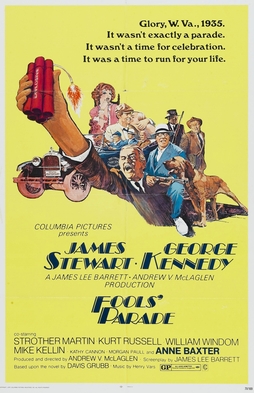
Fools' Parade

So you know what sounded pretty awful? The Great Depression. Man, I'm good at writing introductions to these reviews, aren't I? For every well-known Depression-era movie out there, it seems like there's that many more generally forgotten in a wave of flicks. Here's one I stumbled across on a cable movie channel recently and simply couldn't pass up because of an impressive cast, 1971's Fools' Parade.

It's 1935 and three convicts are being released from a West Virginia penitentiary, including Mattie Appleyard (James Stewart), Lee (Strother Martin) and Johnny (Kurt Russell), all of them having served their sentence for varying crimes. They're driven to the train station by a vicious prison guard, Doc Council (George Kennedy), who ominously states that he'll see them soon. The trio boards the train with plans of opening a general store down the train line, using Mattie's hard-earned savings as a bankroll to get things started. There's a problem though as they get further away from the town and penitentiary. Mattie's check -- earned and saved from 40 years in prison -- can only be cashed back in Glory...where they've been less than pleasantly told to never come back. If they do, Council will be waiting for them. That's not their only problem. Council may not even be waiting that long to hunt them down...

From the older classic like The Grapes of Wrath to the newer entries like O, Brother, Where Art Thou, Depression-era flicks are a cool little genre of flicks that doesn't always get a ton of attention. Maybe it's the whole soul-killing tone of these flicks. Maybe. I don't know. The 1970's especially had some cool entries, including this flick, Emperor of the North Pole, Hard Times, Paper Moon and Dillinger among others. 'Parade' belongs in that group. It's dark(ish), gritty and has the look and feel of one of America's roughest historical stretches.

So why then does this 1971 drama with some light comedy touches have virtually no reputation? Virtually no following? Well, for starters, it most definitely and assuredly is very, very odd. I can't specifically put a finger on said oddness, but it is. It's there. It...is...odd. Maybe as close as I can get is the tone, or lack of. From director Andrew McLaglen and a screenplay by James Lee Barrett, 'Parade' is just a bit of an oddball flick. It's able to build up an impressive sense of doom early on but it never quite takes off. Things slowly derail as the 98-minute running time nears its finish. Still, this is a movie that's never dull or boring. Very watchable, just odd.

Sometimes, an all over the place tone comes in second to something, anything else that's far more appealing. Here, that's easy. It's the cast. That cast. We mostly follow our three recently-freed crooks in Stewart, Martin and Russell. Stewart's Mattie served a 40-year sentence for killing two men, Martin's Lee six years for bank robbery, and Russell's Johnny a shorter sentence for an incident with a girl that's generally left unexplained. The story doesn't linger long on our trio's past criminal transgressions (wisely), instead focusing on them trying to start over again, albeit at different points in their lives. I especially liked Stewart as Mattie, sporting a bizarre-looking glass eye, the oldest of the three who most strongly wants that fresh start. He stashed away all his money during his 40-year sentence (earning a ridiculous-sounding $25,000) and now meets all sorts of roadblocks in getting that cash. Martin's Lee is seemingly a little simple-minded in his obsession with putting together a general store inventory while Russell's Johnny is stubbornly loyal to Mattie. Still, there's something charming about the trio, and there is a solid chemistry among the group.

An interesting cast all-around. When he wanted to, George Kennedy could play one interesting bad guy, and that's on display here. It's just creepy watching him. You're rooting for him to get his due and get it badly. Who else to watch for? An unrecognizable Anne Baxter as a madam who's fallen on hard times, William Windom as an unlucky traveling salesman, Mike Kellin and Morgan Paull as Doc's oddball killers, Robert Donner as a train conductor, Katherine Cannon as Baxter's lone "girl," and David Huddleston as the greedy bank owner. Quite the eclectic bunch!

I can't quite put my finger on it as to 'why' exactly, but I very much enjoyed this movie. Though the subject matter is dark, it is an easy-going, mostly pleasant movie. Yeah, it is a touch slow at times for a movie that runs just 98-minutes, but it is never dull. The West Virginia filming locations are an ideal backdrop for the story as well, giving it an authentic sense of watching where this story would have actually happened. Worth a watch. Apparently, it's somewhat difficult to find so here's my help to the situation. I watched it on Retro, a movie channel coupled with the Encore package on cable. It's a movie I recommend tracking down. Hope you enjoy it!

Fools' Parade (1971): ***/****

Wednesday, May 13, 2015

Bandolero!

With 1960's The Alamo -- one of my two favorite movies -- producer-director-star John Wayne built an entire set in Bracketville, Texas, that included the famous Alamo mission and nearby San Antonio. It was a set that was used in many, many films in the years following, even becoming quite the tourist attraction, before closing in the last few years. One of the best and one of my favorites? A 1968 western called Bandolero!

It's 1867 in Val Verde, Texas -- a small border town not far from the Rio Grande -- where noted outlaw Dee Bishop (Dean Martin) and his gang is caught trying to rob a bank, killing two people in the process. Sentenced to hang, the entire gang is rescued on the gallows by Mace Bishop (James Stewart), who is posing as the hangman. Dee and his men escape, riding out of town hell bent for leather trying to reach Mexico ahead of a posse led by the stubborn Val Verde sheriff, July Johnson (George Kennedy). On the trail, the Bishop gang takes a hostage, Maria Stoner (Raquel Welch), a widow of one of the men killed in the robbery, and continue on to Mexico with the posse close behind. Embarrassed in his town, July Johnson has another reason to pursue the gang as far as they go. He's long been in love with Maria. All sides cross into Mexico into what Maria calls 'territorio bandolero.' Translation? Bandit country, bandits who will kill any and all gringos they come across.

This isn't a classic western, but for me, it's always been one that is a lot of fun. It's from director Andrew McLaglen, a director who specialized in pretty straightforward, almost always pretty entertaining guy's guys movies like this, The Wild Geese, McClintock, The Devil's Brigade and many others. He's one of my favorites just because of that, he made movies that were fun, that were entertaining. This is one of his better efforts, a western with a great cast, an interesting premise, and some tweaks and twists and turns in a story that tries to blaze its own trail. Again, not a classic, but damn entertaining and one of my little-known movies I consider a personal favorite.

It starts with two of my favorite actors, Jimmy Stewart and Dean Martin, in lead roles. The character premise is familiar but handled nicely. These are two brothers torn apart by the Civil War, Stewart's Mace fighting for the Union while Martin's Dee fought with the South, specifically Quantrill's Raiders. Now, years later they're brought back together by dumb luck, some coincidence and one brother desperately trying to help the others. These are two good actors, and they carry the dramatic moments. It's especially cool to see Martin in a villain role, albeit a likable villain. The middle portion of the movie is carried by their scenes as they reunite, talk things out, plan for the future, all the while trying to mend their differences. So yeah, they're on the wrong side of the law, but...meh, it's Jimmy Stewart and Dean Martin so you kinda go with it.

As for the Bishop gang, look for Will Geer as the crotchety old man, Pop Chaney, his ill-mannered, probably a little off son, Joe (Tom Heaton), Babe Jenkins (Clint Richie), a deadshot with a rifle and a bit of a ladies man, and Robbie O'Hare (Sean McClory), the hard-living, loving-life Scotsman. An interesting, nasty group to round out the gang.

The rest of the cast ranges from interesting to good to good-looking. Kennedy is underused but very solid as Sheriff Johnson, the peace officer trying to do his job but he's got some ulterior motives for his actions. I also have always liked Andrew Prine as Roscoe Bookbinder, Johnson's loyal deputy. Lonesome Dove author Larry McMurtry was apparently a big fan of this movie and used both character names and general descriptions in that novel. As for Raquel Welch, she's trying, really doing up a Mexican accent. It isn't nearly as bad as some reviews make it out to be -- the script doesn't do her any favors -- but it isn't especially good either. Shallow dude time though, she looks as beautiful as ever. Plenty more familiar faces though including Denver Pyle, Rudy Diaz (the bandit leader), Harry Carey Jr., Perry Lopez, and Dub Taylor.

Now for that Alamo Village portion of our programming. McLaglen uses the Alamo set to good use with two extended set pieces, the opening being Val Verde, the robbery and then the eventual escape. The finale is actually on the Alamo mission set, an abandoned town set among the ruins of the bombed out fort. They try to disguise the recognizable chapel face, but you can't miss it if you're paying attention. It's a great use of the locations, Utah and Arizona also serving as some locations. Also, one more thing. I love composer Jerry Goldsmith, but this is one of his favorites, a score I absolutely love. The use of a mouth harp over the opening credits is an odd choice, but does it ever work. The rest of the score is more action-packed western themes, but it's catchy, memorable and a great support to all the action. Give it a listen HERE.

If there's an issue in this McLaglen western, it's that the script has a great opening set piece and a memorable, blood and guts finale. In the middle....yeah, things drag at times. There's a couple campfire scenes, Maria getting to know Dee, Dee reacquainting himself with Mace, and all the while Johnson's posse tangles with a large gang of bandits. Never boring, but never as exciting as the beginning and end. Now that ending/finale? Yikes, it packs a wallop, packs quite a punch and does so while delivering some genuine surprises. Quite an ending to one of my favorites. A perfectly entertaining little western. Nothing more, nothing less.

Bandolero! (1968): ***/****

Rewrite of February 2010 review

Monday, February 9, 2015

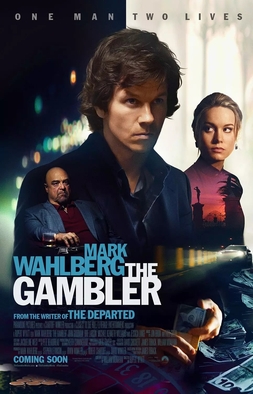
The Gambler (2014)

Oh, how quick we forget. Yes, it's time for another unnecessary remake review. Way back in November 2013, I reviewed 1974's The Gambler, James Caan playing a literature professor with an extreme gambling problem. Well, it's 40-plus years later so let's revamp things! Here we are with 2014's The Gambler.

Walking into an oceanfront underground casino, Jim Bennett (Mark Wahlberg) is carrying a suitcase packed with $10,000. He promptly goes up thousands and thousands of dollars...and then promptly loses it in one bet at the roulette wheel. That's just the start of his problems. A literature professor and respected writer, Bennett is in serious debt. Like $260,000 debt, and that money is coming due very quickly. He only has seven days to come up with the money or else, well, it's not going to end well for him. So already in ridiculous amounts of debt, Bennett borrows more money -- some $50,000 -- from a brutal loan shark (Michael Kenneth Williams) with a similarly fast approaching payment date. The clock is ticking. Can Bennett get his hands on all that money? Will his severe, obsessive gambling addiction even allow the possibility of getting out clean?

So my usual stance on remakes is pretty simple. There needs to be a reason for that remake to be made. Was the original really bad? Was there a ton of wasted potential? That's pretty much it. For the most part, if a movie was good, great or a classic, it doesn't need to be remade. This remake from director Rupert Wyatt is an interesting mix of the above reasons. The Caan version is pretty good (I gave it three stars), but it isn't a hugely well-known flick. Good but not great so where do we sit in the remake department? I, for one, liked this new flick a lot, flaws and all.

I'll say this going in. Not that any movie about gambling addiction is going to be real pleasant, but this is one dark, brooding flick. It starts with Wahlberg's lead performance as Jim Bennett. I was curious how the performance would go, and I came away impressed. Wahlberg is a blue-collar kind of actor, typically playing tough guys, cops, boxers, armed forces, that sort of thing. How about a well-read, intelligent English literature professor? Not exactly a role you'd associate with Wahlberg, but I thought he did an excellent job as Professor Bennett. This is one sad sack of a character, beaten down by the world even though it appears he's been given no real reason to be so downbeat. Maybe the best compliment is that Wahlberg isn't just being a tough guy. He gets to show off his acting chops and doesn't disappoint. Big shoes to fill playing a part James Caan played, but Wahlberg is excellent.

As for the movie itself, I similarly liked it a lot. It's a remake, but thankfully not a scene for scene remake. With a script from William Monahan (The Departed, London Boulevard) that uses the original screenplay as a jumping off point, the new 'Gambler' has some similarities but tries to carve out a niche for itself. It works. The story is different. Wyatt does a good job stylizing the story without going overboard. Title cards count down the days to Bennett's payment deadline. The soundtrack features a good mix of the score from Jon Brion and Theo Green with an eclectic mix of actual sounds with everyone from M83 to a Radiohead cover to Cole Porter and a lot in between. It isn't a flashy visual movie, but you look back and think it's definitely a visually interesting movie.

Much like the 1974 version, the 2014 remake features a strong ensemble cast. The best part goes to John Goodman as Frank, a physically massive, intimidating bear of a loan shark. His scenes with Wahlberg's Bennett are the highlights, Frank giving a great speech about the power of money in everyone's life. Kenneth Williams is similarly very good (read = intimidating and frightening) with Alvin Ing rounding out all the possible loan sharks. Brie Larson plays Amy, one of Bennett's students who has a natural feeling for writing, an excellent supporting part. Oh, and Jessica Lange is very strong as Roberta, Jim's mother who's at the end of her string with her gambling addicted son. Also look for Andre Braugher, Domenick Lombardozzi, George Kennedy, Richard Schiff and Emory Cohen in some other key supporting parts.

Watching a man struggle through the depths of his gambling addiction, it's a frightening, fascinating picture. The gambling scenes are intense and uncomfortable as they're intended to be. We see the highs and lows, the ups and downs with a man who is up enough to pay off his debts only to see him continue to bet as he feels that winning high. That crazy adrenaline rush. There are flaws, and I thought the ending tapped the brakes far too much. There was a natural ending about three minutes earlier that would have been perfect in the open-ended finale department. As is, it's a finale that is a little too tidy. You know what though? I really liked this remake throughout. Well worth checking out.

The Gambler (2014): ***/****

Thursday, January 29, 2015

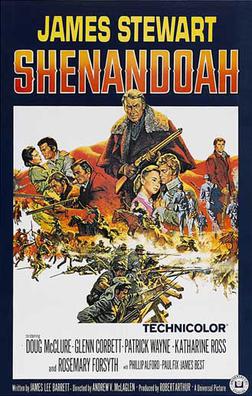
Shenandoah

As far as directing powerhouses of the 1960s, Andrew V. McLaglen will never be remembered as one of the greats. He started off in television before making the jump to feature film, teaming several times with John Wayne while also specializing in audience friendly "guy movies." Good guys versus bad guys, lots of familiar faces and situations, you know the formula. One of his best? An underrated Civil War drama, 1965's Shenandoah.

It's 1864 in Virginia, and the tide of the Civil War has turned as the Union forces are slowly beating down the Confederate armies. Doing his best to remain free of the bloody fighting, farmer and patriarch Charlie Anderson (James Stewart) wants nothing to do with the war. Both for himself and his family -- seven kids, one daughter-in-law -- Anderson simply wants to keep working his 500-acre farm and get through the war unscathed. Fight for Virginia? Fight for slaves he doesn't have? He fights for what he believes in, his family and his farm. Well, that's what he'd like to do. While the fighting rages on, Charlie is stunned when he finds out his youngest son (Phillip Alford) has been confused as a Confederate soldier and captured by nearby Union forces. Now the war and the fighting that Anderson has done so well to steer clear of has landed square on his front porch. Can he find his son amidst the hell of war?

This was a movie I watched often growing up when my sister and I had sleepovers with my Grandma. It made an excellent Civil War double feature with Friendly Persuasion, and let me tell ya, they both hold up! I watched this McLaglen-directed Civil War drama for the first time in years, and it resonated just as much now as an adult as it did when I was a kid, if not more. McLaglen had some excellent movies to his name -- The Wild Geese is a favorite, Hondo, McLintock are also excellent -- but this is his best movie overall. The story is a series of very effective, often moving and often disturbing vignettes, all held together by the Anderson family. Filmed on-location in Oregon and California, 'Shenandoah' is an underrated visual film, and the musical score from composer Frank Skinner is a gem. So what stands out viewing this one as a 29-year old, not a 13-year old kid?

That would be James Stewart, one of my favorites in just about any movie he's in. This doesn't get the attention or notoriety as one of Stewart's best performances, but it certainly belongs in the conversation. I love what he does with the part of Charlie Anderson, a stubborn, feisty Virginia farmer and widower looking out for the best intentions of his family. He doesn't care about the war, about slavery, about Union and Confederate. He will do anything, ANYTHING, to protect his family. Stewart has some great scenes with the younger supporting cast, especially Alford's youngest son, only called 'Boy,' with his daughter, Jenny (Rosemary Forsyth), daughter-in-law, Anne (Katharine Ross), and his sons. There are too many memorable, emotional scenes to mention, but my favorites are the most simple. Minutes before the Andersons go to church each Sunday, Charlie visits his wife's grave and just talks to her. Simple perfection, Stewart absolutely nailing the underplayed but charged scenes. 

Stewart is the unquestioned star of McLaglen's film, but 'Shenandoah' offers quite the ensemble of recognizable faces. Glenn Corbett and Patrick Wayne play Jacob and James, the two oldest brothers. Corbett especially stands out as Jacob who's beginning to question if their choice to stay out of the war is the right decision. Wayne is solid too, especially in his scenes with Ross. In her film debut, Forsyth is excellent, a subtle scene-stealer as innocent, tough and thoughtful Jenny who's also interested in a young Confederate soldier, Sam (Doug McClure). The other Anderson boys include Charles Robinson, Jim McMullan and Tim McIntire. Maybe the best thing you can say about the story is that the family dynamic, it just works. You believe them as one cohesive unit, one that stands together through thick and thin.

But wait, there's more! Also look for George Kennedy as a sympathetic Union officer, Gene Jackson as Gabriel, a friend of Boy's, a slave, Paul Fix as the local doctor, Denver Pyle as the pastor, James Best as Carter, a fellow prisoner who takes Boy under his wing, Harry Carey Jr. as another Confederate prisoner, Tom Simcox as Lt. Johnson, a Confederate officer, with Kevin Hagen, Dabbs Greer and Strother Martin also playing small but memorable parts.

So 29-year old me certainly picked up some new things, or at least was able to process things differently. This is one hell of an anti-war flick. The portrayal of the latter stages of the Civil War is unsettling and often times, disturbing. Death awaits around every corner, hiding behind every tree. The lines are up in the air as the war takes a turn toward its ultimate conclusion. A late battle between a small Confederate camp and a larger Union force with heavy artillery is quick and awful and uncomfortable, one of the more underrated battle sequences I can think of. The last half hour especially features one kick in the gut after another that truly hammers home the anti-war message. And that last scene? Pretty perfect, the possibility of hope lingering in the air amongst all this pain and suffering and death. One of my favorite movies.

Shenandoah (1965): ****/****

Thursday, May 22, 2014

The Delta Force

Here's a universal truth for you that just about everyone can agree about. Chuck Norris is in fact, an amazingly bad ass movie star. His movies aren't always that great -- sometimes they're not even good, sometimes they're truly bad -- but through it all, Chuck Norris and all his awesome facts, is one cool dude. I haven't seen many of his movies, but I do my best to catch up with them, like 1986's The Delta Force, loosely based on the true story of real-life 1985 hijacking of TWA Flight 847.

Flying out of Cairo with scheduled stops at Athens, Rome and New York City, ATW Flight 282 takes off with 100-plus passengers on-board. Not too long after takeoff, terrorists from the New World Revolutionary Organization led by a man named Abdul (Robert Forster) hijack the plane, starting a chain of events as the plane tries to find a landing site to deal with the terrorists and all their hostages. While the terrorists' demands are up in the air, an elite American special forces out, the Delta Force, led by Colonel Nick Alexander (Lee Marvin) and his second-in-command, Major Scott McCoy (Norris), is scrambled to help rescue the hostages. Can the Delta Force get their in time and rescue the hostages in time against nearly insurmountable odds as the terrorists prep to go out in a blaze of glory?

What an odd, weird movie. From director Menahem Golan (who co-wrote the script with James Bruner), 'Delta' was filmed on-location at a new studio in Jerusalem, the GG Israel Studios. The Israeli locations are pretty cool, adding an authentic look and feel to the story. Now with that said, it's a big old mess of a flick with some -- if not enough -- entertaining qualities. It mixes touches of disaster movies, action heavy shoot 'em ups and plenty of patriotic flag-waving, bouncing back and forth among the different angles. It's almost schizophrenic, never finding a rhythm. We go from on-board hostages to diplomatic and government situations, airport to Delta Force, hostages to terrorists. I felt like key parts of the story that explain what went on are completely missing. Title cards try and explain how and when and where, but there seems to be chunks completely cut away. Different segments with no real unifying link.

Instead of that focus on story and character and plot development, 'Delta' rides on one thing; Chuck Norris' awesomeness. That's it. That's all. Unfortunately, he's kept in the background for most of the first hour of the movie.When his McCoy is on-screen, Norris makes the most of it, his experienced Delta Force leader worn down by the horrors of fighting. That said, he sure embraces that whole fighting thing. The last 45 minutes (more on it later) are one scene after another where Norris' McCoy goes all America on some terrorist ass. He jumps off buildings, shoots, punches, and stabs countless terrorists while riding a motorcycle rigged with seemingly infinite rockets and missiles. In another way of showing how cool he is, McCoy typically likes to enter or leave a room by jumping through a window, opening the door for all sorts of badass entrances. Great drama it is not, but in the badass department, 'Delta' succeeds thanks to Norris.

In his last movie before his death a year later in 1987, Marvin is as cool as ever as Col. Alexander, the no-nonsense, smart-ass Delta Force leader, always ready with a quick shot from the hip or a snappy one-liner. Their scenes aren't too long, but Marvin and Norris are an excellent team together. Who else to look for? How about Robert Vaughn as the Delta Force commander back in Washington D.C. Oh, and some of the hostages? George Kennedy, Martin Balsam, Shelley Winters, Joey Bishop, Lainie Kazan, and a young Kim Delaney as a nun with Bo Svenson as the pilot of the hijacked jet airliner. Not a bad cast by any means, just the opposite, but the disjointed story doesn't give most of them a chance to do anything. George Kennedy manages to rise above the story, as do Balsam and Svenson.

If you can make it to the last 45 minutes, you'll be rewarded. It's almost non-stop from there until the final scene, making up for the slowish first 80 minutes and its schizophrenic nature that's all over the freaking place. In general, it's a pretty cheesy 1980s action movie with all sorts of good cliches and stereotypes. The Delta Force theme is unintentionally funny -- nice work from composer Alan Silvestri -- with an almost pleasant, light-hearted feel to it. Listen HERE if curious. You almost expect to be played over a sports movie montage.

Not a bad movie, not necessarily a good movie either, but entertaining enough. Cool cast that isn't used to its potential, but Marvin and Norris make it worthwhile.

The Delta Force (1986): ** 1/2 /****

Friday, September 20, 2013

Small Soldiers

With 1995's Toy Story, the idea of toys coming to life....well...came to life. While there was some really dark moments in that Pixar classic -- Sid comes to mind torturing his toys -- it was mostly a really sweet, really funny story about the lives of toys when their masters/kids aren't around. At its very basic, ground level, that's an incredibly unique idea, one all kids have thought of at some point. But what if Toy Story didn't tap the brakes? I think it would be a movie a little closer to 1998's Small Soldiers.

Helping his father run his struggling toy store, teenager Alan Abernathy (Gregory Smith) accepts (read = bribes) a shipment of new action figures during the latest delivery. From GloboTech Industries comes the Commando Elite, a specialist group of commandos headed by Major Chip Hazard (voiced by Tommy Lee Jones), whose sole goal is to eliminate their enemies, creatures called the Gorgonites, headed by Archer (voiced by Frank Langella). The toys are a new design, able to speak and respond to voice commands. Alan is stunned though when Archer doesn't just talk to him, but respond with unique answers to questions he asks. These aren't just any action figures, but that's only the start. Alan takes Archer home with him overnight, but meanwhile at the store, the Commando Elite have come to life too. Their aim? Kill Archer and his fellow Gorgonites.

While I love Toy Story, I can also appreciate how cool the premise here sounds. I'd seen bits and pieces of this quasi-family oriented science fiction story from director Joe Dante, but I finally sat down and watched it straight through recently. I liked it but didn't love it. Complaints to come, but 'Soldiers' gets a lot of points for originality if nothing else. What if G.I. Joe and Cobra toys came to life? Teenage Mutant Ninja Turtles vs. Shredder and the Foot Clan? Stands to reason they might try and kill each other, right? Yeah, as a kid who grew up with action figures, that's pretty cool. The graphics here are spot-on as the toys come to life. It's not CGI -- always a good thing -- and while it looks realistic, the toys are still toys. They can break (damn plastic!) and their movements are pretty stilted. It goes a long way in making it seem even remotely believable.

The focus is not exclusively on the toys. Our main character, Alan, has quite the checkered past and has been kicked out of two schools, forcing his family, including Dad (Kevin Dunn) and Mom (Ann Magnuson) to move. He meets Christy (Kirsten Dunst), his neighbor, and quickly hits it off with her...even though she only "dates" older guys. So, yes, at times the story focuses too much on that after school special drama, how tough it is to be a teenager and all that garbage. Come on, parents, trust me...even though I've given you no reason to trust me! This is the movie at its slowest and most dull, but thankfully, the story moves along too fast to stay in one place for too long. And back to the killer toys!

One of the coolest things about 'Soldiers' as a movie fan is its knowledge of past movies. Case in point? The Commando Elite are voiced by four members of the cast of 1967's The Dirty Dozen, and it would have been five, but Richard Jaeckel died before filming. The Gorgonites are voiced by the cast of This Is Spinal Tap. Getting in line behind the perfect voice casting of Tommy Lee Jones is Ernest Borgnine as Kip Kallagin, Jim Brown as Butch Meathook, George Kennedy as Brick Bazooka, Clint Walker as Nick Nitro, and replacing Jaeckel, Bruce Dern as Link Static. Along with the calmly voiced Langella as Archer, the Gorgonites include Christopher Guest as Slamfist and Scratch-It, Michael McKean as Insaniac and Freakenstein, and Harry Shearer as Punch-It. It's just fun to hear that many talented actors working together, even if it's only their voices. Also listen for Sarah Michelle Gellar and Christina Ricci as two Gwendy (knockoff Barbie) dolls.

The funnest and also darkest part of 'Soldiers' comes when the Commandos get loose and go gunning for the Gorgonites. It sounds goofy enough, even a little innocent in the fun department. How could toys kill toys? Well, it gets pretty extreme at times. The Commandos have been built with government chips in them -- thanks Department of Defense -- that turn seemingly innocent toys into brutal killing machines. Yeah, seriously, killing machines. They want to kill their rival Gorgonites, but also the people protecting them, like Alan, Christy and their families, including Christy's goofy Dad (the always fun Phil Hartman). They build assault vehicles out of bikes and skateboards, make weapons out of chainsaws and toasters. There's a cool factor involved in seeing these toys go on the offensive, but it gets pretty dark too, many moviegoers complaining the movie was mismarketed upon its initial release.

Also joining the cast are GloboTech's money-minded, condescending CEO (Denis Leary) and the developers of the Commandos and Gorgonites, Jay Mohr and David Cross. It's a fun movie with some pretty big flaws, but it is entertaining with some nice touches in the cast.

Small Soldiers (1998): ** 1/2 /****   

Thursday, June 21, 2012

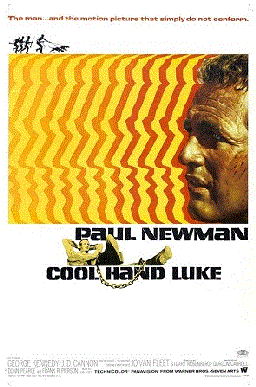
Cool Hand Luke

Heroes are supposed to be noble, loyal, honor-bound and always do what's right. But in the 1960s and its increased cynicism from the audience, was that concept of a hero really going to fly? The idea of an anti-hero started popping up in the 1950s thanks to James Dean and Marlon Brando among others, but for me, the one that kicked the door open in the 1960s was Paul Newman in 1967's Cool Hand Luke.

Having taken the heads off of a long row of parking meters, a drunken Lucas Jackson (Newman) is arrested and sentenced to a two-year sentence on a chain gang in Florida. He meets the Captain (Strother Martin) and his bevy of guards who keep their prison camp roster of 50 prisoners busy on the roads six days a week, but this camp has had nothing like Luke. Easy going enough early on in his sentence, he begins to bristle at being imprisoned, at being told what he's supposed to do. He becomes a hero to his other prisoners, forming a friendship with head honcho, Dragline (George Kennedy), but Luke can only take being held down for so long, and he wants out now.

Paul Newman is one of my all-time favorites, and this is HIS iconic part. Butch Cassidy, The Hustler, The Sting, and many others, all memorable roles, but nothing quite like this one. Want a face for a 1960s audience looking for something different? In steps Lucas Jackson, a man who has little regard for what society says he should do with his life, even less regard for any sort of authority hovering over him. Newman makes Luke -- dubbed 'Cool Hand' for a bluff in poker -- a charming, likable individual, his easy-going, natural smile disarming you in a second. We learn a lot about this character with little background (a veteran, countless jobs, a drifter), finding out that no one and no thing will slow him down. He will do things on his terms, and anyone else can be damned. Newman at his best.

With Newman's Oscar-nominated part at the head, 'Cool' has become one of the seminal movies of the late 1960s, ranking up there with The Wild Bunch, The Graduate, Bonnie and Clyde and several others I'm missing. This is a movie made for a late 1960s audience that isn't content with the status quo. No respect for authority or the so-called 'system'? Check. An anti-hero that wants to do things and live his life his way? Double check. The system are Martin's quiet but intense Captain, Boss Godfrey (Morgan Woodward), the silent guard who wears his ever-present aviator glasses, along with steely-eyed Luke Askew, Richard Donner and John McLiam.  The system is the villain here, imprisoning and breaking the individual down to conform. It's easy to see the appeal in 1967, and just as easy to see now 45 years later in 2012. The thinker, the free spirit, the intelligent rebel, it's an appealing character and premise to root for.

Because Newman's performance is so strong at the top, another part of the film gets lost in the shuffle, and that's the ensemble cast all around him from Martin and Kennedy to the guards to the prisoners. Martin is perfect in his few scenes, including muttering the iconic 'What we have here is failure to communicate.' Kennedy won an Oscar for his part as Dragline, an illiterate but intelligent and fast-talking prisoner who all the other prisoners look up to. Newman and Kennedy play off each other impeccably, the subtle, underplayed Luke with the showier, aggressive and funny Dragline. Other prisoners include J.D. Cannon, Lou Antonio, Robert Drivas, Harry Dean Stanton, Dennis Hopper, Wayne Rogers, Ralph Waite, Joe Don Baker, Dick Davalos and Buck Kartalian among others. Clifton James and Anthony Zerbe are good as prisoners turned associates who help the guards. 

Like any movie that lives on so many years after its release, there's got to be something to make it memorable, and director Stuart Rosenberg doesn't disappoint. The most obvious is Luke stating he can eat 50 eggs in an hour, a classic sequence in its humor, but there's so much more. Luke singing Plastic Jesus -- watch HERE -- after receiving some distressing news is an all-time great. There's Luke earning everyone's respect in a brutal, knock-down boxing match (watch HERE), refusing to go down even when he's beat. There's a teenager washing a car, driving the on-looking prisoners wild (HERE), and up there with Plastic Jesus for the most moving scene, Luke talking with his dying mother, Arletta (Jo Van Fleet). Almost scene-to-scene is aided by composer Lalo Schifrin's amazingly spot-on music, especially the main theme which you can listen to HERE.  

What struck me most in my latest viewing was the darkness of the story. The first hour is generally light-hearted, introducing characters, backgrounds and interactions, setting us up by liking Newman's Luke so much in spite of his bullheaded stubbornness. I'd forgotten then how intensely dark and at times uncomfortable the second half of the movie is. From the start, we know Luke is heading down a bad road, but that unbearable tension and impending sense of doom keeps building. The movie still has its lighter touches -- Luke's escapes provide some unlikely humor -- but there will not be a truly happy ending here. In the end though, one of the final shots shows that free spirits might not always win, but that also doesn't mean the system, authority and power positions will win either. The symbolism can be a little obvious, a little heavy-handed, but the message still strikes a chord.

A classic from beginning to end. End of story.

Cool Hand Luke <---trailer (1967): ****/****

Monday, May 28, 2012

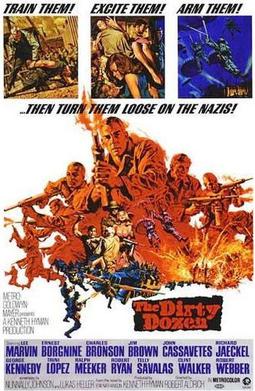
The Dirty Dozen

One of the all-time great tough guy casts -- if not the greatest -- in one of my favorite genres. A movie that stands the test of time that is action-packed, darkly funny and amazingly entertaining. It has taken abuse over the years by some because of its shocking ending, but it also has built up a diehard following by those who will defend it to the last (including me). One of my favorite movies ever, and a Memorial Day themed review, 1967's The Dirty Dozen.

An American army officer with a record a mile long, Major John Reisman (Lee Marvin) has been given a mission that even he doesn't believe is real. It's late spring 1944, and as the Allies prepare for the D-Day invasion, the Allied high command (including Ernest Borgnine) delivers his impossible, suicidal mission. Reisman is to take 12 prisoners either sentenced to death or years of imprisonment and hard labor, train them, and then in the days before the D-Day landing, drop them into German-occupied France. Their mission? Attack a German chateau, killing as many high ranking German officers as possible, hopefully wreaking havoc on the high command. Can Reisman get the prisoners to work together before they kill him?

This is a movie that is a perfect storm of timing, casting and story. A story of 12 convicted criminals -- rape, murder, robbery -- turned commandos who resent any sort of authority given a mission to kill enemy officers in cold blood? Could that story even remotely fly in any time other than late 1960s America? It was a time when America was changing, a darker, more cynical time in our history. Director Robert Aldrich taps into something special there. 'Dozen' has a unique look to it, interesting camera angles, a catchy theme for the Dozen -- listen HERE -- and a general feel of giving the middle finger to any sort of power or authority figure. Could there be a more perfect movie for a 1967 audience?

I could write a whole review discussing the characters and the long list of tough guy actors who play them, but I doubt many people would read 10,000 rambling words about how the cast of The Dirty Dozen is the coolest thing ever. Let's start with Lee Marvin, an all-around bad-ass who by the mid 1960s had become a major, bankable star. His Major Reisman, a sarcastic, quick-witted, smart-mouthed and brutally effective officer, is probably his most well known role, and he owns this movie. With the cast behind and around him, that's saying something. Marvin delivers brutally funny one-liners left and right, handles the action scenes flawlessly, and is believable as the cynical leader of this group of crook commandos. With those type of men behind him, you need someone like him to lead. Richard Jaeckel is a scene-stealer as Sgt. Bowren, the MP assigned to work with Reisman in training and execution of the mission. Along with Borgnine, the High Command and other Allied officers include Robert Webber, George Kennedy and Ralph Meeker. Oh, and Robert Ryan as a stiff-collared officer from the 101st. Enough for you? No?

And then there's the Dirty Dozen. The group includes Charles Bronson as Wladislaw, the former officer sentenced to hang for killing one of his own men, a medic carrying medical supplies away from battle. There's former NFL star Jim Brown as Jefferson, an African American soldier who killed in self defense but is sentenced to hang nonetheless. John Cassavetes was nominated for a Best Supporting Actor Oscar as Franko, a Chicago hood who killed a London man for $10 worth of cash. Telly Savalas is Maggot, a psychopathic Southerner convinced God works through him. Clint Walker is Posey, an Apache with rage issues, Donald Sutherland is Pinkley, a dimwitted soldier, and singer Trini Lopez plays Jiminez. Rounding out the Dozen are character actors Tom Busby, Ben Carruthers, Stuart Cooper, Colin Maitland, and Al Mancini as Bravos, the smallest of the bunch but with a mean/funny streak. The focus is Bronson, Brown, Cassavetes, Walker, Savalas and Sutherland, none of them disappointing, all of them living up to the hype, all given a chance to shine.  

What has helped 'Dozen' gain its cult-like following over the years is its humor in looking at and poking some fun at war in general. Sutherland's dimwitted Pinkley is forced to inspect a crack platoon of Ryan's Col. Breed in one of the most memorable, truly funny scenes. Watch it HERE. Reisman later arranges for eight London prostitutes to visit the Dozen as their training winds down. The facial expressions exchanged back and forth are priceless. The high point comically -- however dark it is -- comes in the War Games sequence, the Dozen forced to prove their worth by capturing Col. Breed's headquarters. They resort to cheating, con jobs, stealing, and all sorts of trickery. After the extended training sequence -- which has its fair share of funny moments -- the War Games development and the eventual payoff provides some great laughs.

The portion of the movie though that tends to drive people away is the attack on the chateau. SPOILERS AHEAD SPOILERS STOP READING Here's the plan, courtesy of Reisman, which you can watch HERE. It of course, doesn't go as planned, Reisman, Bowren and the Dozen forced to improvise. Their solution is simple; throw grenades and gasoline down air chutes and burn (think napalm) the German officers to death. Heroic? No, I would say not. It's a movie though. These guys aren't portrayed as heroes. These are prototypical 1960s anti-heroes! What does work? The entire finale sequence (around 45 minutes long) is dripping with tension, and once the adrenaline starts pumping, it doesn't stop. The Dozen start to get picked off -- including two legitimate shockers -- as the bullets start flying. I've seen this movie 50 times and still root for two characters especially to make it, knowing all the while they won't. The means are brutal, but as far as an entertaining action sequence goes, it is one of the best.

I'm not sure what this says about me, but I grew up watching this movie a lot. Introduced to it via Memorial Day war movie marathons, it will be always be one of my favorites. I love its cynical, dark look at war. I love the ridiculously strong cast from top to bottom. It is funny, entertaining, action-packed, and a true example of 'They don't make them like that anymore.' A classic.

The Dirty Dozen <---trailer (1967): ****/****

Sunday, January 29, 2012

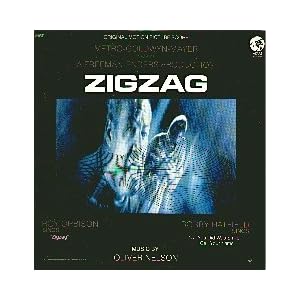
Zigzag (1970)

No VHS, no DVD, no Netflix or Amazon Instant. I had never seen a second of 1970s's Zigzag much less heard of it. It has been almost completely forgotten over the last 40 years so when it appeared on TCM's schedule I took my chance. How many chances do you get to see certain movies? Not a ton. Here though it's fairly obvious why this flick has been pushed to the side.

Working for an insurance company, Paul Cameron (George Kennedy) is diagnosed with a malignant brain tumor, his doctor estimating he has anywhere from a few months to a year to live. Cameron has a wife (Anne Jackson) and young daughter who he does not want to leave with a burden following his death, but what can he do to help them out? He goes through the files of an unsolved kidnapping/murder and knowing many of the facts, frames himself for the murder. Through a series of twists and turns, his wife will receive a reward for "solving" the murder. Somehow and some way, Cameron's plan works...to a point. Doctors discover he isn't going to die. Now Cameron has to prove he made the whole thing up, but can he?

A convoluted murder/thriller starring George Kennedy? My curiosity got the best of me. I had heard or read NOTHING about this flick. Movie nerd that I am, I've read through filmographies of many actors looking for hidden gems among the more well known movies. I didn't understand why Zigzag was a forgotten movie. It does have some positives if not many. The early 1970s style is fun to watch regardless of the tone of the movie, and Roy Orbison singing the theme song (listen HERE) is a guilty pleasure. As for the story, well.....

I'm all for convoluted and twisting stories that basically force you to stay glued to the screen the length of the movie. I enjoy a story that challenges you, defying you to figure out where it's going before the secret is revealed. That said, there is typical convoluted, and then there's Zigzag convoluted. There are plot holes and jumps you could drive a semi-truck through. Kennedy's Cameron implicates himself so perfectly that he's tried and found guilty of a kidnapping and murder? Are the police that fundamentally stupid? And how quick is this trial? I thought he had a few months to live, but the film judicial system is apparently pretty speedy. Some of the efforts are appreciated, especially the non-linear opening sequence and the use of scenes cut into other scenes, some flashbacks.  Overall though, I got the feeling of trying too hard.

What kept me going through the film was the review I read prior to watching that ripped Zigzag and its ending to shreds. I'm a sucker for a stupid ending, mostly to see if I can see it coming. The "twist" is one thing, but director Richard A. Colla handles it in such a heavy-handed manner it loses all effectiveness. His use of slow motion is so ridiculously slowed down that the effort becomes laughable when we're supposed to be blown away by what we're seeing on-screen. A downer ending in the 1960s and 1970s is nothing new, but this one just ends. Game over, no other explanation provided. It is a surprise in a sense, but the techniques used to reveal that surprise ruin any chance it had of working.

Still, still....there were parts of the movie I liked. I've always been a fan of George Kennedy, and seeing him playing a leading role is an obvious bonus. In a ridiculous story, he manages to create an interesting character who even though he's doing something beyond stupid remains remarkably grounded. Eli Wallach plays his lawyer, Mario, with Steve Ihnat playing Gates, the prosecuting district attorney and William Marshall as Morris, an old friend of Cameron's and a bar owner. Mostly worth watching because of its rare availability, it certainly qualifies as a guilty 'so bad its good' pleasure.

Zigzag (1970): **/****

Wednesday, October 12, 2011

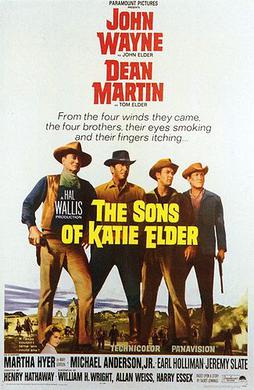
The Sons of Katie Elder

At the height of his long and very popular career in 1964, John Wayne was diagnosed with lung cancer. He underwent surgery to remove one of his lungs and two ribs, putting him out of commission for awhile. Production was even delayed on the movie he was working on, but he returned following the surgery and a cancer-free Wayne returned with a bang, bringing his usual imposing presence to the criminally underrated 1965 western, The Sons of Katie Elder.

It's been 10 years since gunfighter John Elder (Wayne) has returned home to Clearwater, Texas, but when news reaches him that his mother, Kate, has died, he returns home. There he finds his three younger brothers, Tom (Dean Martin), a gambler, Matt (Earl Holliman), a hardware store owner, and Bud (Michael Anderson Jr.), the youngest. Dealing with the guilt of not having seen his mother in years, John and his brothers find out their father was killed just six months earlier under suspicious circumstances. The Elder ranch is now owned by Morgan Hastings (James Gregory), but no one is quite sure how he came to be the owner. The Elders want some answers as to what exactly happened, but mostly they're trying to do something for their long-suffering mother. John intends to do a right, proving that Kate's faith in her sons was well founded.

Coming back from cancer (although it would eventually kill him), this 1965 film marked a big of a turning point for the Duke. From here on in through the end of his career, Wayne could be accused more of playing himself repeatedly in more viewer-friendly, cookie-cutter movies. He knew what his fans liked, and he intended to give it to them. Take none of that as a negative, I love many of the post-1965 movies Wayne made. They're fun to watch and easy to digest. There are good guys and bad guys with little middle ground. You know how it will end before it even starts. Once again, the movie equivalent of comfort food. 'Sons' has a ton going for it, ranging from Elmer Bernstein composing one of his most underrated and memorable scores ever (listen to the main theme HERE) to the location shooting in Durango, Mexico and along the Rio Grande. It's the little things that count.  

There are better, more iconic westerns, but I think 'Sons' would be a fitting introduction to someone who either isn't a fan or just doesn't care for westerns. Above all else, this is a movie -- not just a western -- about family, in this case a family coming back together after years apart. Wayne is the oldest brother, John, a gunfighter who's name precedes him wherever he goes. Martin is the wily gambler, Holliman the button-down businessman, and Anderson Jr. the college dropout. The movie's best moments come from the quartet of brothers reuniting, talking, fighting, working to make the Elder name something to be proud of in their Ma's name. There isn't a weak performance in the bunch. The chemistry is spot-on, the dialogue crackles like four brothers actually would talk -- in love and fighting -- and when the time comes they put aside their differences to work together.

Who ends up being one of the more memorable characters is the never seen Katie Elder. We hear a lot about her from anyone who ever met her, not one person having something negative to say about her. Martha Hyer's Mary Gordon, the boarding house owner, gives a great monologue about Katie lying about her boys, telling the town they always sent money, always wrote to check in. Some of the best parts of Bernstein's score come in these quieter moments as both the Elders and the population of Clearwater reflect on Katie's passing. All she leaves behind is two worn dresses, a rocking chair, and a "legacy" of her four boys. The movie's final shot is a touching one, surprising for a western oater.

Not enough yet? Still haven't sold you on this one? 'Sons' has one of the best supporting casts to come out of a 1960s western. Start with Gregory as Hastings, the businessman looking to put Clearwater on the map, no morals needed. A young Dennis Hopper plays Hastings' squirrelly son, Dave. Western vet and character actor Paul Fix is a scene-stealer as Sheriff Billy Wilson, an old friend of the Elders trying to keep peace in his town with fiery deputy, Ben Latta (Jeremy Slate in a solid supporting role), at his side. In a small but key role, George Kennedy is particularly intimidating as Curley, a hired gun working for Hastings. Also look for John Doucette, John Qualen, Sheldon Allman, and Strother Martin in supporting roles.

From director Henry Hathaway, 'Sons' is never listed as one of the all-time western greats or even among John Wayne's best. Why? I'm not sure. There isn't a ton of action, most of the gunplay saved for the last 30 minutes, including a high tension shootout in El Saltito, Mexico, a gorgeous and familiar location for western fans. The story is very much more interested in characters and their dynamic than making a shoot 'em up flick. It's a wise choice. The script is about as perfect as a western can get, and the cast beyond perfect. Underrated in any number of categories, and one all movie fans should be able to enjoy -- western or not.

P.S. Watch the movie and tell me otherwise. I'm convinced Dean Martin's Tom is supposed to die in the end. One throwaway line saves him, but it always felt tacked on to me. Any opinions?

The Sons of Katie Elder <---trailer (1965): ****/****

Wednesday, August 17, 2011

The Flight of the Phoenix (1965)

In the age of unnecessary remakes, I'm usually first in line opposing the new movies. If a movie in its original form was lacking something and with a remake could be significantly improved, then so be it.  Really though, how rarely does that happen?  A little less than two years ago, I reviewed the 2004 version of Flight of the Phoenix (a guilty pleasure that I love), a remake of the original, 1965's The Flight of the Phoenix. Even as I wrote that first review, I couldn't believe I was writing I enjoyed the new version more...but it's still true.

It is impossible to review a movie combination of an original and a remake without comparing the two so let's get that out of the way early.  The 1965 original is held in high regard thanks to its directing, survival story, and all-star cast.  As for the 2004 remake, well....it's more fun.  It is the most unnecessary of remakes, dumbing down the original with a thinner story that revolves more around action and adventure than pure survival.  I still liked it though a lot.  The problem with the original is that it just isn't as fun.  A better movie? Oh, definitely, but it does not have that re-watchable aspect that I'm always looking for in movies.

Flying a cargo plane headed to Bhengazi loaded with passengers and cargo, veteran pilot Frank Towns (James Stewart) and navigator Lew Moran (Richard Attenborough) are forced to detour when they fly into an epic sandstorm. The storm eventually knocks out both their engines, forcing them to crash land in the desert. With about a dozen survivors, survival mode kicks in with a dwindling supply of water and pressed dates as the only food around. Towns, Moran and the survivors sit back and wait, hoping a search plane or some form of rescue will save them. As the days go by though, all the men question what their fates will be. That is until a German passenger, Heinrich Dorfman (Hardy Kruger), steps forward with an idea. Why not use the wreckage from the downed plane to build a new smaller plane? Could it somehow work?

From director Robert Aldrich comes a tough, hard-edged and well-told story with no frills or distractions. This is a story about surviving in the harshest of conditions with nothing else to focus on.  These survivors of the plane crash can either sit back and die waiting to be rescued, or they can work together and try to pull off this seemingly impossible scheme. Aldrich films in the California desert (a decent stand-in for the Sahara), giving his movie a wide open, vacant feel to it.  Over the course of the movie (a sometimes long 141 minutes), we see the effects of the desert on the survivors, their skin looking like it is being torn apart by the winds and lack of water. You feel like you're there with them, going through the same things they are in a struggle to survive.

The best thing going for Aldrich's survival story is the chemistry among the cast.  Nowhere is that more evident than between James Stewart and Hardy Kruger.  Stewart's Frank Towns has been flying for decades, thousands and maybe millions of miles under his belt.  He's struggling with the guilt of knowing that some of his passengers died in the crash -- he blames himself -- and now has to deal with a primadonna in Kruger's Dorfman who wants everything done exactly as he has stated. A battle of wills ensues, both men fighting for control, their pride and vanity getting in the way of working together and surviving another day. Their scenes together bristle with tension and intensity, providing some much needed outside drama as opposed to just battling the conditions.

It is an Aldrich movie, and one of his trademarks as a director was being able to work with all-star ensemble casts.  In a career of movies with impressive casts, this might be his best.  Stewart and Kruger are great as the opposing forces with Attenborough delivering one of his all-time best performances as Moran, the second-rate navigator who's always struggled with drinking too much. The survivors of the crash include Captain Harris (Peter Finch), a long-time prim and proper, very British officer, and his not so loyal sergeant, Watson (Ronald Fraser), Dr. Renaud (Christian Marquand), Standish (Dan Duryea), a company accountant, and a group of recently relieved oil drillers including Ernest Borgnine, Ian Bannen, and George Kennedy. Star power much? Like any ensemble, all involved get a chance to shine, none disappointing here at all. Finch stands out as does Marquand, Borgnine and Bannen.

Now as a 26-year old moviegoer and film fan, I often get lumped in with a lowest common denominator crowd. I don't like reading subtitles, hate foreign movies, and only go to see new movies with nudity and/or explosions.  I resent the judgment most times, but I say that as a forewarning. It takes a lot for me to say this, but 'Phoenix' is a downright boring movie at times. The focus is on survival and the interactions among these men, but watching the survivors put together a plane out of wreckage is just not a visually stimulating thing to watch. In the night, they work. During the day, they sleep. It doesn't ruin the movie. It just slows it down at times to an incredibly slow pace.

By all means, see both movies and compare. The original is the better made, more professional and well-handled movie, but I still enjoy the dumber, more action-packed remake more.

The Flight of the Phoenix <---trailer (1965): ** 1/2 /****

Thursday, October 21, 2010

Tick...Tick...Tick

At the height of his NFL career, star running back Jim Brown decided to walk away from the sport he loved so he could get into movies.  There are few athletes who have the guts to do that, and to make it more impressive, Brown is still remembered as one of -- if not THE -- the best NFL players of all-time.  Being born some 20 years after he played his last game, I can't speak to that, but I can say I've always liked Brown as an actor.  I've seen most of his more well-known roles but came across one on TCM I'd never heard of before, 1970's tick...tick...tick  Unique title, huh?

Released in 1970 while the civil rights movement was still raging, this Ralph Nelson-directed flick reminded me in a lot of ways of 1967's In the Heat of the Night.  Of course some three years later, a somewhat similar storyline isn't going to have the same impact, and it would be nearly impossible to match the acting talents of Sidney Poitier and Rod Steiger.  You've got to try though, right?  And Nelson has a go at it, handing us a story that is at times predictable in its direction but never in a bad way.  It's not as aggressive or as in your face as 'Night,' but in its own way 'tick' serves as a nice companion piece to its classic predecessor.

In Colusa county in the deep south, Sheriff John Little (George Kennedy) heads in for his last day of work after losing a recent election.  The opponent who beat him has created quite a stir as a black man, Jim Price (Brown), is prepared to take office in a county severely divided by racial ties. Little holds no grudge against his replacement, only being upsetting that he's lost a job he's held for so many years.  New on the job, Price has his work cut out for him as rumors persist that the Klan might try something.  He knows he's in a corner though and can't do much to provoke an incident as told to him by the elderly town mayor (Fredric March).  Looking for help though with a crime that could tear the town and county apart, Price turns to an unlikely ally in Little.

It feels funny writing this, but the pairing of a white and black actor seems laughable in 2010...even if racism continues to exist in some extremely odd, almost always out of place situations.  In the Heat of the Night certainly kicked the door down on the premise, and 'tick' plows right through the open door frame.  Nelson doesn't hit you over the head with anything, but it is quickly apparent that if you throw out skin color, Brown's Price and Kennedy's Little are basically the same person.  They're family men who would do anything for their wife and children.  They do what's right no matter how difficult the choice is or the repercussions that will follow.  When someone or something is in trouble, they come to help because they know it is the right thing to do.

After working together briefly in their few scenes in 1967's The Dirty Dozen, Brown and Kennedy reunite here with some very positive results.  I've read criticisms of Brown that he was a stiff actor without much range, and I'll agree to a point.  He could be stiff at times, but he always rose to the occasion.  The former NFL star was an incredible physical presence, looming over all his co-stars whether he intended it or not.  He was at his best in roles like this, and his somewhat stiff style works for the character, a stubborn but fair man who knows he's in the right.  Kennedy is just as strong as the scorned sheriff who doesn't dwell too much on this change in his life.  Both actors have a very easy-going way about them, and they play well off each other.  And besides, just as a movie fan, it's fun to see two actors like Brown and Kennedy work together.

As I mentioned earlier, the story can be at times a tad predictable.  Nelson never shoves anything down your throat, but some of the so-called twists shouldn't really surprise anyone.  As a viewer, you know where the story is going before the characters even do.  Was there ever any doubt that Brown and Kennedy would end up side by side to combat racism and prejudice?  The same goes for the supporting characters, none of whom are developed much.  March gets some laughs as the old, crotchety mayor while Lynn Carlin is very good as Julia, John's wife trying to help her husband figure out what to do with himself. Some other notable names include Don Stroud as a gun-toting, pissed off former deputy, Clifton James, Bernie Casey, Dub Taylor, Karl Swenson, and Richard Elkins as Brad Wilkes, Price's only deputy.

The one thing that worried me going in was something in the credits, a credit to the singers and writers of a handful of songs that I was disappointed to hear would be the movie's soundtrack.  I won't go through all the songs -- read the list HERE -- but I can say they are all cookie-cutter folk songs from the late 1960s that sound alike.  I'm not a fan to begin with, but the soundtrack is misused with a story dealing with racism and prejudice in the deep south.  Annoying and out of place? You bet, but I liked the movie nonetheless.

...tick...tick...tick... <---TCM trailer (1970): ***/****

Friday, November 13, 2009

The Human Factor


In an interview he did for the special features The Human Factor DVD, George Kennedy says that growing up watching movies his favorite stars were not even stars. As a youngster, Kennedy chose the character actors as his favorites. It's only fitting then that the long-time actor -- still chugging along at 84 -- is a prime example of how good a character actor can be. Rarely given starring roles, the character actor was always given 4th or 5th billing but often enough stole the show. Actors like Ben Johnson, Victor McLaglen, and Warren Oates made careers out of those supporting roles.

So with a supporting actor Oscar to his name for his role as Dragline in Cool Hand Luke, Kennedy became one of the most dependable Hollywood character actors in the late 1960s and throughout the 1970s including a close association with a long list of disaster movies. But having seen enough of those supporting parts, it's always nice to see those actors get a shot with a starring role. In one of his few lead parts, Kennedy steps into vigilante mode in 1975's The Human Factor.

Working for NATO in Italy, electronics expert John Kinsdale (Kennedy) returns home one night to find police ringing his house. His wife and three children have been brutally murdered execution-style and there's very little in the way of evidence or clues to point to the murderers. With some help from the somewhat dimwitted Italian police chief (Raf Vallone), Kinsdale goes about using what little evidence the police do have to track down the killers. His co-worker, Mike McAllister (John Mills), agrees to help out so the duo uses their state of the art computer technology to get readouts on the killers.

As Kinsdale and McAllister continue to use all the facilities at their disposal, quite illegally as well, the evidence points to an extremist group (led by Thomas Hunter and producer Frank Avianca) demanding prisoners be released from prisons all over Western Europe. If the prisoners aren't released, more and more American families living in Europe will be brutally murdered. McAllister thinks they should go to the police with all the information they've obtained, but Kinsdale has other plans. He's not going to settle for a lifetime jail sentence for the terrorists, he's going to go after them himself.

In the vein of Death Wish or the Dirty Harry movies, 'Human' relies heavily on the idea of your average citizen being pushed far enough where his only option is vigilantism. At 6'5 and 250 lbs., Kennedy is quite a presence in the Paul Kersey/Harry Callahan role. His Kinsdale has one motive in life; kill the group who killed his family. If he gets killed in the process, so be it. Kennedy pulls off the scenes that require a ton of intensity nicely, but also nails the quiet scenes, like when he finds one of his daughter's dolls in the terrorists' hideout. Mills is more than solid in his own right as Kinsdale's sidekick, and Vallone is all right as the clueless Italian cop.

Critiques around the movie deal with its use of technology which at the times must have seemed pretty innovative. We're talking computer-to-computer hookup, probability software, programs that analyze evidence quicker than ever before. So watching this now in 2009, we're basically talking your average, run of the mill CSI episode -- feel free to pick which city. I'm betting this wasn't the intent when director Edward Dmytryk made the movie, but 'Human' is quite a time capsule for an early representation of technology.

While those technological segments can drag some, the movie really picks up speed once Kennedy goes vigilante. An otherwise mild-mannered guy, Kinsdale does anything and everything if it will help him get his family's murderers. One interesting scene that Dmytryk apparently winged on-location was a car chase through Naples with Kennedy manning a boat of a station wagon. In its ridiculousness it becomes an exciting chase scene. By far though, the best is saved for last in a hostage situation that is visually reminiscent of the Munich hostage situation. Fed up with formalities and negotiating, Kinsdale takes matters into his own hands in a bloody shootout with an ending that allows the viewer to make up his/her own mind on what happens.

A pretty mindless Italian crime movie that benefits from a strong performance from George Kennedy in the lead and John Mills in an underused supporting part. Slow moving at times, but the final 30 minutes make up for it, especially the finale. Here's a short TV spot if the trailer below doesn't convince you.

The Human Factor <---- (1975): ***/****

Wednesday, November 4, 2009

The Good Guys and the Bad Guys

Ah, the buddy movie where two seemingly different people team up to save the world. Nowhere was the buddy idea used more than westerns, like Butch and Sundance, Blondie and Tuco, or Llewelyn Moss and Anton Chigurh. Okay, maybe not that last one. Director Burt Kennedy uses this formula in his 1969 comedic western The Good Guys and the Bad Guys with a retired marshal working together with his outlaw rival to stop a train robbery.

Between 1966-69, established star Robert Mitchum made eight movies (so much for slowing down later in your career). Six of the eight were westerns ranging from near classics, 1966's El Dorado, to average, Young Billy Young. Mitchum seemed to know what his fans wanted, and from reading his biography, he actually enjoyed making westerns, he stuck with the genre. Why fix something that isn't broken? What sets 'Good Guys' apart from many wild west stories is that it deals with the closing of the west, but with some humor. We're not talking the grandiose violence of The Wild Bunch here.

In the town of Progress, U.S. Marshal James Flagg (Mitchum) tells the mayor, Randolph Wilker (a very funny Martin Balsam), that a gang has been spotted in the area. Leading the group is Big John McKay (George Kennedy), an old rival of Flagg's believed to have been killed in a bank robbery in Texas on the Red River. Flagg guesses that the gang is going to knock off a train carrying $100,000 for the new bank in town, but Wilker has another idea. The mayor retires Flagg -- ceremony and gold watch included-- and puts his own man in charge, leaving the marshal to take matters into his own hands.

Flagg pursues the gang but ends up a prisoner with who else as his guard, McKay. The gang has been taken over by a young outlaw, Waco (David Carradine), who doesn't have much regard for the veteran outlaw. Rescued by an old mule skinner, Grundy (Douglas Fowley), Flagg heads back to town with a handcuffed McKay. But when the chips are down, the marshal/outlaw combo realize they need to help each other so Flagg and McKay team up to stop Waco's gang from hitting the train, deciding they can't attack the train if it doesn't stop in Progress.

For the first hour or so, the comedy here is pretty low-key as Mitchum's Flagg deals with the forward-thinking mayor who's more concerned about the upcoming election than anything else. In Progress, the crowded, paved streets are covered with cars while Flagg rides through on his trusty horse. The humor is saved for the finale as Mitchum and Kennedy hijack the train with Waco's gang riding to catch up and Mayor Wilker leading a posse of cars, wagons, horsemen, and railroad push carts in pursuit. There's a great helicopter shot of the prolonged chase that is a site to see.

As the rivals who aren't so different, Mitchum and Kennedy bring the movie up a notch from what would have been a much lesser western without strong actors in these roles. It's the early 1900s and for better or worse, the duo has 'outlived their usefullness' as technology and the changing times have pushed gun-toting peace officers and bank robbers out the door. After they return to town, the two have a great scene as they discuss what used to be and how things aren't like they used to be. Flagg's been relieved of his duties and McKay has been left behind by his gang. So with nothing else to do, the former marshal and the former outlaw say 'what the hell?' and team up.

I'll recommend this movie mostly because of Mitchum, a long-time movie star, and Kennedy, who was still relatively new to movies after spending years in guest starring spots on TV shows. As always, Mitchum has this ease of making characters likable, and it's nice to see him in a good guy role. He was known for playing roguish brutes who were ultimately good, but Flagg is good through and through, even getting his own theme song. Kennedy gets some good laughs as McKay and has some great chemistry with Mitchum in their scenes together. Other cast members include Tina Louise as a married woman looking for a fling with the mayor, Lois Nettleton as Mary, the owner of the boarding house who is with Flagg, and John Davis Chandler as Deuce, a psychotic member of Waco's gang. Carradine is given little to do and has no background as Waco, but Carradine was intimidating and a good villain just standing there.

Absolutely nothing spectacular about this one --check that, the New Mexico locations are beautiful-- but as you've most likely figured out, a western has to be bottom of the barrel for me not to find something redeeming about it. Watch this one for typically strong performances from Robert Mitchum and George Kennedy and a great supporting part for Martin Balsam. Couldn't find a trailer on Youtube, but that's a good thing. The one featured on the DVD special features was unintentionally corny while also giving away the ending.

The Good Guys and the Bad Guys (1969): ** 1/2 /****

Friday, October 30, 2009

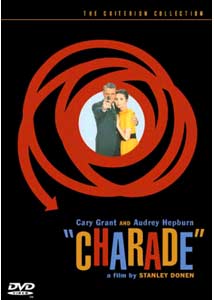
Charade

Cary Grant was as cool and smooth as any Hollywood actor. Audrey Hepburn was an iconic actress known for her style and she's adorable. Do we really need a reason to put these two stars in a movie together? Not really. Any movie with the duo has an appeal right off the bat, and it doesn't hurt that their only pairing together -- 1963's Charade -- did not just settle for their charm bringing in the audiences.

A blend of comedy, romance and spy thriller, Charade has the distinct feel of a Hitchcock movie, even the opening credits have the look of a Hitchcock.. With all that genre blending going on, a movie has the potential to overload. That's not the case here as the plot weaves in and out from romance to comedy to oh so ghastly murders. But hey, it's in Paris so who cares? There's so many switches and betrayals and misdirections, it can be difficult to follow at times but it is never enough to distract from what is an otherwise highly entertaining, stylish, well-made movie.

On a ski vacation in Switzerland, Regina Palmer (Hepburn) debates whether she should leave her husband, Charles, who always seems to be away on work. She meets Peter Joshua (Grant) and strikes up a conversation with him, telling the mysterious stranger to look her up if he's ever in Paris. But returning home, Regina finds out from French police (Jacques Marin) that Charles has been murdered. At her husband's funeral, three complete strangers show up to 'pay their respects.' There's Tex (James Coburn), a drawling cowboy, Scobie (George Kennedy), a bear of a man with a hook for a right hand, and Gideon (Ned Glass) a nerdy-looking fellow.

Not sure what is going on, Regina visits a CIA agent at the American embassy, Hamilton Bartholemew (Walter Matthau), to try and figure out what is going on. Bartholemew tells Regina a story that makes her think she never really knew her husband. Late in WWII, Charles, Tex, Scobie, Gideon and a fifth man, Carson Dyle, were guarding a gold shipment -- $250,000 -- to the French resistance but they buried it and says the Nazis took it. Now, it looks like Charles was going after the gold, and the other three think Regina has it now. She turns to the only person she thinks she can trust, Peter Joshua.

Handled by director Stanley Donen with a tongue-in-cheek feel, Charade is a stylish 60s thriller that highlights the onscreen charisma of its two leads, Grant and Hepburn. Grant was 59 when the movie was made, a little older than your typical romantic lead, but it's hardly noticeable whether it's the action scenes or the love scenes with Hepburn. As the damsel in distress, Hepburn gets to show off some of her comedic chops (I was surprised by how funny she was) while also handling the chase scenes well. The movie's success hinges on the chemistry between the two, and surprise, surprise, Grant and Hepburn pull it off with some great dialogue exchanges throughout.

With the whudunnit story though, there's one pretty major flaw that is hard to avoid. As the bodies start mounting in the search for a quarter million in gold, the clues and evidence point to Grant's Joshua as the culprit. The problem is this...Cary Grant just can't be a murderer. I'm usually pretty slow when it comes to figuring twists out, but this one was easy. I might not have known the 'why' but I figured the 'who' pretty easily. That doesn't take away from the fun though as two twists in the last act don't come across as forced like some twisting storylines tend to do. The final scene is particularly good because there are no hints/clues at all that would have led to this revelation. Sometimes it is fun just to let a movie pull you along, so sit back and enjoy.

This is a movie that's fallen into the public domain so beware of those cheap, low quality DVDs that pop up. I saw one of the lesser quality prints on TV and was still able to enjoy it, but if you're looking for the most watchable version look for the Criterion Collection DVD which is a little pricey but worth it in terms of quality. Or if you're looking to save some money, Youtube has it available to watch, starting with Part 1 of 12. This is the lower quality version so be forewarned.

Charade <----trailer (1963): *** 1/2 /****