In a career shortened by his tragic death at the age of 50, Steve McQueen turned in one memorable performance after another. Films like The Sand Pebbles and The Great Escape and Bullitt come to mind as frequent mentions as the King of Cool's most iconic roles (and rightfully so. They're gems). But how about an underrated performance that doesn't get its due? I've always thought 1962's Hell is For Heroes belonged in McQueen's best performance list. What do you think?
It's 1944 in France along the Siegfried Line and rumors are spreading that troops will be heading home soon. As the infantry waits, Private John Reese (McQueen) arrives as a replacement for an already undermanned squad commanded by Sgt. Larkin (Harry Guardino) with the platoon led by Sgt. Pike (Fess Parker). The troops aren't going home though. They're being sent back on the line. Larkin's squad is in for a surprise though. The entire company was moved in during the night, but many of the men were pulled back during the night and relocated up the line to serve as a reserve for an expected German counterattack. What's that mean for Larkin's squad? The sergeant and his five men, including Reese, must hold an extended portion of the line until reinforcements can arrive. Can they? What if the Germans catch on to who they're actually facing off against?
I think this is one of the best, most underrated war films ever made. It is rarely mentioned in conversations of great war films, but it certainly belongs in the conversation. Director Don Siegel -- one of the all-timers at tough guy flicks -- helms a low-budget (but never in a bad way) war story that genuinely tries to show the horrors of war on a more personal level. This isn't armies clashing over territory. This is a half-dozen tired American soldiers simply trying to survive against overwhelming odds and in spite of idiotic orders. There's no picture of the war or fighting on a grand scale. We're in the trenches and foxholes with the soldiers who are interested in getting some sleep, eating some good food and not being shot at for a change.
What's always appealed to me about Siegel's film is the stark, bleak look. 'Heroes' is filmed in black and white, an excellent decision that helps focus the story more on the soldiers and their bleak situation with little in the way of distraction. Much of the story is focused then on a stretch of line marked with trenches, dugouts, bombed-out pillboxes, dragon's teeth, foxholes and all the remnants of previous fighting littering the ground. Across the line a few hundred yards, the German infantry -- mostly unseen -- waits like a presence just waiting to strike. An obvious impact on TV's Combat!, 'Heroes' has a memorable look, Siegel not undone by his relatively small budget. Throw in a wartime score from Leonard Rosenman -- not used often, highly effective when used -- that's moody and dark and scene-setting and you've got all the ingredients! Watch the opening/closing credits HERE for a sample.
The thing holding it all together though is McQueen's performance as Private John Reese, a brutally efficient soldier and fighter who's most effective in combat. Once removed from the fighting, he starts to get in trouble. This is a performance built on such an intimidating presence that McQueen was supposedly incredibly difficult to work with on-set, rarely getting out of character. His physical appearance is gaunt with several day-old stubble on his face. For lack of a better description, Reese is a psychopath, albeit an incredibly capable soldier. One of the earliest method actors, McQueen radiates intensity and rage here like few performances I've ever seen. He barely speaks and when he does, he's short, quick and to the point. But my goodness, it is a highly memorable performance, one tortured individual who is most at home when the bullets are flying through the air and death is ever-present. One of my first thoughts when watching The Hurt Locker was that Jeremy Renner's character could have been Reese's son! What a performance from McQueen.
The entire ensemble is a strong one with McQueen leading the way. Fess Parker is solid as Pike, the tough sergeant trying to hold his men together even considering the hellish fighting they've been through. Larkin too is a capable soldier, Guardino doing a fine job of showing his unease at what he likely should do and what he's been ordered to do. His squad includes James Coburn as Henshaw, a mechanical genius, Bobby Darin as Corby, a scrounger always ready with a joke/quip, Mike Kellin as Kolinsky, the worrier, and Bill Mullikin as Cumberly, the cheery soldier with a positive outlook. The squad gets unlikely reinforcements in the form of Bob Newhart's Pvt. Driscoll, a typist who finds himself at the front line, and Nick Adams as Homer, a young Polish man who tags along with the squad. Also look for Joseph Hoover as Capt. Loomis, the company commander, and L.Q. Jones appearing very briefly as a supply sergeant.
This is one of the earliest examples of a real look at war I can think of. Sure, Darin has some jokes and Newhart briefly gets to do a telephone bit, but the message of the story is the absolute horror of war. There's nothing glamorous or glorifying about it. It's men killing men in horrific fashion. 'Heroes' is interested in small unit pictures, squad vs. squad, as we see some of the ruses Larkin's men use to trick the Germans into thinking there's far more of them than there really is. When the violence and gunfire erupts, it's quick, unsettling and vicious. Characters die in truly uncomfortable ways that isn't just "Bang...You're Dead." One characters screams "My guts! My guts! Don't tell my wife it was like this!" as he bleeds out before a medic arrives. Generally forgotten, 'Heroes' was one of the first to show war as it really was, laying the groundwork for many future war films.
Take this next part with a grain of salt (I'm not sure how true it is), but I've read Siegel simply ran out of money late in filming and the studio didn't give him anymore. What's next? An improvised ending that is actually one of the most memorable, startling endings I've ever seen. It stays in tune with the movie's general downbeat tone with no happy endings in sight. What I've always wondered then is this...what was the original ending if there was more of a budget? I'm still searching for that answer! In the meantime, it's an excellent movie, one that deserves far more of a reputation among war movie fans. It's a gem.
Hell is For Heroes (1962): ****/****
Rewrite of December 2010 review
The Sons of Katie Elder
"First, we reunite, then find Ma and Pa's killer...then read some reviews."
Showing posts with label James Coburn. Show all posts
Sunday, January 3, 2016
Monday, November 3, 2014
The Avenging Angel
I knew the name but knew little about the history. Meet Brigham Young, a leader of the Latter Day Saints movement, a Mormon who helped found Salt Lake City. I've always been aware of the name and dug into the history a little bit when he appeared on this season of AMC's Hell on Wheels. Well, when it rains, it pours. This little-known TV western popped up on Encore Westerns recently, 1995's The Avenging Angel.
Having traveled west as a young boy with Brigham Young (Charlton Heston) and his Mormon followers, Miles Utley grows up a devout follower of the leader of the Latter Day Saints. It is a movement though riles many, building enemies wherever it goes. As he grows up, Miles becomes a member of the Danites, a secret group of bodyguards who's sole job is to protect Young from threats both inside and out. Now a grown man, Miles (Tom Berenger) is the most skilled of these hidden assassins but now even he will be tested. He kills a would-be assassin during one of Young's speeches but something isn't quite right. It doesn't all add up. Instead, Miles finds that he's the target of something bigger and far more sinister than he thought. Who's the fall guy? Unless he can prove otherwise, it's Miles who may hang.
It's been the year of the TNT made-for-TV western here at Just Hit Play with Rough Riders, Crossfire Trail, The Buffalo Soldiers and now, The Avenging Angel. I had absolutely no recollection of this somewhat earlier entry until I stumbled across it late at night on Encore Westerns a few weeks ago. Like the other TV movies, it's made on a smaller scale but is never really limited by it. Good story, interesting cast, lots of potential. I liked the filming locations, giving the story a mountainous backdrop, and the story is pretty cool as it bends the truth quite a bit for the sake of some entertainment. 'Angel' is missing that special something, and I can't quite put my finger on it. It's okay but not much more.
If there's a positive, it is Tom Berenger, a very solid actor who never quite became a movie star. Recently I reviewed Rough Riders, Berenger stealing the movie in a showy part as future U.S. president Teddy Roosevelt. This is the polar opposite of that part. It's a quiet, intense, even sinister part. Without question, Berenger's Miles obeys orders, knowing he's doing what is required, no matter how difficult. And then it isn't so cut and dry. Has he been used for more sinister motives? I've always liked Berenger, and this is a solid, not so flashy tough guy part. That's not enough though so Miles is given two different love interests, Liza Rigby (Leslie Hope), the wife of an important Mormon leader, and Miranda Young (Fay Masterson), the daughter of Brigham Young. Three cheers for the unnecessary love story!
The rest of the cast is....well, interesting. Heston makes more of an extended cameo as the respected Mormon leader, Brigham Young. This is Hollywood legend Charlton Heston, glaring and growling through his part. Still, it is a Hollywood legend, providing some legitimacy just by being there. The same for James Coburn in a fun part as an aging Mormon trailsman, Porter Rockwell, who hasn't met his match, even training Miles for everything his job as a Danite will throw at him. Also look for Kevin Tighe, Jeffrey Jones, Tom Bower and Daniel Quinn as assorted Mormon leaders, some more important than others. It was also cool to see Andrew Prine in a cool one-scene appearance as a newspaper publisher who isn't afraid to ruffle some feathers through his stories.
I guess the worst thing you can say about this flick is its predictability. Once we've met everyone involved -- in other words, the suspects -- I thought it was pretty easy to piece it all together. When the twists come revealing who's behind this big, bad, evil plot, it doesn't really come along as a twist. That's the movie in a nutshell. Not surprising and could have been better. I'll give Berenger credit though. As another reviewer pointed out, he's got a knack for finding little known stories of American history, like here and in 1999's generally forgotten One Man's Hero. That one's good and Rough Riders was really good. This one's not that memorable.
The Avenging Angel (1995): **/****
Having traveled west as a young boy with Brigham Young (Charlton Heston) and his Mormon followers, Miles Utley grows up a devout follower of the leader of the Latter Day Saints. It is a movement though riles many, building enemies wherever it goes. As he grows up, Miles becomes a member of the Danites, a secret group of bodyguards who's sole job is to protect Young from threats both inside and out. Now a grown man, Miles (Tom Berenger) is the most skilled of these hidden assassins but now even he will be tested. He kills a would-be assassin during one of Young's speeches but something isn't quite right. It doesn't all add up. Instead, Miles finds that he's the target of something bigger and far more sinister than he thought. Who's the fall guy? Unless he can prove otherwise, it's Miles who may hang.
It's been the year of the TNT made-for-TV western here at Just Hit Play with Rough Riders, Crossfire Trail, The Buffalo Soldiers and now, The Avenging Angel. I had absolutely no recollection of this somewhat earlier entry until I stumbled across it late at night on Encore Westerns a few weeks ago. Like the other TV movies, it's made on a smaller scale but is never really limited by it. Good story, interesting cast, lots of potential. I liked the filming locations, giving the story a mountainous backdrop, and the story is pretty cool as it bends the truth quite a bit for the sake of some entertainment. 'Angel' is missing that special something, and I can't quite put my finger on it. It's okay but not much more.
If there's a positive, it is Tom Berenger, a very solid actor who never quite became a movie star. Recently I reviewed Rough Riders, Berenger stealing the movie in a showy part as future U.S. president Teddy Roosevelt. This is the polar opposite of that part. It's a quiet, intense, even sinister part. Without question, Berenger's Miles obeys orders, knowing he's doing what is required, no matter how difficult. And then it isn't so cut and dry. Has he been used for more sinister motives? I've always liked Berenger, and this is a solid, not so flashy tough guy part. That's not enough though so Miles is given two different love interests, Liza Rigby (Leslie Hope), the wife of an important Mormon leader, and Miranda Young (Fay Masterson), the daughter of Brigham Young. Three cheers for the unnecessary love story!
The rest of the cast is....well, interesting. Heston makes more of an extended cameo as the respected Mormon leader, Brigham Young. This is Hollywood legend Charlton Heston, glaring and growling through his part. Still, it is a Hollywood legend, providing some legitimacy just by being there. The same for James Coburn in a fun part as an aging Mormon trailsman, Porter Rockwell, who hasn't met his match, even training Miles for everything his job as a Danite will throw at him. Also look for Kevin Tighe, Jeffrey Jones, Tom Bower and Daniel Quinn as assorted Mormon leaders, some more important than others. It was also cool to see Andrew Prine in a cool one-scene appearance as a newspaper publisher who isn't afraid to ruffle some feathers through his stories.
I guess the worst thing you can say about this flick is its predictability. Once we've met everyone involved -- in other words, the suspects -- I thought it was pretty easy to piece it all together. When the twists come revealing who's behind this big, bad, evil plot, it doesn't really come along as a twist. That's the movie in a nutshell. Not surprising and could have been better. I'll give Berenger credit though. As another reviewer pointed out, he's got a knack for finding little known stories of American history, like here and in 1999's generally forgotten One Man's Hero. That one's good and Rough Riders was really good. This one's not that memorable.
The Avenging Angel (1995): **/****
Labels:
1990s,
Andrew Prine,
Charlton Heston,
James Coburn,
Jeffrey Jones,
Tom Berenger,
westerns
Tuesday, May 6, 2014
The Magnificent Seven
Why
do some movies stick with you more than others? I grew up watching
westerns and war movies from the 1950s and 1960s, movies that still
dominate my all-time Top 10, movies like The Alamo, The Great Escape,
The Dirty Dozen, The Good, the Bad and the Ugly, The Professionals and
several others. They still resonate now more than a few years later. Oh,
and of course, 1960's The Magnificent Seven.
Several years back I reviewed all four movies (the original and the 3
sequels), and it's been too long. Time for an updated review. The
original and still best, one of the best westerns ever and a personal
favorite.
South of the border in a small farming village, a bandit named Calvera (Eli Wallach) rides in and steals almost everything he and his gang of 40 bandits can carry, leaving just enough for the village to survive and start all over again. The villagers decide they've had about enough, riding north into Texas to buy guns so they can fight back against Calvera's gang. Instead, they meet Chris (Yul Brynner), a mysterious gunfighter clad in black who recommends they hire men rather than buy guns. Chris agrees to help, recruiting six other gunfighters from varying backgrounds, including an amiable drifter and gunfighter, Vin (Steve McQueen), to help out. The money is poor, the mission is more than difficult and the odds are stacked against them. Chris and the six gunslingers ride south, ready to help the village and fight off Calvera, odds be damned.
What a good movie. From director John Sturges (a master of 'Movies for Men'), 'Seven' came along at an interesting time for the western genre. Things, they were a'changing. Westerns were becoming more cynical, darker, more introspective, eventually transforming into the spaghetti western and the folksy, revisionist westerns of the 1970s. As fondly remembered as 'Seven' is now, it struggled in theaters in the U.S. upon its initial release, finding huge success in Europe and Asia before being re-issued in the U.S. several years later. It is an Americanized version of Akira Kurosawa's classic film, Seven Samurai, transplanting samurais for wild west gunfighters. It's interesting for any number of reasons, from the music to the budding star power on display, the dark tone to the exciting action scenes. A favorite of mine, a four-star review, and I won't really debate it. So there!
How about that casting?!? Much of the cast would go on to become huge stars, but here in 1960, they were relative unknowns. Brynner was the established star, The King and I, The Ten Commandments already to his name, and he's the pulse of the movie. His Chris is the unflappable leader of the group, a capable gunfighter who's also got all the qualities a leader should have. Loyal, strong, and tough. McQueen steps up to the plate in his first starring role. His Vin is easy-going, a drifter looking for work, quite good with his gun but maybe looking for something else in his life. Brynner and McQueen had a tumultuous relationship on the set -- McQueen trying to upstage the established star -- but the result is more than solid. Their chemistry crackles, their scenes together that perfect dynamic between the commander and his right-hand man. As the bandit Calvera, Wallach is an effortless scene-stealer, disappearing for huge stretches only to return with a vengeance.
And then there's the rest of the seven, because Brynner and McQueen weren't enough, right? Right?!? First, there's Charles Bronson as Bernardo O'Reilly, a half-Mexican, half-Irish gunman who has quite the reputation for cleaning up nasty jobs and his price is high...usually. He bonds with three boys from the village who "got him," promising to watch over him and care for his grave should he die in battle. Then, there's James Coburn as Britt, the laconic, knife-throwing specialist who has few equals with knife or gun. Coburn says about 30 words the entire movie and steals every scene he's in. Next, Robert Vaughn as Lee, a hired gun who's lost his edge, convinced he is facing his death. Next up, Brad Dexter as Harry Luck, a friendly gunslinger convinced there's more to the job than Chris is saying. Finally, there's Horst Buchholz as Chico, the young, unproven kid looking to make a name for himself with his more established cohorts.
As if that star power wasn't enough to carry a movie, I liked the characterization of these gunslingers more than anything. That's something I've picked up on repeated viewings as I got older. The portrayal of these hired guns is honest, not looking to glamorize these men. They're tied down by nothing, drift along from job to job, all the while risking their lives knowing that any job could be their last. What do they have? Their guns, their horse and maybe most importantly, their word. 'Seven' boasts one of my all-time favorite scenes, in westerns and films in general. Given a chance to run from a battle against seemingly insurmountable odds, they opt to stay. Coburn's Britt famously says "No one throws me my own guns and says run....Nobody." When offered the chance to run, Vaughn's Lee is told "Go ahead, Lee, you don't owe anything to anybody." His answer? "Except to myself." That's the essence and spirit of the movie. Men in a nasty situation doing what's right because it's what they should do, what is right. Profoundly simple, it always sticks with me, these men living by their code and what they believe in.
As for the villagers, look for Vladimir Sokoloff as the Old Man, the village patriarch who has little use for the whiny farmers, Jorge Martinez de Hoyos as Hilario, the fiery farmer ready to side with the gunmen, Pepe Hern and John Alonzo his close friends, Rico Alaniz as Sotero, the quasi-mayor of the village trying to weigh all his options and lastly, Rosenda Monteros as Petra, the young woman in the village who takes a liking to Buchholz's Chico. Also look for familiar western faces Robert J. Wilke and Whit Bissell in quick scenes.
More than anything else though, I think what's lasted the longest in the social conscience is composer Elmer Bernstein's musical score. The soundtrack is one of the all-time greats, the main theme a whistle-worthy track that will be running through your head for days. This is what big movie soundtracks can be. They add something to the movie itself, like a new but essential character. If you're not familiar with it (and even if you are), listen HERE. Just a great score, moving, adrenaline-pumping and emotional as needed. An all-time great score from an all-time great composer.
The story covers a lot of ground over its 128-minute running time. The story is fairly episodic, starting with the essential and entertaining recruiting of the team, Brynner's Chris seeking the gunmen out for the job. Each snippet gives each actor his chance to stand out on their own before becoming part of the group. Coburn's classic introduction especially stands out. From there, it's one great scene after another, both as entertainment value but also for delving into all the characters from the Seven to the villagers to Calvera. There isn't a ton of action, but the gunplay stands out, two featured sequences as the Seven tangle with Calvera's gang. It's the final battle that packs the emotional punch, the odds finally taking their toll on this group of gunfighters we've come to like and root for. It's a downbeat ending when you really consider it, but it's the right ending for this story and the characters.
Just a great movie. It was a favorite growing up and always will be. One of the best westerns ever, and an easy one to recommend for fans of the western genre or for someone just being introduced to the genre as a whole. A classic, plain and simple.
The Magnificent Seven (1960): ****/****
Rewrite of September 2009 review
South of the border in a small farming village, a bandit named Calvera (Eli Wallach) rides in and steals almost everything he and his gang of 40 bandits can carry, leaving just enough for the village to survive and start all over again. The villagers decide they've had about enough, riding north into Texas to buy guns so they can fight back against Calvera's gang. Instead, they meet Chris (Yul Brynner), a mysterious gunfighter clad in black who recommends they hire men rather than buy guns. Chris agrees to help, recruiting six other gunfighters from varying backgrounds, including an amiable drifter and gunfighter, Vin (Steve McQueen), to help out. The money is poor, the mission is more than difficult and the odds are stacked against them. Chris and the six gunslingers ride south, ready to help the village and fight off Calvera, odds be damned.
What a good movie. From director John Sturges (a master of 'Movies for Men'), 'Seven' came along at an interesting time for the western genre. Things, they were a'changing. Westerns were becoming more cynical, darker, more introspective, eventually transforming into the spaghetti western and the folksy, revisionist westerns of the 1970s. As fondly remembered as 'Seven' is now, it struggled in theaters in the U.S. upon its initial release, finding huge success in Europe and Asia before being re-issued in the U.S. several years later. It is an Americanized version of Akira Kurosawa's classic film, Seven Samurai, transplanting samurais for wild west gunfighters. It's interesting for any number of reasons, from the music to the budding star power on display, the dark tone to the exciting action scenes. A favorite of mine, a four-star review, and I won't really debate it. So there!
How about that casting?!? Much of the cast would go on to become huge stars, but here in 1960, they were relative unknowns. Brynner was the established star, The King and I, The Ten Commandments already to his name, and he's the pulse of the movie. His Chris is the unflappable leader of the group, a capable gunfighter who's also got all the qualities a leader should have. Loyal, strong, and tough. McQueen steps up to the plate in his first starring role. His Vin is easy-going, a drifter looking for work, quite good with his gun but maybe looking for something else in his life. Brynner and McQueen had a tumultuous relationship on the set -- McQueen trying to upstage the established star -- but the result is more than solid. Their chemistry crackles, their scenes together that perfect dynamic between the commander and his right-hand man. As the bandit Calvera, Wallach is an effortless scene-stealer, disappearing for huge stretches only to return with a vengeance.
And then there's the rest of the seven, because Brynner and McQueen weren't enough, right? Right?!? First, there's Charles Bronson as Bernardo O'Reilly, a half-Mexican, half-Irish gunman who has quite the reputation for cleaning up nasty jobs and his price is high...usually. He bonds with three boys from the village who "got him," promising to watch over him and care for his grave should he die in battle. Then, there's James Coburn as Britt, the laconic, knife-throwing specialist who has few equals with knife or gun. Coburn says about 30 words the entire movie and steals every scene he's in. Next, Robert Vaughn as Lee, a hired gun who's lost his edge, convinced he is facing his death. Next up, Brad Dexter as Harry Luck, a friendly gunslinger convinced there's more to the job than Chris is saying. Finally, there's Horst Buchholz as Chico, the young, unproven kid looking to make a name for himself with his more established cohorts.
As if that star power wasn't enough to carry a movie, I liked the characterization of these gunslingers more than anything. That's something I've picked up on repeated viewings as I got older. The portrayal of these hired guns is honest, not looking to glamorize these men. They're tied down by nothing, drift along from job to job, all the while risking their lives knowing that any job could be their last. What do they have? Their guns, their horse and maybe most importantly, their word. 'Seven' boasts one of my all-time favorite scenes, in westerns and films in general. Given a chance to run from a battle against seemingly insurmountable odds, they opt to stay. Coburn's Britt famously says "No one throws me my own guns and says run....Nobody." When offered the chance to run, Vaughn's Lee is told "Go ahead, Lee, you don't owe anything to anybody." His answer? "Except to myself." That's the essence and spirit of the movie. Men in a nasty situation doing what's right because it's what they should do, what is right. Profoundly simple, it always sticks with me, these men living by their code and what they believe in.
As for the villagers, look for Vladimir Sokoloff as the Old Man, the village patriarch who has little use for the whiny farmers, Jorge Martinez de Hoyos as Hilario, the fiery farmer ready to side with the gunmen, Pepe Hern and John Alonzo his close friends, Rico Alaniz as Sotero, the quasi-mayor of the village trying to weigh all his options and lastly, Rosenda Monteros as Petra, the young woman in the village who takes a liking to Buchholz's Chico. Also look for familiar western faces Robert J. Wilke and Whit Bissell in quick scenes.
More than anything else though, I think what's lasted the longest in the social conscience is composer Elmer Bernstein's musical score. The soundtrack is one of the all-time greats, the main theme a whistle-worthy track that will be running through your head for days. This is what big movie soundtracks can be. They add something to the movie itself, like a new but essential character. If you're not familiar with it (and even if you are), listen HERE. Just a great score, moving, adrenaline-pumping and emotional as needed. An all-time great score from an all-time great composer.
The story covers a lot of ground over its 128-minute running time. The story is fairly episodic, starting with the essential and entertaining recruiting of the team, Brynner's Chris seeking the gunmen out for the job. Each snippet gives each actor his chance to stand out on their own before becoming part of the group. Coburn's classic introduction especially stands out. From there, it's one great scene after another, both as entertainment value but also for delving into all the characters from the Seven to the villagers to Calvera. There isn't a ton of action, but the gunplay stands out, two featured sequences as the Seven tangle with Calvera's gang. It's the final battle that packs the emotional punch, the odds finally taking their toll on this group of gunfighters we've come to like and root for. It's a downbeat ending when you really consider it, but it's the right ending for this story and the characters.
Just a great movie. It was a favorite growing up and always will be. One of the best westerns ever, and an easy one to recommend for fans of the western genre or for someone just being introduced to the genre as a whole. A classic, plain and simple.
The Magnificent Seven (1960): ****/****
Rewrite of September 2009 review
Tuesday, March 4, 2014
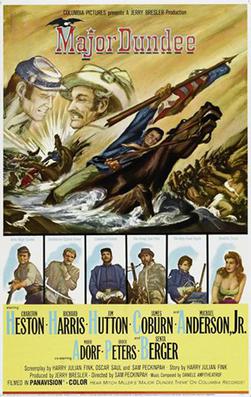
Major Dundee
It's late in 1864, the Civil War raging back east, but in the New Mexico territory, an Apache war party led by Sierra Charriba (Michael Pate), massacres a troop of U.S. cavalry, kidnapping three boys from a local ranch at the same time. The commander of a nearby Confederate prison camp, Major Amos Dundee (Charlton Heston) decides to go after the Apaches, rescuing the kids and bringing Charriba to justice. Without abandoning the camp though, he must assemble a ragtag group of Confederate prisoners, black infantry, inexperienced officers, cowboys, drunks, bandits and thieves to capture the Apaches. At his right hand is a Confederate officer and friend from the past but now a sworn enemy, Capt. Benjamin Tyreen (Richard Harris). Dundee's company of irregular cavalry hits the trail, following the Apache war party into Mexico, tangling with occupying French forces as well. The Apaches and the French are just two enemies though, the Union and Confederate loyalties among the company threatening to tear Dundee's command apart from the inside.
The production history of this Peckinpah western has quite the checkered past. The production in Mexico went way over budget and way over schedule. Depending on what you read, Peckinpah's original cut for 'Dundee' was anywhere between three and four hours long. When the studio took it away from him, it was cut down to just over two hours. A DVD released in 2005 had a new, never before seen version with almost 15 additional minutes added to the running time. Some additional footage was found that was unable to be reinserted back into the film, but as is, we'll probably never know/see Peckinpah's intended version. So what's the end result with the 136-minute version? A far better western than the 123-minute version that features some good performances, a ridiculously deep cast, some ahead of its time vicious action, and a story that drifts needlessly at times.
What was Peckinpah's goal? He wanted to make an epic western, a new western in the vein of the John Ford cavalry movies. It was supposed to be big and violent full of scope and vision. 'Dundee' doesn't quite live up to that, but in terms of pure entertainment, it's hard to beat. It starts with Charlton Heston in the titular role. Like Peckinpah's best movies, Dundee is the flawed anti-hero like nobody's business. The story almost becomes Moby Dick in the Civil War west. Dundee has been posted to this isolated prison camp because of a command decision he made at Gettysburg (hinted at, never spelled out), and he intends to right that wrong. His plan? Get the kids back, take out Sierra Charriba, become a hero again. The problem? Dundee may not be cut out for command. He's equal parts brilliant strategist with overreaching egoist. His pride and ego get in the way of things, the mission into Mexico becoming an obsession. Quite the performance, one that doesn't always get the notoriety it deserves in Heston's already impressive filmography.
One of Peckinpah's favorite storytelling devices was the anti-hero and his right hand man, sometimes a former friend turned unwilling ally, a device used to its best ability four years later in The Wild Bunch. Here, that relationship is between Heston's Dundee and Richard Harris' Capt. Ben Tyreen. Again, their checkered history (friendship turned bitter rivalry, even hatred) all leads up to this, two men forced to work together. Harris is one of my favorite actors, and this is my favorite performance of many, one of my all-time favorite characters in any film. Harris' Tyreen is everything Dundee wants to be; intelligent, charming, a good leader, and well liked and respected by his men. Tyreen has one great line after another, Harris bringing this character to life, a Irish immigrant turned cashiered American officer to Confederate renegade. The dynamic between Dundee and Tyreen provides some of the movie's best dialogue scenes, the confrontations crackling with energy. Kudos to both actors for developing that chemistry to its fullest.
Brace yourself though. This movie has one sick cast of tough guy actors, many from the Peckinpah stock character Hall of Fame. Jim Hutton provides some laughs as Lt. Graham, a bumbling artillery officer assigned to the cavalry. James Coburn is a scene-stealer as Samuel Potts, Dundee's one-armed, bearded, quick-witted scout, as is Mario Adorf as the feisty, loyal Sgt. Gomez, Dundee's most capable Union soldier. Michael Anderson Jr. does a fine job too as Trooper Ryan, Dundee's young bugler, providing the narration from his in-mission journal. There's also Brock Peters as Aesop, the leader of the small contingent of black infantry, Slim Pickens as Wiley, the drunken mule-packer, R.G. Armstrong as Reverend Dahlstrom, the shotgun-wielding preacher, and Dub Taylor as Priam, the disheveled horse thief. As for Tyreen's Confederates, there's Ben Johnson as the tough Sgt. Chillum, L.Q. Jones and Warren Oates as Arthur and O.W. Hadley, and John Davis Chandler as Jimmy Lee, the troublemaker. Also look for Karl Swenson as Dundee's second-in-command at the prison camp. Just a ridiculously deep cast full of great characters.
Where the movie struggles some -- but is also damn entertaining in those struggles -- is the final 40 minutes. The story does drift too much from the Apaches to the French to Dundee's lost weekend in Durango and a brief love affair with Senta Berger's Teresa. Trooper Ryan's narration gets choppy, weeks slipping by in a flash. The saving grace is back-to-back action sequences, one a showdown with the Apaches in a box canyon, the other a bloody, violent battle with French lancers in the Rio Grande. This is Peckinpah at his action best, clearly an indicator of where his movies would go, especially with The Wild Bunch. Watch the scene with the French and see how brutal it is, how graphic it could have been if censors allowed it. Characters are unceremoniously killed off (blink and you'll miss it), including one surprising death, but it's just a great action scene leading to a quick ending.
Most Peckinpah fans don't list this as their favorite, maybe not even one of their favorites. I just really like this movie, always have, and the longer version with the additional 15 minutes or so really does help make it better. The musical score from composer Daniele Amfitheatrof takes some heat, especially the Major Dundee theme (listen HERE), but I like it, almost as a guilty pleasure. Filming on location in Mexico, including stops in Durango, a gorgeous waterfall location at El Saltito, and many more, all add to that authentic flavor. You really feel like you're on an odyssey across Mexico, seeing a variety of spots, locations and cities. One of my favorite westerns, a heavily flawed but just a damn entertaining movie in the end. Hard to beat, even if we'll never see that epic 4-hour version Peckinpah intended.
Major Dundee (1965): ****/****
Rewrite of August 2009 review
Wednesday, July 24, 2013
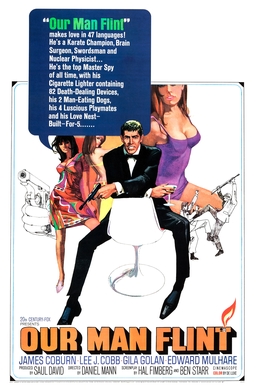
Our Man Flint
By 1966, the James Bond series was up and running, international hit one after another with Dr. No, From Russia With Love, Goldfinger and Thunderball already hits with audiences. Where there's success, comes knockoffs though, and the spoofs weren't far behind. One of the first to follow in Bond's footsteps was 1966's Our Man Flint.
All around the world, horrific weather catastrophes are wreaking havoc. What's the cause? Three scientists working for international criminal organization Galaxy have created a weather machine that can cause thunderstorms, hurricanes, tornadoes, volcanic eruptions. Galaxy demands that all the world's nations capitulate to them, but a N.A.T.O.-like organization, Z.O.W.I.E. (Zonal Organization for World Intelligence and Espionage) has one last solution; get super-spy Derek Flint (James Coburn) out of retirement and let him try to take out Galaxy and its weather weapon. Flint is a hard sell, but he takes the job eventually. There is little in the way of clues and no idea where Galaxy's base is. Flint pursues the one piece of evidence he does have, but Galaxy and its henchmen are waiting for him.
As a huge fan of the 007 series, I'll give any spoof a shot. I'd seen In Like Flint (the sequel to this 1966 original) and liked it if I didn't love it, the same for Dean Martin in the Matt Helm series. From director Daniel Mann, 'Our' is a solid if unspectacular entry into the spy spoof genre. It pokes fun at James Bond, even mentioning a rival and fellow agent of 007, his code name Triple-O 8. At one point, Flint even brings up Spectre, Bond's main rival, and calls 007's Walther PPK, booby-trapped briefcase 'crude.' It knows where it's coming from and has some fun with it while still paying tribute, not like the goofier but still funny Austin Powers series.
The biggest thing going for both movies is the casting of James Coburn as Flint. Already a star thanks to his parts in The Magnificent Seven, The Great Escape and Charade (among others), Coburn wouldn't seem like an obvious choice to play Flint, but he makes it is own. Up until this point, he was more of a stoic anti-hero and man of few words. It's a showier part here but never an obvious one. Coburn's Flint is an epically successful ladies man, knowledgeable about anything and everything, and a specialist in karate and hand-to-hand combat, disliking the brutality of guns. His lankiness, that charming smile, that ever-calm demeanor, it all adds up to make a great character. At one point, he pursues a lead because he knows the ingredients to bouillabaisse, visiting every restaurant in Paris until he can find it, just knowing how it would taste. There's some pressure playing the American James Bond, but Coburn kills the part.
What's lacking though beyond Coburn is any more memorable characters behind him. Lee J. Cobb is a scene-stealer as Cramden, the Z.O.W.I.E. commander and Flint's former commanding officer, always trying to keep tabs on his agent but usually just going along for the ride. Gila Golan is the gorgeous Flint girl, playing Gila (original name, huh?), a Galaxy member tasked with bringing in Flint, preferably alive and before he can complete his mission. The main villain is Malcolm Rodney, played by Edward Mulhare, but he lacks any real charisma, any punch in terms of an intimidating Bond villain. He never really poses a threat to Flint, too bad because his henchman, Gruber (Michael St. Clair) is dispatched far too quickly. The three quasi-evil doctors are played by Benson Fong, Rhys Williams and Peter Brocco. As for Flint's harem of beautiful, scantily clad women, look for Shelby Grant, Sigrid Valdis, Gianna Serra and Helen Funai, around as eye candy without more than 10 words said among the four.
The rebellious, roguish super spy, the sexy women around every corner, the impregnable island fortress, the power-hungry villain, the impossible situation that screams suicide. This spoof has all the touches of a good Bond film, but just in the laugh department it is missing that special something that could bring it up a notch or two. It only runs 107 minutes, but it drags, especially in the second half. One episodic set piece to another, they don't always add up to a really good final product. Through it all, Coburn's laconic, smart-assed Flint makes it worthwhile, but it's not a classic. Just an enjoyable movie that's good for a couple laughs.
Our Man Flint (1966): ** 1/2 /****
All around the world, horrific weather catastrophes are wreaking havoc. What's the cause? Three scientists working for international criminal organization Galaxy have created a weather machine that can cause thunderstorms, hurricanes, tornadoes, volcanic eruptions. Galaxy demands that all the world's nations capitulate to them, but a N.A.T.O.-like organization, Z.O.W.I.E. (Zonal Organization for World Intelligence and Espionage) has one last solution; get super-spy Derek Flint (James Coburn) out of retirement and let him try to take out Galaxy and its weather weapon. Flint is a hard sell, but he takes the job eventually. There is little in the way of clues and no idea where Galaxy's base is. Flint pursues the one piece of evidence he does have, but Galaxy and its henchmen are waiting for him.
As a huge fan of the 007 series, I'll give any spoof a shot. I'd seen In Like Flint (the sequel to this 1966 original) and liked it if I didn't love it, the same for Dean Martin in the Matt Helm series. From director Daniel Mann, 'Our' is a solid if unspectacular entry into the spy spoof genre. It pokes fun at James Bond, even mentioning a rival and fellow agent of 007, his code name Triple-O 8. At one point, Flint even brings up Spectre, Bond's main rival, and calls 007's Walther PPK, booby-trapped briefcase 'crude.' It knows where it's coming from and has some fun with it while still paying tribute, not like the goofier but still funny Austin Powers series.
The biggest thing going for both movies is the casting of James Coburn as Flint. Already a star thanks to his parts in The Magnificent Seven, The Great Escape and Charade (among others), Coburn wouldn't seem like an obvious choice to play Flint, but he makes it is own. Up until this point, he was more of a stoic anti-hero and man of few words. It's a showier part here but never an obvious one. Coburn's Flint is an epically successful ladies man, knowledgeable about anything and everything, and a specialist in karate and hand-to-hand combat, disliking the brutality of guns. His lankiness, that charming smile, that ever-calm demeanor, it all adds up to make a great character. At one point, he pursues a lead because he knows the ingredients to bouillabaisse, visiting every restaurant in Paris until he can find it, just knowing how it would taste. There's some pressure playing the American James Bond, but Coburn kills the part.
What's lacking though beyond Coburn is any more memorable characters behind him. Lee J. Cobb is a scene-stealer as Cramden, the Z.O.W.I.E. commander and Flint's former commanding officer, always trying to keep tabs on his agent but usually just going along for the ride. Gila Golan is the gorgeous Flint girl, playing Gila (original name, huh?), a Galaxy member tasked with bringing in Flint, preferably alive and before he can complete his mission. The main villain is Malcolm Rodney, played by Edward Mulhare, but he lacks any real charisma, any punch in terms of an intimidating Bond villain. He never really poses a threat to Flint, too bad because his henchman, Gruber (Michael St. Clair) is dispatched far too quickly. The three quasi-evil doctors are played by Benson Fong, Rhys Williams and Peter Brocco. As for Flint's harem of beautiful, scantily clad women, look for Shelby Grant, Sigrid Valdis, Gianna Serra and Helen Funai, around as eye candy without more than 10 words said among the four.
The rebellious, roguish super spy, the sexy women around every corner, the impregnable island fortress, the power-hungry villain, the impossible situation that screams suicide. This spoof has all the touches of a good Bond film, but just in the laugh department it is missing that special something that could bring it up a notch or two. It only runs 107 minutes, but it drags, especially in the second half. One episodic set piece to another, they don't always add up to a really good final product. Through it all, Coburn's laconic, smart-assed Flint makes it worthwhile, but it's not a classic. Just an enjoyable movie that's good for a couple laughs.
Our Man Flint (1966): ** 1/2 /****
Labels:
1960s,
Edward Mulhare,
Espionage,
James Coburn,
Lee J. Cobb,
Rhys Williams
Monday, May 20, 2013
A Reason to Live, A Reason to Die
I seem to have checkered pasts when it comes to tracking down hard-to-find movies that I really want to see. On first effort, something goes wrong; cable goes out, recording the wrong film/time, ninjas....that sort of thing. I actually saw this 1972 spaghetti western two years ago via Netflix streaming, but it was the heavily edited 92-minute version. It aired recently on MGM HD and was listed at the much longer, less-edited 111 minute version. Well, point to you MGM, you fooled me. It was the 92-minute version, but here's the review just the same, 1972's A Reason to Live, A Reason to Die.
It's early in the Civil War and as the fighting picks up in the Southwest, Colonel Pembroke (James Coburn), a disgraced Union officer, is looking for vengeance. He has been labeled a coward and a traitor for surrendering Fort Holman, a key position in the territory, to the Confederates without a shot fired. Now, he's got a plan to exact his revenge on the man who took the fort from him, a Confederate major named Ward (Telly Savalas). A frontal assault on the mountaintop fortress would be suicide so he intends to take the fort back on a nearly suicidal commando mission. Commanders won't grant him any troops so instead he ends up with a small squad of convicts, seven men he saves from the gallows, including a man from his past, Eli (Bud Spencer). His odds seem slim as his convicts squad seems more interested in killing him than completing the mission, but heavily guarded and fortified Fort Holman awaits.
It's pretty obvious watching the heavily-edited 92-minute version of this spaghetti western from director Tonino Valerii that some important and major portions of the story were edited. Much of the 20-to-25 minutes that were cut (lengths vary depending on sources) were from an opening prologue that establish how Pembroke and Eli meet in the war-torn Southwest. Instead, we get a dropped-in opening that actually gives away much of the ending. Ta-da, then we're back to the beginning -- sort of -- and away we go with the mission. At different times, the story does feel disjointed, out of sorts, a little rushed and at ends. Can I think of anymore cliches? Nah, that's good for now. The longer version was released on DVD via Wild East, but that DVD is currently worth $190 at Amazon so I don't see a viewing happening any time soon so for now, the heavily-edited version it is!
Now take the rest of what I'm about to write with a grain of salt. I love spaghetti westerns, and I love men-on-a-mission movies. So with that said, is this movie especially good? Nope, but I still liked it a lot. Obviously with the Civil War setting, this isn't your typical gunfighters and bandits spaghetti western. The Civil War background certainly adds a nice touch to a familiar genre. 'Reason' is also aided by some familiar locations from movies like Once Upon a Time in the West, The Deserter and others. The best use though is the fortress from El Condor, here as Confederate garrison Fort Holman. It appears gigantic and imposing, a fortress that's impossible to take down. It's a good-looking western, and the score from Riz Ortolani is a little schizophrenic but pretty cool. Give it a sample HERE with the main theme.
If the basic storyline sounds familiar, it should. It's a not subtle rip-off of 1967's The Dirty Dozen and countless other convicts turned commandos flick. Coburn is solid but nothing special as the revenge-seeking Pembroke, his backstory giving him a sympathetic edge, but he's mailing it in here. Spencer is the star, given more screentime and providing more interest in general. Savalas is given absolutely nothing to do in an appearance that is little more than a cameo. Pembroke's convict commandos lack the star power, basically a unique group of murderers/rapists/thieves and deserters that include Spencher's Eli, Sgt. Brent (Reinhard Kolldehoff), the Union NCO, MacIvers (Guy Mairesse), a murdering muleskinner, Wendel (Ugo Fangareggi), Pickett (Benito Stefanelli), a deserter and rapist, Fernandez (Adolfo Lastretti), a thief who doomed 30 Union soldiers with a bad deal, and a half-breed Apache (Joseph Persaud). The group reminded me of a similar convict crew in 1969's Play Dirty, unique faces with no real background who are meant to be picked off one-by-one. Cool group just the same.
Spaghetti western fans going in shouldn't expect much in the way of action or violence the first 50 minutes or so. If you're looking for a positive, it's this; they were saving all the action for the last 40 minutes!!! Pembroke and his convict commandos make their play attacking Fort Holman in an explosive finale that features an orgy of Gatling guns, explosions and some impressive stuntwork. Like the movie itself, it's a lot of fun. Yes, stupid fun with a whole lot of flaws, but fun just the same. Oh, and the name is one of the coolest ever.
A Reason to Live, A Reason to Die (1972): ***/****
It's early in the Civil War and as the fighting picks up in the Southwest, Colonel Pembroke (James Coburn), a disgraced Union officer, is looking for vengeance. He has been labeled a coward and a traitor for surrendering Fort Holman, a key position in the territory, to the Confederates without a shot fired. Now, he's got a plan to exact his revenge on the man who took the fort from him, a Confederate major named Ward (Telly Savalas). A frontal assault on the mountaintop fortress would be suicide so he intends to take the fort back on a nearly suicidal commando mission. Commanders won't grant him any troops so instead he ends up with a small squad of convicts, seven men he saves from the gallows, including a man from his past, Eli (Bud Spencer). His odds seem slim as his convicts squad seems more interested in killing him than completing the mission, but heavily guarded and fortified Fort Holman awaits.
It's pretty obvious watching the heavily-edited 92-minute version of this spaghetti western from director Tonino Valerii that some important and major portions of the story were edited. Much of the 20-to-25 minutes that were cut (lengths vary depending on sources) were from an opening prologue that establish how Pembroke and Eli meet in the war-torn Southwest. Instead, we get a dropped-in opening that actually gives away much of the ending. Ta-da, then we're back to the beginning -- sort of -- and away we go with the mission. At different times, the story does feel disjointed, out of sorts, a little rushed and at ends. Can I think of anymore cliches? Nah, that's good for now. The longer version was released on DVD via Wild East, but that DVD is currently worth $190 at Amazon so I don't see a viewing happening any time soon so for now, the heavily-edited version it is!
Now take the rest of what I'm about to write with a grain of salt. I love spaghetti westerns, and I love men-on-a-mission movies. So with that said, is this movie especially good? Nope, but I still liked it a lot. Obviously with the Civil War setting, this isn't your typical gunfighters and bandits spaghetti western. The Civil War background certainly adds a nice touch to a familiar genre. 'Reason' is also aided by some familiar locations from movies like Once Upon a Time in the West, The Deserter and others. The best use though is the fortress from El Condor, here as Confederate garrison Fort Holman. It appears gigantic and imposing, a fortress that's impossible to take down. It's a good-looking western, and the score from Riz Ortolani is a little schizophrenic but pretty cool. Give it a sample HERE with the main theme.
If the basic storyline sounds familiar, it should. It's a not subtle rip-off of 1967's The Dirty Dozen and countless other convicts turned commandos flick. Coburn is solid but nothing special as the revenge-seeking Pembroke, his backstory giving him a sympathetic edge, but he's mailing it in here. Spencer is the star, given more screentime and providing more interest in general. Savalas is given absolutely nothing to do in an appearance that is little more than a cameo. Pembroke's convict commandos lack the star power, basically a unique group of murderers/rapists/thieves and deserters that include Spencher's Eli, Sgt. Brent (Reinhard Kolldehoff), the Union NCO, MacIvers (Guy Mairesse), a murdering muleskinner, Wendel (Ugo Fangareggi), Pickett (Benito Stefanelli), a deserter and rapist, Fernandez (Adolfo Lastretti), a thief who doomed 30 Union soldiers with a bad deal, and a half-breed Apache (Joseph Persaud). The group reminded me of a similar convict crew in 1969's Play Dirty, unique faces with no real background who are meant to be picked off one-by-one. Cool group just the same.
Spaghetti western fans going in shouldn't expect much in the way of action or violence the first 50 minutes or so. If you're looking for a positive, it's this; they were saving all the action for the last 40 minutes!!! Pembroke and his convict commandos make their play attacking Fort Holman in an explosive finale that features an orgy of Gatling guns, explosions and some impressive stuntwork. Like the movie itself, it's a lot of fun. Yes, stupid fun with a whole lot of flaws, but fun just the same. Oh, and the name is one of the coolest ever.
A Reason to Live, A Reason to Die (1972): ***/****
Thursday, October 4, 2012
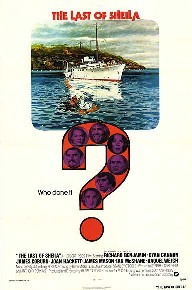
The Last of Sheila
Whodunit?!? Was it the suspicious relative who stands to earn millions of dollars on someone's death? Was it a hired gun? Oh, the murder mystery, where you can throw a long list of characters/suspects into one story, and let the chaos ensue. There are comedies like Clue, dramas like Murder on the Orient Express, and somewhere in between the two genres, 1973's The Last of Sheila.
It has been a full year since the death by hit-and-run of the wife of powerful Hollywood producer Clinton Green (James Coburn), and he's got a plan. Green has invited six friends of both his and his dead wife to a week-long vacation in the Mediterranean on his expansive yacht. All of them with different motivations and reasonings, they all agree. Green has a complicated scavenger hunt for them that will take them to six different ports, all to see who can figure out the end game first. But as the clues come together, the guests begin to realize there may be something more sinister going on.
For the last couple of years, I've been aware of this 1973 murder mystery with a touch of comedy amidst a much darker undertone. I'll get into it more in a bit, but the star power is impressive so it would be hard to completely miss it. From writers Stephen Sondheim and Anthony Perkins (yes, the actor) comes a script that is very smart, very clever and very entertaining. The game turns into a genuine mystery as a second murder comes into question. It's fast paced though, and the first hour is basically perfect as clues start to come together about what exactly Green is up to.
And what is his plan? The Hollywood producer has issued each of his guests a notecard with a single message; "I am a....." They seem like personality traits taken from the ether, but the guests begin to figure out that Green has identified very specific traits from each of his guests, one more embarrassing than the others. One clue is the worst though. "I am a hit and run killer." Does Clinton Green hope to reveal the identify of his wife's murderer? The scavenger hunt provides two great mood-setting scenes, equal parts dark humor and then just plain old darkness. It's clever without being too clever, and in tone alone, it's different from basically any other murder mystery I've ever seen. Win-win.
Now onto that cast, and no James Coburn is not the only star. This is a part that's pitch perfect for him. He's likable, he's charming, and he's an a-hole. His Clinton Green knows how to get under someone's skin like he's being paid to do it. By the 1970s, Coburn seemed to specialize in these amoral characters with questionable....well, everything. Green lures his guests in with the promise of possibly producing a movie about his wife, and he wants them all involved. There's Tom (Richard Benjamin), a screenwriter fallen on tough times, and his wife, Lee (Joan Hackett), Christine (Dyan Cannon), a talent agent who's had a relationship with Clinton in the past, Philip (James Mason), a director now forced to direct TV commercials, and Anthony (Ian McShane), an assistant/agent for his movie star wife, Alice (Raquel Welch). Not a weak performance in the bunch.
From here on in, I continue admitting that I liked this movie a lot and will give it a positive rating. But following my enjoyment from the first hour, I didn't go along as much for the second hour. The story takes a very surprising twist around the 60-70 minute mark that I didn't see coming in the least. The remainder of the story twists, turns, veers, U-turns and brakes all over the place. It all comes together in a long, detailed and fast-moving scene late as everything comes together, but all I could think was that I was missing something. Definitely an ending (and its build-up) that would probably improve on multiple viewings. I'll add it to the list, but for now, I very much enjoyed my first viewing. Above average murder mystery.
The Last of Sheila <---trailer (1973): ***/****
It has been a full year since the death by hit-and-run of the wife of powerful Hollywood producer Clinton Green (James Coburn), and he's got a plan. Green has invited six friends of both his and his dead wife to a week-long vacation in the Mediterranean on his expansive yacht. All of them with different motivations and reasonings, they all agree. Green has a complicated scavenger hunt for them that will take them to six different ports, all to see who can figure out the end game first. But as the clues come together, the guests begin to realize there may be something more sinister going on.
For the last couple of years, I've been aware of this 1973 murder mystery with a touch of comedy amidst a much darker undertone. I'll get into it more in a bit, but the star power is impressive so it would be hard to completely miss it. From writers Stephen Sondheim and Anthony Perkins (yes, the actor) comes a script that is very smart, very clever and very entertaining. The game turns into a genuine mystery as a second murder comes into question. It's fast paced though, and the first hour is basically perfect as clues start to come together about what exactly Green is up to.
And what is his plan? The Hollywood producer has issued each of his guests a notecard with a single message; "I am a....." They seem like personality traits taken from the ether, but the guests begin to figure out that Green has identified very specific traits from each of his guests, one more embarrassing than the others. One clue is the worst though. "I am a hit and run killer." Does Clinton Green hope to reveal the identify of his wife's murderer? The scavenger hunt provides two great mood-setting scenes, equal parts dark humor and then just plain old darkness. It's clever without being too clever, and in tone alone, it's different from basically any other murder mystery I've ever seen. Win-win.
Now onto that cast, and no James Coburn is not the only star. This is a part that's pitch perfect for him. He's likable, he's charming, and he's an a-hole. His Clinton Green knows how to get under someone's skin like he's being paid to do it. By the 1970s, Coburn seemed to specialize in these amoral characters with questionable....well, everything. Green lures his guests in with the promise of possibly producing a movie about his wife, and he wants them all involved. There's Tom (Richard Benjamin), a screenwriter fallen on tough times, and his wife, Lee (Joan Hackett), Christine (Dyan Cannon), a talent agent who's had a relationship with Clinton in the past, Philip (James Mason), a director now forced to direct TV commercials, and Anthony (Ian McShane), an assistant/agent for his movie star wife, Alice (Raquel Welch). Not a weak performance in the bunch.
From here on in, I continue admitting that I liked this movie a lot and will give it a positive rating. But following my enjoyment from the first hour, I didn't go along as much for the second hour. The story takes a very surprising twist around the 60-70 minute mark that I didn't see coming in the least. The remainder of the story twists, turns, veers, U-turns and brakes all over the place. It all comes together in a long, detailed and fast-moving scene late as everything comes together, but all I could think was that I was missing something. Definitely an ending (and its build-up) that would probably improve on multiple viewings. I'll add it to the list, but for now, I very much enjoyed my first viewing. Above average murder mystery.
The Last of Sheila <---trailer (1973): ***/****
Labels:
1970s,
Ian McShane,
James Coburn,
James Mason,
Raquel Welch,
Richard Benjamin
Wednesday, April 25, 2012
Waterhole #3
Throw together elements of It's a Mad, Mad World, Mackenna's Gold, and The Great Race and more or less you get 1967's Waterhole # 3. It comes from my not so favorite sub-genre, the comedic western, but that isn't what bothered me the most. Two major flaws trip up this otherwise pretty decent western.
A U.S. Army gold shipment of four gold bars valued at $100,000 is stolen by a gang and buried near a waterhole by their leader, Doc Quinlen (Roy Jenson). Through a run-in that gets violent quickly, gambler Lewton Cole (James Coburn) discovers a map that will lead him to the buried gold, but he's obviously not the only one looking for it. He steals a horse from Sheriff John Copperud (Carroll O'Connor) and heads off into the desert for the gold. Copperud and his daughter, Billee (Margaret Blye), are not far behind, both with their own motivations. Not far behind them? The double-crossed members of the gang and a cavalry troop looking to get its gold shipment back.
As a fan of westerns, I'll give them all a try; epic or small scale, heavy on action or more artsy, deathly serious or straight comedy. Mostly I was intrigued by this one because of the cast despite all the mixed to negative reviews I was reading. Even Netflix didn't think I'd love it, much less like it too much. For a comedic western, it isn't grating like so many other efforts. It is genuinely funny at times. The cast is too talented for it not to be at least funny by accident, even unintentionally. So where does it go wrong? Pick your poison. There's two guesses, one annoying and one somewhat ethically questionable.
Using the term 'ethically questionable' in any review sounds a little off to me, but it's all I can come up. As Coburn's Lewton heads for the gold in the desert, he's caught in the process of stealing O'Connor's horse, meeting Blye's Billee in the process. He forces himself on her, and even though she kisses back because his kiss must be just so magical....it's a rape scene. Lewton rapes Billee. So how to follow it up? Make it a funny rape scene. In a comedic western, I object to a main character raping a woman. Check that, I object to any character doing that, but you get my point. Is that worth being funny over? I don't care if it's a goofy, stupid movie. I felt funny rooting for Coburn's character after that scene. Oh, and he basically does the same thing toward the end of the movie. It hit a sour note with me, her father more interested in the gold, Billee discovering she loves him after being raped, Lewton playing it off like it was nothing. Ah, rape, one of the lighter topics to deal with.
Now in comparison to a comedic rape, my next objection is going to sound stupid and particularly tame. Making this comedic western more folksy and goofy is country singer Roger Miller's song Waterhole #3 (Code of the West) that basically plays over all the action in the 96-minute movie. Nothing like a folk country western song to rev things up! It talks about killing and raping not being so bad, and does a fantastic job of describing everything going on on-screen, what we've seen and what we're about to see. It's like closed captioning on steroids and set to a tune. Trying to show everyone how awful the song is, I of course cannot find a link to it anywhere on the plains of the Internet. Maybe that's a good thing.
The thing preventing me from completely trashing this movie was the cast. That whole rape thing aside, Coburn brings a certain charm to Lewton, a no-account gambler who's able to manipulate and twist anyone around him. O'Connor too gets to ham it up as the not-so-honest Honest John, Sheriff of Integrity, Arizona. The more obvious physical humor aside, I enjoyed Coburn and O'Connor's back and forth more than anything. In a horrifically written character, Blye is nice eye candy as Billee. Claude Akins plays Sgt. Fugger, the inside man on the robbery, with Jenson and Timothy Carey as the imposing but slow Hilb rounding out the gang. Bruce Dern is funny in his one scene as Tippen, the deputy who disappears on a never-seen posse. James Whitmore appears for two scenes as cavalry captain Shipley, while Joan Blondell is funny as Lavinia, the owner of a whorehouse where everything comes crashing down.
Too bad overall, two bad choices crippling this movie's chances. Take the incredibly unfunny rape/revenge storyline out, replace Miller's mind-numbing score, and you've got a pretty decent comedic western. That pains me a little to say. I'm not typically a fan of comedy being thrown in with a western, but Coburn and O'Connor make this at least partially worth watching. They're very good together, very funny, but it's still a mess of a movie.
Waterhole #3 <---Youtube clip (1967): **/****
A U.S. Army gold shipment of four gold bars valued at $100,000 is stolen by a gang and buried near a waterhole by their leader, Doc Quinlen (Roy Jenson). Through a run-in that gets violent quickly, gambler Lewton Cole (James Coburn) discovers a map that will lead him to the buried gold, but he's obviously not the only one looking for it. He steals a horse from Sheriff John Copperud (Carroll O'Connor) and heads off into the desert for the gold. Copperud and his daughter, Billee (Margaret Blye), are not far behind, both with their own motivations. Not far behind them? The double-crossed members of the gang and a cavalry troop looking to get its gold shipment back.
As a fan of westerns, I'll give them all a try; epic or small scale, heavy on action or more artsy, deathly serious or straight comedy. Mostly I was intrigued by this one because of the cast despite all the mixed to negative reviews I was reading. Even Netflix didn't think I'd love it, much less like it too much. For a comedic western, it isn't grating like so many other efforts. It is genuinely funny at times. The cast is too talented for it not to be at least funny by accident, even unintentionally. So where does it go wrong? Pick your poison. There's two guesses, one annoying and one somewhat ethically questionable.
Using the term 'ethically questionable' in any review sounds a little off to me, but it's all I can come up. As Coburn's Lewton heads for the gold in the desert, he's caught in the process of stealing O'Connor's horse, meeting Blye's Billee in the process. He forces himself on her, and even though she kisses back because his kiss must be just so magical....it's a rape scene. Lewton rapes Billee. So how to follow it up? Make it a funny rape scene. In a comedic western, I object to a main character raping a woman. Check that, I object to any character doing that, but you get my point. Is that worth being funny over? I don't care if it's a goofy, stupid movie. I felt funny rooting for Coburn's character after that scene. Oh, and he basically does the same thing toward the end of the movie. It hit a sour note with me, her father more interested in the gold, Billee discovering she loves him after being raped, Lewton playing it off like it was nothing. Ah, rape, one of the lighter topics to deal with.
Now in comparison to a comedic rape, my next objection is going to sound stupid and particularly tame. Making this comedic western more folksy and goofy is country singer Roger Miller's song Waterhole #3 (Code of the West) that basically plays over all the action in the 96-minute movie. Nothing like a folk country western song to rev things up! It talks about killing and raping not being so bad, and does a fantastic job of describing everything going on on-screen, what we've seen and what we're about to see. It's like closed captioning on steroids and set to a tune. Trying to show everyone how awful the song is, I of course cannot find a link to it anywhere on the plains of the Internet. Maybe that's a good thing.
The thing preventing me from completely trashing this movie was the cast. That whole rape thing aside, Coburn brings a certain charm to Lewton, a no-account gambler who's able to manipulate and twist anyone around him. O'Connor too gets to ham it up as the not-so-honest Honest John, Sheriff of Integrity, Arizona. The more obvious physical humor aside, I enjoyed Coburn and O'Connor's back and forth more than anything. In a horrifically written character, Blye is nice eye candy as Billee. Claude Akins plays Sgt. Fugger, the inside man on the robbery, with Jenson and Timothy Carey as the imposing but slow Hilb rounding out the gang. Bruce Dern is funny in his one scene as Tippen, the deputy who disappears on a never-seen posse. James Whitmore appears for two scenes as cavalry captain Shipley, while Joan Blondell is funny as Lavinia, the owner of a whorehouse where everything comes crashing down.
Too bad overall, two bad choices crippling this movie's chances. Take the incredibly unfunny rape/revenge storyline out, replace Miller's mind-numbing score, and you've got a pretty decent comedic western. That pains me a little to say. I'm not typically a fan of comedy being thrown in with a western, but Coburn and O'Connor make this at least partially worth watching. They're very good together, very funny, but it's still a mess of a movie.
Waterhole #3 <---Youtube clip (1967): **/****
Sunday, October 2, 2011
Hard Times
In one of the first reviews I did a couple years ago, I said Charles Bronson is cooler than you. He was....that's all. There's no argument or counter. Charles Bronson was cool as hell. Later in his career, he got into a rut of Death Wish and Family of Cops movies, but in his heyday in the 1960s and 1970s there were few actors who were as popular as the coal-miner turned action star. He wasn't a great actor in the traditional sense, usually playing quiet anti-heroes who rose to the occasion as needed. But at his best, he was a brewing, intense presence of an actor, especially in 1975's Hard Times.
Whenever you read a list of 'Guy's Movies,' this should be at or near the top. This is a prototypical, definition of a guy's movie. Tough guy actors, brutal story about street fighting, and without much in the way of romance or wasted subplots that go nowhere. If you're going to stop reading this review, here you go. 'Times' is 93 minutes of Charles Bronson whaling on people in knock-down, vicious street fights. Okay, it's more than that...but not by much. Who better to direct this guy's flick than Walter Hill? He was an underrated master at straightforward, hard-edged movies heavy on action and violence. In his directorial debut, Hill definitely comes out swinging -- pun intended.
A drifter and a loner traveling through 1933 Great Depression-riddled America, a man named Chaney (Bronson) jumps off a train and walks into a small Southern town. Looking to make some traveling money, he gets into a street fight, winning with one brutal, efficient knockout punch. There he meets Speed (James Coburn), a gambler, businessman and all-around con man, forming a partnership with the potential for lots of money to be made quickly. With opium-addicted trainer and cut man, Poe (Strother Martin), along, Chaney goes to work, and no one can stop him in a fight. He's just looking for some money though, and nothing else. No fame, no notoriety. Speed on the other hand has a different plan, including a fight worth thousands of dollars against high-stakes gambler and kingpin Chick Gandil (Michael McGuire). Will Chaney go along with it, even when a supposed ringer is brought in?
There is absolutely nothing flashy about this movie. Let's just get that out of the way. Hill isn't interested in it. His movie obviously isn't a documentary, but it definitely has the feel of one. It's a slice of life story, albeit one about a bare-knuckle street fighter. It has a folksy 1970s feel to it, a slice of American history as the country struggles through the Great Depression. Hill films his story entirely in New Orleans and never has a city looked so dirt-poor and grim and still manages to be appealing as New Orleans does here. The look of the movie feels real, not stagey or hokey or done-up like so many movies. The musical score leaves little impression, only making its presence known at the beginning and end. No frills film-making at its best, and no one knows how to do it better than Hill. His focus is on his characters and the harsh world they live in.
A poster at the IMDB actually listed every word Charles Bronson says in the entire movie. I'll say this...it isn't much. Chaney (no first name provided, or needed for that matter) is a man of few words, appropriately enough letting his fists do most of the talking. Above all else in this movie, I loved this character. He's not showing off his ability or looking for fame. As he explains 'He knocks people down' and he's damn good at it. With little said in the way of words, Bronson makes Chaney sympathetic. We know absolutely nothing about his background or where he came from, and we don't need to know. Like so many Americans, he's had a rough time of it and is trying to keep on living. When asked if he's had a rough time, he answers 'Who hasn't?' We see a glimpse of his humanity with Jill Ireland's Lucy, but only briefly. It's in the end we see his true colors.
So I don't care if it was a movie, and the fights were staged. I want nothing to do with Bronson in a street fight. My uncle first recommended this movie to me, stating 'It's Charles Bronson beating the crap out of people." That's a pretty spot-on description. These fights are vicious, bone-rattling affairs that hurt just watching them. There is a distinct sound, a THWACK! as Bronson's punches land, especially when he throws three punches in quick succession (right! left! right!). A fight with Gandil's top fighter (Robert Tessier) is the most vicious, and an incredible scene to watch. In a grain mill or something of the sort in a fenced-off square ringed by bloodthirsty fans, they go to town. No finesse, no dancing around, just two men throwing hay-makers at each other. The final fight against the ringer, a Chicago fighter named Street (Nick Dimitri), couldn't live up to that prior fight, but still holds its own in terms of emotion and the bigger meaning, what Chaney risks to fight.
More than Bronson and the street fighting though, 'Times' has a lot going for it. Bronson and Coburn had worked together several times before, and here again they show a solid chemistry. Two of the all-time coolest actors working together is never a bad thing. Coburn's Speed is a hustler, almost always ending exactly where he started, with nothing. It's Chaney who has to save him. Martin is typically slick and oily as Poe. Also watch for Felice Orlandi and Bruce Glover as two loan sharks on Speed's tail. An underrated movie overall, and a great example of how a simple and straightforward storytelling technique can work so well.
Hard Times <---trailer (1975): ***/****
Whenever you read a list of 'Guy's Movies,' this should be at or near the top. This is a prototypical, definition of a guy's movie. Tough guy actors, brutal story about street fighting, and without much in the way of romance or wasted subplots that go nowhere. If you're going to stop reading this review, here you go. 'Times' is 93 minutes of Charles Bronson whaling on people in knock-down, vicious street fights. Okay, it's more than that...but not by much. Who better to direct this guy's flick than Walter Hill? He was an underrated master at straightforward, hard-edged movies heavy on action and violence. In his directorial debut, Hill definitely comes out swinging -- pun intended.
A drifter and a loner traveling through 1933 Great Depression-riddled America, a man named Chaney (Bronson) jumps off a train and walks into a small Southern town. Looking to make some traveling money, he gets into a street fight, winning with one brutal, efficient knockout punch. There he meets Speed (James Coburn), a gambler, businessman and all-around con man, forming a partnership with the potential for lots of money to be made quickly. With opium-addicted trainer and cut man, Poe (Strother Martin), along, Chaney goes to work, and no one can stop him in a fight. He's just looking for some money though, and nothing else. No fame, no notoriety. Speed on the other hand has a different plan, including a fight worth thousands of dollars against high-stakes gambler and kingpin Chick Gandil (Michael McGuire). Will Chaney go along with it, even when a supposed ringer is brought in?
There is absolutely nothing flashy about this movie. Let's just get that out of the way. Hill isn't interested in it. His movie obviously isn't a documentary, but it definitely has the feel of one. It's a slice of life story, albeit one about a bare-knuckle street fighter. It has a folksy 1970s feel to it, a slice of American history as the country struggles through the Great Depression. Hill films his story entirely in New Orleans and never has a city looked so dirt-poor and grim and still manages to be appealing as New Orleans does here. The look of the movie feels real, not stagey or hokey or done-up like so many movies. The musical score leaves little impression, only making its presence known at the beginning and end. No frills film-making at its best, and no one knows how to do it better than Hill. His focus is on his characters and the harsh world they live in.
A poster at the IMDB actually listed every word Charles Bronson says in the entire movie. I'll say this...it isn't much. Chaney (no first name provided, or needed for that matter) is a man of few words, appropriately enough letting his fists do most of the talking. Above all else in this movie, I loved this character. He's not showing off his ability or looking for fame. As he explains 'He knocks people down' and he's damn good at it. With little said in the way of words, Bronson makes Chaney sympathetic. We know absolutely nothing about his background or where he came from, and we don't need to know. Like so many Americans, he's had a rough time of it and is trying to keep on living. When asked if he's had a rough time, he answers 'Who hasn't?' We see a glimpse of his humanity with Jill Ireland's Lucy, but only briefly. It's in the end we see his true colors.
So I don't care if it was a movie, and the fights were staged. I want nothing to do with Bronson in a street fight. My uncle first recommended this movie to me, stating 'It's Charles Bronson beating the crap out of people." That's a pretty spot-on description. These fights are vicious, bone-rattling affairs that hurt just watching them. There is a distinct sound, a THWACK! as Bronson's punches land, especially when he throws three punches in quick succession (right! left! right!). A fight with Gandil's top fighter (Robert Tessier) is the most vicious, and an incredible scene to watch. In a grain mill or something of the sort in a fenced-off square ringed by bloodthirsty fans, they go to town. No finesse, no dancing around, just two men throwing hay-makers at each other. The final fight against the ringer, a Chicago fighter named Street (Nick Dimitri), couldn't live up to that prior fight, but still holds its own in terms of emotion and the bigger meaning, what Chaney risks to fight.
More than Bronson and the street fighting though, 'Times' has a lot going for it. Bronson and Coburn had worked together several times before, and here again they show a solid chemistry. Two of the all-time coolest actors working together is never a bad thing. Coburn's Speed is a hustler, almost always ending exactly where he started, with nothing. It's Chaney who has to save him. Martin is typically slick and oily as Poe. Also watch for Felice Orlandi and Bruce Glover as two loan sharks on Speed's tail. An underrated movie overall, and a great example of how a simple and straightforward storytelling technique can work so well.
Hard Times <---trailer (1975): ***/****
Labels:
1970s,
Charles Bronson,
James Coburn,
Strother Martin,
Walter Hill
Wednesday, June 1, 2011
The Great Escape
In World War II, both the Allies and Axis forces had to deal with how to handle prisoners of wars. In Germany, the Luftwaffe, the German Air Force, was placed in charge of these Allied prisoners, placing them in P.O.W. camps all over their occupied territory. These prisoners -- as was their sworn duty -- tried countless escapes over the length of the war in typically small groups, sometimes getting as many as a dozen out. But one true story set the bar for heroism and courage among the prisoners, the true story of 76 prisoners escaping Stalag Luft III in March 1944. Literally hundreds of prisoners were involved in the effort as the escape even had an impact on D-Day some three months later.
It's 1943, and a new prison camp has been built. The German Luftwaffe has taken the worst prisoners from all their camps and thrown them in this new camp that features all the security aspects they've learned from previous camps. In this "perfect" camp, the Germans (Hannes Messemer is the commandant) intend to watch these men very carefully. Leading the prisoners is Roger Bartlett (Richard Attenborough), dubbed 'Big X' for his leadership at the top of the 'X Organization,' a team of prisoners working together to bust out as many captured soldiers as they can. Bartlett has bigger plans though this time around. Instead of just getting two or three prisoners out, he intends to get 250 out of the camp with a large-scale plan that includes three extremely long tunnels under the barbed-wire fence. The plan seems impossible, but the prisoners go to work, slowly working their way toward escape.
Do you know the line 'They don't make them like they used to?' This movie applies. Director John Sturges (one of my favorites and an underrated filmmaker overall) turns in his all-time best film, one that stands at or near the top in the lexicon of World War II movies. It is based in fact, sticking to the details and truths in the story, without getting bogged down. There is action, humor (never overplayed, just natural humor arising from the situation), and characters you love and are generally rooting for. Composer Elmer Bernstein turns in a score that is one of the greats, especially the main theme, listen HERE. Bernstein's score both drives the story as needed and keeps it grounded in the quieter, emotional scenes (including one where a tunnel is discovered and its tragic consequences). Sturges filmed in Germany -- as his assistant said, 'Germany looks like Germany.' An entire camp was built, an exact duplicate of the actual camp, bringing this 1963 epic up another notch in terms of realism and authenticity.
Sturges' movies were famous for their male-dominated ensemble casts, but this may be his most impressive. Start with Steve McQueen as Hilts, the motorcycle-riding 'Cooler King,' the role that shot him to international stardom. Then there's James Garner as Hendley, the scrounger, and Attenborough as Bartlett, the prisoner's top man, a brilliant mind who comes up with this improbable plan. Not bad, huh? Oh yeah, there's also James Donald as Ramsey, the senior British officer, Charles Bronson and John Leyton as Danny and Willie, the tunnel kings, James Coburn as Sedgwick, the manufacturer, Donald Pleasence as Blythe, the forger, David McCallum as Ashley-Pitt, "dispersal," and Gordon Jackson as MacDonald, the intelligence officer. Other prisoners include Nigel Stock, Jud Taylor and Angus Lennie in a small but essential part as Ives, Hilt's progressively wire-happy partner. A more impressive cast could be impossible to assemble.
What is amazing is that even with all those stars -- some on the rise, some already established -- is that they all register, they all make a lasting impression in a positive way. More on McQueen later, but Attenborough delivers a career-best as Big X, the driven even obsessed leader who wants to take the war back to the Germans, not sitting out the war comfortably as his captors intend. Garner's Hendley bonds with Pleasence's Blythe in some of the movie's most touching scenes, two very different people forming a friendship. Bronson and Leyton as the tunnel kings certainly make an impression, carving three tunnels out of the Earth 30 feet below the surface. Bronson is at his best, a Polish flyer with claustrophobia who hides his fear of small, enclosed spaces and digs. Coburn doesn't get a ton to do compared to the others, but is his usual, laconic self. There is not a weakness in the cast from top to bottom.
When movie fans think of The Great Escape, they usually go right to Steve McQueen, a rising star who got his crack at the big time here and didn't disappoint. His Capt. Virgil Hilts is one of his most iconic roles, the loner, trouble-making American prisoner who attempts escape attempt after attempt. What's funny is that his character basically disappears for vast stretches of the movie, only to reappear after a stint in the cooler and steal every scene he is in. This is McQueen at his laid back, scene-stealing best. With all the notable actor's actors around him, he is the unquestioned star thanks in great part to the finale, a motorcycle chase across Germany with his captors in hot pursuit. It is one of the greatest chases sequences ever, caped with one of the most impressive stunts ever, a 7-foot jump by stunt man Bud Ekins over a high-strung barbed-wire fence. McQueen is my favorite, but this is always his best to me.
With a final run-time of 2 hours and 53 minutes, Sturges' true story doesn't have to rush along at a lightning pace...but does anyway. The first 105 minutes or so focus exclusively on the escape attempt, putting all the little details together that need to happen. The first and biggest of course is the digging of the tunnels, 30 feet down and over 300 feet straight out. A track is built to transport prisoners/diggers, and wooden boards are needed to shore up the entire length of the tunnel. Up above, forgers create documents, tailors make clothes, Intelligence gathers information, all part of an elaborate system of security and watchmen to make sure nothing is discovered by their ever-vigilant German guards. It would have been easy for this movie to get bogged down in these details, but The Great Escape revels in them, making the mundane and possibly boring, exciting at a breakneck pace.
It is a movie called 'The Great Escape' though, and it is at its most exciting once the prisoners do escape, 76 of them in the dead of night spread out all over the German countryside. The escape attempt covers the last hour of the movie, an incredible extended sequence that is hard to top. It is almost entirely dialogue free, Bernstein's score playing over the action the whole way. Finally free of their camp, the prisoners make their efforts to hopefully reach freedom, some by train, some by bikes, others by planes, and in Hilts' case, a stolen German motorcycle. Sturges was an action master, and this may be his tour de force sequence.
I could go on and on with this movie, and I've already sort of done so. My head is full of little tidbits of information that I've picked up over the course of repeated viewings. Above all else through the drama, the facts, and the action is that Sturges gets the tone right from Paul Brickhill's source novel, and most importantly, the true story it is based on. These men did the impossible in an impossible situation. Knowing their chances of escape back to freedom were slim, they plodded on when they could have just as easily quit. If you didn't know and just read the details -- check out the Wikipedia entry HERE for more details -- you would say there's no way this happened, but somehow, some way, it did. The ending hits you square in the stomach as it should, but the movie ends on a positive note; McQueen's Hilts once again in the cooler, bouncing his baseball off the wall. You may capture him again, but you'll never stop him from trying.
A perfect movie, one of the best around, and one of my two favorite movies.
The Great Escape <---trailer (1963): ****/****
Monday, July 19, 2010
Ride Lonesome
Last fall I reviewed a western from director Budd Boetticher, Buchanan Rides Alone, one of seven pairings with star Randolph Scott. 'Buchanan' was one of the two I hadn't seen prior, and I enjoyed it, if not as much as the other pairings. Everyone has their favorites, but one always stood out from the others for me, 1959's Ride Lonesome, a western typical of the Boetticher/Scott pairings.
These were B-westerns, but in the most positive sense of what a B-movie can be when handled the right way. Almost criminal in their simplicity, these are must-see westerns for fans of the genre. 'Ride' has all the necessary elements; a tough, veteran cast, scenic Western locations, and a solid if unspectacular story that almost always features a twist or two. I won't say the films are a romantic portrayal of the old west, but at times it sure feels like it. Instead they followed a trend in the 1950s of more adult westerns, including a string of Anthony Mann and James Stewart westerns that are some of the best the genre has ever produced.
A former lawman turned bounty hunter, Ben Brigade (Scott) captures young outlaw Billy Joe (James Best), wanted for murder in Santa Cruz. Stopping over at a stagecoach station, Brigade runs into two men who tread that fine line on either side of the law, Boone (Pernell Roberts) and Whit (James Coburn). Anyone who brings Billy in earns an amnesty for past actions, and Boone and Whit intend to collect. Along for the ride is Carrie Lane (Karen Steele), the recent widow of the stagecoach station's owner. Brigade doesn't plan on giving his prisoner over to Boone and Whit, but he knows trouble is following them and he'll need their help. Wearing out horses behind them, Billy's brother Frank (Lee Van Cleef) and his gang are hot on their trail.
There are typically three different variations of characters in a Boetticher western -- four if you count the damsel in distress. There's the good, the bad and the yet to be determined. Scott always play the good, if a somewhat tortured good. The bad is the straight villain with no basically no chance of survival (sorry Lee). And third and the most fun is the yet to be determined, played here by Roberts and Coburn. These are the characters you're not quite sure which way they'll go. Will they turn on the good guy Scott or stay on the righteous path? It depends on the movie which way they turn, but there's always that sense of mystery. It's also the meatier, more showy character to have, but more on that later.
As the steely-eyed, tortured good guy, Scott has about 20 lines to say in the whole movie. The thing is? He doesn't need to say more than that. He's a man of few words with principles and beliefs he lives by, end result be damned. Scott is going to do the right thing no matter the cost. His Brigade has a past incident haunting him -- as most of his characters did in the Boetticher westerns -- and he will right a wrong whether you want him to or not. The more showy character is Roberts playing Boone, an outlaw looking for a second chance. He has this easy way about him that you can't help but like him, even if you're curious what he's really up to. A real scene-stealing part. Coburn in his first movie also shows some of the talent that would make him such a big star in the coming years.
On to the other elements, this one has the good and bad. Karen Steele plays the eye of everyone's affection, the babely widowed station owner's wife. Her platinum blonde hair and bras that could take an eye out look out of place, but her character is a whole lot tougher than most female characters in a western. Her looks sure don't hurt though. Best isn't given much to do other than negotiate for his release, and Van Cleef only has two scenes where he actually talks. For filming, Boetticher chose the California deserts and mountains, and along with cinematographer Charles Lawton Jr. turns in a gorgeous looking western that rivals some of John Ford's best in Monument Valley. The score by Heinz Roemheld is nothing special, but that's a minor complaint.
At just 73 minutes, there isn't a wasted moment or unnecessary scene anywhere to be found. Some reviews call it a dull or slow-moving story, but the time flies by. It isn't heavy on action if that's what you're looking for, instead building up to these quick outbursts of gunfire after long scenes of quiet. The dialogue from screenwriter Burt Kennedy is top-notch and features some quotable western lines while also giving some inspirations for Sergio Leone and the Dollars trilogy. It is available to watch through Youtube (here's Part 1), but it's in pan-n-scan. If you can find a widescreen version, I'd recommend watching that one.
Ride Lonesome <----TCM trailer (1959): *** 1/2 /****
These were B-westerns, but in the most positive sense of what a B-movie can be when handled the right way. Almost criminal in their simplicity, these are must-see westerns for fans of the genre. 'Ride' has all the necessary elements; a tough, veteran cast, scenic Western locations, and a solid if unspectacular story that almost always features a twist or two. I won't say the films are a romantic portrayal of the old west, but at times it sure feels like it. Instead they followed a trend in the 1950s of more adult westerns, including a string of Anthony Mann and James Stewart westerns that are some of the best the genre has ever produced.
A former lawman turned bounty hunter, Ben Brigade (Scott) captures young outlaw Billy Joe (James Best), wanted for murder in Santa Cruz. Stopping over at a stagecoach station, Brigade runs into two men who tread that fine line on either side of the law, Boone (Pernell Roberts) and Whit (James Coburn). Anyone who brings Billy in earns an amnesty for past actions, and Boone and Whit intend to collect. Along for the ride is Carrie Lane (Karen Steele), the recent widow of the stagecoach station's owner. Brigade doesn't plan on giving his prisoner over to Boone and Whit, but he knows trouble is following them and he'll need their help. Wearing out horses behind them, Billy's brother Frank (Lee Van Cleef) and his gang are hot on their trail.
There are typically three different variations of characters in a Boetticher western -- four if you count the damsel in distress. There's the good, the bad and the yet to be determined. Scott always play the good, if a somewhat tortured good. The bad is the straight villain with no basically no chance of survival (sorry Lee). And third and the most fun is the yet to be determined, played here by Roberts and Coburn. These are the characters you're not quite sure which way they'll go. Will they turn on the good guy Scott or stay on the righteous path? It depends on the movie which way they turn, but there's always that sense of mystery. It's also the meatier, more showy character to have, but more on that later.
As the steely-eyed, tortured good guy, Scott has about 20 lines to say in the whole movie. The thing is? He doesn't need to say more than that. He's a man of few words with principles and beliefs he lives by, end result be damned. Scott is going to do the right thing no matter the cost. His Brigade has a past incident haunting him -- as most of his characters did in the Boetticher westerns -- and he will right a wrong whether you want him to or not. The more showy character is Roberts playing Boone, an outlaw looking for a second chance. He has this easy way about him that you can't help but like him, even if you're curious what he's really up to. A real scene-stealing part. Coburn in his first movie also shows some of the talent that would make him such a big star in the coming years.
On to the other elements, this one has the good and bad. Karen Steele plays the eye of everyone's affection, the babely widowed station owner's wife. Her platinum blonde hair and bras that could take an eye out look out of place, but her character is a whole lot tougher than most female characters in a western. Her looks sure don't hurt though. Best isn't given much to do other than negotiate for his release, and Van Cleef only has two scenes where he actually talks. For filming, Boetticher chose the California deserts and mountains, and along with cinematographer Charles Lawton Jr. turns in a gorgeous looking western that rivals some of John Ford's best in Monument Valley. The score by Heinz Roemheld is nothing special, but that's a minor complaint.
At just 73 minutes, there isn't a wasted moment or unnecessary scene anywhere to be found. Some reviews call it a dull or slow-moving story, but the time flies by. It isn't heavy on action if that's what you're looking for, instead building up to these quick outbursts of gunfire after long scenes of quiet. The dialogue from screenwriter Burt Kennedy is top-notch and features some quotable western lines while also giving some inspirations for Sergio Leone and the Dollars trilogy. It is available to watch through Youtube (here's Part 1), but it's in pan-n-scan. If you can find a widescreen version, I'd recommend watching that one.
Ride Lonesome <----TCM trailer (1959): *** 1/2 /****
Wednesday, June 23, 2010
The Internecine Project
If a movie has a gimmick, is that a bad thing? 3-D filming comes to mind, an actor/actress playing against type in a major way, a twist that no one sees coming, and many more I'm probably missing. Sometimes that gimmick can hold an otherwise dull or average movie together and make it worth watching. These gimmicks tend to gravitate toward thrillers, horror and action movies, but that's a general blanket statement. They can be in any type of movie. Generally forgotten since its release, 1974's The Internecine Project has a gimmick, and a good one at that.
This British production is interesting in that it presents a unique idea and executes it in one of the most ridiculously boring sounding sequences. I won't spoil what it is yet, but does a man sitting in his office waiting for a phone to ring at a preordained time over the course of several hours sound interesting at all? You wouldn't think so, but that's part of why 'Project' works so surprisingly well. It's not groundbreaking or anything that new, but the murder mystery thriller keeps you guessing until the end when an appropriate twist ending is delivered.
About to receive a government advisor position after years of working in economic theory as a Harvard professor, Dr. Robert Elliott (James Coburn) is approached by a highly powerful and high ranking government official who also seems to have some ties in big business, E.J. Farnsworth (Keenan Wynn). Elliott has a bit of a shadowy past during his years as an operative for the government, and these people would stand to take him down if he gains this position of power. The only solution? Kill them. But how can he do it without arising suspicion that he did it? Elliott comes up with an ingenious plan that has these four people unknowingly killing each other. The deadline is approaching though, and Elliott has little time to accomplish his task when an ex-girlfriend, a respected journalist (Lee Grant) shows up on his doorstep.
This is the type of story that keeps you guessing as to where exactly it is going through the first 30 minutes. You know something's coming down the highway right at you, but what exactly? When it is revealed, the simplicity of it is what makes it work. Elliott needs these four dead and in a great handful of scenes goes to each of them (including Harry Andrews, Ian Hendry, Michael Jayston, and Christiane Kruger) explaining what they have to do to remain safe. All of the murders will take place in one night in a 3-4 hour window with Elliott telling each of his dupes/victims to call him at a certain time and let the phone ring a specified amount of times.
And that's where the gimmicky scene of Coburn sitting in his office waiting for his private line to ring begins. It's a scene that goes on almost 30 minutes as the four go about their business, sneaking into an apartment or office while another person is doing the same in their apartment. All the while, Coburn's Elliott sits in his office with a checklist, crossing them off as the quartet calls him with updates. The plan is simple but depends almost completely on timing so when the phone rings more or less than expected, Coburn of course gets nervous. The scene is incredibly high on tension in a way I would have never thought possible.
This is the type of thriller though where you're fulling expecting a twist. Sometimes the best twist can be not seeing it coming at all, but others just beg to reveal something or surprise the audience at the end. 'Project' from the get-go feels like a movie that is going to pull the carpet out from under you at the last possible second, and in the last five minutes it certainly does not disappoint. I debated even making this comparison, but it reminded me a lot of 1972's The Mechanic. Both endings caught me by surprise in their execution, but that last twist, that last surprise works beautifully here.
With a twisty story like this, the cast can tend to be replaceable whether it be the star or one of the supporting players. I like the choice of Coburn in the lead because he always showed an ability to play the charming hero or the villainous bad guy. As Elliott, he's a bit of an evil mastermind, but he's so smooth doing it you find yourself rooting for him -- or I did at least. You need someone leading the way in a story similar to this, and Coburn does it well. The movie is available on a good transfer on a recently released DVD if curious.
The Internecine Project <----trailer (1974): ** 1/2 /****
This British production is interesting in that it presents a unique idea and executes it in one of the most ridiculously boring sounding sequences. I won't spoil what it is yet, but does a man sitting in his office waiting for a phone to ring at a preordained time over the course of several hours sound interesting at all? You wouldn't think so, but that's part of why 'Project' works so surprisingly well. It's not groundbreaking or anything that new, but the murder mystery thriller keeps you guessing until the end when an appropriate twist ending is delivered.
About to receive a government advisor position after years of working in economic theory as a Harvard professor, Dr. Robert Elliott (James Coburn) is approached by a highly powerful and high ranking government official who also seems to have some ties in big business, E.J. Farnsworth (Keenan Wynn). Elliott has a bit of a shadowy past during his years as an operative for the government, and these people would stand to take him down if he gains this position of power. The only solution? Kill them. But how can he do it without arising suspicion that he did it? Elliott comes up with an ingenious plan that has these four people unknowingly killing each other. The deadline is approaching though, and Elliott has little time to accomplish his task when an ex-girlfriend, a respected journalist (Lee Grant) shows up on his doorstep.
This is the type of story that keeps you guessing as to where exactly it is going through the first 30 minutes. You know something's coming down the highway right at you, but what exactly? When it is revealed, the simplicity of it is what makes it work. Elliott needs these four dead and in a great handful of scenes goes to each of them (including Harry Andrews, Ian Hendry, Michael Jayston, and Christiane Kruger) explaining what they have to do to remain safe. All of the murders will take place in one night in a 3-4 hour window with Elliott telling each of his dupes/victims to call him at a certain time and let the phone ring a specified amount of times.
And that's where the gimmicky scene of Coburn sitting in his office waiting for his private line to ring begins. It's a scene that goes on almost 30 minutes as the four go about their business, sneaking into an apartment or office while another person is doing the same in their apartment. All the while, Coburn's Elliott sits in his office with a checklist, crossing them off as the quartet calls him with updates. The plan is simple but depends almost completely on timing so when the phone rings more or less than expected, Coburn of course gets nervous. The scene is incredibly high on tension in a way I would have never thought possible.
This is the type of thriller though where you're fulling expecting a twist. Sometimes the best twist can be not seeing it coming at all, but others just beg to reveal something or surprise the audience at the end. 'Project' from the get-go feels like a movie that is going to pull the carpet out from under you at the last possible second, and in the last five minutes it certainly does not disappoint. I debated even making this comparison, but it reminded me a lot of 1972's The Mechanic. Both endings caught me by surprise in their execution, but that last twist, that last surprise works beautifully here.
With a twisty story like this, the cast can tend to be replaceable whether it be the star or one of the supporting players. I like the choice of Coburn in the lead because he always showed an ability to play the charming hero or the villainous bad guy. As Elliott, he's a bit of an evil mastermind, but he's so smooth doing it you find yourself rooting for him -- or I did at least. You need someone leading the way in a story similar to this, and Coburn does it well. The movie is available on a good transfer on a recently released DVD if curious.
The Internecine Project <----trailer (1974): ** 1/2 /****
Labels:
1970s,
Harry Andrews,
Ian Hendry,
James Coburn,
Keenan Wynn
Friday, October 30, 2009
Charade
A blend of comedy, romance and spy thriller, Charade has the distinct feel of a Hitchcock movie, even the opening credits have the look of a Hitchcock.. With all that genre blending going on, a movie has the potential to overload. That's not the case here as the plot weaves in and out from romance to comedy to oh so ghastly murders. But hey, it's in Paris so who cares? There's so many switches and betrayals and misdirections, it can be difficult to follow at times but it is never enough to distract from what is an otherwise highly entertaining, stylish, well-made movie.
On a ski vacation in Switzerland, Regina Palmer (Hepburn) debates whether she should leave her husband, Charles, who always seems to be away on work. She meets Peter Joshua (Grant) and strikes up a conversation with him, telling the mysterious stranger to look her up if he's ever in Paris. But returning home, Regina finds out from French police (Jacques Marin) that Charles has been murdered. At her husband's funeral, three complete strangers show up to 'pay their respects.' There's Tex (James Coburn), a drawling cowboy, Scobie (George Kennedy), a bear of a man with a hook for a right hand, and Gideon (Ned Glass) a nerdy-looking fellow.
Not sure what is going on, Regina visits a CIA agent at the American embassy, Hamilton Bartholemew (Walter Matthau), to try and figure out what is going on. Bartholemew tells Regina a story that makes her think she never really knew her husband. Late in WWII, Charles, Tex, Scobie, Gideon and a fifth man, Carson Dyle, were guarding a gold shipment -- $250,000 -- to the French resistance but they buried it and says the Nazis took it. Now, it looks like Charles was going after the gold, and the other three think Regina has it now. She turns to the only person she thinks she can trust, Peter Joshua.
Handled by director Stanley Donen with a tongue-in-cheek feel, Charade is a stylish 60s thriller that highlights the onscreen charisma of its two leads, Grant and Hepburn. Grant was 59 when the movie was made, a little older than your typical romantic lead, but it's hardly noticeable whether it's the action scenes or the love scenes with Hepburn. As the damsel in distress, Hepburn gets to show off some of her comedic chops (I was surprised by how funny she was) while also handling the chase scenes well. The movie's success hinges on the chemistry between the two, and surprise, surprise, Grant and Hepburn pull it off with some great dialogue exchanges throughout.
With the whudunnit story though, there's one pretty major flaw that is hard to avoid. As the bodies start mounting in the search for a quarter million in gold, the clues and evidence point to Grant's Joshua as the culprit. The problem is this...Cary Grant just can't be a murderer. I'm usually pretty slow when it comes to figuring twists out, but this one was easy. I might not have known the 'why' but I figured the 'who' pretty easily. That doesn't take away from the fun though as two twists in the last act don't come across as forced like some twisting storylines tend to do. The final scene is particularly good because there are no hints/clues at all that would have led to this revelation. Sometimes it is fun just to let a movie pull you along, so sit back and enjoy.
This is a movie that's fallen into the public domain so beware of those cheap, low quality DVDs that pop up. I saw one of the lesser quality prints on TV and was still able to enjoy it, but if you're looking for the most watchable version look for the Criterion Collection DVD which is a little pricey but worth it in terms of quality. Or if you're looking to save some money, Youtube has it available to watch, starting with Part 1 of 12. This is the lower quality version so be forewarned.
Charade <----trailer (1963): *** 1/2 /****
Labels:
1960s,
Audrey Hepburn,
Cary Grant,
George Kennedy,
James Coburn,
Walter Matthau
Friday, August 7, 2009
Harry in Your Pocket
I was skeptical going in because Coburn made some classics, some above average movies, and then there's a gap until you hit rock bottom with a handful of movies I couldn't stand. I'll file this one right under the above average category. As a favor to an old friend, master thief/pickpocket Harry (Coburn) agrees to form a wire mob team, a group of pickpockets working together. Harry and his friend Casey (Walter Pidgeon) must recruit a few other members and decide on Ray (Michael Sarrazin), an inexperienced, low-level thief, and Sandy (Trish Van Devere), a young woman looking for some quick money.
A story about pickpockets might not seem like a huge thrill ride, but everything works smoothly after a somewhat slow start where everyone is introduced. The movie breaks down the techniques, the mannerisms, the planning that goes into a simple and quick theft of a man's wallet. Harry's one rule is simple, 'I don't carry the goods.' It's with his help of the team, Casey picking their mark, Sandy providing the distraction with some short skirts, and Ray taking the handoff, that Harry and Co. start to rack up some serious money.
Of course, that'd be too easy overall, wouldn't it? Harry takes a shine to Sandy who's dating Ray. Ray sees all this developing and doesn't go along easily. On top of that, Ray wants to branch off on his own but is worried he'll lose Sandy to Harry in the process.
Leading the cast, Coburn at his smooth, coolest best. In his better parts, Coburn gave effortless parts where it often seemed he wasn't even trying. As the expert pickpocket, he pulls off that kind of part here. Just by being there, Pidgeon gives 'HiYP' a ton of credibility. Whether you know him or not by name, I can guarantee you've seen him in a movie or two. An underrated actor who is excellent here as Coburn's aging sidekick. Sarrazin and Van Devere are the two youngsters, representing themselves well against two great presences in Coburn and Pidgeon.
Throw in a catchy 70s score from Lalo Schifrin, and you've got a well-rounded, well-told story. The movie doesn't appear to have been released on DVD or VHS so keep your eye out at the TCM website for another showing. Worth it for Coburn fans to see the laconic actor in one of his many silky smooth anti-heroes. You can check out the first 10 minutes here, and then another scene as Harry discusses strategy with his crew.
Tuesday, July 14, 2009
Kings of the Sun
Directed by J. Lee Thompson, 1963's Kings of the Sun is a prime example of an average epic that has enough going for it overall to recommend. Historical setting? Mayans running from fellow tribesmen who've joined with the Spaniards. Check. Big names in the cast? Yul Brynner and George Chakiris, double check. Unnecessary love triangle because the story on its own isn't enough? Of course, what would an epic be without it?
As his father dies and he's appointed king, Mayan king Balam (Chakiris) must deal with a new threat. A large group of fellow tribesmen led by tyrannical Hunac Cel (Leo Gordon) have teamed with European invaders and are rampaging across the land, destroying everyone who doesn't join them. With a small group of survivors, Balam heads to the coast with Hunac Cel close behind. It's there they find a village of fishermen and farmers, and before they too are wiped out, they join Balam in sailing across the Gulf of Mexico to safety and hopefully freedom.
After days of sailing with no end apparently anywhere in sight, the new tribe finally sees land. They reach the beach and start to build a new life, sacrificial temple and all with a stockade to prevent any natives from attacking. It's not long before those natives show up, including Black Eagle (Yul Brynner), a chief of a tribe of hunters and wanderers. Black Eagle is taken prisoner with plans to sacrifice him to the gods in hopes of having a good harvest. Will Balam go against his beliefs to let him go or is the inevitable showdown coming?
This is another time in history that's too often ignored when it comes to movies. I'm no expert when it comes to Mayan culture and history, but KotS seems to get the basics right. One of the main issues with new king Balam is how he keeps up their religion, their beliefs. The high priest, Ah Min (Richard Baseheart), looks out for Balam and tries to guide him, but the main dispute is over sacrificing their own tribesmen. Does it work or are they just too superstitious and believe it has some effect?
Thompson went to Chicen Itza and Mazatlan to film extensively for KotS which gives the story an authenticity, a realism that would be missing if it had just been filmed in the hills around Hollywood. Shot with a Panavision camera, the cinematography is one of the best things about the movie. The main set once the tribe has set up camp is in a beautiful, sunny Mexican bay that fits perfectly.
The main set then provides a cool location for a final battle with Balam's Mayans, Black Eagle's tribe and Hunac Kel's barbarian tribesmen in the village and up the scaffolding of the temple slowly being built. It's the set piece the whole movie builds up to, and it doesn't disappoint. Hundreds of extras, Elmer Bernstein's booming and appropriately epic score, good action with fighters going toe to toe.
The casting is somewhat hit or miss, but Brynner is at his best. At the ripe "old" age of 43 when the movie was released, Brynner looks like he could handle someone half his age, the dude's ripped. Instantly recognizable with his shaved head, he presents an imposing figure as his tribe's most respected warrior. But more than that, his character has a depth missing from other parts in the movie. About to be sacrificed, Black Eagle bonds with Ixchel (Shirley Anne Fields), a young woman promised to Balam as a wife. While the action is good in other scenes, these quiet scenes work just as well and keep the movie somewhat grounded. As his rival, Chakiris doesn't leave much of an impression. Fresh off the success of West Side Story, he just doesn't have the presence needed to keep up with Brynner. Here's their first meeting.
Also worth mentioning, Kings of the Sun has more than a few connections with 1960's The Magnificent Seven. Both films were made by the Mirisch Company so that'll have something to do with it, both star Brynner and Brad Dexter, as Balam's right hand man, Bernstein did the score for both films, and even laconic gunfighter Britt, um, I mean James Coburn provides the opening narration. Just some cool trivia, or at least cool to me.
All things considered, Kings of the Sun is a worthwhile epic. It doesn't have the scope or size of some of the true classics, but it gives a good effort and if nothing else is a fun watch.
Subscribe to:
Posts (Atom)