The Sons of Katie Elder

The Sons of Katie Elder
"First, we reunite, then find Ma and Pa's killer...then read some reviews."
Showing posts with label Robert Duvall. Show all posts

Thursday, December 3, 2015

Lonesome Dove

Sometimes you just need to sit back and take it all in. Just appreciate a movie for being pretty much perfect on all levels. Case in point? The 1989 CBS miniseries Lonesome Dove, based off the Pulitzer Prize-winning novel -- also an all-timer and one of my favorites -- from author Larry McMurtry. Aired over four nights, the miniseries pulled in crazy ratings, better reviews, and rave reviews for its cast. It deserves every positive thing it got. It is a true classic, and regardless of its TV roots, one of the best westerns of all-time.

Along the Rio Grande River in the town of Lonesome Dove in south Texas, former Texas Rangers Capt. Augustus McCrae (Robert Duvall) and Capt. Woodrow F. Call (Tommy Lee Jones) own the Hat Creek Company, working as cattle buyers and sellers, selling an occasional horse but nothing too lucrative. After creating quite a name for themselves as Rangers when all of Texas was still a wilderness, the duo has drifted into obscurity some. They're pleasantly surprised when a good friend from their past and a former ranger himself, Jake Spoon (Robert Urich), rides into Lonesome Dove telling them how beautiful and untouched the Montana territory far to the north is. Call gets the idea in his head to put together a herd of cattle and drive them all the way to the territory, starting up the first cattle ranch in Montana. Gus and several of their men are wary but go along with it. The veteran Rangers have their reasons for going -- both very different -- but no one involved has any real idea what awaits them on the trail.

It's impossible to condense a 900-plus page novel and a four-part miniseries running 384 minutes into one concise paragraph explaining the plot. Expanding a little, the two Rangers drive a cattle herd from south Texas to Montana, experiencing all the good, bad, dangerous and terrifying that the trail has to offer. Without getting too cheesy/flowery, it's about friendship, love, betrayal, pride, loyalty and on the biggest level, the changing times in the west, seen through the eyes of old and young men alike. There is a subplot I've lost interest in over the years and repeated viewings/readings, but Lonesome Dove is as perfect a movie as I've ever seen. I highly recommend the novel too if you're a reader looking for a good book.

Director Simon Wincer does an admirable job bringing McMurtry's novel to life. Decisions that are made to streamline the story excise non-essential characters, scenes and explanation to make a four-part miniseries into a miniseries running longer than six hours that flies by. The filming locations are perfect, helping set up the passage of time with cinematographer Dean Semler turning in a beautiful-looking story. A TV miniseries might seem limiting, but the visual scope and beauty here is a huge selling point. Throw in a sweeping, emotionally perfect score (listen HERE) from composer Basil Poledouris, and you've got all the makings of a halfway decent story!

What sets 'Lonesome' apart I've always felt is its ability to mix the romance of the wild west with the realism of the wild west. There's something straightforward and iconic about the visual of a cowboy on horseback trailing along with a cattle herd against the horizon. There's something simple about it that is able to permeate itself through a ton of westerns, good and bad. A man on his horse, doing a job that isn't easy and ready to fight off whatever comes at the herd because it's his job. The counter? There was nothing romantic about it no matter what you may want to think. It was back-breaking work, and death comes cheap (as it's said several times) to those who aren't careful and even to those who are. It doesn't take much for the winds to shift from good to bad. Straddling that line, 'Lonesome' is a somber, moving story that has the ability to tear your guts up through good and bad. It's the rare western with that ability.

Robert Duvall and Tommy Lee Jones. That's it. That's all. I could leave it at that and be good, but that'd make for a short review, wouldn't it? Both men have had remarkable careers, but I don't believe either has ever (EVER!!!) been better than they were here. Duvall's Gus is fast-talking, loves some whiskey and good biscuits, a ladies man, and an all-timer at avoiding work. Jones' Call is a man of few words, ridiculously stubborn, hard-working to a fault, and lives by a code. A true Odd Couple-esque dynamic, these are phenomenal performances. They play off each other with ease. Their dialogue crackles with energy whether it be two friends busting each other, two partners figuring out how to solve a problem, or two longtime friends having a rare heart-to-heart in a trying moment. Both are amazingly excellent, but Duvall is on another level here as Gus. His energy, his non-stop talking, his physical mannerisms from a quick smirk to sucking his lips to his unique walk...my goodness, Gus McCrae is one of the all-time best western characters. Robert Duvall is the freaking man.


Though there are many characters in the miniseries, the heart of the story is Gus and Call's Hat Creek outfit and their motley crew of cowboys. Danny Glover is a quiet scene-stealer as Josh Deets, the outfit's tracker and scout, a fiercely capable worker and fighter who never complains, just putting his head down and getting the job done. Rick Schroder is excellent as Newt, a young, inexperienced 17-year old cowboy orphaned years before and picked up and cared for by the Hat Creek outfit. Tim Scott plays Pea Eye, a well-meaning but not so intelligent former Ranger. And last, there's unofficial member Dish Boggett, played by D.B. Sweeney, a more than capable cowboy who finds a niche with the group. There's a bond, a camaraderie amongst the crew that feels natural and real, not actors, but real people and their relationships. It is the rare western where you can say that.

You could write a thesis paper about individual characters here, making my job reviewing the miniseries a tough one! Diane Lane doesn't deserved to get buried so far down in a review, but here we sit. Her Lorena Wood, a beautiful young prostitute who finds herself on the trail with the herd, is a fascinating character to watch grow and develop. Her chemistry with Duvall is impeccable too. Anjelica Houston plays Clara, a past love (and maybe currently) of Gus', married and with children on a horse ranch in Nebraska. Frederic Forrest is frightening as Blue Duck, a half-breed bandit who's rampaged all over Texas for years, all the while out of the reach of our Rangers. I also especially liked Jorge Martinez de Hoyos as Po Campo, the cook traveling with the herd.

If there is a weak point in 'Lonesome,' it is a subplot involving an Arkansas sheriff, July Johnson (Chris Cooper), trailing Jake Spoon only to find out his wife (Glenne Headly) has left him. This subplot also features Barry Corbin, Steve Buscemi, and Frederick Coffin. I just don't find myself drawn to the characters here and as a result, their portions of the story tend to drag.

This is a movie that deserves a big old, long review full of in-depth analysis, more than I've got the space for here. I easily could write a college paper about this McMurtry novel! I also don't want to give away too much here with my review, recommending you go into the miniseries with a clean slate. I'll say this instead. There are moments that are absolutely heartbreaking, truly gut-wrenching, whether it be a surprising/shocking death to a face-to-face where you're begging something to happen. Both watching the miniseries and reading McMurtry's novel, I've cried and we're talking real, big crocodile tears. It's a classic movie -- screw the miniseries moniker -- and required viewing for anyone who loves good characters, story and scope regardless of your feelings on the western genre.

Interesting tidbit? McMurtry originally wrote the basic idea as a movie with John Wayne (Call), Jimmy Stewart (Gus) and Henry Fonda (Jake) leading the cast only to see it fall apart because of scheduling conflicts. Can you imagine that? If you're looking to kill a couple hours, see if you can fill out the rest of the cast with actors working in the late 1960's and early 1970's. I have, and let me tell you, it's tough. In the meantime, check Lonesome Dove out.

Lonesome Dove (1989): ****/****

Wednesday, December 4, 2013

The Detective

Movie star, actor, singer and entertainer, Frank Sinatra was able to pick and choose his roles as he saw fit by 1968. He picked movies he wanted to do, not just for the sake of doing a movie. With 1968's The Detective, Sinatra was at the helm of a police drama that was ahead of its time and helped kick the door open for where the genre would go at the end of the 1960s and into the 1970s.

A veteran detective with years of experience in New York City, Joe Leland (Sinatra) has seen it all, and it's starting to wear on him more than a little bit. He's been called in to investigate a particularly gruesome murder, the son of a rich businessman killed and disfigured. Rumor has it the dead man was gay, Leland and his fellow detectives forced to explore the gay sub-culture (its the 1960s, just go with it) to see if they can track down the murderer. The case has gained notoriety in the headlines, putting Leland and the precinct in the spotlight to solve it and solve it quickly. It's the kind of case that can make or break a police officer. Solve it and quickly rise through the ranks? Don't? Well, a scapegoat will be needed. It's not the only case on the docket though, crimes -- murders and more -- rolling in on a daily basis. Hopefully, Leland can keep it together long enough to find his man.

The appeal in this police drama from director Gordon Douglas is obvious. Made during one of the most turbulent times in Hollywood history (and American history at that point), 'Detective' embraces the sharp-edged, rougher mindset perpetuating the minds of the audiences. It isn't interested in being politically correct...at all. A gay man being murdered (with his penis cut off) provides quite the jumping off point, constant mention of "fags" and "homos," as well as an almost laughable portrayal of a homosexual meeting point. Beyond that though, it's a brutally realistic story in terms of the storytelling. Sex, violence, one-night stands, drugs, city corruption, 'Detective' is ready, willing and able to dive in head first and get dirty.

For all the positives though, there's the obvious counter of the negatives. In a movie that runs 114 minutes, I thought too much time was spent getting to know Sinatra's Leland via a series of flashbacks. It serves to give some cool background, but there's a limit. We see Leland meet Karen (Lee Remick) who he eventually marries. If cop movies have taught us anything though, it's that a cop's marriage has never gone smoothly in the history of law enforcement. The subject matter may have seemed ahead of its time in 1968, but it makes the story lag. We hear Joe talk about all the women he's been with, we hear Karen discuss her troubled past, her series of one-night stands, her inability to hold a relationship. A little bawdy if you ask me (that's sarcasm by the way). Seeing Remick's Karen say 'Let me make love to you this time' is a little scandalous for the time, but when the murder cases are far more interesting, those wavy-screened flashbacks kill the momentum.

I've always thought Sinatra was an underrated actor. Was he a great actor? No, but he was far better than people remember him. He does a no-nonsense tough guy like nobody's business. As we see with his dating/marrying Karen, Joe is exceptionally smooth, looking like he's almost bored with the process. He's that cool. More than that though, I appreciated the human side of Sinatra's part as longtime detective Joe Leland. The job is beating him down as he sees the lowest of lows, what people can do to each other in day-to-day life. He comes from a family of police officers and does it because it's in his blood, not because he loves it. Joe is good at what he does, but as he sees the violence and corruption, he begins to question how much more he can take. Uninterested in being a PR police man, he wants to do his job. An underrated part, Sinatra is the best part of this one.

Give Sinatra credit when it's due. Other actors wanted to work with the guy. Including Remick, the cast is pretty impressive. The list of Leland's fellow detectives include Robert Duvall, Jack Klugman, Ralph Meeker and Al Freeman Jr, Horace McMahon playing the precinct commander. Jacqueline Bisset plays a widow who approaches Leland with a case involving her dead husband, supposedly by suicide but she believes otherwise. Also look for Tony Musante, Lloyd Bochner and William Windom as possible suspects in the cases Leland is pursuing.

I wanted to like this one more, mostly because there was so much potential for a really good to maybe even near-classic status. The flaws are pretty big though, especially the intense focus on Leland's personal life. I thought the twists in the movie's last act were pretty solid too, catching me by surprise, but even in that aspect, the execution is pretty weak as the film limps to the finish. Really good performance from Sinatra and a solid cast overall, but it never lives up to what it could have been.

The Detective (1968): **/****

Monday, October 7, 2013

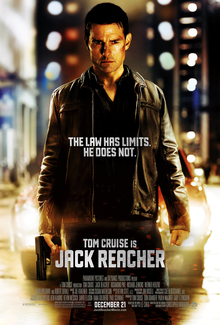
Jack Reacher

First introduced in author Lee Child's 1997 novel, The Killing Floor, the character of Jack Reacher has become quite the fan favorite. In 17 novels since then, Reacher has sold millions of books, and there's no end in sight for Lee or Jack. What's that next step then? As is the case with most successful book series, a movie follow-up/tie-in is inevitable, the series getting its film debut with 2012's appropriately titled Jack Reacher.

Along the Allegheny River in Pittsburgh, a sniper opens fire one lazy afternoon, gunning down and murdering five random, innocent people. The police follow the evidence and within 16 hours have a suspect in custody, James Barr (Joseph Sikora), a former Army sniper. Rather than sign a confession, he requests the help of one Jack Reacher. The district attorney and police look into the name finding out that Reacher is a former military policeman who upon being mustered out has become a drifter. Why then would Barr want his help? Barr's defense lawyer, Helen (Rosamund Pike), thinks nothing of it until Jack Reacher (Tom Cruise) himself shows up in her office unannounced and offers to help...in a way. Reacher knows something about Barr's past, but he says he'll help just the same. It seems like an open and shut case, but it doesn't add up for the former MP turned drifter. Was the sniper's shootings really random, or was there a purpose?

From director Christopher McQuarrie (who also wrote the script), 'Reacher' is based off Child's novel One Shot from 2005. I write this review having watched this movie without giving the Reacher novels a shot so be forewarned. This is a movie review, not a book to film adaptation review. Moral of the story? I liked the movie, and it definitely got better once everything is laid out. There are some early struggles with a lack of tone, from goofy to dumb to really dark. I just couldn't get going early on, but things pick up about the 45-minute mark. From there on in, it manages to find a good mix of drama and action with a few necessary laughs here and there. Once casting was announced, Reacher fans were almost unanimously against the casting of Cruise, mostly because the novel Reacher is 6-foot-5 and about 230 pounds of pure muscle. Cruise? Well, he's in freakish shape, but he ain't that big.

You know what? It doesn't matter. Cruise is a movie star who can act, and physical discrepancies aside, he owns the part. As McQuarrie pointed out in an interview, it isn't about the height or the physical build. It's all about the attitude, that confidence in the character, and that's where Cruise succeeds. That's what counts when we're talking about becoming the character. Jack Reacher is a drifter, seemingly always on the move. He has no real possessions, wearing the clothes on his back, and goes where he's needed. In this case, it's helping someone he worked with in the past (in a way), trying to find out exactly what's going on. Mostly though, his sense of justice appealed to me. He is interested in the law to a point, but mostly he's going to deliver his own brand of vigilante justice. Warrants? Evidence? Nah, let's just get some answers.

More than just his acting, Cruise is really memorable here because he handles most -- if not all -- of his own stunts, something he's become associated with over the years. It adds a touch of authenticity, and more importantly for me, a huge dose of credibility. It's jarring when you see stunt doubles in any type of action scenes, but Cruise? He's a man of ACTION!!! A fight scene early with five thugs dispatched to take him out on a poorly lit street is very cool, Cruise's Reacher swinging and punching and kicking like nobody's business and not surprisingly....winning in grand fashion. A very cool car chase late also has Cruise doing all of his own stunts. The camera is in the shotgun seat with him in a chase reminiscent of some classic 1960s/1970s chase sequences.

The rest of the cast is okay -- nothing spectacular -- in parts that are meant to aid Reacher in his not so normal (read = legal) investigation. Rosamund Pike's Helen seems too dumb for her own good at times, odd considering what a good lawyer she's supposed to be. Unfortunately, the part just devolves into a pretty lawyer wearing heels, short skirts and low(ish) cut shirts. As for the "system," there's Richard Jenkins as the District Attorney Rodin (also Helen's Dad) and David Oyelowo as Emerson, the police officer leading the investigation. Don't want to give too much away in terms of villains, but director Werner Herzog squints as the main baddie, the Zec, with Jai Courtney as his main henchman, a good creepy combo. Also worth mentioning is the always reliable, always fun Robert Duvall in a small but key part as a firing range owner while Alexia Fast is a young woman caught up in something bigger than she thought.

There is something just odd about the movie in general, a lot of that coming from a combination of darkness, dark humor and some slow-going early on. It really finds a groove in the second half, Cruise doing a fine job with the titular character, especially as we see more of him and his unique, brutal means of administering justice. I don't know if the Reacher series will continue, but it's a good flick regardless of where it goes from here on out.

Jack Reacher (2012): ***/****   

Wednesday, May 15, 2013

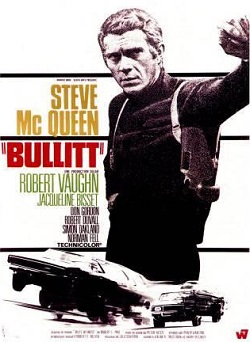
Bullitt


Let's cut away all the fluffiness and cut right to the bone. Steve McQueen is maybe the coolest actor to ever work in Hollywood. An underrated actor who had an incredible on-screen presence, he had his biggest success and popularity in the late 1960s. The Cincinnati Kid, Nevada Smith, Thomas Crown Affair, The Sand Pebbles, all excellent parts in good to great films. Nowhere was McQueen more at his coolest than 1968's Bullitt.

A respected and hard-edged San Francisco detective, Frank Bullitt (McQueen) has been tasked with a somewhat dull but essential task from ambitious politician Walter Chalmers (Robert Vaughn). Prepping for a Senate hearing about a Mafia takedown, Chalmers has enlisted a key witness (Felice Orlandi), and Bullitt and two other detectives must babysit him over a weekend until the hearing. Instead, the witness is killed by two assassins, forcing Bullitt to find out what's going on. Something doesn't fit together as he examines the clues and evidence, but the pressure is on. Chalmers needs a scapegoat, and Bullitt seems like the perfect target to take the fall. Knowing he's been backed into a corner, Bullitt has an extremely limited window to find out exactly what's going on.

The late 1960s were one of the most influential periods in Hollywood history, changing the way films were made and more importantly, the stories that were told. From director Peter Yates, 'Bullitt' is a police/cop movie like none before it. It is a smart, stylish cop drama/thriller that for me, gets better with each viewing. For starters, it was filmed in San Francisco, setting the stage for Dirty Harry, McQ and a whole cop genre to move into the city. It is an ideal backdrop for the story; a polished, good-looking city that is nonetheless hiding secrets. The score from Lalo Schifrin is a good mix of quiet, soothing jazz and faster-paced, more traditional yet still exciting musical cues (listen HERE). The style in an almost documentary-like fashion reflects some of the French crime thrillers that I've really come to appreciate, giving 'Bullitt' a different edge more than just the same old, same old cops and robbers story.

That starts with Steve McQueen as Detective Frank Bullitt, a veteran cop who always gets the job done but usually how he wants to do it, not how he should do it. That basic write-up is as cliched as the countless cop movie stereotypes that have been done to death in the years since, but McQueen gives the lead performance a different edge. Never one for huge dialogue scenes, McQueen's Bullitt is a huge presence whenever he's on-screen. He does more with a look here or there than many actors could do with an entire monologue with the camera trained on them. There's a self-assured confidence in the part, a quietness about it too. Bullitt is an expert at what he does, but he's not interested in fame or accolades. He does it because he's really good, so good that he's become almost desensitized to the violence he sees on a daily basis. McQueen is cool, acts cool and looks cool (I have a way with words, don't I?).

Okay, so we've talked about the plot, Steve McQueen's badass-ness (is that a word?), and hhhmmm, what else? Oh, right, the cars. Some 45 years since its release, 'Bullitt' is still remembered fondly for an infamous car chase that opened the door for countless knockoffs, remakes and retries. Driving his 1968 Ford Mustang, McQueen pursues two assassins (driver Bill Hickman, killer Paul Genge) in, around and through San Fran, two muscle cars going at it for everything they're worth. Schifrin's soundtrack is left by the wayside, just the sounds of the two engines doing battle providing all the soundtrack that's needed. Looking back on it now, it isn't a flashy sequence, but it is clear how much it has influenced just about every movie car chase since. It is an extended sequence that runs about 10 minutes total (near the film's halfway point), one that will definitely get the adrenaline pumping.

Now sometimes at the expense of the film's style is the film's story. It took me three or four viewings to really get everything down just right. Not to throw this out there as a cop-out, but an understanding of the story isn't a must here. You watch for the style. Some reviewers/critics have an issue with the pacing, some point-blank stating that it's a boring movie. It isn't an action-packed movie, that's for sure. 'Bullitt' takes its time but always knows where it wants to go. A chase through a hospital is subtle and underplayed but incredibly full of tension, as is the finale at the San Francisco airport as Bullitt chases a suspect across runways in use. We see little departures into San Fran with Bullitt's girlfriend, Cathy (Jacqueline Bisset), on dates and at work, to Bullitt's apartment, to follow up with witnesses. It's rarely flashy, but there's something charming just the same about that assured style.

Backing McQueen up, Vaughn does what he does best; gentlemanly slimy to perfection. His Chalmers is smooth and suave, but he's really a snake waiting in the grass to strike. Don Gordon (a longtime, close friend of McQueen) is nicely cast as Delgetti, Bullitt's longtime partner with Simon Oakland and Norman Fell as their superiors. Also look for Robert Duvall in a small but key (and effective) part as a cab driver whose help Bullitt enlists as he tries to figure everything out. 

One of my favorites, an iconic flick from the 1960s, and one of Steve McQueen's all-time bests. Haven't seen it? What's wrong with you?!? Highly recommended.

Bullitt (1968): ****/****
Rewrite of November 2009 review

Monday, January 21, 2013

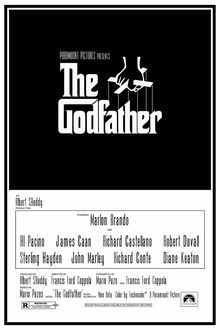
The Godfather

Some movies are just better than others, plain and simple. They're the ones that even the most casual movie fans among us are aware of, films like Gone With the Wind, Casablanca, Lawrence of Arabia, and one of my favorite movies, and maybe the greatest movie ever made, 1972's The Godfather.

It's just a few months since the end of WWII, and Vito Corleone (Marlon Brando), the head of the Corleone crime family in New York City and dubbed the Godfather, is at the height of his power. He has an epically successful business, running the unions and all the gambling in the city, and he's able to do it because he has countless politicians and judges in his back pocket. Things are changing though all around him, especially the underworld and the business he helped create.  Vito is approached about a deal he could bankroll, but it involves drugs, and he chooses to ignore it. The decision is one that drastically affects the family, one that will incorporate all his family members, especially fiery firstborn Santino (James Caan), adopted Irish son, Tom Hagen (Robert Duvall), and his youngest and smartest son, Michael (Al Pacino). What does the future hold? Who will rise up to help their father?

Based off a novel of the same name by author Mario Puzo, 'Godfather' is one of those rarest films; it's perfect. In that sense, director Francis Ford Coppola improves on Puzo's novel, the rare film that is better than its source novel. None of that is a dig at Puzo -- the novel is one of my favorites, a well-written gem -- but the film takes the idea, premise and characters and runs with it. Clocking in at 175 minutes, it never slows down, never feels dull. The dialogue and script provide countless engrossing talking scenes. The look of the movie with its authentic wardrobe, cars and sets is incredible, Coppola filming in an earthy fashion where things always look dark and burned-out to a point. Oh, and composer Nino Rota's score is halfway decent (that's sarcasm by the way), one of the great, classic scores in Hollywood history. You know it already, but listen to the theme HERE.  

What sets Coppola's film apart from countless other films about the Mafia, mobsters and organized crime is the impeccably written story. Puzo's novel introduces countless characters, relationships, history at the reader with all sorts of backstory, and the film assembles it into an expertly told, very coherent (sounds simple, but you'd be surprised) story that develops nicely. It covers over 10 years of time, but at no point does it feel even slightly rushed. Puzo's novel (he also worked with Coppola on the script) introduces characters and within minutes we feel like we've got a good idea of who they are as an individual. Imagine that with over 10 characters that get a fair share of screentime. There is a comfort level with the characters -- the good guys and the bad guys -- that makes the movie more enjoyable the second it begins. Does it all fall into place right away? No, it takes some time, but getting there is half the fun.

As far as true acting movies go, this 1972 classic is hard to beat. There isn't a performance that falls short or feels fake, but two rise above the rest; Brando as Vito Corleone and Pacino as his son, Michael. Playing one of the most iconic characters in film history, Brando's performance has opened the doors for all sorts of impressions, caricatures and stereotypes, but it is a career-best performance (and that's saying something considering Brando's career). It is a layered, nuanced performance, a man in the second half of his life who is highly intelligent, kind and ruthless at the same time, and a man who will stop at nothing to care for his family. Pacino's Michael goes through the film's biggest transition, a young man and WWII hero who wants nothing to do with his family's shady background but finds himself thrust into the family business when outside forces descend on the Corleones. Brando won an Oscar -- fully deserved -- and Pacino was nominated, but whatever the award nominations out there, it's two amazing performances.

Coppola's film earned plenty of acting nominations, three alone for Best Supporting Actor with Pacino, Duvall and Caan all earning a nod. The coolest part? All three deserved it for one reason or another. Caan and Duvall get less screentime, but they make the most of it. Caan is a scene-stealer as the fiery, hot-tempered Santino, known to friends and family as Sonny, the oldest Corleone son. The same for Duvall as Tom Hagen, but in a different way. Where Caan is more aggressive, Duvall underplays his part as Tom, the unofficial Irish Corleone brother, a childhood friend of Sonny's who Vito welcomed into the house. Other members of the Corleone family and operation? Richard Castellano and Abe Vigoda as Clemenza and Tessio, the Corleone caporegimes (think right-hand men, enforcers), John Cazale as Fredo, the Corleone brother and screw-up, Talia Shire as Connie, the lone Corleone sister and her similarly fiery husband, Carlo (Gianni Russo), and Diane Keaton as Kay, young Michael's love who must decide how much she's willing to put up with.

And then there's the opposition, the all-around nice individuals who are trying to take down the Corleones. For starters there's Richard Conte as Barzini, a head of another NYC crime family, Sterling Hayden as Capt. McCluskey, an NYC cop on a rival's payroll, John Marley as a film studio head who incurs the wrath of the Corleones, Al Lettieri as Sollozzo, a drug supplier looking for funding and backing, and Alex Rocco as a casino owner dealing with a buy-out of his casino.

On repeated viewings, I've noticed different features about the film, different layers that can affect how I view it. The biggest is simple; family. Yes, it's a pretty hardcore, violent story about a crime family with its hand in illegal happenings, but it's still family. If you can look past that whole criminal aspect, the biggest focus is the family and the dynamics and relationships among family members. Through the rather vicious, violent ups and downs, love and hate, they're there for each other (for this movie at least). I love how Vito dotes on his kids and grandchildren but can balance that out with a brutal mindset -- it's business, not personal -- at the same time. The relationship between Vito and Michael is the most heartfelt, including one of my all-time favorite scenes as father and son discuss what could have been, maybe what should have been. A worrying Vito wanted more for his son, but a firmly entrenched Michael (very much looking out for the family) calmly states "We'll get there, Pop." It's an endearing, heartfelt moment, one of many.

There are far too many memorable, iconic, and all-time great scenes to discuss one by one.  Big picture, that's probably what viewers will remember the most on initial viewing. The infamous horse head scene, the introduction of Vito, his loyal enforcer, Luca Brasi (Lenny Montana), and his "offer he can't refuse," the perfect simplicity and natural quality of the opening wedding, a slight detour to Sicily and its beautiful hills, a meeting among Michael, Sollozzo, and McCluskey in a traditional Italian restaurant, and maybe the most memorable, the baptism scene, almost entirely silent other than Rota's score playing over the developing scenes. Each of the above scenes could be analyzed in a review unto itself, but this review is already getting long-winded. Long story short? It's maybe the greatest movie in Hollywood history without a flaw in sight. Shame on you if you haven't seen it by the way. What are you waiting for?

The Godfather (1972): ****/****

Thursday, February 16, 2012

Apocalypse Now

As a fan of movies, there are just certain films you have to see. When you haven't seen those movies, you typically get a reaction something like 'HOW HAVE YOU NOT SEEN THAT? IT'S A CLASSIC!' The reaction can be angrier or happier depending on the individual. I've gotten that reaction concerning 1979's Apocalypse Now. Well, check that one off the list.

Having already served at least one tour in Vietnam, special forces Capt. Willard (Martin Sheen) is wasting away in Saigon as he battles through some personal demons. He waits and waits for a mission, and finally gets one, but it's nothing like he expected. Across the Cambodian border, an American officer and Special Forces vet, Col. Kurtz (Marlon Brando), has gone rogue, and Intelligence things he's gone insane with his adoring command still intact. Willard's mission sounds simple but is anything but. Boarding a small patrol boat with its close-knit crew, Willard travels all the way up a river into Cambodia with one objective; terminate Kurtz with extreme discretion.

While director Francis Ford Coppola's highly controversial and much debated movie is typically grouped as a war movie, it is really anything but. It is based off Joseph Conrad's Heart of Darkness, albeit based in a Vietnam setting. Not to sound pretentious -- the movie does enough of that -- but this movie isn't about war. It's more about the affects of war, how it hits people, how it impacts them. I watched Apocalypse Now Redux, the longer version Coppola released in 2001, and I feel safe saying it is unlike any movie I've ever seen before. Emotional, moving, existential, other-worldly, upsetting. It defies descriptions in so many ways.

The best I can do though is surreal. The Vietnam setting is a jumping off point for the weirdness. At 202 minutes (the Redux), it is a leisurely, slow moving story. It is one of the most incredibly visual movies I've ever seen, haunting in its beauty at times and upsetting at others. Working with his father, a composer himself, Coppola creates a musical score that is both classical and innovative. It uses an electronic synthesizer and lots of percussion, setting an eerie, unsettling mood to this trippy, even psychedelic trip up the river to Kurtz's compound. The feeling and aura of the movie is unreal and hard to put into words. Coppola creates a vision of a war -- Vietnam -- that I can only imagine was more terrifying than the actual war itself.

This is a movie about a journey though, both physically moving up the river and in one's mind, specifically Sheen's Capt. Willard. In a movie that runs three-plus hours, we get to see a lot of these bizarre, surreal moments in the journey. It starts with an opening set to The Doors' The End, and then we're off to the Intelligence community where the mission is explained, and then Willard is to to the Air Cav, a helicopter unit commanded by Col. Kilgore (Robert Duvall), more interested in surf conditions than objectives. That's just the start though. We see a disintegrating force of soldiers the further north the boat travels, officers in "command" long since gone. The patrol boat also runs into a USO show with Playboy playmates, the crew later running into them at an isolated Medevac station, and is also captured of sorts by French plantation owners (including Christian Marquand) still in Vietnam from the French occupation years before. The longer the journey, the stranger things get.

Through the good and the bad -- and there's a fair share of both -- are some moments of perfection. Kilgore's Air Cav command assaulting a Viet Cong coastline post is a brilliant sequence, one of the most realistic, intense, adrenaline-pumping action scenes ever. It's set to Wagner's Flight of the Valkyries, the music the attacking helicopters listen to as they fly into battle. Has to be seen to be believed and appreciated. Watch part of it HERE. Another highpoint is the patrol boat reaching the last American post on the river, a bridge under constant construction and under constant attack. Arriving in the dead of night during an attack with lights strung across the river, Willard and the crew find the semblance of what used to be a command in a dream-like, eerily beautiful sequence.

Onto the cast, and there's plenty to talk about there. Sheen nails his part as the tortured Capt. Willard. His narration fills in much of the movie's quieter gaps, treading the line between obnoxious and pretentious with genuinely heartfelt messages. His own descent into madness, his obsession to finish the mission is startling in its own right. Brando doesn't even appear until 150 minutes in, and his performance is almost a caricature of himself. It's all right, but a little much (more on that later). Duvall very much earns his Best Supporting Nod (but didn't win) as Col. Kilgore, infamously stating "I love the smell of napalm in the morning. The patrol boat's crew include Chief (Albert Hall), the no-nonsense commander, Clean (very young Laurence Fishburne), Chef (Frederic Forrest) and zen-like surfer Lance (Sam Bottoms). G.D. Spradlin and Harrison Ford have small parts as Intelligence officers giving Willard his mission. 

As good as parts of the movie can be, it also struggles to hold its momentum until the end. The story drifts along far too much, and by the time Brando's Kurtz actually reveals himself it's almost a disappointment. There is little energy in the build-up to the finale, an incredible ending that has stirred up controversy over the years in all its different variations. Dennis Hopper as a stoned-out photojournalist (Scott Glenn has a small part here as one of Willard's predecessors) and Brando spout off with lots of philosophical musings that mean nothing but sound good. Kurtz delivers one moving monologue about the horrors of war, but it's lost in a sea of drifting, pointless "messages." That's the problem with much of the movie. It wants to say something about war and man, but what exactly? 

Through everything though, this is an incredible movie. Even if you hate it, Apocalypse Now will almost certainly make an impact on you either negative or positive. I watched it two days ago and am still wrapping my head around it. It is unlike any other movie I can think of, and truly needs to be experienced.

Apocalypse Now <---trailer (1979): ***/****

Wednesday, January 5, 2011

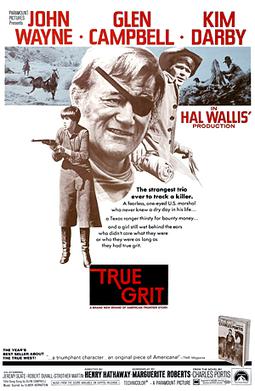
True Grit (1969)

Through a career that spanned four decades by the time 1969 had rolled around, John Wayne had somehow only been nominated for one Oscar in his entire career.  His part in 1949's Sands of Iwo Jima earned him a Best Actor nod which he would lose to Broderick Crawford in All the King's Men.  My complaint isn't that Wayne lost, but he had some excellent parts during his career that included The Searchers, The Quiet Man, Red River, and She Wore a Yellow Ribbon among others.  Well, in 1969 Wayne won his first and only Oscar for his performance in True Grit, an award that obviously came about because of that movie but was almost a symbolic Lifetime achievement award.

Recently this flick has been in the news because the Coen brothers remade it with their movie hitting theaters in the last few weeks.  My worry was that it was a movie that didn't need to be remade so why touch it?  Honestly, the 1969 version isn't a great western, but it is remembered so fondly because of what it meant for John Wayne, his career and his fans.  It's a pretty standard oater and a good example of the type of movies Wayne made at this later point in his career.  Familiar story, good vs. bad, lots of recognizable faces, and nothing really groundbreaking.  But in the end, it's entertaining and a pleasant enough way to pass a couple of hours.

For those not familiar with the story, here's a basic description. The 1969 and 2010 versions are pretty identical story-wise, but here goes. Teenager Mattie Ross (Kim Darby) travels to Fort Smith, Arkansas in 1880 looking for help in tracking down the man, Tom Chaney (Jeff Corey), who gunned down her father in cold blood. She finds no takers other than U.S. Marshal Rooster Cogburn (Wayne), a one-eyed, drunk who is a few years past his prime.  With a Texas Ranger, La Beouf (country singer Glen Campbell), Mattie and Rooster head into the Indian territory to hunt down Chaney and bring him back, hearing rumors he has joined up with outlaw Lucky Ned Pepper (Robert Duvall) and his gang.

Call it his best performance if you want (I don't think it's even close, he had much better) but this may be the one Wayne is most remembered for.  Criticisms aside, and I don't have many, but he had better parts that showed off his ability, Wayne does deliver a great performance and one that he fully deserved his Oscar for.  To a certain point, he is playing a caricature of himself.  He later joked that if he knew all it would take to win an Oscar was put on an eye patch he would have done it years before.  Wayne was an underrated comedic actor, and his Rueben 'Rooster' J. Cogburn shows that off.  He's rough and ready but has a softer side to when it comes to Mattie who can both drive him nuts and have him develop a fatherly bond with her at the same time.  Watch his Oscar acceptance speech HERE for a simple, effective and very moving look at Wayne and this part which finally earned him some Academy Award consideration.

So Wayne is obviously the biggest selling point here, but the problem is what else is there to sell?  As good as Wayne is as Rooster, his two main supporting parts are about as awful as they can be. The Mattie character is key, and as was the case with the remake, annoying but endearing in an odd way.  You're supposed to root for in spite of how ridiculously annoying, how brutally honest she is.  Darby just can't manage it in one of the most grating performances I've ever come across.  You just can't get behind this character.  A similar problem exists for Campbell as Texas Ranger La Beouf.  First, this country singer can't act a lick.  His character is supposed to be the polar opposite of Rooster, but just like Darby's Mattie it's hard to find a reason to like him.  If nothing else, his character redeems himself in the end...twice actually.  Still, it's not enough to save the part.  Check out the remake for how these characters should and could have been played.

Having watched both versions in little less than a week, I had to laugh at the idea that the Coen brothers did something vastly different with their version. Working off the Charles Portis novel, whole scenes, whole exchanges of dialogue are exactly the same between the two movies.  The tone is obviously different -- more light-hearted here -- and the only huge difference is the period authentic dress, dialogue, and accuracy in general.  Director Henry Hathaway films this story in Mexico, California and Colorado and ends up with a beautifully photographed film that looks absolutely nothing like the setting it takes place in, but that's just a minor detail, right? Elmer Bernstein's score sounds like a mix of a lot of his movies, but not necessarily in a bad way.  You'll notice a lot of familiar notes if you're familiar with his work at all, but the main theme is a good one.

You can't help but compare the two, and all I could come up with involving both was that the story itself is lacking something.  Portis was known for straightforward stories that didn't pull punches.  If anything, True Grit is too simplistic, too straightforward.  At times, it's even a little dull.  This is a movie about characters, and for the most part they're interesting even if we don't like them.  Story gets lost in the shuffle at times, but sit back and enjoy getting to know the main characters.  Of the rest of the cast, Duvall makes basically a small cameo, Jeremy Slate and Dennis Hopper are two of his gang, and Strother Martin is a haggling horse trader who incurs Mattie's wrath.

True Grit <---trailer (1969): ***/****

Monday, October 25, 2010

Countdown

In maybe the greatest movie ever made, 1972's The Godfather, my two favorite characters have always been James Caan's Sonny Corleone and Robert Duvall's Tom Hagen.  I love the actors as much as the characters so even with supporting roles they end up standing out to me. Both actors were rising stars at the time having paid their dues through the 1960s with some lesser roles in lesser movies.  If I've learned anything from watching too many movies like I do, it's to pay attention to those pre-star movies.  Take 1968's Countdown, an earlier pairing of Caan and Duvall.

On July 20, 1969, Apollo 11 landed on the moon, the first time man had ever set foot on the surface. It was a defining moment in history, but what about all the years leading up to it?  This wasn't a quick thrown together process.  Space exploration was and probably always will fascinate people -- myself included -- and what better way to explore space than through the movies?  That's the main reason I'll give 'Countdown' a slight recommendation because through all its flaws (and there's plenty) it gives you a great sense of the anxiety and pressure NASA felt in beating the Russians to getting a man on the moon.

Preparing for an Apollo mission, a crew that includes astronauts Lee Stegler (Caan) and Chiz (Duvall) is pulled from their assignment with rumors of something big swirling.  There's whispers that the Russians have made a breakthrough and are about to send a shuttle to the moon, beating the American effort by months.  Chiz is the higher ranking astronaut, but he's bumped for his a non-military astronaut in Lee for a dangerous, even suicidal mission.  In hopes of beating the Russians to the moon, NASA will send a one-man shuttle to the man so that the United States can claim the first steps taken on the moon's surface.  The only problem?  They won't be able to rescue him anytime soon so the astronaut may have to spend up to a year on the moon in a small shelter.  Very aware he could die on the mission, Lee goes about training with his friend's Chiz help.

I've reviewed other space movies here before including 1969's Marooned, a big-star vehicle that never amounted to anything other than an impressive cast listing.  There are certain limitations that any movie regardless of the budget couldn't overcome.  For one, there's no really good way to make "space travel" look real because miniatures and blue screen or any sort of animation is going to cry out in the obvious department.  For the most part, Countdown avoids that, spending more time on the emotional impact this dangerous mission will have on Lee and his family, friends and co-workers.  The "space travel" (semi-SPOILER Lee gets to the moon, but there's more to come SPOILER) is limited, and the moon set doesn't look half bad.

Focusing instead on the emotional impact isn't always a good thing though.  Director Robert Altman (still two years away from MASH) is limited by what looks to be a smallish budget that gives his finished product a definite made-for-TV appearance.  If a scene is indoors, it looks like a set that would blow over if a stiff wind got inside the studio.  Thankfully there is some very cool footage of NASA and its facilities, not to mention some great shots of the shuttles actually blasting off the pads.  In 1968 or 2010, it will always be cool to see the immense amount of force needed to physically send something into outer space.  Of course, the blaring, in your face soundtrack doesn't help anything either.  So with the balance between the two, the weak cinematography cancels itself out.

Leading the cast, Caan and Duvall make the most of a script that gets into a loop and keeps repeating itself over and over again.  There is a friendship between the two men but also a fierce rivalry over being chosen or snubbed for this dangerous mission. Duvall's Chiz is looking out for the younger Lee for his own safety/benefit, but also because he'd rather go on the mission.  Caan's Lee balances out the drive to be the first man on the moon with the fear that he might die trying to accomplish his mission.  The rest of the cast doesn't leave much of an impression other than Joanna Moore as Mickey, Lee's wife who tears herself up worrying about her husband's decision. Also look for pre-Mary Tyler Moore Ted Knight as NASA's public relations director interacting with the rabid media.

One more complaint and I'll call it quits for Countdown.  For most of an hour, I wasn't quite sure what the mission actually was.  Long conversations detailed what Lee would be doing but never specified that he'd be on the moon for possibly a year by himself.  It could have just been me, but I was confused.  The last 45 minutes are the best part of the movie when the actual mission gets underway.  The ending had a chance to go for a real downer, but everything rights itself in the end.  I would have liked the downer ending -- as I usually do -- but this one works just fine too.

Countdown <---TCM trailer (1968): ** 1/2 /****

Friday, September 3, 2010

The Outfit

Organized crime, the mob, the Mafia, all the kingpins of the criminal underworld, and the movies reflect that.  Countless movies have been made about these different criminal organizations, but then of course there's the underdog.  What about the guys trying to take down any of the above?  A suicide mission for some revenge?  A guy with nothing to lose and because of that much more dangerous?  Makes for a good movie if you ask me, especially 1973's The Outfit.

The premise of a lone gunman going after the mob is nothing new and has been done several times since 1973, including Mel Gibson in Payback and Tom Hanks in Road to Perdition among others.  Payback is almost an exact reworking of the story here, but the original is still the best.  If you needed to explain to someone what a 1970s crime thriller was about, The Outfit could be a blueprint for everything that is good about that type of movies.  Perfect casting, exciting action, a cynical, very dark tone, a little black humor thrown in, and a gritty style that just can't be replicated.

Fresh out of prison, Earl Macklin (Robert Duvall) finds out his brother has been killed by two hit men, supposedly for a job the brothers pulled off years before on a mob bank. With a former girlfriend (Karen Black) along for the ride, Macklin survives a hit attempt on his own life and decides to go on the offensive.  He enlists the help of a former partner, Cody (Joe Don Baker), and the duo goes to work.  Macklin wants $250,000 for the trouble 'the outfit' has caused him, but when they don't pay up they start hitting backroom casinos and mob fronts, taking all the money in sight.  But as they go up the ladder, Macklin and Cody realize they'll have to go right to the top, the big-time mobster in charge, Mailer (Robert Ryan). The mobster's waiting for them though and nobody might get out alive.

This is everything that's good about a 1970s B-movie crime thriller.  No big budget, no huge scale, just two pissed off guys with nothing to lose going after the mob.  Director John Flynn shoots his movie in seedy motels, back room offices and dark alleys where a story like this would actually take place.  It was filmed in and around Los Angeles, the locations being one of the strong suits of the movie.  You feel like you're there with Macklin and Cody.  This isn't high class, high end mafiosos were talking about, just low-level thugs.  Everything from the 1970s boats of cars, the bad suits, the awful style, it all works to perfection here.

I've written before about my love of character actors, and Flynn goes all out here to round out his cast.  What was so great about 70s movies was that an actor would take a supporting role that might not require more than a scene or two.  They'd make a quick appearance and be gone, but that's just one scene.  There would be another and another until you've got all these great names filling out the story.  More on the leads later, but the support is as good as it gets.  Timothy Carey plays a mob go-between, Richard Jaeckel and Bill McKinney play mechanic brothers supplying cars for crooks with Sheree North along as McKinney's slutty wife, Felice Orlandi and Tom Reese as two hit men, film noir femme fatale Jane Greer as Macklin's sister-in-law, among many other recognizable faces you'll be watching out for.

Now there's the buddy cop movie, but here there is the buddy crook movie (mostly holding back on the humor). Duvall and Baker make this movie as Macklin and Cody.  Duvall is basically the anti-hero of all-time.  He didn't have classic good looks, he was a little pudgy, he was balding, but it all adds up nicely.  He's an all-around hardass who knows what he wants and doesn't care who gets hurt in the process as long as he gets it.  Baker's Cody is a little more laid back but equally capable of handling himself.  Like any buddy movie, there's a bond, a link between these two men who know their chances of survival are slim but go ahead anyways.  At one point, Macklin says Cody can walk out, no hard feelings.  Cody answers in typical tough guy fashion "I want to see how it turns out."  It doesn't get much cooler than that in true anti-hero form.

Making what amounts to an extended cameo, Robert Ryan's Mailer of course gets progressively pissed off at these two low-level hoods.  That leads to the equivalent of a suicide mission as Macklin and Cody go gunning for him at his heavily guarded estate.  The ending is full of tension and some great action, but there's a bit of a cop out in the last scene.  No spoilers here, and honestly, it doesn't ruin the movie but I could have thought of a better ending.  No DVD available, but if you stumble across this one, plant yourself in a seat, sit back and enjoy.

The Outfit <---TCM clip (1973): *** 1/2 /****

Thursday, July 22, 2010

To Kill a Mockingbird

I recently reviewed the movie version of Moby Dick, based off Herman Melville's classic novel, a book that is often on all sorts of high school and college reading lists.  I had to peruse through a fair share of those reading lists in my glorious academic days, and for long stretches in high school/college I avoided reading a lot because my classes forced me to read books I had no interest in reading...classic or not.  So for better or worse, I typically just ignored the classics.  There's also the problem that if I'm told I will like something, I usually don't.  Can't decide if that's a spite thing or not.

One big I've never read and always meant to get around to is a classic in both book and movie form, 1962's To Kill a Mockingbird.  Opposed to some books I never read, this was one I never intentionally ignored. As part of Gregory Peck month on TCM, I caught the movie version of Harper Lee's famous, highly regarded novel, and I can say I wish I would have caught it sooner.  From reviews I read, it is one of the few movies ever that is good as the book it is based on.  Considering how critically popular the novel was, that's saying something.  For me, I loved the movie and am looking forward to reading the book.

In 1932 in a small Alabama town, 6-year old Scout Finch (Mary Badham) lives with her 10-year old brother Jem (Phillip Alford) and her father, Atticus (Peck), a defense lawyer held in high regard all through the town and the surrounding area.  With her brother and a little boy, Dill (John Megna) who lives next door during the summer, Scout lives the life every kid dreams of; no responsibilities and plenty of time to explore and experience the town.  One summer though, Atticus is given a defendant, black farmer Tom Robinson (Brock Peters) accused of beating and raping a white girl.  It is a case that will almost assuredly tear the town apart, but Atticus treads onward despite everything that goes on around him.  Still naive to the ways of the world, little Scout and Jem look on as they're forced to grow up when they shouldn't have to as they see how things really work.

A coming of age description doesn't seem like enough of a fair shake to this movie.  It is a coming of age story, but it's more than that.  It is an issue picture, a courtroom drama, and a story of human decency and respect.  The first hour is more light-hearted as Scout, Jem and Dill enjoy their summers and their days off.  These scenes have an easy-going way about them, but they serve a purpose as does the first 60 minutes as a whole.  It is to introduce the dynamic among Atticus and his two kids -- his wife died years before -- and more than that, with the whole town.  Then, the second half gets into the issue at hand, delivering a powerful, very moving message.

Read enough books, watch enough movies, you're going to develop opinions on your favorite characters.  Atticus Finch quickly climbed to the top of my list of favorites with Peck doing an all-time best as the soft-spoken, respectable, highly intelligent and unbiased Southern lawyer put in a lose-lose situation.  He is a father, a lawyer, a friend, and most of all, a good man.  He defends a black man accused of rape in a Southern town, knowing some people believe Robinson did his crime before they heard any evidence.  His courtroom speech alone could have won him the Best Actor Oscar (listen HERE, SPOILERS obviously) in a stirring monologue that shows a man near his wit's end. I loved everything about this character from his interactions with his children to the way he does his job no matter the repercussion.  Definitely one of the best written characters ever, and Peck takes it to another level to win his only Oscar.

One of my biggest pet peeves with movies involving kids as major characters is that too often child actors are chosen who can't act.  Well, not a problem here with Badham and Alford, both of them delivering two of the finest performances from a child actor I've ever seen.  Badham as Scout gives her that right combination of toughness as a tomboy and innocence as a girl who still looks at the world in that way; as an innocent.  Alford as Jem is a nice counter, the big brother who always stands up for his sister but isn't beneath socking her when she asks for it.  Jem is years older than his 10 or 11 years, including one of my favorite scenes where he stands down a lynch mob with Atticus.  He might not know what's going on, but he knows it's not right, and he stands with his father to the end.  It's only appropriate that with these two great performances, neither child actor stuck with movies, going on to live normal lives with jobs, friends and family.  Good for both of them.

With a story based in 1932 Alabama, you've got two huge issues to deal with; racism and the Great Depression.  It's clear from the start that Atticus has everything going against him in trying to get Robinson off from the charges against him.  He lays out a strong defense, but it might take more than that with this jury.  In one of the most moving moments in the movie, the Reverend -- a black man -- tells Scout to "Stand up, your Father's passing" as the entirely black audience in the second story viewing area watches Atticus leave the courtroom.  He defended a man who he know is innocent, but to Atticus it doesn't matter much his skin color.  But his effort was there, and that's all that matters.  He tried where others gave up, or much worse, refused to admit something was wrong.

This is Peck's movie, but the rest of the cast is phenomenal, and without a lot of huge names.  I already mentioned Badham and Alford, but also look for Robert Duvall (in his movie debut) as Boo Radley who without a word spoken brings his character to life, Frank Overton as Sheriff Tate, a man stuck in a situation with no real positive conclusion, Estelle Evans as Calpurnia, the Finch's cook who serves as a mom to the kids, Paul Fix as the town judge, and James Anderson as Bob Ewell, the father of the raped girl.  Then there's Elmer Bernstein's great score, and Russell Harlan's great black and white cinematography. A great movie overall, and one truly deserving of its classic status.

To Kill a Mockingbird <----trailer (1962): ****/****

Monday, June 7, 2010

The Road

Read enough of an author's work, and I've always thought you get a decent look at their outlook on life.  More specific than that, look at the endings to books/novels/short stories, and often enough you get a window into their heads.  I've read four of Cormac McCarthy's novels and realize it's impossible to peg this guy down.  In 'No Country for Old Men' and 'Blood Meridian,' the endings are cynical, incredibly dark and pessimistic.  McCarthy is not one to write a happy ending, but for 'All the Pretty Horse' and 'The Road' there are endings that at least offer hope.

Most recently, The Road was made into a feature length movie of the same name in 2009.  Granted, it was in theaters for about 90 minutes -- if at all on Chicago's Southside -- so I didn't get a chance to see it, but the movie hit DVD last week.  The book is a critical favorite, and McCarthy shows his ability to spin a simplistic story that can still be profound (maybe because of its simplicity).  When I found out the novel was being made into a movie, I was suspicious at first.  This post-apocalyptic novel is not full of action or dialogue, and to tell you the truth, not much happens at all.  But somehow, just like the source novel, the film is worthwhile almost in spite of itself at times

Director John Hillcoat has made a movie that creates a tangible, very real look at what a post-apocalyptic world would look and feel like.  He filmed all over the U.S. including Pennsylvania and Oregon and drops the viewer into this world.  The only color we ever see is in a few quick flashbacks to a pre-apocalypse world while everything else is shot in shades of gray and brown.  Nothing specific is ever mentioned as to what happened to the world, but plants are dying, animals are seemingly extinct, and the sky is always covered in dark, gloomy clouds.  As one character points out, the world is dying, and we are too.  Uplifting message, huh?

In this dreary God-forsaken world, a man (Viggo Mortensen) travels along the vacant roads with his young son (Kodi Smit-McPhee) just trying to survive from day-to-day.  Food and water are scarce, and they trudge along looking for anything that might help them survive.  It's been years since something happened to the world and almost destroyed civilization, leaving very few people alive.  Those that are left? Some are like the father and son doing their best to survive.  Others have joined together into roving gangs ready and willing to kill for any reason.  The father and son travel south, hoping to eventually reach the coast and hopefully find a better place.  But in this world, there's no guarantees of anything.

McCarthy's novel is simple and to the point in creating this sparsely-occupied world.  Translating that to a 2-hour movie is/was a daunting task if you ask me because whole stretches in the novel are just descriptions of the things they find and places they walk through.  That's really my only issue with the movie.  To call it leisurely paced is a huge understatement.  I realize the movie's trying to tell us and show us how these two people survive in this world, but it drags in a big way.

The movie is at its best when dealing with the trials and tribulations father and son must make their way through.  Very few people are still alive, but when they do find them, it's every man for himself.  It is kill or be killed, and look out for the individual first.  In this vast, desolate world, someone trying to kill you could be anywhere waiting for their chance.  When these moments do come along, they're the type of scenes that can send chills up and down your back like no thriller/horror movie ever could.  These scenes show how alone this father and son really are.  No one's there to help them.  They're on their own.  Maybe that's the purpose of the slower scenes -- to lull you into a comfort zone -- and in that sense, the deliberate pacing works.

Viggo Mortensen, besides having basically the coolest names ever, is one of the best actors around, and this is a performance that lets him show off his talent.  His sole goal in life is not for himself to survive, but to help his son survive and keep going.  This is a man who's survived for years -- and looks it too -- who is driven by that one desire and goal to help his son.  13-year old Smit-McPhee is impressive as well in his first big-budget movie.  This is a boy who doesn't know any other existence, but still has a humanity and a belief in morality as they cross this ravaged world.  Other parts include Charlize Theron (only in flashback) as Viggo's wife, Robert Duvall as Ely, a 90-year old nearly blind man they meet on the trail, and Guy Pearce and Molly Parker as a man and woman traveling south too.

As for McCarthy's ending, the movie sticks pretty close to what the novel presented.  And as depressing as it could be taken, it offers some semblance of hope.  All these apocalyptic, dystopian stories almost have to end with a remnant surviving, one last pocket of humanity that offers some sort of hope for the future -- however bleak that future may be.  The moral of the story is this, I can't get a read on McCarthy at all, and maybe that's a good thing.  His novels aren't always easy to read, and the movie translations can be difficult at times, but in the end they're worth it.

The Road <----trailer (2009): ***/****

Friday, February 12, 2010

Network

Ah, the American public, always easy pickings for a roasting. Movies have done it left and right, like Billy Wilder's Ace in the Hole, and why not? As an enormous power in terms of what we'll watch, won't watch, what we'll pay to see, the public is as fickle as the weather. And to be fair, it's just not the U.S. So who has to decide what we watch, read and experience in terms of movies, TV shows, books, magazines, anything really. So goes 1976's Network, a not so subtle dig at the decline of television and news journalism into pandering for whatever audiences want.

Like any movie dealing with a timely issue, it's important to look at that time it's made in. Network was released in the mid 1970s after the U.S. had left Vietnam and just a few years removed from the Watergate scandal. There were issues to say the least, especially in the minds of the American people. So Network comes along with director Sidney Lumet presenting a cynical, very dark look at TV and the business it truly is to make money and be successful. Studio execs will do ANYTHING if the ratings are good, even to the point of taking a life.

After working for the UBS broadcasting station for many years, news anchor Howard Beale (Peter Finch) is being let go. Howard's wife has left him and his job was really all he had so on-air he tells his viewers that on a show a week away he is going to kill himself...on air for millions of people to see. Instantly, the ratings shoot up, and the network has a hit on their hands. They can't possibly take him off the air, instead giving Beale a stage to rant and rave about whatever suits him. The network's programming director, Diane Christensen (Faye Dunaway), plays it up, making it such a hit that almost half of the country is watching Beale's new show. All the while, Beale's close friend and boss, Max Schumacher (William Holden), wonders what's happened to the business he grew up with, and if there's any way to get back to the good old days.

That's basically the story in a nutshell, and I don't want to tell too much more because it will take away from the appeal of the movie, especially the last half hour. As presented, the UBS network is fourth in the ratings behind CBS, NBC, and ABC so working with a fictional channel, Lumet pulls out all the stops in portraying a cutthroat, profit above all else company. Dunaway's Diane is all business, all the time and can't carry on a personal life, Holden's Max is fighting to hold on to the last traces of a business that used to be, and Finch's Beale runs with the plan presented to him, preaching to his audiences nightly.

This movie had Oscars written all over it, getting 10 nominations and winning four. And while it's hard to dispute the movie didn't deserve them, I felt like I was watching something surreal, something completely over the top as the story unfolded, especially in the ending. Lumet was going for a satire of the TV industry, and it works -- the networks are skewered over an open fire -- but at times it's too much. Am I supposed to laugh or chuckle at what's going on, or be alarmed at what we're seeing? Probably a little of both, but the turns and twists just felt like too much to me.

What I won't argue with is the phenomenal casting, especially the three leads already mentioned and then throw in Robert Duvall for good measure. Finch was the first actor to be given a posthumous Oscar for his win in Best Actor. I personally would have given it to Holden (who was also nominated), but Finch is at a scenery-chewing, scene-stealing best as Howard Beale, an overnight ratings sensation. Most of his role requires him to deliver long, raving speeches -- and his "I'm as mad as hell" speech is top notch -- and he's presented both as a tragic figure and a bit of a stooge. Holden on the other hand, is much more subdued but equally effective as Max. His scene where he SPOILERS breaks up with Diane earns him the Oscar for me. Dunaway fully deserved her Oscar for Best Actress and is quickly becoming one of my favorite actresses.

Did I like Network? Yes, parts of it I loved. But as cynical as I can be in viewing and reviewing movies at times, I wish this was a little less cynical, maybe a little more subtle in its execution. Ned Beatty has a speech late in the movie that is rightfully impressive but I feel like I've heard it before. Maybe I shouldn't fault Network because other movies since 1976 have dealt with similar subjects, but it's hard not to. I completely recommend this movie to anyone who hasn't seen it for the performances alone, but I was a little disappointed with it. Thought provoking? Sure, but not a classic in my mind.

Network <----trailer (1976): ** 1/2 /****

Monday, June 1, 2009

Badge 373

In the vein of The French Connection, Dirty Harry, and Bullitt comes 1973's Badge 373. This was the 1970s when movie audiences liked their cops treading that fine line between raging psychopaths and honorable officers trying to protect citizens. The characters weren't always easy to like, but that's the fun of the anti-hero.

Starring as Eddie Ryan, the real-life inspiration for The French Connection, Robert Duvall gets to really dig into his part. One of my favorite actors, Duvall has always been a criminally underrated actor to me. He wasn't a crazy, over the top method actor like Dustin Hoffman, but he was certainly capable of pulling off roles that required some dark, very bleak background. And coming just a year since the monumental success of The Godfather where he played Tom Hagen, Duvall was riding high in 1973.

Duvall's performance can't help but remind of Gene Hackman's Academy Award winning performance in The French Connection. As Ryan, he's been warped by what he's seen on the streets a vice cop. Ryan is racist, completely intolerant of Hispanics especially, and isn't afraid to bend the rules if it will help close a case or put a crook behind bars. He's a tough cop who's capable of quick outbursts of violence, but it's these feelings that stop him from getting close to anyone, even to Maureen (Verna Bloom), a waitress he dates who has a similar background. Her past isn't perfect, but she just wants to be happy.

As far as Badge 373's plot, there's nothing you haven't seen before in other police procedural movies and shows. Ryan is suspended when an investigation is started as to whether he killed a suspect, a Puerto Rican gangster, who fell off a roof during an interrogation. During his suspension, he takes a job as a bartender where he meets Maureen. One night, his old partner, Gigi Caputo, comes in and catches up with him, but the next morning Eddie gets a call. Gigi's dead, his throat cut from ear to ear. So starts a vengeance trail as Ryan, without badge or gun, investigates what his possibly dirty partner was into.

Politically correct this movie is not, but that's what makes the movies from the 70s so good. No one was interested in appealing to people's sensitive sides. Stories were told, and if you were insulted, tough luck. The bad guys here are Puerto Ricans looking to free their country with a bloody revolution. Ryan begins to find out Gigi was following a huge shipment of machine guns meant to start the fighting. The always slimy Henry Darrow stars as Sweet William, the Hispanic guns dealer Ryan's come across in the past. I have yet to see Darrow in a movie or TV show where he wasn't the villain, and he doesn't disappoint here as Duvall's adversary. Also in the cast is the real Eddie Egan as Lt. Scanlon, Ryan's superior who wants to help the veteran cop out even at a hefty cost.

As Ryan investigates his partner's death, the story drags at points, but it's never boring. Instead of a car vs. L-train chase, we get Duvall taking over a bus and trying to escape from a mob of Puerto Rican gangsters in a cool chase scene through New York. The violence is quick and sometimes shocking with squibs exploding left and right. The language is the same way with plenty of good old cussing and enough ethnic slurs to make just about anybody wince. But that's the whole feel of the movie, it's a story of a cop looking for revenge that goes for realism instead of big, extravagant action.

Duvall is the reason to watch Badge 373. Watching him go from quiet scenes with Bloom to rage-filled outbursts against gangsters is a treat, just like it was watching Hackman, Eastwood and McQueen do it in their movies. There's nothing groundbreaking here, but it's worth a watch, especially if you're a fan of gritty 1970s cop thrillers.

Thursday, February 12, 2009

Netflix Review #6: Joe Kidd


After the huge success of Dirty Harry the year before, Clint Eastwood returned to the genre that made him a star, the western, in 1972's Joe Kidd, the story of a range war in turn of the century New Mexico. It's another Eastwood western I've always avoided some because I enjoyed the Leone spaghettis so much, but I enjoyed it even with all its flaws of which there are many.

Eastwood is Joe Kidd, a small-time rancher who's just received a 10-day jail sentence for a number of offences. He's let out when a rich land owner, Frank Harlan, wants to hire Joe to lead a hunting expedition of sorts, a hunt for a Mexican stirring up trouble when it comes to land rights by the name of Luis Chama. Kidd turns down the offer but changes his mind when he returns home to find that Chama and his gang have stolen his horses and beaten one of his hired hands. Kidd joins up with Harlan and his posse, finding out how brutal their methods can be on the trail.

For one, it's a short movie at 88 minutes. I was disappointed to read the DVD has missing scenes from previous releases or TV showings. I can't verify having never seen it, but a DVD always gets lower points for something like that. With the short running time, you lose a ton of character and plot development. John Saxon plays Chama, appearing for the first five minutes and then disappearing until the last 20 minutes. Robert Duvall has always been a good villain, and lives up to reputation here, but his character is as one-dimensional as they come. Must kill Chama!

Some of these issues most likely were caused by the lack of a finished script. Director John Sturges improvised on the fly, especially in the finale. There's a cool stunt with a train going off the rails, but a few minutes later, the movie just sort of ends. It's not one of those open-ended conclusions where you're left to interpret what happened, the movie is over and credits roll.

In spite of these flaws, it's a western I enjoyed. Eastwood is a more laid back gunslinger, and even if he is underwritten, Duvall provides a good counter to him. Composer Lalo Schifrin does his own version of a spaghetti western score that's memorable, and the California and Old Tucson locations are shot beautifully. Harlan's posse of hired guns, Lamarr Simms (Don Stroud), a hothead who would like nothing more than kill Kidd, Olin Mingo (James Wainwright), a sniper who can hit anything, and Roy Gannon (Paul Koslo), the calm, cool fast draw specialist, are also good villains, if underused. The showdown the movie builds to with Kidd and Simms has no pay-off, too bad, it would have been a goodie.

The DVD, missing scenes and all, is an average disc. Widescreen presentation is noticeably scratchy in certain scenes, but otherwise appears okay. Special features include the always boring production notes with cast and crew info, and a trailer that plays up the action in the movie. A western with flaws, sure, but still check it out.

Joe Kidd (1972): ***/****