The Sons of Katie Elder

The Sons of Katie Elder
"First, we reunite, then find Ma and Pa's killer...then read some reviews."
Showing posts with label Norman Fell. Show all posts

Wednesday, January 29, 2014

PT 109

John F. Kennedy  is known for any number of things from a tragically shortened life. His beautiful wife, Jackie, his supposed affairs with Marilyn Monroe among others, his charm and popularity, his turbulent presidency that included the Cuban Missile Crisis, and most tragically, his assassination under the rifle of Lee Harvey Oswald. One of the most fascinating parts of his adventure-filled life? His World War II exploits as told in 1963's PT 109.

While the fighting rages in the Solomon Islands in the Pacific in 1943, Lt. John F. Kennedy (Cliff Robertson) arrives at a small naval base specializing in patrol torpedo boats (PT) meant to keep Japanese forces at bay. Kennedy is given command of PT 109, a beat-up old boat that has seen far better days. He's given just a week to get the 109 ready for action, assembling a crew, including Ensign Leonard Thom (Ty Hardin), cleaning the boat, and rehabbing the engines. They manage to come in under deadline, Kennedy, his crew and the 109 thrust immediately into action. The day-to-day life of a PT boat is a dangerous one though, the boats meant to be used to buy time while the U.S. Navy still tries to recover from Pearl Harbor. Patrols, routine or not, rescues, deliveries, Kennedy and his crew take it all on, but the mission that will put them all in the history books awaits one pitch-black night in the Blackett Strait in the Solomon Islands.

One of my favorite movies growing up, I can still go back and visit this 1963 WWII movie from director Leslie H. Martinson and enjoy it from beginning to end. This isn't the most hard-hitting of movies, but like some other WWII movies from Warner Bros., there is a distinct visual look, a professionalism and a straightforward style that plays well. Could things be tightened up a bit with a 140-minute movie? Sure, here and there, but it's an excellent story and film just the same. It was filmed in the Florida Keys, and it's sunny and sandy with plenty of palm trees to help stand in for the Solomon Islands in the Pacific. The musical score from composers David Buttolph and William Lava knows when to lighten the mood and when to show the developing drama, a score that sounds similar to another Warner Bros. WWII movie, 1962's Merrill's Marauders.

Released in theaters less than six months before his death in Dallas, PT 109 was made with the help of Kennedy right in the midst of his term as President. He even had final say on the actor who would play him, Robertson being his ultimate choice. It ends up being a great pick, one that makes the movie far more memorable in my eyes. Besides the striking physical resemblance -- look at Robertson in an iconic JFK picture HERE -- Robertson nails the heroic, likable, charming part of a future American president. That's the movie's goal, to show Kennedy as a hero. More on the details in the next paragraph, but Kennedy's actions were more than enough so Martinson didn't have to stretch things too much. Robertson's Kennedy is smart, quick with a comeback and a plan, a leader who's respected by his men and fellow officers, and a capable commander with a knack for doing the right thing. It's not the most in-depth characterization, but it never set out to be. Kudos to Robertson, already one of my favorites.

Semi-SPOILERS from here on in. The truth of the story behind PT 109 is remarkable in itself. Patrolling in the Blackett Strait a dark August night, the 109 was struck by a Japanese destroyer similarly on patrol. Kennedy's boat was ripped in two pieces, two crewmen killed in the collision. Banding the men together, Kennedy got the survivors to swim to a far-off island and hopefully wait for survival. What followed is and was an inspiring story in itself, Kennedy ultimately winning the the Congressional Medal of Honor for his heroic actions. The movie itself is divided into two halves, the first introducing Kennedy, the crew, the boat and their exploits, the second half following its chapter in history as a Japanese destroyer tears the little boat apart. Both halves are excellent, but it's hard to beat the second half as the survivors desperately wait for help in one form or another, Kennedy swimming out into the Strait at night to flag down an American ship.

While the focus is obviously on Robertson as Kennedy, the supporting cast is very solid without stealing the spotlight. Hardin as 2nd-in-command Ensign Thom has a good chemistry with Robertson, Robert Blake, Norman Fell, and Biff Elliot starring as the most visible of the 109's crew. James Gregory is a scene-stealer as Commander Ritchie, the leader of a squadron of PT boats, a veteran officer who's never seen combat but is always searching for the best out of his men. Even Robert Culp shows up at the halfway point as Ensign Barney Ross, an old friend of Kennedy's who ends up on the 109 for its fateful mission, Michael Pate making a memorable appearance as Evans, an Australian coastwatcher who plays an integral part in the eventual rescue of Kennedy and the remaining survivors. Also lending his voice talents in an uncredited narrator role is Andrew Duggan

This isn't a WWII movie that rewrites the genre. It is a movie meant to honor the heroics of future president John F. Kennedy, and it does it well. Exciting with some good action, some genuine laughs and some lighter moments, and Robertson in a great leading part as Kennedy himself.

PT 109 (1963): *** 1/2 /****
Rewrite of August 2010 review

Friday, September 6, 2013

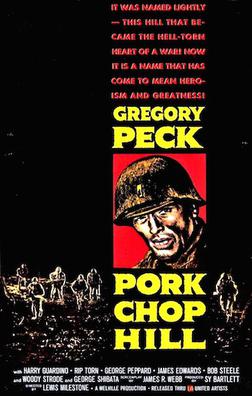
Pork Chop Hill

No soldier wants to die. But what about as a war nears its end? The end of the fighting may only be days away, maybe even hours away. So goes the background for the underrated Korean War drama from 1959, Pork Chop Hill.

It's April 1953 and both American and North Korean/Chinese commanders have agreed to a cease fire with the two sides meeting at Panmunjom. The negotiations though are moving along at a frustratingly slow pace with little being resolved. Near the front lines, the fighting rages on with Lt. Joe Clemons (Gregory Peck) and his King Company awaiting orders, supposedly to withdraw as the fighting dies down with negotiations picking up. The orders though are just the opposite, orders to move forward and take Pork Chop Hill, a worthless hill that's been lost and regained countless times. Now, the Chinese are in possession, but it is a spot on the line that's been deemed very important to negotiations. Clemons assembles his weary company, moving forward to take a hill that holds no military value.

Dubbed the Forgotten War, the Korean War pales in comparison to both World War II and Vietnam in terms of theatrical films released about them. From director Lewis Milestone (A Walk in the Sun, Halls of Montezuma, All Quiet on the Western Front), 'Hill' is a generally forgotten war film that certainly deserves better. It is similar in a lot of ways to 1962's Hell is For Heroes -- even using an eerily similar score from Leonard Rosenman -- and is based on a true story, the battle for Pork Chop Hill. It was filmed in black and white, a highly effective shooting technique, giving everything a sparse, cold and vacant look. Why isn't it remembered as the near-classic that it is? I've got no idea.

What jumped out at me on my recent viewing was the cynicism and darkness that's evident throughout. More surprising? It was made with cooperation from the U.S. Army which in itself isn't too surprising. It's that in exploring the battle, 'Hill' at times shows the complete ineptitude of the American commanders. Assaulting the hill, Clemon's company is put on the grid when American spotlights actually shine right on them in the dead of night. Other companies are given wrong orders, ranging from just plain wrong to misleading. Once King Company is in position, the rear command is genuinely confused, thinking they're fighting a mop-up action when in reality, they're holding on by their fingernails with limited ammunition, food and water. At one point, an U.S.O. photographer is sent up the hill to get photos of an American victory because the folks back home need to see an American win. Peck's reaction is priceless, a commander at wit's end who doesn't know what else to say.

This is an honest criticism of headquarters that's based in reality, and for a 1959 audience, it seems light years ahead of its time. If I didn't know better, it sounds like a Vietnam War movie like Platoon or Apocalypse Now more than a major studio release from 1959. Leading the way is the always reliable, always impressive Gregory Peck. His performance reminded me some of his Oscar-nominated turn in Twelve O'Clock High 10 years earlier. His Clemons is an effective commander simply trying to follow orders and get as many men through the battle unscathed as is possible. Even he is pushed to his limits as one bumbling order after another comes through, the commanders refusing to acknowledge that the battle isn't going as they expected. It's an understated part, but an emotionally effective one. We see the wear and tear on his face, his reassuring, confident tone slowly being worn down.

Beyond Peck though, 'Hill' is noteworthy for its supporting cast of rising and future stars. Harry Guardino and George Peppard play Forstman and Federson, two buddies lugging a machine gun around the hill. Rip Torn plays Lt. Russel, commander of the relief company assigned to help out King Company. 'Hill' is also one of the first war films to show integrated units, Woody Strode playing Franklin, a private fed up with the war, and James Edwards as Cpl. Jurgens, one of Clemon's most dependable, trustworthy men. Also cool casting is George Shibata as Lt. Ohashi, a Japanese-American soldier, Clemon's close friend and one of his platoon commanders. Also look for Norman Fell, Gavin MacLeod, Robert Blake, Biff Elliott, Martin Landau, Harry Dean Stanton, Clarence Williams III and several other familiar faces rounding out King Company's roster.

Clocking in at 97 minutes, a majority of 'Hill' is spent in the trenches and bunkers with King Company, a few asides here and there showing the negotiations of the cease fire. This is a movie interested in the nuts and bolts of the battle, the flanking movements, the reserve companies, the crossfires and preparations for counterattacks. It never gets bogged down though, the battle scenes uncomfortable and unsettling in their reality. It isn't graphic violence here, but that doesn't mean it's not hard to watch. Add in the psychological warfare of a Chinese broadcaster bombarding the American troops with propaganda, and you've got quite the battle here. It's not just bullets and soldiers anymore, but the effect it has on the soldiers' heads too. A great war movie, one that deserves more of a reputation/following.

Pork Chop Hill (1959): *** 1/2 /****

Wednesday, May 15, 2013

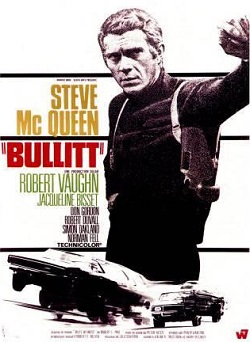
Bullitt


Let's cut away all the fluffiness and cut right to the bone. Steve McQueen is maybe the coolest actor to ever work in Hollywood. An underrated actor who had an incredible on-screen presence, he had his biggest success and popularity in the late 1960s. The Cincinnati Kid, Nevada Smith, Thomas Crown Affair, The Sand Pebbles, all excellent parts in good to great films. Nowhere was McQueen more at his coolest than 1968's Bullitt.

A respected and hard-edged San Francisco detective, Frank Bullitt (McQueen) has been tasked with a somewhat dull but essential task from ambitious politician Walter Chalmers (Robert Vaughn). Prepping for a Senate hearing about a Mafia takedown, Chalmers has enlisted a key witness (Felice Orlandi), and Bullitt and two other detectives must babysit him over a weekend until the hearing. Instead, the witness is killed by two assassins, forcing Bullitt to find out what's going on. Something doesn't fit together as he examines the clues and evidence, but the pressure is on. Chalmers needs a scapegoat, and Bullitt seems like the perfect target to take the fall. Knowing he's been backed into a corner, Bullitt has an extremely limited window to find out exactly what's going on.

The late 1960s were one of the most influential periods in Hollywood history, changing the way films were made and more importantly, the stories that were told. From director Peter Yates, 'Bullitt' is a police/cop movie like none before it. It is a smart, stylish cop drama/thriller that for me, gets better with each viewing. For starters, it was filmed in San Francisco, setting the stage for Dirty Harry, McQ and a whole cop genre to move into the city. It is an ideal backdrop for the story; a polished, good-looking city that is nonetheless hiding secrets. The score from Lalo Schifrin is a good mix of quiet, soothing jazz and faster-paced, more traditional yet still exciting musical cues (listen HERE). The style in an almost documentary-like fashion reflects some of the French crime thrillers that I've really come to appreciate, giving 'Bullitt' a different edge more than just the same old, same old cops and robbers story.

That starts with Steve McQueen as Detective Frank Bullitt, a veteran cop who always gets the job done but usually how he wants to do it, not how he should do it. That basic write-up is as cliched as the countless cop movie stereotypes that have been done to death in the years since, but McQueen gives the lead performance a different edge. Never one for huge dialogue scenes, McQueen's Bullitt is a huge presence whenever he's on-screen. He does more with a look here or there than many actors could do with an entire monologue with the camera trained on them. There's a self-assured confidence in the part, a quietness about it too. Bullitt is an expert at what he does, but he's not interested in fame or accolades. He does it because he's really good, so good that he's become almost desensitized to the violence he sees on a daily basis. McQueen is cool, acts cool and looks cool (I have a way with words, don't I?).

Okay, so we've talked about the plot, Steve McQueen's badass-ness (is that a word?), and hhhmmm, what else? Oh, right, the cars. Some 45 years since its release, 'Bullitt' is still remembered fondly for an infamous car chase that opened the door for countless knockoffs, remakes and retries. Driving his 1968 Ford Mustang, McQueen pursues two assassins (driver Bill Hickman, killer Paul Genge) in, around and through San Fran, two muscle cars going at it for everything they're worth. Schifrin's soundtrack is left by the wayside, just the sounds of the two engines doing battle providing all the soundtrack that's needed. Looking back on it now, it isn't a flashy sequence, but it is clear how much it has influenced just about every movie car chase since. It is an extended sequence that runs about 10 minutes total (near the film's halfway point), one that will definitely get the adrenaline pumping.

Now sometimes at the expense of the film's style is the film's story. It took me three or four viewings to really get everything down just right. Not to throw this out there as a cop-out, but an understanding of the story isn't a must here. You watch for the style. Some reviewers/critics have an issue with the pacing, some point-blank stating that it's a boring movie. It isn't an action-packed movie, that's for sure. 'Bullitt' takes its time but always knows where it wants to go. A chase through a hospital is subtle and underplayed but incredibly full of tension, as is the finale at the San Francisco airport as Bullitt chases a suspect across runways in use. We see little departures into San Fran with Bullitt's girlfriend, Cathy (Jacqueline Bisset), on dates and at work, to Bullitt's apartment, to follow up with witnesses. It's rarely flashy, but there's something charming just the same about that assured style.

Backing McQueen up, Vaughn does what he does best; gentlemanly slimy to perfection. His Chalmers is smooth and suave, but he's really a snake waiting in the grass to strike. Don Gordon (a longtime, close friend of McQueen) is nicely cast as Delgetti, Bullitt's longtime partner with Simon Oakland and Norman Fell as their superiors. Also look for Robert Duvall in a small but key (and effective) part as a cab driver whose help Bullitt enlists as he tries to figure everything out. 

One of my favorites, an iconic flick from the 1960s, and one of Steve McQueen's all-time bests. Haven't seen it? What's wrong with you?!? Highly recommended.

Bullitt (1968): ****/****
Rewrite of November 2009 review

Thursday, February 21, 2013

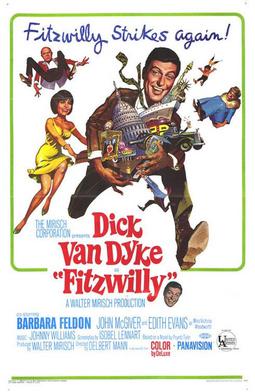
Fitzwilly

It can be weird seeing a star you know in a film you're just not expecting. I grew up watching Dick Van Dyke in his classic 1960s sitcom The Dick Van Dyke Show so while I know he's done plenty of movies, I picture him in the sitcom, not the movies. Well, that don't mean I won't give it a shot, and in the case of 1967's Fitzwilly, I'm certainly glad I did.

As long as he can remember, Claude Fitzwilliam (Van Dyke) has been the head butler for a rich, old widow, Miss Victoria Woodworth (Edith Evans). The problem though is simple; Miss Woodworth -- ever the lady -- isn't rich, but she doesn't know it. How does she maintain her lifestyle then? Well, she lives a somewhat luxurious lifestyle, but she's also generous, very generous, with her donations to charity. In steps Fitzwilly, a highly intelligent, very clever man who has organized Miss Woodworth's staff into quite the crew of con artists and thieves. Their goal is far from selfish though. They steal, bamboozle and con their way into all sorts of money, but always from insurance companies. There's a problem though. Miss Woodworth has hired a new secretary, Juliet Nowell (Barbara Feldon), who seems nosy and might just stumble into Fitzwilly and crew's operation.What to do, what to do?

One word came to mind while watching this comedy from director Delbert Mann, and that is simply...charming. It isn't anything dirty (in the least), obvious, stupid or even physical. The laughs are almost all under-played, focusing more on a line delivery or a reaction from a very talented and deep cast at said line. I've written this before about 1960s comedies, and I'd like to think it certainly applies here. It's almost a last age of innocence when it comes to big screen comedies. They don't try too hard, are content to be entertaining without being offensive, and offer plenty of good, old-fashioned laughs. Just sit back and enjoy it. You shan't be disappointed.

Much of that charm comes from star Dick Van Dyke, and it's fun to see him out of a role I so closely associate him with, his classic sitcom. Sidenote: Yes, I've seen Mary Poppins so I have in fact seen him in other parts, but you know what I mean. It's far from a typical part for Van Dyke. He's a great comedic actor, but more than anything else, he's a great physical comedian, moving around effortlessly. Playing gentlemanly Claude, he doesn't get a chance to be a physical presence. Instead, it allows him to breathe in a quieter, more subtle part that still allows for plenty of laughs. He also has a great chemistry with co-star Barbara Feldon (also a TV star on Get Smart) who arrives on scene to cause some trouble, not knowing what's she gotten herself into. They start off as rivals -- both suspicious of the other -- and not surprisingly end up dealing with a mutual attraction. Obvious? Yes, but it's enjoyable throughout.

What I loved as much as Van Dyke and Feldon though was the supporting cast. A huge name on the stage in England, Evans is a scene-stealer as a not-so-rich old widow who nonetheless thinks she's rich and keeps donating money to charity after charity. Her scenes with Van Dyke and Feldon are perfection in their subtlety. And then there's Fitzwilly's crew of amateur crooks turned highly successful crooks with intricate plans and know-how. There are double-digit members of the crew, but some stand out more than others, none more than John McGiver as Albert, a longtime pickpocket struggling with the morality of what he's done. Also look for Noam Pitlik, a very young Sam Waterston, Anne Seymour, Nelson Olmsted, and Paul Reed. Also worth mentioning are John Fielder and Norman Fell as a dupes of separate Fitzwilly cons, and Harry Townes as Mr. Nowell, Juliet's father.

The script gives the deep cast a chance to show off, much of that coming in a series of reveals of how Fitzwilly and Co. pull their cons off in a variety of different and unique ways. The highlight though is the finale, the crew robbing a Gimbels Department store on Christmas Eve as hundreds of shoppers do their last-minute shopping. Fitzwilly has countless little touches to cause mass chaos, giving him a chance to convince Fell's security official to simply give him the money. One of many highlights? Albert Carrier's Pierre walking around pinching countless women's butts, setting off a domino effect of slaps to innocent men. It's a gem of an ending, the final scene providing some good, funny and story-appropriate twists.

I liked this one a lot. It benefits from some 1967 on-location shooting in New York City and a solid score from a young composer, John Williams, who would go on to be a halfway decent composer for some other movies.  It's funny from the start with Van Dyke, Feldon and Evans leading the way. Well worth tracking down a copy. I had good luck with the TCM print so keep an eye out for the monthly schedule.

Fitzwilly (1967): ***/**** 

Saturday, October 6, 2012

The Stone Killer

The pairing of star Charles Bronson and director Michael Winner is no doubt best remembered for their 1974 film, Death Wish. Lost in the shuffle of the endless if entertaining sequels is that it's a pretty decent movie. The duo had worked together three times prior since 1972 though, including 1973's The Stone Killer, an interesting comparison piece compared to Death Wish. 

Police Lieutenant Lou Torrey (Bronson) is interested in results and little else. He doesn't care how or why it got done. Cases need to get solved, crooks need to be put away. Torrey is bounced from his NYPD precinct and moves west, taking a job on the L.A. police department. Transporting a murder suspect from NYC to L.A., Torrey barely survives a hit attempt, the suspect killed by a drive-by shooter. Torrey thinks back on what happened. The suspect talked -- at the time nonsensically -- of a coming hit. Could the man have been onto something? Torrey begins to investigate, and the clues lead right to the top of the Mafia.

I've mentioned this before. Crime thrillers from the 1970s have a certain charm that you're either going to love or hate with very little middle ground. They can be low-brow, aggressively violent, sexually suggestive (usually pretty obviously), and in general.....just a hell of a lot of fun to watch. That's what you will be getting here with this Bronson-Winner pairing. Bouncing back and forth between NYC and L.A., the story never slows down as Bronson's Torrey gets deeper into the case. The soundtrack from Roy Budd is an odd mix of jazz and funk (listen HERE), but it works in a ridiculous way. That low-budget, gritty, dirty feel permeates the story -- for the better -- and even when it's not a "good" movie, it's still highly entertaining.

Based off a book by John Gardner (with maybe the best title ever) titled 'A Complete State of Death,' 'Stone' gets some points for originality. Released the year after the classic The Godfather, there are similar/familiar touches of that mobster story. It was hard for every mob movie made after 1972 not to have at least some hints of it. The touches are there, but 'Stone' also has a unique streak. Martin Balsam plays Al Vescari, a Sicilian mobster with quite a bit of power who intends to exact some long-awaited revenge. His plan? Recruit disillusioned Vietnam vets with clean records, and train them to lead the assault on a mob war across the country. It's a cool gimmick, and one that's fun to watch.

Oh, Mr. Bronson, you're pretty cool, aren't you? By 1973, Charles Bronson was typically playing the same character over and over again. That's far from a bad thing. He's perfect at the stoic, silent anti-hero. His Torrey is fed up with all the protocols and rules that limit his effectiveness, and basically, he just doesn't care. He will get the job done no matter how brutal his tactics are. Like many of his parts, he gets to throw a couple wisecracks here and there, and genuinely looks like he's having fun. Considering the part he would play a year later in Death Wish, it's hard not to smile at his Torrey who is basically Paul Kersey with a badge. Also look for 1970s familiar faces Jack Colvin, Stuart Margolin, Paul Koslo, Norman Fell, Ralph Waite and a young John Ritter as a beat cop on the investigation.

In his 1970s flicks, Winner had a formula, and he sticks to it here. Action, action and....um....oh, right, action. In a 91-minute movie, he packs it in at an almost frenetic pace. An opening chase in an NYC apartment is quick and to the point to get things going. A mid-movie chase with Torrey (in a boat of a car) chasing Paul Koslo (on a motorcycle) is priceless, a true gem in the ridiculous department with Torrey's car seemingly indestructible. Watch it HERE. A final showdown at the desert hideout of the Mafia army is a solid finish as well, an entertaining finish for an entertaining movie. I know it's far from a classic, and maybe it's just a bad movie, but I liked it a lot. Watch the entire movie HERE at Youtube.

The Stone Killer <---clip (1973): ***/****  

Tuesday, February 22, 2011

Charley Varrick

When you think of leading men in action movies and crime thrillers, certain things come to mind.  Rough and tumble, ready to throw down at a second's notice, classically handsome, able to handle everything presented in front of them.  For a lot of those things, this one actor certainly applies, but he just doesn't seem like a natural leading man.  Seem being the operative word. Walter Matthau was a great leading man, and nowhere was that more evident than 1973's Charley Varrick.

This is a prime example of how good a crime thriller from the 1970s can be.  There is something unexplainable about the style and appeal of a movie from the 1970s that's hard to put your finger on. This Don Siegel-directed thriller has a lot of those elements that range from something as simple as the dusty western settings to the cynical nature to composer Lalo Schifrin's score and everything in between. More than that, there is nothing ground-breaking or innovative about it. This is just professionals doing what they do. It's even easy to see how directors like the Coen Brothers were influenced by the movie, especially No Country for Old Men. With Matthau in the lead and Siegel handling the directing duties, Charley Varrick is a high-quality, well-made, professionally handled movie. Nothing flashy about this one, just a solid movie.

As part of a botched but still successful bank robbery, small-time crooks Charley Varrick (Matthau) and Harman Sullivan (Andy Robinson) head into the back roads of the New Mexico desert looking to escape the police roadblocks and searches.  When they check their take though, both men are stunned at what they see. They find over $750,000 in cash, all from a little bank in the middle of nowhere. Charley quickly pieces it together, it was a mob bank holding money until it could be shipped out of the country. What should they do? It doesn't take long for mob fence, Maynard Boyle (John Vernon), to start a search for his lost money, hiring a hit-man named Molly (Joe Don Baker) to follow what little clues they have. Charley is getting backed into a corner, and it seems he's only got one way out.

With awful movies that know they're awful and movies with high expectations that try to be something they are not, it can be refreshing to see a good, old-fashioned, entertaining story like this one.  There are no major twists, no huge revelations, just a getaway story with crooks, mobsters and cops on all sides.  Based on a novel by John Reese, 'Charley' knows where it is going and how to get there.  It can be somewhat predictable, but the fun is going along for the ride.  Because of the talent both in front and behind the camera, there's never any rush to move things along needlessly fast.  Even considering the seriousness of the story and subject matter, there is a matter of fact, easygoing way about this Siegel production.

Known for his versatility across movie genres, Matthau slipped effortlessly among his movie roles, bouncing back and forth around comedies, action and drama.  He doesn't have the classic good looks of so many leading men, but for me that's always been a positive.  He looks more like the audience member watching the movie than a suave Hollywood star. His Charley is smart, a quick thinker, and seemingly always a step ahead of his pursuers.  Matthau makes this character (who could have been easy to dislike) a strong lead, and something to root for in a sea of not so likable and downright despicable characters. Joe Don Baker is a great villain, the hit-man with a condescending edge and scruples to boot about what he does.  Vernon is Vernon, the perfectly smarmy bad guy who unfortunately is underused, but he makes the most of his not so big appearance.

One of my favorite things about movies released in the 1970s are the supporting casts.  For all the actors like Eastwood, Bronson, Hoffman, Hackman and so many others that starred in these movies, there were countless character actors who filled out the typically unnecessary supporting roles that were still fun to watch. These characters were great at fleshing movies out, and Charley Varrick is packed full of them. The list includes Felicia Farr as Vernon's secretary, 70s sexpot Sheree North as a photographer with a criminal edge, Norman Fell as a district attorney's investigator, Benson Fong as Honest John, a source of Baker's, Woodrow Parfrey as a cowardly bank manager, William Schallert as a focused country sheriff, and a handful of other faces you'll recognize, all in parts that add that little touch to the movie overall.

Now if you're paying attention at all, you can predict the ending long before it arrives.  No, maybe not the specifics, but you know what Charley is up to as the noose looks to be tightening around his neck.  Now, none of that is to say that the finale isn't worthwhile.  Anything but, it's a great ending. Varrick ends up meeting Vernon and Baker at an abandoned airfield with some great aerial stunts included as a chase ensues over the airfield and into a rotted out junk yard. Like the whole movie, there's nothing surprising about the ending, but it is a satisfying one.  A hidden gem from a great decade of movies, Charley Varrick is a winner all around.

Charley Varrick <---trailer (1973): ***/****