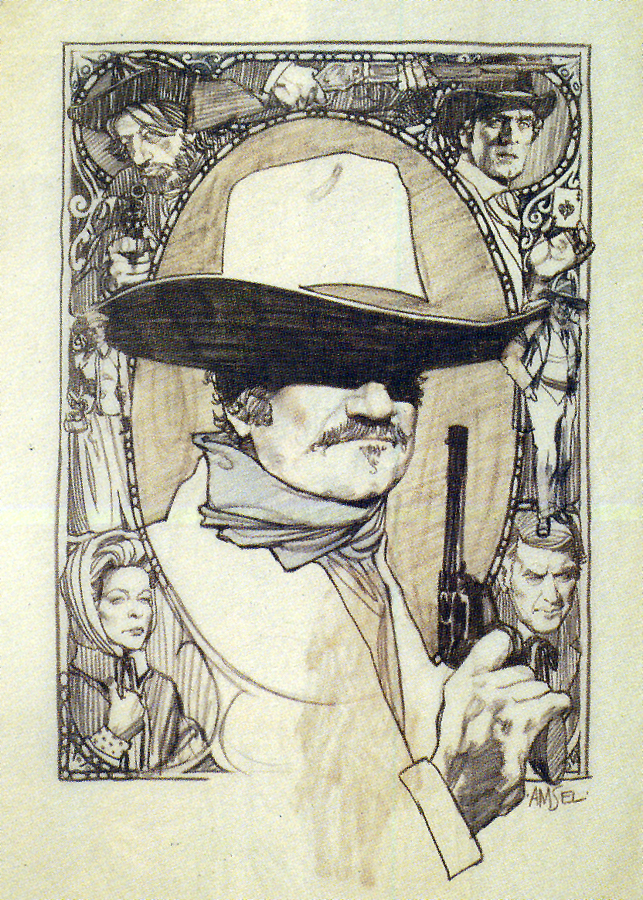
The Sons of Katie Elder

The Sons of Katie Elder
"First, we reunite, then find Ma and Pa's killer...then read some reviews."
Showing posts with label Sheree North. Show all posts

Tuesday, March 18, 2014

The Gypsy Moths

Skydiving has always fascinated me, but I've never had the guts to do it. Odd considering I'm typically scared to death of heights, huh? Meh, big deal! Years ago on a DVD I can't remember, I caught a trailer for a movie from the 1960s about skydiving with a great cast that looked like a light, fun and entertaining flick. Well, I caught up with how many years later, and let me tell you, 1969's The Gypsy Moths ain't what I thought it was going to be.

It's the Fourth of July weekend when a three-man skydiving team, Mike Rettig (Burt Lancaster), an experienced diver, Joe Browdy (Gene Hackman), the motor-mouthed owner/diver, and Malcolm Webson (Scott Wilson), a young but talented diver, drive into a small Kansas town looking to put on a show and make some cash. Malcolm grew up in the little town, the group even staying at the home of some of Malcolm's family. Their mindsets on basically everything is vastly different from the townspeople, including the family, causing some riffs between the barnstorming skydivers and the town-based population. Joe's team gets out on the town though, advertising and getting the word out about their coming show. It won't be easy to put the show together though with weather concerns, and those problems are amplified when the group argues over whether Mike should do a dangerous cape jump as a grand finale.

This 1969 flick comes from one of my favorite directors, John Frankenheimer, the man behind The Train, The Manchurian Candidate and Seven Days in May among others. 'Moths' never got a full theatrical release in the United States, audiences only discovering it years later. The reasoning? My guess would be it was a couple years too early. In the 1970s, this movie may have flourished. There's surprising amounts of nudity, a forthright attitude about sex, adultery, life in general. Whatever the reason though, it didn't really get a chance with American audiences. Frankenheimer has even said in interviews that this was his favorite film he directed. That's all the convincing I need, but in very disappointing fashion, the movie doesn't amount to a great final package.

Some of that definitely comes from a perception of mine because I thought I was getting a different movie. That's not all of it though. I adjusted and went with a far darker story than I thought I would be watching. The screenplay from William Hanley looks to give a little slice of smalltown America and what better time to do that than a 4th of July weekend? Frankenheimer filmed on location all around Kansas, giving an authenticity that wouldn't work if it was filmed on a Hollywood backlot. It doesn't translate overall though. I think the movie is too thoughtful, too introspective, too brooding for its own good. These skydivers sure are moody, depressed, fighting amongst themselves and instantly clashing with the townspeople with their callous(?) outlooks on life. The first hour is painfully slow and so darkly down and depressing that I couldn't get into it at all. For me, that's saying something. I'm usually a big proponent of the darker the better in terms of story.

Whatever the tone though, 'Moths' has quite the cast. Are they used well? Eh, not really. I didn't really understand Lancaster's Mike character. He's a longtime skydiving veteran, an adrenaline junkie who's beginning to see the adrenaline wear off. Are his skydiving days beyond him? He may have found a future with Deborah Kerr's Elizabeth Brandon, a married woman and Malcolm's quasi-aunt. They're instantly drawn to each other, but it's never clear why. As near as I can figure, they're drawn to something different, Mike a settled down life with a wife and family, Elizabeth a wild and free life lived on the road to the fullest. Mostly, this relationship comes out of nowhere, one of those horrible movie relationships where two people fall for each other immediately with some knowing looks. This affair/relationship does push the story to some surprising twists, but the twist didn't have quite the dramatic shock I'm assuming was intended. Surprising? Yes. Effective dramatically? Eh, not quite.

The rest of the cast okay, nothing special. There is a chemistry among Lancaster, Hackman and Wilson, but there's not enough of it. When it does come around, it's too late. Hackman is solid as ever, a fast-talking charmer, the engine that makes the team go. He meets and clicks with a waitress (Sheree North, topless dancing and all) immediately as the skydiving show fast approaches. Wilson is moody and worrying and quiet as Malcolm, an underdeveloped character that falls for a young boarder, Annie (Bonnie Bedelia), at her aunt's home. These are all potentially interesting characters, but something just doesn't click to bring it all together. Also look for William Windom as Kerr's husband, seemingly seeing what's going on but not doing much about it.

The final 45 minutes at least make an effort to get the audience's adrenaline pumping. After all the introspective, slow-moving drama of the first hour, it is desperately needed as the skydiving team heads to their show. The footage is pretty crazy, cameramen jumping with the actual skydivers to get some great skydiving action. There are these ridiculous moments where you sit back and think "Man, that guy is hanging off the plane's wing waiting to drop. What if his parachute doesn't open?" The skydiving footage is the high point of the movie, no doubt about it, but it wasn't enough to save this Frankenheimer film for me. Unfortunate end result, a disappointing effort in the end that never connects.

The Gypsy Moths (1969): **/****

Tuesday, October 2, 2012

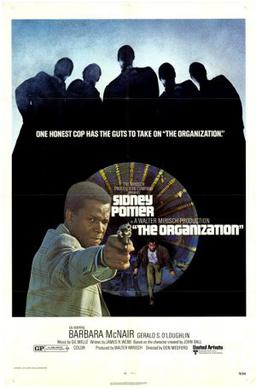
The Organization

For so many reasons, 1967's In the Heat of the Night was a key movie that helped mark the change of the portrayal of race on-screen. It was a groundbreaking movie, one that's noteworthy for the working relationship between two cops, one black, Sidney Poitier, and one white, Rod Steiger. While that film is fondly remembered though, Poitier returned with the same character in two sequels, 1970s's They Call Me Mister Tibbs and 1971's The Organization.

At a heavily guarded business, a murder has taken place, but there is little in the way of evidence pointing to the culprits, leaving the police and investigating officer Virgil Tibbs (Poitier) grasping at straws. As the investigation develops though, Tibbs is contacted by an urban revolutionary group with some revealing information. They take credit for robbing the business -- a front for a criminal organization -- of $4 million worth of heroin, but nothing about the murder. Tibbs is left to make a difficult decision. Help this group that broke the law (multiple times) even though their intentions were pure, or turn them in to face the law.

My first reaction when I found this movie on TCM's schedule was that Poitier was slumming with these two sequels. I've never seen 'Mister Tibbs' so take that into account here too. These two movies in no way affect the power or effectiveness of 'Night,' but what's the point? Why make two sequels? The original got the message across, and even though Poitier's Virgil Tibbs is one badass character, was there a need for more stories back in his hometown instead of the deep South? Nope, not really. Even more unfortunately, the sequel's script and story just isn't up to par. I'm not a huge fan of sequels to begin with, but if the effort is there I'll at least go along with it for the ride. Moral of the story is simple; cool character does not equal cool movie.

Thanks to Poitier and the San Francisco backdrop for the story, the movie isn't a complete waste of time. The script simply doesn't give Poitier much to do as the lead character. He gets deeper and deeper into this case with no easy way out, but there's nowhere to go other than straight down. We get some background with his wife, Valerie (Barbara McNair), and son (George Spell), even some oddly toned scenes where they talk about the birds and the bees. It's far from Poitier's best work, but even a mediocre performance from him is still worthwhile. There's not much else worthwhile in the character department though, leaving Poitier to do all the heavy lifting.

The sinister aspect of "THE ORGANIZATION" is wasted here because the story never picks a route to take. Instead, it bounces all over the place. The urban revolutionaries (including Raul Julia, Ron O'Neal, Billy Green Bush, Lani Miyazaki among others) could have been given their own movie, but instead they are background players here -- a means to an end -- and they never amount to anything more than that. The Organization and all their henchmen are nameless faces (intimidating if nothing else), and the bosses (Fred Beir and John Lasell) have little personality. This criminal organization is given no background, no history, no truly sinister nature other than what we see, but there's no reasoning or motive. So Poitier's Tibbs wants to take them down, but what's the point?

On the positive, look for 1970s eye candy Sheree North as a woman with a possible link to the case and Gerald S. O'Loughlin as a fellow police officer, Lt. Pecora, working with Tibbs on the investigation. Mostly though, the movie on the whole never connects. The story drifts along without much of an end-game in sight so the chases and shootouts don't amount too much. They're there in the story, but when you're not interested in the story to begin with, those sequences lack any energy or much of an interest level. As Bullitt and the Dirty Harry movies proved, San Francisco is a great backdrop for a cop story so the locations stand out, and Poitier is solid, but there's little else.

The Organization <---trailer (1971): **/****  

Tuesday, February 22, 2011

Charley Varrick

When you think of leading men in action movies and crime thrillers, certain things come to mind.  Rough and tumble, ready to throw down at a second's notice, classically handsome, able to handle everything presented in front of them.  For a lot of those things, this one actor certainly applies, but he just doesn't seem like a natural leading man.  Seem being the operative word. Walter Matthau was a great leading man, and nowhere was that more evident than 1973's Charley Varrick.

This is a prime example of how good a crime thriller from the 1970s can be.  There is something unexplainable about the style and appeal of a movie from the 1970s that's hard to put your finger on. This Don Siegel-directed thriller has a lot of those elements that range from something as simple as the dusty western settings to the cynical nature to composer Lalo Schifrin's score and everything in between. More than that, there is nothing ground-breaking or innovative about it. This is just professionals doing what they do. It's even easy to see how directors like the Coen Brothers were influenced by the movie, especially No Country for Old Men. With Matthau in the lead and Siegel handling the directing duties, Charley Varrick is a high-quality, well-made, professionally handled movie. Nothing flashy about this one, just a solid movie.

As part of a botched but still successful bank robbery, small-time crooks Charley Varrick (Matthau) and Harman Sullivan (Andy Robinson) head into the back roads of the New Mexico desert looking to escape the police roadblocks and searches.  When they check their take though, both men are stunned at what they see. They find over $750,000 in cash, all from a little bank in the middle of nowhere. Charley quickly pieces it together, it was a mob bank holding money until it could be shipped out of the country. What should they do? It doesn't take long for mob fence, Maynard Boyle (John Vernon), to start a search for his lost money, hiring a hit-man named Molly (Joe Don Baker) to follow what little clues they have. Charley is getting backed into a corner, and it seems he's only got one way out.

With awful movies that know they're awful and movies with high expectations that try to be something they are not, it can be refreshing to see a good, old-fashioned, entertaining story like this one.  There are no major twists, no huge revelations, just a getaway story with crooks, mobsters and cops on all sides.  Based on a novel by John Reese, 'Charley' knows where it is going and how to get there.  It can be somewhat predictable, but the fun is going along for the ride.  Because of the talent both in front and behind the camera, there's never any rush to move things along needlessly fast.  Even considering the seriousness of the story and subject matter, there is a matter of fact, easygoing way about this Siegel production.

Known for his versatility across movie genres, Matthau slipped effortlessly among his movie roles, bouncing back and forth around comedies, action and drama.  He doesn't have the classic good looks of so many leading men, but for me that's always been a positive.  He looks more like the audience member watching the movie than a suave Hollywood star. His Charley is smart, a quick thinker, and seemingly always a step ahead of his pursuers.  Matthau makes this character (who could have been easy to dislike) a strong lead, and something to root for in a sea of not so likable and downright despicable characters. Joe Don Baker is a great villain, the hit-man with a condescending edge and scruples to boot about what he does.  Vernon is Vernon, the perfectly smarmy bad guy who unfortunately is underused, but he makes the most of his not so big appearance.

One of my favorite things about movies released in the 1970s are the supporting casts.  For all the actors like Eastwood, Bronson, Hoffman, Hackman and so many others that starred in these movies, there were countless character actors who filled out the typically unnecessary supporting roles that were still fun to watch. These characters were great at fleshing movies out, and Charley Varrick is packed full of them. The list includes Felicia Farr as Vernon's secretary, 70s sexpot Sheree North as a photographer with a criminal edge, Norman Fell as a district attorney's investigator, Benson Fong as Honest John, a source of Baker's, Woodrow Parfrey as a cowardly bank manager, William Schallert as a focused country sheriff, and a handful of other faces you'll recognize, all in parts that add that little touch to the movie overall.

Now if you're paying attention at all, you can predict the ending long before it arrives.  No, maybe not the specifics, but you know what Charley is up to as the noose looks to be tightening around his neck.  Now, none of that is to say that the finale isn't worthwhile.  Anything but, it's a great ending. Varrick ends up meeting Vernon and Baker at an abandoned airfield with some great aerial stunts included as a chase ensues over the airfield and into a rotted out junk yard. Like the whole movie, there's nothing surprising about the ending, but it is a satisfying one.  A hidden gem from a great decade of movies, Charley Varrick is a winner all around.

Charley Varrick <---trailer (1973): ***/****

Friday, September 3, 2010

The Outfit

Organized crime, the mob, the Mafia, all the kingpins of the criminal underworld, and the movies reflect that.  Countless movies have been made about these different criminal organizations, but then of course there's the underdog.  What about the guys trying to take down any of the above?  A suicide mission for some revenge?  A guy with nothing to lose and because of that much more dangerous?  Makes for a good movie if you ask me, especially 1973's The Outfit.

The premise of a lone gunman going after the mob is nothing new and has been done several times since 1973, including Mel Gibson in Payback and Tom Hanks in Road to Perdition among others.  Payback is almost an exact reworking of the story here, but the original is still the best.  If you needed to explain to someone what a 1970s crime thriller was about, The Outfit could be a blueprint for everything that is good about that type of movies.  Perfect casting, exciting action, a cynical, very dark tone, a little black humor thrown in, and a gritty style that just can't be replicated.

Fresh out of prison, Earl Macklin (Robert Duvall) finds out his brother has been killed by two hit men, supposedly for a job the brothers pulled off years before on a mob bank. With a former girlfriend (Karen Black) along for the ride, Macklin survives a hit attempt on his own life and decides to go on the offensive.  He enlists the help of a former partner, Cody (Joe Don Baker), and the duo goes to work.  Macklin wants $250,000 for the trouble 'the outfit' has caused him, but when they don't pay up they start hitting backroom casinos and mob fronts, taking all the money in sight.  But as they go up the ladder, Macklin and Cody realize they'll have to go right to the top, the big-time mobster in charge, Mailer (Robert Ryan). The mobster's waiting for them though and nobody might get out alive.

This is everything that's good about a 1970s B-movie crime thriller.  No big budget, no huge scale, just two pissed off guys with nothing to lose going after the mob.  Director John Flynn shoots his movie in seedy motels, back room offices and dark alleys where a story like this would actually take place.  It was filmed in and around Los Angeles, the locations being one of the strong suits of the movie.  You feel like you're there with Macklin and Cody.  This isn't high class, high end mafiosos were talking about, just low-level thugs.  Everything from the 1970s boats of cars, the bad suits, the awful style, it all works to perfection here.

I've written before about my love of character actors, and Flynn goes all out here to round out his cast.  What was so great about 70s movies was that an actor would take a supporting role that might not require more than a scene or two.  They'd make a quick appearance and be gone, but that's just one scene.  There would be another and another until you've got all these great names filling out the story.  More on the leads later, but the support is as good as it gets.  Timothy Carey plays a mob go-between, Richard Jaeckel and Bill McKinney play mechanic brothers supplying cars for crooks with Sheree North along as McKinney's slutty wife, Felice Orlandi and Tom Reese as two hit men, film noir femme fatale Jane Greer as Macklin's sister-in-law, among many other recognizable faces you'll be watching out for.

Now there's the buddy cop movie, but here there is the buddy crook movie (mostly holding back on the humor). Duvall and Baker make this movie as Macklin and Cody.  Duvall is basically the anti-hero of all-time.  He didn't have classic good looks, he was a little pudgy, he was balding, but it all adds up nicely.  He's an all-around hardass who knows what he wants and doesn't care who gets hurt in the process as long as he gets it.  Baker's Cody is a little more laid back but equally capable of handling himself.  Like any buddy movie, there's a bond, a link between these two men who know their chances of survival are slim but go ahead anyways.  At one point, Macklin says Cody can walk out, no hard feelings.  Cody answers in typical tough guy fashion "I want to see how it turns out."  It doesn't get much cooler than that in true anti-hero form.

Making what amounts to an extended cameo, Robert Ryan's Mailer of course gets progressively pissed off at these two low-level hoods.  That leads to the equivalent of a suicide mission as Macklin and Cody go gunning for him at his heavily guarded estate.  The ending is full of tension and some great action, but there's a bit of a cop out in the last scene.  No spoilers here, and honestly, it doesn't ruin the movie but I could have thought of a better ending.  No DVD available, but if you stumble across this one, plant yourself in a seat, sit back and enjoy.

The Outfit <---TCM clip (1973): *** 1/2 /****

Wednesday, July 14, 2010

The Shootist

As a movie star, you don't always pick how you get to ride into the sunset on the horizon.  For many, their days as a star are long past.  Others just never get that right role that allows you to end on a high note.  Well, there is an exception to every role, and that's John Wayne, one of the most iconic stars to come out of Hollywood's first 50 years with sound films. A star whose popularity went up and down some over a long career, Wayne was always in the public eye with his movies, his last part being one of his best all-time parts, 1976's The Shootist.

During the mid 1970s when Wayne was in the process of making his last few movies, The Duke was struggling with stomach cancer that would ultimately end up killing him in 1979.  More than any other time in his career, Wayne resorted to playing a version, a caricature of himself in the late 1960s and into the 1970s.  There was a comfort factor involved for both the actor and the audiences who still loved seeing him on-screen.  With an exception here and there, none of these later movies are classics, but they're all entertaining.  The Shootist is one of those few exceptions, a classic thanks almost exclusively to Wayne's performance in the title role.

It's 1901 and infamous gunfighter J.B. Books (Wayne) rides into Carson City to see an old friend of his, Doc Hostetler (James Stewart). Books has been feeling poorly, and the Doc confirms the bad news; he has cancer and only has a few months to live. The gunfighter takes a room at a boarding house run by a recent widow, Mrs. Rogers (Lauren Bacall) and her troublemaker son, Gillom (Ron Howard).  Books goes about wrapping certain things up with his life as he prepares to die, putting things in place and tying up some loose ends.  But the Doc warned him, letting the cancer kill him will be a long, drawn out and incredibly painful process.  If there was a way to quicken that death, he recommends Books do it.  So knowing what awaits him, the older, worn-out gunfighter puts together one last moment of glory.

Seven years earlier, Wayne won his first and only Academy Award for his performance as Rooster Cogburn in True Grit.  In a sense, it was a lifetime achievement award for all he had accomplished in his career.  But just on performance alone, his John Bernard Books ranks up there as one of his all-time top five.  It is a part that Wayne was born to play, plain and simple.  His Books is a dignified man with a reputation as a killer, a man who lives by certain principles and expects others to do the same.  He doesn't apologize for his past and to a certain point, is frustrated with the life he has led where every young punk with a gun wants to kill him to prove how good they are.  Easily one of the Duke's best parts, and a fitting end to a great career.

Directed by Don Siegel, 'Shootist' brings together an excellent cast, almost like a going away party for the Duke.  Having worked together 20 years before in 'Blood Alley,' Bacall and Wayne are perfect together with some of the best on-screen chemistry Wayne ever had with a female co-star.  Their scenes flow so easily, and it's just fun watching two pros show what they can do with good material.  The same for young Ron Howard who plays a different character than the viewer is used to considering his Andy Griffith and Happy Days roots.  Books becomes a bit of a father figure to Howard's Gillom and tries to teach him the lessons of how to be a man.  Along with Stewart as the doctor, there's Harry Morgan as the town sheriff, John Carradine as the undertaker, Sheree North as a lost love of Books, and Scatman Crothers as the livery stable owner.

The story builds to a certain point, and you dread where it is going -- even knowing it is where it has to go.  Books takes the Doc's advice and arranges a way so three men who would love nothing more than to put a bullet in him meet him at the same place.  If all goes well, he'll go out in one last blaze of glory, avoiding whatever the cancer can throw at him.  The trio include Richard Boone, Hugh O'Brian and Bill McKinney, all three waiting for him in a saloon. The ending is foreshadowed in a line delivered midway through the movie, but it still comes as a bit of a shock.  Of his 170 or so movies, John Wayne actually died in just eight movies, and few are as moving as this one. You can watch it HERE, obvious SPOILERS.

Beyond the sets, background and lack of gunplay, this is a movie entirely devoted to character, specifically John Bernard Books and the last few days of his life.  It is a western focusing on the changing times as the old west becomes a thing of the past, the U.S. advancing forward into a new time.  In that way, it's appropriate that the Wayne character wants no part of it.  As some characters point out, he is a relic from the previous times.  His exit then is only appropriate, going out as he came in.  One of Wayne's best and an underrated western overall.

The Shootist <----trailer (1976): ****/****

Monday, June 22, 2009

Netflix review #23: Madigan

At the top of any list of tough guy directors with Sam Peckinpah and Robert Aldrich, one that certainly belongs is Don Siegel. In the 60s and 70s, Siegel made a string of strong, gritty, realistic movies, often starring Clint Eastwood, that were often ahead of their times and rarely disappointing. Maybe most well known for directing Dirty Harry, Siegel actually made two lesser cop films in 1968, Coogan's Bluff which I reviewed a few months back, and Madigan. Neither are as good as Dirty Harry, but both have redeeming qualities.

In the 60s and 70s when everyone from John Wayne and Steve McQueen were making cop movies, it seemed every well-known guy's guy actor was taking a crack at the genre. And why not really? With American audiences becoming more cynical and wanting the more hard-hitting stories, movies could delve into tougher subjects and even previously taboo topics, like sex, drugs, racism, all that good stuff. Released in 1968, Madigan starts to incorporate those things, but it's almost just testing the waters. A villain who likes kinky sex? Mention it and move on. A cop who 'forgets' suspects' rights? Hint at it and change the topic!

New York detectives Daniel Madigan (Richard Widmark) and Rocco Bonaro (Harry Guardino) are looking to bring a witness in for questioning in a murder case. But what starts as routine investigating takes a nasty turn when the witness, Barney Benesch (Steve Ihnat), takes advantage of a brief lapse of concentration from the two veteran detectives. He pulls a gun on them, takes their guns and escapes into the city. Both detectives have come under fire in the past for their rough methods, but they're given 72 hours to bring Benesch in.

Looking down on all that happens from City Hall, police commisioner Anthony X. Russell (Henry Fonda) is trying to juggle any number of prickly cases, including the Madigan debacle, but also a possible corruption scandal with his close friend and Chief Inspector Charles Kane (James Whitmore). Russell has a past with Madigan and neither man thinks the other is completely on the up and up.

My first reaction after finishing the movie was that Siegel, typically as good as they get with telling a no-frills story that gets right to the point, bit off more than he could chew here. There's too much going on in the way of story here. It's not a long movie at just 101 minutes so both stories, Madigan and Bonaro hunting down the fugitive and Russell trying to keep rein on the city, suffer from lack of development. Both stories are interesting, but each could have had their own movie. Instead, we get a sometimes rushed, not all the way developed procedural cop movie.

Siegel's films almost always did a fine job casting, and for all its faults, Madigan has a strong cast top to bottom. Widmark was an anti-hero in the 1950s before anyone even knew what that meant so as Madigan he's an ideal choice. Det. Madigan is not a likable character with little in the way of redeeming qualities. He's completely driven by his job and cheats on his wife, Julia (a good part for Inger Stevens), mostly because he can. As his superior though, Fonda sleepwalks through his part as the police commisioner. It's not a great part to begin with, but even Fonda doesn't do much with it.

With Widmark, the best parts go to Guardino and Whitmore, two great, often underappreciated character actors. Guardino had already worked with Siegel in 1962's Hell is For Heroes, a WWII movie everyone should see, and would work with him again in Dirty Harry. The New York actor is an ideal sidekick to Widmark because he doesn't have to do much to be noticed. He's a good presence and works well with Widmark. Whitmore does the same as a veteran cop who's risen through the ranks but now sees his career possibly tumbling down around him for a decision he was forced to make. The rest of the cast includes Susan Clark, Michael Dunn, Don Stroud, Sheree North, Raymond St. Jacques, and Frank Marth.

Being a Siegel cop movie, certain touches are there that would be hard to miss. This isn't a good guys vs. bad guys cop movie from the 1950s. Right off the bat, there's nudity in the first scene. The villain is known for his kinky sex preferences and somewhat easier to track because of it. There's police brutality, hinted at more than shown, and quite a bit of shoot first, ask questions later mentality. None of these things are pushed too far or overdone, but even a year or two previously, these subjects might have shocked audiences.

So I can't say I loved the movie or even really enjoyed it, but because of the strong casting, especially Widmark in the lead, and Siegel's typically consistent style, I can mildly recommend Madigan. Here's the trailer with surprisingly enough, female nudity. I can't think of a trailer that's gotten away with that other than red-band trailers, even now in 2009.

Madigan (1968): **/****