The Sons of Katie Elder

The Sons of Katie Elder
"First, we reunite, then find Ma and Pa's killer...then read some reviews."
Showing posts with label Karl Malden. Show all posts

Tuesday, June 2, 2015

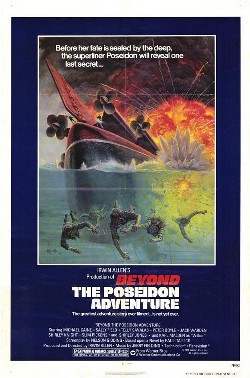
Beyond the Poseidon Adventure

I've never hid my feelings about sequels and remakes. Sure, they can be lazy and big, old cash-cows, but if there's a need to make more movies or an interesting plotline or character(s), then I'm all for it. Same for remakes. If the original sucked or had untapped potential, then fire away. But the other efforts? The purely for the big payday efforts...yeah, here we are today. I watched 1979's Beyond the Poseidon Adventure because I could, because I'm an idiot and...yeah, here's the review.

It's New Year's Eve and Captain Mike Turner (Michael Caine) is on the Mediterranean Sea on his tugboat, the Jenny, with his first mate, partner and friend, crusty seaman, Wilbur (Karl Malden), and a spunky young woman, Celeste (Sally Field), they picked up at their last port. Turner is in some serious financial trouble and will likely see his boat repossessed very soon. But out at sea, they stumble across the floating wreckage of the S.S. Poseidon as a helicopter flies away overhead. Turner's eyes light up. He claims the salvage rights for the ship and taking a huge risk tries to get onto the capsized cruise ship. Turner isn't alone though. Another ship boards, a Dr. Stefan Svevo (Telly Savalas) explaining his ship heard a distress signal and he intends to help any potential survivors. The ship could sink or explode at any moment, but Turner and Co. head into the wreckage, hoping to find some sort of treasure, money, diamonds...if they can survive.

What the hell? I mean, come on. Really? It took Master of Disaster Irwin Allen (directing and producing here) seven years to get this sequel made after the mega-success of 1972's The Poseidon Adventure. I liked the original Poseidon even if I didn't love it. It's hard not to appreciate it for all that it accomplished, influencing whole genres and hundreds of movies since. You know what it didn't call for? A sequel. As in AT ALL. This is an opportunity to make money, pure, plain and simple. Worst than that, it isn't even guilty pleasure good. The cast is interesting as they usually are with disaster movies, but mostly, it is just B-A-D.

It is literally the same movie with one minor change. We've got idiots heading into the sinking ship that is continually rocked with explosions. Sure, the reasons are greed-based (just about everyone can get on-board with that) but really? REALLY?!? And let's think about this for a minute. Does anyone actually believe that Telly Savalas is telling the truth? It's Telly Freaking Savalas. There's simply no way that he is what he says he is. The problem becomes that when the twist is revealed, it is absolutely ridiculous, ending in a gunfight in a cargo hold. So yeah, that happens but the twisting and turning story stretches the limits even for an unnecessary sequel. If it helps your peace of mind (and it should), things don't get better as the running time approaches two hours. It gets worse.

So at this point, the saving grace has to be the star power of the cast. The cast is pretty solid in name recognition, and the formula is the same as most disaster movies. Introduce all our Hollywood stars and see who makes it out relatively unscathed. This was an interesting part of Michael Caine's career, one he's admitted he was in it for the money. There's gems like The Swarm and more into the 1980s, Jaws IV: The Revenge. He was rough in 'Swarm,' but he's actually pretty decent here. He commits to the part/script -- however bad -- and goes for it. Along with Field, Malden and Savalas, there's also Peter Boyle, Jack Warden, Shirley Jones, Shirley Knight, Paul Picerni, Slim Pickens, Mark Harmon, Veronica Hamel, and Angela Cartwright rounding out our assorted ensemble of survivors. Give them some sort of personal background, throw them together and let things fall apart from there. It does so in pretty spectacular fashion.

Things get pretty out of control, truly boring and bad in the second half. The twists are ridiculous, and scene-to-scene, it just feels like everyone is trying too hard. Sally Field is at her disgustingly adorable cutest, always ready with a nervous one-liner in the face of impending doom. Slim Pickens hams it up like his paycheck depended on it and other stuff happens with other actors. Meh, just really bad pretty much from the get-go. Not even guilty pleasure good. Just lousy.

Beyond the Poseidon Adventure (1979): */****

Wednesday, January 28, 2015

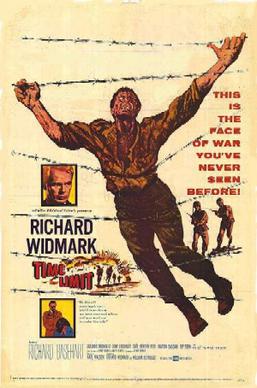
Time Limit

The Korean War helped change things when it came to portrayals of war in film. Sure, there were still huge, blockbuster epics to come like The Longest Day and The Greatest Escape. The nastiness of the war, changing times in America, darker methods of war, it all added up to something new, different and often times, uncomfortable. This wasn't soldier shoots soldier anymore. Part mystery, part prisoner of war drama, part courtroom drama, here's 1957's little-known Time Limit.

An officer in the Judge Advocate General's Corps, Colonel William Edwards (Richard Widmark) is wrapping up interviews for a messy little case that has crossed his desk. An Army major, Harry Cargill (Richard Basehart), has been accused of collaborating with the North Koreans during his time in a prisoner of war camp during the Korean War. Edwards has 14 other witnesses testifying what Cargill did in the P.O.W. camp and complicating matters is that Cargill absolutely refuses to defend himself, turning down legal counsel. If anything, it seems that the officer in question wants to be found guilty and prosecuted to the fullest extent, even if that court martial hearing sentences him to death. It seems like an open and shut case, and that's what makes Edwards curious. Something doesn't add up. What happened in that mountaintop prisoner of war camp in North Korea?

Despite the talent assembled to round out the cast in this 1957 military legal drama, I'd never really heard of this film. I've never seen it pop up in TV listings, and the DVD isn't readily available in Best Buys and Barnes and Nobles. But that Christmas stuff, you get some good presents, and I got this flick! What an interesting movie, one that doesn't get the attention and respect it deserves. Actor Karl Malden takes a crack at the directing chair (his only directing effort) and doesn't disappoint. It is a military film ahead of its time, willing to tackle some brutal, harsh realities about the changing concepts of war. As I mentioned earlier, this isn't Soldier A shoots Soldier B. This is total war that goes far beyond the battlefield. Maybe it's because 'Time' tackles those difficult to talk about subjects that its legacy has been buried over the years. Moral of the story? It's worth catching up with.

A co-producer who also encouraged Malden to direct the film, Widmark clearly had an interest in bringing this film to life. He's always been one of my favorite actors, and this is a performance that clearly shows off his ability. Some of his most well-known performances are big and bold, but this one is understated and subtle (and the better for it). His Colonel Edwards just wants to find out the truth, however dark it may be. It's also a performance that foreshadows Widmark's part four years later in Judgment at Nuremberg, a somewhat similarly-themed courtroom drama. Basehart gets the showier part as Major Cargill, an officer and former prisoner clearly struggling with some past demons. It's never over the top, just emotionally charged. Instead, this is a part of a man just trying to hold it all together as a secret from his past tears him apart.

'Time' doesn't have a huge cast, but there isn't a weak link in the bunch. Dolores Michaels provides a bit of a sexy secretary interest as Edwards' secretary, Jean, while Martin Balsam plays Sergeant Baker, Edwards' adjutant. I really liked and appreciated the dynamic among the trio in the office, three different people with different backgrounds all working toward the same goal. Some of the witnesses Edwards seeks out include June Lockhart as Cargill's worrying wife and Rip Torn as Lt. Miller, a fellow prisoner and bunkmate of Cargill's from the POW camp. Also look for Carl Benton Reid as Edwards' superior officer with a vested interest in the case and Khigh Dhiegh as Colonel Kim, the brutal POW camp commander.

Clocking in at 96 minutes, 'Time' is based on a play and definitely has that distinct feel. Malden's focus is on the actors, letting the camera linger for long, dialogue-driven scenes without a cut. Much of the movie is shot in Edwards' office with a quick departure near the halfway point to visit Lockhart's wife character. That lack of style oddly, gives 'Time' some style in a weird way. It's filmed in black and white and with some interesting camera angles, adds an unforeseen sense of tension that helps build the mystery. It isn't always the quickest movie -- especially the first 45 minutes -- but that momentum picks up in a huge way about the 45-minute mark as things start to reveal themselves.

I thought I had the twist pegged, but I was wrong. The final act features two different twists, one working just as well as the other. These aren't just twists for the sake of a surprise or shock either. These are genuine twists that work while also asking some tough questions. An underrated flick that deserves more of a reputation. Definitely worth checking out.

Time Limit (1957): ***/****

Wednesday, October 22, 2014

Nevada Smith

Just a few weeks ago, I watched and reviewed 1964's The Carpetbaggers, the story of a business mogul expanding his empire in the 1920s and 1930s. A minor character in the story? An aging cowboy turned western movie star, Nevada Smith. His backstory is explained but not shown. That's for a prequel made two years later, 1966's Nevada Smith.

Working at his father's played-out mine that has recently produced some gold deposits, a young half-breed Max Sand (Steve McQueen) is away from the house when three outlaws (Karl Malden, Arthur Kennedy, Martin Landau) ride up looking for that gold. Max is too late to help though, arriving at the house to find the tortured, mutilated corpses of his parents. The outlaws are nowhere to be found, but their trail is easy enough to follow. Max's biggest problem though? He's capable of caring for himself on the trail, but he has little money and no real experience with guns, especially when it comes to actually using a pistol or rifle on a human being. Desperate and with no supplies left, Max tries to rob a man on the trail. Instead, the man, Jonas Cord (Brian Keith), an experienced trailsman and capable shot, teaches Max all he can in his quest for revenge. His biggest advice though? Abandon his quest for revenge and move on with his life, but Max isn't hearing it.

It had been years since I watched this 1966 western from director Henry Hathaway (a solid western director, True Grit, Sons of Katie Elder). My biggest takeaway? It isn't as good as I remembered. Still good, still enjoyable, but not as good. There's still positives to take away though. 'Nevada' was filmed on-location in Inyo National Forest and the Owens Valley in the Sierra Mountains. Visually, it is a stunningly good-looking film with the mountains as a backdrop to the revenge story. The score from composer Alfred Newman is solid -- especially the main theme -- but isn't necessarily used enough. The best thing going is the revenge motive, a pretty gruesome story at times. Not graphic, just really violent because we know what's happening. Stabbings, drownings, choking, beating, systematic shooting of an unarmed man. It can be pretty rough at times.

So if you watch this 1966 western and come away a little confused, there's a good reason. The Max Sand character is young, really young. I'm assuming a teenager, maybe approaching 20. When the movie was made in 1965, McQueen was...35. And he's a half-breed with a white father and Kiowa mother. So yeah, he doesn't really look like a teenage half-breed (with his blonde hair too) in a pretty obvious case of miscasting. Still, McQueen makes the most of it. With the revenge motive, it is a fascinating character. Max -- later dubbing himself Nevada Smith -- becomes obsessed with killing his parents' murderers no matter what the cost on those who are helping him. McQueen does a good job in a physically demanding part, doing his own stunts while also adding a dimension of pure physicality to the performance. It's not often spoken words, just a sad look here, a drop of his shoulders there. Not ideal casting, but McQueen makes the most of it.

But the rest of the cast? The rest of the cast?!? It's pretty great. Brian Keith has always been one of my favorites, but I think this is one of his bests. His Jonas Cord is only in the movie for about 20-25 minutes but steals every scene he's in. His chemistry with McQueen is pretty perfect, and their scenes together crackle, an experienced hand with a gun trying to teach the younger Max all he can through good and bad. The Jonas/Max dynamic has always been my favorite, the movie's strongest point. With the episodic story, Malden, Kennedy and Landau make the most of their screentime, three particularly nasty villains you can't wait to see get their due. Raf Vallone is good too as Father Zaacardi, a priest who comes across Max and helps him in a time of need. Also look for familiar western faces Gene Evans, Paul Fix, Pat Hingle, John Doucette, Lyle Bettger, Howard Da Silva and Strother Martin in supporting parts.

Where does 'Nevada' go a little off the tracks then? At 130 minutes, it drifts too much with some extremely slow portions involving the episodic story. There just isn't a ton of energy at times. Two semi-love interests are added, Janet Margolin as an Indian dance hall girl and Suzanne Pleshette as a Cajun girl, are meant to show Max's obsession over a possible future with either, but they become repetitive and tedious. Just not a ton happens. The performances are good, the locations cool, but it's missing that special something. Good but not great.

Also worth mentioning is a western nerd moment. Any western fan who's seen any number of 1960s westerns will recognize Chuck Roberson, Chuck Hayward and Jerry Gatlin as background players and supporting parts. 'Nevada' takes that to new levels. Watch closely and you see them all playing multiple parts. In one scene, Roberson is part of Malden's gang, and the next he's Paul Fix's deputy. It's a little much and a little lazy, something Hathaway also did in Sons of Katie Elder. Thus ends this rant.

Nevada Smith (1966): ** 1/2 /****

Monday, April 21, 2014

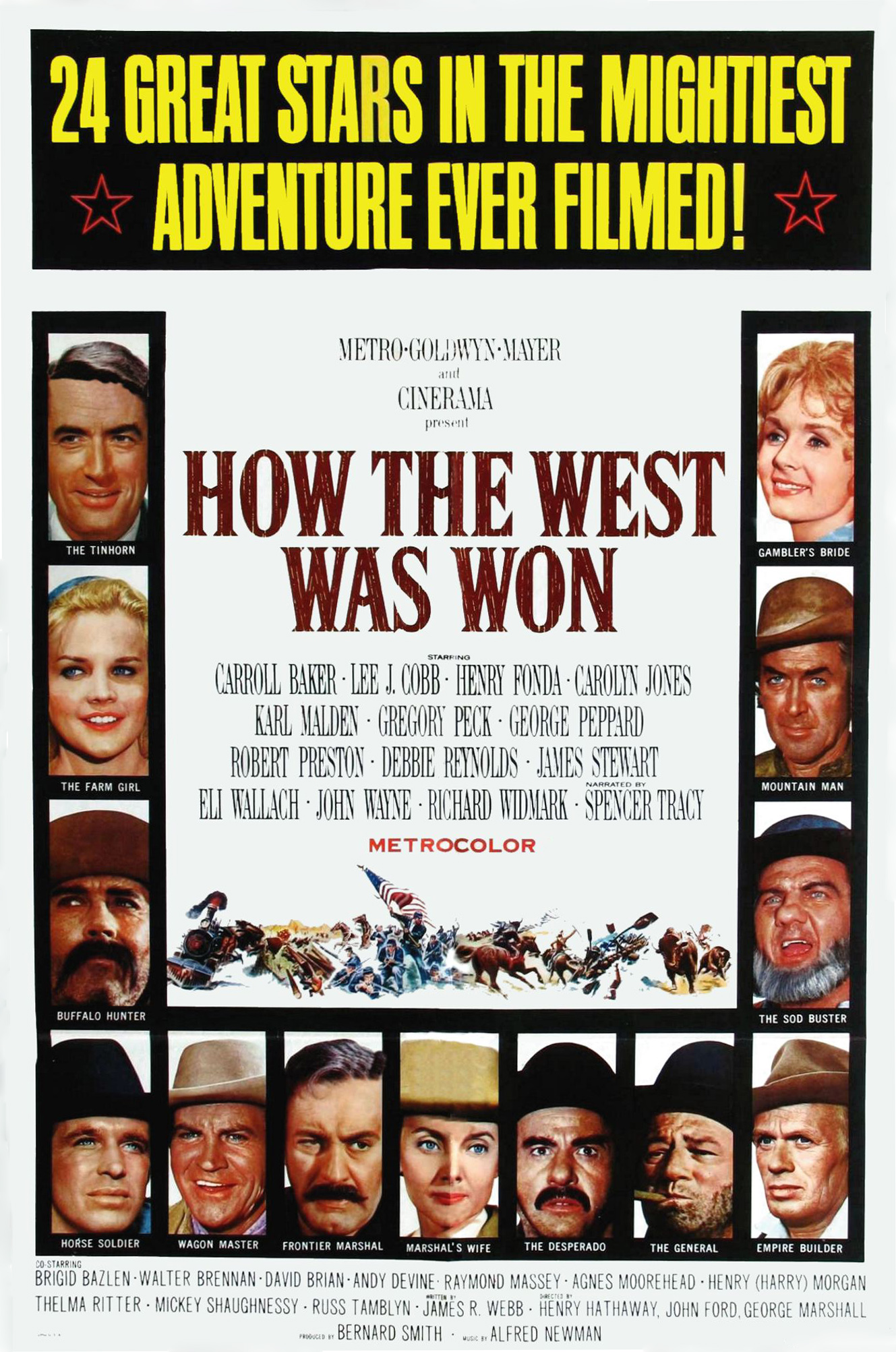
How the West Was Won

In the age of the epics -- the 1950s and 1960s -- some just stand above the rest. It's the stories, the cast, the scope. I don't love 1962's How the West Was Won but as far as epics go, there are very few in its neighborhood. There are obvious flaws, but when it works, it works in a big way. An impressive all-star cast, a story about the development of the American west and a shooting technique that is must-see. That's a winning formula.

A 162-minute film is broken up into five separate segments, the story following the Prescott-Rawlings family as it moves west and settles between the 1840s and the 1880s. It was directed by three different directors and covers a ton of ground. And away we go!

1. The Rivers (directed by Henry Hathaway): It's the 1840s, and the Prescott family, led by patriarch Zebulon (Karl Malden), is moving west and looking for a new life. In Zebulon's family is two daughters, Eve (Carroll Baker), looking for a new life in the west, and Lillith (Debbie Reynolds), wanting to stay in the far-more civilized East. In their dangerous travels on the rivers, they also meet Linus Rawlings (James Stewart), a mountain man with a canoe full of pelts.
Also starring: Lee Van Cleef, Walter Brennan, Agnes Moorehead, Brigid Bazlen.

2. The Plains (directed by Hathaway): Having worked for years on her own as a singer and dancer, Lillith Prescott (Reynolds) has just inherited a gold mine in the wake of the California gold rush. She heads west on a wagon train led by trail driver Richard Morgan (Robert Preston) with a gold-seeking gambler, Cleve Van Valen (Gregory Peck), also along too. 
Also starring: Thelma Ritter.

3. The Civil War (directed by John Ford): The war between the states in its early months, young Zeb Rawlings (George Peppard) leaves home with the blessing of his mother, Eve, to join the Ohio volunteers in the fighting. Like so many others, he thinks the war will be full of glory and be over quickly. Zeb finds out how very wrong he is at the bloody battle of Shiloh.
Also starring: John Wayne (as General Sherman), Russ Tamblyn (as a Confederate deserter), Harry Morgan (as General Grant), Andy Devine, Ken Curtis, Raymond Massey (as Abraham Lincoln).

4. The Railroad (directed by George Marshall): In the years following the Civil War, railroad companies race across the U.S. to link the two coasts. Now in the cavalry, Zeb Rawlings (Peppard) finds himself balancing out what his duty requires of him with what he knows is right, the railroad, including brutal supervisor Mike King (Richard Widmark), pushing the Arapahoes to their limit.
Also starring: Henry Fonda as Jethro Stuart, a former mountain man.

5. The Outlaws (directed by Hathaway): Having left the cavalry behind, Zeb Rawlings is now a family man with two kids, now trying to leave his profession as a lawman behind. He receives a letter from his aunt, Lillith (Reynolds), and readies the family to move. As they travel though, Zeb runs into Charlie Gant (Eli Wallach), a notorious outlaw gunning for Zeb.
Also starring: Lee J. Cobb, Carolyn Jones.

This is a movie that's simply put, BIG. It was filmed in Cinerama, three cameras filming each scene and then splicing the action together. The result? An immense look at the expansion of the west. Shots look like panoramic paintings, putting a whole new scope on the growth and development of the American west. It is a beautiful movie. Certain sequences especially stand out -- the camera on a raft trying to survive river rapids, an Indian attack on a wagon train, a stampeding buffalo herd trampling a railroad camp, a runaway train during an attempted robbery -- over the course of the movie, but visually there just isn't a weak spot. I love composer Alfred Newman's score -- listen to an extended sample HERE -- as it gives a moving background to the story. Countless gorgeous filming locations, providing a great backdrop while also transitioning from segment to segment.

It had been years since I watched this movie straight through in one sitting before my recent revisit of this 1962 epic. As you compare the five separate segments, I don't think it's really in question which one is the strongest. It's John Ford's Civil War segment, doing in 20 minutes what entire movies couldn't do in bringing the Civil War to life. Quick, dark, visually striking and unsettling, it is a gem of a sequence, especially Peppard meeting Tamblyn's Confederate deserter after the battle. The second strongest segment for me is the opening 'Rivers' with Stewart, Baker, Reynolds and Malden all leaving a positive impression. All five segments could be stretched out to a feature length film on their own, but these two especially stand out. They get their message across in a quick window and in both cases left me wanting more. Kudos to Ford and Hathaway for their work here.

What struck me more on the rewatch was the other three segments. They are by no means bad segments, but they're just not as good as the other two. I've always thought the weakest was the Plains segment, things feeling too rushed in general. The same qualifies for the Railroad and Outlaws portions. By the time you take away the Entr'Acte, intermission, and Finale music, we're looking at a movie with five segments covered in about 150 minutes (give or take). None of these three are given a chance to breathe to the point they feel downright rushed. As for some other positives? I loved the transitional scenes -- narrated by Spencer Tracy, directed in uncredited fashion by Richard Thorpe --  that set things up, explaining how America has changed, how its people change. These quick montages provide the heart of the movie, almost like a documentary in some ways. Like any movie that tries to accomplish so much, there's good and bad. The positives -- especially the Civil War middle -- is enough to outweigh the negatives thankfully.

One of my biggest worries in reviewing this 1962 epic was that the cast is too big. There's no way I was gonna be able to get all those names tagged with a 200-character limit. Who stands out? Stewart i excellent as Linus Rawlings, Fonda is good in a quick part as Jethro Stuart, and Baker is very strong too. The best parts though are Debbie Reynolds as Lillith and George Peppard as Zeb, the two hearts of the family. One or both is in every segment, the audience seeing them age, learn and adapt as America grows with them. Their scenes together in the Outlaws portion ring especially true. However you cut it though, just an impressive cast from top to bottom, one of the best ever assembled for a Hollywood film.

A doozy of a movie for what it's trying to accomplish. It falls short at times, but this is a movie worth watching for what it represents alone. This is a throwback film, a true epic that strives to be something great. If it doesn't live up those high hopes, so be it. The effort is admirable, a fascinating story of America growing up over an extremely turbulent portion of its history. Oh, and Debbie Reynolds singing A Home in the Meadow (listen HERE) is a truly beautiful song, a fitting one for the movie.

How the West Was Won (1962): ***/****

Thursday, June 6, 2013

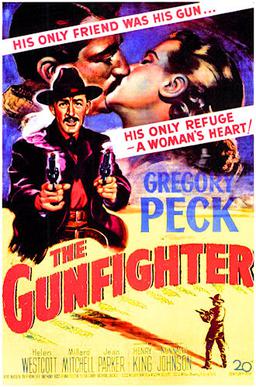
The Gunfighter

One of the enduring myths of the wild west was the idea of the fast draw gunslinger. The story as legend would have it was two men standing on a windy, empty street about 20 feet from each other, the duo finally squaring off to see who was quicker with the gun and ultimately, who would survive. Who was the fastest gun? Who was the best? It's a concept that has become a myth thanks to movie westerns, including one of the most under-appreciated westerns around, 1950's The Gunfighter.

A long, lean Texan, Jimmy Ringo (Gregory Peck) has created quite a name for himself over the last few years. Throughout Texas and the southwest, he's known as the quickest, deadliest gunfighter around with anywhere from 10 to 15 men killed under his gun. Now with his infamous reputation established, Ringo rides from town to town dealing with young guns and eager rivals who want to be the one who killed the famous Jimmy Ringo. Having killed one trigger happy gunslinger (Richard Jaeckel), Ringo finds himself again on the run with some pursuers, the gunslinger's three brothers. He heads for the town of Cayenne with a purpose; he wants to see a woman, Peggy (Helen Wescott), from his past, but it may take some convincing. Ringo is looking for a change in his life, but he may be running out of time.

I have long sought this western from director Henry King out with no luck. I could never find a VHS tape, never find a DVD, never find it airing in the dead of night on a movie channel. Until now that is. I found a video store (GASP!) that actually has old VHS tapes (double GASP!) and wouldn't you know it, this was available. It is a western that is ahead of its time. It takes the concept of the romantic western and twists it around to a more realistic, darker world. The west wasn't white hats vs. black hats. It was a truly nasty, brutal place. So a western that portrays a trail-weary gunslinger who's sick of what he's become....and in 1950?!? We're talking about a movie released two years before the overrated High Noon and with a vastly different, significantly darker message. Moral of the story; I loved this western for a lot of reasons.

More than the story or the characters, 'Gunfighter' has a lot going for it. Filmed in black and white, it has an almost stage-based film noir feel to it. With a few, quick detours, the entire 85-minute running time is spent in the Cayenne saloon as Ringo waits to meet Peggy. We see the story from inside the saloon, from the street in through the windows, and the most bizarre thing...it works ridiculously well. If you've got two working brain cells, you know where the story is heading with King doing an incredible job building up the tension. We know the three revenge-seeking brothers (including Alan Hale Jr., David Clarke and John Pickard) are close behind, some quick cutaways showing them riding with a purpose across the desert. As Ringo waits in the saloon, we see quick shots of a clock on the wall. It's an underplayed, low key tension, but it works in a big way in building up that sense of doom right up until the finale.

Gregory Peck continues to impress me. As far as acting goes, he hit the ground running and never really looked back. Already with a handful of gems to his name, he follows his Best Actor nomination from Twelve O'Clock High with a role that should have at least earned him a nomination. With a few quick scenes, a few dialogue exchanges, we learn a ton about him. Years ago, he wanted to be the fastest gun in the west, and he earned the tag but now he has to deal with it and all it ensues. We learn some tidbits from his past, including his past with Wescott's Peggy and also with Cayenne's sheriff, Mark Strett (Millard Mitchell). A great scene with a youngster in town gives Ringo an added layer of depth that makes him more than just an infamous gunhand. King's film does a wise thing; Ringo is neither a prototypical good guy or bad guy. He's one of the first sympathetic anti-heroes I can think of. Another big winner for Peck.

In the supporting cast, Wescott and Mitchell are gems as Peggy and Mark, maybe the only two people in Cayenne on Ringo's side. The history among the three is a worthy, necessary addition to the story. Also look for Karl Malden as Mac, the saloon owner/bartender who buddies up to Ringo, Jean Parker as Molly, a saloon girl who knows Ringo well, Skip Homeier as Hunt Bromly, a young, inexperienced gunfighter who wants his chance at Ringo, and Anthony Ross as Charlie, Mark's capable if cautious deputy. 

Some critical reviews point to the ending being a little heavy-handed in its execution. It's a fair criticism I suppose, but I think it's necessary to consider something. In 1950, a story shooting holes in the myth of the gunfighter is unique. It's new. It hasn't been seen. Yes, it spells everything out a little too much, but it was a necessary ending for a 1950 audience. What isn't in question is that the build-up and a surprising ending are pretty perfect. This is a western that deserves more notoriety (in a good way). It's a gem of the genre.

The Gunfighter (1950): ****/****

Friday, August 3, 2012

I Confess

As a director, some individuals just have a talent that others can only hope to attain. I've always thought of Alfred Hitchcock as one of those very unique, very talented directors. He's able to turn the typical, the usual, even the mundane into something special and fun to watch. Anyone who's ever watched a police procedural has heard of doctor-patient confidentiality, or the same principle between a priest hearing someone's confession. But a whole movie on that simple law-abiding premise? Hitchcock does it again with 1953's I Confess.

Working at St. Marie's Church in Quebec, Father Michael Logan (Montgomery Clift) is in the quiet, empty church one night when Otto Keller (O.E. Hasse), the church caretaker, stumbles in. Keller tells Father Logan that he's accidentally killed a man and doesn't know what to do. Logan hears his confession but doesn't know what else to do. The next morning he visits the dead man's home where Keller has "stumbled" across the body and called the police. Through an unlucky set of circumstances and clues, the police, including persistent Inspector Larrue (Karl Malden), believe Logan is a top suspect. It seems ridiculous, but could Father Logan actually be hiding something? His vows as a priest prevent him from completely exonerating himself as he's unable to tell the police who the killer really is

With some obvious tweaks, 'Confess' bears some resemblance to The Wrong Man, Hitchcock's film made three years later where an innocent man is believed by everyone and their mother to be a killer. But just looking at this 1953 venture on originality alone, 'Confess' gets a lot of brownie points. The whole success of the story -- and Clift's typically fine acting -- depends on that one unique situation. Clift's Father Logan's situation hangs in the balance. Does he maintain his vows and keep Keller's confession secret? Does he save himself, basically renouncing everything he admits he believes in? It is the simplest of plot devices and the most clever at the same time. Hitchcock takes that simple premise and instead of swinging and missing, hits a home run.

One of the coolest things going for this movie was the use of on-location shooting for much of the indoor and outdoor scenes. It took me a little while to realize the story was set in Quebec, and why everyone was either speaking French, had a French name, and why Father Logan seems very American. Interior shots at churches, hotels, and a variety of spots around Quebec give the proceedings an authentic feel that studio shots just couldn't match. Also worth mentioning is Dimitri Tiomkin's musical score. It's obviously a little different from a typical Franz Waxman (Hitchcock's usual composer), but it is effective to build up some tension as everything points to Father Logan being the real killer.

The combination of the ultra-professional in Hitchcock and method acting Clift not surprisingly produced some fireworks on-set during filming. The director grew increasingly frustrated with Clift's botching multiple takes as he tried to get scenes just right. Whatever the process to get to the end result, I thought Clift did a great job with the role. No one did the tortured, flawed individual in the 1950s quite like Montgomery Clift, and he doesn't disappoint. His past comes out over the course of the movie -- wouldn't you know it? It's a checkered past -- and he truly wants to maintain his beliefs and principles, even if it ends up costing him his career, his reputation, and possibly his life if the evidence does enough to convict him.

Beyond Clift as the tortured priest with a moral and ethical decision, the cast is uniformly solid. Hasse as the real killer, Keller, is a despicable human being. He admits to the murder having looked for some easy cash, but then to protect himself basically turns on everyone around him, including guilt-tripping his wife (Dolly Haas). A villain who starts as one thing and develops into another, one who's very easy to hate. Anne Baxter is the mysterious Ruth (what a sexy name, huh?), a woman who may be involved with the murder and Logan's past too. Malden is the dogged police investigator, following the clues as needed in a case with no obvious suspects. Brian Aherne is the chief prosecutor, smelling blood in the water once a suspect is presented, Roger Dann is Ruth's well-to-do and powerful husband, and Charles Andres as Father Millars, the head priest at St. Marie's.

I Confess is not always mentioned as one of Hitchcock's best, instead hiding in the weeds with all his other solid if unspectacular films waiting to be discovered by audiences. It isn't necessarily on par with his best efforts, but it certainly is above average. Definitely worth a watch for his fans, but also a good introduction to Hitchcock in general.

I Confess <---trailer (1953): ***/****

Friday, November 11, 2011

The Hanging Tree

Playing again with perceptions, I have an image of Gary Cooper as the perfect leading man. No flaws, just a strong, resolute, good man that he so often plays with his characters. Call it Sgt. York Syndrome, or Friendly Persuasion Fever. I see more and more with his roles that he didn't have to play that character as he was capable of so much more, darker, more in-depth characters, like 1959's The Hanging Tree.

In the Montana hills during a gold strike in 1873, Dr. Joseph Frail (Cooper) rides into a gold boom-town and sets up shop. He quickly helps a young gunshot victim, Rune (Ben Piazza), who was shot but managed to escape while robbing the sluice of a miner, Frenchy Plante (Karl Malden). No one saw Rune to identify him, leaving only Frail that knows what he was caught attempting. Frail holds it over his head, insisting he work off his "bill" while not telling him that he threw away the bullet he dug out of his shoulder. Rune agrees, but news hits the town of a woman struggling to survive in the wilderness his problems are pushed aside. The woman, Elizabeth Mahler (Maria Schell), a Swedish immigrant, is found near death. Frail treats her, but questions arise about his intentions. Can the doctor's path come back to haunt him again?

It's odd to see a leading man in a role like this as Cooper plays. He is the star, but with an ensemble cast that features four key parts, Cooper is often pushed to the side in the second act. Of his time in front of the camera through, the screen veteran makes the most of it, again showing his darker, flawed side. His Dr. Frail means well in almost all of his intentions, but the execution of those intentions leave something to be desired. He wants to help those around him, but his manner of doing so is odd. Because he doesn't care what others think of him, Frail obviously rubs some people the wrong way. In the dark, tragic character department, he's also trying to right a wrong, redeem himself for a past action that hovers around him wherever he goes. Somewhat underused, but a great part for Cooper.

Because I feel the need to categorize every movie, I guess you can say this is a western...sort of. The TCM description/review said a movie that's 'Not for all tastes.' It isn't a shoot 'em up, guns blazing western. From director Delmer Daves, this qualifies more as a psychological western, focused more on the individual personalities and dynamics than the wild west action. All the characters are scarred in some way, flawed in another and thrust into this difficult time and place to survive in. Because of that, the pacing can be a little slow at times as the story struggles to pick up any momentum. It took me three different sit-downs to get through the 106-minute movie. When it works, it really works though.

It's also different from most westerns in the setting, the mountains and hills of Montana in the 1870s. There aren't gunfighters or cowboys and Indians. Instead, it's gold prospectors, shop owners, doctors, fanatical preachers, and even families with children around. The look of the movie is great, Daves filming the story in Washington. There is also a very entertaining and completely wrong toned theme song, sung by Marty Robbins. Give it a listen HERE. It's catchy. I'll give him that, even if it sounds like it should have been in a lighter western.

What works through some of the slower portions of the movie is the characters around Dr. Frail, especially Schell's Elizabeth. I probably complain too much about this, but if a western is going to feature a female lead, this is a good example. Elizabeth was traveling with her father when their stagecoach was held up, her father killed in the robbery. In the wilderness, she starts walking and barely survives, brought back to good health by Frail once she's found. She wants to start out on her own, creating a life for herself. Schell's Elizabeth is a good-natured but strong-willed woman, liking to think the best of people but knowing that isn't always the case. Granted, she's put into an unnecessary love triangle between Frail and Rune, but Daves handles it in the right way. Very solid performance and a strong female performance.

My only experience with Piazza was his small part in The Blues Brothers -- trust me, you'll recognize him -- but in his second feature film, he manages to keep up with Gary Cooper. Malden does what he does best, shows off his versatility. He could play good and bad, sometimes within the same role, like here. You know from his introduction he's up to no good, and a confrontation is coming. Karl Swenson is good as Fraunce, the general store owner and friend of Frail's, while George C. Scott has a small part as a Bible-beating "healer" who sees competition in Frail.

The movie picks up steam toward the last 30 minutes, a mob mentality taking over as the psychological effects start to kick in, the very powerful affect gold has on people. Startling in its brutality, the ending works although the final shot leaves the conclusion to your own interpretation. Slow moving at times, but a worthwhile, underrated psychological western.

The Hanging Tree <---TCM trailer (1959): ***/****

Monday, September 26, 2011

Wild Rovers

With Sam Peckinpah's 1969 western The Wild Bunch, the conversation pretty much begins and ends about the best changing of the times westerns, the closing of an era. Star William Holden gives a career-best performance in this blood-splattered western, the leader of a gang of aging outlaws looking for one last score in Mexico. Holden had a long list of great performances, but one that has flown under the radar all these years is a similar changing times story in the wild west, 1971's Wild Rovers.

By the late 1800s and into the first 10 or 20 years of the 1900s, the idea of the wild west was one fading away into the background. Movie westerns have explored this era in countless ways, most revolving around the idea of a man (or men) refusing to change with the times, handcuffed to the way they know how to do things. The Wild Bunch handles it in a brutal, forthright fashion, a cynical view of outlaws going out in a blaze of glory rather than change. Butch Cassidy and the Sundance Kid has its darker moments, but for the most part is more comedic with more humor thanks to its buddy pairing of Newman and Redford. Then there's Wild Rovers, falling somewhere in between, moments of startling violence balanced out with endearing emotional flashes. It finds a good balance in between in an underrated western.

It's almost round-up time for the R-Bar cattle ranch in Wyoming with owner Walt Buckman (Karl Malden) readying his crew of cowboys for the coming rush of work. Among them is Ross Bodine (Holden), a veteran cowboy approaching the age of 50 who's spent 30-plus years in the saddle, and Frank Post (Ryan O'Neal), a young cowboy full of piss and vinegar looking to have a good time. Frustrated with their lot in life -- working long hours with little reward -- the two cowboys come up with an idea; rob a bank and with their take head to Mexico where they can start their own ranch. The bank robbery in the dead of night goes smoothly, but Buckman sends his sons, Paul (Joe Don Baker), his father's favorite and an easy-going sort in general, and John (Tom Skerritt), the youngster desperately seeking his father's approval. Ross and Post were good cowboys, but can they be good outlaws too?

As a western fan, there is something simple and profound in westerns similar to this. A changing time, and a lifestyle gone, men refusing to change who are set in their ways. To direct a western like this, I wouldn't have thought Blake Edwards to be the right choice, but I was wrong. Known for his comedies, especially the Pink Panther movies, Edwards takes his time with this 139-minute long movie. The story drifts along in an episodic nature, introducing the characters and the situation at its leisure. Even post-robbery, the story isn't in any rush. It is a harsher west than many westerns portray, building up tension in certain scenes that can be unbearable to watch. It just works. My only real fault is that the movie has an overture, intermission and entr'acte, and finale music. It seems out of place, like something a different-toned Edwards comedy would have used. Just a minor point, nothing worth worrying about. I just fast forwarded through these segments.

Playing Pike Bishop in Peckinpah's The Wild Bunch, Holden delivered a career best performance, and in my mind, there isn't a close second. This might be that second-best role, a character that is obviously more light-hearted than Bishop, but not too dissimilar. His Ross Bodine is a cowboy about to turn 50 years old who has spent much of his life working himself to the bone herding cows without much to show for it. Robbing a bank seems like an easy out so he takes the chance when presented. Just 53 years old, Holden looks much older. He is a sympathetic, tragic main character if there ever was one, and Holden brings that to life.

Two monologues -- one at the beginning, another at the end -- let him show his range, one about fate and dying, the other about an unlikely friendship that's developed with O'Neal's Post. I thought the best scene though was a quiet moment, Bodine lying in bed next to a prostitute, staring off into the distance. His eyes say a lot, a man who realizes he's made the wrong choice and now has to deal with the consequences. From that moment, you know where this character is headed if you weren't already sure.

Now as perfectly cast as Holden is as the world-weary Bodine, I think there's a bit of miscasting with O'Neal as his young counterpart, Frank Post. Regardless of the role, I've never thought too highly of O'Neal as an actor. The character is interesting here, but I don't think it is due to his acting. He's naive at times but with a devilish streak at others. He's saved by the fact that he's working with a pro like Holden. In the older mentor, younger student dynamic, the relationship works. They play off each other well, their dialogue crackling back and forth as a genuine friendship grows out of this dash for safety in Mexico. It's not a bad performance for O'Neal, but it could have been better.

The other parts while important aren't as key. Malden is the archetypal western cattle baron, ruling with a strong hand and iron will. Baker and Skerritt are nicely cast alongside each other, polar opposites in terms of personality. Baker's John is frustrated with the hunt that drags on into weeks and months while Skerritt's Paul intends to follow his father's request no matter what it takes.

 Dealing with a story that is about a closing chapter in American history, you've got to assume the ending will not be a happy one. The last 45 minutes is where this movie becomes special as Bodine and Post stop at a desert town and rest up before pushing on to Mexico. The ending packs a wallop, leaving that feeling of being punched in the stomach. It's moving for all the people involved, a tragic end to almost all the characters. I don't want to say more without taking away from the emotional impact, but it makes some of the slower parts worth sitting through. This is an underrated western that deserves far more respect than it gets. Beautifully shot all over the west in Monument Valley, Utah and Arizona and aided by a Jerry Goldsmith score that's best in its quieter moments, Wild Rovers is a hidden gem well worth catching up with.

Wild Rovers <---TCM trailer/clips (1971): ***/****

Friday, May 21, 2010

Cheyenne Autumn

A solid director early in his career, John Ford shot to stardom behind the camera thanks to success in one particular genre, the western.  Starting with Stagecoach in 1939 and continuing into the 1940s with his 'cavalry trilogy,' Ford became a go-to director westerns that he was able to put his own personal -- often romantic -- look at the American west in the latter half of the 19th century.  And in almost every one of these westerns, Native Americans were portrayed in a negative light, whether as a fearful presence or as murdering on-screen savages.

With his last western, 1964's Cheyenne Autumn, Ford did an about face in terms of the depiction with something that has since been dubbed 'white man's guilt.' Based on a true story, the movie attempts to put Native Americans in a positive light instead of the stereotypical savage so often associated with westerns.  It's a noble concept and feels like a bit of an apology on Ford's part, but too many things work against this movie from the start, ranging from the casting to the dull, slow-paced storyline.

It's 1878 and 300 members of a Cheyenne tribe on a reservation in the southwestern desert have had enough.  They don't receive supplies promised to them -- food, clothes, medicine -- and are basically being ignored by the U.S. government.  Led by two proud warriors (Ricardo Montalban and Gilbert Roland), the Cheyenne leave the reservation in the dead of night with hopes of marching almost 1,500 miles north to their ancestral hunting grounds in South Dakota and Montana.  Pursuing them is a cavalry outfit led by the sympathetic Capt. Archer (Richard Widmark) who tries his best to bring the Cheyenne in peacefully.  Nothing comes easy though and the terror sets in of 300 Cheyenne roaming the west in towns all along their trail.

To tell this story, Ford assembles a remarkable cast but as is so often the case with huge casts of big name stars, many are lost in the shuffle.  Along with those mentioned already, there's also Karl Malden, Edward G. Robinson, Dolores Del Rio, Carroll Baker, Jimmy Stewart, Arthur Kennedy, Sal Mineo, George O'Brien, and Sean McClory, along with several others I'll mention later.  Needless to say, that's a ton of talent involved, but the odd thing is almost NOTHING happens the entire movie.  It's downright dull at many points and never really gets the viewer invested in what's going on.

First off, the story does represent the Cheyennes in a positive light as a tribe just trying to survive now that their heyday has passed.  But then Ford spends a majority of the time with the white characters as the Cheyenne tribe disappears here and there for long stretches.  There's also the issue of casting Hispanic actors as Indians which just doesn't make much sense to me.  I figure there weren't many Native American actors working in Hollywood in the 1960s, but for a story trying to be authentic and fair, it would have been worthwhile to cast one or two.  Montalban and Roland represent themselves well as the warriors leading the tribe while Mineo says two or three words and enthusiastically takes his shirt off at one point.

One criticism of Ford over his career is his bawdy, broad humor that populates his movies, and Cheyenne Autumn doesn't disappoint.  About 90 minutes in, a 20-plus minute segment takes a complete detour from the story for some incredibly out of place humor in Dodge City with Stewart playing Wyatt Earp and Kennedy playing Doc Holliday.  Besides being incredibly miscast as the famous gunfighters, the tone of this extended segment is comical and over the top.  The tone to this point has been downbeat if not entirely interesting, and we get a segment here that is ripped right from any of the cavalry trilogy.  This comedic segment is so out of place that it can be difficult to watch in its badness.

What I enjoyed most about this movie were the scenes on the trail with the Indians or with the cavalry pursuing them.  Widmark makes the most of a part that just doesn't give him much to do, but Ford seems incredibly comfortable in the cavalry scenes.  Patrick Wayne (the Duke's son) plays Lt. Scott, a young officer out for blood, Mike Mazurki plays the veteran sergeant, and in a nod to Rio Grande and She Wore a Yellow Ribbon, Ben Johnson and Harry Carey Jr play troopers Plumtree and Smith. A running bit between the two has Archer consistently forgetting Carey's name.  Both parts were uncredited ones for the veteran character actors. Maybe because it feels like a throwback to better westerns, but the cavalry portions of the story are infinitely more watchable than much of the rest of the movie.

For all its flaws, 'Autumn' is still worth watching just to see that huge cast work together and as is typical with a Ford western, the Monument Valley scenery.  Through all the movies ever shot there, I don't know if its ever looked better serving as a backdrop for the story.  Overall though, this is an average movie from a great director like Ford.  It's too inconsistent to call a good western, but one that fans should still see.  A disappointing but intriguing last western from one of the genre's best.

Cheyenne Autumn <----trailer (1964) **/****    

Friday, April 2, 2010

Murderers' Row

The huge success of the James Bond series in the 1960s opened doors for all sorts of other spy movies to take over the market, both good and bad.  And after all those serious takes on the spy movie came the spoofs like James Coburn in the Flint series and Dean Martin in the Matt Helm movies.  These aren't spoofs like Scary Movie or anything of the like, but spoofs that were for one, good, and two, they were more tongue in cheek than stupid humor.

Martin made four Matt Helm movies over a three-year span, all of them fairly successful with audiences to the point a fifth was even brought up.  They're basically all James Bond movies except the name has been changed, and the humor has been ratcheted up a few hundred notches.  Now I say this having seen exactly one of the four, 1966's Murderers' Row, but it's not hard to judge a spy series with Dean Martin as the star.  Here's the formula, Martin drinking, smoking and throwing one-liners, ridiculous bad guys, beautiful women, and exotic locales.  It's all incredibly ridiculous, and still pretty entertaining almost in spite of themselves.

After faking his own death, ICE (Intelligence and CounterEspionage) agent Matt Helm (Martin) is given a mission.  A brilliant scientist has been kidnapped by a madman, Julian Wall (Karl Malden) who wants to use the scientist's abilities to hold the world ransom. The scientist, Dr. Solaris (Richard Eastham), has figured a way to control the power of the sun's rays into a beam of light able to destroy cities in seconds.  Posing as a mob enforcer, Helm heads off to Monte Carlo to look for Solaris and instead meets up with his daughter, Suzie (Ann-Margret), who's also looking for him.  Time seems to be running out though as Wall gets closer to utilizing Solaris' death ray on Washington D.C.

This has all the workings of a Bond story from a crazy plot to take over the world to complicated gadgets that would never actually work.  Then's there Ann-Margret and Swedish babe Camilla Sparv frolicking around in next to nothing for most of the movie in bathing suits, mini-skirts, and lingerie as Helm Girls instead of Bond Girls.  Instead of M, there's McDonald (James Gregory) issuing orders to an agent who does things his own way instead of by the book.  And my personal favorite, a gun that fires on a 10-second delay which does provide some rather humorous -- God, that sounds wrong -- killings.  We even get to meet some of the nameless thugs who usually ran around in the background, except here they get their one or two lines and then they're killed.

Playing super secret agent Matt Helm, Dean Martin seems to be having a ball because let's face it, he's playing himself.  It's almost alarming how much he drinks and smokes on-screen.  He's the American James Bond who's got a reputation for his way with the ladies as well as his unorthodox ways of getting the job done.  An IMDB reviewer points out Martin didn't care much for rehearsing or even reading the scripts, and it doesn't matter in the least.  He doesn't so much have lines to memorize as a series of one-liners meant for laughs throughout the movie.  This may all sound rather negative, but it's anything but.  Martin is one of my all-time favorite entertainers, and he was perfectly cut out to play a roguish, boozing, brawling secret agent.

While it's a lot of fun to watch Martin do his thing, the movie has its fair share of flaws.  One of the strengths of the Bond movies is that the villains and their plans are absolutely nuts, but they're developed at least a little.  Karl Malden is an all-time great actor who is completely wasted here as Julian Wall.  He's not intimidating in the least, his plan is dull, and he never seems to be much of a threat to Helm.  The more interesting villain is Tom Reese as Ironhead, a killer with a iron plate for a skull.  He at least poses a challenge to Helm, especially the way his demise is handled.  You can see it coming miles away, but it's still funny.

There are other flaws here with a story -- or lack of -- that drags in the middle sections.  One very long scene has Margret dancing like crazy in a club while Martin races to rescue her from a broach bomb (that's right, a broach bomb) on her dress.  Check it out HERE.  Some jokes are overplayed and instead of using them once they're reused several times.  These are all minor things, but when added up they get tiresome and kinda annoying.  Still, it's an entertaining enough, mindless movie, and I'll probably check out the other ones too.  You can watch Murderers' Row at Youtube, starting HERE.  A stupid movie but worth seeing for Dean Martin, Ann-Margret, and in general, one of the better spoofs to come out of the Bond series.

Murderers' Row <----trailer (1966): ** 1/2 /****

Wednesday, December 23, 2009

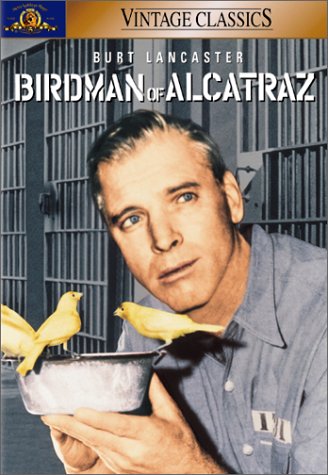
Birdman of Alcatraz

I wonder sometimes if directors and actors get sick of each other if they work together enough. Sure, there's probably a reason they choose to work together on multiple movies, but making movies is such a tough, difficult process that at some point nerves have to be a little shot. Don't they? Maybe the end result justifies some of the struggles, who knows for sure. Over a three year stretch, director John Frankenheimer and star Burt Lancaster worked together 4 times starting with The Young Savages and continuing into Birdman of Alcatraz, Seven Days in May, and The Train. In this case, the ends definitely justify the means.

Seven Days in May and The Train are classics and now I can add Birdman of Alcatraz to that list as Lancaster again turns in a defining performance from his career. Lancaster was able to balance out his roles, those that required more of an action edge, those that needed him to be at the top of his game acting, and those somewhere in the middle. Think of The Train, which required him to do both. As an actor, there's 2 sides to Lancaster that I've been able to piece together. One, there's Elmer Gantry where the actor is loud, boisterious and over the top from the opening scene. Then, there's 'Birdman' where he's quiet, composed and barely cracks a smile the whole movie...and still brings his character to life.

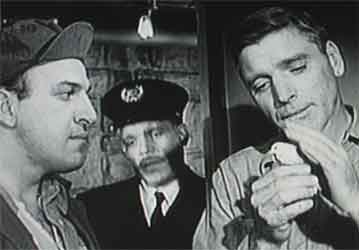
Based on the real life story of convict Robert Stroud, 'Birdman' starts in 1912 as a young Stroud (Lancaster) is sent to Leavenworth prison for killing a man (the victim was beating a prostitute). He clashes with warden Shoemaker (Karl Malden) right away and ends up killing a guard who is preventing his mother from visiting him. He is sentenced to hang but is saved by his mother (Thelma Ritter) who goes all the way to President Woodrow Wilson to save her son. Stroud is saved, but instead of death he's sent to solitary where he'll only have contact with a few guards while never seeing other prisoners.

Basically challenged to survive by Shoemaker, Stroud vows to win out in the end. One day in the yard, he finds a little sparrow who cannot fly and begins to care for it in his cell. So it starts as Stroud's actions impact other inmates who now want birds as cellmates. What starts as one small sparrow snowballs into many more. As the years pass, Stroud becomes an expert on birds and everything about their makeup, including how to treat bird diseases that previously had no cure. But other things are afoot as Shoemaker is now in charge of the Federal Bureau of Prisons which could impact Stroud and his birds.

What was surprising about the movie is how fascinating these sequences with the birds really are. We're talking whole scenes with little to no dialogue as Lancaster's Stroud first treats just one sparrow (which he names Runty) to then trying to figure out what is happening to all the birds that occupy his cell as an unexplained epidemic races through the cages. These are the high points of the movie -- the first 90 minutes or so -- as Stroud learns much about his avian friends while also interacting with guard Bull Ransom (Neville Brand playing against type in a good guy role) and fellow inmate Feto Gomez (Telly Savalas also in an atypical part) who also bonds with birds sent to him by his family.

Really my only issue with the movie is a change that comes about 100 minutes into the story -- and at 149 minutes overall it is a tad long -- when Stroud is transferred to Alcatraz. He is forced to leave all his birds, his studies, his makeshift laboratory behind as he moves to the island prison in San Francisco. So other than the fact that Stroud never had birds at Alcatraz yet he's still dubbed 'the birdman of Alcatraz,' the story gets away from what made the first 90 minutes so strong. Granted, this is a story about a man, not the birds, so the natural progression has to be played out, but the last hour is somewhat dull as this long-time inmate struggles in a new prison. A subplot with a prison riot (with Seinfeld's Uncle Leo leading the riot) seems like it's out of another movie.

What carries the movie through some of it's struggles is the fine cast led by Lancaster and Malden. Malden especially is presented as a good and bad guy, a man trying to do his job who comes down hard sometimes on Stroud, as a viewer it comes across unnecessarily harsh. Brand also delivers one of his best performances in a key supporting role as a guard who unexpected bonds with two-time murderer Stroud, and Savalas gets a chance to play a non-crazy person for a change. Betty Field also makes a strong impression as Robert's wife Stella, and Edmond O'Brien has a bookend cameo as an author who wrote a book about Stroud. Lancaster, Ritter and Savalas were all nominated for their performances. Lancaster deserved to win for this scene with Malden's Shoemaker alone.

Overall though, the strengths of the first half of the movie outweigh the sometimes slow pacing of the second half. Elmer Bernstein's score is a little more understated than his usual booming efforts, and sounds reminiscent of the quieter moments in his Great Escape score. Watch this movie for the performances from Lancaster in the lead to the members of the supporting cast. Maybe Lancaster and Frankenheimer did get on each other's nerves, but if this was the result, it was worth it.

Birdman of Alcatraz <----trailer (1962): *** 1/2 /****

Thursday, May 14, 2009

Netflix review #20: Halls of Montezuma

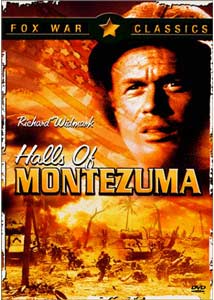
WWII movies have been done left and right in the 64 years since the war ended, some good and some bad. But the heyday was in the 50s and 60s when memories and wounds from the war were still fresh. What these movies provided were a chance to put together a good story with a wide variety of characters. Movies like The Dirty Dozen and Kelly's Heroes stand out as just two examples, war movies with male-dominated casts full of great character actors. Not as well known but made over 15 years earlier, 1950's Halls of Montezuma fits that bill.

Following the campaigns in the Pacific at Guadalcanal and Tarawa, Lt. Carl Anderson (Richard Widmark) prepares his men for another assault on a Japanese-held island. Anderson's been going through a bit of a breakdown recently as just 7 men from his original platoon have survived. He's torn up inside at the thought of all the men he's lost and gets horrific headaches under stress. It's after the Marines hit the beach and have moved inland that the real trouble starts. The Japanese garrison unleashes hundreds of rockets at the advancing Marines. The problem, no one can spot the rocket emplacements.

Assigned to lead a patrol from his commander, Lt. Colonel Gilfillan (Richard Boone), Anderson must find the rockets and call their location in before a huge push the next day. Among the patrol are the few men Anderson genuinely cares about and wants to see make it through, the original members of the platoon. Leading that group is Pigeon Lane (Jack Palance), a former boxer suckered into the Marines, Coffman (Robert Wagner), the youngster trying to figure out who saved him at Tarawa, Doc Jones (Karl Malden), Anderson's close friend, Cpl. Conroy (Richard Hylton), a former student of Anderson's, Pretty Boy Riley (Skip Homeier), a soldier trying to rise above his past, Slattery (Bert Freed), the best soldier in the bunch and the biggest troublemaker, and Sgt. Zelenko (Neville Brand), the tough sergeant. Then for good measure there's a Japanese translator, a war correspondent (Jack Webb), and a new recruit along.

I've written before about how much I like 'men on a mission' movies, and this certainly qualifies with the cast full of recognizable character actors. But instead of just dropping the viewer into the platoon, we get an interesting technique to get to know the platoon. With a handful of flashbacks, we see their interactions in the group, some while in the unit, others as far back as their civilian days. It helps then when the platoon starts getting picked off by the Japanese. These aren't random, faceless soldiers, we know something about them and their makeup.

For a movie made just 5 years since the end of WWII, director Lewis Milestone tells it pretty straight. These aren't superhero G.I. Joe soldiers. Widmark is close to cracking up, and some of his men aren't too far behind. The more I watch of him, the more I think Widmark is one of the more underrated, underappreciated actors to come out of the late 1940s. As well, the Japanese soldiers aren't presented as stereotypical, one-dimensional soldiers. The whole movie has a clear anti-war stance. The action, while good, is understated. Characters are shot off-screen or hit by shrapnel as they head for a foxhole. And made in 1950 years before blood squibs became commonplace in war movies and westerns, the violence is fairly graphic, including one hand-to-hand encounter with a Japanese sniper.

The DVD has the movie in standard presentation, it was released about 3 years before widescreen was used, a trailer, and a handful of trailers for other Fox war movie DVDs. It's not a great WWII movie, but it's certainly a good one. Widmark leads a strong cast, and in general, Halls of Montezuma was ahead of its time when dealing with some of the deeper issues that war movies would later explore.

Halls of Montezuma (1950): ***/****