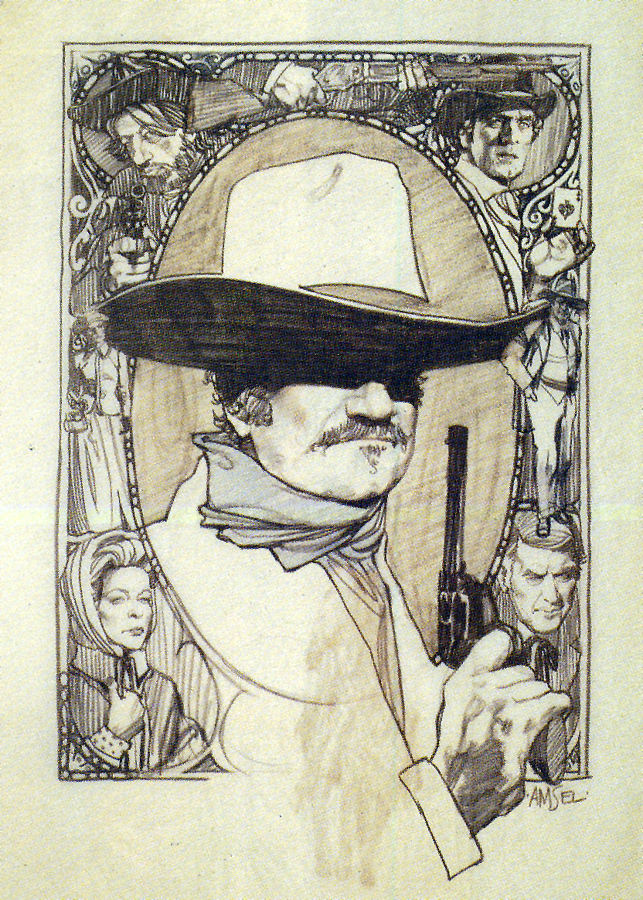
The Sons of Katie Elder

The Sons of Katie Elder
"First, we reunite, then find Ma and Pa's killer...then read some reviews."
Showing posts with label Ron Howard. Show all posts

Thursday, December 17, 2015

In the Heart of the Sea

Whether you've read it or not, everyone has heard of Moby Dick, the classic novel by author Herman Melville, right? Right?!? I'd hope so. If not, go check out a library. What many folks don't know is that Melville's story is partially based on a true story, the tragic story of the Essex (don't read if you don't want to find out some MAJOR SPOILERS). It's gotten a feature film adaptation getting somewhat mixed reviews, but you should decide for yourself with 2015's In the Heart of the Sea.

It's 1820 on Nantucket and the whaling ship the Essex is set to embark on a long voyage that will last at least a year and could stretch as long as two or three. The ship has a new commander, George Pollard (Benjamin Walker), who's relatively inexperienced but who will be aided by a very capable first officer, Owen Chase (Chris Hemsworth). With a crew of 21, the Essex sets sail on a voyage that will take them south through the Atlantic and west into the Pacific as they seek to fill their hold with hundreds of barrels of oil they will produce by killing as many whales as they can track. After months at sea though, they have little to show for their work, forcing Walker to give the orders to go further out into the Pacific where reports of waves of whales offer an enticing potential for success. What awaits though in the vast expanses of the unexplored ocean? Even the experienced sailors on-board the Essex couldn't predict what awaits them.

This recent release from director Ron Howard is based on a book of the same name by author Nathan Philbrick. SPOILERS AHEAD SPOILERS Writing in a simple, straightforward style (much appreciated!), Philbrick goes into detail of the time, the people and the tragic events that took place. While thousands of miles away from land in the Pacific, the Essex was attacked by an immense sperm whale and ultimately sunk, leaving the crew stranded at sea with limited supplies and no real hope of rescue in sight. Knowing it is the truth, it is a terrifying story to read, to know that these men experienced that pure terror. Melville's novel actually ends about halfway through the real-life story so don't think you've read and/or seen it all already! An interesting, uncomfortable read, but one that's worth it if you're a reader. RELATIVE END OF SPOILERS

Howard has tackled a pretty massive undertaking in turning the story and Philbrick's book into a feature film. The book itself isn't that big -- about 250 pages -- but it covers a ton of ground, both in terms of story, character and setting the time period. 'Heart' then has to cram all that into a movie that's about two hours long. It was originally scheduled to be released last March but was pushed back to a December release, and that's never a good thing. The story itself is interesting, and the acting is solid throughout with a cool storytelling and framing device, but it's missing that special something. The music is okay but nothing too memorable. The visual look of the movie is interesting, a bluish/green hue permeating the story. But when taken as a whole, 'Heart' doesn't have that one thing to take it up a notch or two from good to great or even really good.

Where it succeeds is the scope and scale. An early shot of the Essex is startling, a ship that's 87 feet long and barely makes a blip on the ocean's expanse. This is a little ship in a big old ocean. Long establishing shots of the ocean are unsettling, especially considering where the story is heading. There's no easy rescue available. If something happens, these men are on their own. That premise hits you at your very core, makes you realize how desperate survival really can be. The whale attack on the Essex is a quick, unsettling scene that I wish was actually a little longer and more drawn out to really let it breathe. The tension-building and foreshadowing of what's coming is highly effective, a massive whale bigger than any ever seen doing something that has never been seen just waiting in the unexplored depths of the ocean to strike. So yeah, the scope and scale are on point, but as for the more emotional moments...

They just aren't there. I felt very little connection with any of the characters, an issue with the immensity of the story. You've got so much to do as a director, so many goals you want to achieve, but what do you cut? Unfortunately here in 'Heart,' it's that emotional connection that allows us to get to know the characters, to sympathize with them through their horrifying trials at sea where death seems far more welcome than living at so many times. Hemsworth is solid, a capable officer seeking a captaincy of his own with one more successful voyage. Walker too is good as Pollard, a rivalry developing between the two men about how to command, a deep-rooted issue going back to both men's backgrounds and history. This puns sounds so horrifically forced and gimmicky considering the film's title, but it has very little heart. Characters pass away or disappear and we couldn't identify them if we tried. The scale/scope is excellent, but I wish it had evened out some.

Also look for Cillian Murphy in a solid supporting part as Matthew Joy, the Essex's second officer and a longtime friend of Hemsworth's Chase. Tom Holland plays Thomas Nickerson, a teenage Nantucket boy going on his first voyage. In a cool storytelling device, Ben Whishaw (Q in the Bond movies) plays Melville, seeking out a much-older Nickerson in late 1840's Nantucket, Brendan Gleeson as solid as always as Nickerson with Michelle Fairley playing his wife. Among the crew of the Essex, we see a couple faces pop up several times but never get to know them well either. Also look for Jordi Molla as a Spanish ship captain with a warning for the Essex crew as they prepare to head out to the Pacific.

Like so many historical epics and period pieces, 'Heart' seems like a prime candidate for a miniseries of some sort. Maybe a two or three-part series that would have been able to explore in more depth the the time the story takes place in, some more whaling background, the Essex's crew, the attack, and their desperate fight for survival in the wake of the improbable attack by the immense sperm whale inspired Melville to write Moby Dick. A good effort but ultimately a disappointing effort that doesn't live up to its potential.

In the Heart of the Sea (2015): ** 1/2 /****

Monday, July 7, 2014

Backdraft

I grew up in Chicago, several classmates in grammar school with parents working as police officers and firefighters. I imagine there's a respect and admiration for police forces and fire stations in all cities, but even as a kid it was easy to see the regard in which many were held for putting their lives on their line for their jobs. Released in 1991, Backdraft delves into the lives of Chicago firefighters with some familiar family drama to keep things going.

Just seven years old, Brian McCaffrey is a frequent guest at his father's fire station along with his older brother, Stephen. On one fire call though, their dad is killed in a blast. Some 20 years later, Stephen (Kurt Russell, who also plays the Dad...albeit briefly) has followed in his dad's footsteps, becoming a respected lieutenant at one of Chicago's most respected stations. Station 17 has a couple new fireman to fit into the mix, Stephen's brother, Brian (William Baldwin), who did his best to avoid a firefighting career for years only to return to what his family knows best. The brothers have drifted apart over the years, both of them holding grudges that go back for years to when their dad died. With a career that hinges on life and death moments every single day, they have to learn to work together and put their differences aside. Meanwhile, an arsonist is starting fires all over Chicago with two dead already. Who is the arsonist? Does he have a different intention?

I was just six when this movie came out back in 1991. I remember my parents watching it at some point, and enjoying it. For me, there's a period in the late 1980s and early 1990s where because of my age, I just didn't see a lot of movies and never really caught up with them. From director Ron Howard, 'Backdraft' is a big one on that list. A box office success that picked up positive reviews while becoming a fan favorite, it's a solid, entertaining movie. It was filmed on location in Chicago -- never a bad thing -- and gives the developing story an authentic aura hanging in the air. It's not always familiar locations, "known" spots, but that works too in creating a grittier, more authentic feel. In the end, it is a good movie, even really good, that isn't quite great. Nothing wrong with that, but I didn't come away completely blown away like some reviews made it out to be.

The strongest aspect of the movie is one that treads a fine line. This is a film interested in showing the heroic actions of not only Chicago firefighters, but firefighters in general. It also delves into their personal lives, how the threat of horrific burns and wounds -- not to mention death -- hangs in the air with each passing fire. At times, the story gets a little too soap opera-esque, a little too familiar in terms of family issues and brotherly conflict. Still, the firefighting sequences are pretty insane. Firefighters watching the movie criticized Howard's film because these scenes were too clear, things too easily seen, but for the sake of making a movie, you can't criticize Howard there. You feel the fire, the heat, the warmth, the scorching flames nipping at your heels, blazing away at your face, with each passing sequence. Kudos in the reality department, transporting us into the fire with our firefighters. As a viewer, we get a sense of the hell that is these individuals' day jobs, avoiding too much hero worship.

A film archetype across all genres, the warring brothers formula is brought to life by Kurt Russell and Billy Baldwin. Both characters are a little too familiar, one rising above, the other not so much. Russell as Stephen gets the showier part, the gung-ho firefighter following in his father's footsteps. He's the best at what he does and isn't interested in too much career advancement. He puts out fires, wants to put out fires, and looks out for his crew. Look for Rebecca De Mornay as his wife, struggling to cope with the increasing dangers of his job, for her and for her son. Baldwin is okay as Brian, but the character just isn't interesting enough to merit much sympathy. His romantic subplot with Jennifer Jason Leigh's government assistant (a past fling/relationship) goes nowhere as well to the point their scenes become painful, especially the makeout session on a fire truck.....when the alarm goes off. Who saw that coming?!? 

Two supporting parts are truly worthy of mentioning. Along with Russell's Stephen, I thought Robert De Niro has the strongest part here, playing Shadow Rimgale, a fire inspector who helps determine if fires were accidental or the works of arsonists. It's that perfectly underplayed, more low-key part that De Niro could probably do in his sleep. Donald Sutherland is perfectly creepy too as Ronald Bartel as Bartel, an imprisoned arsonist who knows Rimgale all too well and may know what's going on around the city.  Also look for Scott Glenn and Jason Gedrick as fellow firefighters, J.T. Walsh playing a Chicago alderman who always has reelection on his mind.

A good, not great movie. I think it is a tad long in the tooth at 132 minutes, drifting along a little too much in the midsection before getting back to business for the finale. It is a tad cliched, too many slow motion 'Noooooooooooooo!' moments dotting the firefighting sequences. Composer Hans Zimmer's score is as solid as ever...in most scenes, sometimes reverting back to the hero worship that brings the movie down a notch. Big picture though, Backdraft has a lot going for it. An interesting story that did keep me guessing, a very solid cast, and a reveal that certainly caught me by surprise. An excellent look into the lives of Chicago firemen.

Backdraft (1991): ***/****

Monday, April 7, 2014

Rush (2013)

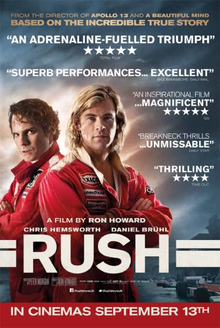
So do we have any auto racing fans out there? Nascar, Formula One, dirt track races, drag racing, anything? I've never been a fan, never been able to sit down and watch a race on TV from beginning to end. On the other hand, I love racing movies from older gems like Grand Prix and Le Mans to more current movies like the Fast and the Furious series. Released in theaters last year to basically uniformally positive reviews and a decent box box, 2013's Rush is one of the best racing movies out there.

It's 1970 and two young drivers, James Hunt (Chris Hemsworth) and Niki Lauda (Daniel Bruhl), are trying to make it from Formula 3 racing to the Formula 1 circuit. The two racers are complete polar opposites, James a smooth, charming ladies man with an incredible knack for racing, Niki the perfectionist who works incessantly at being the best driver he can be. Going down vastly different routes, both James and Niki make it to the pinnacle, finally getting to Formula One. Niki even wins the 1975 World Championship at the circuit's best racer. It all seems primed for the 1976 season, Niki signed with Ferrari while Hunt works with McLaren, both drivers at their prime with the best possible cars to drive and staffs to keep the cars driving at an optimum level. Can this rivalry be pushed too far though? How far will each man go to ensure a win?

What a really, really good movie. One of the most positive things to take away from this movie? Ron Howard is directing! He's had a relative rough patch of late recently, movies that didn't seem up to his talents like The Dilemma or the Dan Brown movies, The Da Vinci Code or Angels and Demons. Even considering his career films, 'Rush' seems like a bit of a departure for Howard, but that's a positive. A big positive. There is a hard-edge here to the story from the personal interactions to the intensity, even smaller things like language or nudity (Hemsworth does a nude scene. You're welcome, ladies). The story from Peter Morgan's script is a nice fit for a 123-minute long movie. It covers almost six full years but hits the necessary moments without feeling rushed, much of the focus on the 1976 season. There's not one high-reaching thing 'Rush' does well, one huge thing that sets it apart from the field. It just does a lot of things really well.

Nowhere is that more evident than the two leads, Hemsworth and Bruhl, and for different reasons. Making a name for himself as Thor in the Avengers movies, it's hard to believe Hemsworth has only been in the public eye for a handful of years. Bruhl is a less well-known actor probably most known to American audiences because of Quentin Tarantino's Inglourious Basterds. Their on-screen chemistry is the heart of the movie. It's not a hatred between the two men, just an intense, palpable rivalry that at times brings out the best and worst in them. Within sports, rivalries fuel it all, and when it is individuals more than teams -- especially in a film -- it works better. Bruhl even picked up some Oscar buzz for his performance here but ultimately didn't get a nomination for his past as Niki Lauda. SPOILERS Don't read the Wikipedia biography if you don't want to know where the movie heads. SPOILERS

It just works, the pairing between Hemsworth and Bruhl. The two men are different, but they've got more in common than they probably want to admit. Watching a movie about either man would have been intensely interesting so seeing the Formula 1 season play out between the two of them is even better. I'm struggling to explain it, but it's just a good dynamic. They don't hate each other -- maybe intensely dislike -- but for the most part their confrontations are hard-edged and brutal...with smiles on their faces. Through it all, there is a mutual respect that grows between the two men, something grown out of a profession that is inherently dangerous (Lauda's narration claims 2 drivers die a year) as the drivers live on the edge with each race. They push each other to the absolute limit, their intense desire to win becoming obsessive. It wears on their persona lives, their relationships, everything. Kudos to Hemsworth and Bruhl.

The focus is almost entirely on that duo, Olivia Wilde making an almost cameo-like appearance as Hunt's wife, and Alexandra Maria Lara as Marlene, Niki's wife who questions if he can ever be invested in a marriage. Pierfrancesco Favino is solid as a rival Ferrari driver, but the rest of the cast is almost entirely background. We meet some of the backers, the pit crew, but nothing in depth.

What works so well beyond the casting is the racing sequences. Stylish and edited at a freaky fast pace, these sequences are still easy to follow. Because 'Rush' covers so much ground, there's only that one big race, most of the build-up a quick, hard-hitting race that isn't wasting any time. The finale is a gem, the race for the World Championship coming down to one final go on a rainy, almost suicidal course, Nurburgring. The races have an almost washed-out look that stylistically works surprisingly well. Howard filmed on many of the courses where the story is set, acquiring a bunch of vintage cars. The 1970s setting definitely adds to the proceedings as does composer Hans Zimmer's score. There wasn't one huge theme that stuck out for me, but it's a great score that adds a lot to the racing sequences. I was impressed especially because it tries to do so much as a score, not just big, booming epic music.

An excellent movie all-around. Well worth tracking down. Without any knowledge of the actual history, the story surprised me, especially one decision Lauda makes that greatly affects everyone on the circuit, including Hunt. Crazy to think this actually happened, Howard more than doing it justice.

Rush (2013): *** 1/2 /****

Monday, February 17, 2014

The Spikes Gang

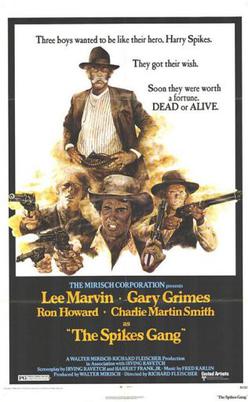
Growing up is tough, and yes, here we are with another coming of age movie. No, it's not a teenager in the 1980s, a little boy growing up in Germany during the Holocaust, but a sub-genre from one of my favorite genres, growing up in the wild west. Movies from The Culpepper Cattle Co. to True Grit and others, it's an always interesting sub-genre. We can definitely add 1974's The Spikes Gang to the list.

Living with his parents on an isolated farm in Texas, teenager Wilson Young (Gary Grimes) has had about enough of his father's strict, one might say cruel, treatment. Walking around out in the isolated brush country with his two friends, Les (Ron Howard) and Tod (Charles Martin Smith), Will finds the body of a seemingly dead man. He isn't though, the three teenagers nursing the severely wounded man back to health. They find out the man is Harry Spikes (Lee Marvin), a notorious bank robber who thanks the boys for their help and rides out. Not soon after, Will, Les and Tod all leave home, vowing to live life and explore the world and all it has to offer. Life on the road isn't everything it's made out to be though, the trio ending up in a Mexican prison with no hope...until now. Spikes lucks upon them, bribing the guard to let them out. His solution? He likes the boys and teaches them how to become bank robbers, forming the oddest gang of bank robbers around.

I was worried as I watched the credits for this Richard Fleischer-directed western. The soundtrack was a soft, folksy-sounding guitar playing, and I'm thinking I stumbled into a lyrical, whimsical 1970s western where everyone's nice and cute and the world is just dreamy. Well, I'm glad I stuck with it. There certainly are moments like that, the three boys hitting the road and ready to experience the world. That sentiment is quickly thrown out the window, and the movie gets better immediately. With no money and starving, Will decides to rob a bank out of nowhere. They get away with some money but Tod accidentally shoots a passerby trying to stop them. From there, the story's previously happy, go-lucky story degenerates, getting darker with each passing scene. Is that a good thing? Um, yes, my name is Tim. Have you read any of my reviews?

This is a gem of a western, one that deserves a much bigger reputation. Fans of westerns typically love or hate 1970s westerns, movies that ripped away the idea that the wild west was glamorous, romantic or anything like most John Wayne westerns. As an interesting touch, 'Spikes' was filmed in Almeria and Andalucia in Spain, the familiar locations for countless spaghetti westerns. So we've got an unsentimental American western interested in exposing the myths of the old west in locations made famous by spaghetti westerns, a genre similarly interested in blowing open the American west. How can you lose? The 96-minute western covers a lot of ground but never feels rushed, an episodic story a positive here. We see some quick appearances from Arthur Hunnicutt as a past-his-prime gunslinger/saddle tramp, Noah Berry Jr. as an unlikely ally, and it all works in perfect fashion.

Beyond the story, the movie works because of the cast. It starts with Lee Marvin as infamous bank robber Harry Spikes. This is a part equal parts charming/disarming and frightening in its reality. He genuinely likes the three boys, looking after them, feeding them, buying them clothes and guns, teaching them how to become outlaws, but he's also brutally honest about it. If they get hurt, he'll leave them. This is a dangerous profession he's chosen and the boys have chosen. It can end at any time, and all it takes is one bullet. Marvin's performance is a gem, one that deserves to be considered one of his best. It's funny, charming, disturbing at times, and he steals every scene he is in. This isn't a part that requires him to be in every scene, drifting in and out at times as needed. When he's on-screen though, it's impossible to look away.

With a lead performance like Marvin as Harry Spikes, it'd be easy for his teenage counterparts to get lost in the shuffle. These are three talented young actors though, and any such worry is unfounded. The best part is for Gary Grimes as Will, the unofficial leader of the trio. He's sick of his father's constant nagging (and occasional beatings with a belt), opting to hit the road. The transformation he goes through is the most profound, the darkest of the three. He was a specialist in the youngster role in 70s westerns, also starring in Culpepper Cattle Co. and Cahill, U.S. Marshal, ultimately retiring from acting in the late 1970s. It's a very human part with some startling developments late. The same year Happy Days premiered, Howard is also very good as Will's closest friend, a logical thinker who's almost the group's conscious. Martin Smith too is excellent as Tod, the most religious and worrisome of the trio.

I wasn't sure exactly where this 1974 western was heading although there were some hints at the finale. The ending is perfectly executed, a major twist revealing itself in the last 15 minutes. It isn't glossy, polished or romantic. This is the west as it was. Dark, nasty, bloody and all about survival. In other words, it's realistic and far from a happy ending. I loved this western, can't recommend it enough.

The Spikes Gang (1974): *** 1/2 /****

Sunday, September 16, 2012

The Dilemma

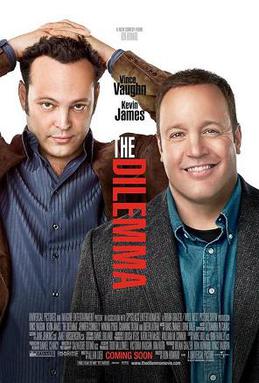
The movie just didn't seem to go with the name. Ron Howard directing this kind of comedy? It just didn't seem up to his reputation or directing ability. This is the guy who directed Apollo 13, A Beautiful Mind, Frost/Nixon, Cinderella Man, and now he's behind a goofy-looking comedy? That was my mindset heading into 2011's The Dilemma.

Going back to their days in college, Ronny (Vince Vaughn) and Nick (Kevin James) have been best friends through thick and thin to the point where they're now business partners. A huge deal with Chrysler looms, transitioning electric motors into recognizable, respected muscle cars. Everything about their business hangs in the balance and both are appropriately nervous, making Ronny's discovery that much more awkward. One day Ronny sees Nick's wife, Geneva (Winona Ryder), on a date with another man. What should he do? If so, how? Should he keep it secret? Uh-oh, decisions, decisions.

As I'm noticing more and more with big budget comedies, I felt duped by this one. Whether it was commercials, trailers or even the DVD cover, 'Dilemma' was billed and advertised as a goofy -- even stupid -- comedy with some over the top slapstick humor that made light of....well, cheating on your spouse. It isn't. Plain and simple, it just isn't. The attempts at humor don't always work, and some are so far overdone that they can be painful to watch. Lame attempts at laughs aside, it's darker than advertised, significantly darker.

And that's where 'Dilemma' struggles to get any footing. As talented a director as Howard is, he goofed here in a big way. Make a stupid, goofy, light-hearted comedy that has no basis in real life or go the complete opposite direction and go so impossibly dark that you will feel bad for laughing. Instead, it stays in that messy middle ground where it can't be either. The sad thing is that early on I was at least mildly enjoying the story. I was enjoying it more as a sort of personal drama -- hold the laughs -- but it takes a detour for the highly obvious. Vaughn's Ronny having an epic showdown with Zip (Channing Tatum), the "rock star" sleeping with Geneva, is bizarre in nature, so over the top that it ceases to be funny. The same goes later for Ronny's speech at an anniversary party. No basis in reality, no sense of any chance of this actually happening.

Watching the story degenerate as it did, I was encouraged by the characters and the talent involved. The characters are dark, and no one's perfect even as we learn more about their backgrounds. No one is faultless here. For the most part Vaughn is able to tone down his motor-mouth self and ends up being a pretty decent lead. James is a good counter to him, a friendship between the two men believable. Ryder seems dead-set on playing Evil Incarnate while Jennifer Connelly is given little to do as Ronny's long-time girlfriend who's gone through some rough patches with him. Queen Latifah has some funny scenes too as Ronny and Nick's Chrysler liaison with some odd sexual metaphors for their business agreement.

Because there's not much else to rip and/or praise, I can say Howard did a great job picking Chicago as his story's location. As a resident, I can say it is a city that just looks good on the big screen. Much of 'Dilemma' was filmed on-location, and the movie is boosted by it. We get some cool shots of downtown, not to mention a couple ventures to a Blackhawks game including a funny ending. Locations aside though, the movie is tolerable at best unfortunately.

The Dilemma <---trailer (2011): **/****

Saturday, May 28, 2011

The Journey

One of the 1950's most popular films, 1956's The King and I was loved by audiences, award shows, and critics alike.  Maybe the biggest reason for the movie's popularity -- besides the Rodgers and Hammerstein music and the epic story -- was the pairing of its two stars, Yul Brynner and Deborah Kerr.  I haven't seen the movie in years but still remember their chemistry. It was only a matter of time before they were paired in a movie together again, that coming three years later with 1959's The Journey.

The story is based during the Hungarian Revolution of 1956. My background in said revolution is that there was in fact a revolution in Hungary in 1956.  As much as I like history, you just can't read and learn about everything.  The setting -- while specific -- is applicable to any world conflict. It is based in individuals in a bad situation trying to reach some sort of safety, some feeling of normalcy.  Through these situations, you often bond through your trials. For all its uniqueness concerning a conflict in a far-off part of the world though, 'Journey' isn't always the most exciting movie, resorting to its star power to carry it through the slower portions.

It's 1956 in Budapest, Hungary, and an English woman, Diane Ashmore (Kerr), arrives at the airport trying to get out of the country and back home to England.  She's given some tough news though; the Hungarian people are revolting against their Russian/Soviet rulers, and all traffic in and out of the country has been canceled. However, transportation has been arranged for Diane and 13 other international passengers trying to leave Hungary. They will board a bus and drive the 250 miles to safety at the Austrian border. Before they reach the border though, they're stopped and inspected by the local commander, a Russian major, Surov (Brynner), who won't let them pass until everyone is approved. Diane starts to worry because she knows a secret about a fellow passenger on board, Fleming (Jason Robards), that threatens to get them all shot.

This is an all-around kind of weird movie. It isn't like so many other movies, but not always in a good or bad way. It is just different. Director Anatole Litvak films his movie in Hungary on some of the locations where the actual revolution took place just three years before in 1956. It certainly gives the movie a feeling of realism, of authenticity that couldn't have been duplicated on a Hollywood backlot (even if it does look like a studio at times). Instead, much of the story is set in a small hotel and its surrounding buildings.  There is a washed out look to The Journey that I suppose could have been the TCM print, but I don't know for sure. I can't put my finger on it, but something about the film just didn't click with me.

With two leads like Kerr and Brynner at the forefront of the movie, it's understandable that you want them to carry the movie as much as possible.  Their performances are the least of the movie's problems.  Their chemistry together is hard to disagree with. They're just good together.  Kerr is quiet and composed, eventually pushed to the point of nerves taking over while Brynner is bigger than life, able to dominate the screen just by standing there.  But in developing these characters, the story requires them to fall for each other. The final 20-30 minutes come along, and they're fighting off urges that I just didn't see building up throughout the movie. It's dialogue and more dialogue and more dialogue. The movie is a tad long at 126 minutes, taking quite awhile to get where it's going.

As if Kerr and Brynner weren't enough to satisfy most moviegoers, Jason Robards makes his feature film debut as Fleming, the mysterious passenger on-board who has all the other passengers concerned what he's up to. SPOILERS STOP READING SPOILERS Kerr is trying to sneak him out of the country, past lovers reunited after he escaped from a Russian prison. END OF SPOILERS Robards is one of the more underrated actors from the era, and he shows off the talent we'd all get to see in the coming years. Filling out the international list of passengers is Robert Morley as the scene-stealing, stiff upper lip Englishman, Deverill, E.G. Marshall and Anne Jackson as an American couple traveling with their kids (including a 5-year old Ron Howard), and other characters from Egypt, France, Germany, and in an interesting twist, a Jewish man. There was potential here for more development among these characters, and yes, I know the focus is on the leads. The 14 passengers though screamed out for a mini-series, something that would have given them a chance to shine. Also look for Senta Berger in a bit part as a serving girl at the hotel.

Maybe the biggest problem 'Journey' has going for it is a lack of focus. Brynner's Surov is investigating these international passengers, but nothing ever seems to get done. He spends most of the time riding his prized horse, eating and drinking with the passengers who are scared to death of him, and all the while, Kerr's Diane worries he'll figure out what's going on. By the way, he does....and pretty quickly.  There is no urgency though at all, and the movie's pacing suffers.  The ending makes up for it some in terms of surprise and shock value, a moving finale that definitely caught me off guard. I just wish more of the movie could have been like that.

The Journey <---trailer (1959): ** 1/2 /****

Thursday, July 29, 2010

The Missing

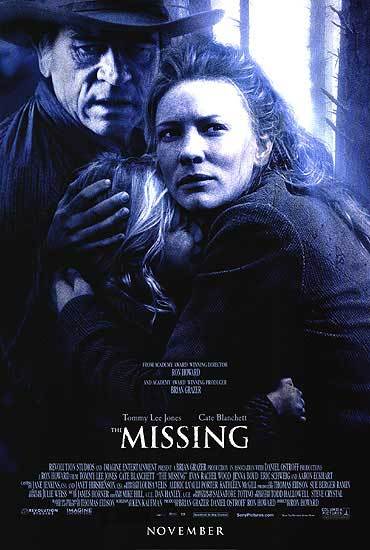
A child actor turned huge star director, Ron Howard has directed a variety of movies that make it hard to peg him down.  The movies are all over the place in terms of time and place setting, but maybe more than anything else Howard has focused on period pieces from Cinderella Man to Apollo 13, Frost/Nixon and several more.  But as wide-ranging as his films has been, he's only done one western, 2003's The Missing.

This is a movie that struggled in theaters -- making about $30 million in the U.S. -- while receiving some lukewarm reviews from critics.  It's a difficult one to put into any sort of category because it features so many different elements from old west mysticism to an estranged family working together after years apart.  The movie was shot on location in New Mexico and is the better for it.  If we were judging on the look of a movie alone, this would have been a huge critical and box office success.  You get the sense of a journey through the wilderness, but then you keep on traveling.  A story that at times doesn't move along too fast clocks in at 137 minutes.  Potential? Sure, but it's hard to find at times.

Living in 1885 New Mexico with her daughters Lilly (Evan Rachel Wood) and younger Dot (Jenna Boyd), single mother and "healer" Maggie (Cate Blanchett) have a tough life but a good life. One day Maggie's estranged father Sam (Tommy Lee Jones) arrives on their doorstep having abandoned Maggie and her mother and siblings as a child to live with an Apache tribe. She wants nothing to do with him at all, but when Lilly is abducted by a gang of renegade Apache scouts she has no one else to turn to.  With Dot along, Maggie and Sam ride south tracking the gang, hoping to catch up before they can cross the border into Mexico where all the women/girls kidnapped along the way will be sold to the highest bidder.

At its most traditional, 'Missing' deals with a kidnapping plot that has been used fairly often within the western genre.  There are good guys and there are bad guys, the lines pretty clearly dividing them with no middle ground.  The added element of an estranged father trying to fix a rift between himself and his daughter works surprisingly well if at times unnecessary.  We've got a band of murdering Apaches selling women, and Blanchett's Maggie still shoots daggers at Jones' Sam whenever she gets a chance.  Thankfully this isn't pushed down our throats with Sam admitting he's not looking for forgiveness, he just wanted to explain himself.  Helping bring back his granddaughter though is his chance at redemption, and he's going to take it.

Where that part could have been overdone and obnoxious, the two stars just don't let it happen.  Jones doesn't push it too far, and Blanchett is able to reel it in instead of being a stark, raving lunatic.  This is Tommy Lee Jones' movie with a quiet, understated performance.  After years away from his family, he just wants to explain himself and all his actions (or lack of) over the years.  He's a very capable man on the trail and isn't going to let anything slow him down along the way.  Other than my issue with so many foreign actors starring in westerns, Blanchett's part as Maggie is very strong.  Anytime a female character in a western can be a strong woman capable of handling herself, I'm all for it.  Other supporting parts include Val Kilmer as a cavalry officer, Aaron Eckhart as Brake, a ranchhand and Maggie's live-in boyfriend, and Jay Tavare as Katiyah, an Apache working with Sam.

For a movie that is basically one long chase, the story tends to drag in certain places.  Most of that can be chalked up to the story's reliance on Indian/Apache mysticism with a hint of witchcraft thrown in.  The leader of the renegade Apaches is called El Brujo (Eric Schweig) which Sam translates as 'an Indian witch.' The character is able to put curses on people, seems to have some link to evil and the devil, and has an all-knowing feel that he's aware of everything.  His look alone is scary, and he's a more than capable villain on his own.  The story would have been just right with him as a renegade Apache looking for blood and money without the mysticism and voodoo.  Cut those segments out, and you've got a more mainlined 100-120 minute movie.

Working with this story with so many different elements, Howard never gets graphic in his depictions of wild west violence, but he always is able to paint a picture of what's happening.  Sometimes not seeing the violence is more effective than seeing it.  We know what's going on, and actually witnessing it would be overkill.  That said, the last 30 minutes is full of action that makes up for some of the movie's slower portions.  Like most of the rest of the movie, the ending doesn't preach or make any sort of judgment, it just ends.  It is an uneven movie, but with enough positive elements to recommend it.

The Missing <----trailer (2003): ** 1/2 /****

Wednesday, July 14, 2010

The Shootist

As a movie star, you don't always pick how you get to ride into the sunset on the horizon.  For many, their days as a star are long past.  Others just never get that right role that allows you to end on a high note.  Well, there is an exception to every role, and that's John Wayne, one of the most iconic stars to come out of Hollywood's first 50 years with sound films. A star whose popularity went up and down some over a long career, Wayne was always in the public eye with his movies, his last part being one of his best all-time parts, 1976's The Shootist.

During the mid 1970s when Wayne was in the process of making his last few movies, The Duke was struggling with stomach cancer that would ultimately end up killing him in 1979.  More than any other time in his career, Wayne resorted to playing a version, a caricature of himself in the late 1960s and into the 1970s.  There was a comfort factor involved for both the actor and the audiences who still loved seeing him on-screen.  With an exception here and there, none of these later movies are classics, but they're all entertaining.  The Shootist is one of those few exceptions, a classic thanks almost exclusively to Wayne's performance in the title role.

It's 1901 and infamous gunfighter J.B. Books (Wayne) rides into Carson City to see an old friend of his, Doc Hostetler (James Stewart). Books has been feeling poorly, and the Doc confirms the bad news; he has cancer and only has a few months to live. The gunfighter takes a room at a boarding house run by a recent widow, Mrs. Rogers (Lauren Bacall) and her troublemaker son, Gillom (Ron Howard).  Books goes about wrapping certain things up with his life as he prepares to die, putting things in place and tying up some loose ends.  But the Doc warned him, letting the cancer kill him will be a long, drawn out and incredibly painful process.  If there was a way to quicken that death, he recommends Books do it.  So knowing what awaits him, the older, worn-out gunfighter puts together one last moment of glory.

Seven years earlier, Wayne won his first and only Academy Award for his performance as Rooster Cogburn in True Grit.  In a sense, it was a lifetime achievement award for all he had accomplished in his career.  But just on performance alone, his John Bernard Books ranks up there as one of his all-time top five.  It is a part that Wayne was born to play, plain and simple.  His Books is a dignified man with a reputation as a killer, a man who lives by certain principles and expects others to do the same.  He doesn't apologize for his past and to a certain point, is frustrated with the life he has led where every young punk with a gun wants to kill him to prove how good they are.  Easily one of the Duke's best parts, and a fitting end to a great career.

Directed by Don Siegel, 'Shootist' brings together an excellent cast, almost like a going away party for the Duke.  Having worked together 20 years before in 'Blood Alley,' Bacall and Wayne are perfect together with some of the best on-screen chemistry Wayne ever had with a female co-star.  Their scenes flow so easily, and it's just fun watching two pros show what they can do with good material.  The same for young Ron Howard who plays a different character than the viewer is used to considering his Andy Griffith and Happy Days roots.  Books becomes a bit of a father figure to Howard's Gillom and tries to teach him the lessons of how to be a man.  Along with Stewart as the doctor, there's Harry Morgan as the town sheriff, John Carradine as the undertaker, Sheree North as a lost love of Books, and Scatman Crothers as the livery stable owner.

The story builds to a certain point, and you dread where it is going -- even knowing it is where it has to go.  Books takes the Doc's advice and arranges a way so three men who would love nothing more than to put a bullet in him meet him at the same place.  If all goes well, he'll go out in one last blaze of glory, avoiding whatever the cancer can throw at him.  The trio include Richard Boone, Hugh O'Brian and Bill McKinney, all three waiting for him in a saloon. The ending is foreshadowed in a line delivered midway through the movie, but it still comes as a bit of a shock.  Of his 170 or so movies, John Wayne actually died in just eight movies, and few are as moving as this one. You can watch it HERE, obvious SPOILERS.

Beyond the sets, background and lack of gunplay, this is a movie entirely devoted to character, specifically John Bernard Books and the last few days of his life.  It is a western focusing on the changing times as the old west becomes a thing of the past, the U.S. advancing forward into a new time.  In that way, it's appropriate that the Wayne character wants no part of it.  As some characters point out, he is a relic from the previous times.  His exit then is only appropriate, going out as he came in.  One of Wayne's best and an underrated western overall.

The Shootist <----trailer (1976): ****/****

Sunday, June 6, 2010

American Graffiti

Before he was ever involved with the Star Wars franchise, director/producer/writer extraordinaire George Lucas made a movie that has impacted a completely different genre, one you probably wouldn't associate with his mega-successful sci-fi movies.  The genre? The teen comedy.  The movie is 1973's American Graffiti and it set out the groundwork for countless teen movies to come from John Hughes 1980s movies to the American Pie series more recently and everything in between.

It's a story Lucas based off of growing up as a teenager in California in the 1950s.  Looking at the cast and even the main credits may throw you for a loop, making you think you're watching Happy Days: The Movie.  Some of the storylines and characters will almost certainly seem cliched for younger audiences, but there's a funny thing about movie cliches.  They've got to start somewhere, right?  'Graffiti' was one of the first as it tells the story of four teenagers and their adventures and misadventures in one late summer night.  If a 1973 teen comedy doesn't sound appealing to you, I'd recommend 1998's Can't Hardly Wait which is basically a more modern remake of the same story.

The night before they're supposed to head east for their first semester of college, Steve (Ron Howard) and Curt (Richard Dreyfuss) meet up at the local burger joint early in the night. They've got big plans for their last night in town, but of course nothing goes smoothly.  Steve wants to spend the night with his girlfriend Laurie (Cindy Williams) but gets things started off on the right foot by saying he'd like to date other girls at college. Curt is wavering about a decision if he should even go to college, all the while looking for a mysterious blonde.  Two other friends, underclassmen Terry (Charles Martin Smith) goes cruising with Steve's car newly given to him, and John (Paul Le Mat), the town's designated cool kid is looking for challengers for a drag race while driving around a young girl (Mackenzie Phillips) who refuses to go home. No matter what happens, a lot of things could change before morning rolls around.

If you could bottle the late 1950s and early 1960s as a decade and sell it, American Graffiti could corner the market.  Lucas -- writing and directing -- creates a feeling and look of the 50s/60s like few others have been able to.  The soundtrack is full of classics from 'Rock Around the Clock' to 'Johnny B. Goode' and everything in between.  Add in famous disc jockey Wolfman Jack, and you've got a winner. Everything from the souped-up cars to the lingo to the jeans and t-shirt look (cigarettes folded in the sleeve of course) feels authentic like you're there with the characters cruising through town on a warm late summer night.

The story is divided fairly equally among the four main characters, Steve, Curt, Terry and John, but thankfully Lucas decides to spend just a little more time with Terry and John -- by far the more interesting of the four characters.  Terry is an underclassmen who meets Debbie (Candy Clark) and ends up feeding her every line in the book to try and convince her how cool he is.  Naturally, nothing goes smoothly.  John Milner is a couple years older than the others and though he's still the coolest guy around -- think of the Fonz -- he's beginning to wonder if his time has passed.  The dynamic Le Mat and Phillips together is perfect and blends humor with drama flawlessly.

None of that is meant to say the other characters aren't interesting.  The problem is it's clear from the start Steve and Laurie are going to end up together even with all the bickering they do.  Howard and Williams -- a year before they'd work together on Happy Days -- do have some great chemistry, but their story is dull compared to the others.  Dreyfuss' story is the weirdest as he starts off questioning what he should do with his life and ends up with the Pharaohs, a local gang of toughs (led by Bo Hopkins).  This movie also starts a tradition where late 20-year olds play teenagers 10-15 years younger than they actually are.  Also look for a scene-stealing Harrison Ford as Bob Falfa, an out of town drag racer, and Suzanne Somers as a mysterious blonde who puts a hex on Curt. 

Now where it seems every teen comedy is a mindless sex romp, it can be refreshing to see a story as good as this one.  A coming of age story can be just as interesting and entertaining -- although these characters are always looking for a little action even if it never ends well.  Reading through the cast, I found a sequel to this one which seems weird.  At the end, four weirdly out of place title cards explain what happened to the four main characters, two of them extremely depressing.  Apparently the sequel wanted to explain those explanations.  Stick with the original, it's about as good as a teen comedy can get.

American Graffiti <---trailer (1973): ***/****

Thursday, April 15, 2010

Frost/Nixon

The 1970s produced all sorts of controversies, some that ended up positively, others not so much, but one of the biggest was President Richard Nixon and the Watergate scandal.  In a decade when the American people were already skeptical of the government, this scandal involving a government cover-up was just one of many straws that helped break the camel's back.  Nixon's actions infuriated thousands and more likely millions, but because Gerald Ford pardoned him for all his actions he was let off the hook.

Last year, director Ron Howard's Frost/Nixon detailed the story and background of an interview that took place in 1977 between Nixon and British talk show host David Frost with one character's motivation being giving Nixon the trial he never received.  Howard is no stranger to working with true stories -- Apollo 13, Cinderella Man, A Beautiful Mind -- and he is an ideal choice to direct this movie.  Working with a pseudo-documentary style, Howard one-ups himself by having his actors provide voiceovers and even on-screen interviews as the real-life people they're playing, all of it adding to the documentary-like feel to the movie.

Interestingly enough, the movie is based off a play which is based off a series of interviews between Nixon and Frost.  An ongoing interview that took place over 12 sittings might not seem like a well-suited idea for a feature length movie, but as interviews on the DVD discuss, watching these interviews develop is like watching a prize fight.  The description is surprisingly dead-on, and these scenes of long stretches of dialogue have energy and tension to burn -- and that's knowing how they'll end.

It's 1977 and British talk show host David Frost (Michael Sheen) has been chosen to interview former President Richard Nixon (Frank Langella) in Nixon's first sit-down session since he resigned following the Watergate scandal.  No one thinks much of Frost or his ability to put Nixon on the spot, but with a team of researchers working with him, the English host lays out a plan of attack for how to question the former president.  But as excitement builds and the interview draws closer (12 sittings totaling 30 hours covering 4 key topics), Frost and his team can't prepare for the wickely intelligent mind that is Richard Nixon.  And with the whole world watching, there's no room for error.

Dealing with a story that is one of the most well-known news stories ever, Howard has his work cut out for him.  The same goes for the actors who are playing real-life people, many of them still alive.  For his performance of Nixon, Langella earned an Oscar nomination, and it's easy to see why.  Nixon was a deeply flawed individual, and the only U.S. president to resign from office so Langella doesn't whitewash any of his background (I don't think Howard would have allowed it).  Langella shows the man for what he was, good and bad.  He was a brilliant mind and intelligent speaker always looking to hold an advantage over those around him.  His Nixon is a master manipulator and isn't beneath pulling some below the belt trickery.

It would be tough to match Langella because his part is so good, but Sheen is a worthy competitor.  His Frost is an interesting character who risks everything to get these interviews on the air.  He has difficulty though because as a TV host, he lacks the credibility of a journalist.  Think of it this way; Jay Leno sits down for a 1-on-1 sit down with President Clinton about his extramarital affairs.  That's basically what this story is although Frost is a pretty smart guy himself.  Sheen's Frost isn't an easy character to get behind -- he's cocky, brash, arrogant -- but maybe more importantly he's an interesting character.  The scenes between him and Langella are at the heart of the movie and move along at a brisk pace.  In the hands of lesser talents, these interview scenes could have dragged on endlessly.

The supporting cast is nothing to shake your head at either.  Rounding out Frost's support team is Oliver Platt as Bob Zelnick, a Washington correspondent for National Public Radio, Sam Rockwell as James Reston, an author who'd like nothing more than to take down Nixon, and Matthew Macfayden as John Birt, Frost's friend and producer.  None of the three are huge parts, but the trio makes the most of it.  Platt and Rockwell have some great chemistry in their short scenes together, and Macfayden works well with Sheen.  In Nixon's corner is Kevin Bacon as Jack Brennan, a former marine and current chief of staff for the former president.  It's another smallish part, but a worthwhile one.  And being a Ron Howard movie, there's lots of recognizable faces, including little brother, Clint.  Also keep an eye out for basically everyone from the NASA war-room in Apollo 13.

Once all the background is laid out over the first 45 minutes, most of the rest of the movie is the interviews between Nixon and Frost with a few quick sidetrips here and there.  If these scenes didn't work, the whole movie would sink right with them.  I've never seen the actual Frost/Nixon interviews, but we get bits and pieces here and there of the first few segments.  The kicker is of course, the finale when Frost gets Nixon all wrapped up and basically traps him into admitting what he did was illegal/wrong.  That final Watergate interview is about 20 minutes long and is the best and strongest part of the movie. 

Howard might not be the flashiest director around -- that sounds a lot more negative than I intended it -- but this quasi-documentary movie has style to spare.  From the clothes to the hair to the sets, it feels very 70s.  The choice to interview his cast as the people they play, years after the interviews looking back on what they accomplished, is an interesting choice that ends up panning out for Howard.  His directing style overall is easygoing here, letting his actors show off and allowing the true story to develop at its own speed.  A movie that's well worth a watch.

Frost/Nixon <----trailer (2008): ***/****

Wednesday, November 25, 2009

Angels and Demons


As good as Dan Brown's The Da Vinci Code and Angels and Demons were, what happened to them when turned into a movie? The books aren't great literature, but they're damn entertaining so a team of director Ron Howard and star Tom Hanks should be a sure thing in helping the transition from bestselling book to blockbuster movie. But for whatever reason, something has not clicked with either movie. 'Da Vinci' in movie form was downright boring at times, and sadly, so is the sequel, 2009's Angels and Demons.

Like many fans of Brown's novels, I was caught up in the Da Vinci craze upon its release and after loving that one sought out Angels and Demons which actually is a prequel in the storyline. I raced through both books in a day or so each unable to put it down. Brown's style lends itself to cranking through chapters at a time with cliffhangers seemingly every few pages. So I somewhat naturally figured a movie would be easy to do off this subject material. Who knows, maybe I didn't think it through, but I was wrong in a big way.

After the pope dies, cardinals from around the world descend on Vatican City to choose a successor from their ranks. One night, four of the cardinals are kidnapped with a foreboding note, they will be killed an hour apart somewhere in Rome, all of this leading up to the complete destruction of the Vatican by a powerful, deadly substance known as antimatter. Worse than that, the act has been done by the Illuminati, a long-time enemy of the Catholic church only know exacting their revenge. The deceased pope's camerlengo, Patrick McKenna (Ewan McGregor) calls in Professor Thomas Langdon (Hanks) to help solve the mystery.

Upon arriving in Rome just hours before the murders are set to begin, Langdon discovers a way to save the kidnapped cardinals. Centuries before, Galileo created a path for people to join the Illuminati if they could follow four clues leading to four different locations. These places are all over Rome and Vatican City so with help from a beautiful Italian physicist (Ayelet Zurer, because every movie needs a beautiful Italian physicist) Langdon starts a race against time to save the cardinals that will take him all across the city.

If this makes sense at all, Howard's 138-minute version of Brown's book feels rushed for the first 90 minutes or so. Howard does not have the advantage of having hundreds of pages of background to set the stage for what's about to happen. Too bad because in place of that all-important background we get lots of scenes of Langdon explaining the historical importance and symbolism of what we're hearing. The book allows this to happen as an aside that doesn't take away from the pacing of the story. In movie form, it brings the high tension to a screeching halt while Langdon pieces together historical mysteries that have stumped brilliant minds for hundreds of years. Langdon on the other hand can figure them out in mere minutes.

Some of this has to be attributed to the sometimes mind-bogglingly bad screenplay which bounces around so much and so quickly it can hard to keep up. Granted, the book is basically one long, extended chase sequence, but there's time here and there for a breather. Not so here as the last half hour to 45 minutes goes from bad to worse and keeps on climbing on the ridiculous meter. I loved Brown's novel even more than 'Da Vinci' but can admit I thought parts of the ending were horribly out of place. The movie takes that one step further on a badness scale, but I won't ruin that here for you. I'll let it be spoiled elsewhere.

While I don't think Tom Hanks is the right choice to play Langdon, the movie's faults are not his own. The dialogue is stilted beyond belief and rarely comes across as believable. Hanks tries to make the most of it, but almost every line of dialogue he has is either a history lesson or a smart-ass comment. Zurer's Vittoria Vetra character has been relegated to background duty here, going from a great character in the book to a sounding board here for some of Langdon's mystery-solving. McGregor is a bright spot -- although the character loses a lot of necessary background from the novel -- with Stellan Skarsgard and Pierfrancesco Favino making the most out of their parts as Vatican security supervisors.

I hate putting this because I realize I sound like a pompous ass, but the book is miles ahead of the film version. Transitioning a beloved book to the big screen is a daunting process, no doubt about that, but it just hasn't worked here with either of Brown's source novels. As for Howard, he makes a beautiful movie -- it'd be hard to make Rome/Vatican City not look good -- but too many changes are made that were made for no obvious reason. Stick with Angels and Demons the novel and avoid this stinker. God help us when The Lost Symbol hits big screens.

Angels and Demons <----trailer (2009): * 1/2 /****