At the height of his popularity in the 1950s, John Wayne turned down an offer that ended up profiting for one person in particular. Wayne turned down the lead role for TV's Gunsmoke and instead recommended James Arness for the part. Wayne kept on being Wayne, and Gunsmoke...well, it aired for 20 seasons with over 600 episodes. Wayne and Arness became friends, Arness even starring in a flick from Wayne's production company (Batjac), a 1956 western, Gun the Man Down.
Following a botched bank robbery, Rem Anderson (Arness) is left behind by his fellow robbers, Rankin (Robert J. Wilkie) and Farley (Don Megowan), when he's wounded and can't keep up with a posse close behind. Anderson is able to hide, but it's only a matter of time before the posse picks up his trail and he's sentenced to a year in prison. Upon getting his parole, Rem has one goal in mind; revenge. He's not sure what became of Rankin and Farley, but he intends to find out. His trail leads him across the territory where finally he tracks them down in a town where they used the money from the bank robbery to open up a successful, raucous saloon. They're out in the open, but that presents a problem in itself. No one knows them as bank robbers, only saloon owners. How can Rem hope to exact his revenge with the chips stacked against him?
Starting in the early 1950s, Batjac Productions backed movies well into the 1970s, many of them starring the Duke, several others made with other stars. For the most part, they were fan friendly flicks, movies audiences would scoop up and enjoy. Not too surprisingly, the ones with Wayne were more successful than those without him, but of the ones I've seen, they've all been solid to good to really good. This 1956 western is a no frills western from director Andrew McLaglen and screenwriters Burt Kennedy and Sam Freedle. McLaglen and Kennedy were frequent collaborators with Wayne in the 50s, 60s and 70s, and you could see a younger Duke playing the Arness part. 'Gun' clocks in at just 76 minutes and features a small scale story with a small cast. It's good, but could have been better.
The odd part? There are times you feel like you're watching a small-scale film noir western. Revenge stories are nothing new to the western genre, but this one is simple and straightforward. We've got our anti-hero (Arness) trying to right a wrong, get his revenge, and get his woman (Angie Dickinson) back in the process (the femme fatale). The villains are dastardly, the cops are waiting for their chance, and we've got a fringe character or two waiting to swoop in for a profit. How can you go wrong? I wish all these pieces fit together in tighter fashion though. It is only 76 minutes long, but it drags at times with some serious pacing issues. Lots of talking, lots of dialogue, making an already short movie feel inexplicably long at times. That's never good when you're struggling to get through a movie that isn't even an hour and a half long.
Without the star power of a John Wayne, 'Gun' still has some cool parts. Arness is a solid, resolute hero who in the second half is more of a presence than an actual hero. We see other characters react to him, see others cower and worry what he's up to. Also, he was robbing a bank to provide for a new life with Dickinson's Janice so he's not all-bad, right? Right?!? Wilkie and Megowan are solid as our villains, ready to cut bait at the first sign of trouble. My favorite parts were for Emile Meyer (usually playing a heavy) as Sheriff Morton and Harry Carey Jr. as his well-meaning but little slow deputy, Lee. Morton knows the dangers of the job, has been at it forever, and is trying to look out for Lee as best as possible. Their dialogue scenes are especially worthwhile, especially Meyer as Morton. Also worth mentioning are Michael Emmet as Billy Deal, a hired killer and friend of Rem's, and Pedro Gonzalez Gonzalez as a hotel employee (he'd work with Dickinson in a similar role 3 years later in Rio Bravo). A solid cast, nothing too flashy.
I just wish I liked this one more as I'm wavering back and forth between ratings. I liked it, but man, it was slow-going at times. There's also some funny, odd moments, including Rem being told a judge will throw the book at him for the robbery...and he gets a year sentence for bank robbery where a man in town was shot during said robbery. Maybe I misread it, but there's a hilarious scene where Wilkie races to catch his horse, mounts up, rides about 4 feet and then dismounts. I'm assuming it's meant to show the horse came up lame, but it had me laughing. Now with all that considered, it's still a pretty decent little western. There are some surprising, dark twists in the last act, and things are wrapped up nicely for everyone (well, almost everyone). Western fans should at least check it out with just enough positive going for it.
Gun the Man Down (1956): ** 1/2 /****
The Sons of Katie Elder
"First, we reunite, then find Ma and Pa's killer...then read some reviews."
Showing posts with label Robert J. Wilke. Show all posts
Monday, January 12, 2015
Tuesday, May 6, 2014
The Magnificent Seven
Why
do some movies stick with you more than others? I grew up watching
westerns and war movies from the 1950s and 1960s, movies that still
dominate my all-time Top 10, movies like The Alamo, The Great Escape,
The Dirty Dozen, The Good, the Bad and the Ugly, The Professionals and
several others. They still resonate now more than a few years later. Oh,
and of course, 1960's The Magnificent Seven.
Several years back I reviewed all four movies (the original and the 3
sequels), and it's been too long. Time for an updated review. The
original and still best, one of the best westerns ever and a personal
favorite.
South of the border in a small farming village, a bandit named Calvera (Eli Wallach) rides in and steals almost everything he and his gang of 40 bandits can carry, leaving just enough for the village to survive and start all over again. The villagers decide they've had about enough, riding north into Texas to buy guns so they can fight back against Calvera's gang. Instead, they meet Chris (Yul Brynner), a mysterious gunfighter clad in black who recommends they hire men rather than buy guns. Chris agrees to help, recruiting six other gunfighters from varying backgrounds, including an amiable drifter and gunfighter, Vin (Steve McQueen), to help out. The money is poor, the mission is more than difficult and the odds are stacked against them. Chris and the six gunslingers ride south, ready to help the village and fight off Calvera, odds be damned.
What a good movie. From director John Sturges (a master of 'Movies for Men'), 'Seven' came along at an interesting time for the western genre. Things, they were a'changing. Westerns were becoming more cynical, darker, more introspective, eventually transforming into the spaghetti western and the folksy, revisionist westerns of the 1970s. As fondly remembered as 'Seven' is now, it struggled in theaters in the U.S. upon its initial release, finding huge success in Europe and Asia before being re-issued in the U.S. several years later. It is an Americanized version of Akira Kurosawa's classic film, Seven Samurai, transplanting samurais for wild west gunfighters. It's interesting for any number of reasons, from the music to the budding star power on display, the dark tone to the exciting action scenes. A favorite of mine, a four-star review, and I won't really debate it. So there!
How about that casting?!? Much of the cast would go on to become huge stars, but here in 1960, they were relative unknowns. Brynner was the established star, The King and I, The Ten Commandments already to his name, and he's the pulse of the movie. His Chris is the unflappable leader of the group, a capable gunfighter who's also got all the qualities a leader should have. Loyal, strong, and tough. McQueen steps up to the plate in his first starring role. His Vin is easy-going, a drifter looking for work, quite good with his gun but maybe looking for something else in his life. Brynner and McQueen had a tumultuous relationship on the set -- McQueen trying to upstage the established star -- but the result is more than solid. Their chemistry crackles, their scenes together that perfect dynamic between the commander and his right-hand man. As the bandit Calvera, Wallach is an effortless scene-stealer, disappearing for huge stretches only to return with a vengeance.
And then there's the rest of the seven, because Brynner and McQueen weren't enough, right? Right?!? First, there's Charles Bronson as Bernardo O'Reilly, a half-Mexican, half-Irish gunman who has quite the reputation for cleaning up nasty jobs and his price is high...usually. He bonds with three boys from the village who "got him," promising to watch over him and care for his grave should he die in battle. Then, there's James Coburn as Britt, the laconic, knife-throwing specialist who has few equals with knife or gun. Coburn says about 30 words the entire movie and steals every scene he's in. Next, Robert Vaughn as Lee, a hired gun who's lost his edge, convinced he is facing his death. Next up, Brad Dexter as Harry Luck, a friendly gunslinger convinced there's more to the job than Chris is saying. Finally, there's Horst Buchholz as Chico, the young, unproven kid looking to make a name for himself with his more established cohorts.
As if that star power wasn't enough to carry a movie, I liked the characterization of these gunslingers more than anything. That's something I've picked up on repeated viewings as I got older. The portrayal of these hired guns is honest, not looking to glamorize these men. They're tied down by nothing, drift along from job to job, all the while risking their lives knowing that any job could be their last. What do they have? Their guns, their horse and maybe most importantly, their word. 'Seven' boasts one of my all-time favorite scenes, in westerns and films in general. Given a chance to run from a battle against seemingly insurmountable odds, they opt to stay. Coburn's Britt famously says "No one throws me my own guns and says run....Nobody." When offered the chance to run, Vaughn's Lee is told "Go ahead, Lee, you don't owe anything to anybody." His answer? "Except to myself." That's the essence and spirit of the movie. Men in a nasty situation doing what's right because it's what they should do, what is right. Profoundly simple, it always sticks with me, these men living by their code and what they believe in.
As for the villagers, look for Vladimir Sokoloff as the Old Man, the village patriarch who has little use for the whiny farmers, Jorge Martinez de Hoyos as Hilario, the fiery farmer ready to side with the gunmen, Pepe Hern and John Alonzo his close friends, Rico Alaniz as Sotero, the quasi-mayor of the village trying to weigh all his options and lastly, Rosenda Monteros as Petra, the young woman in the village who takes a liking to Buchholz's Chico. Also look for familiar western faces Robert J. Wilke and Whit Bissell in quick scenes.
More than anything else though, I think what's lasted the longest in the social conscience is composer Elmer Bernstein's musical score. The soundtrack is one of the all-time greats, the main theme a whistle-worthy track that will be running through your head for days. This is what big movie soundtracks can be. They add something to the movie itself, like a new but essential character. If you're not familiar with it (and even if you are), listen HERE. Just a great score, moving, adrenaline-pumping and emotional as needed. An all-time great score from an all-time great composer.
The story covers a lot of ground over its 128-minute running time. The story is fairly episodic, starting with the essential and entertaining recruiting of the team, Brynner's Chris seeking the gunmen out for the job. Each snippet gives each actor his chance to stand out on their own before becoming part of the group. Coburn's classic introduction especially stands out. From there, it's one great scene after another, both as entertainment value but also for delving into all the characters from the Seven to the villagers to Calvera. There isn't a ton of action, but the gunplay stands out, two featured sequences as the Seven tangle with Calvera's gang. It's the final battle that packs the emotional punch, the odds finally taking their toll on this group of gunfighters we've come to like and root for. It's a downbeat ending when you really consider it, but it's the right ending for this story and the characters.
Just a great movie. It was a favorite growing up and always will be. One of the best westerns ever, and an easy one to recommend for fans of the western genre or for someone just being introduced to the genre as a whole. A classic, plain and simple.
The Magnificent Seven (1960): ****/****
Rewrite of September 2009 review
South of the border in a small farming village, a bandit named Calvera (Eli Wallach) rides in and steals almost everything he and his gang of 40 bandits can carry, leaving just enough for the village to survive and start all over again. The villagers decide they've had about enough, riding north into Texas to buy guns so they can fight back against Calvera's gang. Instead, they meet Chris (Yul Brynner), a mysterious gunfighter clad in black who recommends they hire men rather than buy guns. Chris agrees to help, recruiting six other gunfighters from varying backgrounds, including an amiable drifter and gunfighter, Vin (Steve McQueen), to help out. The money is poor, the mission is more than difficult and the odds are stacked against them. Chris and the six gunslingers ride south, ready to help the village and fight off Calvera, odds be damned.
What a good movie. From director John Sturges (a master of 'Movies for Men'), 'Seven' came along at an interesting time for the western genre. Things, they were a'changing. Westerns were becoming more cynical, darker, more introspective, eventually transforming into the spaghetti western and the folksy, revisionist westerns of the 1970s. As fondly remembered as 'Seven' is now, it struggled in theaters in the U.S. upon its initial release, finding huge success in Europe and Asia before being re-issued in the U.S. several years later. It is an Americanized version of Akira Kurosawa's classic film, Seven Samurai, transplanting samurais for wild west gunfighters. It's interesting for any number of reasons, from the music to the budding star power on display, the dark tone to the exciting action scenes. A favorite of mine, a four-star review, and I won't really debate it. So there!
How about that casting?!? Much of the cast would go on to become huge stars, but here in 1960, they were relative unknowns. Brynner was the established star, The King and I, The Ten Commandments already to his name, and he's the pulse of the movie. His Chris is the unflappable leader of the group, a capable gunfighter who's also got all the qualities a leader should have. Loyal, strong, and tough. McQueen steps up to the plate in his first starring role. His Vin is easy-going, a drifter looking for work, quite good with his gun but maybe looking for something else in his life. Brynner and McQueen had a tumultuous relationship on the set -- McQueen trying to upstage the established star -- but the result is more than solid. Their chemistry crackles, their scenes together that perfect dynamic between the commander and his right-hand man. As the bandit Calvera, Wallach is an effortless scene-stealer, disappearing for huge stretches only to return with a vengeance.
And then there's the rest of the seven, because Brynner and McQueen weren't enough, right? Right?!? First, there's Charles Bronson as Bernardo O'Reilly, a half-Mexican, half-Irish gunman who has quite the reputation for cleaning up nasty jobs and his price is high...usually. He bonds with three boys from the village who "got him," promising to watch over him and care for his grave should he die in battle. Then, there's James Coburn as Britt, the laconic, knife-throwing specialist who has few equals with knife or gun. Coburn says about 30 words the entire movie and steals every scene he's in. Next, Robert Vaughn as Lee, a hired gun who's lost his edge, convinced he is facing his death. Next up, Brad Dexter as Harry Luck, a friendly gunslinger convinced there's more to the job than Chris is saying. Finally, there's Horst Buchholz as Chico, the young, unproven kid looking to make a name for himself with his more established cohorts.
As if that star power wasn't enough to carry a movie, I liked the characterization of these gunslingers more than anything. That's something I've picked up on repeated viewings as I got older. The portrayal of these hired guns is honest, not looking to glamorize these men. They're tied down by nothing, drift along from job to job, all the while risking their lives knowing that any job could be their last. What do they have? Their guns, their horse and maybe most importantly, their word. 'Seven' boasts one of my all-time favorite scenes, in westerns and films in general. Given a chance to run from a battle against seemingly insurmountable odds, they opt to stay. Coburn's Britt famously says "No one throws me my own guns and says run....Nobody." When offered the chance to run, Vaughn's Lee is told "Go ahead, Lee, you don't owe anything to anybody." His answer? "Except to myself." That's the essence and spirit of the movie. Men in a nasty situation doing what's right because it's what they should do, what is right. Profoundly simple, it always sticks with me, these men living by their code and what they believe in.
As for the villagers, look for Vladimir Sokoloff as the Old Man, the village patriarch who has little use for the whiny farmers, Jorge Martinez de Hoyos as Hilario, the fiery farmer ready to side with the gunmen, Pepe Hern and John Alonzo his close friends, Rico Alaniz as Sotero, the quasi-mayor of the village trying to weigh all his options and lastly, Rosenda Monteros as Petra, the young woman in the village who takes a liking to Buchholz's Chico. Also look for familiar western faces Robert J. Wilke and Whit Bissell in quick scenes.
More than anything else though, I think what's lasted the longest in the social conscience is composer Elmer Bernstein's musical score. The soundtrack is one of the all-time greats, the main theme a whistle-worthy track that will be running through your head for days. This is what big movie soundtracks can be. They add something to the movie itself, like a new but essential character. If you're not familiar with it (and even if you are), listen HERE. Just a great score, moving, adrenaline-pumping and emotional as needed. An all-time great score from an all-time great composer.
The story covers a lot of ground over its 128-minute running time. The story is fairly episodic, starting with the essential and entertaining recruiting of the team, Brynner's Chris seeking the gunmen out for the job. Each snippet gives each actor his chance to stand out on their own before becoming part of the group. Coburn's classic introduction especially stands out. From there, it's one great scene after another, both as entertainment value but also for delving into all the characters from the Seven to the villagers to Calvera. There isn't a ton of action, but the gunplay stands out, two featured sequences as the Seven tangle with Calvera's gang. It's the final battle that packs the emotional punch, the odds finally taking their toll on this group of gunfighters we've come to like and root for. It's a downbeat ending when you really consider it, but it's the right ending for this story and the characters.
Just a great movie. It was a favorite growing up and always will be. One of the best westerns ever, and an easy one to recommend for fans of the western genre or for someone just being introduced to the genre as a whole. A classic, plain and simple.
The Magnificent Seven (1960): ****/****
Rewrite of September 2009 review
Wednesday, October 30, 2013
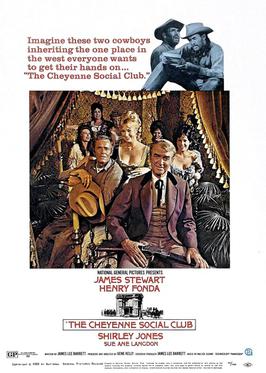
The Cheyenne Social Club
Two of Hollywood's most legendary stars, James Stewart and Henry Fonda starred together in 1968's Firecreek, a pretty solid western that pitted the two legends against each other as adversaries. Friends off the screen, the duo didn't wait long to team up again, working together on 1970's The Cheyenne Social Club.
It's 1867 in Texas and two cowboys, John O'Hanlan (Stewart) and Harley Sullivan (Fonda), are doing what they do best, punching cows on a cattle ranch, when John receives a long overdue telegram. His brother has died and has left him his business, an establishment called the Cheyenne Social Club in Wyoming. The cowboys saddle up and head north to see what's up, but they're in for a surprise. Upon arrival, they meet Jenny (Shirley Jones) at the club and quickly realize that the Cheyenne Social Club is actually a whorehouse. John had been dead set on being a property owner, but now he faces an ethical situation. Does he continue on as owner or does he switch things up, turn it into a boarding house? The city of Cheyenne may have something to say about that.
Considering the year this flick was released -- 1970 -- it's a bit of an oddity. Spaghetti westerns were still very popular in Europe, and in America a trend toward revisionist westerns with a darker tone was on the upward swing. How then does a fairly light, sexually suggestive story fit in? Surprisingly well. Oh, and the director is dancer/actor Gene Kelly?!? It's a weird, pretty out there formula that just works. It doesn't rewrite the genre, and it has its funny moments with some sexually suggestive dialogue. The tone is appropriate (light) with some darker moments late. It's been generally forgotten since its release in 1970, but it's a solid American western from an era where there just weren't many solid American westerns.
It doesn't take a nuclear scientist to figure out the main appeal here. The chemistry between Stewart and Fonda is on display here from the opening scene. Stewart does what he does best, a sort of prickly, high-voiced cowboy with some eccentricities. Mostly though, he'd just like to have something of his own in terms of property, a business, some land. Fonda's Harley reminded me of his part in The Rounders (with Glenn Ford), an easy-going, even laconic cowboy who goes with the wind. He's talkative, rambling on almost incessantly, completely oblivious that he's even doing it. His Harley just enjoys life for the little things and goes with the flow. Their cowboy partnership working cattle drives and ranches together goes back 10 years (apparently they avoided the Civil War entirely), a history that's hinted at more than directly addressed. It's two pros doing their thing perfectly and carrying a movie in the process.
I liked the dynamic between the two veteran cowboys and their surprise gaggle of high-class hookers. A pre-Partridge Family Shirley Jones is excellent as Jenny, the head girl at the Social Club who ends up going toe-to-toe with Stewart's John. Her girls of the night include Opal Ann (Sue Ane Langdon), who takes a shining to Harley, Pauline (Elaine Devry), Carrie Virginia (Jackie Russell), Annie Jo (Jackie Joseph), and Sara Jean (Sharon DeBord). Also look for Robert Middleton as an amiable and angry bartender, Arch Johnson as Cheyenne's sheriff, Robert J. Wilke as a revenge-seeking gunslinger and Dabbs Greer as John's lawyer.
As a western, I liked the message 'Club' goes for. Stewart's John begins to question what he really wants to do with his life. He delivers a good monologue late laying it all out. The longtime friendship comes under fire late when John goes after the wrong man in town, setting his family down on Cheyenne and the Social Club. That's really the only action on display in the 102-minute movie, but it's an enjoyable action set piece. It's a good movie I'm having trouble analyzing. Maybe it's not meant to be. If you like westerns, James Stewart and Henry Fonda, you'll like this one.
The Cheyenne Social Club (1970): ***/****
It's 1867 in Texas and two cowboys, John O'Hanlan (Stewart) and Harley Sullivan (Fonda), are doing what they do best, punching cows on a cattle ranch, when John receives a long overdue telegram. His brother has died and has left him his business, an establishment called the Cheyenne Social Club in Wyoming. The cowboys saddle up and head north to see what's up, but they're in for a surprise. Upon arrival, they meet Jenny (Shirley Jones) at the club and quickly realize that the Cheyenne Social Club is actually a whorehouse. John had been dead set on being a property owner, but now he faces an ethical situation. Does he continue on as owner or does he switch things up, turn it into a boarding house? The city of Cheyenne may have something to say about that.
Considering the year this flick was released -- 1970 -- it's a bit of an oddity. Spaghetti westerns were still very popular in Europe, and in America a trend toward revisionist westerns with a darker tone was on the upward swing. How then does a fairly light, sexually suggestive story fit in? Surprisingly well. Oh, and the director is dancer/actor Gene Kelly?!? It's a weird, pretty out there formula that just works. It doesn't rewrite the genre, and it has its funny moments with some sexually suggestive dialogue. The tone is appropriate (light) with some darker moments late. It's been generally forgotten since its release in 1970, but it's a solid American western from an era where there just weren't many solid American westerns.
It doesn't take a nuclear scientist to figure out the main appeal here. The chemistry between Stewart and Fonda is on display here from the opening scene. Stewart does what he does best, a sort of prickly, high-voiced cowboy with some eccentricities. Mostly though, he'd just like to have something of his own in terms of property, a business, some land. Fonda's Harley reminded me of his part in The Rounders (with Glenn Ford), an easy-going, even laconic cowboy who goes with the wind. He's talkative, rambling on almost incessantly, completely oblivious that he's even doing it. His Harley just enjoys life for the little things and goes with the flow. Their cowboy partnership working cattle drives and ranches together goes back 10 years (apparently they avoided the Civil War entirely), a history that's hinted at more than directly addressed. It's two pros doing their thing perfectly and carrying a movie in the process.
I liked the dynamic between the two veteran cowboys and their surprise gaggle of high-class hookers. A pre-Partridge Family Shirley Jones is excellent as Jenny, the head girl at the Social Club who ends up going toe-to-toe with Stewart's John. Her girls of the night include Opal Ann (Sue Ane Langdon), who takes a shining to Harley, Pauline (Elaine Devry), Carrie Virginia (Jackie Russell), Annie Jo (Jackie Joseph), and Sara Jean (Sharon DeBord). Also look for Robert Middleton as an amiable and angry bartender, Arch Johnson as Cheyenne's sheriff, Robert J. Wilke as a revenge-seeking gunslinger and Dabbs Greer as John's lawyer.
As a western, I liked the message 'Club' goes for. Stewart's John begins to question what he really wants to do with his life. He delivers a good monologue late laying it all out. The longtime friendship comes under fire late when John goes after the wrong man in town, setting his family down on Cheyenne and the Social Club. That's really the only action on display in the 102-minute movie, but it's an enjoyable action set piece. It's a good movie I'm having trouble analyzing. Maybe it's not meant to be. If you like westerns, James Stewart and Henry Fonda, you'll like this one.
The Cheyenne Social Club (1970): ***/****
Labels:
1970s,
Gene Kelly,
Henry Fonda,
James Stewart,
Robert J. Wilke,
Robert Middleton,
westerns
Friday, June 14, 2013
Kill the Umpire
Across preferred sports, favorite teams and athletes, classic games and series, most sports fans can agree on one thing.....officials are brutal. Referees, umpires, call them whatever you want, but fans can always find solace that an official will mess up a call here and there. They're easy targets, aren't they? For the most part and on a percentage basis, they get it right. But what's the fun in that? There aren't many movies out there about umpires, but here we go with 1950's Kill the Umpire.
A former baseball player with a family, Bill Johnson (William Bendix) loves one thing above all else, and it keeps getting him into trouble. Bill loves baseball. He can't get enough of it to the point he keeps losing his job because he bails far too often to go to afternoon ballgames. His wife (Una Merkel) has finally had enough and threatens to leave him unless he really buckles down and commits to keeping a job. Bill's father-in-law, Jonah (Ray Collins), is a former baseball umpire and recommends Bill -- with all his fandom and knowledge of baseball -- trains to become an umpire himself. As a sports fan who hates each and every umpire, Bill bristles at the very thought, but in hopes of keeping his family together, a less than enthused Bill half-heartedly goes along with it.
That is one misleading plot synopsis if there ever was one. Brace yourself, but this 1951 movie from director Lloyd Bacon is a slapstick farce comedy. That in itself isn't a deal-breaker. I love The Three Stooges, Laurel and Hardy and all sorts of physical comedies from the 1930s through the 1950s. What is a deal-breaker is how over the top and ridiculous the slapstick is here. I figured a story titled 'Kill the Umpire' wasn't going to be heavy, dark drama, but the humor here was painful to watch. At one point, Bendix over-inflates his chest protector, gets his cleats stuck in the floor and bounces back and forth like a bouncy ball between the floor and the lockers. Everyone has a good guffaw at that craziness. The best physical humor is just funny, the actors/actresses don't have to try too hard.
Of course, that's not what's going on here. Late in the movie, Bendix's Bill falls out of an ambulance -- it's a long, meandering story -- but manages to catch on to part of a fence the ambulance crashed through and is now dragging behind it. He is able to stand up on the broken fence and basically surfs behind the fleeing ambulance. Seriously, there's no good, rational way to explain how he gets into that troublesome predicament. Just go with me, he's there. Funny is funny when it works, but the on-screen theatrics here were brutal to watch. Too bad because in the more subtle moments, Bendix shows off a low-key comedic timing that still shows how physical comedy can work. I like Bendix a lot, always have, and in small doses here, he's very good. The script is all over the place though, kneecapping him whenever he gets into a rhythm.
In the supporting cast, Collins is pretty good as a straight man to Bendix's Bill. His friendly father-in-law just wants to help out his son-in-law, even if it's something the guy hates to do. Merkel is pretty shrill -- understandably so to be fair -- as Mrs. Johnson with Gloria Henry and Connie Marshall playing the Johnson daughters. Better known as Fred Mertz in I Love Lucy, William Frawley is solid as Jimmy O'Brien, the owner of the umpire school, Tom D'Andrea is Roscoe Snooker, Bill's friend at school, and an uncredited Alan Hale Jr. as a baseball player who comes across Bill's wrath (sort of). Also uncredited are Jeff York and Robert J. Wilke as big-time gamblers trying to bribe Bill.
There are moments that do work here. Bill at Umpire school provides some really funny laughs, especially when he's trying to get kicked out of the school. His final test at graduation -- with an unfortunate mix-up with eye drops -- is the sort of physical humor that works so well, dubbing him a nickname Bill 'Two-Call' Johnson. Earlier ventures showing Bill absolutely losing his mind at umpires' calls is perfect, the fired-up fan even charging onto the field to argue. I did like it, but it's too goofy for its own good. A disappointing mild review.
Kill the Umpire (1951): **/****
A former baseball player with a family, Bill Johnson (William Bendix) loves one thing above all else, and it keeps getting him into trouble. Bill loves baseball. He can't get enough of it to the point he keeps losing his job because he bails far too often to go to afternoon ballgames. His wife (Una Merkel) has finally had enough and threatens to leave him unless he really buckles down and commits to keeping a job. Bill's father-in-law, Jonah (Ray Collins), is a former baseball umpire and recommends Bill -- with all his fandom and knowledge of baseball -- trains to become an umpire himself. As a sports fan who hates each and every umpire, Bill bristles at the very thought, but in hopes of keeping his family together, a less than enthused Bill half-heartedly goes along with it.
That is one misleading plot synopsis if there ever was one. Brace yourself, but this 1951 movie from director Lloyd Bacon is a slapstick farce comedy. That in itself isn't a deal-breaker. I love The Three Stooges, Laurel and Hardy and all sorts of physical comedies from the 1930s through the 1950s. What is a deal-breaker is how over the top and ridiculous the slapstick is here. I figured a story titled 'Kill the Umpire' wasn't going to be heavy, dark drama, but the humor here was painful to watch. At one point, Bendix over-inflates his chest protector, gets his cleats stuck in the floor and bounces back and forth like a bouncy ball between the floor and the lockers. Everyone has a good guffaw at that craziness. The best physical humor is just funny, the actors/actresses don't have to try too hard.
Of course, that's not what's going on here. Late in the movie, Bendix's Bill falls out of an ambulance -- it's a long, meandering story -- but manages to catch on to part of a fence the ambulance crashed through and is now dragging behind it. He is able to stand up on the broken fence and basically surfs behind the fleeing ambulance. Seriously, there's no good, rational way to explain how he gets into that troublesome predicament. Just go with me, he's there. Funny is funny when it works, but the on-screen theatrics here were brutal to watch. Too bad because in the more subtle moments, Bendix shows off a low-key comedic timing that still shows how physical comedy can work. I like Bendix a lot, always have, and in small doses here, he's very good. The script is all over the place though, kneecapping him whenever he gets into a rhythm.
In the supporting cast, Collins is pretty good as a straight man to Bendix's Bill. His friendly father-in-law just wants to help out his son-in-law, even if it's something the guy hates to do. Merkel is pretty shrill -- understandably so to be fair -- as Mrs. Johnson with Gloria Henry and Connie Marshall playing the Johnson daughters. Better known as Fred Mertz in I Love Lucy, William Frawley is solid as Jimmy O'Brien, the owner of the umpire school, Tom D'Andrea is Roscoe Snooker, Bill's friend at school, and an uncredited Alan Hale Jr. as a baseball player who comes across Bill's wrath (sort of). Also uncredited are Jeff York and Robert J. Wilke as big-time gamblers trying to bribe Bill.
There are moments that do work here. Bill at Umpire school provides some really funny laughs, especially when he's trying to get kicked out of the school. His final test at graduation -- with an unfortunate mix-up with eye drops -- is the sort of physical humor that works so well, dubbing him a nickname Bill 'Two-Call' Johnson. Earlier ventures showing Bill absolutely losing his mind at umpires' calls is perfect, the fired-up fan even charging onto the field to argue. I did like it, but it's too goofy for its own good. A disappointing mild review.
Kill the Umpire (1951): **/****
Labels:
1950s,
Alan Hale Jr.,
Robert J. Wilke,
Sports,
William Bendix
Sunday, April 28, 2013
Raw Edge
When I think of westerns, I think of isolated windswept towns, lonely deserts, and far-off mountain ranges. Thank the spaghetti western genre for that one. It's always nice to see a change of pace though, like 1956's Raw Edge, a quasi-western based in 1840s Oregon.
It's 1842 in the wild Oregon territory, and Tex Kirby (Rory Calhoun) is looking to meet up with his brother (John Gavin) and work his ranch together. Upon arriving though, Tex finds his brother hung by a lynch mob, his Indian wife, Paca (Mara Corday), missing, and the ranch in ruins. Who's behind it? A local ranch owner, Montgomery (Herbert Rudley), rules the territory with an iron fist including a bizarre rule concerning any single women in the area. Supposedly Tex's brother was in his way, but now he's looking for answers. Tex finds himself in a situation deeper and darker than he expected, especially with Montgomery's wife, Hannah (Yvonne De Carlo), becoming an issue too. All around the valley though, an Indian war party threatens to attack, smoke signals hanging in the air.
This is not the typical desert western, that's a good thing. Not only is it set in Oregon, it is based in 1840s Oregon long before the typical wild west movie (usually after the Civil War). It was actually filmed in the San Bernardino National Forest, a more than worthy stand-in as a location shoot. Similar to the desert westerns, there's an isolated claustrophobia to the story. One town dots the territory, then there's Montgomery's forted-up, walled ranch, and last his mountain camp. The forest and woods hide all sorts of trouble, and the San Bernardino forest is a beautiful backdrop to the 1840s story.
From director John Sherwood, 'Raw' has a surprisingly dark story. It starts with a truly odd opening monologue that claims to be historically accurate, but who knows for sure? It says that in 1840s Oregon a man -- supposedly Montgomery -- ruled the region and mandated that single women -- A-N-Y single woman -- can be scooped up by any man who wants to take her as his wife. It provides an interesting subplot with Corday's Paca, a young Indian woman who married Tex's brother. The scene where the lynch mob hangs her husband is spooky and unsettling, certain members of the lynch mob leaving the hanging and turning their attention to the beautiful Paca. It develops later with Hannah, Montgomery's wife, as some of his men plan what to do with her should Montgomery not be in the picture anymore.
I liked that darkness that 'Raw' offers. Calhoun is the heroic lead, but his Tex is gunning for revenge and little else. Again, I liked Calhoun a lot, a prime example of a worthy lead in countless B-westerns in the 1950s who never became a huge star. De Carlo is very good too as Hannah, a beautiful wife who looks out for herself when she realizes her situation is not as ideal as she would have liked. Rudley is a good if underused villain with his henchmen leaving more of an impression, including Tarp (Neville Brand), Pop (Emile Meyer), Tarp's equally sinister father, and Sile (Robert J. Wilke), who takes Paca as his own wife. There's also Randolph (Rex Reason), a gentlemanly gambler who pits everyone against each other for his own betting profit, only to have a change of heart late. There are no real heroes here, just less bad heroes, and that's pretty cool to see in a 1956 western.
Seeing all these characters working toward their own greedy/selfish motives provides plenty of fireworks, but it takes a little too long getting there. With a 75-minute movie, that's not a good thing. While I enjoyed the entire movie, the first 45 minutes are too slow with too much talking and not enough action. The last 30 minutes pick up the pace as the Indian attack looms closer and closer. Good B-western, nothing great with solid casting and a change of pace location. Check out the movie at the link below.
Raw Edge (1956): ** 1/2 /****
It's 1842 in the wild Oregon territory, and Tex Kirby (Rory Calhoun) is looking to meet up with his brother (John Gavin) and work his ranch together. Upon arriving though, Tex finds his brother hung by a lynch mob, his Indian wife, Paca (Mara Corday), missing, and the ranch in ruins. Who's behind it? A local ranch owner, Montgomery (Herbert Rudley), rules the territory with an iron fist including a bizarre rule concerning any single women in the area. Supposedly Tex's brother was in his way, but now he's looking for answers. Tex finds himself in a situation deeper and darker than he expected, especially with Montgomery's wife, Hannah (Yvonne De Carlo), becoming an issue too. All around the valley though, an Indian war party threatens to attack, smoke signals hanging in the air.
This is not the typical desert western, that's a good thing. Not only is it set in Oregon, it is based in 1840s Oregon long before the typical wild west movie (usually after the Civil War). It was actually filmed in the San Bernardino National Forest, a more than worthy stand-in as a location shoot. Similar to the desert westerns, there's an isolated claustrophobia to the story. One town dots the territory, then there's Montgomery's forted-up, walled ranch, and last his mountain camp. The forest and woods hide all sorts of trouble, and the San Bernardino forest is a beautiful backdrop to the 1840s story.
From director John Sherwood, 'Raw' has a surprisingly dark story. It starts with a truly odd opening monologue that claims to be historically accurate, but who knows for sure? It says that in 1840s Oregon a man -- supposedly Montgomery -- ruled the region and mandated that single women -- A-N-Y single woman -- can be scooped up by any man who wants to take her as his wife. It provides an interesting subplot with Corday's Paca, a young Indian woman who married Tex's brother. The scene where the lynch mob hangs her husband is spooky and unsettling, certain members of the lynch mob leaving the hanging and turning their attention to the beautiful Paca. It develops later with Hannah, Montgomery's wife, as some of his men plan what to do with her should Montgomery not be in the picture anymore.
I liked that darkness that 'Raw' offers. Calhoun is the heroic lead, but his Tex is gunning for revenge and little else. Again, I liked Calhoun a lot, a prime example of a worthy lead in countless B-westerns in the 1950s who never became a huge star. De Carlo is very good too as Hannah, a beautiful wife who looks out for herself when she realizes her situation is not as ideal as she would have liked. Rudley is a good if underused villain with his henchmen leaving more of an impression, including Tarp (Neville Brand), Pop (Emile Meyer), Tarp's equally sinister father, and Sile (Robert J. Wilke), who takes Paca as his own wife. There's also Randolph (Rex Reason), a gentlemanly gambler who pits everyone against each other for his own betting profit, only to have a change of heart late. There are no real heroes here, just less bad heroes, and that's pretty cool to see in a 1956 western.
Seeing all these characters working toward their own greedy/selfish motives provides plenty of fireworks, but it takes a little too long getting there. With a 75-minute movie, that's not a good thing. While I enjoyed the entire movie, the first 45 minutes are too slow with too much talking and not enough action. The last 30 minutes pick up the pace as the Indian attack looms closer and closer. Good B-western, nothing great with solid casting and a change of pace location. Check out the movie at the link below.
Raw Edge (1956): ** 1/2 /****
Labels:
1950s,
Neville Brand,
Robert J. Wilke,
Rory Calhoun,
westerns,
Yvonne De Carlo
Subscribe to:
Posts (Atom)