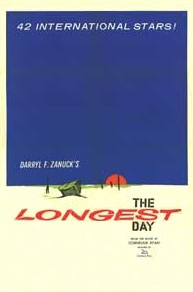
When you look back through history, certain dates hold a higher place in the history books. It can be someone's birth, someone's death, or just have an amazing historical significance in terms of impact on the world. High up on that list is June 6, 1944, the day Allied forces invaded Normandy, better known as D-Day. In the age of gigantic, sprawling epics, one of the best movies of the 1960s tackles the immense subject, 1962's The Longest Day.
A plot description wouldn't do this flick justice. It's just infeasible. The history will serve as a big enough jumping off point. After four-plus years of war, Allied forces had massed for months, all prepping for the invasion of Europe, hopefully taking back the continent from Adolf Hitler and his Nazi Third Reich. The invasion was months and years in planning, millions of men, millions of tons of equipment, thousands and thousands of ships, trucks, jeeps and tanks waiting to be unleashed at Normandy and in the French countryside. What was the mystery? The Allies tried desperately to keep the location of the invasion -- Normandy -- secret to help save lives and make the invasion smoother. The Germans similarly tried desperately to discover where the attack was coming. The war hung in the balance along with millions of lives, not just those taking part in the attack but all over the world. Not bad for historical significance, huh?
So tackling that premise in movie form seems a rather daunting task if you ask me. In the age of the epic, this one doesn't disappoint. At 178 minutes, 'Longest' covers a ridiculous amount of ground in a story that takes place over about a 36-hour time span. We see the Allies deciding the time is finally right after days of wavering while the Germans decide if this is the actual invasion or just a feint, a distraction to throw them off. Based on the book by Cornelius Ryan, it is told in docu-drama style as we meet all the participants from the high command to the soldiers, paratroopers to resistance fighters, townspeople to priests and everything and everyone in between. This isn't a movie about characters, but instead about the spectacle and immensity of what happened. If the Allied invasion on D-Day didn't work, who knows how the world would have changed?
Just a huge movie but one that never feels rushed or forced. The three-hour running time absolutely flies by. It was filmed in black and white, giving it an appropriately dated look. Maybe color takes away from what's on-screen, but the decision to film in black and white simply put, works. Ken Annakin, Andrew Marton and Bernhard Wicki combine to direct this behemoth epic and to handle it well. Technically speaking, it is a virtually flawless film. Some stock footage is sprinkled here and there, but many of the locations where the actual events took place were used as filming locations. Talk about authenticity, it can be downright eerie watching some of the scenes knowing the locations' history. The score from Maurice Jarre is used in appropriate doses with the main theme (listen HERE) a memorable piece of music that's always stuck with me.
As an epic though, one thing was required more than just about anything else. That requirement? A cast of seemingly thousands. Literally everyone in Hollywood and stars internationally were required to star in this movie. Okay, a slight exaggeration, but you get my point. Most of these parts were nothing more than cameos, but just as a taste of the ridiculous star power on display, we get John Wayne, Robert Mitchum, Robert Ryan, Henry Fonda, Richard Burton, Edmond O'Brien, Rod Steiger, even a pre-James Bond Sean Connery. Many of those parts only required an on-screen appearance of a minute or two -- some for much more -- but their presence alone...just wowza. The scary part? That's only a somewhat small taste of the depth of the cast that truly brings an international flavor to the D-Day proceedings with German, French, British, American and many more brought together.
The Longest Day is an epic, plain and simple, but for every scene where the scope and scale impresses, I loved the quieter, personal and often times, terrifyingly real scenes just as effective and memorable. I loved Richard Todd as a paratrooper commander tasked with landing in France via glider and taking a key bridge and holding until reinforcements arrive...if they can. The scene where American paratroopers, including strung-up Red Buttons, overshoot their landing zone and land in a German town is tragic and moving. One paratrooper (Sal Mineo) making a tragic decision is surprising and intensely real. I especially liked the simplicity of a late scene between Burton's RAF pilot and Richard Beymer's American paratrooper discussing the necessary evil of the day but also the lunacy of it. I think the best, most iconic moment has Hans Christian Blech's German officer finally spotting the invasion force in the English Channel when the fog clears. His face drops and he mumbles 'Die invasion,' all set to Beethoven's Fifth Symphony. Just a ton of great moments like this.
The other counter to those scenes are the BIG moments, and that's where the technical comes into play. One tremendous scene has a German fighter strafing the beaches, all of which we see from the perspective of the plane. Hundreds and thousands of extras scramble for cover underneath in a remarkable visual scene. The same later in 'Longest' when French commandos fight their way up a street in a French town, a helicopter (I think) filming all the action. As well, the scene of the paratroopers coming down on the German-held Sainte-Mere-Eglise is a horrifying scene that utilizes some very cool camerawork. Also look for a cool scene where American Rangers -- including Robert Wagner, George Segal, Paul Anka, Fabian, Tommy Sands -- scale the cliffs of Pointe de Huc, all trying to knock out a key German emplacement. Some especially memorable moments, not all of them action scenes.
Because I don't want to forget anyone but don't want to overdo it describing EVERY character, also look for Eddie Albert, Irina Demick, Mel Ferrer, Steve Forest, Gert Frobe, Leo Genn, Jeffrey Hunter, Curd Jurgens, Peter Lawford, Christian Marquand, Roddy McDowall, Kenneth More, Wolfgang Preiss, Ron Randell, Jean Servais, Norman Rossington, Tom Tryon, Peter van Eyck and Stuart Whitman. Okay, I'll take a breath now.
The Longest Day isn't the best war movie around, but it's one of my favorites. It tries to accomplish a ton and succeeds on just about every level. The history, the scale, the spectacle, the gigantic cast, the moments that resonate amongst all the epic qualities. It also serves as an excellent companion piece to the more recent Saving Private Ryan. Nowhere near as violent, but a more far-reaching story. A gem from the age of epics.
The Longest Day (1962): ****/****
The Sons of Katie Elder
"First, we reunite, then find Ma and Pa's killer...then read some reviews."
Showing posts with label Peter Lawford. Show all posts
Tuesday, February 3, 2015
Thursday, October 23, 2014
Pilot #5
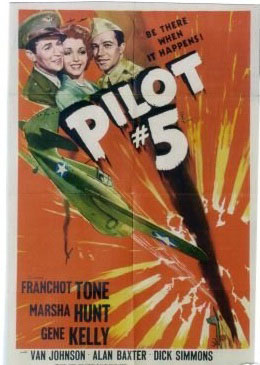
Oh, propaganda flicks, you're so underplayed and subtle. Well, the better ones try at least to not hit you over the head with a message. Subtle and low-key is the way! I stumbled across 1943's Pilot #5 on Turner Classic Movies with no background or knowledge of it, but a WWII flick released right in the middle of the war? I'll give it a try if nothing else.
On the island of Java, an Allied air base has been under almost constant attack and heavy bombardment from the Japanese Navy. The attacks have wreaked havoc though where the new commander has an uncomfortable situation to resolve. The fighter squadron is down to one plane that's flyable with five pilots available. The lucky one that's chosen? George Collins (Franchot Tone), winning out over his compatriots. His mission is basically suicide though, one plane trying to run the gauntlet through Japanese forces to knock out a key Japanese carrier. As the men left behind tell their commander about the man he's chosen, George takes off in a beat-up fighter with a rigged bomb rack to do what he can. Could he somehow get through unscathed?
This World War II movie from director George Sidney popped up on Turner Classic Movie's schedule this week so I thought I'd give it a try. It clocked in at a brisk-sounding 71 minutes and featured a pretty decent cast so I figured there was little harm in giving it a shot. Even if it was lousy, it's only 71 minutes, right? Right?!? Well, it's a good thing it wasn't any longer because I probably would have bailed. 'Pilot' uses the tried and true storytelling device of...the flashback. When used properly, it can be a gem, helping add layers and background to the story. When not used properly, well, that's the case here. It derails a story I thought had some pretty decent potential.
While the cast is pretty good, no one really stood out from the rest in the end. Franchot Tone as the tortured, redemption-seeking George Collins leaves something to be desired in the old "interesting character" department. The character is just too flat for the movie's sake. We're intrigued with how he ended up in this spot but even when we find out, the payoff isn't worth it. The other pilots include Gene Kelly as the fiery, angry Vito Alessandro, Van Johnson as the jokey Everett Arnold, Alan Baxter as the all-business Winston Davis, and Dick Simmons as Henry Claven, a childhood friend of George's. These characters end up being a means to an end, a way of jumping into the flashbacks and little else. Kelly gets the most screen-time and does pretty well while Van Johnson unfortunately is completely wasted. Also look for a very young Peter Lawford as a British soldier at the base.
Of the 71 minutes, I'd say about 50 were more concerned with the George Collins flashback...unfortunately. We see George growing up, heading off to law school, and trying to make something of his name and with a big old chip on his shoulder. He gets involved with Kelly's Vito -- a fellow lawyer and jack of all trades -- and ultimately a corrupt governor (Howard Freeman) that seems more fitting in All the King's Men than in a WWII propaganda flick. Throw in a love story lacking basically all chemistry with George's girlfriend, Freddie (Marsha Hunt), and you've got those middle flashback portions absolutely dragging along. Not a positive when you find yourself looking at the clock a whole lot in a 71-minute movie.
The beginning and ending portions are pretty decent. Dark, claustrophobic and uncomfortable as George flies into impossible odds while his fellow pilots wait back at base and listen over the radio to the developing mission. The new Dutch commander (Steven Geray) is a little much in the propaganda part, encouraging the audience to fight back against Fascism and wanting to really know the man he's sending on a suicide mission. A disappointing end result, a war movie with some potential that never really adds up.
Pilot #5 (1943): **/****
On the island of Java, an Allied air base has been under almost constant attack and heavy bombardment from the Japanese Navy. The attacks have wreaked havoc though where the new commander has an uncomfortable situation to resolve. The fighter squadron is down to one plane that's flyable with five pilots available. The lucky one that's chosen? George Collins (Franchot Tone), winning out over his compatriots. His mission is basically suicide though, one plane trying to run the gauntlet through Japanese forces to knock out a key Japanese carrier. As the men left behind tell their commander about the man he's chosen, George takes off in a beat-up fighter with a rigged bomb rack to do what he can. Could he somehow get through unscathed?
This World War II movie from director George Sidney popped up on Turner Classic Movie's schedule this week so I thought I'd give it a try. It clocked in at a brisk-sounding 71 minutes and featured a pretty decent cast so I figured there was little harm in giving it a shot. Even if it was lousy, it's only 71 minutes, right? Right?!? Well, it's a good thing it wasn't any longer because I probably would have bailed. 'Pilot' uses the tried and true storytelling device of...the flashback. When used properly, it can be a gem, helping add layers and background to the story. When not used properly, well, that's the case here. It derails a story I thought had some pretty decent potential.
While the cast is pretty good, no one really stood out from the rest in the end. Franchot Tone as the tortured, redemption-seeking George Collins leaves something to be desired in the old "interesting character" department. The character is just too flat for the movie's sake. We're intrigued with how he ended up in this spot but even when we find out, the payoff isn't worth it. The other pilots include Gene Kelly as the fiery, angry Vito Alessandro, Van Johnson as the jokey Everett Arnold, Alan Baxter as the all-business Winston Davis, and Dick Simmons as Henry Claven, a childhood friend of George's. These characters end up being a means to an end, a way of jumping into the flashbacks and little else. Kelly gets the most screen-time and does pretty well while Van Johnson unfortunately is completely wasted. Also look for a very young Peter Lawford as a British soldier at the base.
Of the 71 minutes, I'd say about 50 were more concerned with the George Collins flashback...unfortunately. We see George growing up, heading off to law school, and trying to make something of his name and with a big old chip on his shoulder. He gets involved with Kelly's Vito -- a fellow lawyer and jack of all trades -- and ultimately a corrupt governor (Howard Freeman) that seems more fitting in All the King's Men than in a WWII propaganda flick. Throw in a love story lacking basically all chemistry with George's girlfriend, Freddie (Marsha Hunt), and you've got those middle flashback portions absolutely dragging along. Not a positive when you find yourself looking at the clock a whole lot in a 71-minute movie.
The beginning and ending portions are pretty decent. Dark, claustrophobic and uncomfortable as George flies into impossible odds while his fellow pilots wait back at base and listen over the radio to the developing mission. The new Dutch commander (Steven Geray) is a little much in the propaganda part, encouraging the audience to fight back against Fascism and wanting to really know the man he's sending on a suicide mission. A disappointing end result, a war movie with some potential that never really adds up.
Pilot #5 (1943): **/****
Labels:
1940s,
Franchot Tone,
Gene Kelly,
Peter Lawford,
Van Johnson,
WWII
Tuesday, August 5, 2014
Immortal Sergeant
Here's a fun game for you. Ready? Pick a movie star -- any movie star -- and go through their film career trying to pick their worst movie. That one that THEY would hate, not the one you hate. Let's start with Henry Fonda, a Hollywood legend who still had his fair share of duds in his career. I'm looking at you Tentacles, The Swarm, and Meteor. What's Fonda's choice? An odd one, but not because he's bad in it. It's 1943's Immortal Sergeant, and yeah, it has more to do with the making of the movie.
The North African campaign is still raging early in World War II as a British infantry unit arrives back at the front awaiting orders. Among these men are a squad led by Sergeant Kelly (Thomas Mitchell), a World War I veteran who talked his way back into the army. The squad looks to Kelly often to get them through thick and thin, the NCO an intelligent soldier with plenty of combat experience. Kelly's second-in-command is a young Canadian, Corporal Colin Spence (Fonda), a quiet, steady soldier who is nonetheless terrified of being placed in a position that will require him to command. He's scared to death of making a decision that will claim the lives of the men around him. That fear is about to be put to the test. Tasked with a long patrol in the desert to see what the Germans are up to, Kelly, Spence and the squad board an armored vehicle and two trucks and head out from the camp. What awaits in the expansive desert?
Airing on Turner Classic Movies recently, I was able to check off 'Immortal' from my to-watch list finally, the airing being the premiere broadcast on TCM. I remember it being advertised as a preview on my old Sands of Iwo Jima VHS (In COLOR too!) but was never able to find it. So why did Fonda hold this film in such poor regard? Well, apparently it wasn't because the story was a disappointment or the character wasn't interesting. It was because his arrangement with the studio required him to do it. He didn't want to, the contract said he had to so he did. What did Fonda think of the end result? I can't find too much and according to TCM host Robert Osborne, Fonda simply refused to talk about 'Immortal.' So what's the moral of the story? This is far from Fonda's worst movie. He just hated making it so no worries in that department.
Released in 1943, 'Immortal' is an interesting war film. It avoids all the pratfalls of pure propaganda flicks that shove patriotism down your throat so director John M. Stahl gets credit there. Mitchell and Fonda are very good, and the Lost Patrol-angle ends up being pretty decent if familiar. The biggest issue here? In a movie about the immortal Sergeant, it focuses far more on the worrying, sad sack Corporal. There's a handful of flashbacks as Spence worries about the woman he's been seeing, Valentine Lee (Maureen O'Hara), being seduced back home by a dashing war correspondent (Reginald Gardiner). Obviously soldiers in combat, wartime situations worry about what's happening back home, but these flashbacks are rough. A quiet -- some would say emotionless -- Spence doesn't give Valentine much reason to stick around if you ask me. So whenever the camera lingers on Spence as he looks off into space.....yeah, I lost a little focus in flashback mode.
What becomes most disappointing is that the rest of the story -- you know, that part focusing on the war -- is pretty decent. Playing the titular character, Thomas Mitchell is solid as always, what I kinda assume I'll get with Mitchell, one of my favorite character actors. He's natural and believable and likeable from beginning to end, really giving the sense of why his men look up to him and respect him so much, despite his older age. His scenes with Fonda's Spence are solid with two professionals just doing their think. Obviously, their conversations lean toward the dark and foreboding nature, but that comes as no surprise considering the movie's title is about a sergeant but the main character is a corporal. Underplayed, emotionally effective parts for Fonda and Mitchell, providing a good base for the story. Dona especially shines in a scene with O'Hara when he explains why he enlisted, a proud if confused look on his face as it all comes together for him.
As for the men in the squad, look for Allyn Joslyn, Melville Cooper, Bramwell Fletcher, and Morton Lowry. I was disappointed in that part of the story, a wasted opportunity to develop some cool characters around Spence and Kelly but nothing really comes of it. Also look quickly for 20-year old Peter Lawford in a small part as a member of the patrol before an Italian plane gets the best of the future Rat Pack-er.
This movie had some potential, especially when it focuses on the Lost Patrol angle. The story relies on small unit tactics, how a small group of men would still function as a fighting unit in an undesirable position trapped in the desert with little supplies and the enemy all around them. The battle scenes are quick and hard-hitting (especially for a movie released during WWII), including one scene that caught me by surprise in its brutality. It's not what you see, but that it happens at all in a surprisingly dark moment. A decent movie, one that could have been a lot better with some storytelling tweaks. But that's me. When I wanna watch a war movie, I wanna watch a WAR MOVIE, not a love story.
Immortal Sergeant (1943): ** 1/2 /****
The North African campaign is still raging early in World War II as a British infantry unit arrives back at the front awaiting orders. Among these men are a squad led by Sergeant Kelly (Thomas Mitchell), a World War I veteran who talked his way back into the army. The squad looks to Kelly often to get them through thick and thin, the NCO an intelligent soldier with plenty of combat experience. Kelly's second-in-command is a young Canadian, Corporal Colin Spence (Fonda), a quiet, steady soldier who is nonetheless terrified of being placed in a position that will require him to command. He's scared to death of making a decision that will claim the lives of the men around him. That fear is about to be put to the test. Tasked with a long patrol in the desert to see what the Germans are up to, Kelly, Spence and the squad board an armored vehicle and two trucks and head out from the camp. What awaits in the expansive desert?
Airing on Turner Classic Movies recently, I was able to check off 'Immortal' from my to-watch list finally, the airing being the premiere broadcast on TCM. I remember it being advertised as a preview on my old Sands of Iwo Jima VHS (In COLOR too!) but was never able to find it. So why did Fonda hold this film in such poor regard? Well, apparently it wasn't because the story was a disappointment or the character wasn't interesting. It was because his arrangement with the studio required him to do it. He didn't want to, the contract said he had to so he did. What did Fonda think of the end result? I can't find too much and according to TCM host Robert Osborne, Fonda simply refused to talk about 'Immortal.' So what's the moral of the story? This is far from Fonda's worst movie. He just hated making it so no worries in that department.
Released in 1943, 'Immortal' is an interesting war film. It avoids all the pratfalls of pure propaganda flicks that shove patriotism down your throat so director John M. Stahl gets credit there. Mitchell and Fonda are very good, and the Lost Patrol-angle ends up being pretty decent if familiar. The biggest issue here? In a movie about the immortal Sergeant, it focuses far more on the worrying, sad sack Corporal. There's a handful of flashbacks as Spence worries about the woman he's been seeing, Valentine Lee (Maureen O'Hara), being seduced back home by a dashing war correspondent (Reginald Gardiner). Obviously soldiers in combat, wartime situations worry about what's happening back home, but these flashbacks are rough. A quiet -- some would say emotionless -- Spence doesn't give Valentine much reason to stick around if you ask me. So whenever the camera lingers on Spence as he looks off into space.....yeah, I lost a little focus in flashback mode.
What becomes most disappointing is that the rest of the story -- you know, that part focusing on the war -- is pretty decent. Playing the titular character, Thomas Mitchell is solid as always, what I kinda assume I'll get with Mitchell, one of my favorite character actors. He's natural and believable and likeable from beginning to end, really giving the sense of why his men look up to him and respect him so much, despite his older age. His scenes with Fonda's Spence are solid with two professionals just doing their think. Obviously, their conversations lean toward the dark and foreboding nature, but that comes as no surprise considering the movie's title is about a sergeant but the main character is a corporal. Underplayed, emotionally effective parts for Fonda and Mitchell, providing a good base for the story. Dona especially shines in a scene with O'Hara when he explains why he enlisted, a proud if confused look on his face as it all comes together for him.
As for the men in the squad, look for Allyn Joslyn, Melville Cooper, Bramwell Fletcher, and Morton Lowry. I was disappointed in that part of the story, a wasted opportunity to develop some cool characters around Spence and Kelly but nothing really comes of it. Also look quickly for 20-year old Peter Lawford in a small part as a member of the patrol before an Italian plane gets the best of the future Rat Pack-er.
This movie had some potential, especially when it focuses on the Lost Patrol angle. The story relies on small unit tactics, how a small group of men would still function as a fighting unit in an undesirable position trapped in the desert with little supplies and the enemy all around them. The battle scenes are quick and hard-hitting (especially for a movie released during WWII), including one scene that caught me by surprise in its brutality. It's not what you see, but that it happens at all in a surprisingly dark moment. A decent movie, one that could have been a lot better with some storytelling tweaks. But that's me. When I wanna watch a war movie, I wanna watch a WAR MOVIE, not a love story.
Immortal Sergeant (1943): ** 1/2 /****
Labels:
1940s,
Henry Fonda,
Maureen O'Hara,
Peter Lawford,
Thomas Mitchell,
WWII
Saturday, April 13, 2013
Ocean's Eleven (1960)
One of my favorite movies from the 2000s, I love 2001's Ocean's Eleven. I'm no dummy though, and I remember stating that the 2001 remake was better than the original. Well, it took me a little while -- okay, well over a year, but who's counting? -- but I'm revisiting that statement. Was I right or wrong? Maybe somewhere in between? Let's get started with the Rat Pack original, 1960's Ocean's Eleven.
A former paratrooper with countless daring, behind the lines missions under his belt during World War II, Danny Ocean (Frank Sinatra) has moved on with his life, but some 15 years since the end of the war, he's got a plan. The catch? He needs help from his old army buddies to pull off a daring heist. Ocean gets the group together, including Sam Harmon (Dean Martin), Jimmy Foster (Peter Lawford), and Josh Howard (Sammy Davis Jr.) among others, and lays out the plan for them. Just a few days away, Ocean and Co. plan on hitting five of Las Vegas's biggest casinos on New Year's Eve when the vaults are packed to the gills with money. Could it work? The plan depends on to-the-second timing, teamwork and countless little details, maybe even a little luck. It sounds like an impossible plan, but Ocean's crew might be crazy enough to pull it off.
Starting in the mid 1950s, Sinatra, Martin, Davis Jr., Lawford and Joey Bishop teamed up to star in movies that are simply known as....Rat Pack movies. Classic cinema they are not, but they are basically the definition of a good popcorn flick. Just sit back and enjoy them. Of all the Rat Pack movies though, this one is the best by far. Lewis Milestone directs, but his job is basically to get Sinatra and the boys on the right track and let them go. In that sense, he hits it out of the park. It is a vastly different movie than the 2001 remake which is really a remake in name and basic premise alone. The script, the heist, and the Vegas setting are all a means to an end. If you like Sinatra, Martin or any of the Rat Pack, you will enjoy this movie.
Singing or performing on stage, starring in movies, the Rat Pack had an innate chemistry that most entertainers dream of having. So cutting away a lot of other things, this movie is about the Packers hanging out, drinking some liquor, smoking a lot of cigarettes and wearing impeccably cool suits. Is it self-indulgent? Yes, basically the definition of self-indulgent. If you're a fan of Sinatra, Martin or any of the guys, this is the movie for you. It's genuinely funny with plenty of quick, snappy dialogue, lots of one-liners that don't feel like a script. It feels like it is a bunch of friends hanging out busting each other. Oh, and they happen to be planning an epic casino robbery too so they've got that going for them.
One of the biggest differences between the 1960 original and the 2001 remake is the background. Made 15 years after the end of WWII, the paratroopers angle is pretty cool. Sinatra's Danny is the sergeant, Lawford the entitled officer, Martin's Sam the soldier who saved Danny's life and best friend, and so on. Along with Davis. Jr as Josh and Bishop as Mushy, Danny's crew includes Richard Conte as Tony, just out of prison and looking to provide for his son, Henry Silva as smooth, quick-talking Roger, Buddy Lester as Vince, the former club bouncer with an in, Richard Benedict as Curly, Norman Fell as Peter, the explosives specialist, and Clem Harvey as Jackson, the drawling cowboy. Like the best men-on-a-mission movies, there's something inherently cool about a group of specialists working together to pull of an impossible job. When you actually like some of the group? That's even better, like a fastball down the middle.
Not surprisingly, the focus here is on Danny's crew, but the rest of the cast is pretty solid. Angie Dickinson plays Beatrice, Danny's wife who's working through some issues with her always moving husband. Cesar Romero is Duke Santos, a well-connected former gangster who stumbles into Ocean's plan and who happens to be engaged to Jimmy's mother (Ilka Chase). Akim Tamiroff gets a lot of laughs as Spyros, the ex-con who concocted the casino heist but can't come up with the details, turning to Danny for that part. Also look for Red Skelton playing himself in a casino scene, frustrated and wanting more money, and George Raft as a casino head in a strategy session. Even look for an uncredited Shirley MacLaine as a drunken New Year's Eve partygoer who meets Martin's Sam during the heist. And lastly, listen for Richard Boone providing his voice talents in a key scene late, even if he never appears on-screen.
I loved the style from this 1960 heist movie, and that doesn't come as a surprise considering the talent involved. The credits sequence from Saul Bass gets things going nicely. Watch it HERE, composer Nelson Riddle's score playing as accompaniment. Much of the film was shot on location in Las Vegas, and who would have thought? 1960 Vegas looks amazingly fun, like a time capsule into a smooth, cool era. Even the indoor sets look cheesy, but they're cool cheesy. The heist itself is pretty cool if a little more simplistic than the 2001 remake (Damn technology!). As most heist films will tell you though, it's the post-robbery stuff that's the issue. It's Vegas in the middle of the desert. How do you escape or hide the money? The ending delivers a couple great twists, especially the final one that sets up a very cool, very stylish final scene as Ocean's Eleven walk along the Vegas strip.
There is a simple, stylish elegance to this movie. Is it a classic film, an example of great cinema? No, but in terms of pure entertainment value, it's hard to beat. The scene where the crew discuss the upcoming heist in Spyros' well-decorated man cave is epically cool, Ocean's Eleven huddled around the pool table discussing the ins and outs of the heist. It's a fun, cool and entertaining movie that's a prime example of the style of a past era in Hollywood. The Rat Pack is cool. If you agree, you'll like this movie.
Ocean's Eleven (1960): ****/****
A former paratrooper with countless daring, behind the lines missions under his belt during World War II, Danny Ocean (Frank Sinatra) has moved on with his life, but some 15 years since the end of the war, he's got a plan. The catch? He needs help from his old army buddies to pull off a daring heist. Ocean gets the group together, including Sam Harmon (Dean Martin), Jimmy Foster (Peter Lawford), and Josh Howard (Sammy Davis Jr.) among others, and lays out the plan for them. Just a few days away, Ocean and Co. plan on hitting five of Las Vegas's biggest casinos on New Year's Eve when the vaults are packed to the gills with money. Could it work? The plan depends on to-the-second timing, teamwork and countless little details, maybe even a little luck. It sounds like an impossible plan, but Ocean's crew might be crazy enough to pull it off.
Starting in the mid 1950s, Sinatra, Martin, Davis Jr., Lawford and Joey Bishop teamed up to star in movies that are simply known as....Rat Pack movies. Classic cinema they are not, but they are basically the definition of a good popcorn flick. Just sit back and enjoy them. Of all the Rat Pack movies though, this one is the best by far. Lewis Milestone directs, but his job is basically to get Sinatra and the boys on the right track and let them go. In that sense, he hits it out of the park. It is a vastly different movie than the 2001 remake which is really a remake in name and basic premise alone. The script, the heist, and the Vegas setting are all a means to an end. If you like Sinatra, Martin or any of the Rat Pack, you will enjoy this movie.
Singing or performing on stage, starring in movies, the Rat Pack had an innate chemistry that most entertainers dream of having. So cutting away a lot of other things, this movie is about the Packers hanging out, drinking some liquor, smoking a lot of cigarettes and wearing impeccably cool suits. Is it self-indulgent? Yes, basically the definition of self-indulgent. If you're a fan of Sinatra, Martin or any of the guys, this is the movie for you. It's genuinely funny with plenty of quick, snappy dialogue, lots of one-liners that don't feel like a script. It feels like it is a bunch of friends hanging out busting each other. Oh, and they happen to be planning an epic casino robbery too so they've got that going for them.
One of the biggest differences between the 1960 original and the 2001 remake is the background. Made 15 years after the end of WWII, the paratroopers angle is pretty cool. Sinatra's Danny is the sergeant, Lawford the entitled officer, Martin's Sam the soldier who saved Danny's life and best friend, and so on. Along with Davis. Jr as Josh and Bishop as Mushy, Danny's crew includes Richard Conte as Tony, just out of prison and looking to provide for his son, Henry Silva as smooth, quick-talking Roger, Buddy Lester as Vince, the former club bouncer with an in, Richard Benedict as Curly, Norman Fell as Peter, the explosives specialist, and Clem Harvey as Jackson, the drawling cowboy. Like the best men-on-a-mission movies, there's something inherently cool about a group of specialists working together to pull of an impossible job. When you actually like some of the group? That's even better, like a fastball down the middle.
Not surprisingly, the focus here is on Danny's crew, but the rest of the cast is pretty solid. Angie Dickinson plays Beatrice, Danny's wife who's working through some issues with her always moving husband. Cesar Romero is Duke Santos, a well-connected former gangster who stumbles into Ocean's plan and who happens to be engaged to Jimmy's mother (Ilka Chase). Akim Tamiroff gets a lot of laughs as Spyros, the ex-con who concocted the casino heist but can't come up with the details, turning to Danny for that part. Also look for Red Skelton playing himself in a casino scene, frustrated and wanting more money, and George Raft as a casino head in a strategy session. Even look for an uncredited Shirley MacLaine as a drunken New Year's Eve partygoer who meets Martin's Sam during the heist. And lastly, listen for Richard Boone providing his voice talents in a key scene late, even if he never appears on-screen.
I loved the style from this 1960 heist movie, and that doesn't come as a surprise considering the talent involved. The credits sequence from Saul Bass gets things going nicely. Watch it HERE, composer Nelson Riddle's score playing as accompaniment. Much of the film was shot on location in Las Vegas, and who would have thought? 1960 Vegas looks amazingly fun, like a time capsule into a smooth, cool era. Even the indoor sets look cheesy, but they're cool cheesy. The heist itself is pretty cool if a little more simplistic than the 2001 remake (Damn technology!). As most heist films will tell you though, it's the post-robbery stuff that's the issue. It's Vegas in the middle of the desert. How do you escape or hide the money? The ending delivers a couple great twists, especially the final one that sets up a very cool, very stylish final scene as Ocean's Eleven walk along the Vegas strip.
There is a simple, stylish elegance to this movie. Is it a classic film, an example of great cinema? No, but in terms of pure entertainment value, it's hard to beat. The scene where the crew discuss the upcoming heist in Spyros' well-decorated man cave is epically cool, Ocean's Eleven huddled around the pool table discussing the ins and outs of the heist. It's a fun, cool and entertaining movie that's a prime example of the style of a past era in Hollywood. The Rat Pack is cool. If you agree, you'll like this movie.
Ocean's Eleven (1960): ****/****
Monday, April 2, 2012
Salt and Pepper
Ah, the Rat Pack, a name synonymous with an undeniable cool factor of the 1960s. Frank Sinatra, Dean Martin, Sammy Davis Jr., Peter Lawford and Joey Bishop. They performed in Las Vegas together, doing comedy and music, doing variety shows, releasing albums, and of course, they did movies. Flicks like Ocean's 11 or Robin and the 7 Hoods are fairly well known though. Starring just Davis and Lawford, 1968's Salt and Pepper doesn't have that same notoriety.
Running their swanky, groovy, hip (what other 1960s adjectives can I use?) club in Soho, Chris Salt (Davis Jr.) and Charlie Pepper (Lawford) are living the high life without a care or trouble in the world...until now. One night, a woman is murdered in their club, and when they meet investigator Balsom (Ernest Clark), Salt and Pepper find out there's more to the death. The woman was an intelligence agent carrying information about a key investigation, but what was it? The club owners can't recall, only remembering some gibberish she mumbled before dying. Well, knowledge or not, someone thinks Salt and Pepper know more than they're letting on as these bumbling friends are thrust into a world of espionage and murder.
With the exception of 1960's Ocean's Eleven, none of the Rat Packs movies are especially good. HERE is a list of all the flicks. And before someone yells back, yes, I'm aware these weren't supposed to be great, groundbreaking classic movies. They were intended as fun, popcorn flicks that were meant to entertain, watch the coolness of the Rat Pack on a big screen. Fun doesn't have to mean stupid though, and Salt and Pepper -- like the rest of those films -- is dumb. It's just too bad because with the talent in the Rat Pack, you'd figure they could get a decent script to work with. Reading that plot description above, does that sound like a screwball comedy that's even goofier than the spoof spy flicks of the 1960s? Not especially, but it is a screwball comedy, full of comedic double takes, ridiculously forced set pieces, and overacting around every corner.
The beauty of these bad Rat Pack movies -- whoever does make it from the group -- is that the stars are genuinely very good with each other. Part of that comes from the complete lack of acting. Davis is Salt and Lawford is Pepper in name only. Really, we're just watching Davis and Lawford run around London like their pants are on fire, not any actual characters. Still, there is a chemistry that can't be topped. This is two friends just hanging out having a good time. Davis Jr. is the showman, the one getting more of the laughs while Lawford plays the straight role and smooth ladies man, his Abbott to Davis' Costello. Their chemistry is really the only thing holding this movie together. At 102 minutes, it is a painfully slow movie at times (never something you'd want out of a comedy), but the two stars have a way of keeping things entertaining. Davis also gets a chance to sing, watch it HERE.
Through the general badness and stupidity of the movie, there are some good laughs provided. Have you ever actually seen someone do a double take or a spit take in real life? Yeah, me neither. But Davis makes it funny somehow, committing to the dumbness and just going with it. His general physicality -- all 5-foot-3 of him -- is fun to watch. His ability to underplay a scene works just as well, including a surprisingly funny car chase as Salt and Pepper get into a clown car lookalike that's rigged with all sorts of spy gadgets. The payoff is the best part, a sight gag of the ridiculous looking car floating down the Thames River. There are moments like that -- inexplicable though they are -- that stopped me from hating this movie, and it was close.
Spy spoofs are one thing, Derek Flint and Matt Helm proved that. But this one especially is ridiculous. The tone is all over the place, one scene deathly serious, the next refreshingly light. Davis and Lawford make somewhat tame sex jokes, have a misunderstanding about the use of the word 'fag,' and run around like chickens with their heads cut off. Oh, and they're trying to stop a plot that will have a rogue government take over England by unleashing nuclear missiles on English territories. Didn't see that one coming, did you? I certainly didn't. And for the cherry on top, there's a Keystone Cops-like British police officer, Crabbe (Michael Bates), chasing them around for all those lewd things they do at their club. If there's a weirder, more off the wall story than that, I'm drawing a blank. Who am I kidding though? It's a Rat Pack movie, not Lawrence of Arabia 2: The Return.
Salt and Pepper <---trailer (1968): **/****
Running their swanky, groovy, hip (what other 1960s adjectives can I use?) club in Soho, Chris Salt (Davis Jr.) and Charlie Pepper (Lawford) are living the high life without a care or trouble in the world...until now. One night, a woman is murdered in their club, and when they meet investigator Balsom (Ernest Clark), Salt and Pepper find out there's more to the death. The woman was an intelligence agent carrying information about a key investigation, but what was it? The club owners can't recall, only remembering some gibberish she mumbled before dying. Well, knowledge or not, someone thinks Salt and Pepper know more than they're letting on as these bumbling friends are thrust into a world of espionage and murder.
With the exception of 1960's Ocean's Eleven, none of the Rat Packs movies are especially good. HERE is a list of all the flicks. And before someone yells back, yes, I'm aware these weren't supposed to be great, groundbreaking classic movies. They were intended as fun, popcorn flicks that were meant to entertain, watch the coolness of the Rat Pack on a big screen. Fun doesn't have to mean stupid though, and Salt and Pepper -- like the rest of those films -- is dumb. It's just too bad because with the talent in the Rat Pack, you'd figure they could get a decent script to work with. Reading that plot description above, does that sound like a screwball comedy that's even goofier than the spoof spy flicks of the 1960s? Not especially, but it is a screwball comedy, full of comedic double takes, ridiculously forced set pieces, and overacting around every corner.
The beauty of these bad Rat Pack movies -- whoever does make it from the group -- is that the stars are genuinely very good with each other. Part of that comes from the complete lack of acting. Davis is Salt and Lawford is Pepper in name only. Really, we're just watching Davis and Lawford run around London like their pants are on fire, not any actual characters. Still, there is a chemistry that can't be topped. This is two friends just hanging out having a good time. Davis Jr. is the showman, the one getting more of the laughs while Lawford plays the straight role and smooth ladies man, his Abbott to Davis' Costello. Their chemistry is really the only thing holding this movie together. At 102 minutes, it is a painfully slow movie at times (never something you'd want out of a comedy), but the two stars have a way of keeping things entertaining. Davis also gets a chance to sing, watch it HERE.
Through the general badness and stupidity of the movie, there are some good laughs provided. Have you ever actually seen someone do a double take or a spit take in real life? Yeah, me neither. But Davis makes it funny somehow, committing to the dumbness and just going with it. His general physicality -- all 5-foot-3 of him -- is fun to watch. His ability to underplay a scene works just as well, including a surprisingly funny car chase as Salt and Pepper get into a clown car lookalike that's rigged with all sorts of spy gadgets. The payoff is the best part, a sight gag of the ridiculous looking car floating down the Thames River. There are moments like that -- inexplicable though they are -- that stopped me from hating this movie, and it was close.
Spy spoofs are one thing, Derek Flint and Matt Helm proved that. But this one especially is ridiculous. The tone is all over the place, one scene deathly serious, the next refreshingly light. Davis and Lawford make somewhat tame sex jokes, have a misunderstanding about the use of the word 'fag,' and run around like chickens with their heads cut off. Oh, and they're trying to stop a plot that will have a rogue government take over England by unleashing nuclear missiles on English territories. Didn't see that one coming, did you? I certainly didn't. And for the cherry on top, there's a Keystone Cops-like British police officer, Crabbe (Michael Bates), chasing them around for all those lewd things they do at their club. If there's a weirder, more off the wall story than that, I'm drawing a blank. Who am I kidding though? It's a Rat Pack movie, not Lawrence of Arabia 2: The Return.
Salt and Pepper <---trailer (1968): **/****
Tuesday, February 21, 2012
Rogue's March
Like The Beatles or any other popular group, everyone has their favorite Rat Pack member. Okay, maybe not everyone, but I needed something to write about so back off. Dean Martin is mine, followed closely by Frank Sinatra, Sammy Davis Jr., Joey Bishop and bringing up the rear, Peter Lawford. I've never thought of him as a great actor -- typically excelling at playing the condescending ass -- but with 1953's Rogue's March I might be coming around a bit.
A clerk who's never seen a second of actual combat, Capt. Dion Lenbridge (Lawford) gets by because his father, Colonel Lenbridge (Leo G. Carroll), is the commander of his regiment around the turn of the 19th Century. As the battalion is preparing to ship out to India, Dion is set up to look like a traitor for having sold secrets documents to Russian agents. The charge is false, but he has no way of reputing it. Before his long sentence begins, Dion escapes and fakes his own death to get the heat off his back. He has a plan though so he joins up with a different British unit under a false name as a private. Somehow and some way, he's going to redeem his honor and clear his name for the treacherous acts he's been accused of.
To be fair to Lawford as an actor, I'm more familiar with the movies he did later in his career near and around his Rat Pack days. He didn't have to act in those movies. He had to be cool more than anything else, but his cool always came across as smarmy and arrogant (to me at least). Lawford though had been working regularly in films since the early 1940s and has quite a few solid roles to his name, this one included. It's not a great role, and he doesn't really call all that much attention to himself. Like the movie on the whole, things pick up in the second half when he has nothing to lose. He's gotten his comeuppance and now has to fight to prove his innocence no matter how difficult or dangerous. Good, solid part, and a believable heroic lead.
As for the movie itself, it reflects Lawford in the lead role. It is a good, entertaining movie that never amounts to anything greater. The early goings as Lawford's Dion (what the hell kind of name is that even? I want to punch him for the name alone) is set up to take a fall are a little slow-going, but once he fakes his death the story picks up momentum. Director Allan Davis is balancing a lot of characters and relationships in a relatively short movie at 84 minutes so naturally some are not dealt with as much as we might like. 'March' has the distinct feel of the classic Gunga Din from the British army in India to the battle scenes to the hidden, menacing enemy. There's a reason it's been forgotten over the years, but you can certainly do worse.
With a fair share of British character actors (and Americans playing Brits), Lawford doesn't have to carry the movie on his own. Richard Greene plays Capt. Thomas Garron, Dion's old friend who knows the charges cannot be true and a soldier as brave as his friend. Janice Rule is Jane, Dion's fiance who doesn't seem too surprised when said dead fiance comes back from beyond the grave. Carroll is the prim and proper veteran British officer with a stiff upper lip, weighing his sentiment for his son with what he owes to the men of his command. Buried away down in the cast listing are Sean McClory, Michael Pate, and Skelton Knaggs as McGinty, Crane and Fish as three of Dion's friends in the regiments when he re-enlists. Also look for John Lupton as Lt. Jersey, an inexperienced officer who looks to Dion in the heat of battle.
Where 'March' most resembles the classic Gunga Din is in the finale, a British regiment trying to hold off an attack by Indian riflemen. The battle sequences are greatly enhanced by some on-location shooting, 'March' actually being filmed in the spot where the story takes place, the Khyber Pass, a mountain pass linking Pakistan and Afghanistan. The American Southwest wouldn't have held a candle to this spot. The black and white photography aids the location shooting, giving that desert an even more desolate and isolated feel, and the scale of the final battle is pretty impressive for such a small movie. It definitely helps make up for the lack of action in the build-up.
Rogue's March (1953): ** 1/2 /****
A clerk who's never seen a second of actual combat, Capt. Dion Lenbridge (Lawford) gets by because his father, Colonel Lenbridge (Leo G. Carroll), is the commander of his regiment around the turn of the 19th Century. As the battalion is preparing to ship out to India, Dion is set up to look like a traitor for having sold secrets documents to Russian agents. The charge is false, but he has no way of reputing it. Before his long sentence begins, Dion escapes and fakes his own death to get the heat off his back. He has a plan though so he joins up with a different British unit under a false name as a private. Somehow and some way, he's going to redeem his honor and clear his name for the treacherous acts he's been accused of.
To be fair to Lawford as an actor, I'm more familiar with the movies he did later in his career near and around his Rat Pack days. He didn't have to act in those movies. He had to be cool more than anything else, but his cool always came across as smarmy and arrogant (to me at least). Lawford though had been working regularly in films since the early 1940s and has quite a few solid roles to his name, this one included. It's not a great role, and he doesn't really call all that much attention to himself. Like the movie on the whole, things pick up in the second half when he has nothing to lose. He's gotten his comeuppance and now has to fight to prove his innocence no matter how difficult or dangerous. Good, solid part, and a believable heroic lead.
As for the movie itself, it reflects Lawford in the lead role. It is a good, entertaining movie that never amounts to anything greater. The early goings as Lawford's Dion (what the hell kind of name is that even? I want to punch him for the name alone) is set up to take a fall are a little slow-going, but once he fakes his death the story picks up momentum. Director Allan Davis is balancing a lot of characters and relationships in a relatively short movie at 84 minutes so naturally some are not dealt with as much as we might like. 'March' has the distinct feel of the classic Gunga Din from the British army in India to the battle scenes to the hidden, menacing enemy. There's a reason it's been forgotten over the years, but you can certainly do worse.
With a fair share of British character actors (and Americans playing Brits), Lawford doesn't have to carry the movie on his own. Richard Greene plays Capt. Thomas Garron, Dion's old friend who knows the charges cannot be true and a soldier as brave as his friend. Janice Rule is Jane, Dion's fiance who doesn't seem too surprised when said dead fiance comes back from beyond the grave. Carroll is the prim and proper veteran British officer with a stiff upper lip, weighing his sentiment for his son with what he owes to the men of his command. Buried away down in the cast listing are Sean McClory, Michael Pate, and Skelton Knaggs as McGinty, Crane and Fish as three of Dion's friends in the regiments when he re-enlists. Also look for John Lupton as Lt. Jersey, an inexperienced officer who looks to Dion in the heat of battle.
Where 'March' most resembles the classic Gunga Din is in the finale, a British regiment trying to hold off an attack by Indian riflemen. The battle sequences are greatly enhanced by some on-location shooting, 'March' actually being filmed in the spot where the story takes place, the Khyber Pass, a mountain pass linking Pakistan and Afghanistan. The American Southwest wouldn't have held a candle to this spot. The black and white photography aids the location shooting, giving that desert an even more desolate and isolated feel, and the scale of the final battle is pretty impressive for such a small movie. It definitely helps make up for the lack of action in the build-up.
Rogue's March (1953): ** 1/2 /****
Tuesday, September 7, 2010
Advise and Consent
Recently in the news, former Illinois governor Rod Blagojevich was found guilty on one count of 24 levied against him. A mistrial is in the works, but the news was nothing new. Controversies and scandals in politics are as old as well, politics itself. Are we surprised anymore when a politician, whether it be the President or down through the ranks to Senators, Representatives, Governors, and on and on, does something stupid in the news? Sex, past indiscretions, corruption, all over the above, nothing seems to faze the American public anymore.
Let's go back almost half a century in more innocent times, I guess, the 1960s weren't exactly innocent. But the times were certainly different without that 24-hour news cycle that keeps viewers up to date on everything going on. Politicians could have secrets and that's just what they were, secrets. The master of adult-themed movies, Otto Preminger explored this concept with 1962's Advise and Consent. When you accept a position in the public eye, you lose your privacy to a certain point. You open yourself up for criticism on many fronts, but if this Preminger movie teaches us anything, we all have secrets. It's only a matter of time before they're found out.
The President of the United States (Franchot Tone) has chosen a nominee for the vacant position of the Secretary of State. The man is Robert Leffingwell (Henry Fonda) and from the get-go, the nomination divides the Senate who will have to approve or disapprove him. The Senate majority leader (Walter Pidgeon) is all for the choice and knows he can get the necessary number of votes for Leffingwell. Opposing him is a long-time senator from South Carolina (Charles Laughton), who was burned by Leffingwell in the past and still holds a grudge. But before a vote can be counted, the nomination must go through a Senate sub-committee headed by an idealistic young senator (Don Murray) who will decide if Leffingwell is capable of doing the job. But as the committee starts, the dirt comes out and the fight begins.
As he did so often with his movies, Preminger puts together a very impressive ensemble cast to work with. It's so good from top to bottom that Fonda -- yes, Henry Fonda -- is almost an afterthought as a supporting character. He doesn't even make an appearance in the last 30 minutes. Preminger was a perfectionist as a filmmaker, but actors must have liked working with him. Along with the names mentioned above, there is also Gene Tierney, Peter Lawford, Will Geer, Burgess Meredith, Lew Ayres, and Paul Ford among others. Like any large ensemble, some in the cast get more of a chance to shine than others, but none disappoint however long they're on screen. Murray, Pidgeon and Laughton are the ones that shine brightest though, including Ayres as a vanilla vice president.
This isn't a movie about camera techniques or in your face effects. Preminger lets takes and scenes go on uninterrupted without the slightest editing. Characters hold conversations like they would in real life. He lets his cast show off their ability, letting the dialogue do all the talking the story needs. At times, the pace can be infuriatingly slow (it is 140 minutes long) because of that, especially toward the end when the pace should be picking up, but it's all part of the story the movie revels in. Preminger filmed in countless locations in Washington DC -- shooting in black and white -- giving a real feel for all the backroom deals and shady motives that really go on in the capital. It doesn't intentionally call attention to itself, but the movie is a treat to watch on a purely visual level.
What was somewhat disappointing as the story develops is that by 2010, nothing really surprised me in terms of government scandals and controversies. In the last 10 or 20 years, there has been murder, extramarital affairs, corruption, prostitution, kidnappings, and any number of other things I'm probably forgetting. So when the scandals do pop up, including Fonda's Leffingwell and his past involvement in a different government and Murray's Senator's past coming back to haunt him, they don't have a huge affect on the viewer. Shocking in 1962, maybe, but not in 2010. Through no fault of Preminger's then (you can't blame him for making a move when he did), the emotional impact is lessened then just by time and how the world has changed in the almost 50 years since.
As everything does unravel in the end and the twists and secrets come out, the story thankfully picks up some steam. One twist at the very end was a little too coincidental for me personally, the timing just too perfect, but that's movies for you. It is a movie that is as professionally done as just about any other movie you'll come across, and the cast is hard to top. If there was a way to watch this in 1962, maybe the impact would have been greater, but in 2010, it's still pretty good.
Advise and Consent <---IMDB trailer (1962): ***/****
Let's go back almost half a century in more innocent times, I guess, the 1960s weren't exactly innocent. But the times were certainly different without that 24-hour news cycle that keeps viewers up to date on everything going on. Politicians could have secrets and that's just what they were, secrets. The master of adult-themed movies, Otto Preminger explored this concept with 1962's Advise and Consent. When you accept a position in the public eye, you lose your privacy to a certain point. You open yourself up for criticism on many fronts, but if this Preminger movie teaches us anything, we all have secrets. It's only a matter of time before they're found out.
The President of the United States (Franchot Tone) has chosen a nominee for the vacant position of the Secretary of State. The man is Robert Leffingwell (Henry Fonda) and from the get-go, the nomination divides the Senate who will have to approve or disapprove him. The Senate majority leader (Walter Pidgeon) is all for the choice and knows he can get the necessary number of votes for Leffingwell. Opposing him is a long-time senator from South Carolina (Charles Laughton), who was burned by Leffingwell in the past and still holds a grudge. But before a vote can be counted, the nomination must go through a Senate sub-committee headed by an idealistic young senator (Don Murray) who will decide if Leffingwell is capable of doing the job. But as the committee starts, the dirt comes out and the fight begins.
As he did so often with his movies, Preminger puts together a very impressive ensemble cast to work with. It's so good from top to bottom that Fonda -- yes, Henry Fonda -- is almost an afterthought as a supporting character. He doesn't even make an appearance in the last 30 minutes. Preminger was a perfectionist as a filmmaker, but actors must have liked working with him. Along with the names mentioned above, there is also Gene Tierney, Peter Lawford, Will Geer, Burgess Meredith, Lew Ayres, and Paul Ford among others. Like any large ensemble, some in the cast get more of a chance to shine than others, but none disappoint however long they're on screen. Murray, Pidgeon and Laughton are the ones that shine brightest though, including Ayres as a vanilla vice president.
This isn't a movie about camera techniques or in your face effects. Preminger lets takes and scenes go on uninterrupted without the slightest editing. Characters hold conversations like they would in real life. He lets his cast show off their ability, letting the dialogue do all the talking the story needs. At times, the pace can be infuriatingly slow (it is 140 minutes long) because of that, especially toward the end when the pace should be picking up, but it's all part of the story the movie revels in. Preminger filmed in countless locations in Washington DC -- shooting in black and white -- giving a real feel for all the backroom deals and shady motives that really go on in the capital. It doesn't intentionally call attention to itself, but the movie is a treat to watch on a purely visual level.
What was somewhat disappointing as the story develops is that by 2010, nothing really surprised me in terms of government scandals and controversies. In the last 10 or 20 years, there has been murder, extramarital affairs, corruption, prostitution, kidnappings, and any number of other things I'm probably forgetting. So when the scandals do pop up, including Fonda's Leffingwell and his past involvement in a different government and Murray's Senator's past coming back to haunt him, they don't have a huge affect on the viewer. Shocking in 1962, maybe, but not in 2010. Through no fault of Preminger's then (you can't blame him for making a move when he did), the emotional impact is lessened then just by time and how the world has changed in the almost 50 years since.
As everything does unravel in the end and the twists and secrets come out, the story thankfully picks up some steam. One twist at the very end was a little too coincidental for me personally, the timing just too perfect, but that's movies for you. It is a movie that is as professionally done as just about any other movie you'll come across, and the cast is hard to top. If there was a way to watch this in 1962, maybe the impact would have been greater, but in 2010, it's still pretty good.
Advise and Consent <---IMDB trailer (1962): ***/****
Friday, January 30, 2009
Never So Few
When I first saw the movie a few years back, I was glad I found because of the subject matter. But when I saw what a great all-around cast was in it, I started to wonder how it'd slipped through the cracks since its release. I figured it out quick enough, it's an average war movie that's pulled down by a completely unnecessary love story. The story of Reynolds and his Kachin guerillas is the high point of the movie with some impressive action sequences, an ambush on a bigger Japanese force, a surprise attack on the Kachins' Xmas party, and an assault on a heavily guarded Japanese airfield.
Too bad of course the love story was added. It doesn't work for any number of reasons. For one, Sinatra and Lollobrigida had little to no actual chemistry. Two, it takes far too long to develop. The movie opens with an ambush and the aftermath and then spends most of 45 minutes to an hour with Reynolds and his 2nd in command, British officer Danny DeMortimer, back in civilization as Reynolds and Lollobrigida's Carla meet.
Having said all this, I did buy the DVD so there must be something positive, right? Sinatra is pretty good as Reynolds, although he does sport a ridiculous goatee early in the movie. Richard Johnson as DeMortimer has some funny moments and is a great character, a good counter to Reynolds. The whole supporting cast is good, Charles Bronson, Peter Lawford, Dean Jones, Brian Donlevy, Phillip Ahn, and Robert Bray. But most of them aren't given much to do because so much of the story's focus is away from the OSS volunteers and the Kachins.
So overall, an average movie that could have been better, but it's a guilty pleasure for me. Worth checking out, but don't expect a classic.
Subscribe to:
Posts (Atom)