My timing really couldn't have been more impeccable. I just turned the big 3-0 a few weeks ago in mid-June. Through dumb luck, Turner Classic Movie's always solid schedule, and my inability to catch up with this movie over the years, I watched 1976's Logan's Run for the first time. The premise? A futuristic society where everyone is killed once they turn 30 to help control the population. Well, if that isn't downright bad timing, I don't know what is.
It's late in the 23rd Century and what remains of mankind lives in a domed city protected from all outer dangers. This is life at its hedonistic, fun-loving, screw the consequences best...with a catch. You get to live life to the fullest, but at the age of 30, you must undergo Carousel, a renewal process to let you start life over again. Among the population is a man in his late 20s, Logan 5 (Michael York), a 'Sandman' who helps track down 'Runners,' those not interested in the Carousel process. As he watches on renewal ceremony though, Logan begins to question more and more about the whole layout. Something just doesn't make sense. Something doesn't add up. The problem is though, he's good at what he does -- very good -- and doesn't want to risk anything by investigating. Some things though...they're just too perfect to pass up.
Well, here we sit. I do love me a good science fiction flick. I especially love those ventures from the 1960's and 1970's, movies like Planet of the Apes, Fahrenheit 451, Westworld, Soylent Green (more on that later), and The Omega Man. This flick from director Michael Anderson is one I've always wanted to see but never actively sought out. It is based off a novel by authors William F. Nolan and George Clayton Johnson, but it sounds like the film and novel have very little in common other than the name and the basic premise. My biggest issue though? I liked it, but as has been the case with a lot of so-called twist movies, the twist works...but not afterward in using that all-important twist as a jumping off point.
It's my Christmas Eve theory all over again. Do you want the mystery of your presents or do you want to know what's under all that wrapping paper?!? I like the mystery so naturally, I love the build-up in mysterious, twist-based movies. The other issue is pretty obvious. Of course everything isn't hunky-dory in this futuristic world!!! It doesn't come as a surprise that the whole 30-year old Carousel renewal process is garbage. The build-up is solid as Logan 5 begins to piece things together. All humans have a crystal implant in their left hand inserted at birth and once they reach 30, it begins to flash. Your turn for renewal! I felt like something was missing. The "twist" seemed far too obvious to me, especially actually seeing the renewal process. Still, though there are flaws through the first hour of the 119-minute movie, it is still an above average, tension-filled sci-fi story. I just wish the second half could have followed suit with it.
The cast definitely has some fun along the way, whether it be starring roles or just key supporting parts. I thought York was okay as Logan, but it's missing something in that lead role department. His female companion is Jenny Agutter's Jessica, a 20-something young woman drawn to Logan who may know more than she's letting on. They spend much of the movie running for safety and whining when they have some free time. They just aren't the most compelling characters and that takes away from the drama and mystery. Richard Jordan is excellent as Francis, Logan's best friend and fellow Sandman who wants his friend to simply get in line, stop questioning and enjoy life but when it comes right down to it, he's got his own job to do. In other supporting parts look for Michael Anderson Jr., Roscoe Lee Browne, Farrah Fawcett (feathered hair and all), and Peter Ustinov.
Just last year, a movie was released that I don't remember seeing in any theaters, and I only noticed it on Redbox. It's called Space Station 76, and is a futuristic sci-fi movie, 1970's style. Just check out that poster! 'Logan' is a prime inspiration for that spoof. This futuristic world, a domed city, looks like it was shot in a mall. A nice mall at that, but you get the idea. Everyone wears pastel colors because God bless, everyone is happy. The women refuse to wear bras (so there's that), instead opting for loose, almost sheer quasi-dresses. The effects too are horrifically dated, both obvious miniatures and more obvious green screen shots. Considering all these things, there is a certain charm in small doses, but combine them all together and you've got quite a lot of 1970's science fiction cheese. At times, it reminded me of the classic Soylent Green, but the payoff there was far better than it was here.
And that's what my disappointment comes down to. 'Logan' has a ton of potential and delivers on it at certain points but ultimately comes up short. It's played straight but too often comes through like a spoof. Roscoe Lee Browne providing his voice for a ridiculous-looking killer robot? Peter Ustinov as the oldest man alive, a crazy cat man at that? Shouldn't someone be controlling the questioning? Just a computer is in charge of this last beacon of hope for mankind? There are simply too many unanswered questions and predicaments that ultimately did the movie in for me. A disappointing rating because I definitely wanted to like this one more.
Logan's Run (1976): **/****
The Sons of Katie Elder
"First, we reunite, then find Ma and Pa's killer...then read some reviews."
Showing posts with label Michael Anderson. Show all posts
Thursday, July 16, 2015
Monday, September 17, 2012
Around the World in 80 Days (1956)
There are epics, and then there are EPICS. In the age of such immense, gigantically-scaled films of the 1950s and 1960s, studios pulled out all the stops in hopes of impressing moviegoers. Huge all-star casts with thousands of extras, lavish sets and costumes, and in general, a sight to behold on the big screen. Some movies were just made for a viewing that only a full-size movie theater can offer, like 1956's Around the World in 80 Days.
It is the 1870s and new technological advances have made travel to far-off places not only possible but quicker, more efficient, and more entertaining. A prim and proper Englishman, Phileas Fogg (David Niven), even boasts to his fellow members of the Reform Club that he can travel completely travel around the world in just 80 days. The club members laugh at the thought, but Fogg maintains his stance and a bet is born. With a significant amount of money on the line, Fogg and his assistant/valet, Passepartout (Mexican actor Cantinflas), embark on a journey around the world against the clock with no idea of what will be actually thrown their way during their adventurous travels.
If you were trying to define what an old-school Hollywood epic is to someone who didn't know, this would be a great start. Filming in locations around the world from Japan, the U.S., Thailand, Spain, England, France, Pakistan and China, '80 Days' is a true visual stunner. The screen is filled with incredible locations packed to the gills with the cast and then hundreds and thousands of extras behind them. Director Michael Anderson filmed with a Todd-AO technique, an ultra-widescreen filming process that makes certain shots look like epically wide panoramic shots. I was impressed watching the film on my 32-inch TV. I can only imagine what this film would look like on a movie screen. As well, composer Victor Young's score (which won an Oscar) is light-hearted and fun, keeping the travels moving.
It is hard to criticize this movie on its technical levels. It is far easier to criticize the movie for basically everything else. Oh, didn't see that twist coming, did you? All that epic quality comes at the expense of character, story and any sort of development involving either of those. This is a movie you appreciate, just sit back and enjoy it. The widescreen filming process is a sight to behold, but they become tedious by the 11th or 12th such long shot of a mountain vista, train running down a track, Cantinflas fighting a bull. Yes, I get it. On visuals alone, this is a stunningly beautiful movie. But at almost three-hours long, it feels like nothing more than an extended world travel guide. There never is even the slightest sense of urgency to the 80 day deadline until the final 10 minutes. Instead we get the visual, Niven's Fogg paying someone to right a wrong, then another nature shot.
I'll go into more depth about the supporting cast of thousands in a bit, but let's start with the lead performances. David Niven is one of my favorite actors, but I came away disappointed here. His Fogg is the definition of a prim and proper Englishman. He's even asked 'Why must you be so British?' at one point. At no point though does he actually look interested in bringing the part to life. To me, Niven look bored, and that's tough to say as a fan. Famed Mexican actor Cantinflas sure takes some grief for his part as Passepartout, but I thought he did a fine job with his limited grasp of English. His bit with Red Skelton is a highlight, the duo shoveling food into the others mouth in a very funny routine. Other bigger parts include Shirley MacLaine oddly cast as an Indian princess traveling with Fogg and Passepartout, and Robert Newton as Mr. Fix, a bank investigator trailing Fogg who's convinced the Englishman is an infamous bank robber.
Then there's the cameos, a long list that must put even The Greatest Story Ever Told to shame. Take a deep breath, and here goes. Look out for Finlay Currie, Robert Morley, Noel Coward, Trevor Howard, John Gielgud, Charles Boyer, Gilbert Roland, Cesar Romero, Cedric Hardwicke, Peter Lorre, George Raft, Marlene Dietrich, Frank Sinatra, John Carradine, Buster Keaton, Joe E. Brown, Andy Devine, Victor McLaglen, John Mills and Glynis Johns among others. I include those names because I recognized them in the cast, not because I necessarily saw them in the actual film. They are the 'blink and you'll miss them' type of cameos to the point many don't even register. Sinatra is shown over his shoulder three times and then turns and smiles. Mind you, he doesn't even say anything. He SMILES. That's it. Yes, it's fun seeing all these actors/actresses together but give them something to do.
This is a tough one to review in the end. It's too long, downright dull at times, a visual treat to watch, and a movie experience unlike any other. It's flaws though are crippling. '80 Days' may be three-hour longs but because of its schizo, hyper kinetic energy that bounces all over the place, it feels significantly longer and has not aged well over the years. A movie to be appreciated for its positives for what it does amount to, even if I won't be watching it again anytime soon. Okay, maybe in a movie theater.
Around the World in 80 Days <---trailer (1956): ** 1/2/****
It is the 1870s and new technological advances have made travel to far-off places not only possible but quicker, more efficient, and more entertaining. A prim and proper Englishman, Phileas Fogg (David Niven), even boasts to his fellow members of the Reform Club that he can travel completely travel around the world in just 80 days. The club members laugh at the thought, but Fogg maintains his stance and a bet is born. With a significant amount of money on the line, Fogg and his assistant/valet, Passepartout (Mexican actor Cantinflas), embark on a journey around the world against the clock with no idea of what will be actually thrown their way during their adventurous travels.
If you were trying to define what an old-school Hollywood epic is to someone who didn't know, this would be a great start. Filming in locations around the world from Japan, the U.S., Thailand, Spain, England, France, Pakistan and China, '80 Days' is a true visual stunner. The screen is filled with incredible locations packed to the gills with the cast and then hundreds and thousands of extras behind them. Director Michael Anderson filmed with a Todd-AO technique, an ultra-widescreen filming process that makes certain shots look like epically wide panoramic shots. I was impressed watching the film on my 32-inch TV. I can only imagine what this film would look like on a movie screen. As well, composer Victor Young's score (which won an Oscar) is light-hearted and fun, keeping the travels moving.
It is hard to criticize this movie on its technical levels. It is far easier to criticize the movie for basically everything else. Oh, didn't see that twist coming, did you? All that epic quality comes at the expense of character, story and any sort of development involving either of those. This is a movie you appreciate, just sit back and enjoy it. The widescreen filming process is a sight to behold, but they become tedious by the 11th or 12th such long shot of a mountain vista, train running down a track, Cantinflas fighting a bull. Yes, I get it. On visuals alone, this is a stunningly beautiful movie. But at almost three-hours long, it feels like nothing more than an extended world travel guide. There never is even the slightest sense of urgency to the 80 day deadline until the final 10 minutes. Instead we get the visual, Niven's Fogg paying someone to right a wrong, then another nature shot.
I'll go into more depth about the supporting cast of thousands in a bit, but let's start with the lead performances. David Niven is one of my favorite actors, but I came away disappointed here. His Fogg is the definition of a prim and proper Englishman. He's even asked 'Why must you be so British?' at one point. At no point though does he actually look interested in bringing the part to life. To me, Niven look bored, and that's tough to say as a fan. Famed Mexican actor Cantinflas sure takes some grief for his part as Passepartout, but I thought he did a fine job with his limited grasp of English. His bit with Red Skelton is a highlight, the duo shoveling food into the others mouth in a very funny routine. Other bigger parts include Shirley MacLaine oddly cast as an Indian princess traveling with Fogg and Passepartout, and Robert Newton as Mr. Fix, a bank investigator trailing Fogg who's convinced the Englishman is an infamous bank robber.
Then there's the cameos, a long list that must put even The Greatest Story Ever Told to shame. Take a deep breath, and here goes. Look out for Finlay Currie, Robert Morley, Noel Coward, Trevor Howard, John Gielgud, Charles Boyer, Gilbert Roland, Cesar Romero, Cedric Hardwicke, Peter Lorre, George Raft, Marlene Dietrich, Frank Sinatra, John Carradine, Buster Keaton, Joe E. Brown, Andy Devine, Victor McLaglen, John Mills and Glynis Johns among others. I include those names because I recognized them in the cast, not because I necessarily saw them in the actual film. They are the 'blink and you'll miss them' type of cameos to the point many don't even register. Sinatra is shown over his shoulder three times and then turns and smiles. Mind you, he doesn't even say anything. He SMILES. That's it. Yes, it's fun seeing all these actors/actresses together but give them something to do.
This is a tough one to review in the end. It's too long, downright dull at times, a visual treat to watch, and a movie experience unlike any other. It's flaws though are crippling. '80 Days' may be three-hour longs but because of its schizo, hyper kinetic energy that bounces all over the place, it feels significantly longer and has not aged well over the years. A movie to be appreciated for its positives for what it does amount to, even if I won't be watching it again anytime soon. Okay, maybe in a movie theater.
Around the World in 80 Days <---trailer (1956): ** 1/2/****
Friday, January 14, 2011
The Quiller Memorandum
By 1966, the James Bond phenomenon had taken over the world with the huge successes of Dr. No, From Russia With Love, Goldfinger and Thunderball. Audiences wanted more spy movies, and studios obliged them whenever they could. A wall of international intrigue movies hit theaters ranging from Bond knockoffs to spoofs like the Matt Helm and Derek Flint series to attempts that took a more serious approach to the spy genre, including 1966's The Quiller Memorandum.
This is the anti James Bond movie, a spy story focusing on the more subtle but still very dangerous life of a espionage agent. There is no globe-trotting heroics, no ridiculously over the top shootouts and chases, no bedding down of countless women, just a good old-fashioned story of a spy with a dangerous mission that could easily cost him his life. You know what though? All those things about the Bond series that viewers typically either hate or love...they were fun to watch. That's missing here. It's a dull transition to the screen from a novel by Trevor Dudley Smith that lacks anything in the way of excitement or thrills. I'm all for more realistic spy movies, but at least make them enjoyable to sit through.
Two British agents in post-WWII Berlin have been murdered so a new American agent, Quiller (George Segal), is brought in to pick up the investigation where his predecessors left off. His superior, Pol (Alec Guinness), tells him something else about the mission that could put him in even more danger. Both murdered agents were investigating the possible reemergence of an extremist Nazi group that wants to again claim power in Germany. If possible, Quiller must infiltrate this Nazi group (headed by Max von Sydow) and find their hideout before any of their plan can take effect. One of the few clues Quiller has though to get close to the group is a schoolteacher, Inge (Senta Berger), who may or may not know more than she's letting on.
There was a lot about this movie that appealed to me. The setting of post-World War II Berlin is a really unique to tell this hard-boiled story that remains rooted in a believable plot, not a plan to take over the world. Director Michael Anderson is a visual director, using some great on-location shoots as Segal's Quiller explores Berlin looking for clues. I've never thought of Berlin as a particularly pretty city, but the locations here are a great scene-setter and background. It's refreshing also to see a spy movie so heavy on dialogue -- and good, snappy dialogue at that -- instead of relying so heavily on babes and action. Visually, a great movie to watch and listen to when it's 'on' but not always an exciting movie to watch.
That last part surprised me because with the cast involved and the basic premise, it sounded like a real winner. A second Nazi party looking to regain power? Now that's a prime villain if there ever was one. Maybe the movie's best scene are these Nazis including von Sydow interrogating Segal in a great, very unique scene unlike any other interrogation I've seen in a movie. Watch it HERE. That's the whole movie though, great moments broken up by long periods of nothing. There is no real plot to begin with, and Segal's Quiller makes some unbelievably stupid decisions for someone who is considered such a top spy. His character drifts along and stumbles into clues rather than deducing anything for himself. Add in an oddly out of place and overbearing John Barry score, and the plotline is cartoonish with this blaring music being played over it.
I don't fault Segal for bad acting here because it's the writing, not his acting. His Quiller is just not a very strong main character. A very capable spy by reputation, he makes decision after decision that should have ended with him getting a bullet in the head yet somehow he survives time and time again. I have always liked Segal as an actor, but this wasn't his best part. His romance with the lovely Senta Berger never goes anywhere and has a forced feeling to it. They've got a decent chemistry together, but the story gets bogged down in their romantic interludes. Worst of all, a somewhat coherent twist late in the movie between the two characters is so poorly handled that it misses having any impact. The movie just ends with no resolution, or not one I was satisfied with.
Now I can't say I was surprised by the positives in this movie, both of them..Guinness and von Sydow. Guinness' part as Pol is nothing more than three or four scenes that probably total 10-15 minutes on-screen, and he steals every scene he is in, especially an explanation of the trials Quiller will face from both sides. Underused, sure, but what's there is choice. Playing a steely-eyed, blonde and blue eye Nazi villain, who is better than von Sydow? His character is pretty one-note with no surprises, but he brings such a feeling of menace and intensity to it you can't help but remember his smallish part. Also watch for George Sanders in a humorous cameo as a higher-up agent in London.
The Quiller Memorandum <---trailer (1966): **/****
This is the anti James Bond movie, a spy story focusing on the more subtle but still very dangerous life of a espionage agent. There is no globe-trotting heroics, no ridiculously over the top shootouts and chases, no bedding down of countless women, just a good old-fashioned story of a spy with a dangerous mission that could easily cost him his life. You know what though? All those things about the Bond series that viewers typically either hate or love...they were fun to watch. That's missing here. It's a dull transition to the screen from a novel by Trevor Dudley Smith that lacks anything in the way of excitement or thrills. I'm all for more realistic spy movies, but at least make them enjoyable to sit through.
Two British agents in post-WWII Berlin have been murdered so a new American agent, Quiller (George Segal), is brought in to pick up the investigation where his predecessors left off. His superior, Pol (Alec Guinness), tells him something else about the mission that could put him in even more danger. Both murdered agents were investigating the possible reemergence of an extremist Nazi group that wants to again claim power in Germany. If possible, Quiller must infiltrate this Nazi group (headed by Max von Sydow) and find their hideout before any of their plan can take effect. One of the few clues Quiller has though to get close to the group is a schoolteacher, Inge (Senta Berger), who may or may not know more than she's letting on.
There was a lot about this movie that appealed to me. The setting of post-World War II Berlin is a really unique to tell this hard-boiled story that remains rooted in a believable plot, not a plan to take over the world. Director Michael Anderson is a visual director, using some great on-location shoots as Segal's Quiller explores Berlin looking for clues. I've never thought of Berlin as a particularly pretty city, but the locations here are a great scene-setter and background. It's refreshing also to see a spy movie so heavy on dialogue -- and good, snappy dialogue at that -- instead of relying so heavily on babes and action. Visually, a great movie to watch and listen to when it's 'on' but not always an exciting movie to watch.
That last part surprised me because with the cast involved and the basic premise, it sounded like a real winner. A second Nazi party looking to regain power? Now that's a prime villain if there ever was one. Maybe the movie's best scene are these Nazis including von Sydow interrogating Segal in a great, very unique scene unlike any other interrogation I've seen in a movie. Watch it HERE. That's the whole movie though, great moments broken up by long periods of nothing. There is no real plot to begin with, and Segal's Quiller makes some unbelievably stupid decisions for someone who is considered such a top spy. His character drifts along and stumbles into clues rather than deducing anything for himself. Add in an oddly out of place and overbearing John Barry score, and the plotline is cartoonish with this blaring music being played over it.
I don't fault Segal for bad acting here because it's the writing, not his acting. His Quiller is just not a very strong main character. A very capable spy by reputation, he makes decision after decision that should have ended with him getting a bullet in the head yet somehow he survives time and time again. I have always liked Segal as an actor, but this wasn't his best part. His romance with the lovely Senta Berger never goes anywhere and has a forced feeling to it. They've got a decent chemistry together, but the story gets bogged down in their romantic interludes. Worst of all, a somewhat coherent twist late in the movie between the two characters is so poorly handled that it misses having any impact. The movie just ends with no resolution, or not one I was satisfied with.
Now I can't say I was surprised by the positives in this movie, both of them..Guinness and von Sydow. Guinness' part as Pol is nothing more than three or four scenes that probably total 10-15 minutes on-screen, and he steals every scene he is in, especially an explanation of the trials Quiller will face from both sides. Underused, sure, but what's there is choice. Playing a steely-eyed, blonde and blue eye Nazi villain, who is better than von Sydow? His character is pretty one-note with no surprises, but he brings such a feeling of menace and intensity to it you can't help but remember his smallish part. Also watch for George Sanders in a humorous cameo as a higher-up agent in London.
Saturday, July 3, 2010
The Wreck of the Mary Deare
Looking for a sign as to whether a movie is worth checking out? Do some research and find out the pre-production in the movie. Was it a smooth production, on-time and under budget? Did stars and directors drop out? Reading about 1959's The Wreck of the Mary Deare, I found that Alfred Hitchcock was originally attached to the movie only to drop out because he couldn't figure out what to do with the source novel. Hitchcock bailed and worked on a different movie that ended up being halfway decent, North by Northwest. As for the movie he left behind, that one wasn't so lucky.
Director Michael Anderson stepped in to helm the movie that has a lot working for it, and a lot of things that just don't add up. The cast features two highly regarded actors -- one on the rise, one in his last movie -- and a story that should have been more interesting. It attempts to keep you guessing by keeping you in the dark, but in the process just ends up being frustratingly boring. By the time everything gets figured out there are some good reveals in a story that does come together, but even then it's so low-key that it barely registers.
Salvaging wrecks and abandoned ships in the Atlantic Ocean, Captain Mike (Ben Wright) and partner John Sands (Charlton Heston) stumble upon a large vessel in the English Channel apparently on fire with no one at the controls. Sands gets on board hoping to claim the abandoned vessel and salvage it for a pretty penny only to find a man, Gideon Patch (Gary Cooper), claiming to be the captain. He enlists Sands help in docking the ship, the Mary Deare, in the Minquiers where they'll abandon it and find land where Patch can tell his side of the story at a court of inquiry. Sands is instantly suspicious of Patch's motives, but the drive and greed for the salvage rights keeps him involved. Waiting at the court of inquiry though is a prosecutor (Michael Redgrave) who isn't going to pull any punches in finding out what really happened.
The high seas is as good a place to start a story because honestly, anything can happen there because you're relying on principles and morals of individuals to come out on top. There's no one to police crimes. You're on the water alone and are forced to fend for yourself. The opening sequences as Heston's Sands explores the empty Mary Deare are well-handled, full of tension because we wonder what really happened? Where's the crew? But once Cooper shows up, there's at least a wordless half hour of these two trying to keep the ship afloat and beach it in the Minquiers, a rock-ridden area off the coast of France. The pacing is really off and coming so early it makes it difficult to get into the movie.
More than that, the guessing game as to what really happened aboard the Mary Deare becomes tiresome. Here's a scene that is repeated at least five times. Sands: What happened? Patch: I can't tell you yet, just trust me. Curiosity only takes you so far unless you're given some sort of reason to be pulled along. There are some clues, big business intrigue, large monetary payouts, betrayals and murder all involved as Patch tries to prove his innocence so he can one day captain another ship. The intrigue gives Richard Harris (in just his 3rd movie) a crack at playing a bad guy as well, playing Higgins, a treacherous second officer. Harris is one of my favorites, but I prefer him as a roguish hero more than a straight bad guy. Truth be told, he's an intimidating villain.
Reading about the movie, the tipping point was Cooper and Heston starring together in a movie. This would be Cooper's second-to-last movie before his death in 1961 while Heston was in the midst of a string of roles that made him one of Hollywood's most bankable stars. There's a decent chemistry between the two actors, and they do dominate much of the screentime, but something is missing. Beyond the acting and on-screen persona, Cooper seems tired and looks to be going through the motions. Even when trying to swing opinion to his side, he's just not that convincing. Heston's part could have been filled by just about anyone, requiring him to follow along at Cooper's coattails, asking a question now and then and generally being frustrated. For two names as big as theirs, I expected more from the two lead roles.
That rings true for the whole movie, I expected more of...well, everything. The acting is nothing to write home about, the story is dead in the water almost from the beginning and attempts to liven it up fall short. As a whole, the movie feels very flat without a sense of energy or urgency to get things going and make it better. A disappointing end result.
The Wreck of the Mary Deare <----trailer (1959): **/****
Director Michael Anderson stepped in to helm the movie that has a lot working for it, and a lot of things that just don't add up. The cast features two highly regarded actors -- one on the rise, one in his last movie -- and a story that should have been more interesting. It attempts to keep you guessing by keeping you in the dark, but in the process just ends up being frustratingly boring. By the time everything gets figured out there are some good reveals in a story that does come together, but even then it's so low-key that it barely registers.
Salvaging wrecks and abandoned ships in the Atlantic Ocean, Captain Mike (Ben Wright) and partner John Sands (Charlton Heston) stumble upon a large vessel in the English Channel apparently on fire with no one at the controls. Sands gets on board hoping to claim the abandoned vessel and salvage it for a pretty penny only to find a man, Gideon Patch (Gary Cooper), claiming to be the captain. He enlists Sands help in docking the ship, the Mary Deare, in the Minquiers where they'll abandon it and find land where Patch can tell his side of the story at a court of inquiry. Sands is instantly suspicious of Patch's motives, but the drive and greed for the salvage rights keeps him involved. Waiting at the court of inquiry though is a prosecutor (Michael Redgrave) who isn't going to pull any punches in finding out what really happened.
The high seas is as good a place to start a story because honestly, anything can happen there because you're relying on principles and morals of individuals to come out on top. There's no one to police crimes. You're on the water alone and are forced to fend for yourself. The opening sequences as Heston's Sands explores the empty Mary Deare are well-handled, full of tension because we wonder what really happened? Where's the crew? But once Cooper shows up, there's at least a wordless half hour of these two trying to keep the ship afloat and beach it in the Minquiers, a rock-ridden area off the coast of France. The pacing is really off and coming so early it makes it difficult to get into the movie.
More than that, the guessing game as to what really happened aboard the Mary Deare becomes tiresome. Here's a scene that is repeated at least five times. Sands: What happened? Patch: I can't tell you yet, just trust me. Curiosity only takes you so far unless you're given some sort of reason to be pulled along. There are some clues, big business intrigue, large monetary payouts, betrayals and murder all involved as Patch tries to prove his innocence so he can one day captain another ship. The intrigue gives Richard Harris (in just his 3rd movie) a crack at playing a bad guy as well, playing Higgins, a treacherous second officer. Harris is one of my favorites, but I prefer him as a roguish hero more than a straight bad guy. Truth be told, he's an intimidating villain.
Reading about the movie, the tipping point was Cooper and Heston starring together in a movie. This would be Cooper's second-to-last movie before his death in 1961 while Heston was in the midst of a string of roles that made him one of Hollywood's most bankable stars. There's a decent chemistry between the two actors, and they do dominate much of the screentime, but something is missing. Beyond the acting and on-screen persona, Cooper seems tired and looks to be going through the motions. Even when trying to swing opinion to his side, he's just not that convincing. Heston's part could have been filled by just about anyone, requiring him to follow along at Cooper's coattails, asking a question now and then and generally being frustrated. For two names as big as theirs, I expected more from the two lead roles.
That rings true for the whole movie, I expected more of...well, everything. The acting is nothing to write home about, the story is dead in the water almost from the beginning and attempts to liven it up fall short. As a whole, the movie feels very flat without a sense of energy or urgency to get things going and make it better. A disappointing end result.
The Wreck of the Mary Deare <----trailer (1959): **/****
Saturday, June 26, 2010
Shake Hands With the Devil
Growing up watching older movies, I came to embrace just about any tough guy movie star from John Wayne to Clint Eastwood and everyone in between. But having seen nothing more than a clip here and there and reading about his other movies, I was never able to embrace James Cagney, one of Hollywood's first stars and possibly the most famous in the 1930s and 1940s. It wasn't that I actively disliked Cagney or his movies, but the over the top, fast-talking little tough guy never appealed to me. So having seen only two Cagney movies, I'm giving him a try and seeing what he's all about.
The most recent one I've watched is one of his later pictures, 1959's Shake Hands With the Devil. Cagney was nearing 60 years old when he made this British production, but he shows no signs of slowing down. His character goes through quite an arc from beginning to end, starting off as a heroic freedom fighter and ending up as an obsessed quasi-villain. But through it all, the focus and attention is on him, especially with a second-billed star who just can't keep up with him.
It's 1921 in Ireland and American veteran of WWI Kerry O'Shea (Don Murray) is studying at a surgeon school to become a doctor. With the IRA battling the Black and Tans in hopes of making their country a free republic, Ireland is up for grabs with violence in the streets on every corner. O'Shea is walking home late one night with a friend when he's forced to take action against the Black and Tans, making him a marked man. He's supposed to be smuggled out of Ireland, but ends up joining an IRA squad, led by Sean Linehan (Cagney), his professor at the medical school. O'Shea joins the effort with the squad's sights set on one man, a brutal local commander, but the effort begins to take a toll on the men, especially Linehan at the top.
A story that focuses on a bloody, often incredibly brutal fight for independence has to tread a fine line in how it tells the story. Both the IRA and the Black and Tans committed atrocities during the fighting for Irish independence from British rule. Director Michael Anderson does not paint either side as completely heroic or completely villainous to his credit. Both sides have flaws and are willing to murder, maim and sabotage, whatever it takes to get their side to win. Obviously focusing on the Irish Republican Army more than their opponents the viewer will get more depth and background from one side, but even then it's not always positive, most of that coming from Cagney's Linehan.
It's obvious early on that Cagney is not just making a cameo appearance as an Irishman teaching at a medical school so it does not come as much of a surprise when he's revealed to be an IRA commandant with years of experience and know-how. Once O'Shea joins the group, Linehan is a strong, sturdy leader who is committed to his men and to the fight, more than ready to give his life if the cause demands it. But as the fighting continues, Linehan begins to crack a bit and his personal issues begin to emerge, especially with a young barmaid (Glynis Johns) who hangs around with his men, and the ever-present threat from traitors and informers. Even when it seems the fighting is nearing its end, Linehan refuses to give up, wanting to continue the fight.
As his counter though, Murray's Terry O'Shea starts off as an interesting character, but he fades into the background midway through the movie. He's a WWI vet sick of killing and violence and just wants to move on to a new life as a doctor when he's thrust into this fight for independence. His father a former freedom fighter, O'Shea has to live up to certain expectations, but by the end he's fallen in love with a young English girl (Dana Wynter) who he met about 10 minutes ago. Thankfully the rest of the cast steps up, including Michael Redgrave as the General, an IRA leader, Cyril Cusack as Chris Noonan, poet turned IRA gunman, and even Richard Harris in just his second movie playing Terrence O'Brien, a self-assured but capable member of Lenihan's squad.
Filming in Ireland, Anderson made the choice to film in black and white as opposed to color. It is a decision that makes sense because of the tone and mood of the story. If he had chosen a color format, 'Shake Hands' would look like The Quiet Man. But lush green fields and soft rolling hills would seem out of place with a story focusing on such a dark subject. Full of shadows, Anderson made the right choice going with black and white instead of color. It's an interesting movie with a controversial topic and worth watching if you can track it down.
Shake Hands With the Devil (1959): ** 1/2 /****
The most recent one I've watched is one of his later pictures, 1959's Shake Hands With the Devil. Cagney was nearing 60 years old when he made this British production, but he shows no signs of slowing down. His character goes through quite an arc from beginning to end, starting off as a heroic freedom fighter and ending up as an obsessed quasi-villain. But through it all, the focus and attention is on him, especially with a second-billed star who just can't keep up with him.
It's 1921 in Ireland and American veteran of WWI Kerry O'Shea (Don Murray) is studying at a surgeon school to become a doctor. With the IRA battling the Black and Tans in hopes of making their country a free republic, Ireland is up for grabs with violence in the streets on every corner. O'Shea is walking home late one night with a friend when he's forced to take action against the Black and Tans, making him a marked man. He's supposed to be smuggled out of Ireland, but ends up joining an IRA squad, led by Sean Linehan (Cagney), his professor at the medical school. O'Shea joins the effort with the squad's sights set on one man, a brutal local commander, but the effort begins to take a toll on the men, especially Linehan at the top.
A story that focuses on a bloody, often incredibly brutal fight for independence has to tread a fine line in how it tells the story. Both the IRA and the Black and Tans committed atrocities during the fighting for Irish independence from British rule. Director Michael Anderson does not paint either side as completely heroic or completely villainous to his credit. Both sides have flaws and are willing to murder, maim and sabotage, whatever it takes to get their side to win. Obviously focusing on the Irish Republican Army more than their opponents the viewer will get more depth and background from one side, but even then it's not always positive, most of that coming from Cagney's Linehan.
It's obvious early on that Cagney is not just making a cameo appearance as an Irishman teaching at a medical school so it does not come as much of a surprise when he's revealed to be an IRA commandant with years of experience and know-how. Once O'Shea joins the group, Linehan is a strong, sturdy leader who is committed to his men and to the fight, more than ready to give his life if the cause demands it. But as the fighting continues, Linehan begins to crack a bit and his personal issues begin to emerge, especially with a young barmaid (Glynis Johns) who hangs around with his men, and the ever-present threat from traitors and informers. Even when it seems the fighting is nearing its end, Linehan refuses to give up, wanting to continue the fight.
As his counter though, Murray's Terry O'Shea starts off as an interesting character, but he fades into the background midway through the movie. He's a WWI vet sick of killing and violence and just wants to move on to a new life as a doctor when he's thrust into this fight for independence. His father a former freedom fighter, O'Shea has to live up to certain expectations, but by the end he's fallen in love with a young English girl (Dana Wynter) who he met about 10 minutes ago. Thankfully the rest of the cast steps up, including Michael Redgrave as the General, an IRA leader, Cyril Cusack as Chris Noonan, poet turned IRA gunman, and even Richard Harris in just his second movie playing Terrence O'Brien, a self-assured but capable member of Lenihan's squad.
Filming in Ireland, Anderson made the choice to film in black and white as opposed to color. It is a decision that makes sense because of the tone and mood of the story. If he had chosen a color format, 'Shake Hands' would look like The Quiet Man. But lush green fields and soft rolling hills would seem out of place with a story focusing on such a dark subject. Full of shadows, Anderson made the right choice going with black and white instead of color. It's an interesting movie with a controversial topic and worth watching if you can track it down.
Shake Hands With the Devil (1959): ** 1/2 /****
Thursday, June 10, 2010
Operation Crossbow
Most of the war movies I watch are depictions of front-line action or at least the generals/headquarters making the decisions that affect the front-line soldiers. But what about the Intelligence agencies doing their damnedest to help the war effort through espionage, gaining information and sabotage behind enemy lines. So goes 1965's Operation Crossbow, a British-Italian production telling the true story of British efforts to slow down Germany's rocket/technological advances as WWII reaches its middle years.
As much as WWII was about one Allied soldier facing one Axis soldier, there was a race at home to be the first country to develop the atom bomb. On less destructive levels, both sides tried to create weapons technology that could cause more death and destruction than the average grenade or artillery shell. Obviously, these advances were kept as top secret as possible, but that doesn't mean each side wasn't trying to one-up their enemy by playing a little defense courtesy of the Intelligence community doing a little sabotage.
It's midway through 1943, and the Germans have developed a new flying bomb that they plan to unleash on London and other English cities. The Allies are aware of the new development, and do their best to slow down the advances by consistently bombing German work sites where they believe the bombs to be built and launched. But as dangerous as the bombs are, the Germans have a new weapon in the late stages of development; the V-2 rocket, that could drastically change the course of the war, including the D-Day invasion. Facing such a huge game changer, Allied Intelligence is forced to use a desperate plan; send Allied agents into Germany disguised as engineers who will help develop the rockets.
You might have noticed there's not a single actor/actress listed in the plot description. Basically, it would have taken too long to include them and make that paragraph a behemoth to read. Like other big budget war movies, 'Crossbow' utilizes an ensemble cast with talent from all over the world taking part. And in terms of story, the ensemble works better because the plot is very episodic. The first 30 minutes is almost exclusively from the German perspective, the next 30 the Allied Intelligence, and the last hour mostly with the agents working deep undercover. Each of these segments could have been expanded for their own movie, but together they work to form a coherent storyline.
The cast listing is an odd one because producer Carlo Ponti listed his wife Sophia Loren as the lead when really she makes a 20-minute or so appearance and is an add-on more than anything else. That's not being critical of Loren because she's a fine actress, but big picture her part isn't essential to the movie. Starring as Germans the ensemble includes Paul Henreid and Helmut Dantine as two high-ranking German generals, Barbara Rutting as German aviator Hannah Reitsch, and Anthony Quayle as Bamford, a secret agent/spy. Allied Intelligence includes Richard Johnson, Trevor Howard, John Mills and Richard Todd as the men trying to halt the German advances. The agents sent into Germany include George Peppard, Jeremy Kemp and Tom Courtenay, all posing as deceased scientists so they can access the German rocket plants with Lilli Palmer playing a resistance contact.
The whole movie is a good example of a solid WWII ensemble, but the best and most interesting/exciting part is when the story follows these three agents. They are all forced to become someone else, knowing if they are caught they will be summarily shot on site. Even getting to that point is difficult as Peppard's Lt. Curtis finds out when the scientist he is posing as is visited by his wife (Loren). Courtenay's Henshaw is dealt a cruel twist of fate and must decide how much he is willing to sacrifice. Kemp's Bradley is dropped into Germany as a last-minute resort with little knowledge of the man he's impersonating. Their scenes as they try to dupe the Germans are tense and difficult to watch, those scenes where you get butterflies hoping everything doesn't hit the fan.
Crossbow's story covers a lot of ground -- almost a year and a half -- but never feels like we're being let out. Supposedly a much longer finished product was turned in by director Michael Anderson only to have it cut heavily to the movie we see now which clocks in at just under two hours. You can see where certain segments were cut, especially the German segment to open the movie, and other odd instances like Peppard gaining a bandage on his forehead, but we never see why. But these are little things, not big disturbances that could ruin the movie.
While the V-2 rocket was actually used by Germany in WWII -- over 3,000 were fired at England -- the movie does have to have some sort of resolution if not necessarily a happy ending. The finale is a whopper as Peppard and Kemp desperately try to pinpoint their underground location to a passing bomber force. The huge underground facilities sets look like something out of a James Bond movie and provide quite an ending to a strong story. Not as well know as some of its 1960s WWII counterparts, but definitely worth a watch or two.
Operation Crossbow <----trailer (1965): ***/****
As much as WWII was about one Allied soldier facing one Axis soldier, there was a race at home to be the first country to develop the atom bomb. On less destructive levels, both sides tried to create weapons technology that could cause more death and destruction than the average grenade or artillery shell. Obviously, these advances were kept as top secret as possible, but that doesn't mean each side wasn't trying to one-up their enemy by playing a little defense courtesy of the Intelligence community doing a little sabotage.
It's midway through 1943, and the Germans have developed a new flying bomb that they plan to unleash on London and other English cities. The Allies are aware of the new development, and do their best to slow down the advances by consistently bombing German work sites where they believe the bombs to be built and launched. But as dangerous as the bombs are, the Germans have a new weapon in the late stages of development; the V-2 rocket, that could drastically change the course of the war, including the D-Day invasion. Facing such a huge game changer, Allied Intelligence is forced to use a desperate plan; send Allied agents into Germany disguised as engineers who will help develop the rockets.
You might have noticed there's not a single actor/actress listed in the plot description. Basically, it would have taken too long to include them and make that paragraph a behemoth to read. Like other big budget war movies, 'Crossbow' utilizes an ensemble cast with talent from all over the world taking part. And in terms of story, the ensemble works better because the plot is very episodic. The first 30 minutes is almost exclusively from the German perspective, the next 30 the Allied Intelligence, and the last hour mostly with the agents working deep undercover. Each of these segments could have been expanded for their own movie, but together they work to form a coherent storyline.
The cast listing is an odd one because producer Carlo Ponti listed his wife Sophia Loren as the lead when really she makes a 20-minute or so appearance and is an add-on more than anything else. That's not being critical of Loren because she's a fine actress, but big picture her part isn't essential to the movie. Starring as Germans the ensemble includes Paul Henreid and Helmut Dantine as two high-ranking German generals, Barbara Rutting as German aviator Hannah Reitsch, and Anthony Quayle as Bamford, a secret agent/spy. Allied Intelligence includes Richard Johnson, Trevor Howard, John Mills and Richard Todd as the men trying to halt the German advances. The agents sent into Germany include George Peppard, Jeremy Kemp and Tom Courtenay, all posing as deceased scientists so they can access the German rocket plants with Lilli Palmer playing a resistance contact.
The whole movie is a good example of a solid WWII ensemble, but the best and most interesting/exciting part is when the story follows these three agents. They are all forced to become someone else, knowing if they are caught they will be summarily shot on site. Even getting to that point is difficult as Peppard's Lt. Curtis finds out when the scientist he is posing as is visited by his wife (Loren). Courtenay's Henshaw is dealt a cruel twist of fate and must decide how much he is willing to sacrifice. Kemp's Bradley is dropped into Germany as a last-minute resort with little knowledge of the man he's impersonating. Their scenes as they try to dupe the Germans are tense and difficult to watch, those scenes where you get butterflies hoping everything doesn't hit the fan.
Crossbow's story covers a lot of ground -- almost a year and a half -- but never feels like we're being let out. Supposedly a much longer finished product was turned in by director Michael Anderson only to have it cut heavily to the movie we see now which clocks in at just under two hours. You can see where certain segments were cut, especially the German segment to open the movie, and other odd instances like Peppard gaining a bandage on his forehead, but we never see why. But these are little things, not big disturbances that could ruin the movie.
While the V-2 rocket was actually used by Germany in WWII -- over 3,000 were fired at England -- the movie does have to have some sort of resolution if not necessarily a happy ending. The finale is a whopper as Peppard and Kemp desperately try to pinpoint their underground location to a passing bomber force. The huge underground facilities sets look like something out of a James Bond movie and provide quite an ending to a strong story. Not as well know as some of its 1960s WWII counterparts, but definitely worth a watch or two.
Operation Crossbow <----trailer (1965): ***/****
Monday, February 16, 2009
The Dam Busters
Doctor B.N. Wallis is a very intelligent if somewhat eccentric aviation engineer living in England in 1942. He's been working for months on a plan that could severely disrupt the German war effort. To create just one ton of raw steel, the Germans must use 100 tons of water. What's the best way to slow the process up? Knock out three dams deep in Germany that supply 2/3 of the needed water. Wallis develops a bomb that when dropped from a bomber at low altitudes skips across water toward the dam much like a rock skipping across a lake.
Of course things don't go smoothy as Wallis perfects the skipping five-ton bombs. That's just part of his problems, ranging from war materiel to dealing with the government. Throw in the issues the British pilots are having, and you've got a highly entertaining story. The pilots will attack the dams at night, flying just 60 feet up, and must drop their bombs with pin-point timing so the payload is delivered at just the right time.
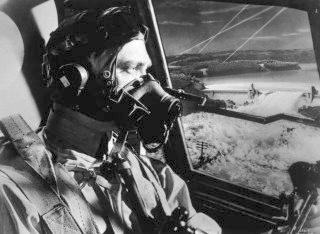
The actual attack on the dams is handled perfectly, including some pre-CGI special effects that look dated, but what do you expect? The movie was made in 1955 so keeping that in mind, the effects aren't that bad. Besides, I was so wrapped up in whether the bombing runs would work I didn't even notice the so-so effects. Throughout the movie, the aerial footage stands out as incredibly well-done, and it's led some people to compare it to the end of Star Wars. See for yourself.
Cast-wise, the list goes on and on but two characters are at the forefront, Michael Redgrave as Wallis, and Richard Todd, a real-life war hero, as Wing Commander Guy Gibson, the leader of the British bombers. They're about as different as two men can be, but they share a common goal and become friends because of their shared experiences. Also, keep an eye out for a young Robert Shaw in just his 2nd movie and first speaking part.
One other thing mentioning that made me rewind a couple times. Gibson's dog is named 'N*gger." Looking the movie up at IMDB, I saw I wasn't the only one surprised by the name. Apparently, the word was a way of describing a black dog in England at the time, and in no way is any sort of racial slur. Still, I had to mention it.
Labels:
1950s,
Michael Anderson,
Michael Redgrave,
Richard Todd,
WWII
Subscribe to:
Posts (Atom)