For the United States, the Vietnam War officially began in 1965 as American forces officially became involved in the fighting in Vietnam. Of course, American advisors had been on the ground in Vietnam for a decade-plus trying to help swing things toward the American way and away from the Communist way. A particularly nasty period leading to a far nastier period, it's shady and dark and very hush-hush, very Cold War. Not too many films address the pre-Vietnam War time. An exception? From 1958, The Quiet American.
It's 1952 in Saigon and the political situation in Vietnam is on the verge of exploding as Vietnamese insurgents have begun to fight back against their French colonist rulers. Everything is seemingly in the balance just waiting for someone to strike the match that sets it all off. Living in the city is Thomas Fowler (Michael Redgrave), a middle-aged British journalist working as a war correspondent on the almost-daily updates of the fighting. He lives with a young Vietnamese woman, Phuong (Giorgia Moll), and is quite comfortable in his living situation in spite of the fighting and death around him. His peaceful arrangement changes though when a young American (Audie Murphy) shows up in Saigon. Working with a friends of Asia organization, the American takes an immediate liking to Phuong, putting the young woman in quite a spot. Now, Fowler -- with a wife back home -- must decide what is most important to him.
This 1958 historical drama from director Joseph Mankiewicz is based on a novel by author Graham Greene. As for the finished product, Greene was less than pleased with some rather major changes made from his source novel. Mankiewicz too was displeased with what the studio had done to the version he had written and then directed. I haven't read the novel, but I have seen the 2002 version of the film (starring Michael Caine and Brendan Fraser) that's supposedly a lot more in line with Greene's original. Moral of the story? Issues those involved may have had, 'Quiet' is worth a watch for any number of reasons, flaws considered and flaws aside.
My feeble mind can only grasp so much Politic. That's right...the upper-cased Politic. That was my worry about this 1958 drama. Though it is a personal story among three people in Saigon, the political situation in the city (and the world on a bigger level) is the basis. I wasn't always sure what they're talking about, but it's fascinating to watch it develop. Basically, everyone has their motives, the French, Communists, Americans and those that would benefit from a third force taking an active role in Vietnam, in this case those dastardly Americans. Mankiewicz filmed in Vietnam in 1958 -- so not the most peaceful filming location -- which gives 'Quiet' an authentic air of actually being a part of what we're seeing on-screen. Filming was less than smooth sounds like as demonstrations and violence rocked the city. How about that for adding that layer of reality?
The basis of the story is one of my least favorite storytelling devices....well, ever. It's the love triangle among Redgrave's middle-aged journalist, Murphy's noble, naive, idealistic American, and Moll's innocent Phuong who simply wants to be happy. The historical backdrop certainly helps alleviate the pain, but mostly, it's the acting talent involved. Mankiewicz's script lets these potential cardboard cutouts be red-blooded individuals (mostly). Redgrave is excellent as Fowler, the journalist going through a mid-life crisis of sorts at the worst possible moment. It's a challenging character because he isn't sympathetic, is a bit too whiny but all under the umbrella of being a stodgy British gentleman. He's passive aggressive and with a touch of condescending for good measure. By far, that's the best performance.
Murphy wasn't the first choice to play the titular, unnamed character, just part of a checkered production that saw some huge names drop in and out of filming. Murphy takes a rap sometimes for his wooden acting, but I thought he was excellent here. The biggest change made from Greene's novel is in the character, Murphy's American presented as a heroic, naive, honest, genuinely good individual while his backstory and motive for being in Vietnam are never truly explained. The 2002 version did not have that problem. Redgrave and Murphy play well off each other, Moll keeping up throughout with a thankless part. Also look for Claude Dauphin as a scene-stealing police investigator, Bruce Cabot, Fred Sadoff, Kerima and Richard Loo in key supporting parts.
There are issues with the story's pacing and as I mentioned, I get lost at times in the politically-heavy scenes. But as a movie? It's very good. I liked the movie-watching experience a lot. Filmed in black and white, 'Quiet' looks great, humid and sweaty and sun-drenched, a perfect backdrop for that politically and love-charged Saigon. The storytelling techniques work well -- giving away the ending in the opening scene, the rest told in flashback -- and the acting is solid all-around. A lot to recommend for an oft-forgotten drama.
The Quiet American (1958): ***/****
The Sons of Katie Elder
"First, we reunite, then find Ma and Pa's killer...then read some reviews."
Showing posts with label Michael Redgrave. Show all posts
Thursday, March 3, 2016
Thursday, September 15, 2011
The Heroes of Telemark
While troops from both the Allied and Axis powers all over Europe and the South Pacific in WWII, another battle raged in laboratories with scientists and doctors working toward another goal; the creation of the first atomic bomb. Whichever country made the first bomb would almost assuredly win the war as just the threat of using such a weapon would force other countries to surrender. In 1942 some three years into the war, Germany seemed to be in the lead as Adolf Hitler sought the perfect weapons.
Based on a true story, 1965's The Heroes of Telemark tells the story of the Norwegian resistance's effort to stop the atomic development. By the mid 1960s, WWII espionage and commando stories were at the absolute height of their success as a wave of movies flooded theaters (sorry for the bad pun). 'Telemark' is one that isn't a classic, and despite some interesting casting in the two leads has been generally forgotten. It hasn't been available to watch on DVD in the U.S. until recently so that might have something to do with it, but even though I enjoy the movie I can appreciate those who don't. More on that later.
Working at a university in Oslo in Nazi-occupied Norway in 1942, Professor Rolf Pedersen (Kirk Douglas) is trying to stay as far away from the war effort -- on either side -- as possible. One day he is approached by Knut Straud (Richard Harris), a resistance fighter from the town of Rjukan, who has information about the Germans' development and increased production of heavy water in a factory in his hometown. Rolf sees the potential for disaster and agrees to go with Knut to England -- sneaking into the country -- to consult with British Intelligence on what they want done. The thought of Hitler having atomic weapons at his disposal is all the motivation he needs. The objective then is simple; send a commando team (including Knut and Rolf) to the Rjukan factory to sabotage the effort and slow down the developments. The means to do it? A little harder as the Germans have an intimidating security force all around the factory.
While the names have been changed and some of the events dramatized a bit, the basic story is based off a true story of the Norwegian resistance and their efforts to slow down the Germans' advances in atomic weaponry. That plot description is a general one too, only taking the story up to the hour mark or so in a 131-minute movie. Director Anthony Mann certainly adds a wrinkle to the commando story with the potential of this new city-destroying weapon. Most commando/espionage movies have an objective like taking out a key bridge or an important gun emplacement. Using the history and very timely matter of atomic weapons is an interesting and fact-based twist.
My biggest surprise when I first saw this was the casting of Kirk Douglas and Richard Harris as the two leads. I was in a Richard Harris phase -- still am I guess, he's a badass -- and thought 'Why the hell was I not aware of this movie?!?' Seeing two big stars like these two is part of the fun of stumbling across movies like this. Douglas was the more established one here, Harris the rising star, and apparently they didn't get along too well on-set. That is very much a good thing because their on-screen rivalry is very much real. They don't like each other at all. They work together because they need each others help and are forced to do so, not because they enjoy being commandos together. Douglas gets the shinier part -- including a rekindling relationship with ex-wife Anna, played by Ulla Jacobsson -- while Harris gets pushed to the side too much. Still, it's Kirk Douglas and Richard Harris. They're cool so deal with it.
Two key sequences always stand out for me, both of them coming straight out of the history books. The first is the raid on the Rjukan factory as Rolf and Knut lead eight Norwegian resistance fighters into the factory, avoiding security at every turn. The real-life raid went just as smoothly as this one, but Mann shoots it so well that the scene's are packed with tension and adrenaline. All it takes is one goof, and these guys are going to be outnumbered in a big way. The same goes for the finale as the Dynamic Duo attempts to sink a ferry carrying thousands of gallons of heavy water going across the Norwegian fjords. In both sequences, there is little to no gunfire, the natural tension of the situation doing the heavy lifting.
So what's the problem with this movie? I can't put my finger on it, and I like the movie. It is just missing something. At 131 minutes it is a tad on the slow side. Mann shot the movie on location in Norway, and it is stunning to watch. Composer Malcolm Arnold's score is highly memorable, even if it borrows liberally from his Bridge on the River Kwai soundtrack. Michael Redgrave is underused as Anna's uncle also working with the resistance. I guess the best description I can give is that it isn't the most personal movie. It never sucks you in the way The Guns of Navarone or Where Eagles Dare do. Still a good WWII commando movie, but not the best.
The Heroes of Telemark <---TCM trailer (1965): ***/****
Based on a true story, 1965's The Heroes of Telemark tells the story of the Norwegian resistance's effort to stop the atomic development. By the mid 1960s, WWII espionage and commando stories were at the absolute height of their success as a wave of movies flooded theaters (sorry for the bad pun). 'Telemark' is one that isn't a classic, and despite some interesting casting in the two leads has been generally forgotten. It hasn't been available to watch on DVD in the U.S. until recently so that might have something to do with it, but even though I enjoy the movie I can appreciate those who don't. More on that later.
Working at a university in Oslo in Nazi-occupied Norway in 1942, Professor Rolf Pedersen (Kirk Douglas) is trying to stay as far away from the war effort -- on either side -- as possible. One day he is approached by Knut Straud (Richard Harris), a resistance fighter from the town of Rjukan, who has information about the Germans' development and increased production of heavy water in a factory in his hometown. Rolf sees the potential for disaster and agrees to go with Knut to England -- sneaking into the country -- to consult with British Intelligence on what they want done. The thought of Hitler having atomic weapons at his disposal is all the motivation he needs. The objective then is simple; send a commando team (including Knut and Rolf) to the Rjukan factory to sabotage the effort and slow down the developments. The means to do it? A little harder as the Germans have an intimidating security force all around the factory.
While the names have been changed and some of the events dramatized a bit, the basic story is based off a true story of the Norwegian resistance and their efforts to slow down the Germans' advances in atomic weaponry. That plot description is a general one too, only taking the story up to the hour mark or so in a 131-minute movie. Director Anthony Mann certainly adds a wrinkle to the commando story with the potential of this new city-destroying weapon. Most commando/espionage movies have an objective like taking out a key bridge or an important gun emplacement. Using the history and very timely matter of atomic weapons is an interesting and fact-based twist.
My biggest surprise when I first saw this was the casting of Kirk Douglas and Richard Harris as the two leads. I was in a Richard Harris phase -- still am I guess, he's a badass -- and thought 'Why the hell was I not aware of this movie?!?' Seeing two big stars like these two is part of the fun of stumbling across movies like this. Douglas was the more established one here, Harris the rising star, and apparently they didn't get along too well on-set. That is very much a good thing because their on-screen rivalry is very much real. They don't like each other at all. They work together because they need each others help and are forced to do so, not because they enjoy being commandos together. Douglas gets the shinier part -- including a rekindling relationship with ex-wife Anna, played by Ulla Jacobsson -- while Harris gets pushed to the side too much. Still, it's Kirk Douglas and Richard Harris. They're cool so deal with it.
Two key sequences always stand out for me, both of them coming straight out of the history books. The first is the raid on the Rjukan factory as Rolf and Knut lead eight Norwegian resistance fighters into the factory, avoiding security at every turn. The real-life raid went just as smoothly as this one, but Mann shoots it so well that the scene's are packed with tension and adrenaline. All it takes is one goof, and these guys are going to be outnumbered in a big way. The same goes for the finale as the Dynamic Duo attempts to sink a ferry carrying thousands of gallons of heavy water going across the Norwegian fjords. In both sequences, there is little to no gunfire, the natural tension of the situation doing the heavy lifting.
So what's the problem with this movie? I can't put my finger on it, and I like the movie. It is just missing something. At 131 minutes it is a tad on the slow side. Mann shot the movie on location in Norway, and it is stunning to watch. Composer Malcolm Arnold's score is highly memorable, even if it borrows liberally from his Bridge on the River Kwai soundtrack. Michael Redgrave is underused as Anna's uncle also working with the resistance. I guess the best description I can give is that it isn't the most personal movie. It never sucks you in the way The Guns of Navarone or Where Eagles Dare do. Still a good WWII commando movie, but not the best.
The Heroes of Telemark <---TCM trailer (1965): ***/****
Labels:
1960s,
Anthony Mann,
Kirk Douglas,
Michael Redgrave,
Richard Harris,
WWII
Wednesday, March 30, 2011
Young Cassidy
Born in 1880 in Dublin, Ireland, Irish playwright/dramatist/memoirist Sean O'Casey would go on to become one of Ireland's most famous writers. So I've read at least, I've never heard of him. Apparently, O'Casey thought fairly highly of himself too, publishing a 6-volume autobiography while also completing over 20 other works during his career. Not having heard of him, I stumbled across the movie of his life, 1965's Young Cassidy, and tuned in mostly because of the star.
In his personal life, O'Casey was a noted socialist, but that's not going to work in an America-made movie about his life now, is it? An Irish writer in the first 20 years of the 20th Century is ripe pickings for a story fraught with conflict and issues as Ireland went through violent conflict after violent conflict in the 1910s. I was somewhat worried to read that John Ford shot part of the movie before being forced to leave the production after falling ill. I love Ford and all of his quirks, but I didn't want to watch The Quiet Man 2. Instead, director Jack Cardiff replaced him and probably for the better.
It's 1910 in the slums in Dublin and John Cassidy (Rod Taylor) is searching for work to care for his extended family and his aging mother (Flora Robson). Ireland is struggling with poverty and violence as the people fight back, upset with the lives they've almost been forced to live. Cassidy among them doesn't know what to make of the situation but ends up joining the Irish revolutionary forces. A treaty is signed with England for peace, and a young Johhny doesn't know what to do with his life. With help from a young, pretty bookstore owner, Nora (Maggie Smith), he turns to writing, something he's always enjoyed and been good at but never saw any future in it. He begins to write about the things he knows, the life he's led, and he once again is good at it. But in the process, he begins to drive everyone close to him further away.
So often stereotyped or pigeon-holed as a tough guy actor, Rod Taylor didn't always get a ton of chances to show off his acting ability. While I like other Taylor movies better than 'Young,' I can't think of a better performance delivered by the Australian actor. John Cassidy (changed from Sean O'Casey for some reason) has been toned down some from the real O'Casey, but there's still some chinks in the armor that help make him a full-fledged character. He's a family man but a fiery individual too, his temper often getting the better of him. He gets around town a fair share, typically getting involved where he shouldn't be. Seeing the strife and struggle around him, Cassidy just wants something better for himself and the Irish people. He loves everything about his roots, his background, and he uses it as a source in his writings.
The darker, tragic Irish history apparently creates many dark, tragic writers (James Joyce also comes to mind). What makes a great writer great? If you read enough and believe what classical critics say, it's that the most successful writers write about what they know. It's the people they meet, the streets and businesses in the cities and towns they grew up in, their relationships with friends, families, enemies and strangers. Irish poverty then comes easy to Cassidy in his writing. It is all he knows. The story reminded me in a lot of ways of Angela's Ashes, painting Ireland and its culture in a positive and negative light. Through all the struggles though, Ireland still manages to get across the impression of a classically romantic country, partially due to all its struggles. Cardiff takes advantage, filming his story in Ireland to give it that authentic feel without going down that cutesy, too sweet way that Ford did in The Quiet Man.
The supporting characters cover the gamut, all given a chance to play off of Taylor's Johnny. The story covers years so some characters stick around longer than others, and for the most part they make the most of it. Late in her career, Robson is a quiet scene-stealer as Johnny's mother, doting on her son who seems to always have been her favorite, the one child who has a chance to amount to something. Philip O'Flynn plays Mick Mullen, a close friend and co-worker of Johnny's who sticks with him through the ups and downs. In one of her first film roles, Julie Christie plays Daisy Battles, a possible love interest for Johnny. Edith Evans and Michael Redgrave are also scene-stealers as Lady Gregory and W.B. Yeats, owners of the Abbey Playhouse who see the potential Johnny has in his writings.
For a movie that clocks in at 110 minutes, I'm struggling to remember a lot of what happened. The story has an episodic feel to it as the years pass, Johnny growing and developing into a writer. It certainly picks up the pace when the story focuses on his writing after all the struggles he's been through. What I liked was the ending. Irish history isn't going to have a lot of happy endings -- especially when it comes to movies -- and Cardiff picks the perfect place to end the story. It's by no means a downer ending because that's not a fair description. It's a real ending, one that makes sense regardless of it is qualifies as a Hollywood happy ending. I'm not sure if I did enjoy the movie or just moderately enjoy it, but as I right this now, I'll say give it a try.
Young Cassidy <---TCM trailer (1965): ***/****
In his personal life, O'Casey was a noted socialist, but that's not going to work in an America-made movie about his life now, is it? An Irish writer in the first 20 years of the 20th Century is ripe pickings for a story fraught with conflict and issues as Ireland went through violent conflict after violent conflict in the 1910s. I was somewhat worried to read that John Ford shot part of the movie before being forced to leave the production after falling ill. I love Ford and all of his quirks, but I didn't want to watch The Quiet Man 2. Instead, director Jack Cardiff replaced him and probably for the better.
It's 1910 in the slums in Dublin and John Cassidy (Rod Taylor) is searching for work to care for his extended family and his aging mother (Flora Robson). Ireland is struggling with poverty and violence as the people fight back, upset with the lives they've almost been forced to live. Cassidy among them doesn't know what to make of the situation but ends up joining the Irish revolutionary forces. A treaty is signed with England for peace, and a young Johhny doesn't know what to do with his life. With help from a young, pretty bookstore owner, Nora (Maggie Smith), he turns to writing, something he's always enjoyed and been good at but never saw any future in it. He begins to write about the things he knows, the life he's led, and he once again is good at it. But in the process, he begins to drive everyone close to him further away.
So often stereotyped or pigeon-holed as a tough guy actor, Rod Taylor didn't always get a ton of chances to show off his acting ability. While I like other Taylor movies better than 'Young,' I can't think of a better performance delivered by the Australian actor. John Cassidy (changed from Sean O'Casey for some reason) has been toned down some from the real O'Casey, but there's still some chinks in the armor that help make him a full-fledged character. He's a family man but a fiery individual too, his temper often getting the better of him. He gets around town a fair share, typically getting involved where he shouldn't be. Seeing the strife and struggle around him, Cassidy just wants something better for himself and the Irish people. He loves everything about his roots, his background, and he uses it as a source in his writings.
The darker, tragic Irish history apparently creates many dark, tragic writers (James Joyce also comes to mind). What makes a great writer great? If you read enough and believe what classical critics say, it's that the most successful writers write about what they know. It's the people they meet, the streets and businesses in the cities and towns they grew up in, their relationships with friends, families, enemies and strangers. Irish poverty then comes easy to Cassidy in his writing. It is all he knows. The story reminded me in a lot of ways of Angela's Ashes, painting Ireland and its culture in a positive and negative light. Through all the struggles though, Ireland still manages to get across the impression of a classically romantic country, partially due to all its struggles. Cardiff takes advantage, filming his story in Ireland to give it that authentic feel without going down that cutesy, too sweet way that Ford did in The Quiet Man.
The supporting characters cover the gamut, all given a chance to play off of Taylor's Johnny. The story covers years so some characters stick around longer than others, and for the most part they make the most of it. Late in her career, Robson is a quiet scene-stealer as Johnny's mother, doting on her son who seems to always have been her favorite, the one child who has a chance to amount to something. Philip O'Flynn plays Mick Mullen, a close friend and co-worker of Johnny's who sticks with him through the ups and downs. In one of her first film roles, Julie Christie plays Daisy Battles, a possible love interest for Johnny. Edith Evans and Michael Redgrave are also scene-stealers as Lady Gregory and W.B. Yeats, owners of the Abbey Playhouse who see the potential Johnny has in his writings.
For a movie that clocks in at 110 minutes, I'm struggling to remember a lot of what happened. The story has an episodic feel to it as the years pass, Johnny growing and developing into a writer. It certainly picks up the pace when the story focuses on his writing after all the struggles he's been through. What I liked was the ending. Irish history isn't going to have a lot of happy endings -- especially when it comes to movies -- and Cardiff picks the perfect place to end the story. It's by no means a downer ending because that's not a fair description. It's a real ending, one that makes sense regardless of it is qualifies as a Hollywood happy ending. I'm not sure if I did enjoy the movie or just moderately enjoy it, but as I right this now, I'll say give it a try.
Young Cassidy <---TCM trailer (1965): ***/****
Labels:
1960s,
Julie Christie,
Maggie Smith,
Michael Redgrave,
Rod Taylor
Saturday, July 3, 2010
The Wreck of the Mary Deare
Looking for a sign as to whether a movie is worth checking out? Do some research and find out the pre-production in the movie. Was it a smooth production, on-time and under budget? Did stars and directors drop out? Reading about 1959's The Wreck of the Mary Deare, I found that Alfred Hitchcock was originally attached to the movie only to drop out because he couldn't figure out what to do with the source novel. Hitchcock bailed and worked on a different movie that ended up being halfway decent, North by Northwest. As for the movie he left behind, that one wasn't so lucky.
Director Michael Anderson stepped in to helm the movie that has a lot working for it, and a lot of things that just don't add up. The cast features two highly regarded actors -- one on the rise, one in his last movie -- and a story that should have been more interesting. It attempts to keep you guessing by keeping you in the dark, but in the process just ends up being frustratingly boring. By the time everything gets figured out there are some good reveals in a story that does come together, but even then it's so low-key that it barely registers.
Salvaging wrecks and abandoned ships in the Atlantic Ocean, Captain Mike (Ben Wright) and partner John Sands (Charlton Heston) stumble upon a large vessel in the English Channel apparently on fire with no one at the controls. Sands gets on board hoping to claim the abandoned vessel and salvage it for a pretty penny only to find a man, Gideon Patch (Gary Cooper), claiming to be the captain. He enlists Sands help in docking the ship, the Mary Deare, in the Minquiers where they'll abandon it and find land where Patch can tell his side of the story at a court of inquiry. Sands is instantly suspicious of Patch's motives, but the drive and greed for the salvage rights keeps him involved. Waiting at the court of inquiry though is a prosecutor (Michael Redgrave) who isn't going to pull any punches in finding out what really happened.
The high seas is as good a place to start a story because honestly, anything can happen there because you're relying on principles and morals of individuals to come out on top. There's no one to police crimes. You're on the water alone and are forced to fend for yourself. The opening sequences as Heston's Sands explores the empty Mary Deare are well-handled, full of tension because we wonder what really happened? Where's the crew? But once Cooper shows up, there's at least a wordless half hour of these two trying to keep the ship afloat and beach it in the Minquiers, a rock-ridden area off the coast of France. The pacing is really off and coming so early it makes it difficult to get into the movie.
More than that, the guessing game as to what really happened aboard the Mary Deare becomes tiresome. Here's a scene that is repeated at least five times. Sands: What happened? Patch: I can't tell you yet, just trust me. Curiosity only takes you so far unless you're given some sort of reason to be pulled along. There are some clues, big business intrigue, large monetary payouts, betrayals and murder all involved as Patch tries to prove his innocence so he can one day captain another ship. The intrigue gives Richard Harris (in just his 3rd movie) a crack at playing a bad guy as well, playing Higgins, a treacherous second officer. Harris is one of my favorites, but I prefer him as a roguish hero more than a straight bad guy. Truth be told, he's an intimidating villain.
Reading about the movie, the tipping point was Cooper and Heston starring together in a movie. This would be Cooper's second-to-last movie before his death in 1961 while Heston was in the midst of a string of roles that made him one of Hollywood's most bankable stars. There's a decent chemistry between the two actors, and they do dominate much of the screentime, but something is missing. Beyond the acting and on-screen persona, Cooper seems tired and looks to be going through the motions. Even when trying to swing opinion to his side, he's just not that convincing. Heston's part could have been filled by just about anyone, requiring him to follow along at Cooper's coattails, asking a question now and then and generally being frustrated. For two names as big as theirs, I expected more from the two lead roles.
That rings true for the whole movie, I expected more of...well, everything. The acting is nothing to write home about, the story is dead in the water almost from the beginning and attempts to liven it up fall short. As a whole, the movie feels very flat without a sense of energy or urgency to get things going and make it better. A disappointing end result.
The Wreck of the Mary Deare <----trailer (1959): **/****
Director Michael Anderson stepped in to helm the movie that has a lot working for it, and a lot of things that just don't add up. The cast features two highly regarded actors -- one on the rise, one in his last movie -- and a story that should have been more interesting. It attempts to keep you guessing by keeping you in the dark, but in the process just ends up being frustratingly boring. By the time everything gets figured out there are some good reveals in a story that does come together, but even then it's so low-key that it barely registers.
Salvaging wrecks and abandoned ships in the Atlantic Ocean, Captain Mike (Ben Wright) and partner John Sands (Charlton Heston) stumble upon a large vessel in the English Channel apparently on fire with no one at the controls. Sands gets on board hoping to claim the abandoned vessel and salvage it for a pretty penny only to find a man, Gideon Patch (Gary Cooper), claiming to be the captain. He enlists Sands help in docking the ship, the Mary Deare, in the Minquiers where they'll abandon it and find land where Patch can tell his side of the story at a court of inquiry. Sands is instantly suspicious of Patch's motives, but the drive and greed for the salvage rights keeps him involved. Waiting at the court of inquiry though is a prosecutor (Michael Redgrave) who isn't going to pull any punches in finding out what really happened.
The high seas is as good a place to start a story because honestly, anything can happen there because you're relying on principles and morals of individuals to come out on top. There's no one to police crimes. You're on the water alone and are forced to fend for yourself. The opening sequences as Heston's Sands explores the empty Mary Deare are well-handled, full of tension because we wonder what really happened? Where's the crew? But once Cooper shows up, there's at least a wordless half hour of these two trying to keep the ship afloat and beach it in the Minquiers, a rock-ridden area off the coast of France. The pacing is really off and coming so early it makes it difficult to get into the movie.
More than that, the guessing game as to what really happened aboard the Mary Deare becomes tiresome. Here's a scene that is repeated at least five times. Sands: What happened? Patch: I can't tell you yet, just trust me. Curiosity only takes you so far unless you're given some sort of reason to be pulled along. There are some clues, big business intrigue, large monetary payouts, betrayals and murder all involved as Patch tries to prove his innocence so he can one day captain another ship. The intrigue gives Richard Harris (in just his 3rd movie) a crack at playing a bad guy as well, playing Higgins, a treacherous second officer. Harris is one of my favorites, but I prefer him as a roguish hero more than a straight bad guy. Truth be told, he's an intimidating villain.
Reading about the movie, the tipping point was Cooper and Heston starring together in a movie. This would be Cooper's second-to-last movie before his death in 1961 while Heston was in the midst of a string of roles that made him one of Hollywood's most bankable stars. There's a decent chemistry between the two actors, and they do dominate much of the screentime, but something is missing. Beyond the acting and on-screen persona, Cooper seems tired and looks to be going through the motions. Even when trying to swing opinion to his side, he's just not that convincing. Heston's part could have been filled by just about anyone, requiring him to follow along at Cooper's coattails, asking a question now and then and generally being frustrated. For two names as big as theirs, I expected more from the two lead roles.
That rings true for the whole movie, I expected more of...well, everything. The acting is nothing to write home about, the story is dead in the water almost from the beginning and attempts to liven it up fall short. As a whole, the movie feels very flat without a sense of energy or urgency to get things going and make it better. A disappointing end result.
The Wreck of the Mary Deare <----trailer (1959): **/****
Saturday, June 26, 2010
Shake Hands With the Devil
Growing up watching older movies, I came to embrace just about any tough guy movie star from John Wayne to Clint Eastwood and everyone in between. But having seen nothing more than a clip here and there and reading about his other movies, I was never able to embrace James Cagney, one of Hollywood's first stars and possibly the most famous in the 1930s and 1940s. It wasn't that I actively disliked Cagney or his movies, but the over the top, fast-talking little tough guy never appealed to me. So having seen only two Cagney movies, I'm giving him a try and seeing what he's all about.
The most recent one I've watched is one of his later pictures, 1959's Shake Hands With the Devil. Cagney was nearing 60 years old when he made this British production, but he shows no signs of slowing down. His character goes through quite an arc from beginning to end, starting off as a heroic freedom fighter and ending up as an obsessed quasi-villain. But through it all, the focus and attention is on him, especially with a second-billed star who just can't keep up with him.
It's 1921 in Ireland and American veteran of WWI Kerry O'Shea (Don Murray) is studying at a surgeon school to become a doctor. With the IRA battling the Black and Tans in hopes of making their country a free republic, Ireland is up for grabs with violence in the streets on every corner. O'Shea is walking home late one night with a friend when he's forced to take action against the Black and Tans, making him a marked man. He's supposed to be smuggled out of Ireland, but ends up joining an IRA squad, led by Sean Linehan (Cagney), his professor at the medical school. O'Shea joins the effort with the squad's sights set on one man, a brutal local commander, but the effort begins to take a toll on the men, especially Linehan at the top.
A story that focuses on a bloody, often incredibly brutal fight for independence has to tread a fine line in how it tells the story. Both the IRA and the Black and Tans committed atrocities during the fighting for Irish independence from British rule. Director Michael Anderson does not paint either side as completely heroic or completely villainous to his credit. Both sides have flaws and are willing to murder, maim and sabotage, whatever it takes to get their side to win. Obviously focusing on the Irish Republican Army more than their opponents the viewer will get more depth and background from one side, but even then it's not always positive, most of that coming from Cagney's Linehan.
It's obvious early on that Cagney is not just making a cameo appearance as an Irishman teaching at a medical school so it does not come as much of a surprise when he's revealed to be an IRA commandant with years of experience and know-how. Once O'Shea joins the group, Linehan is a strong, sturdy leader who is committed to his men and to the fight, more than ready to give his life if the cause demands it. But as the fighting continues, Linehan begins to crack a bit and his personal issues begin to emerge, especially with a young barmaid (Glynis Johns) who hangs around with his men, and the ever-present threat from traitors and informers. Even when it seems the fighting is nearing its end, Linehan refuses to give up, wanting to continue the fight.
As his counter though, Murray's Terry O'Shea starts off as an interesting character, but he fades into the background midway through the movie. He's a WWI vet sick of killing and violence and just wants to move on to a new life as a doctor when he's thrust into this fight for independence. His father a former freedom fighter, O'Shea has to live up to certain expectations, but by the end he's fallen in love with a young English girl (Dana Wynter) who he met about 10 minutes ago. Thankfully the rest of the cast steps up, including Michael Redgrave as the General, an IRA leader, Cyril Cusack as Chris Noonan, poet turned IRA gunman, and even Richard Harris in just his second movie playing Terrence O'Brien, a self-assured but capable member of Lenihan's squad.
Filming in Ireland, Anderson made the choice to film in black and white as opposed to color. It is a decision that makes sense because of the tone and mood of the story. If he had chosen a color format, 'Shake Hands' would look like The Quiet Man. But lush green fields and soft rolling hills would seem out of place with a story focusing on such a dark subject. Full of shadows, Anderson made the right choice going with black and white instead of color. It's an interesting movie with a controversial topic and worth watching if you can track it down.
Shake Hands With the Devil (1959): ** 1/2 /****
The most recent one I've watched is one of his later pictures, 1959's Shake Hands With the Devil. Cagney was nearing 60 years old when he made this British production, but he shows no signs of slowing down. His character goes through quite an arc from beginning to end, starting off as a heroic freedom fighter and ending up as an obsessed quasi-villain. But through it all, the focus and attention is on him, especially with a second-billed star who just can't keep up with him.
It's 1921 in Ireland and American veteran of WWI Kerry O'Shea (Don Murray) is studying at a surgeon school to become a doctor. With the IRA battling the Black and Tans in hopes of making their country a free republic, Ireland is up for grabs with violence in the streets on every corner. O'Shea is walking home late one night with a friend when he's forced to take action against the Black and Tans, making him a marked man. He's supposed to be smuggled out of Ireland, but ends up joining an IRA squad, led by Sean Linehan (Cagney), his professor at the medical school. O'Shea joins the effort with the squad's sights set on one man, a brutal local commander, but the effort begins to take a toll on the men, especially Linehan at the top.
A story that focuses on a bloody, often incredibly brutal fight for independence has to tread a fine line in how it tells the story. Both the IRA and the Black and Tans committed atrocities during the fighting for Irish independence from British rule. Director Michael Anderson does not paint either side as completely heroic or completely villainous to his credit. Both sides have flaws and are willing to murder, maim and sabotage, whatever it takes to get their side to win. Obviously focusing on the Irish Republican Army more than their opponents the viewer will get more depth and background from one side, but even then it's not always positive, most of that coming from Cagney's Linehan.
It's obvious early on that Cagney is not just making a cameo appearance as an Irishman teaching at a medical school so it does not come as much of a surprise when he's revealed to be an IRA commandant with years of experience and know-how. Once O'Shea joins the group, Linehan is a strong, sturdy leader who is committed to his men and to the fight, more than ready to give his life if the cause demands it. But as the fighting continues, Linehan begins to crack a bit and his personal issues begin to emerge, especially with a young barmaid (Glynis Johns) who hangs around with his men, and the ever-present threat from traitors and informers. Even when it seems the fighting is nearing its end, Linehan refuses to give up, wanting to continue the fight.
As his counter though, Murray's Terry O'Shea starts off as an interesting character, but he fades into the background midway through the movie. He's a WWI vet sick of killing and violence and just wants to move on to a new life as a doctor when he's thrust into this fight for independence. His father a former freedom fighter, O'Shea has to live up to certain expectations, but by the end he's fallen in love with a young English girl (Dana Wynter) who he met about 10 minutes ago. Thankfully the rest of the cast steps up, including Michael Redgrave as the General, an IRA leader, Cyril Cusack as Chris Noonan, poet turned IRA gunman, and even Richard Harris in just his second movie playing Terrence O'Brien, a self-assured but capable member of Lenihan's squad.
Filming in Ireland, Anderson made the choice to film in black and white as opposed to color. It is a decision that makes sense because of the tone and mood of the story. If he had chosen a color format, 'Shake Hands' would look like The Quiet Man. But lush green fields and soft rolling hills would seem out of place with a story focusing on such a dark subject. Full of shadows, Anderson made the right choice going with black and white instead of color. It's an interesting movie with a controversial topic and worth watching if you can track it down.
Shake Hands With the Devil (1959): ** 1/2 /****
Sunday, May 24, 2009
Battle of Britain
Battle of Britain (1969), directed by Guy Hamilton of James Bond fame, is everything that was good and bad about the epic war movies to come out of the 60s, and really epic movies in general. Growing up in the good old USA, the early parts of WWII were never taught as much as the post-Pearl Harbor years once America got involved in the war so this movie serves as a good introduction to the earlier years of the war. Immediately following the Dunkirk disaster, it appears that Hitler and the Third Reich are one good push away from winning the war. All that's needed for that final push is the invasion of England.
But before a cross-channel invasion can take place, Herman Goring and his illustrious Luftwaffe must knock out the Royal Air Force so an invasion force can go across the channel relatively unmolested. For the RAF though, they're heading into a battle with the odds heavily stacked against them with just 600 pilots to Germany's 2,500. As Laurence Olivier's Air Chief Marshal Dowding so eloquently but effectively states, "Our boys are going to have shoot down their boys at a rate of 4 to 1." So begins the battle of Britain, here's the film's opening, a good sum-up of what's happened and what's to come.
With a movie that focuses exclusively on a key moment in Britain's history, the benefits are obvious. Director Hamilton collects a who's who of British actors to fill out his cast. Olivier and Trevor Howard star as Dowding and Air Vice Marshal Park, the higher-ups in the RAF who oversee the desperate fight in the air. As the pilots, Micheal Caine, Robert Shaw and Christopher Plummer lead the fight with Ian McShane and Edward Fox as two pilots in Shaw's squadron. And then making short appearances are Curd Jurgens, Harry Andrews, Patrick Wymark, Michael Redgrave, Kenneth More, and Ralph Richardson. If that cast doesn't impress you at least a little bit, this might not be your movie.
As I've covered before though, the flaw with such a huge cast is the characterization which suffers. These characters are more outlines of historical figures than flesh and blood people. Plummer stands out mostly because he's given a love interest, the beautiful Susannah York, so we find out something about his squadron leader. You're not hoping Caine's Squadron Leader Canfield makes it, you're hoping Michael Caine makes it. The same with Shaw and Plummer. But that's a minor flaw for me, not something that should stop you from seeing the movie.
And surprise, surprise, what's the actual reason for seeing a movie built around WWII in the air? If you answered 'dogfights' and lots of aerial footage, pat yourself on the back. It's a pre-CGI movie that relies on actual footage being shot of these pilots in action, the British Spitfires tangling with the German Stukas, here's one great scene with Goring asking his officers what they need to win. The film will sink or swim for most viewers on the dogfights, which do eat up most of the movie's 132-minute running time. The best is saved for last appropriately enough as the British throw all their reserves into the battle in one last, desperate ploy to stop the Luftwaffe. It's a 4-minute scene with no dialogue, no sound at all other than Ron Goodwin's score, sampled here, a very British score indeed.
Hamilton's movie then is not so much about the characters as the battle itself. Obviously, without the pilots, WAFs and coast watchers, the battle for Britain could not have happened. But Hamilton goes for the spirit of these people. Maybe we don't know much about them, their personal backgrounds, but they're fighting for what they believe in to stop a power-hungry Adolf Hitler as he swept across Europe. If these pilots hadn't held off the Luftwaffe and ultimately won the battle, who knows how different the world would be right now? It's a frightening thought. And that's why Battle for Britain works, even with its flaws.
Still wavering? Here's a trailer, a long one at that, and a longer preview of the movie as a whole. A WWII movie not as well known as many war movies of the time, but one definitely worth checking out if you've missed it up to now.
Monday, February 16, 2009
The Dam Busters
Doctor B.N. Wallis is a very intelligent if somewhat eccentric aviation engineer living in England in 1942. He's been working for months on a plan that could severely disrupt the German war effort. To create just one ton of raw steel, the Germans must use 100 tons of water. What's the best way to slow the process up? Knock out three dams deep in Germany that supply 2/3 of the needed water. Wallis develops a bomb that when dropped from a bomber at low altitudes skips across water toward the dam much like a rock skipping across a lake.
Of course things don't go smoothy as Wallis perfects the skipping five-ton bombs. That's just part of his problems, ranging from war materiel to dealing with the government. Throw in the issues the British pilots are having, and you've got a highly entertaining story. The pilots will attack the dams at night, flying just 60 feet up, and must drop their bombs with pin-point timing so the payload is delivered at just the right time.
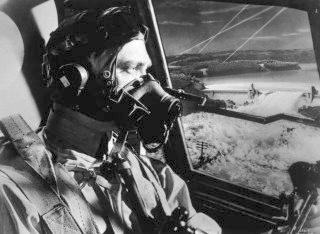
The actual attack on the dams is handled perfectly, including some pre-CGI special effects that look dated, but what do you expect? The movie was made in 1955 so keeping that in mind, the effects aren't that bad. Besides, I was so wrapped up in whether the bombing runs would work I didn't even notice the so-so effects. Throughout the movie, the aerial footage stands out as incredibly well-done, and it's led some people to compare it to the end of Star Wars. See for yourself.
Cast-wise, the list goes on and on but two characters are at the forefront, Michael Redgrave as Wallis, and Richard Todd, a real-life war hero, as Wing Commander Guy Gibson, the leader of the British bombers. They're about as different as two men can be, but they share a common goal and become friends because of their shared experiences. Also, keep an eye out for a young Robert Shaw in just his 2nd movie and first speaking part.
One other thing mentioning that made me rewind a couple times. Gibson's dog is named 'N*gger." Looking the movie up at IMDB, I saw I wasn't the only one surprised by the name. Apparently, the word was a way of describing a black dog in England at the time, and in no way is any sort of racial slur. Still, I had to mention it.
Labels:
1950s,
Michael Anderson,
Michael Redgrave,
Richard Todd,
WWII
Subscribe to:
Posts (Atom)