From World War II to the Cold War and everything in between, the submarine has become its own war movie genre. Up Periscope to Hunt for Red October and many others, it's quite the list. How about a sub-sub genre (pun intended)? The submarine in distress!!! A quasi-war movie, quasi-disaster flick, here we go with 1978's Gray Lady Down.
Awarded a promotion, Commander Paul Blanchard (Charlton Heston) is on his last patrol, bringing in the U.S.S. Neptune -- a nuclear submarine -- into port. In foggy conditions though in the Atlantic, the surfaced submarine is struck by a Norwegian freighter and sinks, falling over 1,400 feet below the surface. The Neptune manages to land on a ledge above the ocean floor, perched precariously and one slip-up away from sinking all the way to the bottom of the ocean. They manage to send out an S.O.S. though, and the U.S. Navy is quickly sending rescue ships and crews to the site, headed by specialist Captain Bennett (Stacy Keach). Time is running out though, and the surviving members of Neptune's crew have a limited amount of air. The mission is obviously extremely delicate, the Navy turning to an eccentric officer, Capt. Gates (David Carradine), with a specialized two-man sub to save the day. Can they do so in time?
My first thought when I stumbled across this movie was that it was based on a similar story, even sounding similar to a British war movie about a similar accident, Morning Departure. Nope, I was wrong. From director David Greene, 'Gray' is a disaster flick that doesn't play like a disaster flick. For me, that was a good thing. This isn't some natural calamity, no huge building on fire, no airplane trying to stay in the air. Instead, it feels like a war story that could be true. A horrific accident at sea? A group of survivors desperately holding out? An all-out effort by the Navy to rescue them? Yeah, I could totally buy that as being a true story. It plays well without pandering or being too obvious. There aren't a lot of stand-out examples of "Oh, drama! People are in danger!"
The danger is established and recognized throughout, but for me, it never felt really obvious. That's saying something considering the end-game here. The Neptune sinks several hundred feet below its crush depth, meaning that at any second the submarine could simply be ripped to pieces by the extreme pressure of the water. I can't think of too many worst ways to die than drowning near the bottom of the ocean. Making it worse, the Neptune was torn up nicely in the collision, forcing the survivors to band together in the parts of the sub that are still operational. Just inches and feet away though, the water pressure is beating away at the air-tight doors. Credit to composer Jerry Fielding for turning in a score that doesn't need to be in the forefront either. It is a solid, underplayed score that reveals itself in some key moments.
The one way 'Gray' does stick to its disaster flick roots is in the casting. It's not a huge A-list cast like Towering Inferno or Poseidon Adventure, but it's solid just the same. Mr. Disaster himself, Charlton Heston is a rock-solid lead. It's a quieter, less obvious part that Heston handles well, the sub commander trying to keep his men going while hiding his own worry, concern and guilt over the accident. Keach does a solid part in a more workmanlike role that simply doesn't give him much to do. It's Stacy Keach though, and that ain't a bad thing. As for Blanchard's crew, Ronny Cox is Cmdr. Samuelson, the Neptune's second-in-command who starts to question how things came about. Also look for Stephen McHattie as Murphy, the officer on watch who blames himself for the accident, a pre-Caddyshack Michael O'Keefe as the radioman, Hilly Hicks as Page, the medic, and more than a few other familiar faces. Rosemary Forsyth makes a quick cameo-like appearance as Blanchard's wife.
The best part though goes to David Carradine as the eccentric Navy officer who doesn't have much use for authority in any form. His Capt. Gates has developed a two-man submersible with a hydraulic arm that can be used underwater. When the Neptune's escape hatch is blocked, Gates and his assistant, Mickey (Ned Beatty), are called in to remove the underwater debris. Gates isn't interested in protocol, orders and what should be done. He's more interested in getting the job done and rescuing the trapped men in the Neptune. It is a part and character we're supposed to like, but Carradine's roguish Navy officer handles it perfectly. Solid casting from top to bottom, Carradine rising to the top.
Sure, things get to be a little much by the end. How many different things can be thrown at this seemingly doomed submarine? It's one thing after another and all against a ticking clock getting close to its deadline. The tension gets ratcheted up throughout, especially when the Navy is finally able to use its Deep Submergence Rescue Vehile (DSRV) in conjunction with Gates' submersible. The final 45 minutes feature a couple pretty big surprises, including one shocker in the final scene that caught me by surprise. Critics and reviews ripped this one to pieces for any number of reasons, but I liked it. It's a solid, entertaining and pretty dramatic story that kept me interested throughout. Also, look for a pre-Superman Christopher Reeve making his screen debut.
Gray Lady Down (1978): ***/****
The Sons of Katie Elder
"First, we reunite, then find Ma and Pa's killer...then read some reviews."
Showing posts with label Ned Beatty. Show all posts
Tuesday, August 20, 2013
Tuesday, November 27, 2012
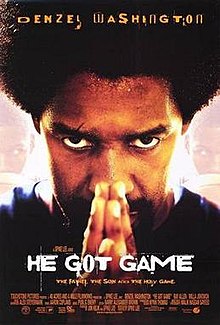
He Got Game
As a director, producer, New York Knicks fan, and writer, Spike Lee is one of the most dividing names currently working in films. Just about everyone has an opinion on Lee -- for good or bad -- but somewhere in there around the strong opinions and controversial comments is a very talented director. One of his best was obviously an important film for the diehard basketball fan, 1998's He Got Game.
A high school senior living in Brooklyn and caring for his sister (Zelda Harris), Jesus Shuttlesworth (NBA star Ray Allen) is a basketball star and the No. 1 recruit in the country. The world is smothering Jesus as he makes his future plans. Does he forgo his college eligibility and declare for the NBA Draft or does he decide on a university to attend? It's a decision that could cost or produce millions depending on how it works out. It's a decision that the Governor -- an alum of Big State University -- is interested in. He cuts a deal with Jesus' father, Jake (Denzel Washington), currently wasting away in Attica. Jake will be "released" for a week with one goal; get Jesus to commit to Big State, and his sentence will be severely shortened.
I'm a fan of Spike Lee, not a diehard fan, but his films are always interesting. Now whether you take them as good or bad interesting, that's a different story, but I typically enjoy his films. However you feel about Lee, I think this is a film where you have to give him credit. 'Game' tries to accomplish a lot in its storytelling, and for the most part, it accomplishes that. It's frightening in Lee's ability to make a film that so accurately predicts the future, in this case the business of sports. Jesus' decision in theory just effects him, but that's a naive way to look at it. Everyone in the world and business of sports will be dramatically affected by his plans. Look at 'Game' in 2012, and the things we see are familiar, normal, everyday things we'd see on ESPN. Not so much in 1998. Think LeBron James, and you've got this movie.
One of Lee's trademarks as a director is his style, and that's evident here. The opening montage shows basketball (and sports on a bigger level) at its purest, kids and teenagers playing from a wide variety of backgrounds and locations. They play out of love because they want to. Watch it HERE starting at :30. A monologue later from one shady guy (Roger Guenveur Smith) who claims to have Jesus' best intentions at heart is frightening in its accuracy. Everyone Jesus has ever met is about to become his best friend. What should be a pure, innocent and personal decision -- a 17, 18 year old kid picking his college choice -- becomes something dirty. Everyone involved starts to see the $ all over Jesus. It's sad that this is where sports has gone, but it's the truth of the business.
When this movie is clicking on all cylinders, it's that cynical nature that works. The most effective dramatic, emotional moments come from the interaction and completely shattered relationship between Jake and Jesus. We learn why Jake is in Attica, and more importantly why Jesus despises him. The performances from Washington and Allen are the best things going for 'Game.' When has Washington ever not delivered a worthy performance? None I can think of. His Jake is not an easy character to like, but that's the beauty of it. He knows he made mistakes, but he also did certain things the right way. The best thing going is we're not sure of his intentions. Does he want Jesus to go to Big State because it's what is best for him or because it will get him a reduced sentence? Playing Jesus, Allen (a Milwaukee Bucks star at the time) delivers a natural, heartfelt performance, better than just about 99% of all athletes' performances in a movie. Oh, and his jump shot is disgustingly beautiful to watch.
There are moments of perfection in this father-son relationship. The movie is at its strongest when focusing on this reconnecting, but certain scenes ring truer than others. The best scenes are those of Jake and Jesus on a basketball court. In quick, little snippets, we see Jake pushing Jesus as a little boy to get better. Later, we see an encounter where maybe Jake pushes too far, and a 12-year old Jesus responding with frustration like a 12-year old should. The best scene -- and one of my all-time favorites -- is a one-on-one game between Jake and Jesus as time runs out on Jake's "mission." Jesus is a significantly more skilled player now, but it's still a battle, Jake giving him nothing. Watch it in its entirety HERE. Stylized, message, story, I think it's one of those rare perfect scenes.
Before I forget, there are some other halfway decent actors/actresses around. Milla Jovovich plays Dakota, a prostitute Jake meets, while Rosario Dawson is particularly memorable as LaLa, Jesus' girlfriend who is up to something. 32-year old Hill Harper is effective playing Booger, Jesus' cousin and teammate. Jim Brown and Joseph Lyle Taylor have some fun as Jake's ever-present parole officers with Ned Beatty playing the warden at Attica cutting a deal with Jake. Bill Nunn is a slimy scene-stealer as Jesus' money-grubbing uncle with Michelle Shay as his more thoughtful aunt. Also look for Lee favorite John Turturro as a coach pulling out all the stops to recruit Jesus. Sports fans should also look for countless cameos from Michael Jordan to Shaq to Reggie Miller with countless coaches and TV personalities making an appearance.
Say what you want about Spike Lee, but he's a talented director, and this is one of his best. Give it a shot. I don't know how long this link will stay up there, but check out the full movie HERE at Youtube.
He Got Game <---trailer (1998): *** 1/2 /****
A high school senior living in Brooklyn and caring for his sister (Zelda Harris), Jesus Shuttlesworth (NBA star Ray Allen) is a basketball star and the No. 1 recruit in the country. The world is smothering Jesus as he makes his future plans. Does he forgo his college eligibility and declare for the NBA Draft or does he decide on a university to attend? It's a decision that could cost or produce millions depending on how it works out. It's a decision that the Governor -- an alum of Big State University -- is interested in. He cuts a deal with Jesus' father, Jake (Denzel Washington), currently wasting away in Attica. Jake will be "released" for a week with one goal; get Jesus to commit to Big State, and his sentence will be severely shortened.
I'm a fan of Spike Lee, not a diehard fan, but his films are always interesting. Now whether you take them as good or bad interesting, that's a different story, but I typically enjoy his films. However you feel about Lee, I think this is a film where you have to give him credit. 'Game' tries to accomplish a lot in its storytelling, and for the most part, it accomplishes that. It's frightening in Lee's ability to make a film that so accurately predicts the future, in this case the business of sports. Jesus' decision in theory just effects him, but that's a naive way to look at it. Everyone in the world and business of sports will be dramatically affected by his plans. Look at 'Game' in 2012, and the things we see are familiar, normal, everyday things we'd see on ESPN. Not so much in 1998. Think LeBron James, and you've got this movie.
One of Lee's trademarks as a director is his style, and that's evident here. The opening montage shows basketball (and sports on a bigger level) at its purest, kids and teenagers playing from a wide variety of backgrounds and locations. They play out of love because they want to. Watch it HERE starting at :30. A monologue later from one shady guy (Roger Guenveur Smith) who claims to have Jesus' best intentions at heart is frightening in its accuracy. Everyone Jesus has ever met is about to become his best friend. What should be a pure, innocent and personal decision -- a 17, 18 year old kid picking his college choice -- becomes something dirty. Everyone involved starts to see the $ all over Jesus. It's sad that this is where sports has gone, but it's the truth of the business.
When this movie is clicking on all cylinders, it's that cynical nature that works. The most effective dramatic, emotional moments come from the interaction and completely shattered relationship between Jake and Jesus. We learn why Jake is in Attica, and more importantly why Jesus despises him. The performances from Washington and Allen are the best things going for 'Game.' When has Washington ever not delivered a worthy performance? None I can think of. His Jake is not an easy character to like, but that's the beauty of it. He knows he made mistakes, but he also did certain things the right way. The best thing going is we're not sure of his intentions. Does he want Jesus to go to Big State because it's what is best for him or because it will get him a reduced sentence? Playing Jesus, Allen (a Milwaukee Bucks star at the time) delivers a natural, heartfelt performance, better than just about 99% of all athletes' performances in a movie. Oh, and his jump shot is disgustingly beautiful to watch.
There are moments of perfection in this father-son relationship. The movie is at its strongest when focusing on this reconnecting, but certain scenes ring truer than others. The best scenes are those of Jake and Jesus on a basketball court. In quick, little snippets, we see Jake pushing Jesus as a little boy to get better. Later, we see an encounter where maybe Jake pushes too far, and a 12-year old Jesus responding with frustration like a 12-year old should. The best scene -- and one of my all-time favorites -- is a one-on-one game between Jake and Jesus as time runs out on Jake's "mission." Jesus is a significantly more skilled player now, but it's still a battle, Jake giving him nothing. Watch it in its entirety HERE. Stylized, message, story, I think it's one of those rare perfect scenes.
Before I forget, there are some other halfway decent actors/actresses around. Milla Jovovich plays Dakota, a prostitute Jake meets, while Rosario Dawson is particularly memorable as LaLa, Jesus' girlfriend who is up to something. 32-year old Hill Harper is effective playing Booger, Jesus' cousin and teammate. Jim Brown and Joseph Lyle Taylor have some fun as Jake's ever-present parole officers with Ned Beatty playing the warden at Attica cutting a deal with Jake. Bill Nunn is a slimy scene-stealer as Jesus' money-grubbing uncle with Michelle Shay as his more thoughtful aunt. Also look for Lee favorite John Turturro as a coach pulling out all the stops to recruit Jesus. Sports fans should also look for countless cameos from Michael Jordan to Shaq to Reggie Miller with countless coaches and TV personalities making an appearance.
Say what you want about Spike Lee, but he's a talented director, and this is one of his best. Give it a shot. I don't know how long this link will stay up there, but check out the full movie HERE at Youtube.
He Got Game <---trailer (1998): *** 1/2 /****
Labels:
1990s,
Denzel Washington,
Jim Brown,
John Turturro,
Ned Beatty,
Rosario Dawson,
Spike Lee,
Sports
Friday, November 2, 2012
Silver Streak
This spring I reviewed Stir Crazy starring Gene Wilder and Richard Pryor and liked it a lot, the complete random nature of the comedy appealing to me. I didn't want to rush into other Wilder-Pryor pairings though, letting it breathe a bet, so recently after a several month wait, I dove back in, watching 1976's Silver Streak, the duo's first film pairing.
Traveling from Los Angeles to Chicago via the Silver Streak train, editor George Caldwell (Wilder) is looking forward to a couple days of quiet travel. Aboard the Streak, he meets Hilly (Jill Clayburgh), an assistant to an author traveling on-board, and they quickly hit it off. Back in George's sleeper bunk (uh-oh, adult situations!), George swears he sees a dead body, Hilly's boss, hanging outside his window but shakes it off as his head playing tricks on him. The next morning he goes to the boss' sleeper only to find a mysterious character (Ray Walston) rummaging through his bags. What the heck is going on in this train?
I don't know exactly what I was expecting out of this movie, but with Wilder and Pryor involved, I feel safe saying I expected a pretty funny flick. And you know what? It was. It's not a mile a minute laugh fest, but when I laughed, it was genuine. But overall, what a weird movie. The first 30 minutes are basically a slow burn as George and Hilly seduce each other. Then there's a murder, more murders, some investigating, new characters, shootouts, and a twist with a vicious, murdering art appraiser. I assure you that's the first time I've ever wrote that in a review. Director Arthur Hiller has an entertaining mess of a movie here, but it's a mess in a good way. A romantic, action-packed comedy. How often can you see those, and good ones at that?
What surprised me most was that Pryor doesn't appear until an hour-plus into the movie. What isn't surprising? The movie is at its best when Wilder and Pryor are on-screen together. There is a natural, easy-going and very funny chemistry between them that most actors and duos can only aspire to. Pryor plays Grover T. Muldoon, a small-time crook who ends up helping Wilder's George in his efforts to save Hilly. How do you ask? George is thrown off or falls off the Silver Streak three or four times, meeting Grover in the process. For no other reason than the story requires it, Grover helps the efforts, teaching this very un-criminal-like George how to be a crook. Things get crazier and crazier, but through it all the hijinks and shenanigans from Wilder and Pryor keep this one going at its frenetic pace.
The bits do come fast and furious after the dramatic, mystery scenes. A running bit with George being suspected as a rapist is hilarious in its bizarre oddness and inherent darkness. The highlight though is obvious; George -- being looked for by the police for murder....it's a long story -- is forced to pretend to be a black man. Courtesy of some shoe polish, a Rastafarian hat, a shiny jacket, and some "cool" lessons from Grover, George tries to embrace his inner cool black guy with some obviously politically incorrect but truly funny scenes. That's probably the biggest laugh, but most of the humor comes from a simple line delivery or a perfectly expressed facial reaction. It doesn't always have to be a big laugh to be effective, it just has to work for what it is.
I loved the Wilder-Pryor duo, but the cast here is nothing to shake your head at. Clayburgh does her best as the damsel in distress, having some surprising chemistry with Wilder. Because he always played a bad guy, Patrick McGoohan plays the Bad Guy, the conniving, murdering art appraiser with Walston, Bond villain Richard Kiel and Stefan Gierasch as his henchmen. Ned Beatty has a very funny supporting part as Bob Sweet, a vitamin salesman who strikes it up with George aboard the train, waiting to deliver a twist. Also look for Clifton James, Lucille Benson, Scatman Crothers and a young Fred Willard in supporting parts.
Another winner for Wilder and Pryor, a definitively different, unique comedy that wasn't quite what I was expecting. Off-the-point expectations aside, this was a winner with a good cast, a lot of laughs, and just a good old-fashioned goofy comedy.
Silver Streak <---trailer (1976): ***/****
Traveling from Los Angeles to Chicago via the Silver Streak train, editor George Caldwell (Wilder) is looking forward to a couple days of quiet travel. Aboard the Streak, he meets Hilly (Jill Clayburgh), an assistant to an author traveling on-board, and they quickly hit it off. Back in George's sleeper bunk (uh-oh, adult situations!), George swears he sees a dead body, Hilly's boss, hanging outside his window but shakes it off as his head playing tricks on him. The next morning he goes to the boss' sleeper only to find a mysterious character (Ray Walston) rummaging through his bags. What the heck is going on in this train?
I don't know exactly what I was expecting out of this movie, but with Wilder and Pryor involved, I feel safe saying I expected a pretty funny flick. And you know what? It was. It's not a mile a minute laugh fest, but when I laughed, it was genuine. But overall, what a weird movie. The first 30 minutes are basically a slow burn as George and Hilly seduce each other. Then there's a murder, more murders, some investigating, new characters, shootouts, and a twist with a vicious, murdering art appraiser. I assure you that's the first time I've ever wrote that in a review. Director Arthur Hiller has an entertaining mess of a movie here, but it's a mess in a good way. A romantic, action-packed comedy. How often can you see those, and good ones at that?
What surprised me most was that Pryor doesn't appear until an hour-plus into the movie. What isn't surprising? The movie is at its best when Wilder and Pryor are on-screen together. There is a natural, easy-going and very funny chemistry between them that most actors and duos can only aspire to. Pryor plays Grover T. Muldoon, a small-time crook who ends up helping Wilder's George in his efforts to save Hilly. How do you ask? George is thrown off or falls off the Silver Streak three or four times, meeting Grover in the process. For no other reason than the story requires it, Grover helps the efforts, teaching this very un-criminal-like George how to be a crook. Things get crazier and crazier, but through it all the hijinks and shenanigans from Wilder and Pryor keep this one going at its frenetic pace.
The bits do come fast and furious after the dramatic, mystery scenes. A running bit with George being suspected as a rapist is hilarious in its bizarre oddness and inherent darkness. The highlight though is obvious; George -- being looked for by the police for murder....it's a long story -- is forced to pretend to be a black man. Courtesy of some shoe polish, a Rastafarian hat, a shiny jacket, and some "cool" lessons from Grover, George tries to embrace his inner cool black guy with some obviously politically incorrect but truly funny scenes. That's probably the biggest laugh, but most of the humor comes from a simple line delivery or a perfectly expressed facial reaction. It doesn't always have to be a big laugh to be effective, it just has to work for what it is.
I loved the Wilder-Pryor duo, but the cast here is nothing to shake your head at. Clayburgh does her best as the damsel in distress, having some surprising chemistry with Wilder. Because he always played a bad guy, Patrick McGoohan plays the Bad Guy, the conniving, murdering art appraiser with Walston, Bond villain Richard Kiel and Stefan Gierasch as his henchmen. Ned Beatty has a very funny supporting part as Bob Sweet, a vitamin salesman who strikes it up with George aboard the train, waiting to deliver a twist. Also look for Clifton James, Lucille Benson, Scatman Crothers and a young Fred Willard in supporting parts.
Another winner for Wilder and Pryor, a definitively different, unique comedy that wasn't quite what I was expecting. Off-the-point expectations aside, this was a winner with a good cast, a lot of laughs, and just a good old-fashioned goofy comedy.
Silver Streak <---trailer (1976): ***/****
Monday, February 21, 2011
Toy Story 3
Released in 1995 to adoring audiences, Toy Story revolutionized movie animation as we know it. I remember clearly going to see it with my parents and my sister and instantly falling in love with it. The same goes for the sequel which in many ways was even better than the first. Pixar animation gave viewers something they had never seen before, and we ate it up. It was a high-quality product that spared little expense in turning out a superior end result. Now 11 years later in 2010, Toy Story 3 was released. Did it need to be made? Not really, but it is a perfectly fitting end to one of the great animated franchises ever.
In making movies about what our toys did when we're not around, Pixar hit a nerve in just about all of its viewers. What kid at one point or another didn't wonder that very question? When you're at school, what do you think your toys are up to? Do you think they have exciting adventures only to fall where they were the second you return? If you can't admit to asking yourself those questions, well, shame on you because we all did it. What makes these movies so special though is somehow the creators made these incredible toy characters and truly got into their heads. Sure, the toys interact when we're not around, but what are they thinking about, what are their worries? What about when the toy owners get older? What happens to the toys then?
With just a few days before he has to move away to college, 18-year old Andy has to make a choice. What should he do with the few toys he has left in his room as he packs? Woody (Tom Hanks), Buzz Lightyear (Tim Allen), Jessie (Joan Cusack) and Co. wait to see what's going to happen to them. Andy's mom sees the toys wrapped in a trash bag though, and they accidentally end up sent to Sunnytime Day Care where they're greeted by Lotso (Ned Beatty) and a sea of welcoming toys. Woody manages to escape though, wanting to get back to Andy. He finds out though that the Day Care is a living hell for new toys with Lotso as an evil dictator of the place. Seeing his friends left behind to die a slow toy's death, Woody goes back to help them escape, hoping he can get back to Andy in time too.
Maybe because I grew up loving these movies as a kid, but I'll always have a fond place in my heart for Woody, Buzz and the entire Toy Story world. Unlike the old Disney classics, these aren't just stories meant for kids. The producers were smart enough to include stories that would appeal to kids on a simpler, easier to comprehend level while also adding that second layer of more adult, subtle humor in to keep the non-kids in the audience entertained. The animation doesn't seem as groundbreaking now as when it was first released in 1995, but it's still something to marvel at. It's top notch as are the casting choices, the story, and one of the great endings to an animated movie/franchise ever, but more on that later.
These movies almost completely sink or swim on the shoulders of the actors/actresses chosen for their voice talents. As intelligent and heroic sheriff Woody, Hanks again shows that he can be as good a comedic actor as a dramatic one. I hear his voice now and associate him with Woody more than any other role he's done. Allen is the same way, an inspired choice to play brave and somewhat clueless Space Ranger Buzz Lightyear. The movie could have used some more Buzz here, but a bit late allows us to see Buzz of old, on guard and paranoid...in Spanish. Most of the rest of the toys are back too including Cusack as cowgirl Jessie, Don Rickles and Estelle Harris as Mr. and Mrs. Potato Head, Wallace Shawn as the cowardly Rex, and John Ratzenberger as Hamm. Star power maybe not, but just in terms of getting the right voice for the right character, Toy Story again shows why it is such a successful franchise.
With another series moving forward after a successful opener, the key has to be adding something new into the mix. All three movies basically have the same storyline; toys out of their element in dangerous situation, other toys must help out. Originality isn't a huge factor here, it's just fun to see the old crew back together! The new elements are all winners though, especially Beatty as the evil Lotso (Lotso Huggin' Bear). He just has the right voice to play a sweet-looking but ultimately evil pink teddy bear. Michael Keaton joins the cast as Ken -- Barbie's boy-toy -- in a perfect supporting part while Timothy Dalton, Whoopi Goldberg, Jeff Garlin, Bonnie Hunt and Richard Kind all make quick appearances (just listen closely and you'll recognize them).
A credit to the producers/creators/writers of this franchises is their ability to bring just immense amounts of emotion into these stories about toys of all things. Just about any viewer watching this movie has some personal experience with a favorite toy, buying them, playing with it, losing it, breaking it, eventually outgrowing it, any or all of the above. So naturally a teenager dealing with the transition to adulthood is a logical issue. What do you do with the toys you once loved so much? I don't know if the greatest writers in the world could have come up with a better resolution than the one used here. In terms of character and story, it's perfect. You can't top it. I'm not talking a tear here and there. We're bawling here, tears flowing down your face. What's best about it though? It stays true to the characters like Woody and Buzz we've all come to love without pandering. Yes, it is an emotional ending, but it works because it is real. It's never forced, much like the success of these groundbreaking animated classics.
Toy Story 3 <---trailer (2010): ****/****
In making movies about what our toys did when we're not around, Pixar hit a nerve in just about all of its viewers. What kid at one point or another didn't wonder that very question? When you're at school, what do you think your toys are up to? Do you think they have exciting adventures only to fall where they were the second you return? If you can't admit to asking yourself those questions, well, shame on you because we all did it. What makes these movies so special though is somehow the creators made these incredible toy characters and truly got into their heads. Sure, the toys interact when we're not around, but what are they thinking about, what are their worries? What about when the toy owners get older? What happens to the toys then?
With just a few days before he has to move away to college, 18-year old Andy has to make a choice. What should he do with the few toys he has left in his room as he packs? Woody (Tom Hanks), Buzz Lightyear (Tim Allen), Jessie (Joan Cusack) and Co. wait to see what's going to happen to them. Andy's mom sees the toys wrapped in a trash bag though, and they accidentally end up sent to Sunnytime Day Care where they're greeted by Lotso (Ned Beatty) and a sea of welcoming toys. Woody manages to escape though, wanting to get back to Andy. He finds out though that the Day Care is a living hell for new toys with Lotso as an evil dictator of the place. Seeing his friends left behind to die a slow toy's death, Woody goes back to help them escape, hoping he can get back to Andy in time too.
Maybe because I grew up loving these movies as a kid, but I'll always have a fond place in my heart for Woody, Buzz and the entire Toy Story world. Unlike the old Disney classics, these aren't just stories meant for kids. The producers were smart enough to include stories that would appeal to kids on a simpler, easier to comprehend level while also adding that second layer of more adult, subtle humor in to keep the non-kids in the audience entertained. The animation doesn't seem as groundbreaking now as when it was first released in 1995, but it's still something to marvel at. It's top notch as are the casting choices, the story, and one of the great endings to an animated movie/franchise ever, but more on that later.
These movies almost completely sink or swim on the shoulders of the actors/actresses chosen for their voice talents. As intelligent and heroic sheriff Woody, Hanks again shows that he can be as good a comedic actor as a dramatic one. I hear his voice now and associate him with Woody more than any other role he's done. Allen is the same way, an inspired choice to play brave and somewhat clueless Space Ranger Buzz Lightyear. The movie could have used some more Buzz here, but a bit late allows us to see Buzz of old, on guard and paranoid...in Spanish. Most of the rest of the toys are back too including Cusack as cowgirl Jessie, Don Rickles and Estelle Harris as Mr. and Mrs. Potato Head, Wallace Shawn as the cowardly Rex, and John Ratzenberger as Hamm. Star power maybe not, but just in terms of getting the right voice for the right character, Toy Story again shows why it is such a successful franchise.
With another series moving forward after a successful opener, the key has to be adding something new into the mix. All three movies basically have the same storyline; toys out of their element in dangerous situation, other toys must help out. Originality isn't a huge factor here, it's just fun to see the old crew back together! The new elements are all winners though, especially Beatty as the evil Lotso (Lotso Huggin' Bear). He just has the right voice to play a sweet-looking but ultimately evil pink teddy bear. Michael Keaton joins the cast as Ken -- Barbie's boy-toy -- in a perfect supporting part while Timothy Dalton, Whoopi Goldberg, Jeff Garlin, Bonnie Hunt and Richard Kind all make quick appearances (just listen closely and you'll recognize them).
A credit to the producers/creators/writers of this franchises is their ability to bring just immense amounts of emotion into these stories about toys of all things. Just about any viewer watching this movie has some personal experience with a favorite toy, buying them, playing with it, losing it, breaking it, eventually outgrowing it, any or all of the above. So naturally a teenager dealing with the transition to adulthood is a logical issue. What do you do with the toys you once loved so much? I don't know if the greatest writers in the world could have come up with a better resolution than the one used here. In terms of character and story, it's perfect. You can't top it. I'm not talking a tear here and there. We're bawling here, tears flowing down your face. What's best about it though? It stays true to the characters like Woody and Buzz we've all come to love without pandering. Yes, it is an emotional ending, but it works because it is real. It's never forced, much like the success of these groundbreaking animated classics.
Toy Story 3 <---trailer (2010): ****/****
Labels:
2010s,
Animated,
Comedy,
Michael Keaton,
Ned Beatty,
Tim Allen,
Timothy Dalton,
Tom Hanks
Sunday, February 13, 2011
Hopscotch
Released a few years ago, Burn After Reading followed a CIA agent being pushed out the door after a long career. Angry at the world, that agent – played to perfection by John Malkovich – decides to write his memoirs of all the things he saw as a secret agent. Of course, this version was played for laughs, and a lot of them at that. So what if that similar premise was handled seriously? That’s 1980's Hopscotch.
A similar premise is one thing, but Burn After Reading wisely chose to go down one road and stick with it. Released 30 years earlier, Hopscotch tries to do that but instead wavers back and forth between comedy and drama. It still works to a point because let’s face it. Secret agents are up to some nasty, shady stuff. If they get burned or put out to pasture, think of all the available information they have at their disposal, info that a government or intelligence agency would not want released. But pick comedy or drama, not both.
After running his successful CIA station in Munich for years, Miles Kendig (Walter Matthau) is called back to Langley for a meeting with his boss, Myerson (Ned Beatty). He doesn’t know what to expect and is blind-sided upon entering the office when he told he’s being forcibly transferred. A field agent all his life, Miles is now going to be in charge of running the CIA file room deep in the cavernous basements of Langley. Miles decides he’s had enough and disappears for a few days without explanation. He visits an old flame in Austria, Isobel (Glenda Jackson), and goes to work. If the CIA doesn’t want him anymore, Miles intends to take them down a notch or two…or ten. He starts to write his memoirs, all his exploits of his years as a CIA agent. Instead of just writing them down though, he sends them to CIA and foreign intelligence agencies all over the world, starting a worldwide chase with Miles as the main target.
Walter Matthau is one of the most easily watchable movie stars in Hollywood history. He switches back and forth effortlessly between hysterical comedic performances and heavy dramatic parts that allowed him to show off his ability. Above all else in Hopscotch, Matthau always keeps it watchable. All I could picture with this 1970s spy flick was that if Jason Bourne ever made it into his 50s, this is what he would be like…albeit a little more crotchety and not so willing to fight his way out of most situations. It’s just good fun seeing Matthau’s Kendig go hopping around the world, duping his pursuers at every corner with his deep pockets full of secrets. If this was a cat and mouse chase, the cat would have given up long ago. Instead, Miles keeps pulling the string and the so-called intelligence agencies struggle keeping up.
But the good and bad of the Matthau character is that he’s really good at what he does with few rivals. Instead of a chase like Jason Bourne eluding his pursuers who are equally adept, we get Matthau laughing his way through his chase. He laughs off the situation, shrugging off Beatty and his thugs like they’re a fly buzzing around his ear. There’s never any real threat of danger regardless of much Beatty wants to get Matthau’s head on a platter. You know the bait will be laid out, the CIA will bite, and Matthau will pull the ball away like Lucy does to Charlie Brown. More than that, we never know what is being written about in his manuscript. Yes, government secrets, shady dealings, black ops that no one should know about, but give us a couple details here and there. Just having the MacGuffin doesn’t work. There’s got to be some pay-off.
Joining in on the chase are some solid performances from the supporting cast. Beatty does what he does best, play the squirrelly, obsessed villain with a glint of crazy hovering in his eye. He plays him straight, no redeeming qualities anywhere in sight, just a despicable government representative more worried about himself than anyone else. Jackson as Matthau’s love interest is somewhat bland mostly because it’s hard to see Matthau as a love interest. Sam Waterston as Joe Cutter, Miles’ replacement is a scene-stealer, an agent torn between his friendship with the man they’re chasing and his duty/obligation to his employers. He gets some effortless laughs with his off the cuff, casual lines delivieries. Herbert Lom is criminally underused as Yahkov, a Russian agent along for the ride.
I liked the effort here and was never bored watching Hopscotch. At the same time though, I didn’t love it. There’s humor, yes, but then the drama quickly approaches and cancels it out. Instead of being really exciting or really tense, the movie just sits there. There’s no real energy even toward the end when the chase is coming to an end. There is a weak attempt at a semi-twist in the finale, but it falls short. An average spy flick that’s good for Matthau, Waterston and Lom, but for me, I’ll stick with Jason Bourne and Burn After Reading for now.
Hopscotch ß-trailer (197?): **/****
A similar premise is one thing, but Burn After Reading wisely chose to go down one road and stick with it. Released 30 years earlier, Hopscotch tries to do that but instead wavers back and forth between comedy and drama. It still works to a point because let’s face it. Secret agents are up to some nasty, shady stuff. If they get burned or put out to pasture, think of all the available information they have at their disposal, info that a government or intelligence agency would not want released. But pick comedy or drama, not both.
Walter Matthau is one of the most easily watchable movie stars in Hollywood history. He switches back and forth effortlessly between hysterical comedic performances and heavy dramatic parts that allowed him to show off his ability. Above all else in Hopscotch, Matthau always keeps it watchable. All I could picture with this 1970s spy flick was that if Jason Bourne ever made it into his 50s, this is what he would be like…albeit a little more crotchety and not so willing to fight his way out of most situations. It’s just good fun seeing Matthau’s Kendig go hopping around the world, duping his pursuers at every corner with his deep pockets full of secrets. If this was a cat and mouse chase, the cat would have given up long ago. Instead, Miles keeps pulling the string and the so-called intelligence agencies struggle keeping up.
But the good and bad of the Matthau character is that he’s really good at what he does with few rivals. Instead of a chase like Jason Bourne eluding his pursuers who are equally adept, we get Matthau laughing his way through his chase. He laughs off the situation, shrugging off Beatty and his thugs like they’re a fly buzzing around his ear. There’s never any real threat of danger regardless of much Beatty wants to get Matthau’s head on a platter. You know the bait will be laid out, the CIA will bite, and Matthau will pull the ball away like Lucy does to Charlie Brown. More than that, we never know what is being written about in his manuscript. Yes, government secrets, shady dealings, black ops that no one should know about, but give us a couple details here and there. Just having the MacGuffin doesn’t work. There’s got to be some pay-off.
Joining in on the chase are some solid performances from the supporting cast. Beatty does what he does best, play the squirrelly, obsessed villain with a glint of crazy hovering in his eye. He plays him straight, no redeeming qualities anywhere in sight, just a despicable government representative more worried about himself than anyone else. Jackson as Matthau’s love interest is somewhat bland mostly because it’s hard to see Matthau as a love interest. Sam Waterston as Joe Cutter, Miles’ replacement is a scene-stealer, an agent torn between his friendship with the man they’re chasing and his duty/obligation to his employers. He gets some effortless laughs with his off the cuff, casual lines delivieries. Herbert Lom is criminally underused as Yahkov, a Russian agent along for the ride.
I liked the effort here and was never bored watching Hopscotch. At the same time though, I didn’t love it. There’s humor, yes, but then the drama quickly approaches and cancels it out. Instead of being really exciting or really tense, the movie just sits there. There’s no real energy even toward the end when the chase is coming to an end. There is a weak attempt at a semi-twist in the finale, but it falls short. An average spy flick that’s good for Matthau, Waterston and Lom, but for me, I’ll stick with Jason Bourne and Burn After Reading for now.
Hopscotch ß-trailer (197?): **/****
Labels:
1980s,
Espionage,
Herbert Lom,
Ned Beatty,
Sam Waterston,
Walter Matthau
Tuesday, December 14, 2010
The Life and Times of Judge Roy Bean
When people get more cynical, so do their movies. In the 1930s, westerns portrayed good guys wearing white hats and bad guys in black duds. By the time Clint Eastwood came along in the spaghetti westerns gunning down anything that would net him a buck, things were up for grabs. Then in the late 1960s and 1970s, somebody decided to put a new spin on the old west, stories that were more cynical in nature that attempted to show what the west was really like. Goodbye romantic, hello cynicism. Say howdy to the revisionist western.
If you look at the list of westerns included in the Wikipedia entry, there are some good entries, but for the most part I don't necessarily like revisionist westerns. They try much too hard to show you that what you've been watching all these years is garbage. Take 1972's The Life and Times of Judge Roy Bean, directed by one of my favorites, John Huston. In telling the story of real-life Roy Bean, this western blends some really awkward comedic moments, overlong sub-plots that go nowhere, some hypocritical views on just about everything (can't decide if that was intended), and in general a waste of a very strong cast.
Sometime around the turn of the century, "outlaw" Roy Bean (Paul Newman) rides into west Texas past the Pecos River, an area notorious for hiding bandits and criminals. At one saloon, they turn on him and leave him for dead only to have the wounded man come back and gun them all down. Disgusted by what he's seen, Bean sets up shop as a judge, administering his unique brand of justice to anyone and everyone looking for trouble. Word spreads and soon he even has deputies who help him out, all in the name of Texas and Lilly Langtry (Ava Gardner), a stage actress from the east, a woman Bean has always been in love with. But Bean's style of justice may catch up with him as civilization follows him around every corner, and his time may be running out.
I don't know where to start with this one because to be fair, Huston doesn't know where to start either. Roy Bean was a real-life judge in west Texas who ended up becoming a legendary figure after he died. So with this revisionist western instead of telling a story that showed what the actual man was like, Huston goes for the ridiculous legend. At a run-time of 120 minutes (a very long 120 minutes), 'Life' is all over the place with no sense of where it's going. The tone ranges from slapstick comedy that produces its fair share of groans -- it did from me at least -- to an oddly serious finale. It tries to be funny while also delivering a hacked up message about the changing times and the last few years of the wild west. Pick one or the other and go with it, but don't waver between the two.
A bright spot not surprisingly is Newman in the titular role, rising above materiel that at times is just beneath him. Newman's parts in the 1970s typically covered a wide variety of movies, and this surely doesn't disappoint. What works is that he commits so fully to this part. His beliefs are ridiculously hypocritical, and he'll string anyone up at the drop of a hat if he disagrees with what's been said or done. If you're loyal to him, he'll be loyal to you, but for heaven's sake don't turn on him. This isn't a part on par with his best performances like Butch Cassidy or Lucas Jackson, but it's a quality one. Even when the movie is dull to watch, it's worthwhile to check out Newman.
So with a story that is light on story and heavy on non-related vignettes, we get a chance to see a long list of actors play small parts (some being on-screen no more than a few seconds). Gardner makes an appearance in the movie's final scene in a moving scene that comes along a little too late. Anthony Perkins is a scene-stealer as a traveling preacher who realizes Newman's Bean may be a little off his rocker but doesn't want to get shot bringing the topic up. Ned Beatty, Matt Clark, Jim Burk, Bill McKinney, and Steve Kanaly are underused but all solid as Bean's loyal deputies. Also watch for Victoria Principal, Tab Hunter, Huston as a grizzled old mountain man, Stacy Keach as an albino gunman, Roddy McDowall, Anthony Zerbe, and Jacqueline Bisset in parts that range from bad to good, your decision on where they fall.
I will give Huston credit for trying new things. Early on, we get narration from Perkins and Hunter, but instead of just hearing it, the camera is placed right in front of them as they ride into town. They're looking right at the audience, addressing us in a cool change of pace, a unique little technique. But then the narration resorts to been there, done that voiceovers. It's just an odd movie overall, one with plenty of flaws but enough positives to give it a mild recommendation.
The Life and Times of Judge Roy Bean <---trailer (1972): **/****
If you look at the list of westerns included in the Wikipedia entry, there are some good entries, but for the most part I don't necessarily like revisionist westerns. They try much too hard to show you that what you've been watching all these years is garbage. Take 1972's The Life and Times of Judge Roy Bean, directed by one of my favorites, John Huston. In telling the story of real-life Roy Bean, this western blends some really awkward comedic moments, overlong sub-plots that go nowhere, some hypocritical views on just about everything (can't decide if that was intended), and in general a waste of a very strong cast.
Sometime around the turn of the century, "outlaw" Roy Bean (Paul Newman) rides into west Texas past the Pecos River, an area notorious for hiding bandits and criminals. At one saloon, they turn on him and leave him for dead only to have the wounded man come back and gun them all down. Disgusted by what he's seen, Bean sets up shop as a judge, administering his unique brand of justice to anyone and everyone looking for trouble. Word spreads and soon he even has deputies who help him out, all in the name of Texas and Lilly Langtry (Ava Gardner), a stage actress from the east, a woman Bean has always been in love with. But Bean's style of justice may catch up with him as civilization follows him around every corner, and his time may be running out.
I don't know where to start with this one because to be fair, Huston doesn't know where to start either. Roy Bean was a real-life judge in west Texas who ended up becoming a legendary figure after he died. So with this revisionist western instead of telling a story that showed what the actual man was like, Huston goes for the ridiculous legend. At a run-time of 120 minutes (a very long 120 minutes), 'Life' is all over the place with no sense of where it's going. The tone ranges from slapstick comedy that produces its fair share of groans -- it did from me at least -- to an oddly serious finale. It tries to be funny while also delivering a hacked up message about the changing times and the last few years of the wild west. Pick one or the other and go with it, but don't waver between the two.
A bright spot not surprisingly is Newman in the titular role, rising above materiel that at times is just beneath him. Newman's parts in the 1970s typically covered a wide variety of movies, and this surely doesn't disappoint. What works is that he commits so fully to this part. His beliefs are ridiculously hypocritical, and he'll string anyone up at the drop of a hat if he disagrees with what's been said or done. If you're loyal to him, he'll be loyal to you, but for heaven's sake don't turn on him. This isn't a part on par with his best performances like Butch Cassidy or Lucas Jackson, but it's a quality one. Even when the movie is dull to watch, it's worthwhile to check out Newman.
So with a story that is light on story and heavy on non-related vignettes, we get a chance to see a long list of actors play small parts (some being on-screen no more than a few seconds). Gardner makes an appearance in the movie's final scene in a moving scene that comes along a little too late. Anthony Perkins is a scene-stealer as a traveling preacher who realizes Newman's Bean may be a little off his rocker but doesn't want to get shot bringing the topic up. Ned Beatty, Matt Clark, Jim Burk, Bill McKinney, and Steve Kanaly are underused but all solid as Bean's loyal deputies. Also watch for Victoria Principal, Tab Hunter, Huston as a grizzled old mountain man, Stacy Keach as an albino gunman, Roddy McDowall, Anthony Zerbe, and Jacqueline Bisset in parts that range from bad to good, your decision on where they fall.
I will give Huston credit for trying new things. Early on, we get narration from Perkins and Hunter, but instead of just hearing it, the camera is placed right in front of them as they ride into town. They're looking right at the audience, addressing us in a cool change of pace, a unique little technique. But then the narration resorts to been there, done that voiceovers. It's just an odd movie overall, one with plenty of flaws but enough positives to give it a mild recommendation.
The Life and Times of Judge Roy Bean <---trailer (1972): **/****
Friday, January 22, 2010
White Lightning
Reviewing Quentin Tarantino's Inglourious Basterds last fall, I did my fair share of slobbering over the movie but didn't go into much detail when it came to the soundtrack. An avid movie buff, Tarantino sampled a long list of scores from previous movies -- including a heavy dose of Ennio Morricone and spaghetti westerns -- that ranged from critically acclaimed French movies to lesser thought of average flicks. What was so surprising was that almost all these scores that were made for other movies worked so well in Tarantino's WWII story.Not intentionally seeking these movies out, I've caught up with many of them and more than a few times have thought 'why does this music sound familiar?' while watching. Give the man credit, he knows how to put a sountrack together. The latest track I can cross off the list is from 1973's White Lightning with a soundtrack from composer Charles Bernstein. Listen HERE to the main theme that Tarantino used in 'Inglorious Basterds.'
Bernstein's main theme sets the tone just seconds into White Lightning in a great scene that plays along with the credits. Two men are rowing a boat out in the swamp with a second boat tied behind them. In that second boat, two teenagers are gagged and cuffed to an anchor lying on the floor. One of the men in the lead boat pulls a shotgun up and blasts a hole in the second boat, sending the two boys to their painful deaths. At a work camp/prison upstate, one prisoner, Gator McCluskey (Burt Reynolds) receives news that his brother is dead and no one knows how it happened.
A longtime whiskey runner, Gator is no fool and can figure out what happened -- of course he doesn't know that his younger brother was one of the two in the boat. He cuts a deal with the government to work as an informant and try to bring the Bogan County sheriff, J.C. Connors (Ned Beatty), down for years of corruption and overstepping his bounds of the office. Gator signs on with another moonshine runner, Roy Boone (Bo Hopkins), and starts to work for the big supplier in the county, Big Bear (R.G. Armstrong). It's not long before Connors figures out Washington has a snoop in town, but can Gator get enough information on him to take him down before he gets whacked?
Moonshine in the deep South has been handled all sorts of ways in popular culture, as comedy in TV shows like The Andy Griffith Show and seriously like in Thunder Road with Robert Mitchum. White Lightning falls somewhere in between with comedic and dramatic moments. Gator takes the job as an informant only as a means to exact some revenge, but he doesn't seem to be in any rush to take that revenge. He does some moonshining, some driving, romances Boone's girl Lou (Jennifer Billingsley) and generally enjoys himself now that he's out of prison.
A few exciting car chases make the movie worthwhile including some crazy stunts, one that almost ended disastrously when a car tried to jump a pier onto a barge floating down the river. These chases are basically the Dukes of Hazard before that show was around, so imagine fast cars gunning it across country backroads with cops hot on their tail. Not a paved road in sight as sand, dirt and dust gets kicked up all over the South. Reynolds, Hopkins and Beatty all look to have done a fair share of their own stunt driving which is always nice to see instead of an obviously inserted stuntman.
This 'rednecks and cars' movie was released a year after the huge success of Deliverance so Reynolds was becoming a huge star at the time. I'd never say he was a great actor, but he's a great movie star. His parts always had a lot of presence, and Reynolds was a more than capable comedic action star. A part that required him to be a smart-ass who's always ready with a punch or a one-liner was ideal for him, and this fits in that category. The rest of the cast is one of those typically 70s casts that just makes me happy. Hopkins and Armstrong are joined by Matt Clark as Dude Watson, Gator's source and mechanic. All great supporting actors that were never huge stars but nonetheless make a movie better just by being there. And Beatty as the villain, who would have thought a little, balding, pudgy guy could be so intimidating, but he pulls it off.
A harmless enough movie that's a good way to spend a couple hours. Fast cars, sometimes faster women, boozing and corrupt cops. That sounds like an entertaining movie to me. I liked it enough to watch the sequel that came out three years later, named appropriately enough 'Gator.' If interested in checking this one out, Hulu has it available to watch, click HERE.
White Lightning <----trailer (1973) ** 1/2 /****
Labels:
1970s,
Bo Hopkins,
Burt Reynolds,
Ned Beatty,
R.G. Armstrong
Subscribe to:
Posts (Atom)