Does the name Matthew Vaughn ring a bell? Well, it's not necessarily a household name...yet. A director, producer and writer extraordinaire, Vaughn has been behind such movies as Layer Cake, Kick-Ass, X-Men: First Class, The Debt, and even the upcoming Fantastic Four reboot. His most recent flick, 2014's Kingsman: The Secret Service, is pulling in the dough. Who knows? It might not be too long before Vaughn is definitely a household name.
Part of a secret spy organization working in England with a history dating back to the early 20th century, the Kingsmen, gentleman spy Harry Hart (Colin Firth), codename: Galahad, is on a mission in the Middle East, when a fellow young agent is killed saving his life. Back in England, Harry meets the agent's young son and some 17 years later saves him from a nasty encounter with the police. Why the encounter so many years later? Harry recruits young Gary 'Eggsy' Unwin (Taron Egerton) to become the newest agent, the newest Kingsman. Having grown up on the streets, Eggsy is intelligent, tough and quick-thinking, but he hasn't always lived up to his potential. Now, Harry needs him to live up to it if he hopes to beat the other candidates. Trouble is on the horizon in the form of Richmond Valentine (Samuel L. Jackson), an internet billionaire with a horrific plan to alter Earth's future. The key to it all, that could be feisty, stubborn Eggsy.
Let's give Mr. Vaughn credit where it's due. This is a guy who knows what kind of movie he wants to make, sets out to do it, and screw anyone who gets in his way. No, I'm not saying he's some sort of movie studio bully. It's just that Vaughn makes movies unlike just about any other movie currently in theaters. Helter-skelter, schizophrenic, stylish, smart and equal parts stupid, this is just a ridiculously fun and entertaining movie. It most assuredly is NOT for everyone. The violence is cartoonishly over the top and stylized, the humor a little low-brow at times, but my goodness, what a fun movie.
The British spy movie has a long and rich history, starting obviously with the James Bond/007 franchise. It's the rare movie that is able to put a new spin on the spy genre, but 'Kingsman' does it with violent glee and fun. This is a smart movie, poking fun at the genre without venturing into spoof territory (thankfully). The script from Vaughn and Jane Goldman is self-conscious, some great dialogue scenes between Firth's Harry and Jackson's Valentine discussing the backgrounds of the gentleman spy and the maniacal villain trying to take over the world. Fans of the genre will get a kick out those moments, the quieter, smarter and lower key moments that balance out the general craziness of the rest of the movie.
Reviews were generally pretty mixed about star Taron Egerton, but I came away impressed with the young British actor. He definitely holds his own in the dramatic scenes with quite the cast surrounding him of dramatic star power. When it comes to the action scenes, Egerton shows off his physical prowess, blending in seamlessly. It doesn't hurt that he's got that cocky smirk ready with a snap to disarm a scene with ease. How about some star power though? Constantly wearing the layered look and showing off a flat-brim hat and rocking a lisp, Samuel L. Jackson is clearly having a ball as Valentine, the villain with a plan to save the world by some horrifying means. This isn't a nutso villain. His plan is certainly...interesting, but he's also squeamish around blood, a bit of a goof and loves a good McDonald's cheeseburger. Also look for Sofia Boutella as Gazelle, Valentine's foot-less hench-woman who uses bladed prosthetic legs as deadly weapons.
The casting of three British actors was what originally caught my eye and kept me interested as a release date drew closer. Enter Colin Firth, Michael Caine and Mark Strong. One of the most talented actors currently working in film and the prototypical British gentleman (on screen at least, he may be a wild man in his personal life), Firth absolutely nails the movie. Let's call it Liam Neeson Mode, a highly respected actor taking on a more fun role. He plays the straight man to all the shenanigans, but man, is he having fun. The same for Strong as Merlin, a fellow Kinsgman and a drill sergeant of sorts, barking out orders with a bit of a Scottish brogue as his potential agents navigate training. Oh, and that Michael Caine guy. Have you heard of him? It's a smaller part, but an essential one. How can you go wrong with that trio? I submit that you CANNOT. Also look for Mark Hamill and Jack Davenport in supporting parts.
The history of the Kingsman would be an interesting prequel in itself, a group of agents and spies with code names from the legend of King Arthur, all criss-crossing the world to stop all sorts of diabolical plots. A highly recommended movie with some ridiculously stylized violence, some great one-liners, style in general to burn, and a 'Screw you' type of attitude. It's the type of movie that doesn't care if you like it. It's just interested in being a ton of fun.
Kingsman: The Secret Service (2014): ***/****
The Sons of Katie Elder
"First, we reunite, then find Ma and Pa's killer...then read some reviews."
Showing posts with label Colin Firth. Show all posts
Monday, March 2, 2015
Friday, December 28, 2012
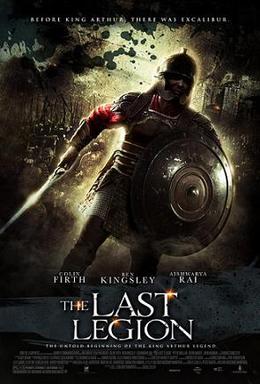
The Last Legion
Colin Firth is first and foremost an actor. He is not a movie star in the typical sense. The 52-year old actor has films like The King's Speech, A Single Man and many more dramatic movies to his name. Then, there are the departure films, like 2007's The Last Legion.
It's 460 A.D., and the Roman Empire is struggling through some perilous times. After years away from Rome and Italy and all its issues, veteran soldier Aurelius Antoninus (Firth) is being called back to the city. He has been tasked with a dangerous mission, protecting the recently appointed emperor, Romulus (Thomas Brodie-Sangster), a teenage boy. With a legion of loyal soldiers, Aurelius settles in, preparing anything he can to protect the boy emperor. Multiple factions are working against the boy though, including a Goth leader (Peter Mullan), who wants nothing more than to turn Rome on its side and take power. When the coup-like attack comes, Aurelius must turn to his most trusted men while also relying on one last legion of Roman troops in Britannia.
Despite the generally lukewarm reviews and less than impressive Netflix rating, I went into this historical epic with somewhat high hopes. Director Doug Lefler has crafted an enjoyable epic story that at its best feels like an old-fashioned epic from the 1950s and 1960s. It runs only 102 minutes so we're not talking a 3-hour mega epic here, just a solid, fast-moving story. There is something appealing about that throwback quality, especially one set in the declining years of the Roman Empire. Lefler filmed 'Legion' in Slovakia and Tunisia, giving his story an exotic feel to it that genuinely gives the impression of a moving story that has characters all over the known world. I also liked composer Patrick Doyle's score, big and booming like an epic demands. It's the good guys and bad guys, and there's no room for that messy middle ground.
Unfortunately, that throwback quality only goes so far. For me, that point was about the 55-minute mark. The entire movie covers a ridiculous amount of ground -- more on that later -- in a movie that doesn't even come close to the two-hour mark. For the first hour of the movie, that isn't a problem. The pacing is actually a benefit as Firth's Aurelius and a small group of soldiers protects Romulus apparently all over the Empire. Then out of the blue, Aurelius and Co. decide they need to go to Britannia (that's England) to seek the aid of the last remaining loyal legion of Roman troops, the Ninth Legion. That's fair. A legion of troops would be helpful in putting down a coup. But once arriving in Britannia, Aurelius and his followers must now battle a Britannic leader who has long sought the sword that will one day "rule the Empire." Basically, the story throws out the first half of the movie, going down a completely different road. Too bad, the first hour was highly enjoyable.
That's the biggest issue hamstringing this otherwise enjoyable flick. It just tries to do far too much. The final battle between Aurelius, his followers, the lost legion, and the forces of the diabolically evil Vortgyn (Harry Van Gorkum) ends, and that's it. A final scene connects the story to a well-known story in history and literature -- no real spoilers here, it does come as a pleasant surprise -- but in the process basically disregards the entire first half of the movie. Reading up on the movie, it seems it was originally intended to be anywhere between three and four hours. Can we believe that? Who knows, but a little extra meat on the bone sure couldn't have hurt. That way, it could have played like a two-part miniseries at least. That's wishful thinking though. The movie is what we have, not what it could have been.
A saving grace is the casting, starting with Firth. Far from his typical role, Firth represents himself well as the aging veteran who can still hold his own on the battlefield. I was especially impressed with how he handled the action scenes, more than holding his own. Ben Kingsley looks to be having some fun as Ambrosinus, a philosopher, teacher and warrior who works as Romulus' guardian/protector. Indian beauty Aishwarya Rai plays Mira, a warrior from Constantinople traveling with Romulus. Aurelius' Roman soldiers include Rupert Friend, Nonso Anozie and Owen Teale. Before being discarded at the movie's halfway point, Mullan is a solid villain with Kevin McKidd capably taking the reins as scarred Goth warrior, Wulfila, who would like nothing more than to kill the boy emperor. Also look for John Hannah as a Roman senator with a long history working with Aurelius.
For the most part, I liked this flick. There are times the action/violence feels toned down -- like 'Legion' was going for a PG-13 rating more than an R rating -- but the battle scenes are fun, exciting and fast-moving in a bloodless way. The final battle in Britannia is similarly epic, but I keep coming back to the somewhat disjointed feel of the story. The movie struggles to find any sort of rhythm, and that ends up being a major issue.
The Last Legion (2007): ** 1/2 /****
Wednesday, September 5, 2012
The King's Speech
There the movie sat in my Netflix queue for well over a year. I wanted to see it. It had claimed several Oscars and had been nominated for that many more. I knew it was a good movie. Some people I talked to and some reviews I read said it was a great movie. I couldn't quite bring myself to put it up at the No. 1 spot, well, until now. Safe to say 2010's The King's Speech was worth the wait.
Since he was a young boy, Prince Albert, the Duke of York (Colin Firth), has had to deal with an at times crippling stammer whenever he speaks. He fears addressing more than a few people at a time, always knowing at any moment the stammer could kick in, and he will freeze up. His wife, Elizabeth (Helena Bonham Carter), has helped him as much as he can, going to any and all speech therapists and experts. Their latest is Lionel Logue (Geoffrey Rush), an Aussie with some out-of-the-box ideas. As Albert and Logue start to work together though, England is hurtling toward World War II where Prince Albert may be thrust into a power position he wants nothing to do with.
Big action movies, raunchy comedies, and schmaltzy romance stories. And then there are historical dramas like this where the focus is.....acting. Go figure. The focus is on the actors and actresses as they develop these characters that just happen to be real-life people. All three lead performances were nominated for an Oscar -- Firth winning, with Carter losing to Melissa Leo in The Fighter, Rush to Christian Bale in the same movie -- and this will sound simple, but it's fun to watch the actors act, especially actors as talented as these. Even the supporting performances (however small) ring true. It's always a good start when the acting is as memorable as this.
How come? Because as was the case here in director Tom Hooper's film, everything else falls into place behind it. Hooper joined Firth in the Oscar-winning department for his job behind the camera, and he deserves it. At just under two hours, the story covers a lot of ground, beginning in 1925 and running all the way to the start of World War II as Albert -- now George, 'Albert' sounds so Germanic according to Churchill -- rises to the throne of England. Hooper does a subtle but effective job with his camera, turning ordinary shots into interesting shots, making so many scenes look like paintings. From the costuming to the locations, the look of the movie helps make this period piece something special. Like period pieces that work, you feel like you're in 1930s England. It's easy to mess that up -- the audience realizing they're watching a movie -- but it is handled very effectively here.
Oh, right, back to the acting. In a performance that saw him win his second straight Oscar, Firth delivers a very human part. For all his Royal upbringing, Prince Albert has struggled through life for as long as he can remember. The opening scene where he crumbles giving a speech is heartbreaking as are several others as we see him battle his stammer while speaking. He wants to speak, to be a strong leader, but his personal make-up just won't allow it. While Firth is very good, I thought the best performance was from Rush. It's not a showy part, but it could have been. This is a supporting part that in the wrong hands would have been very obvious and even annoying. Rush never lets it get there. As Lionel, he sees all of Albert's potential and through all his unique, even odd ideas, genuinely wants to help him. In the smallest of the three parts, Carter still manages to leave a positive impression. Her Elizabeth is a loving wife who tirelessly wants to help her husband.
The period piece, where movie fans get to see some always solid character actors do their damnedest to upstage the stars. Well, sort of. 'Speech' has a handful of those parts, starting with Guy Pearce as Prince Edward, Albert's older brother who causes a stir when he becomes king because of his relationship with a twice-divorced American woman, Wallis Simpson (Eve Best). Also look for Michael Gambon as King George, Albert's dying father, Derek Jacobi as the Archbishop, Jennifer Ehle as Myrtle, Lionel's wife, and Timothy Spall as Winston Churchill, the soon-to-be Prime Minister of England.
I don't know what I was expecting going into this Best Picture-winning film. I didn't love it as much as appreciate it, but I think that was the objective. The acting is great as is the visual look of the movie, but it's never anything Earth-shattering in its execution. Sit back and enjoy the natural drama and even some humor of the situation. I especially enjoyed the relationship and friendship that develops between Albert and Logue as they work together. An actor's got to act, and that's on display here.
The King's Speech <---trailer (2010): ***/****
Friday, January 13, 2012
Tinker Tailor Soldier Spy (2011)
I love reading, always have and hope I always will. So when I saw a trailer this past summer for a spy movie based off a book from English novelist John Le Carre, I wanted to check out the book before seeing the movie. I can't tell you how much I struggled through the book, forcing myself to finish it because if a movie was made, the source novel has to be good, right? Thankfully, 2011's Tinker Tailor Soldier Spy was infinitely more enjoyable than its source novel.
When a mission is badly botched in Budapest, Control (John Hurt) and his right hand man, George Smiley (Gary Oldman), are forcefully pushed out the door at MI6. A new power system rises to the top, and most of a year later with Control dead, Smiley is approached with an important mission. More and more intelligence points to a high-up official in British intelligence being a mole working deep, deep undercover for Russia. The suspects have been narrowed down to four key individuals, but none of them seem any more likely to be the mole than the others. With the help of a younger but very capable agent, Peter Guillam (Benedict Cumberbatch), Smiley is tasked with exposing the mole. Can they do it in time?
Le Carre's book is something else. Countless characters, seemingly endless passages of dialogue on top of dialogue, and a non-linear story that I for one had trouble keeping up with. I hate calling a book dull or boring because it sounds very high school, but I struggled to maintain an interest in the very slowly developing story. Even when things were revealed, I had to re-read and double check just to make sure I'd read right. It defines a low-key, subtle spy story with little sense of urgency. Thankfully the movie streamlines the characters, the dialogue and the story, all the while remaining true to Le Carre's novel. It certainly isn't a movie for everyone, and it has its flaws, but 'Tinker' is quite the thinking man's spy movie.
Let's start with the tone and look of the movie. Like the novel, it is incredibly low-key, almost comatose in its development. For a story revolving around a high-level mole, no one seems particularly worried. The story utilizes flashbacks and bounces around constantly, throwing new characters in and out of scenes as needed. You know, just know, they're somehow related, and for the most part they do fit together in the end. It is a self-assured movie, and will probably lose some viewers with its leisurely pacing. The look of the movie is incredible from the sets and costumes to the camera work. The spies all wear suits and ties, constantly smoke cigarettes, and always have some liquor close by. This was the Cold War fought by gentlemen, not the gung-ho, shoot 'em up James Bond and Jason Bournes. These spies did their best when not seen by their opposition, slinking in and out as quickly as they arrived.
My biggest motivation for finishing the book was the cast assembled in director Tomas Alfredson's spy drama. I'll begin with Gary Oldman as George Smiley, a part that has already started to earn the actor some Oscar buzz for Best Actor. Like its story, Oldman is understated beyond belief as Smiley, a veteran agent with years of experience under his belt. He's experienced more than most can dream of, and the wear and tear shows. Pushed out of a job he was damn good at, his Smiley holds some earned resentment at the government and superiors that turned their back on him. Above all else, he is a professional though. He's a dogged investigator, able to piece together clues and information as needed, always thinking how the pieces fit together. I love Oldman as an actor -- playing good or bad guy -- but it's great seeing him truly acting, not just hamming it up. Great lead performance.
That's saying something considering the rest of the cast. The treacherous suspects include Alleline (Toby Jones), Haydon (Colin Firth), Esterhase (David Dencik), and Bland (Ciaran Hinds), both Jones and Firth making the best impressions. Cumberbath too holds his own at Oldman's side, an agent with a possible secret of his own, and Hurt is Hurt, legitimizing his small part because he's John Hurt. One of my new favorite actors, Mark Strong, has a solid supporting part as Prideaux, an agent who's stumbled into a botched mission and must pay the consequences. Another favorite of mine, Tom Hardy plays Ricki, a "scalphunter," an agent usually relegated to the more sinister missions, this time trying to move up a level with some info he stumbled into. Kathy Burke and Stephen Graham have key parts as former Intelligence members Smiley investigates. Not a false performance in the bunch, an ensemble working perfectly together. Not showy at all, just professionals doing what they do, seemingly effortlessly.
The movie isn't perfect though, but I did enjoy it considerably more than Le Carre's novel. Problems persist though. We learn little to nothing about the suspects so even when the mole is revealed, it makes little impact. A throwaway line explains the reasoning in a weak wrap-up. I would have liked some reasoning, some background on these men, allowing us to connect emotionally in some way whether it be hatred, respect, whatever. The story drifts at time -- like the novel -- in an 127-minute movie. Still, it's almost a must-see movie because it is so rare to see a movie of this quality, especially among the spy genre. The ending especially is a winner, a montage set to French song La Mer, later Americanized by Bobby Darin's Beyond the Sea. Style and acting to spare, just know what you're about to watch.
Tinker Tailor Soldier Spy <---trailer (2011): ***/****
Labels:
2010s,
Benedict Cumberbatch,
Colin Firth,
Espionage,
Gary Oldman,
John Hurt,
Mark Strong,
Toby Jones,
Tom Hardy
Subscribe to:
Posts (Atom)