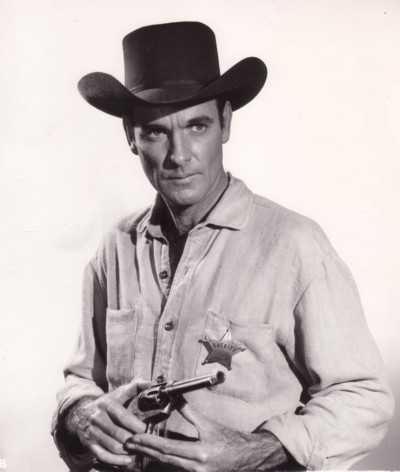
The Sons of Katie Elder

The Sons of Katie Elder
"First, we reunite, then find Ma and Pa's killer...then read some reviews."

Friday, July 15, 2011

Young Widow

Let's get the easy part of the way. When reviewing/criticizing female actors, I do my best to avoid any sort of criticism of their looks because 1. It sounds sexist, and 2. Unless the actresses' physical appearance is key to the movie, it sounds stupid in the context of a review. That being said...I love Jane Russell.  The Hollywood starlet recently died in February at the age of 90, but in her heyday she was drop dead gorgeous. I'd never heard of her until the last two or three years, but now I'll basically watch anything with her starring in it, like 1946's Young Widow.

Just a week or so ago, I reviewed 'Till the End of Time,' the story of World War II veterans returning home at the end of the war, struggling to adjust to the lives they had left behind years before. Like so many pieces of history, there is so much more going on than we can ever know. It's the little things you just never think of, or at least I don't. The soldiers returned, but what about those who didn't, buried in hundreds and thousands of graves all over the Pacific and Europe? What about the loved ones they left behind? How did they move on? Did they move on? While the storytelling is all over the place in this movie, the premise is interesting if nothing else.

After her husband is killed in an aerial reconnaissance mission over Berlin, young and recently widowed Joan Kenwood (Russell) returns to the United States after living in England. She returns to her family home in the south, but quickly finds out that everything reminds her of her recently deceased husband. Instead, Joan heads to New York where she rooms with an old friend, Peg (Penny Singleton), who is waiting for her husband -- a submariner -- to return home too. Her boss, Peter Waring (Kent Taylor), offers her the same job she left at a NYC newspaper, but Joan just can't cope yet as she struggles to move on from her husband's death. Making her transition tougher? An Air Force pilot, Lt. Jim Cameron (Louis Hayward), is aggressively pursuing her through all her rejections, unwilling to take 'no' for an answer. 

Though she had made the then-scandalous but now tame The Outlaw in 1943, Young Widow was more than likely most moviegoers introduction to Jane Russell.  Thanks to the controversy over her outfits (or lack of), The Outlaw was in and out of theaters due to censorship issues.  The performance is pretty impressive on its own even if she'd done the part 10 years later or so. But for a girl basically picked up off the street with little acting background to do a role like this is that much more impressive. Like so many good-looking actresses -- and actors too I suppose -- her looks sometimes overshadowed her actual acting ability. Like my recent reviews of Audie Murphy pointed out, I think Russell was best when she was in her comfort zone. She could do drama, but she was best at comedy. If there was any question that she could do drama though, this movie should put them to rest.

What will separate Russell's acting here from most is that she underplays it. Emotionally, she's destroyed, torn up, a wreck because the person she loved most in the world is gone. Maybe it's the character, maybe it's Russell's acting style (up to you to decide), but she's not theatrically over the top. Joan doesn't throw things across rooms and scream and cry hysterically. Instead she buries the pain and broods on it which ends up biting her in the backside anyway.  I think it's a great performance overall, understated in its effectiveness without playing to obvious cliches. For anyone who hasn't seen Russell in a dramatic role, this would be an appropriate introduction.

The problem is that beyond Russell's performance, the movie is really odd in terms of pacing and tone. It is a drama, but there are random moments of comedy thrown in. One of Peg's other roommates, Mac (Marie Wilson), is a dimwitted blonde who always has a gaggle of soldiers following her. These soldiers (including Norman Lloyd, Steve Brodie and Robert Holton) have these weirdly comedic scenes that present them as some out of place vaudeville team. Joan's trip back home makes Song of the South seem politically correct too with two Odd Couple aunts (one a belle, the other a tomboy) and two inexplicable black kids hanging around. A late scene has Joan and Jim on a date having to trick a motorcycle cop. I suppose its meant to show their chemistry, their budding relationship, but it would have been more appropriate in a Bob Hope/Bing Crosby comedy, not here. If the movie was handled as a drama throughout, it would certainly have been a better movie.

With a chance to make and develop a truly heartfelt relationship, 'Young' instead goes down a different route. A guy refusing to accept that a girl is not interested in him is one thing, even in a movie. But the way Lt. Cameron goes about it borders on stalker-behavior, following her home and basically badgering Joan into submission. Finally she not so pleasantly caves and goes out with him. How does she end up falling for him? He rescues a woman in a subway who has fainted onto the tracks as a train speeds toward them. So it's nothing about his personality or who he is as a person, just that he reacted in that situation. Thankfully after that the relationship grows in a genuine fashion, putting that scene far behind.

A decent movie that is hamstrung by some truly bad choices in film-making. Mostly worth watch for Jane Russell's performance which carries the movie. And even in a dramatic story about a war widow, producers still found a way to get Ms. Russell into a swimsuit...several times.  You know, just because you can. As you can see by the poster above, the advertisers clearly played up the sex kitten vibe...of which the movie has none. Go figure.

Young Widow (1946): **/****

Thursday, July 14, 2011

The Quick Gun

A user review at the IMDB points out a simple but key problem working against the success of the 1964 B-western The Quick Gun. Succinctly wrapping it all up, the user states 'It's not exciting.' As I struggled to come up with something to write about, that's what hit me. The story is a rehash of other westerns as is the case with the characters. But rehashes isn't always a bad thing so I kept watching. It never got better though as the movie coasts along.

After reviewing two Audie Murphy westerns these last couple of days, I was looking forward to this third western that aired as part of Turner Classic Movie's Audie Murphy night. I enjoyed both Drums Across the River and The Guns of Fort Petticoat, but 'Quick' never rises to that level. By the 1960s, Murphy's star had started to fade some which is reflected in his movie roles. The 60s were marked by low budget B-westerns that never rose above their smallish budgets.  IMDB ratings aren't a hard and fast rule because voters can strategically increase or decrease a ratings, but of Murphy's 40 roles, The Quick Gun is his lowest rated movie, and that says something. It just isn't very good.

Two years after he was provoked into a gunfight where he killed the two sons of a local rancher (Walter Sande), gunfighter Clint Cooper (Murphy) returns home to the town he grew up in. He's not sure what reaction he will get from the townspeople who were happy to see him go, but his return is halted on the road into town. He meets Jud Spangler (Ted de Corsia), the leader of a gang Clint briefly rode with in the past. Spangler offers for Clint to ride with them as they rob the bank in town, but he refuses and manages to escape, riding into town. No one is happy to see him other than his old friend turned sheriff, Scotty Wade (James Best). The rancher is still looking for revenge, and suspicions abound when Clint informs the town of the news of Spangler's impending robbery. They believe Clint's working as an inside man so can he convince them otherwise in time?

You would think with a movie that doesn't even break the 90-minute barrier, a story would not have trouble moving things along. That's not the case here with director Sidney Salkow's western which struggles with a pacing problem throughout. I can deal with familiar stories and cliched characters, but something has to actually happen for a movie to be even a little enjoyable. Murphy's Clint rides into town, gets stared at a lot, he helps prepare a defense and he ends up in jail when he's forced to kill in self defense. By the time Spangler's gang actually shows up I was bored to tears.  These townspeople don't deserve the help he's offering. More than any lack of excitement -- of which there's little to none -- is that there is no energy to the movie at all. No one seems that worried about the coming robbery.

In those previous Murphy western reviews, I mentioned the actor's somewhat limited range that usually worked well within westerns. The idea of the Clint Cooper character is a good one, a take on the prodigal son as this infamous gunfighter wants to return home after years away. His intentions are pure, just wanting to get a second chance, and he gets it when he stumbles into the news of the coming robbery. But like the rest of the movie, Murphy looks to be sleepwalking through the part. Some of that can be attributed to his character, a beaten down gunfighter sick of what he's done in the past. There's no real sense of urgency for this character who actually ends up spending about 30 minutes of the 87-minute movie in a jail cell. Now that just ain't right.

A bright spot from the slow-moving story is James Best as Sheriff Scotty Wade.  Too often Best is remembered for his part in the 1980s TV show The Dukes of Hazard as Sheriff Rosco Coltrane, but he made a name for himself in the 1950s and 1960s, usually in supporting parts in westerns and war movies. It's great to see him in a leading role, keeping up with Murphy and eventually making more of a positive impression. Wade is now engaged to Helen (Merry Anders), the town schoolteacher who used to go with Clint, and he quickly sees the writing on the wall. Calling him a tragic character in this B-western is a little much, but the character is certainly on that path. It's clear it will not work out for him as he's torn between his duty to the town and the people, to his fiance Helen, and to his old friend who he genuinely believes is telling the truth. In an otherwise pedestrian western, Best's performance stands out from the rest.

The rest of the story and cast is more hit or miss. Anders as Helen is pretty awful, somewhat redeeming herself in the end when all seems lost. Ted de Corsia gets to ham it up as Spangler, the not quite maniacal bad guy who looks to be enjoying himself in the spotlight. Sande and Rex Holman are the secondary villains, the Morrisons, the ranchers looking for revenge, but they're not around enough to leave an impression. Frank Ferguson is solid as Dan Evans, the hotel owner who used to be close friends with Clint, while Mort Mills and Gregg Palmer play two of Spangler's gunmen.

Cynical watcher of westerns that I am, I was hoping for the darkest of endings here, especially about midway through the movie when I was losing interest. The most appropriate ending (in my head) has Murphy getting gunned down as he ultimately saves the town with Best's Wade ending up with the girl. That of course is not the ending we get, but I can wish. The shootout in the main street at the end has a chance to be good because it is far from a happy ending, but right before going into really dark territory, The Quick Gun takes its foot off the pedal and slams on the brakes.  Too bad, a different ending could have saved it a little.

The Quick Gun <---TCM clips (1964): **/****

Wednesday, July 13, 2011

Goldeneye

By 1995, the James Bond franchise was at a bit of an impasse.  Timothy Dalton had made two 007 flicks, the last one coming in 1989.  Both were solid movies, but audiences didn't necessarily fall in love with the tough, icy cold portrayal that Dalton brought to the franchise. So with six years since the last movie, the franchise turned to a new star, a British actor known mostly up to that point in his career for his starring role in Remington Steele, Pierce Brosnan.

Making his debut as the infamous MI6 agent with a license to kill, Brosnan helped reinvigorate the franchise with 1995's Goldeneye. He only made four movies, ending with one of the worst Bond movies ever in 2002's Die Another Day, and his second and third entries are not the best entries either. It has to do at least a little with no more Ian Fleming novels to base stories off of, but there were other problems, few of them having to do with Brosnan's actual performance. But for starters, Goldeneye is one of the best that has actually gotten more popular over the years thanks to a Nintendo 64 game and more recently, a Nintendo Wii version with Daniel Craig digitally inserted where Brosnan would have been. So, Pierce, welcome to the franchise.

Working a mission with fellow 00 agent, Alec '006' Trevelyan (Sean Bean) at a secret weapons facility deep in Russia, MI6 agent James Bond (Brosnan) barely survives when Russian troops discover his presence in the facility. He struggles knowing Alec was killed in the process, but moves on, and nine years later continues his work. A new mission pops up when a new prototype for a high-powered offensive helicopter is stolen. Bond begins to think it's related to a mysterious Russian arms dealer named Janus who no one ever has actually met. When a Russian radar station is knocked out by a satellite firing an EMP pulse, Bond investigates, trying to find one of the two survivors, a computer technician named Natalya (Izabella Scorupco). But as clues start to mount, Bond begins to wonder. Is his supposedly dead partner Alec somehow involved in this scheme?

Besides the obvious transition from Dalton to Brosnan, Goldeneye is also noteworthy because it's the first Bond movie to be released since the Soviet Union collapsed. The evil Commie Russians were always a prime enemy for Bond to battle. So in a lot of ways, this is a transitional 007 flick. Director Martin Campbell (who would return for Craig's first movie, Casino Royale) brings the right energy to the franchise. There's action, but not too much. It's over the top, but never cartoonish or comic book stylized. There is humor and one-liners, but they're never over-done. Goldeneye is not only a good James Bond movie, but just a good movie overall. Brosnan's later entries struggled to stay in that middle ground, instead bouncing around too much into humor and ridiculous, even stupid, action.

Sean Connery is and always will be the best James Bond. Daniel Craig certainly has the potential to be second best, and of course depending on who you ask, any Bond fan is going to have a personal favorite. Brosnan is an interesting mix because he's a solid mix of all of those previous Bond actors while still putting his own spin on the character. He's smooth and stylish but can be equally cold. He's calmly efficient in his workings, but he is also troubled by his past failures. Much the way Connery did, Brosnan delivers his lines impeccably. James Bond one-liners have a tendency to sound forced and awkward if not handled just the right way, but Brosnan has a way of throwing them off the cuff that feels natural. As the series went forward, Brosnan as Bond was the least of the franchise's troubles. He was never in question, just the movies he starred in.

Just about any good James Bond movie has any number of reasons why it is successful. For me, one of Goldeneye's biggest selling points is the cast in support of Brosnan.  Sean Bean is one of the best and most underrated actors around at playing that villain you can't help but like a little bit. He's charming but with that hint of evil waiting to reveal itself. Scorupco isn't the best Bond girl, but she does have a good chemistry with Brosnan if nothing else. Famke Jannsen is one of the all-time best Bond girls as Xenia, Trevelyan's hench-woman, a killer who literally squeezes her victims to death with her thighs, getting some sort of sexual release in the process. Judi Dench is a great addition as M, head of MI6, Joe Don Baker plays Jack Wade, Bond's CIA counter, Robbie Coltrane is Valentin, a former KGB agent, Gottfried John is the treacherous Russian general, Orumov, Alan Cumming is conniving computer hacker Boris, Tcheky Karyo is Mishkin, Russia's defense minister, and of course, Desmond Llewelyn is Q, Bond's supplier of any and all needed gadgets.

Looking at the storyline this is an interesting addition to the Bond movies. The pre-credit sequence actually has something to do with the rest of the movie, and of all those sequences it is one of the best. But after Tina Turner's Bond song (listen HERE), the action goes by the wayside for most of an hour. Campbell doesn't rush the proceedings, giving Brosnan some room to breathe as Bond, laying out all the characters and situation. He does not disappoint then when the action does come around. A chase through a Russian facility followed by a tank chase through St. Petersburg is nicely executed as is a small-scale showdown with Trevelyan and Xenia on a Russian missile train. The finale at the necessary secret base as Trevelyan tries to rob the Bank of London through Boris' hacking is a great set piece, something you have come to expect from a Bond movie.

Partially because I love the N64 game so much, I probably give the actual movie a higher rating than I might if I was just judging purely on the movie alone. But it is still one of the best James Bond movies, and a fitting intro to Pierce Brosnan as 007.  Not quite a reboot like Casino Royale was, Goldeneye is by far the best Brosnan entry, and one any Bond fan should enjoy.

Goldeneye <---trailer (1995): *** 1/2 /**** 

Tuesday, July 12, 2011

I Love You, Man

Ah, here we are again; a review of a mainstream, recent comedy that was successful in theaters, on DVD, and most recently when it finally reached cable channels for an endless stream of repeats and reshowings. The movie is 2009's I Love You, Man. By all accounts, it is a very funny movie with some great laughs, good performances, and even better bit parts and cameos. But as I rewatched the movie recently, all I'm thinking is 'What do I write about? Should I just list all the funny lines that cracked me up?' Eh, I guess I'm a little better than that because otherwise I'd just provide a link to IMDB's Memorable Quotes (which I may end up doing anyway). But anyways, here we go.

This is another of the R-rated comedies that has thankfully breathed some new life into the comedy genre over the last 10 years or so.  Chicago Tribune movie critic/reviewer Michael Phillips has delved into these movies  a lot, many of them coming from director/producer extraordinaire Judd Apatow -- I Love You, Man is not one of those flicks but it certainly feels like one. They are often enough stories about men in their late 20s and early 30s, that middle point in their lives where they're realizing they aren't kids anymore, but they don't quite want to be grown-up either.  They manage to be smart and stupid at the same time, mixing dry humor with more obvious sex jokes and physical humor. However the formula works, it does, and these movies are great for a laugh.

After eight months of dating, real estate agent Peter Klaven (Paul Rudd) decides to propose to his girlfriend, Zooey (Rashida Jones). She accepts, and they start to plan the wedding, but they both realize a little problem Peter has...he doesn't have a best friend, much less any real guy friends. So not wanting to cause his fiance any embarrassment, Peter goes about finding a best friend, immediately realizing that it's harder than it looks. How do you even go about forming a platonic friendship with a guy? He goes down every avenue presented to him, meeting a lot of different and often enough weird individuals in the process before he meets Sidney Fife (Jason Segel), a single guy about the same age with similar interests. They hit it off, becoming fast friends, but can it end well for the friendless Peter?

The movie's success and its laughs rides on the shoulders of Rudd and Segel, two of the best comedic actors around and two of the funniest comedic actors currently starring in movies.  Rudd does awkward like nobody's business, bringing uncomfortable silences and weird nonsense words and phrases to a whole new level. It's funny watching him bumble through this man-love situation, but it is incredibly uncomfortable at times. Through it all though, there's a likable quality to Peter though so you root for him and feel for his situation. I've liked Segel since his Freaks and Geeks days and like him now in How I Met Your Mother where the sitcom parameters limit him. His Sidney is one of my favorite characters, just a genuinely good dude who has a unique way of living and going about life. Separately, they're great characters, but put them together, and they have this great energy and chemistry throughout.

Watch these movies, and you get a feel for a family-like setting in the making of process.  You see the same faces pop up over and over again, most of them just quick one or two scene appearances that in a lesser movie would seem unnecessary or forced. Here though, they fit in like peanut butter and jelly. J.K. Simmons and Jane Curtin and are perfectly cast as Peter's extremely frank, honest parents with Andy Samberg as his younger brother by eight years, a proud gay man if there ever was one. Jaime Pressly plays Zooey's best friend with Jon Favreau as her less than happy husband. Rob Huebel plays Tevin, Peter's smarmy fellow real estate agent, Thomas Lennon is Doug, one of Pete's failed "man-dates," with many more recognizable faces popping up here and there. In a bad movie, these are parts that could have saved you from the badness.  In a good movie, these are parts that bring the movie to another level.

Most of the humor that works here comes from the little bits, the little touches of reality that ring true. Peter and Sydney bond over their love of rock band Rush, holding epic jam sessions in Sydney's man-cave garage. Peter is trying to sell Lou Ferrigno's house in Venice and is having some trouble getting the job done. Talk about pulling a cameo out of your butt.  Lou Ferrigno, the Incredible Hulk? No way that should work, but it's one of the most sublimely perfect cameos ever. In his attempts to be cool, Peter instead kills himself with awkwardness, prompting random nonsense like calling Sydney "Jobin" with other gems like "Totes McGotes," "See you in a jif," "I'll talk to you then or I'll talk to you at another time," highlighting the awkwardness. It's funny though because Sydney goes along with it, embracing it, making it a little far-fetched but still fun to watch. My ramblings aside, I'll add again; this is a truly funny movie.

A huge test for any comedy is quotability. Once that movie is over, can you leave the theater throwing lines back and forth for days on end, and in this case, years later?  I Love You, Man is epically successful in that department. As promised, here is the link to IMDB's Memorable Quotes (read HERE). This is polished, smart and stupid R-rated comedy with a great cast and laughs to burn. You won't be disappointed watching this one if you're looking for a laugh.

I Love You, Man <---trailer (2009): ***/****

Monday, July 11, 2011

The Guns of Fort Petticoat

It can be easy at times to forget that in the taming of the wild west, it wasn’t just the men leading the charge. Now granted, the movies, TV shows and western novels tend to focus on the male characters, but the women played a major role in the settling of the west. I’ve made no bones about my issue with female characters in so many westerns, but my issue has nothing to do with what the women did, just how they’re portrayed; the whiny, helpless damsels in distress who couldn’t find their way out of a paper bag. To live in the west in the second half of the 1800s, you had to be tough whether you were man or woman.

Too few westerns take advantage of that situation. There are countless stories of what women accomplished in the west. One of the best examples – which I reviewed a couple years back – was Westward the Women, a story of a wagon train full of women heading west to meet their husbands. They struggle on and keep going, taking everything thrown at them and continuing to fight. As part of the Audie Murphy night recently on Turner Classic Movies, 1957’s The Guns of Fort Petticoat reminded me a lot of ‘Westward’ for all the right reasons, taking the formula and tweaking it a bit as a valley-full of women must fend for themselves during an Indian uprising.

With the Union and Confederate forces back east in the Civil War, cavalry officer Lt. Frank Hewitt (Murphy) sees a superior officer order an unnecessary and brutal attack on a peaceful Indian village and knows there will be repercussions at their western post. He deserts his post and rides south, knowing there will be attacks and raids for thousands of miles in every direction. Hewitt is heading home to his home in Texas, a little valley that lies unprotected with all the men off fighting the war. Organizing all the women left behind, he prepares a defense at an abandoned Spanish mission, knowing an attack will come. He trains the women, readying them for the coming fight, but can he get them ready enough in time?  

This is a movie that had a lot of potential to be a campy western full of obvious humor that would have been remembered for all the wrong reasons. Instead, director George Marshall turns in an above average western that is entertaining, well-made and different from your typical run of the mill cowboys/cavalry and Indians movies. 'Guns' was filmed in Old Tucson, one of the most instantly recognizable locations for western shooting to anyone even remotely familiar with westerns. For starters, it looks great. Not given a credit in the credit sequence, composer Mischa Bakaleinoff turns in an appropriate, exciting western score that keeps the action flowing. At just 82 minutes, this is fast paced and exciting, and a quality example of a modest B-movie rising above its genre conventions.

Before his tragic death in 1971 in a plane crash, Murphy made 44 movies of which 33 were westerns. He just seems at home as the lead -- cowboy, rancher, officer, scout, gunman -- in all these westerns.  I don't intend this as a criticism, but Murphy wasn't the greatest actor around as he worked within a comfort zone that played to his range. Nothing wrong with that. That resolute, staunch hero is especially needed here because he's the only good guy (quite literally GUY) around. There are attacking Indians, conniving cowards, and a gang of opportunistic bandits around with Murphy leading the way for his little company of female fighters. Murphy -- range limitations aside -- is always very believable, very natural in his acting, and his performance is a key to this movie's success.

Instead of working with one tough, strong female co-star, Murphy gets plenty of them here. His company includes Kathryn Grant as Anne, a pretty tomboy who catches Lt. Hewitt's eyes, Hope Emerson as Hannah Lacey, an older, tough as nails woman who claims to be as tough as any three men and becomes Hewitt's "sergeant," (a similar role to the one she played in a similar movie, Westward the Women), Peggy Maley as Lucy, a saloon girl with a heart of gold (of course), Isobel Elsom as a prim and proper Southern woman with her slave/assistant, Hetty (Ernestine Wade) along, Jeanette Nolan as Cora, the bible-thumping religious freak and Patricia Tiernan as Stella, a past love interest of Hewitt's who hasn't quite moved on. As an ensemble filling in the pieces around Murphy, the almost all female supporting cast does not disappoint in their performances.  

So often 1950s westerns can be extremely tame looks at a particularly brutal time in American history. That's not an issue here with this western. When a small group of people fort up and basically prepare for a siege, there are going to be some casualties.  My worry was that somehow all these characters would make it through the movie unscathed, throwing away any semblance of reality. The siege and continuing attacks on the mission where Hewitt and Co. hole up are a bright spot for the movie. They're realistic, violent, and shot in a way where the battle is always coherent and easy to follow (harder than you'd think comparing it to other movies). And there are casualties which is probably a little more shocking because you just don't see many female characters killed in westerns. The action though on top of a solid story make this western better than most.

Now there are moments where this movie leans toward the camp humor (intentionally or not). Jeff Donnell plays Mary Wheeler, a single woman who is pregnant with the baby of a no-good gunslinger, Emmett Kettle (Sean McClory). It's the type of performance that grates like so many other helpless female characters and feels out of place compared to the rest of the women. There's also the obnoxious but somehow necessary little kid (Kim Charney), full of piss and vinegar and "tough talk" who ends up causing an attack when the Indians are about to pass the group by. Nolan's Cora is also a little much as the religious zealot, especially her rant in the end. Other small parts go to Ray Teal, Nestor Paiva and James Griffith as three low-down bandits. Underused parts, but effective for what's needed. Named Salt Pork, Tortilla and Kipper respectively, they also have three of the coolest names ever.

Reviews are somewhat mixed on Guns, and most of the criticisms I read were very fair. But in the end, I liked this western a lot. It isn't a classic western, but it does just about everything it can to be an above average oater. 

The Guns of Fort Petticoat <---TCM clips (1957): *** 1/2 /****

Sunday, July 10, 2011

Drums Across the River

Thanks to a release of a recent DVD collection of four Audie Murphy movies, Turner Classic Movies did a service to western fans with a night devoted to the World War II hero turned movie star.  Only one of the films shown is actually in the collection, but three Murphy westerns dotted the schedule, and not necessarily his more well-known flicks. In other words, expect a couple reviews over the next couple days of Murphy films, starting with 1953’s Drums Across the River.

I go back and forth on 1950s westerns, but when done right and not handled in a glossy whitewash, they can be a lot of fun. Just look to the Anthony Mann and Budd Boetticher westerns. With wave after wave of westerns made on a small scale hitting theaters, these movies needed bad guys, and the 1950s produced a lot of them. They aren’t instantly recognizable names now over 60 years later, but for a decade they parlayed their bad guy look into a long list of movies. One of the best at playing bad was Lyle Bettger, chief baddie in ‘Drums’ and Murphy’s main rival.

Working with his father (Walter Brennan) running a freight company in Crown City, a western mining town, Frank Brannon (Murphy) agrees to take on a job transporting goods to a mine that needs supplies. Along for the ride is a handful of cowboys looking to help out, including a man named Walker (Bettger), who has some other plans. Walker intends to start a war with the peaceful Ute Indians in the territory, all with hopes of getting a chance at mining gold out of the hills and mountains promised to the Indians. Brannin manages to negotiate a peace with the Utes after Walker’s failed attempt, but this fight is far from over.

I’ve been a fan of Audie Murphy since I first saw him in the autobiographical film To Hell and Back, the story of his exploits in World War II that earned him worldwide fame. Not always remembered with the John Waynes, Randolph Scotts and Clint Eastwoods, Murphy is nonetheless one of the all-time best western stars. As an actor, he didn’t have the greatest range, but as a western hero, he was strong, loyal, honest, trustworthy and tough as nails. You just know with a Murphy character that he’s not going to take any crap from the bad guys, and in the end, he’s going to win out and get the girl. As the western hero, he’s able to stay in that comfort zone as an actor, and as was the case here, he rarely disappoints.

What is cool about Murphy – and a few other action heroes – is that he does a majority of his stunts whether it be riding his horse at full speed chasing the bad guys or taking part in a knock down, drag ‘em out fistfight. That’s what works here with Drums. Starting with Murphy in the lead, this movie has a nasty streak right up its back, impressive stuff considering it was released in the early 1950s. Two fistfights are absolutely brutal affairs that don’t feel choreographed or overly staged, just two guys beating the hell out of each other. Murphy’s Brannin later dispatches a gunslinger by whipping him across the face and then shooting him twice in the stomach. You don’t see that too often in many pre-1960 westerns.

More than just the honest look at the brutality of the western life, this is a fun western, and one I enjoyed a lot surprisingly enough. Director Nathan Juran films his story on location for the most part in the hills and mountains of Red Rock Canyon State Park in California. It is a beautiful movie that features some familiar locations and some new ones. The story also treats Indians as human beings too, not just mindless savage killing machines. Later gaining fame as Tonto in The Lone Ranger, Jay Silverheels plays Taos, a Ute chief who strikes a deal with Murphy’s Brannin. With some twists and turns as to what everyone is up to, the story keeps you guessing enough to make it always entertaining, not easily settling for the typical route.

In one of his many 1950s western bad guy roles, Bettger is a gem as he so often was. These westerns weren’t interested in villains and shades of gray. There was black and white with nothing in between. So because of that, these bad guys are bad news with absolutely no redeeming qualities. Bettger revels in these roles, slimy, smooth villains who will no doubt meet a nasty fate in the end. As for the rest of the cast, screen veteran Brennan has a good chemistry with Murphy even if his part doesn’t require much after about half the movie. Lisa Gaye plays Jennie, the love interest with Mara Corday playing Sue, the saloon girl in cahoots with Bettger’s Walker. Hugh O'Brian plays Morgan, a hired gun who would like nothing more than a shot at Murphy in another part that has some fun with the over the top bad guy. It’s a fun western though, one that rises above so many average westerns from the 1950s. Well worth looking into.

Drums Across the River (1953): ***/****

Saturday, July 9, 2011

Pocket Money

My high school and college Spanish only takes me so far when it comes to actually understanding the language. That can be a problem when trying to understand and keep up with a Spanish movie, or at least an American-made movie dubbed into Spanish.  That's where I was first introduced to 1972's Pocket Money, a late night showing of this modern western. When I saw stars Paul Newman and Lee Marvin, I sat down and trudged through it, trying to keep up with the language the best I could.

Long story short? My Spanish isn't that good if I have to rush to keep up. I had no real concept of what was going on but went along for the ride. The problem arose that this was not a movie available in any formats, and TCM wasn't showing it as part of their rotation.  Well, finally it was released on DVD as part of a Newman film collection, and how many years later I was able to catch up with it. I knew going in that it wasn't either actor's best work, but as a fan of both, I wanted to give it a try...in English this time around.

A down on his luck Arizona cowboy, Jim Kane (Newman) has been dealt some bad news when he finds out the horses he's brought to market have to be quarantined with the horse equivalent of an STD. He needed the money he would get for the sale to pay off a bank loan, but now he's up the creek. Looking for work -- any sort of work -- Kane makes a deal with a somewhat shady businessman, Bill Garrett (Strother Martin), to herd cattle up from Mexico into the U.S. for an upcoming rodeo. Something about the deal doesn't strike Kane quite right, but desperate for the cash he takes the job. With help from an old friend and "cattle broker," Leonard (Marvin), he heads south to round up the animals, but nothing is going to go as planned for this perpetually down on his luck cowboy.

The ingredients for a really solid modern western were all here.  Marvin and Newman working together for the only time was the only selling point I needed to hear.  The plot reminded me some of Cormac McCarthy's All the Pretty Horses, and when I saw Terrence Malick had written the script I was psyched.  Throw in supporting parts for Martin, Wayne Rogers, Matt Clark, Hector Elizondo, Gregory Sierra, and Fred Graham too. Something doesn't make the transition though because the end result is a story that meanders along too much with an already short 99 minute run-time and never really gets anywhere, finishing where it started. It isn't a bad movie, just one that fails to make much of an impression.  I watched it last night and early this morning, and I'm already struggling to remember much about it. That's never a good thing.

If you're going to watch this movie though, I'm guessing it will be because of Newman and Marvin in the two lead roles.  What makes it worthwhile seeing these two legends work together is that they both play against type.  Newman's Jim is a nice enough guy, a hard worker, and a decent cowboy, but he just isn't the sharpest crayon in the box.  Stupid is too harsh, and dim-witted sounds too comical, but there's a naivete to the character that you rarely see in a Paul Newman movie. The same for Lee Marvin as Leonard, a businessman and cowboy who always wears a suit and tie while working. He's not as intense or intimidating as so many other roles, but Marvin easily slides into the part.

The chemistry between the two is not in question here.  With a story bouncing around between some dramatic scenes and some comedic exchanges, the duo makes it look effortless.  It's more impressive when you consider the script just doesn't give them much to do.  Maybe it was just early in his career as he was finding his voice, but Malick's script is not a strong one. It relies far too heavily on the star power without developing any sense of pacing or character development. As a topper, it's never quite clear what's going on.  There are moments of great quality, especially Marvin's speech to their Mexican cowhands and Newman's confrontation with Martin over their deal, but the long stretches of nothingness handicap the movie too much overall.

I can't put my finger on what went wrong with this movie.  Is it drama or comedy? Is it neither? Maybe I'm judging it too harshly, but I came away empty from it as if the movie had left no impression on me at all.  I don't know what else to say. The Mexican locations are authentic -- appropriately enough -- and Carole King's song (listen HERE) is pretty standard fare for a folk song theme played over the opening and closing credits. I wish the movie was better, but it never amounts to anything.

Pocket Money <---Youtube clip (1972): **/****

Friday, July 8, 2011

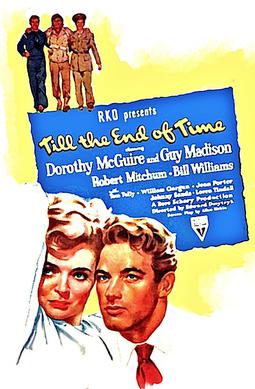
Till the End of Time

Wars end, and the soldiers return to their lives back home. Following Vietnam and most recently with troops returning from Afghanistan and Iraq, we see that it isn't so simple. The readjustment and transition back to a somewhat normal life can be extremely difficult as their lives are flipped all around. This is a popular subject in movies, especially with Vietnam. WWII had some movies like this -- most notably 1946's The Best Years of Our Lives -- but one has flown under the radar all these years. Released the same year as 'Best Years,' 1946's Till the End of Time is a more compact, more moving, and better movie regardless of its unknown status.

I have this notion that following the end of World War II in both the European and Pacific theaters that everything was hunky-dory, everything was just fine as soldiers returned home to their friends and families without missing a beat. That of course was not the truth. Thousands of young men had just taken part in a world-shattering and world-changing event that altered the course of history, and then after years of fighting, the war was over. As much as they may have wanted to go home, it just wasn't that easy. From director Edward Dmytryk, 'End of Time' is an honest, moving look at this transition through the eyes of three Marine veterans.

After three-plus years fighting in the Pacific, highly decorated Marine Cliff Harper (Guy Madison) is being mustered out just a few months after the end of WWII. He parts ways with his best friend, William Tabeshaw (Robert Mitchum), and heads home to California where he sees his parents (Tom Tully and Ruth Nelson) for the first time in years. Cliff is glad to be home, but he doesn't know quite what to do with himself. He finds himself lashing out at everyone around him. He wants nothing to do with any sort of job or responsibility. Nothing comes easy for him as he tries to readjust even when he meets Pat Ruscomb (Dorothy McGuire), a young widow who lost her pilot husband in Europe within the last year. Instantly drawn to a similarly struggling Pat, Cliff can't seem to do anything right though, and his struggles to keep his emotions in check might drive her away.

I had little to no expectations going into this one. The plot description sounded interesting, and I liked the two leads in McGuire and Madison, not even realizing one of my favorites in Robert Mitchum played a key supporting role. The premise was even more interesting considering the film was released within a year of the end of WWII. My picture of a post-WWII America is one where audiences did not want to see movies about their heroic veterans struggling to readjust to civilian life.  This is a great movie, authentic, honest and moving. It doesn't try to whitewash these struggles so many veterans went through after surviving the hell of combat. I liked it so much more than 'Best Years' and wish it could receive some recognition alongside that much more well-known movie. Still, it doesn't take away from its value as a film that can stand alone on its own.

Certain moments take this movie to another level. In terms of a no-frills opening, the long, uninterrupted shot of Madison's Cliff walking through his childhood home upon returning is great. He slowly walks through the rooms, seeing things so much differently than he did only a few years before.  Later, a veteran, Perry (Bill Williams), refuses to wear his prosthetic legs but finally swallows his pride and pushes his stubborness by the wayside. In a great reveal, he opens the door to his room dressed in his dress uniform, proudly walking to his beaming mother. The best though comes when Cliff and Pat are on a date at an ice rink where they see an Army soldier (Richard Benedict) struggling with a bout of the shakes. Both having dealt with similar circumstances in their own way, they help the young soldier who wants to go home but doesn't want to worry his parents. A scene that is incredibly moving in its execution, it is years ahead of its time in honesty.

Just 24 years old at the time, Guy Madison does not disappoint in his first starring role and second movie overall.  What sets his Cliff Harper character apart is that at several different times, he's a complete asshole.  Granted, it isn't so much him as his internal battle to adjust and be normal again, but he's aggressive and even violent, both physically and lashing out with words. Mostly though, he realizes what he's doing and does his best to stop it. His relationship with a scene-stealing McGuire feels real and never forced. These are two individuals who are dealing with similar problems but end up using the other for some sort of legitimacy or rationale. I have this picture of McGuire as the motherly character from Friendly Persuasion and Swiss Family Robinson so seeing her as a somewhat promiscuous young lady is quite a departure. You buy it though. Like Madison's Cliff, she doesn't know how to move on with her life.

Imagine my surprise when I sat through the credits and after McGuire and Madison I saw Robert Mitchum's name pop up.  Consider me very pleased, even if his part is only a supporting one, if a key one at that. This is a pre-stardom Mitchum, but it's clear he's destined for bigger and better things. His character is also an ex-Marine who has a metal plate in his head after he was wounded. He refuses to deal with the ever-increasing headaches he has, living life as it presents itself. From what I've read about Mitchum, the character isn't too far removed from his real-life personality.  In other words? He's always up to something, and it's always going to be entertaining.

There is little not to like about this movie. From the lead parts down to the supporting roles like Williams' ex-boxer Perry and Tully and Nelson as Cliff's parents, everyone hits that right note.  It's that rare movie that hits almost all the right notes.  It never gets too melodramatic or hammy, but also doesn't underplay the situation of these returning veterans.  'Best Years' is much more well-known, and it also features some great performances, but for me, I'll stick with this one.

Till the End of Time <---TCM clips (1946): *** 1/2 /****

Thursday, July 7, 2011

The Three Stooges Go Around the World in a Daze

Between the years 1934 and 1959, The Three Stooges were one of the most prolific comedy teams working in Hollywood.  Over that 25-year span, the trio (with five overall Stooges) made 220 shorts for which they are most famous for.  Even now in 2011, they still are popular among audiences and are shown in syndication while also boasting impressive DVD sales.  Eventually though, the demand for shorts ran out, and the Stooges turned to film like so many other actors and comedic teams.

With their shorts running in syndication on television starting in 1959, the Stooges saw a boost in their popularity as a whole new generation was introduced to the comedy team. Between 1959 and 1965, they made six feature films and appeared in cameo parts in several other movies, most notably 4 For Texas and It's a Mad, Mad, Mad, Mad World.  As someone who grew up watching the Stooge shorts, the movies were never as good, but it is still The Three Stooges. So when I saw 1963's The Three Stooges Go Around the World in a Daze pop up on TCM's schedule, I had to give it a watch if nothing else.

The great-great grandson of the famous Phileas Fogg who traveled around the world in 80 days, young Londoner Phileas Fogg III (Jay Sheffield) is unknowingly conned into trying to repeat the feat. Two crooks and con men, Vickers Cavendish (Peter Forster) and Lory Filch (Walter Burke) plan on robbing a bank and using Fogg as a dupe. Fogg agrees on the bet and prepares for his around the world journey. His three American servants, Moe (Moe Howard), Larry (Larry Fine) and Curley Joe (Joe DeRita), plan on traveling with him, helping whenever and wherever they can. The con hasn't worked though because Fogg has caught the attention of Scotland Yard. Now instead of just focusing on traveling, Fogg and the boys now have to worry about Cavendish and Filch too coming after them to shut them up.

After years of watching the Columbia shorts the Stooges made, it still feels odd watching feature-length films. You're so used to watching 15-20 minute shorts that I always wonder how long they'll be able to keep the momentum up.  As I mentioned before though, it is still The Three Stooges, and if you are a fan of them, you're going to get some enjoyment out of a movie no matter how long it is.  If anything, it can be fun to see them out of their element in such a different venue. Traveling with Fogg, they start in London and visit Istanbul, Shanghai, Tokyo, Hawaii, San Francisco, Ottawa and finally back to London. Part of the fun is just seeing these screw-ups traveling along, finding new ways of getting into trouble along the way. It's the Three Stooges for goodness sake!

By 1963, comedian Joe DeRita was filling out the ranks of the trio after Joe Besser left the group. DeRita starred in all six of the Stooges movies.  There isn't the same energy there was with Curly or Shemp, but DeRita is a capable fill-in for the group. If nothing else, he isn't Besser, the hated and even despised temporary replacement after Shemp's death.  With Moe and Larry still around though, you don't notice it much. All the physical and slapstick humor that made them famous is back although Moe does have a great line about their infamous eye-gouging, stating "We don't do that anymore" because young impressionable TV audiences didn't need to see that.  Short or feature, it's always good to see the Stooges doing their routines no matter which three is around.

Fans of the Stooges will appreciate several recycled bits from previous Columbia shorts here in 'Daze.' The most famous is probably the 'Maja?...Aha...Raja' routine made famous by the 1946 short Three Little Pirates with Moe playing the same part and Curley Joe taking over Curly's part of the act. Watch the original bit HERE. Another bit -- this time from the classic 1934 short Punch Drunks -- has Larry playing Pop Goes the Weasel, sending Curley Joe into a fit that no one can stop.  One of my favorites that was used in several shorts has a fight going on in a darkened room. Someone always manages to turn on a light or light a match just in time for someone to get whacked over the head.  The pay-offs aren't as good here -- no 'Here I am, Moe!' -- but the routine works no matter how you figure it.

This is the longest of the six Stooge movies at 94 minutes, but the pacing is never slowed down. Sheffield is a suitable tag-along as the younger Fogg, a necessary part of the story who is required to not get in the way and provide some lines that move the story along. He falls for American tourist Amelia (Joan Freeman) and not surprisingly falls in love. In the meantime, the Stooges fight sumo wrestlers, escape a Turkish prison (you read that right), stowaway on an ocean liner, hide out in a closely packed train, and in general, are up to their old shenanigans. Is it as good as the classic Columbia shorts? No, but it's still an enjoyable ride.

The Three Stooges Go Around the World in a Daze <---TCM trailer (1963): ***/****