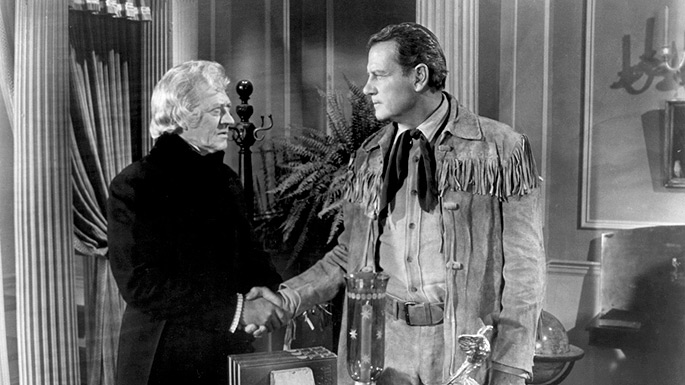
The Sons of Katie Elder

The Sons of Katie Elder
"First, we reunite, then find Ma and Pa's killer...then read some reviews."

Monday, April 11, 2011

Hereafter

After struggling in theaters last fall during its first release, Clint Eastwood's 2010 film Hereafter has been in the news recently for all the wrong reasons.  The film opens with a startling sequence of a tsunami hitting a coast somewhere in Asia.  After the recent natural disaster in Japan with an almost identical tsunami that claimed thousands of lives, the movie's premiere was postponed and more than likely canceled for good in Japan.

Upon its release, Eastwood's film struggled in theaters.  Critics were mixed about the movie, and it never caught on with audiences.  It's easy to see why.  In a lot of ways, it is the completely atypical Eastwood movie, unlike any of his other flicks as a director (more on that later). It also deals with one of the more polarizing issues when it comes to audiences and people in general, faith, religion, death and the afterlife.  Just about everyone has their personal opinions on the subject, and many don't want to be preached at about someone else's beliefs.  Fair enough I guess.  It's a shame because the movie is typical Eastwood, well-made, well-written, and just a good movie overall.

On vacation in Asia with her boyfriend, French TV journalist Marie Lelay (Cecile De France) barely survives a near-death experience when an immense tsunami strikes the coastal town she's staying in. Swept away by the wall of water, Marie has visions, maybe hallucinations, of another place, maybe out of this world which she struggles to deal with as she returns to her normal life. In London, 12-year old Marcus (played by twins Frankie and George McClaren) is dealing with the death of his twin brother as his mother deals with a substance abuse problem. All Marcus wants is some sort of answer. Is his brother all right wherever he went? And where do the dead do?  In San Francisco, factory worker George Lonegan (Matt Damon) is trying to move on with his life. From an early age, George has been able to communicate with the dead, but looking at the ability as a curse, he's trying to put it all behind him and live a normal life. As these three people's lives develop and change (for the better and worse), their paths seem destined to cross in some way. How? Who really knows?

Many of the reviews I read about Hereafter pointed out that this was such a departure for Clint Eastwood as a director.  His films always had a very gritty, hard-edged feel that showed people struggling through some past trauma, past incidents.  Think of Mystic River, Gran Torino, Million Dollar Baby, even Unforgiven and The Bridges of Madison County.  They were all about the people above all else.  That's why I don't understand the reviews written about Hereafter.  Is it a departure for Eastwood? Yes, of course it is because he is working on a different level, more faith-based, more personal beliefs. But at its heart, this movie is about the small people in a big world looking for some sort of happiness, some sort of answers to a question or a problem facing them. What I'm trying to say is that yes, this movie is different, but not bad different. It's Eastwood playing with what he knows but expanding on it out of his comfort zone.

Where I'm guessing this movie lost some people is at its most basic level, the conversation and dependency on the idea of an other world after death. That's an individual thing that will hit each person differently when talking about this movie.  If you don't believe in some version of a god, some place your soul goes after your death, you're probably going to struggle getting through this movie.  Not a judgment there, just an observation, I struggle with those questions myself.  At a certain point, you just have to go along with it all.  Damon's Lonegan actually does communicate with the dead. This isn't left up for interpretation by Eastwood and the script. George does it. Either you can accept this or you can't as a movie viewer.  The message boards at the IMDB are riddled with arguments -- not discussions -- about religions, god, life after death. It's got to be one of the easiest ways to start an argument (mention any of those), and it is then easy to see why a movie like this can be so dividing. What's disappointing is I don't think Eastwood intended to make a "message" movie. This is a movie about the people, not the idea.

The story follows in the vein of Crash where character interactions and storylines are inevitable.  For me, Damon's story is the best, a middle-aged man truly struggling through an ability given him.  He's lonely and just wants to be happy in one form or another. Through physical contact he can communicate with the dead so relationships are nearly impossible. He has a chance with Melanie (Bryce Dallas Howard, great supporting part), a woman he meets at a cooking class he's enrolled in. You're rooting for George to just be happy, and Damon -- maybe Eastwood's new favorite actor -- does a fine job with the character. The other two main characters, Marie and Marcus, deliver equally impressive performances, but I didn't love them as much as Damon's.  De France especially turns in an amazing performance, and she's one of the more classically beautiful actresses I've ever seen. It all plays into this innocence, this vulnerability to her character trying to right her life.

One complaint I can understand is the somewhat slow pacing in this 129-minute movie.  Eastwood is in no rush to move the story along, and that's fine because we do get to know the three different characters. He provides these heartbreakingly real moments that will make you forget the slower moments.  George makes a connection with Howard's Melanie only to see his "ability" ruin the possibility of any future.  Marcus narrowly avoids being killed himself with some possible divine intervention. Marie finds an outlet for the questions she has. The best though is George's late scene with Marcus, genuine and real no matter how you look at it.  The ending could have been pegged sappy, but I'll say instead that it's tone and theme appropriate. An underrated work from one of my favorites, Clint Eastwood.

Hereafter <---trailer (2010): *** 1/2 /**** 

Sunday, April 10, 2011

Synanon

Starting things off with a big generalization that I have no concrete facts to back up with, the 1960s have to be the most turbulent decade in American history, rivaled by the 1860s, the 1930s, and the 1940s among others I'm probably forgetting.  At the height of this turbulence was the drug culture that no doubt existed before, but really came to the forefront of people's minds during the time of Vietnam, hippies, and free love.  I have this perception of the average American home being oblivious to the drug culture. Were they? Who knows for sure, but some were aware.

The Synanon organization was devoted to drug rehabilitation, helping junkies and addicts kick the habit they'd developed.  Founded in 1958 in Santa Monica, California by Charles Dederich, the organization existed until the late 1980s before finally going under.  They were obviously doing something right to last over 30 years. Their success in the early 1960s was even parlayed into a feature film, 1965's appropriately titled Synanon. Made on location in Santa Monica at the Synanon Home where its patients went through treatment, the movie was made with the support of the organization, which made me wonder.  Why didn't they insist on a more positive story, or if nothing else, at least a better written script?

Coming off a heroin high one night on the boardwalk, ex-con and thug Zankie Albo (Alex Cord) finds himself in front of the Synanon House on the beach and checks himself in. At the lowest of lows though, being sober sounds like a good thing. When you're off your high, not so much, and Zankie has to convince the Synanon administration (Edmond O'Brien as Dederich, along with Richard Conte and singer Eartha Kitt) that he's on the up and up. Zankie goes back and forth but decides to stick around, partially because he's got an eye for another patient, Joaney (Stella Stevens), while also dealing with a fellow patient and person from his past, Ben (Chuck Connors). Going along with the program though and genuinely trying to get better, it seems only a matter of time before his demons get the best of him.

The biggest reason I watched this flick was the cast, no huge stars but actors who I'm always glad to see.  The performances though are more hit or miss.  O'Brien is a one-note character, the tough-talking administrative leader of the house, always glowering down at its patients with his tough love mentality. Conte plays a variation of so many of his performances, a condescending guy who thinks he knows everything.  Basically, that asshole everyone knows.  Kitt is okay but isn't given a ton to do.  Cord, Stevens, and Connors are the best thing going for the movie.  All three characters are deeply flawed individuals with their pasts looming over them.  What clicks together is that individually or as a group, there's nothing very redeeming about them, but they're still interesting to watch.  In the end, one character does get a chance to redeem themselves and move on to something better.

Now if I'm supporting a Hollywood feature film about my organization, I'm making certain demands about how things are going to be portrayed.  With an organization like Synanon, that can be trouble because you're dealing with drug rehab (albeit a seemingly white-washed version).  If you show it as it is, this is going to be one of the darkest movies ever.  If you censor it as it feels like in the film at times, you're not doing the story justice.  Director Richard Quine is trapped somewhere in the middle with moments of incredible darkness followed by moments of adoring adulation of the organization. Going back and forth like the story does, that's not the biggest concern. It's a reliance on story conventions that soap operas would be jealous of. Maybe it seemed innovative or ahead of its time in 1965, but now in 2011, it's all been done and seen.  Shocking then, but not so much now.

What aids the movie through its ups and downs has little to do with the actual story of this organization trying to aid patients in their drug rehab.  It's a very stylish, well-made look at Santa Monica, California, providing a bit of a time capsule for a really cool time period.  Filming was done at the original Synanon house on the Santa Monica beach although I'm guessing indoor scenes were filmed on a studio.  Other than though, as a viewer we feel like we're there at the house with the patients.  Quine shoots on the streets surrounding the house, in and around the seedy bars nearby, and uses some unique angles that take you out of a typical comfort zone. It's not an aggressive style, but it doesn't just settle to put the camera in front of the cast and let them go.  With a soft jazz score by Neal Hefti, 'Synanon' gives a window into 1960s California that transports you into the story.

Trying to look past the cliches and stereotypes the script relies on far too much, I was genuinely impressed with the performances by Cord, Stevens and Connors.  I've only seen Alex Cord in a handful of really average movies, but I've always liked him as an actor.  Besides the ridiculously odd but still cool name -- Zankie Albo -- the character is interesting even if I would have liked a little more background.  Stevens plays up her sex kitten image and then throws you for a twist the same way Connors does, shedding his Lucas McCain image from The Rifleman.  So overall, while the movie wasn't that good, some of the performances were good enough to give this a slight recommendation.

Synanon <--- TCM clips (1965): ** 1/2 /****

Thursday, April 7, 2011

The Next Three Days

Master thieves, hardened criminals, hired killers.  Movies have a way of dramatizing and romanticizing those people into something they are almost assuredly not.  The life of a real criminal has to be something different from the one we as moviegoers see so regularly.  It's an entirely different world.  If you wanted to get into that world, where would you even start?  You want to do something you've got absolutely no experience or background in and have no idea how to get it done. Sound like a dangerous enough proposition? That's 2010's The Next Three Days.

In and out of theaters in a week or two thanks to some less than favorable reviews, I missed this movie last fall even though I thought it looked good.  So why didn't it succeed? Why weren't the reviews that good?  My first reaction was that -- and this will come as a surprise -- it's a good movie.  It's not an instant classic that will rewrite the genre, but it is unique, it is different, and in the end, entertaining.  From Crash director Paul Haggis, 'Days' tries to put a spin on the criminal underworld that as viewers we think we understand.  Facing a situation that could tear your life apart, would you go down a road that could easily end with a lengthy jail sentence and maybe even claim your life?

A professor at a small community college in Pittsburgh, John Brennan (Russell Crowe) is happily married to career woman, Lara (Elizabeth Banks), with a 3-year old son. Their life is ripped apart though when one day police officers burst into their home with a warrant for Lara's arrest for the murder of a co-worker. She's found guilty and even with a lengthy appeals process looks like she'll be sent to prison for life.  Seeing his wife truly start to crumble, John decides he will break her out of prison and with their family flee to another country.  But just a professor, what should he do? Where should he start?  Almost by trial and error, John starts to figure things out. A plan starts coming together when he receives a shock from his wife. She's being sent to a different prison in three days. If he wants to pull the job off, he's going to have to put it into effect now.

Who among us at some point watching a movie like this not thought 'Hey, I could do that'.  Okay, just me? Well, anyways, that's what makes the story interesting from your typical story of criminals trying to pull off a job.  Starting from scratch, Crowe's John has to figure out how exactly you go about busting someone out of prison?  He's Joe America, a middle-aged man with a decent job who's never committed a crime in his life.  He has literally no experience with anything illegal, but with his back against the wall sees he has to attempt something desperate if he wants to bring his wife back.

Russell Crowe is a great choice in the lead even if at first glance it doesn't sound like it should work.  This is Maximus from Gladiator or Ben Wade from 3:10 to Yuma.  Of course he'll know how to break his wife out of prison.  Maybe playing on audience perception going in, Haggis makes a wise choice casting Crowe.  He's that good mix of vulnerable and worried with determined and steadfast.  It never hurts that Crowe is a very likable actor, bringing the audience in on his side, maybe even more so as a family man.  What surprised me was the acting by Banks who I normally think of as a more comedic actress.  Consciously or not, Haggis and his screenplay don't portray her in the most favorable light.  Her introduction brought to mind a word that rhymes with 'itchy.' Haggis does leave you guessing about Banks' Lara.  Is she or isn't she a murderer?  It's resolved in the end, but Banks does a great job keeping you unbalanced with a not so likable character.

'Days' is a remake of a 2008 French film that clocked in at just 96 minutes.  If there's a complaint here, it's that 'Days' is a little long in the tooth at 133 minutes.  The first 60-75 minutes are necessary to show John learning how exactly he's going to pull this job off, some plans working and others failing miserably.  A tense failure at the prison truly puts you in shoes as nerves and anxiety rack his body.  A little slow-moving at times, it is certainly needed to set up the actual break which is the better half overall. Haggis has only hinted at how Crowe's Brennan will do the job so seeing it in execution is exciting.  In the process of putting his plan together, his name has popped up on the radar with two detectives (nice supporting parts for Lennie James and Allan Steele) trying to keep up with him.  Tension at its best with a prolonged chase dominating the last 40 minutes or so, the movie ending on a high note.

Thanks to some not so factual advertising, I thought I was seeing a slightly different movie than the one I ended up seeing.  Previews built up Liam Neeson as a crook gone straight who will help Crowe in his efforts.  Not so fast, Neeson is in the entire movie for one scene that goes about three or four minutes. A good part, but don't expect a big part. The whole supporting cast surprised me mostly because none of the names were really pushed in ads.  Daniel Stern plays the Brennans' lawyer, Brian Dennehy plays John's father with whom he has a rocky relationship, former Wu Tang member RZA as a drug dealer, and Olivia Wilde as a single mom who John meets. None of the parts are very big, but they are quick scenes that help move the story along, always keeping things interesting.  If for no other reason, you're wondering what's a guy like Dennehy or an up and coming actress like Wilde doing here?

While I enjoyed the ending, I felt like there was a lot of potential to go down a darker and -- in my eyes -- better finale.  We do get resolution about Banks' character, but all I can think of now is it would have been better to not know.  If Haggis keeps us in the dark, maybe that drives some people away, makes others leave the theater with a bad taste in their mouths, but he'd be trying something different.  Even if he just went a slightly different way, the ending could have improved.  As is, it is all right, especially the final shot on Crowe questioning what's happened and what's still to come.  All-around, a good movie.

The Next Three Days <---trailer (2010): ***/****

Wednesday, April 6, 2011

Shock Corridor

For a look into a mental institution, one needs only go as far as One Flew Over the Cuckoo's Nest.  It's a good look to, honest but sympathetic in most ways, well except for Nurse Ratchet that is.  Reading about 1963's Shock Corridor, I thought I was going into a similar story, the inner workings of a mental institution from the perspective of the patients.  When I saw Samuel Fuller directed the film, I was even more excited. That excitement wore off pretty quickly. This movie was bad from the start, dated and campy but not in a good way.  Instead, it ends up being surprisingly funny, but I'd assume for all the wrong reasons.

A movie that tries to explore social dilemmas, problems that should be dealt with, it has to be handled correctly or else the finished product is going to blow up on the launch pad.  I was surprised and not surprised this movie is held in high regard by moviegoers and critics alike.  For a movie released in 1963, it certainly does tackle some issues that were ahead of its time.  But the execution of it on top of the really bad acting and hackneyed dialogue end up crippling any chance of success this movie had. Maybe I'm just looking at it the wrong way, but I thought this movie was awful and couldn't wait to get through it.

A highly-regarded newspaper reporter, John Barrett (Peter Breck) has thought of a story idea that he's convinced will win him the Pulitzer Prize.  Recently, an unsolved murder occurred in a local mental institution, but the murderer was never found and the police gave up on the case (apparently). Barrett hopes to get himself committed to the place and piece things together from the inside. He goes through training so he can act like and appreciate what some of the patients will be going through. His girlfriend, Cathy (Constance Towers), poses as his sister who says her "brother" has made advances on her and has him committed. John goes along with it, feeling things out as he goes through therapy sessions -- some more extreme than the others -- trying to figure out what happened to the murdered patient. But as the clues come together, John begins to descend into his own madness. Can he figure out the murderer before it's too late for him?

I like Fuller as a director, but this was just a weird movie overall. It's off the wall and ridiculous, portraying the patients in such a bizarre way that the movie doesn't serve as a condemnation of mental institutions. Instead, it's more a big joke. One immensely obese patient (Larry Tucker) believes he is Pagliacci, constantly singing opera in the ward.  Some patients do nothing but sit all day in the hallway, "the street" dubbed by the staff where patients who have behaved get to interact and have some sense of freedom. That's where most of the movie takes place, in the hallway, Breck's John doing his best to figure out exactly what's happened. It never works though. The murder mystery is never really established (it's fairly easy to predict who the killer is) and feels like the script needed any excuse to put this respected journalist into an institution.

Watching Barrett basically fall apart day by day and week by week, I came to dislike the character more and more until finally I just decided I hated him. Part of that is the character's fault because he just isn't likable. The other part is that Breck delivers a downright bad performance. His stream of conscious narration is hilarious, and his two go-to moves to show he's going crazy is stoned silence with an empty stare or scream like toddler who isn't getting his way. He's so obsessively driven to pull the stunt off and get his story he becomes oblivious to his own issues. You know where it's going almost from the start, and it isn't going to end well for Barrett.  I'll also add this as someone with no medical experience or background. Are mental illnesses contagious? Can you catch some sort of sickness by just acting like you have said sickness? I realize he's basically imbedded himself in a world of crazy, but can that turn you crazy? I wouldn't think so, but the whole movie relies on that ridiculous (to me at least) premise.

Treading the ever so thin line between overacting and just delivering highly dramatic parts are three key supporting characters, the witnesses to the murder Barrett is trying to solve.  They include James Best, Fuller favorite Gene Evans, and Hari Rhodes. All sane men at some point, they all had breakdowns. Best was captured in Korea and brainwashed by the North Koreans and Chinese, returning never quite the same. Evans was a brilliant scientist who just snapped one day, his mind regressing back to his childhood days. Rhodes plays a black student who broke the color barrier at an all-white school, and now thinks he's white, terrorizing the black patients.  Each man is given a scene that delves into their mind (or what's left of it). If I had to recommend anything about this movie, it would be those three extended scenes.  They're intense (if a little overbearing) and feel like the one authentic thing going for this story.  On a sidenote, Barrett doesn't actually "investigate" anything. He talks to them, they rant for awhile, and he finally blurts out "Who killed Sloan?!?!" That's just good detective work there, sir! Good work.

All positives aside, there is much, MUCH more toward the negative. Constance Towers isn't a bad actress, but her character is mind-blowingly stupid. Pretending to be Barrett's sister who he's sexually interested in, she passionately kisses him during one of their visits at the institution.  Yes, I can appreciate she's worried about her boyfriend/fiance, but does she not see the problem in her actions? She flips out then when Barrett pushes her away.  Most of her part has her slinking around (she's a stripper for her day job) in Barrett's nightmares, convincing him that she's hooking up with other men while he's wasting away in the institution.  The moments of clarity patients go through are laughable and border on the pretentious. The breakdowns are laughable when they do happen, and made me laugh more than I was probably supposed to. The best though by far is Barrett accidentally stumbling into a ward for a certain type of female patients. He realizes who and what they are, his first thought via narration...."NYMPHOS!" They proceed to attack him in a truly awful but still funny scene which you can watch HERE.

I really did not know what to make of this movie. At one time effective, others so misplayed that the movie comes across like a camp classic.  Maybe because there was some potential here that the end result is that much more disappointing.  Stretching for a positive is an increased role for Chuck Roberson, John Wayne's stunt double and one of the most talented stunt men in the business.  If you've seen a Wayne movie from the 1960s, I guarantee you've seen Roberson whether you know it or not.  He plays Wilkes, one of the institution's attendants who tries to help Barrett through his struggles.  It's a small part, but one of the bigger ones Roberson had in an impressive career, rivaling his screentime in 1960's The Alamo.  Still, it's a minor positive in a sea of major negatives.

Shock Corridor <---trailer (1963): */****

Tuesday, April 5, 2011

The First Texan

From the time I watched Fess Parker as Davy Crockett in the Disneyland episodes and John Wayne's The Alamo, I was hooked on the story of the famous 13-day siege in 1836 that ended with the massacre of the whole garrison on March 6.  It was a natural jumping off point to the whole Texas War of Independence which took place between late 1836 and spring 1836 as Texas fought for its freedom from Mexico. It's a little stretch of history that often gets overlooked in the shadow of the Alamo massacre, but one of our country's most unsung heroes, Sam Houston, played a major role in the war and the formation of Texas into one of the United States.

Now before I write this, yes, I realize Houston has a city named after him, but his name isn't always synonymous with the other heroes of the war for independence, Crockett, Bowie, Travis, Seguin, Stephen Austin.  He was a larger than life individual who hasn't always gotten his due through history.  In 2004's The Alamo played by Dennis Quaid, Houston's part was severely cut.  A 1980s TV movie Gone for Texas is a mediocre effort at telling his story even with a solid lead performance from Sam Elliott.  Add 1956's The First Texan to the list of bland attempts at telling Houston's involvement in Texas' fight for freedom in 1836.

In 1832, former Tennessee governor Sam Houston (Joel McCrea) rides into the Mexican province of Texas looking to start fresh with his life after a personal scandal back home helped ruin his reputation. Rumors abound about a coming fight with Mexico for Texas independence with infamous knife fighter and land owner Jim Bowie (Jeff Morrow) among the leaders who approach Houston to join the cause. Smitten by a young woman, Katherine Delaney (Felicia Farr), he meets in San Antonio, Sam just wants to move on with his life and build up his law practice. A natural leader like he is though, it's only a matter of time before he gets pulled into the conflict, especially when tensions escalate between the Texans and the Mexican government, prompting General Antonio Lopez de Santa Anna (David Silva) to lead his army into Texas.

For starters, McCrea is a solid choice to play Sam Houston beginning with his physical resemblance.  Houston was a big man in real life, standing over 6' feet tall.  In one of his later roles, McCrea's presence lends itself well to this larger than life character.  Through most of his westerns, he typically played roles like this anyways, stout, resolute, heroic men who stood by their word and their gun as needed.  Making the jump then to play Houston (who by all accounts was a man like that) isn't a huge stretch then for McCrea.  He can be a little stiff at times, and his forced relationship with Farr's Catherine is unnecessary, but it's a solid leading performance.  Too bad the rest of the cast (mostly B-movie actors and TV guest stars) isn't quite up to the standard.

Biographies of a historical figure are always a tough project to tackle, especially in B-westerns like this that clock in at a slim 82 minutes.  Four years are glossed over in Houston's life in less than 90 minutes.  The scope and perspective are limited from the start with a smallish budget.  Worse though is that nothing is really done to try and disguise this.  The first 70 minutes are so ridiculously dialogue heavy that the whole pace of the movie gets thrown off.  The massacre at the Alamo is talked about but not shown (I'm assuming because of budget constraints), and then the next 20 minutes shows the Runaway Scrape. Watching men retreat across Texas and then bitching about it at night doesn't make for the most exciting visual experience either.  By the time the battle of San Jacinto arrives, it is just too late to save the movie.

For an Alamo and history buff, I look for certain things in movies like this that just have to work, have to click if the movie's going to be successful.  All the big names are here, starting with Morrow's Bowie and continuing on to Davy Crockett (James Griffith), William Travis (William Hopper), Stephen Austin (Dayton Lummis), scout Deaf Smith (Chubby Johnson), Mexican colonel Cos (Rodolfo Hoyos Jr), among several other recognizable names.  Unfortunately, the script basically pushes these guys aside for fictional characters who do the same things but with different names. There are so many characters they all become lost in the shuffle, hard to distinguish them all from each other.  One bright spot is McCrea's son, Jody McCrea as Lt. Baker, one of Houston's aides.

Trying to avoid sounding like that pretentious 'I know everything about history' guy, I'll keep this brief.  For the few topics I actually know something about, I hate seeing those things mangled in movie form.  'Texan' certainly plays free and easy with historical accuracy.  Sure, some of the mistakes can be chalked up to budget and time limitations, but The First Texan does a poor job overall, just randomly making things up and tweaking other things for the sake of doing it.  This isn't a good or bad movie. It's just boring, and is an inoffensive enough way to kill 82 minutes. I just wish it could have been better.

The First Texan (1956): **/****

Monday, April 4, 2011

Rocky III

At some point when a single successful movie becomes a successful movie franchise, there's a point where studios should just call it quits.  More sequels become unnecessary, and in a lot of ways painful to watch. Even The Godfather movies hit a major road block by the third movie.  The Rocky series is one of the weirder ones to look at in that way.  Rocky and Rocky II are classics, but after that the series went more in favor of entertainment as opposed to the drama of the first two.  None of that is to say the other four movies aren't good (okay, Rocky V sucks), but they're just not as good. Still quality but not on par with its predecessors, 1982's Rocky III.

What carries the franchise through its less-impressive efforts is basically the will-power of star, director and writer Sylvester Stallone.  In the early 1980s, he wasn't quite the cliched action star, the punch line yet that he became in later years.  I'm a fan so cliched action star isn't necessarily a bad thing, but through his ups and downs, Stallone knew what audiences liked and wanted.  High up on that list is underdog stories, the little guy getting a crack at the big time. Rocky Balboa has to be one of the most beloved characters ever in movies so even when the story is a quasi-rehash of what we've seen before, we're still rooting for him when the chips are down.

After beating Apollo Creed (Carl Weathers) for the heavyweight title, Rocky Balboa (Stallone) defends the title for three years, beating any opponent put in front of him. His trainer, Mick (Burgess Meredith), breaks down and tells him he's been beating fighters just not on his level, making Rocky want to take on the top contender for the heavyweight crown, an up and coming, viciously brutal fighter, Clubber Lang (Mr. T). The fire, the passion just aren't there though so Rocky trains but ends up getting knocked out.  After someone close to him dies following the fight, Rocky is left to question, what next?  With some help from Apollo, Balboa goes for the rematch with Lang.  If he stands any chance of winning though, he's going to have to relearn everything he knows about fighting, reinventing himself as a boxer.

The first two Rocky movies are both on their own classics in my mind, and the end of the second one with Rocky narrowly defeating Apollo in a brutal fight was an ideal ending for the series.  Any more sequels were just unneeded.  It's like Michael Jordan coming back after hitting the game-winning shot in the 1998 NBA Finals.  Don't come back, close on the highest note possible.  Thankfully where Jordan's comeback with the Washington Wizards was a disaster, Rocky III is still an above average, very entertaining movie.  It follows an almost identical formula as all the Rocky movies do, and all the familiar faces are back with a few new, interesting ones thrown in to liven things up.  Not on par with I or II, but still quality.

The key to everything of course is who else? Mr. Stallone as America's favorite underdog turned champion Rocky Balboa.  There's still something endearing about this character who has finally hit it big and wants to enjoy himself.  With wife Adrian (a less shrill Talia Shire than usual) and son, Rocky has carved out quite a name and a life for himself.  Trying to keep the drama going, Stallone's script adds a darker feel to Balboa here.  SPOILERS STOP READING SPOILERS When Mick dies after the first Lang fight, Rocky questions everything he's done, everything he's made for himself.  Even when he starts training with Apollo, he doesn't give his full effort until a heated conversation/discussion with Adrian re-lights his fire.  It's a great scene that works well because one, Stallone is a better actor than he's given credit for, and two, he has great chemistry with Shire.

On to the old and new stuff, starting with Meredith as Mick, Burt Young as the always obnoxious Pauly, and Tony Burton as Apollo turned Rocky trainer Duke. Meredith is as perfect as ever as crotchety, tightly-wound trainer, Mick, pushing Rocky wherever and whenever he can.  For the big positives though, I'll start with Weathers as Apollo Creed. He was a great foe, a great enemy in the first two, but there was still something likable about Apollo.  Team him up with Rocky as opposed to against him, and you've got a great fighting duo. Plus, Apollo becomes more than just a cardboard cutout of a character as we get to see more of him.  Hulk Hogan also makes an appearance in a charity match, playing wrestler Thunderlips (Everything that is MAN!) who throws Rocky around like a rag doll -- briefly that is. And then there's the best addition to Rocky III, Eye of the Tiger by Survivor, a song meant to be played over a training montage if there ever was one.  As for Clubber, Mr. T is perfect, the ideal overexaggerated opponent for Rocky to fight.

If you've made it this far into the review, it's safe to say you're a Rocky fan.  There's just something basic about these movies that you either love or hate with no middle ground.  If hearing the Rocky theme (listen HERE), doesn't get your blood flowing, these aren't the movies for you. If you don't smile at the ridiculously cool -- and slightly homoerotic -- training montage (watch HERE), steer clear. As a sports fan, you love to see the underdog story. As a movie fan, you love the characters and the drama. The final fight is a whopper, an epic fight that should and will have you cheering.  That's the whole point of these movies.  As sports flicks, they're hard to beat.

Rocky III <---trailer (1982): ***/****    

Sunday, April 3, 2011

Sometimes a Great Notion

Spend enough time in front of a camera, and an observant actor/actress is going to pick certain things up.  More than just acting, you see what it takes to actually make a movie from a business perspective.  There is a notion that actors turned directors are primadonna who just want a chance to show off their all-around skills.  I usually think of the positive examples though, actors who became successful, respected directors like Clint Eastwood, Robert Redford and Warren Beatty.  One of my favorite actors, even Paul Newman took a crack at movie-making from the director's chair.

Released in 1970, Sometimes a Great Notion was just Newman's second directing effort.  It was nominated for two Academy Awards -- neither of which won -- and features an all-star cast, all of whom deliver performances worth talking about individually.  As a collective group, they are great together.  Based on a novel by One Flew Over the Cuckoo's Nest author Ken Kesey, 'Notion' has still somehow managed to be generally forgotten over the last 40-plus years despite the talent involved in the production. It was only recently that it became available on DVD through the Warner Archive.  Why has it been forgotten?  Who knows for sure. What I do know is that it is definitely worth catching up with now.

In a small tight-knit coastal town in Oregon, the local loggers union is and has been on strike for quite awhile. Only one company remains open, the one belonging to the Stamper family, long-time residents of the area. Family patriarch Henry (Henry Fonda) is hobbled by a recent fall that broke his left arm, but with sons Hanks (Newman) and Joe Ben (Richard Jaeckel), is in good hands. While everyone else objects to them continuing to work, the Stampers don't really give a damn, claiming they need to keep their word and fill contracts. If everyone else wants to go on strike, let them. In the midst of the work stoppage, half-brother and semi-hippie Leeland (Michael Sarrazin) returns home with some previous issues welling up among the family.  The Stampers try and piece it all together, figure it out, all the while worrying that the union will take drastic measures to put them out of business.

I read about this movie years ago but was never able to track down a copy or stumble across it on TV, but thanks to Netflix Instant watch, I did finally get a chance to watch it.  As a director, Newman carves out a little niche of Americana here with his story of the Stamper family.  At times, it reminded me of a 1970s version of John Steinbeck's The Grapes of Wrath in its portrayal of the not so perfect, never easy life of a middle to lower class American family.  They are close-knit, all of them willing to stand up for the other, but that doesn't mean everything is perfect. Hank's wife Viv (Lee Remick) is struggling to continue on with the life she leads. Sarrazin's Lee marvels how the family and the business goes on, some of the time completely oblivious to the problems around them. But when backed into a corner, family issues and personal problems will get thrown aside because family comes first, last and always.

A sucker for strong ensemble casts, I fell hook, line and sinker for this one.  I loved, LOVED this movie.  Why it isn't held in higher regard I just don't know because it certainly deserves more recognition than it's gotten.  The cast is the biggest reason for high marks. Newman's Hank is that quintessential Newman character, a bit of a rebel, someone who does things his way and doesn't really care what others think of him.  Sarrazin's Lee is his polar opposite, a product of the late 1960s who's embrace a different lifestyle but returns to his estranged family after his life took a new turn. Half-brothers with quite a past (no SPOILERS here), the two men are vastly different but also perfectly similar. Lifestyles and outlook on life are different, but they are both strong-willed, smart, incredibly stubborn and both hard workers. They butt heads because they are so alike. Remick is typically solid as the quiet, attentive wife trapped in a life she doesn't think is so glamorous anymore, and Fonda is the perfect choice to play the Stamper patriarch. A tough son of a bitch and crude to boot, he keeps his family going almost by force of will alone.  The supporting cast includes some very recognizable 1970s face including character actors Roy Jenson, Charles Tyner, Jim Burk, and Joe Maross as town heavies trying to influence the Stamper's decision.

Telling a story revolving around family, certain stereotyped characters are going to be common place -- the prodigal son, the tough patriarch, the tough and intelligent first son, the affable if somewhat simple younger brother -- but working with Kesey's novel, Newman and the cast rise above anything that might be seem commonplace.  There are elements of a Greek tragedy here because from the start there is just an assurance, a guarantee that everything will not end well for the Stampers.  The shoe drops late as the family tries to fill their contracts SPOILERS from here on in SPOILERS with Fonda's Henry and Jaeckel's Joe Ben both dying when a tree splinters, the explosion setting off a chain reaction. Henry loses an arm and later dies in the hospital while Joe Ben gets pinned under an immense fallen log and later drowns. His death scene is so heartbreakingly real with the darkest, black humor rolling through as an undercurrent, it's just perfect.  It is well-written drama at its best, characters you've come to love put into these life and death situations.  Newman's reaction comes from the gut, his heart tearing itself apart because he wasn't able to death. END OF SPOILERS You can watch the whole scene HERE.

One of two Oscar nominations 'Notion' earned, Richard Jaeckel got the nod for Best Supporting character, eventually losing out to Ben Johnson for The Last Picture Show (an equally deserving part).  I've long been a fan of Jaeckel, one of those great character actors who started out playing heavies and then worked his way up into key supporting roles.  He's given a chance here to not just be a tough guy here, instead showing off his acting chops.  His Joe Ben is married (wife Linda Lawson) with two kids and has in recent years found God. He's not a simple man or a stupid one, but he also isn't overly intelligent or could ever be accused of being a thinker. The character is one that's hard not to love, making his late death even more tragic.  Pinned under the log, he jokes with Newman's Hank about what's happening, laughing at the situation he finds himself in. It is genuinely funny and equally tragic, one of the greatest, most emotional death scenes I've ever watched.

Nothing flashy here, just a good old-fashioned story about a family living and trying to survive.  The cast is phenomenal, the musical score from Henry Mancini quiet and moving, the setting unique if the circumstances aren't.  If nothing else, the look at the logging business is incredibly interesting to watch. There's something primal about watching a tree hundreds of feet tall being cut down, falling back to the ground with a deafening crash. It provides a great setting for this story, an underrated 1970s classic with a perfectly appropriate ending in tone, story and character. The movie is available to watch at Youtube, starting HERE with Part 1 of 11.

Sometimes a Great Notion <---trailer (1970): ****/****

Saturday, April 2, 2011

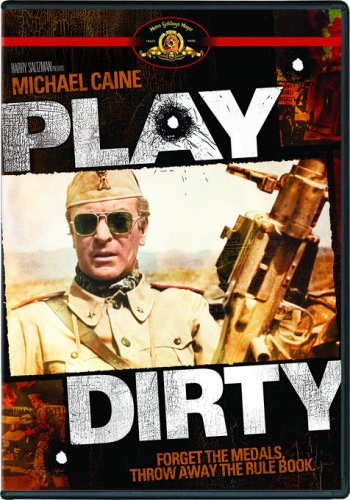
Play Dirty

An actor in the lead almost always worth watching. Michael Caine, check. A setting that rarely disappoints. Check, North Africa in WWII as the Germans battle the Allies for control. An ending that delivers one of the best sucker punch surprises ever. You bet. So why has no one heard of 1968's Play Dirty? It's one of those hidden gems I was very pleased I stumbled upon.  Now if only more fans could find it, it might get some of the credit it deserves.

After a year of failed missions that produced no results, British commando leader Colonel Masters (Nigel Green) has been given one last chance to do something positive. He has reports of a German fuel dump that is key to Rommel's success. The high command's only demand is that Masters send a British officer along with to lead the mission. In steps Capt. Douglas (Caine), a British petroleum official, who instantly clashes with his second-in-command and Masters' officer, Capt. Leech (Nigel Davenport). That might be the least of his problems. Trekking across 400 miles of desert, Douglas leads a small team of convict commandos, battling German patrols, murdering Arab tribesmen, and everything the desert can throw at them. Something else might be waiting for them too, something none of them could plan for.

Director Andre De Toth has a hidden gem here in this WWII story.  It borrows liberally from other North Africa WWII movies like Tobruk or TV shows like The Rat Patrol. But something just clicks here that's hard to explain.  It is a minimalist war movie if there ever was one. It is cynical beyond all belief, the headquarters officers (including Harry Andrews in a small part) clueless but brimming with pride and ego. The commandos are murderers, rapists, drug dealers and arms smugglers, only joining Masters' force because it got them out of prison. The effect is a winner. It's an honest, downright filthy look at WWII.  As the tagline said, 'Throw out the medals, forget the rule book, if you want to survive...play dirty.'

Playing a cat and mouse game on the mission is Caine as Douglas and Davenport as Leech.  Michael Caine plays the stiff upper-lip officer perfectly, prim and proper trying to do things by the book.  He doesn't realize he's basically a sacrificial lamb, trying to pull off this suicidal mission. He receives little help from Capt. Leech, a man interested only in which side will pay more for his services. The problem is, he's damn good at his job and is working with a pay-off in mind. Seeing these two men go toe to toe is fun, like a heavyweight bout where both sides land punch after punch. It's not great performances on their own, but together they carry the movie. Douglas just wants to accomplish the mission placed in front of him, even with the men behind him possibly gunning for him. Leech is going to do what it takes to ensure his own survival, and hopefully Douglas' life too.

Like Tobruk, the basic mission is simple. In the desert, gasoline and water are key if you want to keep your vehicles moving. The men on a mission angle isn't played up much after an early introduction scene of the convict commandos. More focus is placed on Douglas and Leech, but the commandos include Sadok (Aly Ben Ayed), explosives expert, Kostas Manou (Takis Emmanuel), black market arms dealer, Kafkarides (Enrique Avila), the drug dealer and driver, Boudesh (Scott Miller), a brawler, and Hassan (Mohsen Ben Abdallah) and Assine (Mohamed Kouka), the two gay Arab trail guides. Among the group, there's maybe 15 or 20 lines combined. It's more what they are that's important. They're the lowest of the low and no one much cares what happens to them. None of these actors were anything more than background players, and for some, they were only in three or four movies at all.  They still do a solid job giving Douglas' team an eclectic mix of sordid individuals though.

The minimalist aspect helps make this movie better than other similar WWII stories. The mission is painfully simple. Travel across the desert and blow up the fuel dump. Done, no detours. A long sequence has them navigating a steep cliff face trying to get their vehicles to the top. They change countless tires. They run into patrols, Arab tribesmen, avoiding mine fields and booby traps. Michel Legrand's musical score never provides any clues as to what's about to happen, the story surprising you instead. The pacing may seem a little slow, but this is what faces them. Survival at its most base in the desert. You do what you need to do to keep moving.  For these men, it's always moving forward because what awaits them is better than what they're leaving behind.

Above all else though, the final 30-45 minutes makes Play Dirty a near classic. I'm going to give away the ending so stop reading if you don't want to know. SPOILERS STOP READING SPOILERS Making it all the way to the dump, Douglas' team doesn't realize their mission has become compromised. The fuel dump is in reach of Allied forces and can be saved, not destroyed. British headquarters contacts double agents and tells them a team of commandos is gunning for the fuel. All but Douglas and Leech are killed in the attempt, the two officers making it out. Not bad, right? Late 1960s cynicism at its best.  There's more. The next morning, the duo (in German uniforms) attempts to surrender to advancing Allied forces. Hands up, white flag in sight, they're accidentally gunned down by British troops. A soldier apologizes to his officer, claiming he didn't see the flag, credits roll.  END OF SPOILERS

Just in terms of sheer guts to actually use that ending, Play Dirty gets a ridiculous amount of credit from me.  I can think of maybe three or four other movies that surprised me, just completely caught me off-guard in a shocking way.  First, that many main characters getting killed off is an oddity. But that's what works.  People get killed during war, often in situations where mistakes are made and soldiers have to be sacrificed. One of the best shocker endings I've ever seen in one of the most underrated WWII movies around.

Play Dirty <--- opening credits (1968): *** 1/2 /****

Friday, April 1, 2011

Viva Maria!

Other than the name recognition, I know little about French actress and all-around beauty Brigitte Bardot.  I've seen her in only one movie -- 1968 Euro-western Shalako -- and nothing else. All I do know about her? Not to sound sexist, but it's her looks.  She wasn't in a ton of movies to begin with before retiring from the movie business in 1973, and more than that, she wasn't in many American-made movies.  Hurting her cause is that Netflix doesn't think I'll enjoy some of her more existential works in French films.  But there's got to be something to her, and I'll take what I can get so that's why I looked into 1965's Viva Maria! 

I went in to this movie with one minor misconception.  Call it miscommunication, or just my head making a transition where there wasn't a transition.  I read that it was a Euro-western with touches of a spaghetti western, but neither really applies.  It is one of the more off-the-wall movies I've watched in recent memory with a surreal edge to the story, and a general feeling of the absurd, the crazy.  Viva Maria is neither good nor bad. It's just weird.  Plus, Bardot and co-star Jeanne Moreau performing a handful of stripteases is never a bad thing.

It's 1908 in the tiny Central American country of San Miguel, and Maria 1 (Bardot) is fending for herself after her father, an Irish revolutionist, is killed trying to sabotage a bridge. On the run, she latches on with a traveling stage show touring the country, joining another Maria 2 (Moreau) in an act that has them singing and dancing for the audience.  The act is a bust until Maria 1's clothes start ripping on-stage, and a hit is born.  Audiences come out to see them in droves.  But on one stop, the Marias and the stage show/circus end up mixed up in a revolution.  Both women end up at the front of the charge, leading the population of San Miguel in a desperate effort to overthrow the dictator and the ruling families.

If you can think of a movie that does a bigger 180 than this one, you're better than me.  Take out the obvious bonus of Bardot and Moreau performing stripteases through the first hour, and we're talking one of the most incredibly dull movies I've ever seen.  Long, uncut shots of the stage show caravan are thankfully interrupted by the duo on-stage.  Then when you think the story is going one way, BAM, they get involved and end up leading a revolution?  Yeah, I can't say I saw that one coming.  In a weird way, it does work just because it is all so bizarre.  At other times, I just shook my head that I was sticking with this movie.

The very beautiful Bardot and Moreau are the main reasons to see this oddity of a flick.  No question about it, Bardot is easy on the eyes, but as an actress (here at least), she's stiff and not always very convincing.  Maybe her character is supposed to be a tad awkward, but it's a little much at times.  Still, no matter what I thought of her acting the image of Bardot with her strawberry blonde hair and gorgeous eyes blasting away at waves of soldiers with a machine gun is worth watching.  It just is. No explanation needed, and I won't be providing one.  Of the few movies I've seen of Moreau, she's always been a sort of plain Jane, her looks dulled down.  Boy, was I wrong.  She's beautiful, and shows off some comedic and her always on-point dramatic ability.  Watch their first striptease HERE if curious.

Throwing so many elements into one movie, Viva Maria certainly has the potential to be good.  Claudio Brook is a scene-stealer as Rodolfo, ringleader of the stage show circus obsessed with building a curved rifle that can fire around corners.  Seeing his circus in a large scale battle is hilarious too with a strongman, acrobats, and a magician all helping the cause. The action scenes in the movie's second half are something else too, highlighted by a running battle with Bardot gunning for a hidden artillery battery and the finale, the attempted overthrow of the dictator in a scene reminiscent of the end of 1954's Vera Cruz.  Composer Georges Delerue's score is a highlight too, memorable without being over-powerful, especially the main theme.

For the positive, there's also the negatives.  I'll start with George Hamilton as Flores, a revolutionary caught up in the fighting who falls for Moreau's Maria.  Did he get blackmailed into this bizarre part? It's the tone of the second half of the movie that feels so odd, like an existential, surreal dream on LSD.  Sight gags galore around every corner, and a sense of humor that falls flat.  A group of monks/priests prepare for torture straight out of the Spanish Inquisition, and I'm wondering again, "What the hell am I watching?!?" I just don't know what to make of this movie. When it's not weird, it's slow and even boring at times. When it's full of action, it's everywhere.  A mess of a movie, one I'll give a slightly positive recommendation.

Viva Maria! <---trailer (1965): ** 1/2 /****