Hard to mess up a good, old-fashioned time traveling story. When it's good, it can be great, a picture into the future we don't know or the past we do. What bizarre versions of our future can be presented? When it's bad....oh, it can be glorious and downright awful, often times in B-movies like 1956's World Without End. Where does this one end up?
It's 1957 and a crew of astronauts is orbiting Mars, transmitting what they see back to Earth before completing their mission and heading for home. Commanded by Dr. Eldon Galbraithe (Nelson Leigh), the crew includes John Borden (Hugh Marlowe), a scientist, Herb Ellis (Rod Taylor), the radioman, and an engineer, Henry Jaffe (Christopher Dark). Soon after beginning the return trip though, the spaceship begins to accelerate to dangerous speeds, eventually going so fast that all four members of the crew are knocked out. The spaceship crashes on a snow-covered mountain on a mysterious planet, but the entire crew survives. What do they find? They theorize the spaceship flew so fast that it flew forward in time. Dr. Galbraithe and his men surmise that they've actually crashed on Earth some 500 years into the future. The crew has found our future where a surviving band of slightly altered humans are fighting for their existence against mutant human beings. Can they make it out alive?
This 1956 sci-fi B-movie was aired on Turner Classic Movies recently as part of a time travel themed-night. And my goodness....was it cheesy, but in a good way! It comes from probably the strongest decade ever for science fiction movies (the 1950s) and has an interesting story, casting and some timely messages. It comes from director Edward Bernds (who also wrote the screenplay) and manages to rise above its B-movie status to be pretty damn entertaining, sometimes in a bad way but mostly in a fun, sit back and enjoy the ride kind of entertainment. This isn't a movie with a huge fan following or rave critical reviews, but it was a good flick in itself and also in how it was an influence on some major science fiction flicks still to be released in the coming years.
The most obvious influence? That would be 1968's Planet of the Apes. The first 30 minutes or so serves almost as a literal blueprint for that famous sci-fi classic that spawned a whole franchise that's still plugging along today. Astronauts on mission, something goes wrong, they land on a mysterious planet, and GO! Let the new planet hijinks begin! Obviously, if you've read this far you know the twist -- that they've landed on....future EARTH!!!! but it is in the build-up that the story works. What happened exactly? So if we know where they are, we now get to ask the infamous time travel question. WHEN are they? Yeah, it can be cheesy but if you've seen enough time travel sci-fi flicks, you know the moment is coming so sit back and appreciate it for all its cheesy glory. In the meantime, watch out for the giant spiders, mutated creatures and caveman-like residents of Earth.
No big names here and really only one future star in the cast. That would be Rod Taylor in an early role and rocking his heavy Aussie accent. The crew's radioman, Taylor's Herb (maybe the sexiest name ever) is the resident ladies man of the quartet. Taylor is clearly having some fun with the part as these future Earth women are completely undone by his muscles and physique. A good early part (albeit a supporting one) for Mr. Taylor. Marlowe was the most recognizable star of the time, and he's okay in a part that doesn't give him much to do other than be the stout, sturdy, resolute hero who's trying to overcome some past mission failures. Rounding out the four-man crew, Leigh is older and brainier as the crew's commander and scientist while Dark's Jaffe is the brilliant mathematician coping with the loss of his family, now long since dead since...you know, the ship traveled forward in time.
One of the biggest selling points for me within the science fiction genre is how does said movie envision the future. In the meantime that vision is dated by budget and special effects limitations. So what does 'World' think the future will be like? Well, funny looking. The men are all crippled and saggy and withering away while the women wear tight clothing, are apparently really horny and fascinated by these new arrivals from Earth's past, these new specimens that represent all that is man. The sets and the wardrobes are hysterical once the crew finds some remnant of mankind, but they add that all-important cheesy charm to the proceedings. For the future babes of Earth, look for Nancy Gates and Lisa Montell while the future weaklings of men are led by Everett Glass' Timmek.
There is a muddled message somewhere in the story about the Cold War and nuclear destruction and embracing life and all that good stuff. It's not really an effective message, nothing as ominous or effective as like-minded messages from so many other classic 1950s sci-fi movies. This is a movie better suited to dumb entertainment without any messages getting in the way.
World Without End (1956): ** 1/2 /****
The Sons of Katie Elder
"First, we reunite, then find Ma and Pa's killer...then read some reviews."
Showing posts with label Rod Taylor. Show all posts
Wednesday, July 8, 2015
Tuesday, March 24, 2015
Chuka
I've been in a bit of a movie funk of late. I've given some newer flicks a try and couldn't/didn't get through them. The same for some older entries, movies that just didn't pull me in quick enough. Well, it is as good a time as any to revisit some reviews and give them an old-fashioned update. Today's review, 1967's Chuka, an underrated western I caught for the first time as I was just starting my reviews here at Just Hit Play.
Out of the snow-capped, frigid mountains of the north, a man named Chuka (Rod Taylor) rides south into the desert. A hired gun and a saddle bum, he has not set destination but is quickly realizing he's riding into the beginnings of an Indian uprising. As he rides across the desert, Chuka stumbles across a waylaid stagecoach carrying two women, one a woman from his past many years ago, the beautiful Senora Veronica Kleitz (Luciana Paluzzi). He agrees to escort them to the nearest outpost, Fort Clendennon but has no idea what he's heading into. The fort is commanded by a former English army officer now serving in the U.S. cavalry, Colonel Valois (John Mills), who is ignoring all the telltale signs of the coming uprising. Can Chuka convince the stubborn colonel to do something or is the entire outpost doomed to be wiped out by the warring Arapaho warriors?
This was a Netflix find for me way back in 2009. I'd never heard of it despite its impressive cast, much less seen a single minute of it. It left quite an impression on me then, and it did again on this recent revisit courtesy of Encore Westerns. The biggest reason? Made on the relative cheap, it is B-L-E-A-K. This is one dark, nasty western from director Gordon Douglas. It has the feel of a TV movie, but my goodness, it doesn't pull any punches. 'Chuka' is a tough guy movie for guys. Plain and simple. There aren't heroic good guys or even despicable villains, just flawed folks in a hellish situation looking for some way -- any way really -- to get out unscathed and keep on living. If there's no way out? Well, hell, let's have a bloody finish.
One of Hollywood's more underrated tough guys and one of my favorites, Rod Taylor passed away this past January at the age of 84 after a long, distinguished career. This is a dark role even for Taylor, ranking up there with Dark of the Sun as one of his more highly charged tough guy roles. I like his Chuka character, a reflection of where the western genre was in 1967. He's not particularly heroic, thinks of himself for the most part and has a reputation as a brutal gunslinger. It's a cool part because it is so brutally efficient. He is the anti-hero, a flawed figure, and as far as westerns go, you don't see a lot of main characters who are just what they seem. Chuka is a saddle tramp, a drifter, a killer and trying not to get shot in the back because of his bloody, body-riddled past. Taylor is always an above average screen presence, and he looks to be having some fun with this darker part.
How about the rest of the cast? It isn't a huge cast -- that whole B-movie feel -- but what's there, it's pretty preemo. John Mills is the flawed outpost commander, his checkered past floating over him at all times. Redemption? You bet, no matter the cost. Ernest Borgnine has some fun too in a role he specialized over the years, the tough as nails right hand man, playing Sgt. Otto Hahnsbach, Valois' loyal NCO who's served next to him for years. The always reliable James Whitmore plays Lou Trent, the fort's drunken scout who forms a fast friendship with Chuka upon his arrival. Paluzzi unfortunately isn't given much to do other than look worried/distressed, but dang, she's gorgeous. Also look for Victoria Vetri as her traveling companion, Louis Hayward as the cowardly Major Benton, and Joseph Sirola as Baldwin, the stagecoach guard who finds himself trapped in the fort with all the others.
So that whole bleak angle....yeah, this is one rough western. There are some slower portions -- Taylor and Paluzzi reuniting just ain't as interesting -- but the focus is this isolated, lonely outpost with a small army of Arapaho warriors waiting to attack. The odds are (to say the least) stacked against them. The fort's garrison? From Mills' Valois and his officers down to the enlisted men, these are the dregs of the army, all of them screw-ups, foul-ups, thieves, killers and deserters. A massacre seems impossible unless something is done and done quickly. A brutal knockdown fight between Taylor and Borgnine is an exhausting affair and a testament to the two actors who didn't appear to use ANY stunt doubles. When the action does come along, it is surprisingly graphic. It isn't bloody, but it is quick and hard-hitting and uncomfortable. It's quite an ending.
A hidden gem of a western. Sure, it has some flaws, but I'm glad I caught up with it (again). The claustrophobic fort set is a gem, really giving a sense of being closed in by the surrounding Indians. You get a sense of the coming doom, all of it building to quite an ending. Solid cast, surprisingly dark, a refreshingly brutal change of pace. Well worth catching up with.
Chuka (1967): ***/****
Rewrite of March 2009 review
Out of the snow-capped, frigid mountains of the north, a man named Chuka (Rod Taylor) rides south into the desert. A hired gun and a saddle bum, he has not set destination but is quickly realizing he's riding into the beginnings of an Indian uprising. As he rides across the desert, Chuka stumbles across a waylaid stagecoach carrying two women, one a woman from his past many years ago, the beautiful Senora Veronica Kleitz (Luciana Paluzzi). He agrees to escort them to the nearest outpost, Fort Clendennon but has no idea what he's heading into. The fort is commanded by a former English army officer now serving in the U.S. cavalry, Colonel Valois (John Mills), who is ignoring all the telltale signs of the coming uprising. Can Chuka convince the stubborn colonel to do something or is the entire outpost doomed to be wiped out by the warring Arapaho warriors?
This was a Netflix find for me way back in 2009. I'd never heard of it despite its impressive cast, much less seen a single minute of it. It left quite an impression on me then, and it did again on this recent revisit courtesy of Encore Westerns. The biggest reason? Made on the relative cheap, it is B-L-E-A-K. This is one dark, nasty western from director Gordon Douglas. It has the feel of a TV movie, but my goodness, it doesn't pull any punches. 'Chuka' is a tough guy movie for guys. Plain and simple. There aren't heroic good guys or even despicable villains, just flawed folks in a hellish situation looking for some way -- any way really -- to get out unscathed and keep on living. If there's no way out? Well, hell, let's have a bloody finish.
One of Hollywood's more underrated tough guys and one of my favorites, Rod Taylor passed away this past January at the age of 84 after a long, distinguished career. This is a dark role even for Taylor, ranking up there with Dark of the Sun as one of his more highly charged tough guy roles. I like his Chuka character, a reflection of where the western genre was in 1967. He's not particularly heroic, thinks of himself for the most part and has a reputation as a brutal gunslinger. It's a cool part because it is so brutally efficient. He is the anti-hero, a flawed figure, and as far as westerns go, you don't see a lot of main characters who are just what they seem. Chuka is a saddle tramp, a drifter, a killer and trying not to get shot in the back because of his bloody, body-riddled past. Taylor is always an above average screen presence, and he looks to be having some fun with this darker part.
How about the rest of the cast? It isn't a huge cast -- that whole B-movie feel -- but what's there, it's pretty preemo. John Mills is the flawed outpost commander, his checkered past floating over him at all times. Redemption? You bet, no matter the cost. Ernest Borgnine has some fun too in a role he specialized over the years, the tough as nails right hand man, playing Sgt. Otto Hahnsbach, Valois' loyal NCO who's served next to him for years. The always reliable James Whitmore plays Lou Trent, the fort's drunken scout who forms a fast friendship with Chuka upon his arrival. Paluzzi unfortunately isn't given much to do other than look worried/distressed, but dang, she's gorgeous. Also look for Victoria Vetri as her traveling companion, Louis Hayward as the cowardly Major Benton, and Joseph Sirola as Baldwin, the stagecoach guard who finds himself trapped in the fort with all the others.
So that whole bleak angle....yeah, this is one rough western. There are some slower portions -- Taylor and Paluzzi reuniting just ain't as interesting -- but the focus is this isolated, lonely outpost with a small army of Arapaho warriors waiting to attack. The odds are (to say the least) stacked against them. The fort's garrison? From Mills' Valois and his officers down to the enlisted men, these are the dregs of the army, all of them screw-ups, foul-ups, thieves, killers and deserters. A massacre seems impossible unless something is done and done quickly. A brutal knockdown fight between Taylor and Borgnine is an exhausting affair and a testament to the two actors who didn't appear to use ANY stunt doubles. When the action does come along, it is surprisingly graphic. It isn't bloody, but it is quick and hard-hitting and uncomfortable. It's quite an ending.
A hidden gem of a western. Sure, it has some flaws, but I'm glad I caught up with it (again). The claustrophobic fort set is a gem, really giving a sense of being closed in by the surrounding Indians. You get a sense of the coming doom, all of it building to quite an ending. Solid cast, surprisingly dark, a refreshingly brutal change of pace. Well worth catching up with.
Chuka (1967): ***/****
Rewrite of March 2009 review
Wednesday, December 10, 2014
Giant
So there's the United States, but if you ask some people from Texas, there's a different way of looking at it. There's 49 states that make up the U.S., and then there's TEXAS!!! A giant state with some giant personality, it needs a movie just as big as the idea of the state to really get the message across. Here's an epic that certainly tries, 1956's Giant.
It's the early 1910s and young, powerful Texas rancher Jordan 'Bick' Benedict (Rock Hudson) travels to a farm in Maryland to buy a strong, beautiful young horse. There, he finds what he's looking for and much, much more. Instantly struck, Bick marries the seller's daughter, Leslie (Elizabeth Taylor), who's as equally moved by the big, strong Texan. Leslie travels back to Texas with Bick where she's stunned by the immensity of the Benedict ranch, hundreds of thousands of acres with cattle numbering in the thousands. The life is hard but worthwhile...for those accustomed to it. Leslie is used to a certain openness about living and prejudices and beliefs, none of which she finds in Texas. The marriage is just weeks old, but Bick and Leslie begin to butt heads almost immediately. The young couple with everything at their disposal, right at their fingertips, is heading into a turbulent time, both for themselves but also for Texas.
Some movies just scream EPIC, and in the age of the monster budget, historical epics, this 1956 Texas family drama from director George Stevens certainly qualifies. Based off a novel from author Edna Ferber, this is a big old movie. At the time, it was the most expensive film ever made. The scope and scale is gigantic. Stevens took advantage of the widescreen filming techniques, filling the screen with the wide expanses of the Texas plains in all its sunny and sandy glory. Visually, 'Giant' is a stunner. Dimitri Tiomkin's score is solid but more subdued than most of his more well-known scores and with an obvious reliance on some patriotic Texas songs. A must in an epic -- seemingly -- is to get a message across though, to say something. That's where 'Giant' seems to stumble in a big way. I don't know if it's trying to say much of anything. That's for a little later. For now, here's some positives to take away.
So big story, big setting....yeah, we need a big cast. Two rising stars who were definitely on the way to bigger and better things in Rock Hudson and Elizabeth Taylor. I was interested in these characters which is a credit to Hudson and Taylor because let's be honest. These aren't especially likable characters. They bicker, fight and argue about anything and everything. Love at first sight....until real life settles in. So they're not especially likable, but they do a fine job bringing these characters to life. It feels like real life, two madly in love individuals figuring out marriage and love isn't so easy. Neither is a truly great performance, but they're very solid performances just the same.
Unfortunately, 'Giant' was remembered both then and now for the sudden, tragic death of one of its cast members. That actor? The iconic James Dean, star of just three movies before his sudden passing in 1955 before the film was completely finished, just 24 years old when he died. Here, he plays Jett Rink, a lower class cowboy working on the Benedict Ranch, a thorn in Bick's side but liked by everyone else. Jett was my favorite character, a remotely sympathetic anti-hero just trying to make his way, to carve out a niche for himself. A late monologue had to be re-recorded because the dubbing hadn't been completed before his surprising death during post-production. It's a quiet, understated part with some great moments (early on at least), especially when Jett's land proves to be far more valuable than originally thought. An obvious influence on many actors who would rise to stardom in the coming years, Dean is a gem.
Okay, enough with the relative positives. I love epics, especially those from the 1950s and early 1960s. This one pushed even me to the limits to the point I struggled to get through the last hour-plus in a movie that already runs 201 minutes. The first 90-120 minutes are pretty good if nothing classic in my mind. Then from there on in, the story jumps to when Bick and Leslie are far older, their empire grown, their family established and all grown up. At this point, all the issues introduced early are basically brushed aside. The story -- not exactly fast-moving up to this point -- grinds to a complete halt. Characters are introduced and dispatched with little fanfare. It drifts aimlessly until an ending that to put it lightly is disappointing. Was there an ending in mind that actually accomplished something? 'Giant' limps to the finish line after a painfully slow 3-hour road trip.
That's the biggest issue. What -- if anything -- is it trying to say? It's obviously a story focused on family and Texas and all their drama. Let's say this though. There is A LOT of drama. It's everything from marital strife to racism, sexism to political corruption, old school versus new school, parenting methods to manipulation of all sorts and on countless different levels, cattle ranching to becoming an oil baron. Pick one, or even two or three, and run with it. Instead, Giant just barrels ahead with all of the above and lets things fall where they may.
Now back to the casting. The characters may not always be very good, but the star power is impressive. Mercedes McCambridge does what she does best as Luz, Bick's sister who's a tomboy, a bit of a spinster, and if this movie was in 2014...a tough as nails lesbian. Chill Wills is solid in a more subdued part as Bick's very Texas uncle. As for the younger generation that pops up in the last third of the movie, look for Carroll Baker, Sal Mineo, Earl Holliman, and Dennis Hopper. Oh, and for good measure, Paul Fix and Rod Taylor have underused supporting parts so there's that. A big disappointment for me though, one I really, REALLY wanted to love. I came away barely tolerating it. A major disappointment.
Giant (1956): **/****
It's the early 1910s and young, powerful Texas rancher Jordan 'Bick' Benedict (Rock Hudson) travels to a farm in Maryland to buy a strong, beautiful young horse. There, he finds what he's looking for and much, much more. Instantly struck, Bick marries the seller's daughter, Leslie (Elizabeth Taylor), who's as equally moved by the big, strong Texan. Leslie travels back to Texas with Bick where she's stunned by the immensity of the Benedict ranch, hundreds of thousands of acres with cattle numbering in the thousands. The life is hard but worthwhile...for those accustomed to it. Leslie is used to a certain openness about living and prejudices and beliefs, none of which she finds in Texas. The marriage is just weeks old, but Bick and Leslie begin to butt heads almost immediately. The young couple with everything at their disposal, right at their fingertips, is heading into a turbulent time, both for themselves but also for Texas.
Some movies just scream EPIC, and in the age of the monster budget, historical epics, this 1956 Texas family drama from director George Stevens certainly qualifies. Based off a novel from author Edna Ferber, this is a big old movie. At the time, it was the most expensive film ever made. The scope and scale is gigantic. Stevens took advantage of the widescreen filming techniques, filling the screen with the wide expanses of the Texas plains in all its sunny and sandy glory. Visually, 'Giant' is a stunner. Dimitri Tiomkin's score is solid but more subdued than most of his more well-known scores and with an obvious reliance on some patriotic Texas songs. A must in an epic -- seemingly -- is to get a message across though, to say something. That's where 'Giant' seems to stumble in a big way. I don't know if it's trying to say much of anything. That's for a little later. For now, here's some positives to take away.
So big story, big setting....yeah, we need a big cast. Two rising stars who were definitely on the way to bigger and better things in Rock Hudson and Elizabeth Taylor. I was interested in these characters which is a credit to Hudson and Taylor because let's be honest. These aren't especially likable characters. They bicker, fight and argue about anything and everything. Love at first sight....until real life settles in. So they're not especially likable, but they do a fine job bringing these characters to life. It feels like real life, two madly in love individuals figuring out marriage and love isn't so easy. Neither is a truly great performance, but they're very solid performances just the same.
Unfortunately, 'Giant' was remembered both then and now for the sudden, tragic death of one of its cast members. That actor? The iconic James Dean, star of just three movies before his sudden passing in 1955 before the film was completely finished, just 24 years old when he died. Here, he plays Jett Rink, a lower class cowboy working on the Benedict Ranch, a thorn in Bick's side but liked by everyone else. Jett was my favorite character, a remotely sympathetic anti-hero just trying to make his way, to carve out a niche for himself. A late monologue had to be re-recorded because the dubbing hadn't been completed before his surprising death during post-production. It's a quiet, understated part with some great moments (early on at least), especially when Jett's land proves to be far more valuable than originally thought. An obvious influence on many actors who would rise to stardom in the coming years, Dean is a gem.
Okay, enough with the relative positives. I love epics, especially those from the 1950s and early 1960s. This one pushed even me to the limits to the point I struggled to get through the last hour-plus in a movie that already runs 201 minutes. The first 90-120 minutes are pretty good if nothing classic in my mind. Then from there on in, the story jumps to when Bick and Leslie are far older, their empire grown, their family established and all grown up. At this point, all the issues introduced early are basically brushed aside. The story -- not exactly fast-moving up to this point -- grinds to a complete halt. Characters are introduced and dispatched with little fanfare. It drifts aimlessly until an ending that to put it lightly is disappointing. Was there an ending in mind that actually accomplished something? 'Giant' limps to the finish line after a painfully slow 3-hour road trip.
That's the biggest issue. What -- if anything -- is it trying to say? It's obviously a story focused on family and Texas and all their drama. Let's say this though. There is A LOT of drama. It's everything from marital strife to racism, sexism to political corruption, old school versus new school, parenting methods to manipulation of all sorts and on countless different levels, cattle ranching to becoming an oil baron. Pick one, or even two or three, and run with it. Instead, Giant just barrels ahead with all of the above and lets things fall where they may.
Now back to the casting. The characters may not always be very good, but the star power is impressive. Mercedes McCambridge does what she does best as Luz, Bick's sister who's a tomboy, a bit of a spinster, and if this movie was in 2014...a tough as nails lesbian. Chill Wills is solid in a more subdued part as Bick's very Texas uncle. As for the younger generation that pops up in the last third of the movie, look for Carroll Baker, Sal Mineo, Earl Holliman, and Dennis Hopper. Oh, and for good measure, Paul Fix and Rod Taylor have underused supporting parts so there's that. A big disappointment for me though, one I really, REALLY wanted to love. I came away barely tolerating it. A major disappointment.
Giant (1956): **/****
Tuesday, February 28, 2012
The Liquidator
In the closing days of WWII in Paris, American(?) tanker Boysie Oaks (Rod Taylor) stumbles into a possible murder, saving a man (Trevor Howard) from his two would-be murderers. Years pass, and the man, Mostyn, is a higher-up in British intelligence given an unenviable mission. He needs to find an agent who can do one thing and one thing only; kill and kill effectively and discreetly. He tracks down Oaks and offers him the position...with some training. Oaks jumps at the chance to step into a "glamorous" lifestyle only to make a surprising discovery when finally tasked with a mission. He can't do it, just can't kill a man. It might be too late though because enemy agents are very aware of who he is.
This spy flick from director Jack Cardiff is an oddity among the genre that was so popular in the 1960s. It isn't as over the top as the Bond movies. The villains are just enemy agents, not masterminds bent on taking over the world. It isn't a spoof either, even though it does provide some laughs. It's funny, but it isn't trying too hard to be funny. Now there are some odd moments. Shirley Bassey sings the theme song -- The Liquidator <---listen there -- and it does seem like an easy knock-off of her Goldfinger theme, the credits even looking like a quasi-bond movie. Lalo Schifrin's score is appropriately jazzy and 60s. In the blind leap department looking to make a connection, Taylor's co-star Jill St. John would later star in Diamonds Are Forever too. Now whether the comparisons are fair or not is up to you, but however you feel about it, the movie is entertaining, providing a good mix of serious spy drama with just enough dark humor.
Many reviews have pointed to Rod Taylor being miscast in the role of Boysie Oaks. First, I'm a big Taylor fan, and I thought he did a good job with the character. Oaks is based off a character created by author John Gardner, one a whole series would develop around. I will say that Taylor is a different choice, but he makes it work. Regardless the movie, Taylor could manage brawling tough guy and smooth ladies man depending on the scene. He does that pretty effortlessly here, bouncing back and forth. As his stiff upper lip superior, Howard is a scene-stealer as Mostyn (think Bond's M), the veteran spy/agent who's seen and done it all. Their scenes together are highlights, two actors clearly having fun with their characters and the at-times off the wall story.
There are the typical spy features here most fans have come to expect. We get a scenic trip to beautiful Nice in France along the coast of the Mediterranean Sea thrown in with all sorts of hijinks and what not. It's different though. When Oaks realizes he can't kill, he hires an actual killer, Griffen (Eric Sykes), to do his dirty work for him, all expertly handled in a very dark, very funny montage. What kind of super-spy can't kill? Well, Oaks likes the lifestyle he's been introduced to, the cars, the clothes, the women. He definitely hits it off with St. John's Iris, Mostyn's secretary, which of course is frowned upon by company policy. The last hour is the more familiar territory as an enemy plan unfolds, Taylor's Oaks becomes the unknowing dupe to a conspiracy involving an assassination and theft of a new model aircraft. The surprising thing? It's funnier than you'd think.
Along with Taylor, Howard and St. John, the cast isn't full of huge stars, but you will see some recognizable faces. Wilfrid Hyde-White is Chief, the MI6 head who knows what's going on but typically turns a blind eye to his agents. Regular baddie Akim Tamiroff is hilarious as Shereik, the leader of a team of enemy agents who accidentally pick Oaks up. Beautiful Gabriella Licudi plays Corale, the bait in Shereik's plan who plans on seducing Taylor. Also look for David Tomlinson in a great little part as Quadrant, a fellow agent who is only telling Oaks part of what he needs to know. Several great supporting parts to round out the cast behind the bigger names.
A generally forgotten spy thriller with that rare right mix of action and humor. Well worth seeking this one out.
The Liquidator <---TCM trailer/clips (1965): ***/****
Labels:
1960s,
Akim Tamiroff,
Espionage,
Rod Taylor,
Trevor Howard
Friday, November 18, 2011
36 Hours
Though I've written about this before, it's hard to avoid repeating it. Imagine a secret the whole world wants to know in this modern ultra-connected world and keeping that secret for months...successfully. In 1944, Allied forces kept a secret of the coming European invasion, keeping Normandy under wraps as the spot of the attack. How far would the Germans go to discovering that location? In steps 1965's 36 Hours.
It is May 31, 1944 and U.S. Army intelligence officer Major Jefferson Pike (James Garner) is sent to Lisbon to meet with a source who may have info on the German's knowledge of the coming invasion. He is one of the select few among the Allied forces who knows not only the location of the coming invasion but all its intricate details....and the Germans know it. He's drugged and kidnapped. How far will the Germans go to get that knowledge? Using a radical procedure developed by Dr. Walter Gruber (Rod Taylor) for a different result, the Germans intend to trick Pike into thinking it is 1950, and that World War II is long since over. With the invasion looming and working in a small window, can Gruber get the info out of Pike in time?
Intensely unique and original. That's the best description I can think of for director George Seaton's film, but somehow it is not enough, not appropriate enough. It is the execution of the first 75 minutes that make this movie special. In 2011, imagine a secret as big as the Normandy invasion.....exactly, you can't. This is a secret that kept the world captive for months and wasn't revealed. The D-Day invasion of June 6, 1944 was a world changer, an event that altered the course of history. Is the story true? Who knows for sure? It stands to reason though that with a coming event that could change the future of the world, one side would pull out each and every stop to see if they could influence that event.
So how does Dr. Gruber do it? Pike is kidnapped and drugged. His hair is dyed, a chemical is placed on his skin to age it, a solution dropped in his eyes to blur his vision, and he wakes up in a U.S. Army hospital in......1950?!? This is a vast conspiracy to get the information out of the Intelligence officer, Gruber telling him he has retrograde amnesia that cancels the last six years of his life. I won't go into a ton of details or reveals, but the movie and the story -- even resorting to an amnesia ploy -- works. It just works. Could Pike fall for it? Could he reveal Normandy as the location of the coming invasion? Would the German High Command even believe him if he told them? One of the most unique, well-told "gimmicks" (for lack of a better word) I've ever seen in a movie.
Three stars do the heavy lifting here in support of said-unique story. Garner is the unknowing dupe, the target. His performance isn't great because the movie doesn't require him to be great. His Pike doesn't have much to do other than look confused. Garner is still himself though, and his laid back, ultra-cool persona works....until he doesn't have to be laid back or ultra-cool anymore. Then watch out there, Germans, because you're in for it. Eva Marie Saint plays Anna, one of Gruber's "assistants," a nurse posing as Pike's future wife. Anna has been lifted from a concentration camp to help, her life used as a bargaining chip. Her character and its relevance certainly adds some gravity to the film, giving a heart to a WWII thriller.
The best part though is saved for Rod Taylor as Doctor/Major Walter Gruber. The brilliant mind behind the plan, Gruber is an American-born German, returning to Germany with his family when he was 16. His original intention with the plan of future-amnesia hypnosis (best description I can think of) was to "save" German troops returning from the Russian front, and it worked, helping them relax only to find out it's a few days later, not years. He has faith in his plan if not its intentions, and Taylor does a great job there. He balances the deception with a genuine concern for Pike, Anna and Germany as a whole as he feels pressure from the S.S. (including interrogator Werner Peters). He seems to know it but plods on anyways. Gruber is fighting a losing battle because he gets the information, he gets the Normandy location, but no one believes it. A great performance from Taylor with a tragic-tint to it.
With a story that unique and entertaining, it would be nearly impossible to keep up the momentum, and the last 30 minutes just isn't as good as the first 80 or so. It loses some of the perspective as the smart, well thought out angle heads back to the more traditional chase sequences. Still, the movie is a gem. It is beautifully shot in black and white and composer Dimitri Tiomkin's score won't disappoint. Even look for Hogan's Heroes' Sgt. Schultz, John Banner, in a small but key role late. Looking for something different in a WWII movie? Start here.
36 Hours <---TCM trailer (1965): ***/****
It is May 31, 1944 and U.S. Army intelligence officer Major Jefferson Pike (James Garner) is sent to Lisbon to meet with a source who may have info on the German's knowledge of the coming invasion. He is one of the select few among the Allied forces who knows not only the location of the coming invasion but all its intricate details....and the Germans know it. He's drugged and kidnapped. How far will the Germans go to get that knowledge? Using a radical procedure developed by Dr. Walter Gruber (Rod Taylor) for a different result, the Germans intend to trick Pike into thinking it is 1950, and that World War II is long since over. With the invasion looming and working in a small window, can Gruber get the info out of Pike in time?
Intensely unique and original. That's the best description I can think of for director George Seaton's film, but somehow it is not enough, not appropriate enough. It is the execution of the first 75 minutes that make this movie special. In 2011, imagine a secret as big as the Normandy invasion.....exactly, you can't. This is a secret that kept the world captive for months and wasn't revealed. The D-Day invasion of June 6, 1944 was a world changer, an event that altered the course of history. Is the story true? Who knows for sure? It stands to reason though that with a coming event that could change the future of the world, one side would pull out each and every stop to see if they could influence that event.
So how does Dr. Gruber do it? Pike is kidnapped and drugged. His hair is dyed, a chemical is placed on his skin to age it, a solution dropped in his eyes to blur his vision, and he wakes up in a U.S. Army hospital in......1950?!? This is a vast conspiracy to get the information out of the Intelligence officer, Gruber telling him he has retrograde amnesia that cancels the last six years of his life. I won't go into a ton of details or reveals, but the movie and the story -- even resorting to an amnesia ploy -- works. It just works. Could Pike fall for it? Could he reveal Normandy as the location of the coming invasion? Would the German High Command even believe him if he told them? One of the most unique, well-told "gimmicks" (for lack of a better word) I've ever seen in a movie.
Three stars do the heavy lifting here in support of said-unique story. Garner is the unknowing dupe, the target. His performance isn't great because the movie doesn't require him to be great. His Pike doesn't have much to do other than look confused. Garner is still himself though, and his laid back, ultra-cool persona works....until he doesn't have to be laid back or ultra-cool anymore. Then watch out there, Germans, because you're in for it. Eva Marie Saint plays Anna, one of Gruber's "assistants," a nurse posing as Pike's future wife. Anna has been lifted from a concentration camp to help, her life used as a bargaining chip. Her character and its relevance certainly adds some gravity to the film, giving a heart to a WWII thriller.
The best part though is saved for Rod Taylor as Doctor/Major Walter Gruber. The brilliant mind behind the plan, Gruber is an American-born German, returning to Germany with his family when he was 16. His original intention with the plan of future-amnesia hypnosis (best description I can think of) was to "save" German troops returning from the Russian front, and it worked, helping them relax only to find out it's a few days later, not years. He has faith in his plan if not its intentions, and Taylor does a great job there. He balances the deception with a genuine concern for Pike, Anna and Germany as a whole as he feels pressure from the S.S. (including interrogator Werner Peters). He seems to know it but plods on anyways. Gruber is fighting a losing battle because he gets the information, he gets the Normandy location, but no one believes it. A great performance from Taylor with a tragic-tint to it.
With a story that unique and entertaining, it would be nearly impossible to keep up the momentum, and the last 30 minutes just isn't as good as the first 80 or so. It loses some of the perspective as the smart, well thought out angle heads back to the more traditional chase sequences. Still, the movie is a gem. It is beautifully shot in black and white and composer Dimitri Tiomkin's score won't disappoint. Even look for Hogan's Heroes' Sgt. Schultz, John Banner, in a small but key role late. Looking for something different in a WWII movie? Start here.
36 Hours <---TCM trailer (1965): ***/****
Labels:
1960s,
Eva Marie Saint,
James Garner,
Rod Taylor,
WWII
Monday, October 10, 2011
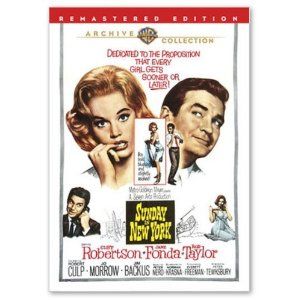
Sunday in New York
A member of one of Hollywood's royal families, Jane Fonda can be remembered for a lot of things. Her controversial visit to North Vietnam, earning her the nickname Hanoi Jane, is certainly at the top of that list. In the 1980s, she "reinvented" herself in a way, releasing a series of exercise tapes. None of this even mentions her film roles, including campy space sex romp Barbarella or her five Academy Award nominations or two Oscar wins. Before all that though? A handful of light 1960s romantic comedies, including 1963's Sunday in New York.
Now as I write this in an age of inept, annoying and downright awful romantic comedies, it's safe to say that the concept of romantic comedies has taken a bit of a hit, a public relations debacle. At some point, romantic comedies stopped being romantic, smart and enjoyable, resorting to moronically stupid stories that put stereotypes to shame and characters doing things no sane or rational person would ever do. Just because it was released in the 1960s doesn't mean these are perfect movies. But there is a charm, a style, and a sense of enjoyment that has been lost in so many movies since.
After a bad breakup with her fiance, 22-year old Eileen (Fonda) visits her older brother, Adam (Cliff Robertson), in New York City, planning to spend a week or so with him and just get away from her problems. She corners him, asking if men are only interested in sex in relationships. A globe-trotting airline pilot and all-around ladies man, Adam does the only thing he can do for his sister's benefit...he lies. Eileen isn't so sure, meeting Mike (Rod Taylor) later that day and hitting it off immediately with him. She intends to put Mike to the test to see if he'll be interested if she throws herself at him. Her plan doesn't go quite as planned though, putting her in an awkward situation when her ex-fiance, Russ (Robert Culp), bursts into the apartment with Eileen and Mike only wearing bath robes. Uh-oh, Eileen's got some explaining to do.
More than the well-written, semi-intelligent script or the interesting and still believable characters, there is that style and charm in 'Sunday' that you just can't duplicate. Director Peter Tewksbury shot the movie on location in NYC, and let's face it, it is hard to mess up that city in a movie, especially downtown Manhattan. It could serve as a companion piece to Breakfast at Tiffany's, (released two years earlier), serving as a time portal into a very cool city some 50 years back. All the guys wear suits (at all times too), the ladies get dolled up to go out. Adam's apartment -- where much of the shenanigans take place -- is immense and ends up being an additional character. Imagine the Friends' apartment in 1963, and you've got your set. The whole story takes place in under 24 hours -- that one rainy Sunday afternoon -- but never feels rushed. Charm and style, 'Sunday' has it to spare.
As for the semi-intelligent part involving the script, this movie was probably a little shocking to audiences in 1963. Now, it seems tame although there are some instances that caught me off guard watching it for the first time. Fonda's Eileen is a virgin, wondering if she's the last one on the planet. Culp's Russ dumped her because their relationship wasn't developing physically quick enough for his liking. Fonda even makes a reference to Russ having to play "handball" several times a week (that line and Fonda's delivery really cracked me up). The point is though, it's never dirty or filthy, just adults talking about sex and relationships. It will seem tame to modern audiences, but you enjoy the story and its developments and the characters. Smart? Maybe not, but it feels real.
A well-written script is one thing, but having the actors/actresses to pull it off is another thing. 'Sunday' goes 4-for-4 in that department. Fonda is the all-American girl here, so perfectly cute that you can't help but like her. Her chemistry with Taylor is as natural as they come, their friendship/relationship serving as an easy blue print for what romantic comedies should aspire for. As for Taylor and Robertson, neither would seem like an obvious choice for their parts, both men more at home in a "guy's movie." They're too talented not to leave a positive impression though, both getting a chance to show off their lighter, comedic sides. Culp is the unknowing dupe, the somewhat sympathetic but mostly clueless boyfriend. Also look for Jim Backus as Drysdale, Robertson's flight controller boss, and Jo Morrow as Mona, Adam's girlfriend who just can't seem to buy a break.
For all my writing about an intelligent romantic comedy, the last third of the movie does resort to a needlessly ridiculous plot twist about a case of mistaken identity. Culp thinks Taylor is Fonda's brother, not a stranger she just met, and Robertson is Taylor's pilot friend. Yep, I Love Lucy syndrome, a "dilemma" that could be solved with one simple explanation. It never panders or tries too hard to be funny though, just going along with the developments. A high point is Robertson and Taylor dancing together, showing Fonda how to explain the situation. Physical comedy that isn't overdone. It's just right. Now if only some more recent romantic comedies could be even halfway as good as this one....then we'd have something.
Sunday in New York <---TCM trailer (1963): ***/****
Now as I write this in an age of inept, annoying and downright awful romantic comedies, it's safe to say that the concept of romantic comedies has taken a bit of a hit, a public relations debacle. At some point, romantic comedies stopped being romantic, smart and enjoyable, resorting to moronically stupid stories that put stereotypes to shame and characters doing things no sane or rational person would ever do. Just because it was released in the 1960s doesn't mean these are perfect movies. But there is a charm, a style, and a sense of enjoyment that has been lost in so many movies since.
After a bad breakup with her fiance, 22-year old Eileen (Fonda) visits her older brother, Adam (Cliff Robertson), in New York City, planning to spend a week or so with him and just get away from her problems. She corners him, asking if men are only interested in sex in relationships. A globe-trotting airline pilot and all-around ladies man, Adam does the only thing he can do for his sister's benefit...he lies. Eileen isn't so sure, meeting Mike (Rod Taylor) later that day and hitting it off immediately with him. She intends to put Mike to the test to see if he'll be interested if she throws herself at him. Her plan doesn't go quite as planned though, putting her in an awkward situation when her ex-fiance, Russ (Robert Culp), bursts into the apartment with Eileen and Mike only wearing bath robes. Uh-oh, Eileen's got some explaining to do.
More than the well-written, semi-intelligent script or the interesting and still believable characters, there is that style and charm in 'Sunday' that you just can't duplicate. Director Peter Tewksbury shot the movie on location in NYC, and let's face it, it is hard to mess up that city in a movie, especially downtown Manhattan. It could serve as a companion piece to Breakfast at Tiffany's, (released two years earlier), serving as a time portal into a very cool city some 50 years back. All the guys wear suits (at all times too), the ladies get dolled up to go out. Adam's apartment -- where much of the shenanigans take place -- is immense and ends up being an additional character. Imagine the Friends' apartment in 1963, and you've got your set. The whole story takes place in under 24 hours -- that one rainy Sunday afternoon -- but never feels rushed. Charm and style, 'Sunday' has it to spare.
As for the semi-intelligent part involving the script, this movie was probably a little shocking to audiences in 1963. Now, it seems tame although there are some instances that caught me off guard watching it for the first time. Fonda's Eileen is a virgin, wondering if she's the last one on the planet. Culp's Russ dumped her because their relationship wasn't developing physically quick enough for his liking. Fonda even makes a reference to Russ having to play "handball" several times a week (that line and Fonda's delivery really cracked me up). The point is though, it's never dirty or filthy, just adults talking about sex and relationships. It will seem tame to modern audiences, but you enjoy the story and its developments and the characters. Smart? Maybe not, but it feels real.
A well-written script is one thing, but having the actors/actresses to pull it off is another thing. 'Sunday' goes 4-for-4 in that department. Fonda is the all-American girl here, so perfectly cute that you can't help but like her. Her chemistry with Taylor is as natural as they come, their friendship/relationship serving as an easy blue print for what romantic comedies should aspire for. As for Taylor and Robertson, neither would seem like an obvious choice for their parts, both men more at home in a "guy's movie." They're too talented not to leave a positive impression though, both getting a chance to show off their lighter, comedic sides. Culp is the unknowing dupe, the somewhat sympathetic but mostly clueless boyfriend. Also look for Jim Backus as Drysdale, Robertson's flight controller boss, and Jo Morrow as Mona, Adam's girlfriend who just can't seem to buy a break.
For all my writing about an intelligent romantic comedy, the last third of the movie does resort to a needlessly ridiculous plot twist about a case of mistaken identity. Culp thinks Taylor is Fonda's brother, not a stranger she just met, and Robertson is Taylor's pilot friend. Yep, I Love Lucy syndrome, a "dilemma" that could be solved with one simple explanation. It never panders or tries too hard to be funny though, just going along with the developments. A high point is Robertson and Taylor dancing together, showing Fonda how to explain the situation. Physical comedy that isn't overdone. It's just right. Now if only some more recent romantic comedies could be even halfway as good as this one....then we'd have something.
Sunday in New York <---TCM trailer (1963): ***/****
Labels:
1960s,
Cliff Robertson,
Comedy,
Jane Fonda,
Robert Culp,
Rod Taylor
Thursday, April 21, 2011
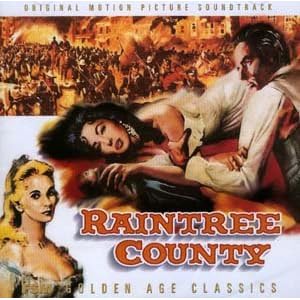
Raintree County
The conversation about the best Civil War epic will typically always begin and end with one movie, 1939's Gone With the Wind, a classic film and one of the best movies ever made in Hollywood history. In general though, Hollywood hasn't gone to the Civil War well too often, and I've never been able to figure out why. Movies like Gettysburg and Gods and Generals were made because Ted Turner has lots of money and is a Civil War buff. Glory is a classic true story that I think is the best depiction of the war around. Well, there's another epic, 1957's Raintree County.
The main problem with this MGM epic is that it tries to be Gone With the Wind 2 too much instead of blazing its own trail. I was surprised though to read the hate this movie gets whether it be the cast being miscast, the story being too simple, or just overall, it's a boring movie. I think two of those three are legitimate issues to have with the movie, but there's something appealing about Raintree County that will take more than that to ruin the movie. The 1950s and early 1960s were the time of the epic in Hollywood, 3-hour movies where no expense was spared. Gigantic budgets, big-time directors, all-star casts, they just don't make them like this anymore. It's a time capsule of a different era in Hollywood, and an interesting one at that.
It's 1859 in Freehaven, Indiana in Raintree County and young John Shawnessy (Montgomery Clift) is about to graduate from the local college. He's ready for the future with his longtime sweetheart, Nell (Eva Marie Saint), when he meets Susanna (Elizabeth Taylor), a Southern belle visiting Freehaven from Louisiana. John falls for her immediately as does she for him. It doesn't take long before Susanna tells him that she's pregnant with his child so they marry and move to the South. With a conflict brewing about states' rights and the ability to own slaves though, John insists they move back to Raintree County. As the Civil War breaks out though with the attack on Fort Sumter, he finds out that his young wife has a secret that could tear them apart. His life thrown on its side, John must now make a huge decision, all the while the North fighting the South around them.
The biggest surprise I found reading reviews here was about the casting and acting of Clift and Taylor. Montgomery Clift was involved in a horrific car accident during filming that caused production to shut down for two months while waiting for him to heal so there is already a stigma attached to the part and the movie as unlucky, and in some circles, just plain bad. I don't know if Clift was the right choice for the lead role, but it's the rare movie he's not very watchable in that lead role. It's not his best performance, but it's still good. More surprising is that Elizabeth Taylor earned a nomination for her performance. No disrespect to the recently passed Miss Taylor, but this was just too hammy of a performance. She's Scarlet O'Hara on steroids, chewing the scenery left and right, a fragile woman screaming and crying at every turn because of her past. She treads that fine line between highly dramatic and soap opera, but too often it leans toward the soap opera acting, loud, confrontational and overbearing.
Say what you will about the two leads, but one thing that's untouchable is the rest of the cast. That's always one of the best things to come out of these Hollywood epics, casts that feature a who's who list of stars playing supporting roles. For this particular epic we've got Marie Saint as the innocent, incredibly sweet Nell, Nigel Patrick as Professor Stiles, a fast-talking, intelligent, philanderer of a man, Lee Marvin as Orville 'Flash' Perkins, John's drinking buddy and a brawler of a man, Rod Taylor as Garwood Jones, a Northern politician who leans toward Southern rights, Agnes Morehead and Walter Abel as John's parents, and DeForest Kelley as a Confederate officer John comes across in Georgia. Of all the performances, Patrick and Marvin especially shine. Patrick's Professor is that good sort of scenery chewing, verbose and expressive, a man who loves life and everything about it. Marvin's Flash is a similar character if from a little lower class. He loves to fight and compete, loves women, and loves to drink.
Director Edward Dmytryk was given a $5,000,000 budget to make this movie, a huge sum at the times. While the film struggled with audiences, it wasn't for lack of effort. It was nominated for best costumes and best art direction and deservedly so. Raintree County is a stunningly beautiful movie with beautiful locations (Kentucky and Mississippi mostly), huge sets filled with hundreds of extras, and a screen so full of action, details, and vivid colors that you can overlook the somewhat stilted dialogue or slow-moving story (it clocks in at just under 3 hours). This is an EPIC, a type of movie they just don't make anymore. The story -- based off a novel -- tries to tackle a lot of topics because honestly, the Civil War had a lot of topics worth covering. It's too much at different points and not enough, focusing on the same thing over and over instead of focusing on the more interesting aspects, Abolitionism, slavery, the actual fighting. Like any movie, it is good and bad. You just hope the good outweighs the bad, and for me it did.
One reason I've assumed the Civil War has never been made into many feature films is the expense of creating huge battle scenes. The actual combat of the war is the second half of the movie after a brief intermission. The sequences are large-scale but don't linger, and were even re-used five years later in How the West Was Won. Clift's John ends up with General Sherman's army in Georgia, and for me this was the movie at its best. Battle sequences are handled with an effective, well-done montage, and Dmytryk paints a picture of what 1864-5 Georgia must have been like, war-torn, terrifying, and a host for all sorts of evil. Working off a novel and trying to stay true to the source, I understand you have to go with what is in front of you. Dmytryk's epic is solid and I enjoyed it from beginning to end. It could have been better, but it's the rare movie that couldn't be better. There are only so many Hollywood epics like this so enjoy them for what they are.
Raintree County <---trailer (1957): ***/****
The main problem with this MGM epic is that it tries to be Gone With the Wind 2 too much instead of blazing its own trail. I was surprised though to read the hate this movie gets whether it be the cast being miscast, the story being too simple, or just overall, it's a boring movie. I think two of those three are legitimate issues to have with the movie, but there's something appealing about Raintree County that will take more than that to ruin the movie. The 1950s and early 1960s were the time of the epic in Hollywood, 3-hour movies where no expense was spared. Gigantic budgets, big-time directors, all-star casts, they just don't make them like this anymore. It's a time capsule of a different era in Hollywood, and an interesting one at that.
It's 1859 in Freehaven, Indiana in Raintree County and young John Shawnessy (Montgomery Clift) is about to graduate from the local college. He's ready for the future with his longtime sweetheart, Nell (Eva Marie Saint), when he meets Susanna (Elizabeth Taylor), a Southern belle visiting Freehaven from Louisiana. John falls for her immediately as does she for him. It doesn't take long before Susanna tells him that she's pregnant with his child so they marry and move to the South. With a conflict brewing about states' rights and the ability to own slaves though, John insists they move back to Raintree County. As the Civil War breaks out though with the attack on Fort Sumter, he finds out that his young wife has a secret that could tear them apart. His life thrown on its side, John must now make a huge decision, all the while the North fighting the South around them.
The biggest surprise I found reading reviews here was about the casting and acting of Clift and Taylor. Montgomery Clift was involved in a horrific car accident during filming that caused production to shut down for two months while waiting for him to heal so there is already a stigma attached to the part and the movie as unlucky, and in some circles, just plain bad. I don't know if Clift was the right choice for the lead role, but it's the rare movie he's not very watchable in that lead role. It's not his best performance, but it's still good. More surprising is that Elizabeth Taylor earned a nomination for her performance. No disrespect to the recently passed Miss Taylor, but this was just too hammy of a performance. She's Scarlet O'Hara on steroids, chewing the scenery left and right, a fragile woman screaming and crying at every turn because of her past. She treads that fine line between highly dramatic and soap opera, but too often it leans toward the soap opera acting, loud, confrontational and overbearing.
Say what you will about the two leads, but one thing that's untouchable is the rest of the cast. That's always one of the best things to come out of these Hollywood epics, casts that feature a who's who list of stars playing supporting roles. For this particular epic we've got Marie Saint as the innocent, incredibly sweet Nell, Nigel Patrick as Professor Stiles, a fast-talking, intelligent, philanderer of a man, Lee Marvin as Orville 'Flash' Perkins, John's drinking buddy and a brawler of a man, Rod Taylor as Garwood Jones, a Northern politician who leans toward Southern rights, Agnes Morehead and Walter Abel as John's parents, and DeForest Kelley as a Confederate officer John comes across in Georgia. Of all the performances, Patrick and Marvin especially shine. Patrick's Professor is that good sort of scenery chewing, verbose and expressive, a man who loves life and everything about it. Marvin's Flash is a similar character if from a little lower class. He loves to fight and compete, loves women, and loves to drink.
Director Edward Dmytryk was given a $5,000,000 budget to make this movie, a huge sum at the times. While the film struggled with audiences, it wasn't for lack of effort. It was nominated for best costumes and best art direction and deservedly so. Raintree County is a stunningly beautiful movie with beautiful locations (Kentucky and Mississippi mostly), huge sets filled with hundreds of extras, and a screen so full of action, details, and vivid colors that you can overlook the somewhat stilted dialogue or slow-moving story (it clocks in at just under 3 hours). This is an EPIC, a type of movie they just don't make anymore. The story -- based off a novel -- tries to tackle a lot of topics because honestly, the Civil War had a lot of topics worth covering. It's too much at different points and not enough, focusing on the same thing over and over instead of focusing on the more interesting aspects, Abolitionism, slavery, the actual fighting. Like any movie, it is good and bad. You just hope the good outweighs the bad, and for me it did.
One reason I've assumed the Civil War has never been made into many feature films is the expense of creating huge battle scenes. The actual combat of the war is the second half of the movie after a brief intermission. The sequences are large-scale but don't linger, and were even re-used five years later in How the West Was Won. Clift's John ends up with General Sherman's army in Georgia, and for me this was the movie at its best. Battle sequences are handled with an effective, well-done montage, and Dmytryk paints a picture of what 1864-5 Georgia must have been like, war-torn, terrifying, and a host for all sorts of evil. Working off a novel and trying to stay true to the source, I understand you have to go with what is in front of you. Dmytryk's epic is solid and I enjoyed it from beginning to end. It could have been better, but it's the rare movie that couldn't be better. There are only so many Hollywood epics like this so enjoy them for what they are.
Raintree County <---trailer (1957): ***/****
Wednesday, March 30, 2011
Young Cassidy
Born in 1880 in Dublin, Ireland, Irish playwright/dramatist/memoirist Sean O'Casey would go on to become one of Ireland's most famous writers. So I've read at least, I've never heard of him. Apparently, O'Casey thought fairly highly of himself too, publishing a 6-volume autobiography while also completing over 20 other works during his career. Not having heard of him, I stumbled across the movie of his life, 1965's Young Cassidy, and tuned in mostly because of the star.
In his personal life, O'Casey was a noted socialist, but that's not going to work in an America-made movie about his life now, is it? An Irish writer in the first 20 years of the 20th Century is ripe pickings for a story fraught with conflict and issues as Ireland went through violent conflict after violent conflict in the 1910s. I was somewhat worried to read that John Ford shot part of the movie before being forced to leave the production after falling ill. I love Ford and all of his quirks, but I didn't want to watch The Quiet Man 2. Instead, director Jack Cardiff replaced him and probably for the better.
It's 1910 in the slums in Dublin and John Cassidy (Rod Taylor) is searching for work to care for his extended family and his aging mother (Flora Robson). Ireland is struggling with poverty and violence as the people fight back, upset with the lives they've almost been forced to live. Cassidy among them doesn't know what to make of the situation but ends up joining the Irish revolutionary forces. A treaty is signed with England for peace, and a young Johhny doesn't know what to do with his life. With help from a young, pretty bookstore owner, Nora (Maggie Smith), he turns to writing, something he's always enjoyed and been good at but never saw any future in it. He begins to write about the things he knows, the life he's led, and he once again is good at it. But in the process, he begins to drive everyone close to him further away.
So often stereotyped or pigeon-holed as a tough guy actor, Rod Taylor didn't always get a ton of chances to show off his acting ability. While I like other Taylor movies better than 'Young,' I can't think of a better performance delivered by the Australian actor. John Cassidy (changed from Sean O'Casey for some reason) has been toned down some from the real O'Casey, but there's still some chinks in the armor that help make him a full-fledged character. He's a family man but a fiery individual too, his temper often getting the better of him. He gets around town a fair share, typically getting involved where he shouldn't be. Seeing the strife and struggle around him, Cassidy just wants something better for himself and the Irish people. He loves everything about his roots, his background, and he uses it as a source in his writings.
The darker, tragic Irish history apparently creates many dark, tragic writers (James Joyce also comes to mind). What makes a great writer great? If you read enough and believe what classical critics say, it's that the most successful writers write about what they know. It's the people they meet, the streets and businesses in the cities and towns they grew up in, their relationships with friends, families, enemies and strangers. Irish poverty then comes easy to Cassidy in his writing. It is all he knows. The story reminded me in a lot of ways of Angela's Ashes, painting Ireland and its culture in a positive and negative light. Through all the struggles though, Ireland still manages to get across the impression of a classically romantic country, partially due to all its struggles. Cardiff takes advantage, filming his story in Ireland to give it that authentic feel without going down that cutesy, too sweet way that Ford did in The Quiet Man.
The supporting characters cover the gamut, all given a chance to play off of Taylor's Johnny. The story covers years so some characters stick around longer than others, and for the most part they make the most of it. Late in her career, Robson is a quiet scene-stealer as Johnny's mother, doting on her son who seems to always have been her favorite, the one child who has a chance to amount to something. Philip O'Flynn plays Mick Mullen, a close friend and co-worker of Johnny's who sticks with him through the ups and downs. In one of her first film roles, Julie Christie plays Daisy Battles, a possible love interest for Johnny. Edith Evans and Michael Redgrave are also scene-stealers as Lady Gregory and W.B. Yeats, owners of the Abbey Playhouse who see the potential Johnny has in his writings.
For a movie that clocks in at 110 minutes, I'm struggling to remember a lot of what happened. The story has an episodic feel to it as the years pass, Johnny growing and developing into a writer. It certainly picks up the pace when the story focuses on his writing after all the struggles he's been through. What I liked was the ending. Irish history isn't going to have a lot of happy endings -- especially when it comes to movies -- and Cardiff picks the perfect place to end the story. It's by no means a downer ending because that's not a fair description. It's a real ending, one that makes sense regardless of it is qualifies as a Hollywood happy ending. I'm not sure if I did enjoy the movie or just moderately enjoy it, but as I right this now, I'll say give it a try.
Young Cassidy <---TCM trailer (1965): ***/****
In his personal life, O'Casey was a noted socialist, but that's not going to work in an America-made movie about his life now, is it? An Irish writer in the first 20 years of the 20th Century is ripe pickings for a story fraught with conflict and issues as Ireland went through violent conflict after violent conflict in the 1910s. I was somewhat worried to read that John Ford shot part of the movie before being forced to leave the production after falling ill. I love Ford and all of his quirks, but I didn't want to watch The Quiet Man 2. Instead, director Jack Cardiff replaced him and probably for the better.
It's 1910 in the slums in Dublin and John Cassidy (Rod Taylor) is searching for work to care for his extended family and his aging mother (Flora Robson). Ireland is struggling with poverty and violence as the people fight back, upset with the lives they've almost been forced to live. Cassidy among them doesn't know what to make of the situation but ends up joining the Irish revolutionary forces. A treaty is signed with England for peace, and a young Johhny doesn't know what to do with his life. With help from a young, pretty bookstore owner, Nora (Maggie Smith), he turns to writing, something he's always enjoyed and been good at but never saw any future in it. He begins to write about the things he knows, the life he's led, and he once again is good at it. But in the process, he begins to drive everyone close to him further away.
So often stereotyped or pigeon-holed as a tough guy actor, Rod Taylor didn't always get a ton of chances to show off his acting ability. While I like other Taylor movies better than 'Young,' I can't think of a better performance delivered by the Australian actor. John Cassidy (changed from Sean O'Casey for some reason) has been toned down some from the real O'Casey, but there's still some chinks in the armor that help make him a full-fledged character. He's a family man but a fiery individual too, his temper often getting the better of him. He gets around town a fair share, typically getting involved where he shouldn't be. Seeing the strife and struggle around him, Cassidy just wants something better for himself and the Irish people. He loves everything about his roots, his background, and he uses it as a source in his writings.
The darker, tragic Irish history apparently creates many dark, tragic writers (James Joyce also comes to mind). What makes a great writer great? If you read enough and believe what classical critics say, it's that the most successful writers write about what they know. It's the people they meet, the streets and businesses in the cities and towns they grew up in, their relationships with friends, families, enemies and strangers. Irish poverty then comes easy to Cassidy in his writing. It is all he knows. The story reminded me in a lot of ways of Angela's Ashes, painting Ireland and its culture in a positive and negative light. Through all the struggles though, Ireland still manages to get across the impression of a classically romantic country, partially due to all its struggles. Cardiff takes advantage, filming his story in Ireland to give it that authentic feel without going down that cutesy, too sweet way that Ford did in The Quiet Man.
The supporting characters cover the gamut, all given a chance to play off of Taylor's Johnny. The story covers years so some characters stick around longer than others, and for the most part they make the most of it. Late in her career, Robson is a quiet scene-stealer as Johnny's mother, doting on her son who seems to always have been her favorite, the one child who has a chance to amount to something. Philip O'Flynn plays Mick Mullen, a close friend and co-worker of Johnny's who sticks with him through the ups and downs. In one of her first film roles, Julie Christie plays Daisy Battles, a possible love interest for Johnny. Edith Evans and Michael Redgrave are also scene-stealers as Lady Gregory and W.B. Yeats, owners of the Abbey Playhouse who see the potential Johnny has in his writings.
For a movie that clocks in at 110 minutes, I'm struggling to remember a lot of what happened. The story has an episodic feel to it as the years pass, Johnny growing and developing into a writer. It certainly picks up the pace when the story focuses on his writing after all the struggles he's been through. What I liked was the ending. Irish history isn't going to have a lot of happy endings -- especially when it comes to movies -- and Cardiff picks the perfect place to end the story. It's by no means a downer ending because that's not a fair description. It's a real ending, one that makes sense regardless of it is qualifies as a Hollywood happy ending. I'm not sure if I did enjoy the movie or just moderately enjoy it, but as I right this now, I'll say give it a try.
Young Cassidy <---TCM trailer (1965): ***/****
Labels:
1960s,
Julie Christie,
Maggie Smith,
Michael Redgrave,
Rod Taylor
Tuesday, March 29, 2011
The Train Robbers
For lack of a better reason, I like this movie because of my childhood memories of The Train Robbers. Watching it now, I still get the same enjoyment I did that I watched it when I was 10 or 11. This was one of my Grandma's favorite westerns, one that she'd taped off of WGN at some point. So every couple months when my sister and I would have a sleepover at her house, this was one of those movies I'd stay up until the wee hours watching. So maybe that's why I like it so much in spite of its many flaws. Not one of the Duke's best, but still an interesting, entertaining western.
In the isolated border town of Liberty, Texas, five gunmen, including grizzled cowboys, Grady (Rod Taylor) and Jesse (Ben Johnson), and young hotshots, Calhoun (Christopher George), Ben (Bobby Vinton) and Turner (Jerry Gatlin) wait for the inbound train. On board is an old friend, Lane (Wayne), who offers a dicey if promising deal. With him is a widow, Mrs. Lowe (Ann-Margret), who wants to get the reward for the gold/money her since dead husband stole from a train. The gold has been stashed away in the desert some three or four days south somewhere in Mexico, but only Mrs. Lowe knows the exact spot. With the chance to split the reward, they all join Lane and start out on the trail south, but they're not alone. The other surviving members of the gang from the robbery years before are gunning for the gold. It's a race into the desert to see who can find it first.
Doing his typical solid if unspectacular, workmanlike job directing, Burt Kennedy has a problem with this movie which he also wrote. The movie is just 93 minutes long and at times feels like it was severely cut. I've read nothing that confirms a longer version of The Train Robbers, but it is a surprisingly short movie. Call it a gut reaction, but something was missing and maybe it was lost in the editing room. What's left still manages to be full of holes. Of the 91 minutes, I'd wager half is long/medium shots of riders on the horizon, Wayne and Co. riding south. While tedious, it's not all bad. Composer Dominic Frontiere's score is memorable, especially the main theme that you'll be humming for days. Two, the locations are gorgeous (Durango, Mexico for those curious) and familiar to fans of westerns. Still, this movie feels more like a travel guide than a feature length film at times.
Somewhat predictable storyline aside (more on that later), the strength of the movie is in the casting, especially Wayne, Taylor and Johnson. The Duke is as comfortable as ever as the western hero, and he plays well off of consummate vets like Taylor and Johnson. As Grady, Taylor is that obnoxious friend who never shuts up, but you like him anyways. As Jesse, Johnson plays a variation on every character he ever played, the grizzled but wise cowboy. Their history is probably worthy of its own movie, but the trio has an ease on-screen that carries the movie through its slower portions. George is the only one of the other three to distinguish himself as Calhoun, the fiery gunfighter along for the cash also trying to prove himself. This is the 3rd review in a row I'll say it, but Ann-Margret God bless her is there for eye candy. She succeeds magnificently by the way.
Writing this script, it seems pretty clear to me that Kennedy had an idea for the opening, the shootout over the gold in the middle of the desert, and then the final showdown back at the sleepy train station and town. Anything else in between those three things? Eh, we'll figure it out. That's where the long, uninterrupted shots of riders on the horizon come in, the repetitious campfire scenes. Thankfully those three set pieces are worthwhile. The dusty opening as the crew waits for the train is reminiscent of a similar opening in Once Upon a Time in the West. The shootout in the desert around an over-turned train has an apocalyptic, other-worldly feel to it, and the finale has plenty of shooting and explosions to appease the action fan in all of us. I just wished there was something else, something more.
Worth pointing out is a really solid surprise ending courtesy of Ricardo Montalban's mysterious hombre. Up until this point, he's just been hovering around the story without a word said. His twist he delivers is a classic, prompting a great exchange between Taylor and Johnson. It's a good movie overall, but I've always felt it could have been much, much better. It's missing something that's hard to explain. If curious, check it out at Youtube, watch the whole thing HERE.
The Train Robbers (1973): ***/****
Wednesday, January 19, 2011
Fate is the Hunter
Director Ralph Nelson takes control of the helms here in this quasi-disaster flick which is both ahead of its time in storytelling but also very dated at times. Nelson is one of those hidden gems of a director you stumble across every so often. He was never pigeon-holed into one specific type of movie and ended up directing films across countless genres. Action, western, drama, comedy, message movies, he tried them all and did them all well. Never flashy but always getting the job done in above average fashion, Nelson doesn't have a true classic to his name, but his filmography is nonetheless littered with worthwhile movies.
On a flight from Los Angeles to Seattle, veteran pilot Capt. Jack Savage (Rod Taylor) and his crew run into mechanical problems and are forced to crash land on a beach, the jet airliner exploding on contact with a pier running across the beach. Everyone on board other than one stewardess (Suzanne Pleshette) is killed, and the public, the corporation, and the media want answers. What happened that caused Savage to attempt such a difficult maneuver? All evidence points to pilot error being the cause, but airline executive, former pilot and friend of Savage's, Sam McBane (Glenn Ford), thinks something else happened. Time is running out though, and McBane must prove Savage's innocence before a board of inquiry pins the blame on the deceased pilot.
Wasting little time surprising the viewer, Nelson kills off star Rod Taylor before the credits even roll. Just when you think Taylor's Savage has successfully landed his jet airliner carrying 49 passengers...BOOM! The plane explodes, and 'Fate is the Hunter' pops up on the screen. Talk about a tone-setter. No worries though for Taylor fans, this is not the last we'll see of him. His involvement in the movie from there on in besides his character being constantly talked about is through flashbacks that flesh him out as an individual. It's those little bits of character that should help us decide if this experienced, always calm and capable pilot was really incapable of dealing with what seemed like a minor mechanical issue. Long story short, don't miss the first 10 minutes, or you'll be lost.
The problem any movie faces when it has such a strong start is sustaining that energy over the length of the movie. That's where 'Hunter' struggles. The investigation is interesting enough because it's hard not to be curious about what actually caused the plane to malfunction in such a surprising way. But Ford's questioning gets tedious quickly. The flashbacks are beyond tedious and serve only to make Savage more of a 3-D character. After the first flashback, it becomes too much. We get it. He's a good pilot who is cocky, arrogant, not always likable and quite the ladies man. But is a movie really going to peg Taylor as a boozehound who caused the deaths of over 50 people? I think not. It's not a matter of if, it's a matter of how Taylor didn't crash the plane because he was drunk.
Worse than that though (as a Lost fan I can appreciate even the slowest of flashbacks) is the direction Ford's character and the story takes overall in the final half hour. Now granted, the word 'Fate' is in the movie's title. As the evidence comes together and Ford's McBane talks to all these possible witnesses, he begins to question if maybe, just maybe, fate played a role in that plane crashing. An out of season bird may have flown into the engine, three other planes were all off-schedule by a few minutes, the pier was supposed to have been removed a week earlier, it just doesn't add up. Was something else at play here? Ford's testimony is even worse when he admits all this. I can't tell if it is just all too sappy or handled poorly, but if Nelson was trying to deliver a message with this change in direction it didn't work. I haven't read the source novel to know one way or another, but the ending disappoints on a lot of levels.
The redeeming factor through all the negatives is the impressive cast assembled here. Ford is never flashy but is as reliable as always with Taylor making the most of his posthumous part...in character at least. Pleshette has a small but integral part (and looks great by the way). Also look for Nancy Kwan, Constance Towers, Jane Russell in a cameo as herself in 1945, Nehemiah Persoff, an uncredited Dorothy Malone, Max Showalter, Wally Cox and many more recognizable faces even if you don't know their name. Other than the cast and some nice-looking black and white camerawork, I struggled to get through this movie. Potentially good but never amounts to anything much.
Fate is the Hunter <---trailer (1964): **/****
Wednesday, September 15, 2010
The High Commissioner
A fish out of water, one of the most reliable story ideas to use when making a movie. It's easy to take it in any direction whether it be drama, comedy or both. It seems movies lean more toward the comedy part, but dramatic ventures can be just as good, including 1968's The High Commissioner. A mostly forgotten smaller budget film with a good cast, 'Commissioner' has an Australian cop from the bush out of his element in London bringing in a murder suspect who happens to be a highly ranking government official.
I stumbled across this one on Netflix a few weeks ago and was curious why I'd never heard a thing about it. The stars are pretty good considering it is a late 1960s movie -- Rod Taylor and Christopher Plummer among others -- and the story sounded like it had a fair share of political intrigue and excitement. So what's the reasoning for its almost complete lack of popularity or even recognition? The stars are good, the intrigue is interesting, but that's it. 'Commissioner' is a straightforward thriller/action movie with a twist and turn here and there, but it doesn't possess anything major that sets it apart from the pack.
An Australian bush cop most comfortable and familiar with the Australian Outback, Scobie Malone (Taylor) receives a mission to travel to London and bring back a murder suspect from a case almost 15 years old. There's finally enough evidence to prosecute him, Sir James Quentin (Plummer), the High Commissioner of Australia currently living and working in London. Malone meets Quentin who agrees to go back to Australia with him, seemingly having waited all these years to be caught. But Quentin has one request; he's leading a commission with global trade ramifications that could unite 1st and 3rd world countries. All he needs is a few days to put it all together. Malone somewhat suspiciously agrees, not knowing that he's getting into a sticky situation with the powers that be not pleased with Quentin's intentions.
First off, I wasn't expecting the story to focus more on the global summit than Malone's mission to bring Quentin back. It was a pleasant surprise as the two plots balance each other out. A good cop no matter where he's working, Malone then devotes himself to protecting Quentin and helping him in any way he can. There's a leak in the meetings though so the Aussie cop has to narrow down the suspects, including Quentin's secretary Lisa (Camilla Sparv), his wife (Lilli Palmer), a gorgeous woman with suspicious motives (Daliah Lavi), and an American (Calvin Lockhart) who offers to help Malone in his investigation. The solution is not so surprising, but the momentum builds to the more surprising finale after that reveal.
Rod Taylor is one of my favorites, and he doesn't disappoint here as Aussie cop Scobie Malone. Cool name aside, the character is that fish out of water trying to figure everything out. He travels to London and is immediately out of place in this high-class setting. But on the other hand, he's a good cop above all else and no matter the situation he commits himself. Taylor also handles a lot of his really physical stunts, delivers some comedic one-liners and is pretty smooth in the process. Plummer drifts in and out of the story, but ever the professional he makes the most of it. The wisest choice made here is leaving his guilt up in the air until the end. Did he really kill his first wife so many years ago? If he didn't kill her, why'd he run? It all comes together nicely in the end, all the story lines converging and wrapping up with a nice tidy bow.
For a movie that's limited by a smaller budget, director Ralph Thomas balances out the limitations with some very cool location shooting. For every matte painting or indoor set standing in for a dark London street, there's an equally impressive on-location scene. One highlight has Taylor's Malone chasing down a possible hitman through the London streets and ending up at...Wimbledon, currently hosting the summer tennis major. It's a cool, fast-paced sequence as Malone realizes someone's making another attempt on Quentin's life. So for all the pretty obvious indoor set shooting, there's the good to balance it all out.
So for all the positive aspects of the movie, what's missing? I'm not quite sure. The story lacks a certain energy at times, relying too much on the talents of the actors to carry on through the slow patches. The biggest issue is that the story doesn't always know where it's going. It just drifts too much as all these characters go in and out of the story. Thankfully, the cast is up to the task so any slow parts are still entertaining enough to watch.
The High Commissioner (1968): ***/****
I stumbled across this one on Netflix a few weeks ago and was curious why I'd never heard a thing about it. The stars are pretty good considering it is a late 1960s movie -- Rod Taylor and Christopher Plummer among others -- and the story sounded like it had a fair share of political intrigue and excitement. So what's the reasoning for its almost complete lack of popularity or even recognition? The stars are good, the intrigue is interesting, but that's it. 'Commissioner' is a straightforward thriller/action movie with a twist and turn here and there, but it doesn't possess anything major that sets it apart from the pack.
An Australian bush cop most comfortable and familiar with the Australian Outback, Scobie Malone (Taylor) receives a mission to travel to London and bring back a murder suspect from a case almost 15 years old. There's finally enough evidence to prosecute him, Sir James Quentin (Plummer), the High Commissioner of Australia currently living and working in London. Malone meets Quentin who agrees to go back to Australia with him, seemingly having waited all these years to be caught. But Quentin has one request; he's leading a commission with global trade ramifications that could unite 1st and 3rd world countries. All he needs is a few days to put it all together. Malone somewhat suspiciously agrees, not knowing that he's getting into a sticky situation with the powers that be not pleased with Quentin's intentions.
First off, I wasn't expecting the story to focus more on the global summit than Malone's mission to bring Quentin back. It was a pleasant surprise as the two plots balance each other out. A good cop no matter where he's working, Malone then devotes himself to protecting Quentin and helping him in any way he can. There's a leak in the meetings though so the Aussie cop has to narrow down the suspects, including Quentin's secretary Lisa (Camilla Sparv), his wife (Lilli Palmer), a gorgeous woman with suspicious motives (Daliah Lavi), and an American (Calvin Lockhart) who offers to help Malone in his investigation. The solution is not so surprising, but the momentum builds to the more surprising finale after that reveal.
Rod Taylor is one of my favorites, and he doesn't disappoint here as Aussie cop Scobie Malone. Cool name aside, the character is that fish out of water trying to figure everything out. He travels to London and is immediately out of place in this high-class setting. But on the other hand, he's a good cop above all else and no matter the situation he commits himself. Taylor also handles a lot of his really physical stunts, delivers some comedic one-liners and is pretty smooth in the process. Plummer drifts in and out of the story, but ever the professional he makes the most of it. The wisest choice made here is leaving his guilt up in the air until the end. Did he really kill his first wife so many years ago? If he didn't kill her, why'd he run? It all comes together nicely in the end, all the story lines converging and wrapping up with a nice tidy bow.
For a movie that's limited by a smaller budget, director Ralph Thomas balances out the limitations with some very cool location shooting. For every matte painting or indoor set standing in for a dark London street, there's an equally impressive on-location scene. One highlight has Taylor's Malone chasing down a possible hitman through the London streets and ending up at...Wimbledon, currently hosting the summer tennis major. It's a cool, fast-paced sequence as Malone realizes someone's making another attempt on Quentin's life. So for all the pretty obvious indoor set shooting, there's the good to balance it all out.
So for all the positive aspects of the movie, what's missing? I'm not quite sure. The story lacks a certain energy at times, relying too much on the talents of the actors to carry on through the slow patches. The biggest issue is that the story doesn't always know where it's going. It just drifts too much as all these characters go in and out of the story. Thankfully, the cast is up to the task so any slow parts are still entertaining enough to watch.
The High Commissioner (1968): ***/****
Labels:
1960s,
Camilla Sparv,
Christopher Plummer,
Espionage,
Lilli Palmer,
Rod Taylor
Friday, January 15, 2010
Dark of the Sun
Where the wild west had its gunfighters, hired gun and bounty killers, the 20th century had its mercenaries and soldiers of fortune. Action movies have certainly played that angle, men with no allegiance to country or morals, just whoever will pay them the most money. Of course, it's not like mercenaries just popped up on the radar in the 1900s, they've been around for as long as there's been fighting and war going back to ancient Egypt all the way to the American Revolution when German soldiers fought alongside the British.But in the 20th Century conflicts all around the world allowed mercenaries to step into the limelight, and nowhere is that reflected more than in the movies. Films about soldiers of fortune that come to mind include several set in Africa where government coups, overthrows and assassinations dot the continent's history. Movies like The Wild Geese, The Dogs of War, and 1968's Dark of the Sun all follow the exploits and adventures of mercenaries working on the Dark Continent with all the political unrest giving them a chance to make heaps of cash.
Recruited by Congo president Ubi (Calvin Lockhart) and offered a large sum of money for their services, mercenary duo Capt. Curry (Rod Taylor) and Sgt. Ruffo (Jim Brown) agree to take on a dangerous mission in war-torn Congo in the early 1960s. They must travel almost 300 miles into enemy territory to a town housing a diamond mine. Their goal is to rescue some 60 refugees there and to find over $50 million dollars in uncut diamonds before Ubi's enemy General Moses and his Simba force can get them. Given just three days to accomplish the mission, Curry agrees.
The veteran mercenary begins to plan with his long-time friend and second in command, Ruffo, finding several officers to go along, Henlein (Peter Carsten), a German officer and former Nazi who's more interested in the diamonds than anything else, Surrier (Olivier Despax), a young Frenchman, and Reid (Kenneth More), a drunken doctor who's worked previously with Curry. With 40 soldiers from Henlein's Strike Force Blue along, Curry's column moves out on a heavily-armed train for the town 300 miles down the track, hoping to beat their deadline and avoid the brutal Simba forces.
This is an action movie with a message, but not one that director Jack Cardiff hits you over the head with. Curry is solely on the job for the cash payout he'll get upon delivery while Ruffo -- a native of Congo who was educated in the U.S. at USC -- takes the job because he sees it as a way to help his country out. The friendship between the two men is genuine, but there is conflict over their beliefs between them. Taylor and Brown are an excellent combo together and have some great scenes together as they discuss why they do what they do and what drives them inside. The ending brings this full circle with one character doing a 180 from where he was at in the beginning of the movie. For a change, it's nice to see some of the motivation these tough guys have instead of endless action scenes.
But all that message stuff aside, this is one of the great action movies of the 1960s that's never really gotten its due, thanks in great part to the lack of a DVD release from a major studio. It is a mercenary movie after all. The first half hour or so is used to set the story up but in an entertaining way as the characters and their dynamics among the group are established. But once the train takes off into Simba territory, it's never very long between action scenes. The tension between Curry and Henlein escalates quickly into a fight with a chainsaw, and that's even before the Simbas attack. These action scenes are highlighted by an extended segment midway through the movie as Curry must wait on a time-released vault to get the diamonds with a Simba force drawing nearer in an incredibly tense scene, and then the recovery of those diamonds later. Made in 1968, 'Dark' also takes advantage of the recent changes in on-screen violence with some very graphic scenes.
Other than Taylor and Brown, this isn't a cast of stars. Never a huge star to begin with, Taylor is excellent as Curry, the hardbitten soldier, and with the always tough, always reliable Brown form a good team. Carsten ends up being a strong villainous presence, and Yvette Mimieux has a smallish part as Claire, one of the refugees the train picks up. Filming in Jamaica instead of Africa -- understandably so considering the time -- it's a nicely-shot movie, aided in great part by Jacques Loussier's sweeping score (watch the title sequence here) which Quentin Tarantino sampled in Inglourious Basterds.
One of those movies that is not well known, but it is one of my favorites. Hopefully down the road there is a DVD release somewhere in sight, but until then I'll stick with my tape from a TCM showing. If you do stumble across it on TV, give it a try. Lots of action and excitement to get the blood and adrenaline flowing.
Dark of the Sun <----trailer (1968): *** 1/2 /****
Labels:
1960s,
Africa,
Jack Cardiff,
Jim Brown,
Men on a Mission,
Rod Taylor
Sunday, August 23, 2009
Inglourious Basterds
Is there a more polarizing personality in Hollywood than Quentin Tarantino? People hate him or love him with little middle ground. He's such an eccentric guy, both in his movies and in real life, that it's almost hard to believe he is for real. But say what you want about him, Tarantino knows, respects and loves movies. His newest, Inglourious Basterds, is one of his best with his own unique take on WWII.Before you go and plop $10 to see this movie, there's some things you should know. Tarantino loves dialogue, lllllloves it, and with a running time of 153 minutes he really gets to delve into dialogue. The good thing to come of it? The dialogue scenes are top-notch with an intensity, a tension that would be hard to duplicate any other way. Other things, the violence can be a little extreme with several graphic, detailed scalpings, a German soldier is beaten to death with a baseball hat, that sort of thing. The other and maybe most important thing; don't go in expecting non-stop action. The movie really has very little action at all until the last 30 minutes or so.
With the story, I don't want to give too much away so here's a real brief summary of the several interweaving storylines. One, Lt. Aldo Raine (Brad Pitt) puts together a special team of Jewish-American soldiers who will be dropped behind enemy lines and basically kill, maim and torture any Nazi they can get their hands on. Two, Parisian cinema owner Shoshana Dreyfus (Melanie Laurent) finds out the German High Command intends to screen a new propaganda movie at her theater. The catch? Shoshana was the lone survivor of her Jewish family's massacre at the hands of SS Colonel Hans Landa (Christoph Waltz) and now she's looking for revenge by taking out the Third Reich's highest figures.
That's it in a nutshell, but anyone who has ever seen a Tarantino movie knows there's much more going on. The stories cross paths repeatedly as Aldo's Basterds become involved with the plot to take out Hitler, and Landa is always seemingly waiting in the background to strike. With some nice stylistic touches, Tarantino leaves his imprint on the movie, breaking the story into 5 chapters with title cards and everything. The opening sequence is almost 20 minutes of the most nerve-wracking dialogue you'll ever see as Landa interrogates a French dairy farmer hiding Shoshana's family in his cellar. It's the perfect game of cat and mouse as Landa toys with the farmer, and a perfect example of what Tarantino is capable of with strong dialogue.
My one disappointment is that the Basterds were underused. Aldo's hit squad is only in the movie for about 45 minutes or so as the story bounces between the Basterds, Landa and Shoshana's interaction with German war hero Fredrick Zoller (Daniel Bruhl) as she prepares for her big debut. The ensemble cast, and that's what it is, no two ways about it, carries this movie. Would I have liked some more background, more explanation? Of course, but what's there with the Basterds is quality stuff, especially an interrogation of German prisoners in the woods. You will be disappointed if you think Brad Pitt is in the movie the whole 150 minutes, but his character is so perfect you'll come away very pleased with the character, especially the ending. His scowling, squinting drawling Tennessean is just more proof that Pitt should do more comedic roles.
As good as Pitt is, and his name will certainly bring audiences in, it's Laurent's and Waltz's movie. Tarantino shoots French actress Laurent like a movie idol, and her plot for revenge sets the whole movie in motion. She's so natural in her scenes, so believable, and you're rooting for her to pull it off, and her scenes late in the movie are haunting and not easily forgettable. Waltz as SS Colonel Landa will get an Oscar nom for his supporting role. Landa is one of the best villains in recent movie history, a charming, intelligent detective labeled the Jew Hunter who crosses paths with all the characters and serves as the link among all the stories.
The rest of the casting has some interesting choices but I can't think of one that doesn't work as I write this. Of the Basterds, there's director Eli Roth as Sgt. Donny Donowitz, the Bear Jew who beats Germans with his baseball bat, Til Schweiger as Hugo Stiglitz, a German soldier who killed 13 Gestapo officers and is recruited by the Basterds, and then Gedeon Burkhard, Samm Levine, Omar Doom, and B.J. Novak. Other strong parts include Michael Fassbender as Lt. Archie Hicox, a British agent assigned to work with the Basterds, Diane Kruger looking like a 1930s/40s movie star as Bridget von Hammersmark, a German movie star and double agent working with the Allies, and even Mike Myers as a British general briefing Hicox. Classic Hollywood fans should look for Rod Taylor in a small part as Winston Churchill too.
This is a movie that at 153 minutes or so could have been much longer as odd as that sounds. Rumors abounded since its showing at Cannes that the Weinstein Company cut 40 minutes from the run time. As good as it is now, it feels like there's much more there, more background, more explanations including one deleted scene with Donny backing in Boston getting his baseball bat and having Jewish families write names of lost loved ones on the bat. Are there flaws? Sure, but nothing that takes away from the experience overall.
It all comes together so nicely here from Tarantino's direction and unique style to the casting, especially Pitt, Laurent and Waltz, the musical soundtrack choices, to the snappy dialogue and visceral violence, and even some rewriting of history. I know I was wavering some going in to see this movie so hopefully something I've written convinces you to go see this in theaters. The movie's last line may be a hint as to what Tarantino thinks of his movie, and I wholeheartedly agree, but I ain't spoiling it here.
Inglourious Basterds (2009): ****/****
Subscribe to:
Posts (Atom)