My movie list of hard to find films and hidden gems seems to get shorter every year. One, I'm proud of my persistence in tracking some down that aren't readily available. Two, I'm realizing how many movies I actually watch. Yeah, I kinda have a problem in that department. I read about this Civil War drama years ago when I stumbled across its ridiculously cool tough guy cast. Where'd I find it? Fox Movies Retro On-Demand. Here's 1954's The Raid.
It's fall of 1864 and the tide of the Civil War has fully turned in favor of the Union forces on all fronts. At a prison camp in the northeast, a group of Confederate prisoners led by Major Neal Benton (Van Heflin) plots their escape and manage to break out, hoping to head north into Canada. From there? Hopefully lead raids into Union territory to help ease the pressure on Southern forces. Their first target is a small town in Vermont, St. Albans, that offers several banks just waiting to be knocked off with the funds meant to help the Confederate cause. With his fellow escapees and several other Rebel soldiers hiding out in Canada, Benton puts the plan into play. He starts off posing as a landowner and businessman just visiting St. Albans, but all the while he's putting the pieces together to pull off the successful raid and robbery. There's so many pieces though and success depends on everything going off without a hitch. Can Benton and his Confederates succeed and get out alive in the process?
The American Civil War lasted four years, three weeks and six days between 1861 and 1865 with hundreds of thousands of soldiers killed, wounded and crippled. It is probably the darkest time in American history -- or certainly one of them -- and in general, is a historical era underutilized in film. There just aren't many Civil War movies out there for viewing pleasure. The unfortunate part? A movie like this is a prime example, a true story of a real-life incident. Read through the history books and there are literally hundreds and thousands of stories like this just waiting to be told. Sure, there are the major battles like Gettysburg, Shiloh and Antietam, but what about stories like these? Read about the real-life raid HERE if you're curious.
I was very glad to finally track this one down. From director Hugo Fregonese, 'Raid' clocks in at a crisp 83 minutes and has that distinct B-movie feel but is never held down by its relatively small scale and budget. It's dark and dirty and nasty with the raid being unleashed partially as a counter to Sherman's march through Georgia. In other words, it's about the war, but it's more too. It's about revenge. Title cards introduce the days as the raid draws closer, Benton's plan being put into action with minute details. Much of the story takes place in the St. Albans set with some brief detours into the prison camp and also across the U.S./Canada border. 'Raid' is content to not be an epic but to tell a little known story that's become a footnote in most Civil War and history books. Nothing flashy, but well done and always interesting.
Now what originally caught my eye with this 1954 Civil War drama was the cast. There's some established stars and some rising stars who would go onto bigger and better things in the late 1950s and into the 1960s and beyond. Heflin is just solid as always, the relative anti-hero and leader of the raid. We learn his family was murdered and his home burned down, the desire for revenge coursing through his body. His men include Lee Marvin as a fiery, unpredictable and possibly unhinged Confederate fanatic, Peter Graves as Benton's loyal, capable second-in-command, James Best, an uncredited Claude Akins and later, John Dierkes. Some cool names working together, giving some variety to the Rebel group.
A big plus to the story is that nothing is black and white. It isn't Confederates good and Union bad or vice versa. It's both. This was war, and there was nothing particularly pleasant about it. We get to meet some of the St. Alban residents, starting with Anne Bancroft (just 23 years old) as a widowed boarding house owner (with young Tommy Rettig playing her son), Richard Boone as a Union officer trying to overcome a mistake he made in combat, and assorted other townspeople from farmers to business owners to preachers. It adds a cool element to the story as we see this raid won't be as easy as planned once Benton gets to meet people around town.
If there is a relative disappointment, it comes in the finale, the actual raid. The quick-moving story builds and builds, and the raid is well done as Fregonese sticks pretty close to the facts of the 1864 raid. Unfortunately, the ending just kinda...well, ends. It's fairly accurate to the truth, but this is one case where maybe stretching the truth even a little would have livened things up a touch. As is, the ending scene is rather abrupt as 'THE END' pops up on the screen. It is still a worthwhile movie but the ending could have been far stronger. Still, it tells a little known slice of Civil War history that simply isn't very well known. Worth tracking down a copy for sure.
The Raid (1954): ** 1/2 /****
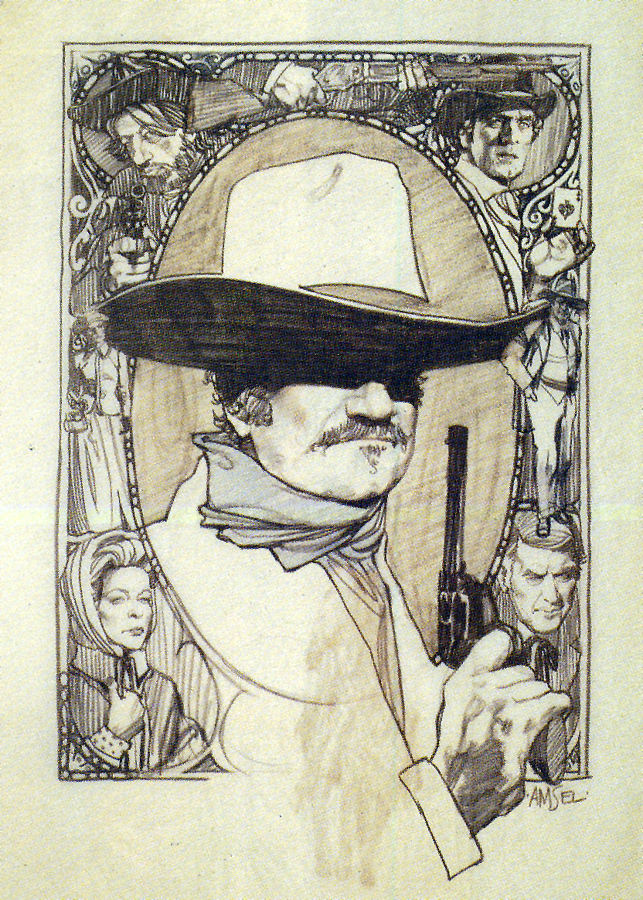
The Sons of Katie Elder
"First, we reunite, then find Ma and Pa's killer...then read some reviews."
Showing posts with label Richard Boone. Show all posts
Monday, January 5, 2015
Saturday, April 13, 2013
Ocean's Eleven (1960)
One of my favorite movies from the 2000s, I love 2001's Ocean's Eleven. I'm no dummy though, and I remember stating that the 2001 remake was better than the original. Well, it took me a little while -- okay, well over a year, but who's counting? -- but I'm revisiting that statement. Was I right or wrong? Maybe somewhere in between? Let's get started with the Rat Pack original, 1960's Ocean's Eleven.
A former paratrooper with countless daring, behind the lines missions under his belt during World War II, Danny Ocean (Frank Sinatra) has moved on with his life, but some 15 years since the end of the war, he's got a plan. The catch? He needs help from his old army buddies to pull off a daring heist. Ocean gets the group together, including Sam Harmon (Dean Martin), Jimmy Foster (Peter Lawford), and Josh Howard (Sammy Davis Jr.) among others, and lays out the plan for them. Just a few days away, Ocean and Co. plan on hitting five of Las Vegas's biggest casinos on New Year's Eve when the vaults are packed to the gills with money. Could it work? The plan depends on to-the-second timing, teamwork and countless little details, maybe even a little luck. It sounds like an impossible plan, but Ocean's crew might be crazy enough to pull it off.
Starting in the mid 1950s, Sinatra, Martin, Davis Jr., Lawford and Joey Bishop teamed up to star in movies that are simply known as....Rat Pack movies. Classic cinema they are not, but they are basically the definition of a good popcorn flick. Just sit back and enjoy them. Of all the Rat Pack movies though, this one is the best by far. Lewis Milestone directs, but his job is basically to get Sinatra and the boys on the right track and let them go. In that sense, he hits it out of the park. It is a vastly different movie than the 2001 remake which is really a remake in name and basic premise alone. The script, the heist, and the Vegas setting are all a means to an end. If you like Sinatra, Martin or any of the Rat Pack, you will enjoy this movie.
Singing or performing on stage, starring in movies, the Rat Pack had an innate chemistry that most entertainers dream of having. So cutting away a lot of other things, this movie is about the Packers hanging out, drinking some liquor, smoking a lot of cigarettes and wearing impeccably cool suits. Is it self-indulgent? Yes, basically the definition of self-indulgent. If you're a fan of Sinatra, Martin or any of the guys, this is the movie for you. It's genuinely funny with plenty of quick, snappy dialogue, lots of one-liners that don't feel like a script. It feels like it is a bunch of friends hanging out busting each other. Oh, and they happen to be planning an epic casino robbery too so they've got that going for them.
One of the biggest differences between the 1960 original and the 2001 remake is the background. Made 15 years after the end of WWII, the paratroopers angle is pretty cool. Sinatra's Danny is the sergeant, Lawford the entitled officer, Martin's Sam the soldier who saved Danny's life and best friend, and so on. Along with Davis. Jr as Josh and Bishop as Mushy, Danny's crew includes Richard Conte as Tony, just out of prison and looking to provide for his son, Henry Silva as smooth, quick-talking Roger, Buddy Lester as Vince, the former club bouncer with an in, Richard Benedict as Curly, Norman Fell as Peter, the explosives specialist, and Clem Harvey as Jackson, the drawling cowboy. Like the best men-on-a-mission movies, there's something inherently cool about a group of specialists working together to pull of an impossible job. When you actually like some of the group? That's even better, like a fastball down the middle.
Not surprisingly, the focus here is on Danny's crew, but the rest of the cast is pretty solid. Angie Dickinson plays Beatrice, Danny's wife who's working through some issues with her always moving husband. Cesar Romero is Duke Santos, a well-connected former gangster who stumbles into Ocean's plan and who happens to be engaged to Jimmy's mother (Ilka Chase). Akim Tamiroff gets a lot of laughs as Spyros, the ex-con who concocted the casino heist but can't come up with the details, turning to Danny for that part. Also look for Red Skelton playing himself in a casino scene, frustrated and wanting more money, and George Raft as a casino head in a strategy session. Even look for an uncredited Shirley MacLaine as a drunken New Year's Eve partygoer who meets Martin's Sam during the heist. And lastly, listen for Richard Boone providing his voice talents in a key scene late, even if he never appears on-screen.
I loved the style from this 1960 heist movie, and that doesn't come as a surprise considering the talent involved. The credits sequence from Saul Bass gets things going nicely. Watch it HERE, composer Nelson Riddle's score playing as accompaniment. Much of the film was shot on location in Las Vegas, and who would have thought? 1960 Vegas looks amazingly fun, like a time capsule into a smooth, cool era. Even the indoor sets look cheesy, but they're cool cheesy. The heist itself is pretty cool if a little more simplistic than the 2001 remake (Damn technology!). As most heist films will tell you though, it's the post-robbery stuff that's the issue. It's Vegas in the middle of the desert. How do you escape or hide the money? The ending delivers a couple great twists, especially the final one that sets up a very cool, very stylish final scene as Ocean's Eleven walk along the Vegas strip.
There is a simple, stylish elegance to this movie. Is it a classic film, an example of great cinema? No, but in terms of pure entertainment value, it's hard to beat. The scene where the crew discuss the upcoming heist in Spyros' well-decorated man cave is epically cool, Ocean's Eleven huddled around the pool table discussing the ins and outs of the heist. It's a fun, cool and entertaining movie that's a prime example of the style of a past era in Hollywood. The Rat Pack is cool. If you agree, you'll like this movie.
Ocean's Eleven (1960): ****/****
A former paratrooper with countless daring, behind the lines missions under his belt during World War II, Danny Ocean (Frank Sinatra) has moved on with his life, but some 15 years since the end of the war, he's got a plan. The catch? He needs help from his old army buddies to pull off a daring heist. Ocean gets the group together, including Sam Harmon (Dean Martin), Jimmy Foster (Peter Lawford), and Josh Howard (Sammy Davis Jr.) among others, and lays out the plan for them. Just a few days away, Ocean and Co. plan on hitting five of Las Vegas's biggest casinos on New Year's Eve when the vaults are packed to the gills with money. Could it work? The plan depends on to-the-second timing, teamwork and countless little details, maybe even a little luck. It sounds like an impossible plan, but Ocean's crew might be crazy enough to pull it off.
Starting in the mid 1950s, Sinatra, Martin, Davis Jr., Lawford and Joey Bishop teamed up to star in movies that are simply known as....Rat Pack movies. Classic cinema they are not, but they are basically the definition of a good popcorn flick. Just sit back and enjoy them. Of all the Rat Pack movies though, this one is the best by far. Lewis Milestone directs, but his job is basically to get Sinatra and the boys on the right track and let them go. In that sense, he hits it out of the park. It is a vastly different movie than the 2001 remake which is really a remake in name and basic premise alone. The script, the heist, and the Vegas setting are all a means to an end. If you like Sinatra, Martin or any of the Rat Pack, you will enjoy this movie.
Singing or performing on stage, starring in movies, the Rat Pack had an innate chemistry that most entertainers dream of having. So cutting away a lot of other things, this movie is about the Packers hanging out, drinking some liquor, smoking a lot of cigarettes and wearing impeccably cool suits. Is it self-indulgent? Yes, basically the definition of self-indulgent. If you're a fan of Sinatra, Martin or any of the guys, this is the movie for you. It's genuinely funny with plenty of quick, snappy dialogue, lots of one-liners that don't feel like a script. It feels like it is a bunch of friends hanging out busting each other. Oh, and they happen to be planning an epic casino robbery too so they've got that going for them.
One of the biggest differences between the 1960 original and the 2001 remake is the background. Made 15 years after the end of WWII, the paratroopers angle is pretty cool. Sinatra's Danny is the sergeant, Lawford the entitled officer, Martin's Sam the soldier who saved Danny's life and best friend, and so on. Along with Davis. Jr as Josh and Bishop as Mushy, Danny's crew includes Richard Conte as Tony, just out of prison and looking to provide for his son, Henry Silva as smooth, quick-talking Roger, Buddy Lester as Vince, the former club bouncer with an in, Richard Benedict as Curly, Norman Fell as Peter, the explosives specialist, and Clem Harvey as Jackson, the drawling cowboy. Like the best men-on-a-mission movies, there's something inherently cool about a group of specialists working together to pull of an impossible job. When you actually like some of the group? That's even better, like a fastball down the middle.
Not surprisingly, the focus here is on Danny's crew, but the rest of the cast is pretty solid. Angie Dickinson plays Beatrice, Danny's wife who's working through some issues with her always moving husband. Cesar Romero is Duke Santos, a well-connected former gangster who stumbles into Ocean's plan and who happens to be engaged to Jimmy's mother (Ilka Chase). Akim Tamiroff gets a lot of laughs as Spyros, the ex-con who concocted the casino heist but can't come up with the details, turning to Danny for that part. Also look for Red Skelton playing himself in a casino scene, frustrated and wanting more money, and George Raft as a casino head in a strategy session. Even look for an uncredited Shirley MacLaine as a drunken New Year's Eve partygoer who meets Martin's Sam during the heist. And lastly, listen for Richard Boone providing his voice talents in a key scene late, even if he never appears on-screen.
I loved the style from this 1960 heist movie, and that doesn't come as a surprise considering the talent involved. The credits sequence from Saul Bass gets things going nicely. Watch it HERE, composer Nelson Riddle's score playing as accompaniment. Much of the film was shot on location in Las Vegas, and who would have thought? 1960 Vegas looks amazingly fun, like a time capsule into a smooth, cool era. Even the indoor sets look cheesy, but they're cool cheesy. The heist itself is pretty cool if a little more simplistic than the 2001 remake (Damn technology!). As most heist films will tell you though, it's the post-robbery stuff that's the issue. It's Vegas in the middle of the desert. How do you escape or hide the money? The ending delivers a couple great twists, especially the final one that sets up a very cool, very stylish final scene as Ocean's Eleven walk along the Vegas strip.
There is a simple, stylish elegance to this movie. Is it a classic film, an example of great cinema? No, but in terms of pure entertainment value, it's hard to beat. The scene where the crew discuss the upcoming heist in Spyros' well-decorated man cave is epically cool, Ocean's Eleven huddled around the pool table discussing the ins and outs of the heist. It's a fun, cool and entertaining movie that's a prime example of the style of a past era in Hollywood. The Rat Pack is cool. If you agree, you'll like this movie.
Ocean's Eleven (1960): ****/****
Tuesday, December 25, 2012
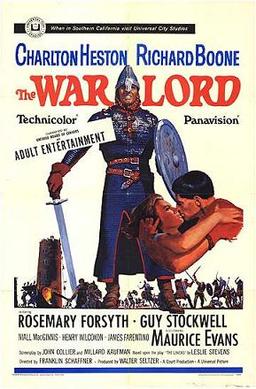
The War Lord
With movies like Ben Hur, The Ten Commandments, The Agony and the Ecstasy, El Cid and plenty more, Charlton Heston is an actor directly associated with historical epics. Some have gotten lost in the shuffle over the years, including the worthwhile 1965 epic The War Lord.
It's the 11th Century in the Middle Ages in France, knight Chrysagon de la Cruex (Heston) has been given a mission. An isolated Druid village along the coast comes under constant attack so Chrysagon is tasked with taking a small troop of knights and soldiers, including his brother, Draco (Guy Stockwell), and right hand man, Bors (Richard Boone). Upon arriving, he finds a poor village where a failed defensive castle was only partially built and villagers who have strayed from acceptable ways. Chrysagon's group works well though, but the knight falls for a beautiful young woman from the village, Bronwyn (Rosemary Forsyth). The only problem? She is engaged to a villager, and the only way Chrysagon can have her is to simply take her, angering the rest of the villagers. All the while, the threat of an attack looms.
In the age of the epics -- the 1960s -- this modestly scaled epic from director Franklin J. Schaffner has been lost in the shuffle over the last 40-plus years. I say 'modestly scaled,' and I don't intend that at all in a negative way. There are no on-location shooting, just California filling in for Middle Ages France. Much of the story is contained in one stretch of marshy coast, Chrysagon's single-towered castle sitting just off the land in a shallow waterway. There is something simple and elegant about the setting; the knights in their water-surrounded castle, the villagers hidden away in the woods. So while the scale isn't on a hugely epic level -- no countries warring, no government in-fighting -- it focuses on the personal at its most simple. In this case, it's just a man and woman who fall madly in love with each other and all the repercussions and fall-out.
I've made no secret about my general disdain for romance sub-plots in stories that simply don't call for it. In this epic though, it's not only necessary but handled well. I don't think of Heston as a natural choice for a historical epic's romantic lead, but he does a solid job here in an understated way. His Chrysagon has been fighting for a Duke for 20-something years, traveling, fighting and warring wherever he goes. When he meets Forsyth's Bronwyn, he can't help himself. He needs her, wants her. Similarly, Bronwyn is drawn to him in a way she can't explain. Without being ridiculously lovey-dovey or over the top, this relationship seems real. Everything hits the fan when Chrysagon realizes a local custom allows the powerful lords to take a virgin bride on her wedding night for himself. Not surprisingly, Bronwyn's husband-to-be (James Farentino) is less than pleased to give away his wife for a night. The results are not surprisingly pretty downbeat, but getting there is worthwhile, and the finale is a highly effective emotional punch.
Balancing out the effective love story is the solid casting backing up Heston. Adding another dimension is Stockwell's Draco as Chrysagon's brother. Brothers in the Middle Ages who differ in opinions on how to do things? Well, it doesn't take a nuclear scientist to figure out that might not end well. Stockwell does a fine job as Draco, the less-experienced knight in battle who nonetheless wants to prove himself. As the gruff voiced Bors, Boone delivers the best supporting performance. As we learn more about how these characters came to ride together, Boone's acting gets better and better, including a great job in the last few scenes without saying more than a few words. Also look for Maurice Evans as the local priest caught in the middle of the knights and villagers, Niall MacGinnis as Odins, the village elder trying to hold his people together, Henry Wilcoxon as the rival Frisian chief, and Allen Jaffe and Michael Conrad as two of Chrysagon's men.
So overall, I liked this movie a lot. I liked it a lot, and that's considering that there is little in the way of action until the last third of the 120-minute long movie. When it does arrive on the scene, the action does not disappoint. The Frisian raiders arrive to reclaim the chief's son -- accidentally left behind in a raid and feared dead -- forcing Chrysagon and his troop to retreat to their castle tower for defense. The violence is brutal without being graphic, and the action is kept from the view of the foot soldiers. We see the Frisians attacking -- catch an example HERE -- in various ways, any way to breach the heavily guarded door or at least get over the walls. The attack runs about 25 minutes, and it's a gem. The post-battle fallout is equally good too. Also worth mentioning, the score from Jerome Moross and Hans J. Salter is perfect for both the action and the love scenes. Check out the entire movie at Youtube starting HERE.
The War Lord (1965): ***/****
It's the 11th Century in the Middle Ages in France, knight Chrysagon de la Cruex (Heston) has been given a mission. An isolated Druid village along the coast comes under constant attack so Chrysagon is tasked with taking a small troop of knights and soldiers, including his brother, Draco (Guy Stockwell), and right hand man, Bors (Richard Boone). Upon arriving, he finds a poor village where a failed defensive castle was only partially built and villagers who have strayed from acceptable ways. Chrysagon's group works well though, but the knight falls for a beautiful young woman from the village, Bronwyn (Rosemary Forsyth). The only problem? She is engaged to a villager, and the only way Chrysagon can have her is to simply take her, angering the rest of the villagers. All the while, the threat of an attack looms.
In the age of the epics -- the 1960s -- this modestly scaled epic from director Franklin J. Schaffner has been lost in the shuffle over the last 40-plus years. I say 'modestly scaled,' and I don't intend that at all in a negative way. There are no on-location shooting, just California filling in for Middle Ages France. Much of the story is contained in one stretch of marshy coast, Chrysagon's single-towered castle sitting just off the land in a shallow waterway. There is something simple and elegant about the setting; the knights in their water-surrounded castle, the villagers hidden away in the woods. So while the scale isn't on a hugely epic level -- no countries warring, no government in-fighting -- it focuses on the personal at its most simple. In this case, it's just a man and woman who fall madly in love with each other and all the repercussions and fall-out.
I've made no secret about my general disdain for romance sub-plots in stories that simply don't call for it. In this epic though, it's not only necessary but handled well. I don't think of Heston as a natural choice for a historical epic's romantic lead, but he does a solid job here in an understated way. His Chrysagon has been fighting for a Duke for 20-something years, traveling, fighting and warring wherever he goes. When he meets Forsyth's Bronwyn, he can't help himself. He needs her, wants her. Similarly, Bronwyn is drawn to him in a way she can't explain. Without being ridiculously lovey-dovey or over the top, this relationship seems real. Everything hits the fan when Chrysagon realizes a local custom allows the powerful lords to take a virgin bride on her wedding night for himself. Not surprisingly, Bronwyn's husband-to-be (James Farentino) is less than pleased to give away his wife for a night. The results are not surprisingly pretty downbeat, but getting there is worthwhile, and the finale is a highly effective emotional punch.
Balancing out the effective love story is the solid casting backing up Heston. Adding another dimension is Stockwell's Draco as Chrysagon's brother. Brothers in the Middle Ages who differ in opinions on how to do things? Well, it doesn't take a nuclear scientist to figure out that might not end well. Stockwell does a fine job as Draco, the less-experienced knight in battle who nonetheless wants to prove himself. As the gruff voiced Bors, Boone delivers the best supporting performance. As we learn more about how these characters came to ride together, Boone's acting gets better and better, including a great job in the last few scenes without saying more than a few words. Also look for Maurice Evans as the local priest caught in the middle of the knights and villagers, Niall MacGinnis as Odins, the village elder trying to hold his people together, Henry Wilcoxon as the rival Frisian chief, and Allen Jaffe and Michael Conrad as two of Chrysagon's men.
So overall, I liked this movie a lot. I liked it a lot, and that's considering that there is little in the way of action until the last third of the 120-minute long movie. When it does arrive on the scene, the action does not disappoint. The Frisian raiders arrive to reclaim the chief's son -- accidentally left behind in a raid and feared dead -- forcing Chrysagon and his troop to retreat to their castle tower for defense. The violence is brutal without being graphic, and the action is kept from the view of the foot soldiers. We see the Frisians attacking -- catch an example HERE -- in various ways, any way to breach the heavily guarded door or at least get over the walls. The attack runs about 25 minutes, and it's a gem. The post-battle fallout is equally good too. Also worth mentioning, the score from Jerome Moross and Hans J. Salter is perfect for both the action and the love scenes. Check out the entire movie at Youtube starting HERE.
The War Lord (1965): ***/****
Sunday, December 16, 2012
Big Jake
From his starring screen debut in 1930's The Big Trail to his final film in 1976's The Shootist, John Wayne
became one of Hollywood's most beloved stars. For me, he will always be
one of my favorites. Some look to The Searchers, She Wore a Yellow
Ribbon and The Shootist as his best roles (and they are), but one of my
favorites from the Duke is a change of pace western from 1971, Big Jake.
It's 1909 along the Texas/Mexico border when an outlaw, John Fain (Richard Boone), leads his gang of murderers and cutthroats in a vicious attack on the expansive McCandles Ranch. Ten people are killed, and ranch owner Martha (Maureen O'Hara) sees her grandson kidnapped. Fain demands a ransom of $1 million, leaving a note that says simply "Follow the map." Knowing her grandson could be killed no matter what she decides, Martha seeks out her estranged husband, Jacob (Wayne), to take the ransom money into Mexico and get his grandson (who he didn't know) back. With help from his two sons, James (Patrick Wayne) and Michael (Christopher Mitchum), and an old friend, Apache Sam Sharpnose (Bruce Cabot), Jacob agrees, setting off to bring his grandson back alive or his captors dead.
Without a doubt, this is the most graphically violent movie of Wayne's career. Others like The Alamo are violent, but nothing quite like this. For western fans alone, that feature makes this George Sherman-directed western worth watching. Sidenote: With Sherman sick and unable to be on-location during shooting, Wayne directed much of the movie. In a career that spanned five decades, this is certainly a departure for the Duke. It is trying to be more modern, using some heavy-duty blood squibs. Even when the violence isn't on-screen, it is beyond startling and even disturbing in some scenes. Somewhat oddly, there is still an oddly comic tune at times that feels out of place alongside the sometimes extreme violence.
Wouldn't you know it though? I grew up watching this film -- still have an old VHS recording off TBS along with the bare-bones DVD -- and will always remember it fondly. Beyond the on-screen violence, there is something different about this western that's hard to put my finger on. I think I like it because of its general eccentric nature; the violence mixed with the odd humor. 'Jake' was shot on location in Mexico in Durango and Zacatecas, giving it a real sense of authenticity. Many Wayne westerns -- The War Wagon, Sons of Katie Elder, The Undefeated -- were shot in Mexico, and wouldn't you know it? Mexico looks like Mexico, giving a great backdrop to the story. The always reliable Elmer Bernstein turns in an eclectic score that covers a lot of ground, but in a good way. Listen to the main theme HERE, but that's just a taste of what Bernstein's score has to offer. Another case of the little things aiding the bigger cause.
What else though? I love the interaction between Wayne and his two sons he hasn't seen in years. Estranged from his family (for unknown reasons), he only comes back at his wife's request. Wayne's introduction is priceless, O'Hara's Martha saying she needs a man as unpleasant as the mission he'll undertake. Cut to Wayne squinting down the barrel of a rifle in an extreme close-up with Bernstein's score playing. Jake is believed to have been killed years before, forcing him to hear many people say "I thought you were dead." Nope, still kicking, traveling through Texas and Mexico with his fiercely loyal dog. Seeing his sons again provides some of the movie's genuinely funny moments and also some surprisingly effective dramatic moments. Neither Patrick Wayne or Mitchum are out of this world actors, but they hold their own, as does a scene-stealing Cabot as an aging Apache.
The cast is far from done there, especially an underused Richard Boone as the calculating, brutal John Fain. Most villains cower in Wayne's shadow, but not Boone. Their scenes together are beyond perfect, few though they may be. Watch THIS scene for proof (apologies for the low quality). Fain's gang includes O'Brien (Glenn Corbett), a half-breed gunslinger, Pop Dawson (an unrecognizable Harry Carey Jr.), Kid Duffy (stuntman Dean Smith), a deadshot with a rifle, John Goodfellow (Gregg Palmer), a machete-wielding psycho, Trooper (Jim Burk), an Army deserter, and Will Fain (Robert Warner), John's brother who favors a shotgun. Singer Bobby Vinton makes a brief appearance as Jake's third son. Also look for recognizable western faces John Doucette, John Agar, Jim Davis, Hank Worden, Chuck Roberson (Wayne's stunt double), and Roy Jenson. Wayne's real-life son, Ethan Wayne, plays the kidnapped Little Jake.
Following the startling opening attack at the McCandles Ranch, things more or less settle down until the finale in the action department. After dealing with some pistoleros who want to get their hands on the $1 million ransom, Jacob and Co. head to the ruins of an old Spanish mission for the exchange. On a stormy night, the sequence that follows is a gem. It's brutal and vicious -- with at least two surprises -- but it always stays on a small-scale level where you know what's going on. The mission and plaza was supposedly used in the 1910s by revolutionary Pancho Villa for executions, adding a dark edge to the scenes. The gunplay isn't remembered as one of the all-time bests, but the finale is one of my favorites, partially due to the action, some to the script with its great one-liners.
Whatever the reasoning, I love this movie. I know it's not a great movie, but I love it just the same. John Wayne fans should appreciate this one, and western fans on the whole as well.
Big Jake <----trailer (1971): ****/****
Rewrite of review from July 2009
It's 1909 along the Texas/Mexico border when an outlaw, John Fain (Richard Boone), leads his gang of murderers and cutthroats in a vicious attack on the expansive McCandles Ranch. Ten people are killed, and ranch owner Martha (Maureen O'Hara) sees her grandson kidnapped. Fain demands a ransom of $1 million, leaving a note that says simply "Follow the map." Knowing her grandson could be killed no matter what she decides, Martha seeks out her estranged husband, Jacob (Wayne), to take the ransom money into Mexico and get his grandson (who he didn't know) back. With help from his two sons, James (Patrick Wayne) and Michael (Christopher Mitchum), and an old friend, Apache Sam Sharpnose (Bruce Cabot), Jacob agrees, setting off to bring his grandson back alive or his captors dead.
Without a doubt, this is the most graphically violent movie of Wayne's career. Others like The Alamo are violent, but nothing quite like this. For western fans alone, that feature makes this George Sherman-directed western worth watching. Sidenote: With Sherman sick and unable to be on-location during shooting, Wayne directed much of the movie. In a career that spanned five decades, this is certainly a departure for the Duke. It is trying to be more modern, using some heavy-duty blood squibs. Even when the violence isn't on-screen, it is beyond startling and even disturbing in some scenes. Somewhat oddly, there is still an oddly comic tune at times that feels out of place alongside the sometimes extreme violence.
Wouldn't you know it though? I grew up watching this film -- still have an old VHS recording off TBS along with the bare-bones DVD -- and will always remember it fondly. Beyond the on-screen violence, there is something different about this western that's hard to put my finger on. I think I like it because of its general eccentric nature; the violence mixed with the odd humor. 'Jake' was shot on location in Mexico in Durango and Zacatecas, giving it a real sense of authenticity. Many Wayne westerns -- The War Wagon, Sons of Katie Elder, The Undefeated -- were shot in Mexico, and wouldn't you know it? Mexico looks like Mexico, giving a great backdrop to the story. The always reliable Elmer Bernstein turns in an eclectic score that covers a lot of ground, but in a good way. Listen to the main theme HERE, but that's just a taste of what Bernstein's score has to offer. Another case of the little things aiding the bigger cause.
What else though? I love the interaction between Wayne and his two sons he hasn't seen in years. Estranged from his family (for unknown reasons), he only comes back at his wife's request. Wayne's introduction is priceless, O'Hara's Martha saying she needs a man as unpleasant as the mission he'll undertake. Cut to Wayne squinting down the barrel of a rifle in an extreme close-up with Bernstein's score playing. Jake is believed to have been killed years before, forcing him to hear many people say "I thought you were dead." Nope, still kicking, traveling through Texas and Mexico with his fiercely loyal dog. Seeing his sons again provides some of the movie's genuinely funny moments and also some surprisingly effective dramatic moments. Neither Patrick Wayne or Mitchum are out of this world actors, but they hold their own, as does a scene-stealing Cabot as an aging Apache.
The cast is far from done there, especially an underused Richard Boone as the calculating, brutal John Fain. Most villains cower in Wayne's shadow, but not Boone. Their scenes together are beyond perfect, few though they may be. Watch THIS scene for proof (apologies for the low quality). Fain's gang includes O'Brien (Glenn Corbett), a half-breed gunslinger, Pop Dawson (an unrecognizable Harry Carey Jr.), Kid Duffy (stuntman Dean Smith), a deadshot with a rifle, John Goodfellow (Gregg Palmer), a machete-wielding psycho, Trooper (Jim Burk), an Army deserter, and Will Fain (Robert Warner), John's brother who favors a shotgun. Singer Bobby Vinton makes a brief appearance as Jake's third son. Also look for recognizable western faces John Doucette, John Agar, Jim Davis, Hank Worden, Chuck Roberson (Wayne's stunt double), and Roy Jenson. Wayne's real-life son, Ethan Wayne, plays the kidnapped Little Jake.
Following the startling opening attack at the McCandles Ranch, things more or less settle down until the finale in the action department. After dealing with some pistoleros who want to get their hands on the $1 million ransom, Jacob and Co. head to the ruins of an old Spanish mission for the exchange. On a stormy night, the sequence that follows is a gem. It's brutal and vicious -- with at least two surprises -- but it always stays on a small-scale level where you know what's going on. The mission and plaza was supposedly used in the 1910s by revolutionary Pancho Villa for executions, adding a dark edge to the scenes. The gunplay isn't remembered as one of the all-time bests, but the finale is one of my favorites, partially due to the action, some to the script with its great one-liners.
Whatever the reasoning, I love this movie. I know it's not a great movie, but I love it just the same. John Wayne fans should appreciate this one, and western fans on the whole as well.
Big Jake <----trailer (1971): ****/****
Rewrite of review from July 2009
Thursday, November 22, 2012
Rio Conchos
No matter what movies will tell you, there was nothing
particularly pleasant about the wild, wild west. Let’s even limit that from the
years immediately following the Civil War right up into the 1890s. Depending on
the western, you’re going to get a different picture of that brutal, plain
nasty survival based time. One of the deepest and darkest? That’s 1964’s RioConchos, an ahead of its time western that still resonates today.
It’s 1867 along the Texas/Mexico border, and a shipment of
2,000 new repeating rifles meant for the undermanned U.S. cavalry has been
stolen without a trace. Jim Lassiter (RichardBoone), a former Confederate officer, is arrested with one of those rifles
soon after brutally shooting down a handful of Apache warriors. Lassiter is
approached to undertake a dangerous mission; find the rifles before they fall
into the wrong hands. He doesn’t want to but agrees to it, an incident from his
past haunting him. Under the command of Capt. Haven (Stuart Whitman) and a cavalry sergeant, Franklin (Jim Brown), and with a shifty bandit,
Rodriguez (Tony Franciosa), along to
“even things out,” Lassiter heads into Mexico. What awaits? A Confederate
officer, Pardee (Edmond O’Brien),
trying to start a second war with an army of Apache warriors.
From the first time I saw this Gordon Douglas-western on a beat-up old VHS, I loved this western.
It’s harder to find although it has received a DVD release the last few years.
It has all the little things going for it. Jerry Goldsmith’s score is a gem (listen HERE), setting the stage for a similar score four
years later with Bandolero! There’s also the location shooting in Arches National Park and Dead Horse State Park in Utah and
that adds that sense of realism that the best desert westerns have. Those
little things, they can make a bad movie mildly acceptable and a decent movie
into a good to great final product. The story as well doesn’t spell everything
out for you. It’s not always clear what some characters’ intentions are, adding
a sense of mystery to the mission.
What appealed to me most about ‘Conchos’ though was the casting.
It’s a men on a mission movie, and a goodie. These aren’t four specially
trained commandos working together. This is a group of four very different men
at that. With his gravelly voice, heavily lined face and generally nasty
demeanor, Boone looks extremely comfortable in the western setting. Lassister’s
background adds some much-needed sympathy to the Lassiter character. Franciosa
especially is a scene-stealer as the shiftless Rodriguez, always ready with a
smile but mostly waiting for a chance to double-cross you. Whitman delivers a
workmanlike performance, lost in the shuffle against Boone and Franciosa. In
his first movie, Brown is a nearly-silent presence, but an imposing one at
that.
The focus is on the back-stabbing quartet, but the supporting
cast also features Wende Wagner as an Apache woman the group picks up along the
way on the trail, Warner Anderson as Colonel Wagner, the Union commander setting up the mission, Rodolfo Acosta as Bloodshirt, a warring Apache
chief, Vito Scotti as a Mexican bandit, and an uncredited Timothy Carey as a
suspicious bartender with few answers. O’Brien as Pardee is nothing more than a
cameo. The character is more important as a name and idea, Pardee finally
showing up in the last 30 minutes. Hearing Boone say ‘Parrrrrr-deeeeeee’ is
worth the price of admission alone.
As for the whole nastiness factor, ‘Conchos’ has plenty of
it and more to spare. We’re introduced to Lassiter callously gunning down five
Apache warriors burying one of their own. Lassiter and Haven hate each other
almost as much as the Apaches. The former Confederate wants revenge for the
death of his wife and daughter at the hands of Apaches, and he sees Indians as
one being; man, woman, child. It doesn’t matter. In a rage, he tries to bash
Wagner’s Sally’s head in. The border setting helps too. It’s a country with
little law or rule. Whoever is fastest with a gun rules.
Now up to this point, you wouldn’t be wrong to think this is
an action-packed western. Ready to be surprised? It isn’t. The action is kept
to quick-hitting scenes that don’t linger. That ends up being a good thing. It
doesn’t overstay its welcome. An encounter with bandits is chaotic and bloody
as is a showdown later with an Apache war party. The nastiness in the action
department comes late when Lassiter and Co. encounter Pardee’s army of ex-Confederate
soldiers, Mexican bandits, and Apaches, enduring some brutal torture at their
hands. The ending still surprises me in its darkness, but it’s an ending that
won’t be easily forgotten. An underrated western, one definitely worth catching
up with.
Rio Conchos <---trailer (1964): *** 1/2 /****
Tuesday, March 6, 2012
The Alamo (1960)
From the time I was introduced to Fess Parker as Davy Crockett in the
Disney episodes, I fell hook, line and sinker for the story of the
siege and fall of the Alamo. Even as a kid, I was able to appreciate the
courage, the sheer bravery of the defenders of the mission who
sacrificed themselves. But while I love the Disney Davy Crockett
episodes, one thing stands above. Right alongside The Great Escape as my
favorite movie, 1960's The Alamo.
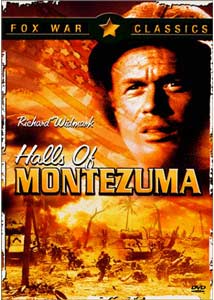
It's February 1836 and the Mexican province of Texas is fighting for its freedom against Mexico and its dictator Antonio Lopez de Santa Anna. Leading the Texas revolutionaries is General Sam Houston (Richard Boone) who leads a nonexistent army and needs time to assemble and train a fighting force. In the town of San Antonio stands the Alamo, an old mission built by Franciscan monks over a 100 years earlier, a mission never intended for military use. With hopes of buying Houston the time he needs, Lt. Colonel William Travis (Laurence Harvey), knife-fighter and adventurer Jim Bowie (Richard Widmark), and famed frontiersman and former Congressman Davy Crockett (John Wayne) and 180-odd volunteers have forted up in the Alamo and are quickly surrounded by Santa Anna's army of over 7,000 men.
For star John Wayne, The Alamo was a labor of love, a film he had wanted to make for 14 years. He not only stars in it but also produced it and directed, his first ever film as a director. The story of the battle of the Alamo had long appealed to him -- the bravery, the heroism, the sacrifice -- and it was a story he wanted and needed to tell. He spared no expense in this truly epic production. In Bracketville, Texas, Wayne had a complete Alamo mission built, not to mention the town of San Antonio too in the middle of the Texas desert. The set -- dubbed Alamo Village -- becomes an additional character, adding a sense of realism and authenticity that no studio set would have done justice. The actual Alamo mission constructed is a sight to behold, a behemoth fortress that puts in perspective how difficult it would have been for 180 men to defend against an army of thousands. Wayne's love child, most will disagree with me, but I think it's a nearly perfect movie.
Playing three legendary figures, Wayne, Widmark and Harvey all deliver layered, nuanced performances, all of them unique and different from the rest. As Davy Crockett, Wayne is a huge presence. It's far from his best acting roles -- The Searchers, She Wore a Yellow Ribbon -- but Crockett of the time was a legend in his own right. Who better to play him than one of Hollywood's biggest stars? Much of the tension in the movie comes from the rivalry over command between Widmark's Bowie and Harvey's Travis, both actors representing themselves flawlessly. Widmark is fiery and hot-tempered, Harvey condescending, intelligent and an idealist, but they share a common goal. All differences aside, both men are willing to sacrifice themselves for the cause they're fighting. I love the banter, the back and forth, the chemistry among the three. Making a two-scene cameo as Houston, Boone too doesn't disappoint, making those two scenes more than just throwaway fluff.
In terms of actual screentime, the big three dominate, but as a director, Wayne assembled quite a cast. Ken Curtis plays Capt. Dickinson, Travis' second-in-command, with Joan O'Brien as his loyal, equally brave wife, Susannah. Crockett's Tennessee volunteers include singer Frankie Avalon as Smitty, the youngest Alamo defender, Chill Wills (in an Oscar-nominated turn) as Beekeeper, the drinking, jovial fighter, Denver Pyle as Thimblerig, the thinker and gambler, Hank Worden as the Parson, a preacher, with Chuck Roberson (a talented stunt man and Wayne's double) and Rudy Robbins as two unnamed Tennesseans, engaging in their running bit; 'Do that mean what I think it do?....It do.' Other defenders include Patrick Wayne as Lt. Bonham, the Alamo's famous messenger, John Dierkes as Jocko and his blind wife, Nell (Veda Ann Borg), Joseph Calleia as Juan Seguin, and Guinn Williams as Lt. Finn, and Jack Pennick as Sgt. Lightfoot. Two other worthwhile performances include singer Jester Hairston as Jethro, Bowie's slave, and the lovely Linda Cristal as Flaca, a young woman who shares a brief relationship with Wayne's Crockett.
Anyone remotely familiar with the historical facts knows that on March 6, 1836, the Mexican army assaulted the Alamo and wiped out the defenders to a man in a brutal, bloody massacre; extreme casualties on both sides. For a first-time director, Wayne puts together one of the all-time great battle sequences ever committed to film (if not the best ever). Almost five full minutes are shown as the Mexican army marches into formation around the doomed mission, an eerie silence hanging in the air for several seconds before the attack begins. The assault features hundreds of extras -- and in one scene, thousands -- as the garrison tries to repel the soldiers from the walls only to be ultimately overwhelmed. Cavalry, infantry, artillery, this defines the SPECTACLE of an epic. More than that, it is a moving sequence, each of the defenders we've come to know meeting their death. More details later on this, but Dimitri Tiomkin's score here is some of his best work. You can watch the battle sequence HERE, but to be appreciated, see it on a large, large screen.
Wayne's film has its share of detractors, and the complaints are fair (even if I disagree with them). The original version is 192 minutes and has its slower moments. Speechifying abound from James Edward Grant's script, but I eat this stuff up. Big speeches about freedom, Republic, right and wrong. That's John Wayne at his best. What does work? The very real emotion of the movie. Countless scenes impact me the more I watch this movie. Travis addressing his men, knowing death awaits those who stay, is beautifully simple. Watch it HERE. I love too, that Crockett's men dismount before him. Overlooking a field covered with casualties, Pyle's Thimblering says 'Speaks well for a man who's willing to die because he believes right is on his side...speaks well.' The night before the final assault is the most effective though, the defenders sitting quietly as they wait for the inevitable in the morning. Bowie releases Jethro, but the former slave decides to stay and fight. Roberson's Tennessean delivers a simple monologue that is profound in its outlook on life. And best of all, Crockett is asked by Thimblering, "What are you thinking about?" to which Crockett answers "Not thinking....just remembering." The last 45 minutes features some of the most perfect dialogue, emotion, music and spectacle of any movie ever. The Green Leaves of Summer (listen HERE), one of the most beautiful songs ever, playing over this sends chills up and down my back at the thought of it.
A criticism of The Alamo is the complete lack of historical accuracy as pertaining to the actual 1836 battle, and that's true. Wayne never set out to do a spot-on, dead-on accurate telling of the story. The 2004 film -- The Alamo -- does that. Instead, Wayne wanted to tell the story honoring the men who fought and died. They fight because they believe in what they're fighting for. Surrounded on all sides with no hope of reinforcement, the Alamo defenders stay inside the walls, knowing certain death awaits. They go out fighting, go down swinging. That is what Wayne was going for. I have difficulty even processing that sort of heroism. Crockett's Tennesseans dismounting before him illustrates that. Crockett has seen some of his men die already and doesn't want to see anymore die, but his men don't look to him for a decision. They do it because they want to, not because they're told. Say what you want about Wayne as a director/star with a heavy-handed message, but he got that part right to a T.
Initial reviews were mixed for The Alamo, forcing Wayne to cut 30 minutes from his 192-minute long movie. Those cut portions include Intro Music, an Intermission and Entr' Acte, and Exit Music with about 15-20 minutes of scenes, some better than others. The scene that truly needed to be in the final print was Parson's death, a beyond moving, effective scene as the battle becomes very real for Crockett and his men. Watch it HERE. The actual prints of the 192-minute version seem lost to the ages, but many of the deleted scenes are available at Youtube. Watch several of them in one video, HERE. Among them is Scotty's death, and a birthday party held for Lisa Dickinson, played by Wayne's daughter Aissa. As a fan of the movie, it's great to see any of this footage.
So what else can I ramble about? That's probably enough. I love this movie and everything about it. Wayne gets the spirit right, showing the bravery and heroism of the Alamo defenders as they faced certain death and didn't shy away from it. A true epic with scale and spectacle to impress all moviegoers. Great cast, an amazing set of the Alamo mission, Tiomkin's phenomenal score, and a battle sequence that few can even approach in terms of quality. They don't make them like this anymore.
The Alamo <---trailer (1960): ****/****
It's February 1836 and the Mexican province of Texas is fighting for its freedom against Mexico and its dictator Antonio Lopez de Santa Anna. Leading the Texas revolutionaries is General Sam Houston (Richard Boone) who leads a nonexistent army and needs time to assemble and train a fighting force. In the town of San Antonio stands the Alamo, an old mission built by Franciscan monks over a 100 years earlier, a mission never intended for military use. With hopes of buying Houston the time he needs, Lt. Colonel William Travis (Laurence Harvey), knife-fighter and adventurer Jim Bowie (Richard Widmark), and famed frontiersman and former Congressman Davy Crockett (John Wayne) and 180-odd volunteers have forted up in the Alamo and are quickly surrounded by Santa Anna's army of over 7,000 men.
For star John Wayne, The Alamo was a labor of love, a film he had wanted to make for 14 years. He not only stars in it but also produced it and directed, his first ever film as a director. The story of the battle of the Alamo had long appealed to him -- the bravery, the heroism, the sacrifice -- and it was a story he wanted and needed to tell. He spared no expense in this truly epic production. In Bracketville, Texas, Wayne had a complete Alamo mission built, not to mention the town of San Antonio too in the middle of the Texas desert. The set -- dubbed Alamo Village -- becomes an additional character, adding a sense of realism and authenticity that no studio set would have done justice. The actual Alamo mission constructed is a sight to behold, a behemoth fortress that puts in perspective how difficult it would have been for 180 men to defend against an army of thousands. Wayne's love child, most will disagree with me, but I think it's a nearly perfect movie.
Playing three legendary figures, Wayne, Widmark and Harvey all deliver layered, nuanced performances, all of them unique and different from the rest. As Davy Crockett, Wayne is a huge presence. It's far from his best acting roles -- The Searchers, She Wore a Yellow Ribbon -- but Crockett of the time was a legend in his own right. Who better to play him than one of Hollywood's biggest stars? Much of the tension in the movie comes from the rivalry over command between Widmark's Bowie and Harvey's Travis, both actors representing themselves flawlessly. Widmark is fiery and hot-tempered, Harvey condescending, intelligent and an idealist, but they share a common goal. All differences aside, both men are willing to sacrifice themselves for the cause they're fighting. I love the banter, the back and forth, the chemistry among the three. Making a two-scene cameo as Houston, Boone too doesn't disappoint, making those two scenes more than just throwaway fluff.
In terms of actual screentime, the big three dominate, but as a director, Wayne assembled quite a cast. Ken Curtis plays Capt. Dickinson, Travis' second-in-command, with Joan O'Brien as his loyal, equally brave wife, Susannah. Crockett's Tennessee volunteers include singer Frankie Avalon as Smitty, the youngest Alamo defender, Chill Wills (in an Oscar-nominated turn) as Beekeeper, the drinking, jovial fighter, Denver Pyle as Thimblerig, the thinker and gambler, Hank Worden as the Parson, a preacher, with Chuck Roberson (a talented stunt man and Wayne's double) and Rudy Robbins as two unnamed Tennesseans, engaging in their running bit; 'Do that mean what I think it do?....It do.' Other defenders include Patrick Wayne as Lt. Bonham, the Alamo's famous messenger, John Dierkes as Jocko and his blind wife, Nell (Veda Ann Borg), Joseph Calleia as Juan Seguin, and Guinn Williams as Lt. Finn, and Jack Pennick as Sgt. Lightfoot. Two other worthwhile performances include singer Jester Hairston as Jethro, Bowie's slave, and the lovely Linda Cristal as Flaca, a young woman who shares a brief relationship with Wayne's Crockett.
Anyone remotely familiar with the historical facts knows that on March 6, 1836, the Mexican army assaulted the Alamo and wiped out the defenders to a man in a brutal, bloody massacre; extreme casualties on both sides. For a first-time director, Wayne puts together one of the all-time great battle sequences ever committed to film (if not the best ever). Almost five full minutes are shown as the Mexican army marches into formation around the doomed mission, an eerie silence hanging in the air for several seconds before the attack begins. The assault features hundreds of extras -- and in one scene, thousands -- as the garrison tries to repel the soldiers from the walls only to be ultimately overwhelmed. Cavalry, infantry, artillery, this defines the SPECTACLE of an epic. More than that, it is a moving sequence, each of the defenders we've come to know meeting their death. More details later on this, but Dimitri Tiomkin's score here is some of his best work. You can watch the battle sequence HERE, but to be appreciated, see it on a large, large screen.
Wayne's film has its share of detractors, and the complaints are fair (even if I disagree with them). The original version is 192 minutes and has its slower moments. Speechifying abound from James Edward Grant's script, but I eat this stuff up. Big speeches about freedom, Republic, right and wrong. That's John Wayne at his best. What does work? The very real emotion of the movie. Countless scenes impact me the more I watch this movie. Travis addressing his men, knowing death awaits those who stay, is beautifully simple. Watch it HERE. I love too, that Crockett's men dismount before him. Overlooking a field covered with casualties, Pyle's Thimblering says 'Speaks well for a man who's willing to die because he believes right is on his side...speaks well.' The night before the final assault is the most effective though, the defenders sitting quietly as they wait for the inevitable in the morning. Bowie releases Jethro, but the former slave decides to stay and fight. Roberson's Tennessean delivers a simple monologue that is profound in its outlook on life. And best of all, Crockett is asked by Thimblering, "What are you thinking about?" to which Crockett answers "Not thinking....just remembering." The last 45 minutes features some of the most perfect dialogue, emotion, music and spectacle of any movie ever. The Green Leaves of Summer (listen HERE), one of the most beautiful songs ever, playing over this sends chills up and down my back at the thought of it.
A criticism of The Alamo is the complete lack of historical accuracy as pertaining to the actual 1836 battle, and that's true. Wayne never set out to do a spot-on, dead-on accurate telling of the story. The 2004 film -- The Alamo -- does that. Instead, Wayne wanted to tell the story honoring the men who fought and died. They fight because they believe in what they're fighting for. Surrounded on all sides with no hope of reinforcement, the Alamo defenders stay inside the walls, knowing certain death awaits. They go out fighting, go down swinging. That is what Wayne was going for. I have difficulty even processing that sort of heroism. Crockett's Tennesseans dismounting before him illustrates that. Crockett has seen some of his men die already and doesn't want to see anymore die, but his men don't look to him for a decision. They do it because they want to, not because they're told. Say what you want about Wayne as a director/star with a heavy-handed message, but he got that part right to a T.
Initial reviews were mixed for The Alamo, forcing Wayne to cut 30 minutes from his 192-minute long movie. Those cut portions include Intro Music, an Intermission and Entr' Acte, and Exit Music with about 15-20 minutes of scenes, some better than others. The scene that truly needed to be in the final print was Parson's death, a beyond moving, effective scene as the battle becomes very real for Crockett and his men. Watch it HERE. The actual prints of the 192-minute version seem lost to the ages, but many of the deleted scenes are available at Youtube. Watch several of them in one video, HERE. Among them is Scotty's death, and a birthday party held for Lisa Dickinson, played by Wayne's daughter Aissa. As a fan of the movie, it's great to see any of this footage.
So what else can I ramble about? That's probably enough. I love this movie and everything about it. Wayne gets the spirit right, showing the bravery and heroism of the Alamo defenders as they faced certain death and didn't shy away from it. A true epic with scale and spectacle to impress all moviegoers. Great cast, an amazing set of the Alamo mission, Tiomkin's phenomenal score, and a battle sequence that few can even approach in terms of quality. They don't make them like this anymore.
The Alamo <---trailer (1960): ****/****
Monday, September 19, 2011
Kona Coast
An underrated actor who shot to fame via a 1950s TV show and eventually settled into a career playing bad guys and heavies, Richard Boone doesn't get the credit he deserves much of the time. His role as Paladin, a traveling gunman in Have Gun Will Travel, was ahead of its time during the show's six-year run. He specialized playing some truly bad dudes in his movie roles, but even his good guys had an edge to them that screamed 'Don't mess with me!' I grew up watching him as Sam Houston in John Wayne's The Alamo and as the vicious leader of a brutal gang in Big Jake so I've always been a fan.
Through the 1960s and 1970s, Boone often got his best work as part of a bigger ensemble. He could play both good and bad, almost always making his characters interesting to watch, keeping you guessing as to what they're really up to. They weren't always good movies, but they can't all be winners, right? With that, I can introduce 1968's Kona Coast, a movie with Boone in the lead. This movie was awful, just plain awful. I watched it mostly for Boone's presence, but even he can't save this one.
A goods transporter and a known and respected man in Hawaii, Sam Moran (Boone) is someone who is not to be tangled with. He always gets the job done no matter the difficulty. Sam gets a call one day from a young woman clearly stoned out of her mind. She turns up dead on the shore one day, needle tracks up and down her arm. The police (no Steve McGarrett in sight) are curious why he's so interested, Sam revealing the young woman is his estranged daughter. Who gave her the drugs? Sam intends to find out, and he doesn't have any of the limitations on him the police do. Who is responsible? A man named Kryder (Steve Ihnat), a rich, spoiled nut who organizes parties where girls are given the chance to pump their systems with as much drugs as they want. Watch out, Mr. Kryder, here comes Sam Moran.
My first thought when this showed up on TCM's schedule in August was a positive one. Richard Boone gunning for the bad guys who killed his daughter? And it is in Hawaii? Translated to me, that sounded like an early version of Death Wish with a tropical setting as opposed to dirty early 1970s New York City. I was even more encouraged when the IMDB rating came in at a low 4.4 out of 10. I love a good bad movie. Well, it is bad. But it's not even bad enough to enjoy for some laughs. I couldn't have been more wrong about this movie. I ended up fast-forwarding through huge chunks of an already short 93-minute movie.
The reasoning for that goes two ways. Made in Hawaii in 1968, the movie does serve as a very cool, very stylish look at Hawaii in a different time. As a fan of the original Hawaii Five-O TV series, I'm a sucker for that so I did enjoy seeing all kinds of cool different locations in Hawaii. The bigger issue is that the story never really develops into anything. I counted three different montages of Boone's Moran walking around, talking to people, "investigating," and serving as our tour guide for 1968 Hawaii. That would be fine in most situations, but not this one. Instead, Moran ends up on one of the smaller Hawaiian Islands where he can't get back to Honolulu. Party detour! That whole murder investigation of his daughter gets put on hold while he parties, drinks and carouses with a whole bunch of different ladies.
Now if you couldn't tell from my lead for the review here, I'm a fan of Richard Boone. This movie would not be a great introduction to Boone's otherwise pretty solid career. Like the movie itself, his Sam Moran character is just surreal. For one thing, he wears a ridiculous looking yellow windbreaker the whole movie with some short shorts. That's quite a look for anyone, much less an angry, pissed off gunning for his estranged daughter's murderers. That isn't enough though. The "script" calls for Sam to be all that is man. It gives him this animal magnetism that attracts women left and right (ex-wife Vera Miles, young and beautiful Gina Villines) without any rhyme or reason. Surreal is all I can come up with. Then, snap your finger, he's pissed off again and looking for revenge.
Writing this review is making me realize how bad this movie really was. Sometimes you watch a bad movie and realize, but I always think about it some, maybe realizing it wasn't as bad as I originally thought. With Kona Coast? Not so much. It's awful. Joan Blondell, Chips Rafferty and Kent Smith all got roped into this dreck in supporting roles, making me question how bad they needed the work. This was just bad. Weird 1960s psychedelic scenes, drifting, meandering storyline, wasted cast, and basically only worthwhile to see Hawaii. It's hard to mess that part up.
Kona Coast <---trailer (1968): */****
Through the 1960s and 1970s, Boone often got his best work as part of a bigger ensemble. He could play both good and bad, almost always making his characters interesting to watch, keeping you guessing as to what they're really up to. They weren't always good movies, but they can't all be winners, right? With that, I can introduce 1968's Kona Coast, a movie with Boone in the lead. This movie was awful, just plain awful. I watched it mostly for Boone's presence, but even he can't save this one.
A goods transporter and a known and respected man in Hawaii, Sam Moran (Boone) is someone who is not to be tangled with. He always gets the job done no matter the difficulty. Sam gets a call one day from a young woman clearly stoned out of her mind. She turns up dead on the shore one day, needle tracks up and down her arm. The police (no Steve McGarrett in sight) are curious why he's so interested, Sam revealing the young woman is his estranged daughter. Who gave her the drugs? Sam intends to find out, and he doesn't have any of the limitations on him the police do. Who is responsible? A man named Kryder (Steve Ihnat), a rich, spoiled nut who organizes parties where girls are given the chance to pump their systems with as much drugs as they want. Watch out, Mr. Kryder, here comes Sam Moran.
My first thought when this showed up on TCM's schedule in August was a positive one. Richard Boone gunning for the bad guys who killed his daughter? And it is in Hawaii? Translated to me, that sounded like an early version of Death Wish with a tropical setting as opposed to dirty early 1970s New York City. I was even more encouraged when the IMDB rating came in at a low 4.4 out of 10. I love a good bad movie. Well, it is bad. But it's not even bad enough to enjoy for some laughs. I couldn't have been more wrong about this movie. I ended up fast-forwarding through huge chunks of an already short 93-minute movie.
The reasoning for that goes two ways. Made in Hawaii in 1968, the movie does serve as a very cool, very stylish look at Hawaii in a different time. As a fan of the original Hawaii Five-O TV series, I'm a sucker for that so I did enjoy seeing all kinds of cool different locations in Hawaii. The bigger issue is that the story never really develops into anything. I counted three different montages of Boone's Moran walking around, talking to people, "investigating," and serving as our tour guide for 1968 Hawaii. That would be fine in most situations, but not this one. Instead, Moran ends up on one of the smaller Hawaiian Islands where he can't get back to Honolulu. Party detour! That whole murder investigation of his daughter gets put on hold while he parties, drinks and carouses with a whole bunch of different ladies.
Now if you couldn't tell from my lead for the review here, I'm a fan of Richard Boone. This movie would not be a great introduction to Boone's otherwise pretty solid career. Like the movie itself, his Sam Moran character is just surreal. For one thing, he wears a ridiculous looking yellow windbreaker the whole movie with some short shorts. That's quite a look for anyone, much less an angry, pissed off gunning for his estranged daughter's murderers. That isn't enough though. The "script" calls for Sam to be all that is man. It gives him this animal magnetism that attracts women left and right (ex-wife Vera Miles, young and beautiful Gina Villines) without any rhyme or reason. Surreal is all I can come up with. Then, snap your finger, he's pissed off again and looking for revenge.
Writing this review is making me realize how bad this movie really was. Sometimes you watch a bad movie and realize, but I always think about it some, maybe realizing it wasn't as bad as I originally thought. With Kona Coast? Not so much. It's awful. Joan Blondell, Chips Rafferty and Kent Smith all got roped into this dreck in supporting roles, making me question how bad they needed the work. This was just bad. Weird 1960s psychedelic scenes, drifting, meandering storyline, wasted cast, and basically only worthwhile to see Hawaii. It's hard to mess that part up.
Kona Coast <---trailer (1968): */****
Sunday, May 1, 2011
Siege at Red River
I feel kind of stupid using a historical lead for a movie of this caliber, but hey, write what you know, when you know it. I needed a lead, and this one came to mind. As late as the Civil War, military "tactics" involved opposing armies standing across from each other in an open field and firing at each other. Brilliant planning and nice use of soldiers' lives, huh? Well, weapons makers obviously saw the lunacy of it and started developing weapons that could kill men faster and more efficiently. Enter the Gatling gun, one of the first rapid fire guns and predecessor to the modern machine gun. It was developed during the Civil War but never actually used in combat.
Still, that allows for some good storytelling opportunities of the gun almost being used in the Civil War and later during the fighting between the cavalry and the Indians in the west. So take it with a grain of salt, 1954's Siege at Red River is pure historical drivel that doesn't always make a ton of sense (in a lot of ways). It's another odd, little Civil War western that is sold as part of a DVD packaging of a bunch of average to bad westerns. There are so many elements working against each other and working together in subsequent scenes that there is no way on God's green earth this movie should work...in any way. It does though, flaws and all. 'Red River' is no classic, and maybe it's not even very good all things considered. I liked it though, and that's all I care about, entertain value.
After robbing a Union train in Ohio of one of the few models of a Gatling gun in existence, Confederate spies Capt. James Farraday (Van Johnson) and Sgt. Benjy Guderman (Milburn Stone, later of Gunsmoke fame) travel west to avoid the Union soldiers searching for the missing gun. They are holed up in a small western town where a Pinkerton agent, Kelso (Jeff Morrow) and Union cavalry commanded by Lt. Braden (Craig Hill) arrive soon after, not knowing who has the gun, only that someone in town is hiding it. Farraday and Guderman meet a young woman, Nora (Joanne Dru), the owner of a nursing home, hoping she'll be able to help, but ultimately turn to a horse wrangler/rustler, Manning (Richard Boone), to help them get through the Union lines. The Pinkerton agent and the cavalry are closing in though, but they've got to keep their eyes on Manning too who looks like he'll take the first chance he can get to turn them in for the biggest payday.
I don't know if I can think of a single western that features as many discordant elements all in one place as this movie. For the most part, that's a positive. It starts as a Civil War movie, moves west, and then by the end is a straight cavalry vs. Indians flick. In between those things, we've got a traveling salesman (Johnson) selling "muscle builders" while also performing the song, Tapioca, as a signal to other Confederate agents. Then there's Van Johnson as a driven, almost obsessed Confederate agent. On the other side, there's Van Johnson, ladies man who woos Joanne Dru. Also for good measure, Stone's Sgt. Benny gets Dru drunk to throw her off their trail, Morrow's Kelso doesn't tell anyone what's going on and then flips out when things don't go his way, Hill's Lt. Braden is a talented scout/tracker masquerading as an officer, and by the end we've got an epic grouping of Indian tribes that threaten to take over the American west...oh, and there's the Civil War too.
An underrated actor and one of my favorites, Van Johnson is an interesting choice to play the lead in this Civil War western. He had a knack for starring in comedies, even romantic comedies, but was nonetheless able to play heavy dramatic roles. In 1954 along with 'Red River,' he starred in one of his most dramatic roles, The Caine Mutiny. This is a mix of a little bit of everything. As needed, Johnson moves back and forth seamlessly between drama, action, romance and comedy. It's always the sign of a good actor when it doesn't feel forced watching that change back and forth. As the straight villain, Richard Boone nails his part, the wrangler/rustler who has some ulterior motives as to what he wants to do with the Gatling gun. His Brett Manning has a bit of the gay caballero thing going on, with an odd outfit that includes a "very stylish" tie and his penchant for using a whip to strike rivals. A little flamboyant, but a worthy rivalry through all the craziness.
Not all the weirdness works though, and there's a fair share. For one, and it's a big issue, is the whole driving force of the movie. Johnson and Stone rob a Union train (which is a mess itself with people shooting each other left and right with no explanation) in hopes of turning the tide of the war which isn't going well for the South. So the robbery seems to take place in Ohio -- judging by a map that's shown after the robbery -- and then head....southwest into Indiana and Missouri. Head east or southeast, but not that direction. The decision to do so in the story is for one reason and one reason alone....the story requires the Indians to be a key part of the story late. It's just a ridiculous premise, turn the tide of war by going where there are no Confederate armies for hundreds and thousands of smiles. Then there's Joanne Dru who will she is a fine actress has a knack for ruining westerns she's in (see Red River and She Wore a Yellow Ribbon, the 2nd one not so much). She's very tolerable here until her change of tone drunk scene out of a bad slapstick comedy. She also falls for Van Johnson with the snap of a finger after hating him for most of the movie.
Little things end up being the tipping point here. Director Rudolph Mate has a real mess of a movie overall. Through the haze of the mess, it is a beautiful movie. I'm really not sure where this story is supposed to take place, but seeing similar locations as John Ford used in Fort Apache and some other westerns is never a bad thing. The Utah locations are a big selling point here, especially late when the Civil War plot gets left behind for a more traditional western oater. The finale is a gem as the all-powerful Gatling gun gets stolen and re-stolen and then is finally used late during an Indian attack on a lonely cavalry outpost. As is the formula opened up by the movie, we've got a Union patrol, an enormous Indian war party, a Gatling gun, and Johnson's Confederate spy wavering over what he should do. For good measure, the cavalry and Indians have one last go at each other at a shallow water hole. Reading other reviews, I see I'm one of the few who liked this movie. It isn't great, and I can't say I'll seek it out again. But for a western I went into with low expectations, they were easily met and then some.
Siege at Red River (1954): ***/****
Still, that allows for some good storytelling opportunities of the gun almost being used in the Civil War and later during the fighting between the cavalry and the Indians in the west. So take it with a grain of salt, 1954's Siege at Red River is pure historical drivel that doesn't always make a ton of sense (in a lot of ways). It's another odd, little Civil War western that is sold as part of a DVD packaging of a bunch of average to bad westerns. There are so many elements working against each other and working together in subsequent scenes that there is no way on God's green earth this movie should work...in any way. It does though, flaws and all. 'Red River' is no classic, and maybe it's not even very good all things considered. I liked it though, and that's all I care about, entertain value.
After robbing a Union train in Ohio of one of the few models of a Gatling gun in existence, Confederate spies Capt. James Farraday (Van Johnson) and Sgt. Benjy Guderman (Milburn Stone, later of Gunsmoke fame) travel west to avoid the Union soldiers searching for the missing gun. They are holed up in a small western town where a Pinkerton agent, Kelso (Jeff Morrow) and Union cavalry commanded by Lt. Braden (Craig Hill) arrive soon after, not knowing who has the gun, only that someone in town is hiding it. Farraday and Guderman meet a young woman, Nora (Joanne Dru), the owner of a nursing home, hoping she'll be able to help, but ultimately turn to a horse wrangler/rustler, Manning (Richard Boone), to help them get through the Union lines. The Pinkerton agent and the cavalry are closing in though, but they've got to keep their eyes on Manning too who looks like he'll take the first chance he can get to turn them in for the biggest payday.
I don't know if I can think of a single western that features as many discordant elements all in one place as this movie. For the most part, that's a positive. It starts as a Civil War movie, moves west, and then by the end is a straight cavalry vs. Indians flick. In between those things, we've got a traveling salesman (Johnson) selling "muscle builders" while also performing the song, Tapioca, as a signal to other Confederate agents. Then there's Van Johnson as a driven, almost obsessed Confederate agent. On the other side, there's Van Johnson, ladies man who woos Joanne Dru. Also for good measure, Stone's Sgt. Benny gets Dru drunk to throw her off their trail, Morrow's Kelso doesn't tell anyone what's going on and then flips out when things don't go his way, Hill's Lt. Braden is a talented scout/tracker masquerading as an officer, and by the end we've got an epic grouping of Indian tribes that threaten to take over the American west...oh, and there's the Civil War too.
An underrated actor and one of my favorites, Van Johnson is an interesting choice to play the lead in this Civil War western. He had a knack for starring in comedies, even romantic comedies, but was nonetheless able to play heavy dramatic roles. In 1954 along with 'Red River,' he starred in one of his most dramatic roles, The Caine Mutiny. This is a mix of a little bit of everything. As needed, Johnson moves back and forth seamlessly between drama, action, romance and comedy. It's always the sign of a good actor when it doesn't feel forced watching that change back and forth. As the straight villain, Richard Boone nails his part, the wrangler/rustler who has some ulterior motives as to what he wants to do with the Gatling gun. His Brett Manning has a bit of the gay caballero thing going on, with an odd outfit that includes a "very stylish" tie and his penchant for using a whip to strike rivals. A little flamboyant, but a worthy rivalry through all the craziness.
Not all the weirdness works though, and there's a fair share. For one, and it's a big issue, is the whole driving force of the movie. Johnson and Stone rob a Union train (which is a mess itself with people shooting each other left and right with no explanation) in hopes of turning the tide of the war which isn't going well for the South. So the robbery seems to take place in Ohio -- judging by a map that's shown after the robbery -- and then head....southwest into Indiana and Missouri. Head east or southeast, but not that direction. The decision to do so in the story is for one reason and one reason alone....the story requires the Indians to be a key part of the story late. It's just a ridiculous premise, turn the tide of war by going where there are no Confederate armies for hundreds and thousands of smiles. Then there's Joanne Dru who will she is a fine actress has a knack for ruining westerns she's in (see Red River and She Wore a Yellow Ribbon, the 2nd one not so much). She's very tolerable here until her change of tone drunk scene out of a bad slapstick comedy. She also falls for Van Johnson with the snap of a finger after hating him for most of the movie.
Little things end up being the tipping point here. Director Rudolph Mate has a real mess of a movie overall. Through the haze of the mess, it is a beautiful movie. I'm really not sure where this story is supposed to take place, but seeing similar locations as John Ford used in Fort Apache and some other westerns is never a bad thing. The Utah locations are a big selling point here, especially late when the Civil War plot gets left behind for a more traditional western oater. The finale is a gem as the all-powerful Gatling gun gets stolen and re-stolen and then is finally used late during an Indian attack on a lonely cavalry outpost. As is the formula opened up by the movie, we've got a Union patrol, an enormous Indian war party, a Gatling gun, and Johnson's Confederate spy wavering over what he should do. For good measure, the cavalry and Indians have one last go at each other at a shallow water hole. Reading other reviews, I see I'm one of the few who liked this movie. It isn't great, and I can't say I'll seek it out again. But for a western I went into with low expectations, they were easily met and then some.
Siege at Red River (1954): ***/****
Labels:
1950s,
Joanne Dru,
Richard Boone,
Rudolph Mate,
The Civil War,
Van Johnson,
westerns
Wednesday, July 14, 2010
The Shootist
As a movie star, you don't always pick how you get to ride into the sunset on the horizon. For many, their days as a star are long past. Others just never get that right role that allows you to end on a high note. Well, there is an exception to every role, and that's John Wayne, one of the most iconic stars to come out of Hollywood's first 50 years with sound films. A star whose popularity went up and down some over a long career, Wayne was always in the public eye with his movies, his last part being one of his best all-time parts, 1976's The Shootist.
During the mid 1970s when Wayne was in the process of making his last few movies, The Duke was struggling with stomach cancer that would ultimately end up killing him in 1979. More than any other time in his career, Wayne resorted to playing a version, a caricature of himself in the late 1960s and into the 1970s. There was a comfort factor involved for both the actor and the audiences who still loved seeing him on-screen. With an exception here and there, none of these later movies are classics, but they're all entertaining. The Shootist is one of those few exceptions, a classic thanks almost exclusively to Wayne's performance in the title role.
It's 1901 and infamous gunfighter J.B. Books (Wayne) rides into Carson City to see an old friend of his, Doc Hostetler (James Stewart). Books has been feeling poorly, and the Doc confirms the bad news; he has cancer and only has a few months to live. The gunfighter takes a room at a boarding house run by a recent widow, Mrs. Rogers (Lauren Bacall) and her troublemaker son, Gillom (Ron Howard). Books goes about wrapping certain things up with his life as he prepares to die, putting things in place and tying up some loose ends. But the Doc warned him, letting the cancer kill him will be a long, drawn out and incredibly painful process. If there was a way to quicken that death, he recommends Books do it. So knowing what awaits him, the older, worn-out gunfighter puts together one last moment of glory.
Seven years earlier, Wayne won his first and only Academy Award for his performance as Rooster Cogburn in True Grit. In a sense, it was a lifetime achievement award for all he had accomplished in his career. But just on performance alone, his John Bernard Books ranks up there as one of his all-time top five. It is a part that Wayne was born to play, plain and simple. His Books is a dignified man with a reputation as a killer, a man who lives by certain principles and expects others to do the same. He doesn't apologize for his past and to a certain point, is frustrated with the life he has led where every young punk with a gun wants to kill him to prove how good they are. Easily one of the Duke's best parts, and a fitting end to a great career.
Directed by Don Siegel, 'Shootist' brings together an excellent cast, almost like a going away party for the Duke. Having worked together 20 years before in 'Blood Alley,' Bacall and Wayne are perfect together with some of the best on-screen chemistry Wayne ever had with a female co-star. Their scenes flow so easily, and it's just fun watching two pros show what they can do with good material. The same for young Ron Howard who plays a different character than the viewer is used to considering his Andy Griffith and Happy Days roots. Books becomes a bit of a father figure to Howard's Gillom and tries to teach him the lessons of how to be a man. Along with Stewart as the doctor, there's Harry Morgan as the town sheriff, John Carradine as the undertaker, Sheree North as a lost love of Books, and Scatman Crothers as the livery stable owner.
The story builds to a certain point, and you dread where it is going -- even knowing it is where it has to go. Books takes the Doc's advice and arranges a way so three men who would love nothing more than to put a bullet in him meet him at the same place. If all goes well, he'll go out in one last blaze of glory, avoiding whatever the cancer can throw at him. The trio include Richard Boone, Hugh O'Brian and Bill McKinney, all three waiting for him in a saloon. The ending is foreshadowed in a line delivered midway through the movie, but it still comes as a bit of a shock. Of his 170 or so movies, John Wayne actually died in just eight movies, and few are as moving as this one. You can watch it HERE, obvious SPOILERS.
Beyond the sets, background and lack of gunplay, this is a movie entirely devoted to character, specifically John Bernard Books and the last few days of his life. It is a western focusing on the changing times as the old west becomes a thing of the past, the U.S. advancing forward into a new time. In that way, it's appropriate that the Wayne character wants no part of it. As some characters point out, he is a relic from the previous times. His exit then is only appropriate, going out as he came in. One of Wayne's best and an underrated western overall.
The Shootist <----trailer (1976): ****/****
During the mid 1970s when Wayne was in the process of making his last few movies, The Duke was struggling with stomach cancer that would ultimately end up killing him in 1979. More than any other time in his career, Wayne resorted to playing a version, a caricature of himself in the late 1960s and into the 1970s. There was a comfort factor involved for both the actor and the audiences who still loved seeing him on-screen. With an exception here and there, none of these later movies are classics, but they're all entertaining. The Shootist is one of those few exceptions, a classic thanks almost exclusively to Wayne's performance in the title role.
It's 1901 and infamous gunfighter J.B. Books (Wayne) rides into Carson City to see an old friend of his, Doc Hostetler (James Stewart). Books has been feeling poorly, and the Doc confirms the bad news; he has cancer and only has a few months to live. The gunfighter takes a room at a boarding house run by a recent widow, Mrs. Rogers (Lauren Bacall) and her troublemaker son, Gillom (Ron Howard). Books goes about wrapping certain things up with his life as he prepares to die, putting things in place and tying up some loose ends. But the Doc warned him, letting the cancer kill him will be a long, drawn out and incredibly painful process. If there was a way to quicken that death, he recommends Books do it. So knowing what awaits him, the older, worn-out gunfighter puts together one last moment of glory.
Seven years earlier, Wayne won his first and only Academy Award for his performance as Rooster Cogburn in True Grit. In a sense, it was a lifetime achievement award for all he had accomplished in his career. But just on performance alone, his John Bernard Books ranks up there as one of his all-time top five. It is a part that Wayne was born to play, plain and simple. His Books is a dignified man with a reputation as a killer, a man who lives by certain principles and expects others to do the same. He doesn't apologize for his past and to a certain point, is frustrated with the life he has led where every young punk with a gun wants to kill him to prove how good they are. Easily one of the Duke's best parts, and a fitting end to a great career.
Directed by Don Siegel, 'Shootist' brings together an excellent cast, almost like a going away party for the Duke. Having worked together 20 years before in 'Blood Alley,' Bacall and Wayne are perfect together with some of the best on-screen chemistry Wayne ever had with a female co-star. Their scenes flow so easily, and it's just fun watching two pros show what they can do with good material. The same for young Ron Howard who plays a different character than the viewer is used to considering his Andy Griffith and Happy Days roots. Books becomes a bit of a father figure to Howard's Gillom and tries to teach him the lessons of how to be a man. Along with Stewart as the doctor, there's Harry Morgan as the town sheriff, John Carradine as the undertaker, Sheree North as a lost love of Books, and Scatman Crothers as the livery stable owner.
The story builds to a certain point, and you dread where it is going -- even knowing it is where it has to go. Books takes the Doc's advice and arranges a way so three men who would love nothing more than to put a bullet in him meet him at the same place. If all goes well, he'll go out in one last blaze of glory, avoiding whatever the cancer can throw at him. The trio include Richard Boone, Hugh O'Brian and Bill McKinney, all three waiting for him in a saloon. The ending is foreshadowed in a line delivered midway through the movie, but it still comes as a bit of a shock. Of his 170 or so movies, John Wayne actually died in just eight movies, and few are as moving as this one. You can watch it HERE, obvious SPOILERS.
Beyond the sets, background and lack of gunplay, this is a movie entirely devoted to character, specifically John Bernard Books and the last few days of his life. It is a western focusing on the changing times as the old west becomes a thing of the past, the U.S. advancing forward into a new time. In that way, it's appropriate that the Wayne character wants no part of it. As some characters point out, he is a relic from the previous times. His exit then is only appropriate, going out as he came in. One of Wayne's best and an underrated western overall.
The Shootist <----trailer (1976): ****/****
Saturday, January 23, 2010
The Kremlin Letter
Sometimes I get fed up with movies spoon-feeding their stories, their twists and turns with supposedly shocking revelations. They are the type of movies where you don't even have to be fully conscious to follow the story. Call it attention deficit disorder in younger viewers -- I'm 24 and resent people saying 'younger audiences' can't sit still for more than 10 minutes -- but for whatever reason movies more and more go down the road where original stories are dummied down so the average chimp can keep up.
So when I stumble across a movie that requires your attention for every second of screen time I jump at the chance. Movies with lots of information thrown your way in a short period of time can be frustrating and enjoyable at the same time. And where would this all work better because the genre framework is already established? Spy movies where betrayals, deceptions and double crosses are part of the landscape. Virtually forgotten 40 years since its release -- thanks to no DVD or VHS release -- 1970's The Kremlin Letter, directed by John Huston, is a nice little twist on the spy movie.
Released in the midst of the James Bond craze, The Kremlin Letter is basically the anti-007 in terms of action and storytelling. Huston's take is heavy on dialogue with almost no action from start to finish. Instead of action, there's tension to spare as a team of American and British agents go undercover in Moscow to accomplish a perilous mission. Countless bits of information and explanations about the setting and the characters are thrown your way without warning, forcing you to file away little bits of information in your head so a scene or a line makes sense later in the movie. With all that said, the "twist" revealed late isn't that much of a surprise -- if you're paying attention or have seen even a couple spy movie or two you'll spot it early -- but it does work because of how the twist affects the story.
In the midst of the Cold War, a single letter could tear apart the world if it falls into the wrong hands. A high-ranking American official has written a letter saying the U.S. would help the USSR in taking out China's nuclear weapons program, and the agent holding the letter turns up dead...without the letter. A new agent, Charles Rone (Patrick O'Neal), is assigned to assemble a team with the help of agents who have experience dating back to WWII. This group of American and British agents will be headed by Ward (Richard Boone) who will lead a group of specialists (Nigel Green, Dean Jagger, George Sanders, and Barbara Parkins) in hopes of getting the letter back before all-out war breaks out. Getting that letter won't be so easy though with two Russian agents, Kosnov (Max von Sydow) and Bresnavitch (Orson Welles) also involved.
Reading through that cast listing when I saw this movie on TCM's schedule, I'm not going to lie; I was a little disappointed in myself I'd never even heard of this movie...not even in passing, even a little bit. It's not a classic spy movie, but it is an above average entry. Most of that credit goes to Huston's directing and the performances he gets from this very impressive grouping of actors and actresses. With very little action, the spotlight is squarely on the cast to carry the movie. Some are in it more than others -- Jagger, Green and Sanders are criminally underused with some great eccentric characters -- but even the smaller performances leave an impression.
Never a huge star but always a reliable lead, O'Neal is the anti-007 in his portrayal of a spy. His Rone doesn't carry a gun, is a last-minute replacement for his position, and with his photographic memory and ability to remember everything told to him is a valuable member of the team. Instead of fighting his way out of a situation, Rone thinks things out before putting his life on the line, especially in a key subplot that sees him develop a relationship with von Sydow's Kosnov's wife, Erika (Bibi Andersson). As the veteran agent working with Rone, Richard Boone makes the biggest impression, and that's saying something considering the cast. His Ward is a scene-stealer, always addressing Rone as 'Nephew' with his Texan drawl, and demanding your attention every minute he's on-screen.
Their counterparts, von Sydow and Welles, have less time and development but don't waste a second. And really can you think of two better actors to play imposing, always intimidating Russian agents? Much like his role in 3 Days of the Condor, von Sydow is frightening with his steely glare, and when wasn't Welles an intimidating presence? The whole cast seems to be enjoying themselves with Green as a pimp/drug dealer, Sanders as a transvestite, and Parkins as a wet behind the ears safecracker. Raf Vallone even makes a quick appearance as an espionage teacher. They play the type of characters that could probably carry a movie on their own, but instead play supporting roles here. If I can find a copy of Noel Behn's source novel, I'll be sure to pick it up just to see if how much had to be cut for a feature film.
An interesting movie for any number of reasons, especially considering the year and time it was released in. It's hard to figure out why this little gem has been forgotten over the years (maybe it was too different from what audiences were seeing with the Bond series), but it is worth tracking down just to watch this great cast go to town with an interesting spy story. Convoluted at times but everything clears up in the end, including one last twist in the final scene.
The Kremlin Letter <----TCM clips (1970): ***/****
So when I stumble across a movie that requires your attention for every second of screen time I jump at the chance. Movies with lots of information thrown your way in a short period of time can be frustrating and enjoyable at the same time. And where would this all work better because the genre framework is already established? Spy movies where betrayals, deceptions and double crosses are part of the landscape. Virtually forgotten 40 years since its release -- thanks to no DVD or VHS release -- 1970's The Kremlin Letter, directed by John Huston, is a nice little twist on the spy movie.
Released in the midst of the James Bond craze, The Kremlin Letter is basically the anti-007 in terms of action and storytelling. Huston's take is heavy on dialogue with almost no action from start to finish. Instead of action, there's tension to spare as a team of American and British agents go undercover in Moscow to accomplish a perilous mission. Countless bits of information and explanations about the setting and the characters are thrown your way without warning, forcing you to file away little bits of information in your head so a scene or a line makes sense later in the movie. With all that said, the "twist" revealed late isn't that much of a surprise -- if you're paying attention or have seen even a couple spy movie or two you'll spot it early -- but it does work because of how the twist affects the story.
In the midst of the Cold War, a single letter could tear apart the world if it falls into the wrong hands. A high-ranking American official has written a letter saying the U.S. would help the USSR in taking out China's nuclear weapons program, and the agent holding the letter turns up dead...without the letter. A new agent, Charles Rone (Patrick O'Neal), is assigned to assemble a team with the help of agents who have experience dating back to WWII. This group of American and British agents will be headed by Ward (Richard Boone) who will lead a group of specialists (Nigel Green, Dean Jagger, George Sanders, and Barbara Parkins) in hopes of getting the letter back before all-out war breaks out. Getting that letter won't be so easy though with two Russian agents, Kosnov (Max von Sydow) and Bresnavitch (Orson Welles) also involved.
Reading through that cast listing when I saw this movie on TCM's schedule, I'm not going to lie; I was a little disappointed in myself I'd never even heard of this movie...not even in passing, even a little bit. It's not a classic spy movie, but it is an above average entry. Most of that credit goes to Huston's directing and the performances he gets from this very impressive grouping of actors and actresses. With very little action, the spotlight is squarely on the cast to carry the movie. Some are in it more than others -- Jagger, Green and Sanders are criminally underused with some great eccentric characters -- but even the smaller performances leave an impression.
Never a huge star but always a reliable lead, O'Neal is the anti-007 in his portrayal of a spy. His Rone doesn't carry a gun, is a last-minute replacement for his position, and with his photographic memory and ability to remember everything told to him is a valuable member of the team. Instead of fighting his way out of a situation, Rone thinks things out before putting his life on the line, especially in a key subplot that sees him develop a relationship with von Sydow's Kosnov's wife, Erika (Bibi Andersson). As the veteran agent working with Rone, Richard Boone makes the biggest impression, and that's saying something considering the cast. His Ward is a scene-stealer, always addressing Rone as 'Nephew' with his Texan drawl, and demanding your attention every minute he's on-screen.
Their counterparts, von Sydow and Welles, have less time and development but don't waste a second. And really can you think of two better actors to play imposing, always intimidating Russian agents? Much like his role in 3 Days of the Condor, von Sydow is frightening with his steely glare, and when wasn't Welles an intimidating presence? The whole cast seems to be enjoying themselves with Green as a pimp/drug dealer, Sanders as a transvestite, and Parkins as a wet behind the ears safecracker. Raf Vallone even makes a quick appearance as an espionage teacher. They play the type of characters that could probably carry a movie on their own, but instead play supporting roles here. If I can find a copy of Noel Behn's source novel, I'll be sure to pick it up just to see if how much had to be cut for a feature film.
An interesting movie for any number of reasons, especially considering the year and time it was released in. It's hard to figure out why this little gem has been forgotten over the years (maybe it was too different from what audiences were seeing with the Bond series), but it is worth tracking down just to watch this great cast go to town with an interesting spy story. Convoluted at times but everything clears up in the end, including one last twist in the final scene.
The Kremlin Letter <----TCM clips (1970): ***/****
Thursday, May 14, 2009
Netflix review #20: Halls of Montezuma
WWII movies have been done left and right in the 64 years since the war ended, some good and some bad. But the heyday was in the 50s and 60s when memories and wounds from the war were still fresh. What these movies provided were a chance to put together a good story with a wide variety of characters. Movies like The Dirty Dozen and Kelly's Heroes stand out as just two examples, war movies with male-dominated casts full of great character actors. Not as well known but made over 15 years earlier, 1950's Halls of Montezuma fits that bill.Following the campaigns in the Pacific at Guadalcanal and Tarawa, Lt. Carl Anderson (Richard Widmark) prepares his men for another assault on a Japanese-held island. Anderson's been going through a bit of a breakdown recently as just 7 men from his original platoon have survived. He's torn up inside at the thought of all the men he's lost and gets horrific headaches under stress. It's after the Marines hit the beach and have moved inland that the real trouble starts. The Japanese garrison unleashes hundreds of rockets at the advancing Marines. The problem, no one can spot the rocket emplacements.
Assigned to lead a patrol from his commander, Lt. Colonel Gilfillan (Richard Boone), Anderson must find the rockets and call their location in before a huge push the next day. Among the patrol are the few men Anderson genuinely cares about and wants to see make it through, the original members of the platoon. Leading that group is Pigeon Lane (Jack Palance), a former boxer suckered into the Marines, Coffman (Robert Wagner), the youngster trying to figure out who saved him at Tarawa, Doc Jones (Karl Malden), Anderson's close friend, Cpl. Conroy (Richard Hylton), a former student of Anderson's, Pretty Boy Riley (Skip Homeier), a soldier trying to rise above his past, Slattery (Bert Freed), the best soldier in the bunch and the biggest troublemaker, and Sgt. Zelenko (Neville Brand), the tough sergeant. Then for good measure there's a Japanese translator, a war correspondent (Jack Webb), and a new recruit along.
I've written before about how much I like 'men on a mission' movies, and this certainly qualifies with the cast full of recognizable character actors. But instead of just dropping the viewer into the platoon, we get an interesting technique to get to know the platoon. With a handful of flashbacks, we see their interactions in the group, some while in the unit, others as far back as their civilian days. It helps then when the platoon starts getting picked off by the Japanese. These aren't random, faceless soldiers, we know something about them and their makeup.
For a movie made just 5 years since the end of WWII, director Lewis Milestone tells it pretty straight. These aren't superhero G.I. Joe soldiers. Widmark is close to cracking up, and some of his men aren't too far behind. The more I watch of him, the more I think Widmark is one of the more underrated, underappreciated actors to come out of the late 1940s. As well, the Japanese soldiers aren't presented as stereotypical, one-dimensional soldiers. The whole movie has a clear anti-war stance. The action, while good, is understated. Characters are shot off-screen or hit by shrapnel as they head for a foxhole. And made in 1950 years before blood squibs became commonplace in war movies and westerns, the violence is fairly graphic, including one hand-to-hand encounter with a Japanese sniper.
The DVD has the movie in standard presentation, it was released about 3 years before widescreen was used, a trailer, and a handful of trailers for other Fox war movie DVDs. It's not a great WWII movie, but it's certainly a good one. Widmark leads a strong cast, and in general, Halls of Montezuma was ahead of its time when dealing with some of the deeper issues that war movies would later explore.
Halls of Montezuma (1950): ***/****
I've written before about how much I like 'men on a mission' movies, and this certainly qualifies with the cast full of recognizable character actors. But instead of just dropping the viewer into the platoon, we get an interesting technique to get to know the platoon. With a handful of flashbacks, we see their interactions in the group, some while in the unit, others as far back as their civilian days. It helps then when the platoon starts getting picked off by the Japanese. These aren't random, faceless soldiers, we know something about them and their makeup.
For a movie made just 5 years since the end of WWII, director Lewis Milestone tells it pretty straight. These aren't superhero G.I. Joe soldiers. Widmark is close to cracking up, and some of his men aren't too far behind. The more I watch of him, the more I think Widmark is one of the more underrated, underappreciated actors to come out of the late 1940s. As well, the Japanese soldiers aren't presented as stereotypical, one-dimensional soldiers. The whole movie has a clear anti-war stance. The action, while good, is understated. Characters are shot off-screen or hit by shrapnel as they head for a foxhole. And made in 1950 years before blood squibs became commonplace in war movies and westerns, the violence is fairly graphic, including one hand-to-hand encounter with a Japanese sniper.
The DVD has the movie in standard presentation, it was released about 3 years before widescreen was used, a trailer, and a handful of trailers for other Fox war movie DVDs. It's not a great WWII movie, but it's certainly a good one. Widmark leads a strong cast, and in general, Halls of Montezuma was ahead of its time when dealing with some of the deeper issues that war movies would later explore.
Halls of Montezuma (1950): ***/****
Subscribe to:
Posts (Atom)

Poster.jpeg)