That British Empire, it got around in its heyday. You couldn't go far without stepping on some territory that Great Britain had an interest in. So with so big an empire, things didn't always go well, and in steps film and movies. Today's entry is 1966's Khartoum, an epic story about a little-known part of history (to me at least) with some impressive scale.
In 1883, an English general marches into the Sudan with 10,000 Egyptian troops looking to capture or put down a rebellion of Muslim zealots being led by the Mahdi (Laurence Olivier), believing himself to be the one appointed by Muhammad as a savior. The army is massacred to a man, leaving the British government in a spot. The Prime Minister, William Gladstone (Ralph Richardson), doesn't want to commit a British army to the Sudan to resolve the situation, but what other measure can be taken? A solution is found in the form of a British military hero, General Charles "Chinese" Gordon (Charlton Heston), the man who helped rid the Sudan of slavery. The plan seems doomed to failure -- the British admitting to him they will only offer military assistance as a last ditch effort -- but Gordon takes the job just the same. What is his reasoning? Can he accomplish a mission with little hope of success? What does the Mahdi have in store? It's all going to be played out on an international stage.
I love a good epic from The Alamo to Spartacus, Ben-Hur to Lawrence of Arabia. This 1966 epic from director Basil Dearden doesn't quite have the huge scale of those other movies, but it is most definitely a gem. It clocks in at a modest 134 minutes (not quite the 3-hour behemoths) but accomplishes a lot in its running time. 'Khartoum' is based on a true story about Britain's quasi-involvement in the Sudan during the 1880s, filming on location in Egypt to give it some authenticity. Most importantly, it has the feel of an epic from the look to the far-reaching story to the music (composer Frank Cordell's score is solid) to the action. It doesn't have quite the reputation or following of so many other historical epics from the 1950s and 1960s, but it is well worth seeking out.
Who better to lead the way in this epic than Mr. Epic himself, Charlton Heston? Here's a case of some excellent casting. This is an underrated performance in a career that featured plenty of memorable roles, his Gordon interesting because there's so much mystery. A military hero, he's religious, loyal, intelligent, stubborn, and so much more. Does he take on this mission because he believes he can accomplish the impossible? Or is it ego, his vanity? Is it more than that? Is it something else? Whatever the answer, this is a layered, deep character who possibly only has one for sure intention...to do good. Gordon himself -- read about him HERE -- was a fascinating person, and Heston more than does him justice. We see all the sides of Gordon, a capable leader, a strong military strategist, and a man brimming with personality. It's easy to see why people believed in him, why people followed him and turned to Gordon when times were tough. An excellent performance from Heston.
The depth of the cast isn't the cast of thousands we've come to expect from an epic, but what's there is excellent. Olivier's part isn't huge -- kinda an extended cameo -- but once you get past the point that the very British actor is playing a very Muslim Arab, it's a good part. His scenes with Heston's Gordon are a high point, two Hollywood legends going toe-to-toe in quiet, underplayed scenes dripping with tension. Richard Johnson is excellent too as Colonel J.D.H. Stewart, the one officer granted to Gordon, working as his aide who sees the writing on the wall with their desperate mission. Richardson leads the government contingent as the wishy-washy prime minister, Michael Hordern, Hugh Williams and Ralph Michael as his government tools. In the military department, Nigel Green plays General Wolseley, the army commander tasked with "rescuing" Gordon, while Peter Arne plays Major Kitchener, the signal corps officer sent somewhat close to Khartoum to aid the defense. Also look for Johnny Sekka as Khaleel, Gordon's house servant, and Alexander Knox as a British official working with Gordon in Khartoum.
Enough with all this acting stuff, let's talk about some epic scale! I liked the story and the characters, feeling like I really learned something from this historic story. What resonated most though in 'Khartoum' was the impressive scale from three extended battle sequences. The opening massacre really sets the tone, the Mahdi's army swarming down hillsides at an exhausted army. Seemingly thousands of extras fill the screen in an amazingly tone-setting sequence. The middle action sequence has Gordon's forces holding off a nighttime ambush of the Mahdi's forces while the final assault on Khartoum packs the screen with Gordon's small forces in the city and the Mahdi's army charging the city in endless waves. Cinematographer Edward Scaife and second unit director Yakima Canutt (a former stunt man, a hugely underrated name in Hollywood stunt/action history) film right there in the dirt and sand with the action. They put the cameras on trucks and speed right into the battle like cavalry charging into its own battle. Great, adrenaline-pumping sequences that belong in the conversation of memorable battle scenes.
I liked a lot about this 1966 epic. It's able to cover a lot of ground, the siege of Khartoum lasting almost a full year. Things never feel rushed as we get to know Gordon, his motivations (sort of), the international situation, the British "solution" to the plan, and the slow-burn Gladstone and Parliament use to hopefully resolve it all. While it's an up and close and personal story, the script from Robert Ardrey does a good job keeping it in an international perspective. All the while, the doom builds right up until the conclusion. I liked it a lot, the expansive look from the opening prologue narrated by Leo Genn to the desert scenes and everything in between. Highly recommended.
Khartoum (1966): ***/****
The Sons of Katie Elder
"First, we reunite, then find Ma and Pa's killer...then read some reviews."
Showing posts with label Richard Johnson. Show all posts
Tuesday, March 25, 2014
Friday, December 13, 2013
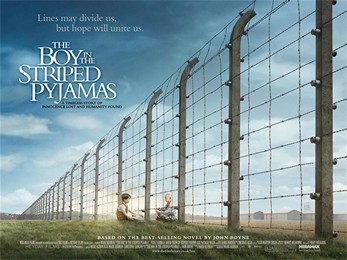
The Boy in the Striped Pajamas
How do you explain the Holocaust to a little kid? For that matter, how do you explain it to anyone? One of the most horrific, truly awful things in the history of mankind, the Holocaust claimed the lives of millions as Adolf Hitler and the Nazis tried to wipe out the Jewish race among several other ethnicities and entire cultures. As difficult as it can be to fathom now, in 2013, how would you explain it to a child growing up in the 1940s? How about an eight-year old boy growing up in 1940s Germany? That question provides the background for one of the best movies I've seen in quite awhile, 2008's The Boy in the Striped Pajamas.
It's Berlin in the 1940s, and a young boy named Bruno (Asa Butterfield) is more than upset when his father, a S.S. officer (David Thewlis) in the German army has received a promotion, one that requires the family to a new posting and home in the countryside. Removed from his friends and isolated in the country, Bruno hates the new home. One day, exploring in the woods beyond the house, young Bruno finds an expansive barbed-wire fence, a little boy, Shmuel (Jack Scanlon), wearing pajamas sitting on the other side. The boy sees other people dressed just like Shmuel and assumes they're living on some sort of farm, but he can't tell for sure. From his tutor, from his sister, from his father's fellow officers, he hears about how the Germans are the master race, the Jewish people one step above scum. Bruno tries to get answers of what's going on, but nothing seems to click for him, his friendship with Shmuel seemingly one of the few positives he does have.
Semi-SPOILERS if you want to skip this paragraph, Semi-SPOILERS. Bruno's father is the new commandant of a concentration camp tasked with exterminating thousands of Jews and other ethnicities. His father -- unnamed -- keeps the secret from his family, especially Bruno, and it's only after living there for several months that Bruno's mother (Vera Farmiga) figures it out and is horrified at the truth. The camp is never identified by name and for the most part it isn't shown clearly. We get glimpses of what's going on, hear some conversations, see some paperwork about massive crematoriums, but nothing is ever aggressively shown to the audience....with one major exception. I think it's a great stylistic choice because we hear/see what Bruno hears and sees. We're left to draw our own conclusions without anything obvious. End of SPOILERS.
Based off a novel from author John Boyne and directed by Mark Herman, this is a beautifully told, unsettling, tragic film that I can't recommend enough. Will you like it? It's hard to say you "like" a Holocaust movie, but this was an excellent film from beginning to end. Movies about the Holocaust are typically seen from two perspectives; the prisoners and the Nazis/Germans in charge of the camps. How different is it then to tell this story through the eyes of a curious, friendly, lonely 8-year old boy? It's a perfect storytelling device. It is a World War 2 movie, a Holocaust movie, but because it isn't handled directly with the subject matter, there's a certain charm to it, both good and bad. There is a beauty to the film in its visual look and appearance. Filming out in the countryside goes a long way in its natural beauty, comparing it to the cold, sparsely decorated house that reflects the quickly-turning opinion on what's going on.
So go figure, a movie about the Holocaust is really more of a coming of age story. This is a movie about an eight-year old boy growing up, albeit in one of the world's most turbulent, violent periods in history. The recent star of Ender's Game, Butterfield delivers an amazingly real, personal and heartbreaking performance as young Bruno. He's proud of his Father because boys should be proud of their fathers, even if he questions exactly what his father's job is. He loves reading adventures, exploring the woods, all the things a little boy should do. Bruno is also looking for a friend and finds it across a barbed wire fence in Shmuel, a young Jewish boy who's always hungry but enjoys just sitting and talking to Bruno. Their unlikely friendship is perfectly handled, Bruno curious to what's going on, Shmuel not sure how to explain what is going on, only knowing whatever it is, it isn't right.
The performances across the board are pretty perfect, starting with Butterfield and Scanlon as the two boys. Farmiga does a fine job as Bruno's mother, supportive of her husband but not fully knowing what he's in charge of. I did question why/how she couldn't know what he has been assigned to do, but it provides an interesting character arc for her. Thewlis as the Father/commandant is a difficult character to wrap my head around, a loyal soldier, committed to his duty, blind to the horror he's been assigned to do. Amber Beattie is very good as Bruno's sister, Gretel while Richard Johnson is memorably obtuse as their grandfather, a loyal German. Also worth mentioning are Rupert Friend as Lieutenant Kotler, Father's right-hand man, Jim Norton as Herr Lizst, the children's tutor, and David Hayman as Pavel, a Jewish man who does odd jobs around the new house after they move in. Is it weird all these Germans have English accents? Sure, but reviews that point that out are simply missing the point.
This was a movie I couldn't quite figure out. I was never quite sure where it was going, knowing there an end game here, a message that would land heavy, hard and effective. I'm not going to reveal anything or give away any spoilers, but the ending here is beyond heartbreaking, composer James Horner's score bringing it to life (sounded a little like A Beautiful Mind and Enemy at the Gates). I was pretty much ruined for the day after seeing the finale. Unbelievably tragic, heartbreaking, incredibly moving, any and all, it's an amazingly emotional ending. Maybe this isn't a movie to truly enjoy, but to experience. A must-see.
The Boy in the Striped Pajamas (2008): ****/****
It's Berlin in the 1940s, and a young boy named Bruno (Asa Butterfield) is more than upset when his father, a S.S. officer (David Thewlis) in the German army has received a promotion, one that requires the family to a new posting and home in the countryside. Removed from his friends and isolated in the country, Bruno hates the new home. One day, exploring in the woods beyond the house, young Bruno finds an expansive barbed-wire fence, a little boy, Shmuel (Jack Scanlon), wearing pajamas sitting on the other side. The boy sees other people dressed just like Shmuel and assumes they're living on some sort of farm, but he can't tell for sure. From his tutor, from his sister, from his father's fellow officers, he hears about how the Germans are the master race, the Jewish people one step above scum. Bruno tries to get answers of what's going on, but nothing seems to click for him, his friendship with Shmuel seemingly one of the few positives he does have.
Semi-SPOILERS if you want to skip this paragraph, Semi-SPOILERS. Bruno's father is the new commandant of a concentration camp tasked with exterminating thousands of Jews and other ethnicities. His father -- unnamed -- keeps the secret from his family, especially Bruno, and it's only after living there for several months that Bruno's mother (Vera Farmiga) figures it out and is horrified at the truth. The camp is never identified by name and for the most part it isn't shown clearly. We get glimpses of what's going on, hear some conversations, see some paperwork about massive crematoriums, but nothing is ever aggressively shown to the audience....with one major exception. I think it's a great stylistic choice because we hear/see what Bruno hears and sees. We're left to draw our own conclusions without anything obvious. End of SPOILERS.
Based off a novel from author John Boyne and directed by Mark Herman, this is a beautifully told, unsettling, tragic film that I can't recommend enough. Will you like it? It's hard to say you "like" a Holocaust movie, but this was an excellent film from beginning to end. Movies about the Holocaust are typically seen from two perspectives; the prisoners and the Nazis/Germans in charge of the camps. How different is it then to tell this story through the eyes of a curious, friendly, lonely 8-year old boy? It's a perfect storytelling device. It is a World War 2 movie, a Holocaust movie, but because it isn't handled directly with the subject matter, there's a certain charm to it, both good and bad. There is a beauty to the film in its visual look and appearance. Filming out in the countryside goes a long way in its natural beauty, comparing it to the cold, sparsely decorated house that reflects the quickly-turning opinion on what's going on.
So go figure, a movie about the Holocaust is really more of a coming of age story. This is a movie about an eight-year old boy growing up, albeit in one of the world's most turbulent, violent periods in history. The recent star of Ender's Game, Butterfield delivers an amazingly real, personal and heartbreaking performance as young Bruno. He's proud of his Father because boys should be proud of their fathers, even if he questions exactly what his father's job is. He loves reading adventures, exploring the woods, all the things a little boy should do. Bruno is also looking for a friend and finds it across a barbed wire fence in Shmuel, a young Jewish boy who's always hungry but enjoys just sitting and talking to Bruno. Their unlikely friendship is perfectly handled, Bruno curious to what's going on, Shmuel not sure how to explain what is going on, only knowing whatever it is, it isn't right.
The performances across the board are pretty perfect, starting with Butterfield and Scanlon as the two boys. Farmiga does a fine job as Bruno's mother, supportive of her husband but not fully knowing what he's in charge of. I did question why/how she couldn't know what he has been assigned to do, but it provides an interesting character arc for her. Thewlis as the Father/commandant is a difficult character to wrap my head around, a loyal soldier, committed to his duty, blind to the horror he's been assigned to do. Amber Beattie is very good as Bruno's sister, Gretel while Richard Johnson is memorably obtuse as their grandfather, a loyal German. Also worth mentioning are Rupert Friend as Lieutenant Kotler, Father's right-hand man, Jim Norton as Herr Lizst, the children's tutor, and David Hayman as Pavel, a Jewish man who does odd jobs around the new house after they move in. Is it weird all these Germans have English accents? Sure, but reviews that point that out are simply missing the point.
This was a movie I couldn't quite figure out. I was never quite sure where it was going, knowing there an end game here, a message that would land heavy, hard and effective. I'm not going to reveal anything or give away any spoilers, but the ending here is beyond heartbreaking, composer James Horner's score bringing it to life (sounded a little like A Beautiful Mind and Enemy at the Gates). I was pretty much ruined for the day after seeing the finale. Unbelievably tragic, heartbreaking, incredibly moving, any and all, it's an amazingly emotional ending. Maybe this isn't a movie to truly enjoy, but to experience. A must-see.
The Boy in the Striped Pajamas (2008): ****/****
Labels:
2000s,
Asa Butterfield,
David Thewlis,
Richard Johnson,
Vera Farmiga,
WWII
Friday, March 29, 2013
Cairo
From director John Huston, 1950's The Asphalt Jungle is one of the all-time great film noirs, a heist flick with a great cast and story. It was inevitable, wasn't it? Yes......a remake, even if it is a little known remake. Some 13 years later with the location transplanted to Egypt, we get 1963's Cairo.
Released from a German prison after a long sentence, a man known only as the Major (George Sanders) arrives in Cairo with a new plan. He's been working on all the intricate details to pull off a dangerous if very lucrative job at the Cairo Museum, stealing the King Tut diamonds. The Major needs some help though and has to get some funding and backing from a respected if somewhat shady businessman/lawyer, Kuchuk (Walter Rilla), who has plans of his own with the diamonds. Putting his plan into action, the Major assembles a small team of specialists and crooks, including enforcer Ali (Richard Johnson). Everything is seemingly worked out to the last second, but no matter how much planning has been done, there's always something surprising waiting.
I'm going to sound like quite the movie hypocrite here because usually I'm completely against remakes. Did Huston's Asphalt Jungle really need to be remade? Nope, not in the least. It's basically perfect as is. Just the same, 13 years later here comes this almost scene-for-scene remake based off of W.R. Burnett's source novel. It simply isn't necessary so if you've seen Huston's version, you've seen this movie. Director Wolf Rilla (son of star Walter Rilla) does a solid if unspectacular job with his version, and it's entertaining throughout. It's a tad shorter than 'Asphalt,' clocking in at 91 minutes as opposed to 112 minutes, and it does feel a little rushed at times. Kenneth Jones' score is good without being intrusive. And maybe it was just the aged quality of a 1963 movie, but the shadowy, dark look of the movie is a nice touch.
The only difference between the two movies is the setting, and that's probably the biggest selling point for Cairo. Credit to director Rilla for shooting on-location in Cairo rather than a Hollywood-like Cairo set. The story moves along and develops on the Egyptian streets, Sanders, Johnson and the cast walking around with the population and not in front of a green screen. It's a simple thing, but it goes a long way toward giving a familiar story something memorable when you've seen everything else. The location include the more obvious ones like the Cairo Museum and the Pyramids, but it's cool just to see these places, even if it is in the background. Then there's the less familiar locations, the back alleys and streets, not to mention the desert roads and oasis' in the Egyptian countryside.
Beyond the first two or three stars listed in the cast, 'Cairo' features a predominantly Egyptian cast so for the most part, there is far less star power here than in 'Asphalt.' I liked Sanders a lot as the Major, a mysterious thief with no real explained background. He's an English gentleman, prim, proper and mannered who has a knack for pulling off difficult jobs. His character is more prominent than his 'Asphalt' counterpart. Besides the odd choice of casting the very English Johnson as a very Egyptian character, Johnson does a fine job as Ali, the enforcer who wants nothing more than return to his childhood farm but gambling problems have derailed those plans. He has an on-again, off-again relationship with Amina (Faten Hamama), a singer/dancer working in cheap clubs, helping humanize the tough character. As the biggest name stars, Sanders and Johnson get the majority of development and screentime, and they don't disappoint. It's a solid, natural chemistry among two very different men drawn together for a job.
The rest of the Major's crew includes Willy (John Meillon), a WWII vet who specializes in explosives and safecracking, Kerim (Ahmed Mazhar), the coffee house owner doubling as the getaway driver, and Nicodemos (Eric Pohlmann), the Major's link to everything in the criminal underworld and black market. Rilla too is solid as Kuchuk, the shady financier of the Major's plan with his own intentions. Salah Nazmi plays the police commandant hunting the thieves.
Here we are again, the actual heist. Pulling off the job is a good extended sequence, if not quite as complicated as it would seem according to the plan. Like so many heist films, the best is saved for last; the fall-out following the heist. As is so often the case, it's not the job that's the most difficult part. It is getting away with it and dealing with the inevitable double-crosses and betrayals. The post-heist fallout sticks close to 'Asphalt,' but it is full of tension and develops nicely. This 1963 remake is unnecessary, not adding anything new to the formula other than the Cairo setting, but it is entertaining throughout. Sometimes that's all that counts. Watch a slightly edited, shorter version HERE at Youtube.
Cairo (1963): ** 1/2 /****
Released from a German prison after a long sentence, a man known only as the Major (George Sanders) arrives in Cairo with a new plan. He's been working on all the intricate details to pull off a dangerous if very lucrative job at the Cairo Museum, stealing the King Tut diamonds. The Major needs some help though and has to get some funding and backing from a respected if somewhat shady businessman/lawyer, Kuchuk (Walter Rilla), who has plans of his own with the diamonds. Putting his plan into action, the Major assembles a small team of specialists and crooks, including enforcer Ali (Richard Johnson). Everything is seemingly worked out to the last second, but no matter how much planning has been done, there's always something surprising waiting.
I'm going to sound like quite the movie hypocrite here because usually I'm completely against remakes. Did Huston's Asphalt Jungle really need to be remade? Nope, not in the least. It's basically perfect as is. Just the same, 13 years later here comes this almost scene-for-scene remake based off of W.R. Burnett's source novel. It simply isn't necessary so if you've seen Huston's version, you've seen this movie. Director Wolf Rilla (son of star Walter Rilla) does a solid if unspectacular job with his version, and it's entertaining throughout. It's a tad shorter than 'Asphalt,' clocking in at 91 minutes as opposed to 112 minutes, and it does feel a little rushed at times. Kenneth Jones' score is good without being intrusive. And maybe it was just the aged quality of a 1963 movie, but the shadowy, dark look of the movie is a nice touch.
The only difference between the two movies is the setting, and that's probably the biggest selling point for Cairo. Credit to director Rilla for shooting on-location in Cairo rather than a Hollywood-like Cairo set. The story moves along and develops on the Egyptian streets, Sanders, Johnson and the cast walking around with the population and not in front of a green screen. It's a simple thing, but it goes a long way toward giving a familiar story something memorable when you've seen everything else. The location include the more obvious ones like the Cairo Museum and the Pyramids, but it's cool just to see these places, even if it is in the background. Then there's the less familiar locations, the back alleys and streets, not to mention the desert roads and oasis' in the Egyptian countryside.
Beyond the first two or three stars listed in the cast, 'Cairo' features a predominantly Egyptian cast so for the most part, there is far less star power here than in 'Asphalt.' I liked Sanders a lot as the Major, a mysterious thief with no real explained background. He's an English gentleman, prim, proper and mannered who has a knack for pulling off difficult jobs. His character is more prominent than his 'Asphalt' counterpart. Besides the odd choice of casting the very English Johnson as a very Egyptian character, Johnson does a fine job as Ali, the enforcer who wants nothing more than return to his childhood farm but gambling problems have derailed those plans. He has an on-again, off-again relationship with Amina (Faten Hamama), a singer/dancer working in cheap clubs, helping humanize the tough character. As the biggest name stars, Sanders and Johnson get the majority of development and screentime, and they don't disappoint. It's a solid, natural chemistry among two very different men drawn together for a job.
The rest of the Major's crew includes Willy (John Meillon), a WWII vet who specializes in explosives and safecracking, Kerim (Ahmed Mazhar), the coffee house owner doubling as the getaway driver, and Nicodemos (Eric Pohlmann), the Major's link to everything in the criminal underworld and black market. Rilla too is solid as Kuchuk, the shady financier of the Major's plan with his own intentions. Salah Nazmi plays the police commandant hunting the thieves.
Here we are again, the actual heist. Pulling off the job is a good extended sequence, if not quite as complicated as it would seem according to the plan. Like so many heist films, the best is saved for last; the fall-out following the heist. As is so often the case, it's not the job that's the most difficult part. It is getting away with it and dealing with the inevitable double-crosses and betrayals. The post-heist fallout sticks close to 'Asphalt,' but it is full of tension and develops nicely. This 1963 remake is unnecessary, not adding anything new to the formula other than the Cairo setting, but it is entertaining throughout. Sometimes that's all that counts. Watch a slightly edited, shorter version HERE at Youtube.
Cairo (1963): ** 1/2 /****
Labels:
1960s,
George Sanders,
Heist movies,
Remakes,
Richard Johnson
Sunday, October 23, 2011
Danger Route
I stumbled across a channel in the last few weeks I didn't realize was on the dial -- This TV -- and taking any chance I can to see some hard-to-find movies, I've been reviewing their website fairly regularly. They're not showing classics, focusing more on some lesser known, more mainstream movies, including some I've never heard of, including 1967's Danger Route.
Part James Bond knock-off with a darker outlook on the life of a secret agent/spy, it struggles at times to decide what's really going on. The cast was what drew me in, and for the most part no one disappoints. Certain moments ring so true you feel they just have to be accurate, dead-on in their portrayal of the espionage underworld. The other moments though? Well, they fall short. The first 45 minutes were mind-numbingly slow, the middle portions a major improvement, and the end too tidy although perfectly cynical.
A secret agent with a license to kill, Jonas Wylde (Richard Johnson) has had enough of the business and wants out. He decides to take on one more job, a contract hit on an order he receives from his superiors. A Czechoslovakian scientist has defected to the Americans with all his secrets, and he's ready to spill them all. Wylde must now figure a way to get to the heavily guarded defector, briefly staying in Britain as he travels to America. As his plan comes together though, the very capable and highly professional Jonas begins to suspect something else is up. His mission is one thing, but is there something more? Is he part of a mole hunt? Who exactly is gunning for him?
I'm going to get this one rant out of the way and then won't come back to it again. As I say/type it, I know I sound like an ignorant American, but here goes anyways. This movie is very British. Usually in my mind, that's a positive. Here? Mostly because there was no closed captioning on the broadcast, it's a bad thing. Johnson talks in what can only be described as a quiet mumble. I'm pretty decent deciphering accents, but this movie threw me for a loop. Therefore, I felt more than a few times like I was behind or had missed something, jumps in logic and story going over my head. Apparently not though, 'Danger' just relying on a twisting and turning story that doesn't always make sense.
Taking into consideration his choice to talk in a growling whisper for most of his lines, Johnson is still an interesting choice to play this well-worn, experienced secret agent. Usually playing a key secondary role -- he specialized in the right hand man part -- he gets a chance at a starring role. I like the edge he brings to his character, an ability to handle himself in every situation, a distrust in basically everyone around him, and a knack for figuring things out quicker than humanly possible. In the cool but odd department, he also dispatches quite a few people via a nicely placed judo chop that Austin Powers would be proud of. Johnson's Wylde snaps necks like nobody's business.
About 45 minutes into the movie after the painfully slow opening, I was very much drawn in. Wylde finds out his mission is more than he was told, and things get interesting. Director/actor Sam Wanamaker has a scene-stealing part that in two or three brutally effective scenes almost save the movie on their own. Playing CIA agent 'Lucinda,' Wanamaker shows the potential here after capturing Wylde, telling him exactly how he caught him. It's well-written, well thought out and executed as perfectly as possible. Simple and straightforward, and the best scene in the movie going away.
The supporting parts on the whole -- including Wanamaker -- are key without being time-consuming in actual screentime. Harry Andrews plays Canning, Wylde's long-time supervisor trying to look out for one of his most-trusted agents. Gordon Jackson is Brian, Wylde's partner who helps him in and out of different missions, leaving the authorities in the dust. Call me chauvinistic, but I had trouble keeping track of the female characters in this movie, four of them if I counted right, all attractive, blonde women. There's Carol Lynley as Jocelyn, Wylde's mistress, Barbara Bouchet as Marita, a possible double agent playing both sides, Sylvia Sims as Barbara, Canning's wife, and Diana Dors as a somewhat clueless maid Wylde plays.
I wanted to like this one, and really tried to get into it, but it never amounts to much. Decent cast wasted in a disappointing espionage story.
Danger Route <---trailer (1967): * 1/2 /****
Part James Bond knock-off with a darker outlook on the life of a secret agent/spy, it struggles at times to decide what's really going on. The cast was what drew me in, and for the most part no one disappoints. Certain moments ring so true you feel they just have to be accurate, dead-on in their portrayal of the espionage underworld. The other moments though? Well, they fall short. The first 45 minutes were mind-numbingly slow, the middle portions a major improvement, and the end too tidy although perfectly cynical.
A secret agent with a license to kill, Jonas Wylde (Richard Johnson) has had enough of the business and wants out. He decides to take on one more job, a contract hit on an order he receives from his superiors. A Czechoslovakian scientist has defected to the Americans with all his secrets, and he's ready to spill them all. Wylde must now figure a way to get to the heavily guarded defector, briefly staying in Britain as he travels to America. As his plan comes together though, the very capable and highly professional Jonas begins to suspect something else is up. His mission is one thing, but is there something more? Is he part of a mole hunt? Who exactly is gunning for him?
I'm going to get this one rant out of the way and then won't come back to it again. As I say/type it, I know I sound like an ignorant American, but here goes anyways. This movie is very British. Usually in my mind, that's a positive. Here? Mostly because there was no closed captioning on the broadcast, it's a bad thing. Johnson talks in what can only be described as a quiet mumble. I'm pretty decent deciphering accents, but this movie threw me for a loop. Therefore, I felt more than a few times like I was behind or had missed something, jumps in logic and story going over my head. Apparently not though, 'Danger' just relying on a twisting and turning story that doesn't always make sense.
Taking into consideration his choice to talk in a growling whisper for most of his lines, Johnson is still an interesting choice to play this well-worn, experienced secret agent. Usually playing a key secondary role -- he specialized in the right hand man part -- he gets a chance at a starring role. I like the edge he brings to his character, an ability to handle himself in every situation, a distrust in basically everyone around him, and a knack for figuring things out quicker than humanly possible. In the cool but odd department, he also dispatches quite a few people via a nicely placed judo chop that Austin Powers would be proud of. Johnson's Wylde snaps necks like nobody's business.
About 45 minutes into the movie after the painfully slow opening, I was very much drawn in. Wylde finds out his mission is more than he was told, and things get interesting. Director/actor Sam Wanamaker has a scene-stealing part that in two or three brutally effective scenes almost save the movie on their own. Playing CIA agent 'Lucinda,' Wanamaker shows the potential here after capturing Wylde, telling him exactly how he caught him. It's well-written, well thought out and executed as perfectly as possible. Simple and straightforward, and the best scene in the movie going away.
The supporting parts on the whole -- including Wanamaker -- are key without being time-consuming in actual screentime. Harry Andrews plays Canning, Wylde's long-time supervisor trying to look out for one of his most-trusted agents. Gordon Jackson is Brian, Wylde's partner who helps him in and out of different missions, leaving the authorities in the dust. Call me chauvinistic, but I had trouble keeping track of the female characters in this movie, four of them if I counted right, all attractive, blonde women. There's Carol Lynley as Jocelyn, Wylde's mistress, Barbara Bouchet as Marita, a possible double agent playing both sides, Sylvia Sims as Barbara, Canning's wife, and Diana Dors as a somewhat clueless maid Wylde plays.
I wanted to like this one, and really tried to get into it, but it never amounts to much. Decent cast wasted in a disappointing espionage story.
Danger Route <---trailer (1967): * 1/2 /****
Labels:
1960s,
Espionage,
Gordon Jackson,
Harry Andrews,
Richard Johnson
Thursday, October 14, 2010
Hennessy
Pick any assassination attempt -- successful or not -- in history, and you've got a problem when it comes to turning that attempt into a movie. If the person being gunned for is even somewhat well known, you know the end of the movie before it starts. Your average Joe Blow doesn't mean much so a hit attempt can leave you guessing, but what's the point? Political figures on the other hand are pretty obvious if they're going to survive or not. So goes a major problem with 1975's Hennessy.
Abe Lincoln, Martin Luther King, John F. Kennedy, Malcolm X, Robert Kennedy, all major, universally well-known names that have been assassinated over the last 150 years. Not on that list? Queen Elizabeth of England. She's the target in this British-made movie detailing the true story of one man's suicidal mission to take out the Queen and as much of Parliament as he can. Now I'm no genius, but some 30 years later, Queen Elizabeth is still kicking so the attempt must fail at some point. That's not a sure thing for movie failure, but it's got to be handled the right way, keep you guessing as to HOW he'll fail, but that sense of urgency is missing here, and that ends up derailing the story.
An Irishman with some past IRA connections, Nile Hennessy (Rod Steiger), turns down an offer to join the IRA in a mission, wanting to live his life. Soon after though, his wife and daughter are accidentally gunned down by British troops, and something inside him snaps. Nile decides to go on a suicide mission with hopes of killing the Queen and the member of Parliament. Two groups are working against him. The police (including Trevor Howard and Richard Johnson) follow the clues, trying to catch up with him, while the IRA -- wary of the political backlash from a possible connection to Hennessy and an assassination attempt -- puts a hit out on him. The odds are against Hennessy, but with nothing to lose, not much is going to slow him down.
The movie I consistently found myself thinking of while watching Hennessy was the overall much better Day of the Jackal, the story of a possibly true hit attempt on Charles De Gaulle. You know going in that De Gaulle survives, but it's getting there that makes the movie a classic. Tension, worry, near panic dominate the movie as it appears that maybe -- just maybe -- the Jackal actually pulls off the job. In Hennessy, that same fear and worry just isn't there. Steiger's Hennessy is an easy semi-bad guy to root for, but the character is pretty vanilla after his motivations are presented. When the attempt does come, it's dullsville. The chase after the attempt is equally weak and caps off a movie with a workable idea that never quite clicks.
Where some actors play themselves over and over again, Steiger is an actor who always played himself but in a wide variety of ways if that makes any sense. His characters were always these ultra-intense dudes who looked seconds away from just blowing up at all times. Hennessy is a man with nothing to lose on a mission that he HOPES and WANTS to end with him dying. His wife and daughter were callously shot down, and he can only think of one thing; revenge on the biggest scale possible. He doesn't have political inclinations and he doesn't hope to deliver a message. He is pissed at the world, and he intends to make the world suffer just as much as he is. Once Nile gets involved with the assassination, there's no more development late so the pacing can be a little off.
While Steiger is an interesting choice to play a burned Irishman -- the accent isn't as bad as you'd think -- his female co-star is interesting but not in a good way. Lee Remick plays Kate Brooke, the widowed wife of an old friend of Nile's. After years without seeing him, she invites him into her house while he copes with the loss of his family. She knows something is going on but seems to choose not to push the issue. Bad attempt at an Irish/English accent aside, Remick is given little to do in a pointless supporting part. She's dispatched when the story requires it with one of the more unceremonious deaths I've seen in awhile.
As for the police pursuing Hennessy, Johnson joins Steiger as the main reason to catch this movie. He's a cop who's worked undercover in Ireland and has paid the consequences, both physically and emotionally. He is a shell of the man he used to be, and like his counterpart, is motivated by a mix of anger and persereverance that won't let him quit, knowing if he fails the repercussions will be epic. Howard's part is more of a cameo, but it's always cool to see him no matter the size of the part. The acting is the lone reason to check this one out because otherwise it just doesn't have much going for it.
Hennessy <--- TCM clips (1975): **/****
Abe Lincoln, Martin Luther King, John F. Kennedy, Malcolm X, Robert Kennedy, all major, universally well-known names that have been assassinated over the last 150 years. Not on that list? Queen Elizabeth of England. She's the target in this British-made movie detailing the true story of one man's suicidal mission to take out the Queen and as much of Parliament as he can. Now I'm no genius, but some 30 years later, Queen Elizabeth is still kicking so the attempt must fail at some point. That's not a sure thing for movie failure, but it's got to be handled the right way, keep you guessing as to HOW he'll fail, but that sense of urgency is missing here, and that ends up derailing the story.
An Irishman with some past IRA connections, Nile Hennessy (Rod Steiger), turns down an offer to join the IRA in a mission, wanting to live his life. Soon after though, his wife and daughter are accidentally gunned down by British troops, and something inside him snaps. Nile decides to go on a suicide mission with hopes of killing the Queen and the member of Parliament. Two groups are working against him. The police (including Trevor Howard and Richard Johnson) follow the clues, trying to catch up with him, while the IRA -- wary of the political backlash from a possible connection to Hennessy and an assassination attempt -- puts a hit out on him. The odds are against Hennessy, but with nothing to lose, not much is going to slow him down.
The movie I consistently found myself thinking of while watching Hennessy was the overall much better Day of the Jackal, the story of a possibly true hit attempt on Charles De Gaulle. You know going in that De Gaulle survives, but it's getting there that makes the movie a classic. Tension, worry, near panic dominate the movie as it appears that maybe -- just maybe -- the Jackal actually pulls off the job. In Hennessy, that same fear and worry just isn't there. Steiger's Hennessy is an easy semi-bad guy to root for, but the character is pretty vanilla after his motivations are presented. When the attempt does come, it's dullsville. The chase after the attempt is equally weak and caps off a movie with a workable idea that never quite clicks.
Where some actors play themselves over and over again, Steiger is an actor who always played himself but in a wide variety of ways if that makes any sense. His characters were always these ultra-intense dudes who looked seconds away from just blowing up at all times. Hennessy is a man with nothing to lose on a mission that he HOPES and WANTS to end with him dying. His wife and daughter were callously shot down, and he can only think of one thing; revenge on the biggest scale possible. He doesn't have political inclinations and he doesn't hope to deliver a message. He is pissed at the world, and he intends to make the world suffer just as much as he is. Once Nile gets involved with the assassination, there's no more development late so the pacing can be a little off.
While Steiger is an interesting choice to play a burned Irishman -- the accent isn't as bad as you'd think -- his female co-star is interesting but not in a good way. Lee Remick plays Kate Brooke, the widowed wife of an old friend of Nile's. After years without seeing him, she invites him into her house while he copes with the loss of his family. She knows something is going on but seems to choose not to push the issue. Bad attempt at an Irish/English accent aside, Remick is given little to do in a pointless supporting part. She's dispatched when the story requires it with one of the more unceremonious deaths I've seen in awhile.
As for the police pursuing Hennessy, Johnson joins Steiger as the main reason to catch this movie. He's a cop who's worked undercover in Ireland and has paid the consequences, both physically and emotionally. He is a shell of the man he used to be, and like his counterpart, is motivated by a mix of anger and persereverance that won't let him quit, knowing if he fails the repercussions will be epic. Howard's part is more of a cameo, but it's always cool to see him no matter the size of the part. The acting is the lone reason to check this one out because otherwise it just doesn't have much going for it.
Hennessy <--- TCM clips (1975): **/****
Labels:
1970s,
Lee Remick,
Richard Johnson,
Rod Steiger,
Trevor Howard
Thursday, June 10, 2010
Operation Crossbow
Most of the war movies I watch are depictions of front-line action or at least the generals/headquarters making the decisions that affect the front-line soldiers. But what about the Intelligence agencies doing their damnedest to help the war effort through espionage, gaining information and sabotage behind enemy lines. So goes 1965's Operation Crossbow, a British-Italian production telling the true story of British efforts to slow down Germany's rocket/technological advances as WWII reaches its middle years.
As much as WWII was about one Allied soldier facing one Axis soldier, there was a race at home to be the first country to develop the atom bomb. On less destructive levels, both sides tried to create weapons technology that could cause more death and destruction than the average grenade or artillery shell. Obviously, these advances were kept as top secret as possible, but that doesn't mean each side wasn't trying to one-up their enemy by playing a little defense courtesy of the Intelligence community doing a little sabotage.
It's midway through 1943, and the Germans have developed a new flying bomb that they plan to unleash on London and other English cities. The Allies are aware of the new development, and do their best to slow down the advances by consistently bombing German work sites where they believe the bombs to be built and launched. But as dangerous as the bombs are, the Germans have a new weapon in the late stages of development; the V-2 rocket, that could drastically change the course of the war, including the D-Day invasion. Facing such a huge game changer, Allied Intelligence is forced to use a desperate plan; send Allied agents into Germany disguised as engineers who will help develop the rockets.
You might have noticed there's not a single actor/actress listed in the plot description. Basically, it would have taken too long to include them and make that paragraph a behemoth to read. Like other big budget war movies, 'Crossbow' utilizes an ensemble cast with talent from all over the world taking part. And in terms of story, the ensemble works better because the plot is very episodic. The first 30 minutes is almost exclusively from the German perspective, the next 30 the Allied Intelligence, and the last hour mostly with the agents working deep undercover. Each of these segments could have been expanded for their own movie, but together they work to form a coherent storyline.
The cast listing is an odd one because producer Carlo Ponti listed his wife Sophia Loren as the lead when really she makes a 20-minute or so appearance and is an add-on more than anything else. That's not being critical of Loren because she's a fine actress, but big picture her part isn't essential to the movie. Starring as Germans the ensemble includes Paul Henreid and Helmut Dantine as two high-ranking German generals, Barbara Rutting as German aviator Hannah Reitsch, and Anthony Quayle as Bamford, a secret agent/spy. Allied Intelligence includes Richard Johnson, Trevor Howard, John Mills and Richard Todd as the men trying to halt the German advances. The agents sent into Germany include George Peppard, Jeremy Kemp and Tom Courtenay, all posing as deceased scientists so they can access the German rocket plants with Lilli Palmer playing a resistance contact.
The whole movie is a good example of a solid WWII ensemble, but the best and most interesting/exciting part is when the story follows these three agents. They are all forced to become someone else, knowing if they are caught they will be summarily shot on site. Even getting to that point is difficult as Peppard's Lt. Curtis finds out when the scientist he is posing as is visited by his wife (Loren). Courtenay's Henshaw is dealt a cruel twist of fate and must decide how much he is willing to sacrifice. Kemp's Bradley is dropped into Germany as a last-minute resort with little knowledge of the man he's impersonating. Their scenes as they try to dupe the Germans are tense and difficult to watch, those scenes where you get butterflies hoping everything doesn't hit the fan.
Crossbow's story covers a lot of ground -- almost a year and a half -- but never feels like we're being let out. Supposedly a much longer finished product was turned in by director Michael Anderson only to have it cut heavily to the movie we see now which clocks in at just under two hours. You can see where certain segments were cut, especially the German segment to open the movie, and other odd instances like Peppard gaining a bandage on his forehead, but we never see why. But these are little things, not big disturbances that could ruin the movie.
While the V-2 rocket was actually used by Germany in WWII -- over 3,000 were fired at England -- the movie does have to have some sort of resolution if not necessarily a happy ending. The finale is a whopper as Peppard and Kemp desperately try to pinpoint their underground location to a passing bomber force. The huge underground facilities sets look like something out of a James Bond movie and provide quite an ending to a strong story. Not as well know as some of its 1960s WWII counterparts, but definitely worth a watch or two.
Operation Crossbow <----trailer (1965): ***/****
As much as WWII was about one Allied soldier facing one Axis soldier, there was a race at home to be the first country to develop the atom bomb. On less destructive levels, both sides tried to create weapons technology that could cause more death and destruction than the average grenade or artillery shell. Obviously, these advances were kept as top secret as possible, but that doesn't mean each side wasn't trying to one-up their enemy by playing a little defense courtesy of the Intelligence community doing a little sabotage.
It's midway through 1943, and the Germans have developed a new flying bomb that they plan to unleash on London and other English cities. The Allies are aware of the new development, and do their best to slow down the advances by consistently bombing German work sites where they believe the bombs to be built and launched. But as dangerous as the bombs are, the Germans have a new weapon in the late stages of development; the V-2 rocket, that could drastically change the course of the war, including the D-Day invasion. Facing such a huge game changer, Allied Intelligence is forced to use a desperate plan; send Allied agents into Germany disguised as engineers who will help develop the rockets.
You might have noticed there's not a single actor/actress listed in the plot description. Basically, it would have taken too long to include them and make that paragraph a behemoth to read. Like other big budget war movies, 'Crossbow' utilizes an ensemble cast with talent from all over the world taking part. And in terms of story, the ensemble works better because the plot is very episodic. The first 30 minutes is almost exclusively from the German perspective, the next 30 the Allied Intelligence, and the last hour mostly with the agents working deep undercover. Each of these segments could have been expanded for their own movie, but together they work to form a coherent storyline.
The cast listing is an odd one because producer Carlo Ponti listed his wife Sophia Loren as the lead when really she makes a 20-minute or so appearance and is an add-on more than anything else. That's not being critical of Loren because she's a fine actress, but big picture her part isn't essential to the movie. Starring as Germans the ensemble includes Paul Henreid and Helmut Dantine as two high-ranking German generals, Barbara Rutting as German aviator Hannah Reitsch, and Anthony Quayle as Bamford, a secret agent/spy. Allied Intelligence includes Richard Johnson, Trevor Howard, John Mills and Richard Todd as the men trying to halt the German advances. The agents sent into Germany include George Peppard, Jeremy Kemp and Tom Courtenay, all posing as deceased scientists so they can access the German rocket plants with Lilli Palmer playing a resistance contact.
The whole movie is a good example of a solid WWII ensemble, but the best and most interesting/exciting part is when the story follows these three agents. They are all forced to become someone else, knowing if they are caught they will be summarily shot on site. Even getting to that point is difficult as Peppard's Lt. Curtis finds out when the scientist he is posing as is visited by his wife (Loren). Courtenay's Henshaw is dealt a cruel twist of fate and must decide how much he is willing to sacrifice. Kemp's Bradley is dropped into Germany as a last-minute resort with little knowledge of the man he's impersonating. Their scenes as they try to dupe the Germans are tense and difficult to watch, those scenes where you get butterflies hoping everything doesn't hit the fan.
Crossbow's story covers a lot of ground -- almost a year and a half -- but never feels like we're being let out. Supposedly a much longer finished product was turned in by director Michael Anderson only to have it cut heavily to the movie we see now which clocks in at just under two hours. You can see where certain segments were cut, especially the German segment to open the movie, and other odd instances like Peppard gaining a bandage on his forehead, but we never see why. But these are little things, not big disturbances that could ruin the movie.
While the V-2 rocket was actually used by Germany in WWII -- over 3,000 were fired at England -- the movie does have to have some sort of resolution if not necessarily a happy ending. The finale is a whopper as Peppard and Kemp desperately try to pinpoint their underground location to a passing bomber force. The huge underground facilities sets look like something out of a James Bond movie and provide quite an ending to a strong story. Not as well know as some of its 1960s WWII counterparts, but definitely worth a watch or two.
Operation Crossbow <----trailer (1965): ***/****
Thursday, November 5, 2009
The Haunting
I don't watch horror movies. I just don't. I can't tell you how far back this goes, whether I saw some creepy horror movie that traumatized me or what, but I typically steer clear of them (you know, just to be safe). There are exceptions, the black and white monster movies made between the 1930s and 1950s like Dracula, Frankenstein, Creature from the Black Lagoon, and some assorted others like The Omen. But other than that, I steer clear unless pushed into watching one. On Halloween, TCM did two full days of scary/horror movies so I figured I'd at least try one, 1963's The Haunting.
Maybe it's the gore in horror/slasher movies I don't like because just getting scared doesn't bother me. Seeing someone's guts slashed out is a different story so I've avoided the torture porn movies like Saw and Hostel in recent years. The Haunting relies almost completely on your imagination scaring you so I can get on board for that. Director Robert Wise doesn't use cliches or any tricks to catch you off guard, he just presents something that you can hear, but not see and let's your mind do the rest. Pretty effective when you compare it to a mass murderer like Freddy Krueger or Jason slashing and stabbing their way through countless victims.
A long-time student of paranormal activity, Dr. John Markway (Richard Johnson) has arranged with the owners of a supposedly haunted house, Hill House, to conduct an experiment as to whether the huge New England home does have evil spirits inside. Built in the years after the Civil War, Hill House has a history of strange occurrences and weird happenings that include some grisly deaths (all introduced in the opening prologue). Markway assembles a small group who have experience in one way or another with the paranormal, the supernatural. Eleanor Lance (Julie Harris) as a child was part of the only documented encounter with a poltergeist, and Theodora (Claire Bloom) has vast expertise with E.S.P. and therefore knows what those around her are saying. Last, there's Luke Sanderson (Russ Tamblyn), a skeptic who stands to inherit Hill House and looks forward to the cash it will bring him.
So the group of four prepares for a possibly extended stay at Hill House to see if the rumors are true. At first, nothing happens but each night unexplainable incidents start to occur. Doors close on their own, lights go on and off in the dead of night, musical instruments play themselves, and loud, crashing sounds race up and down the hallways. An individual with some mental health issues to begin with, Eleanor starts to suspect that the house and its spirits want her and no one else. The ending comes as a bit of a twist, not a nice, tidy finale but one that certainly works for the story.
Shot in black and white, the Hill House sets deserve billing with the cast. Director Wise shot the movie in black and white so right off the bat, it's dark and shadowy as the night drags on and the house guests start to experience all the eccentricities of the house. The hallways wind endlessly with countless doors that look exactly alike. Each room is filled with piles of art, statues and furniture so there's a claustrophobic feel. Topping it off, the statues and gargoyles are all perched at eye level and above as if they're looking down on the goings on in Hill House. All of this adds to the creepy mood that do make the scarier moments work so well.
Telling the story, Wise doesn't use shocking moments or really even reveal anything as to an explanation for Hill House. It just is haunted, and to be fair, any explanation would have come across as false or not lived up to expectations. Because the viewer never sees a spirit or a ghost, your imagination has to picture what exactly is making that noise out in the hall, like this scene where Eleanor hears a man and boy talking in the dead of night. Composer Humphrey Searle is not subtle in its execution but does push the frightening scenes along when it needs to, including some quick cutting and memorable camera work from Wise.
With the small cast, Harris is excellent as Eleanor. Her invalid mother she cared for over the last 12 years has died recently, and from her backstory we know she's got some guilt issues about her mother's death. She is looking for a new life because after so many years she now has some freedom, but she doesn't exactly know where to start and thinks that maybe Hill House is the place she's been seeking. Bloom, Johnson, and Tamblyn are all very good in their parts as this foursome dominates the screentime. Bloom's Theo develops a close friendship with Eleanor (leading some critics to believe there's a lesbian connection because of course, two women who are close in movies must be lesbians) while Johnson starts to look out for Eleanor and question whether he should have brought her along. Tamblyn gets some of the lighter lines as the cynical heir who doesn't quite believe in ghosts or spirits...at first.
Look at this way, if someone who doesn't enjoy horror movies liked the movie, it has to be pretty good, right? It's not a terrifying movie or one full of shock value. The Haunting lets you decide how scary everything is. Youtube has the movie broken up into segments, starting here with Part 1 of 11.
The Haunting <---trailer (1963): ***/****
Maybe it's the gore in horror/slasher movies I don't like because just getting scared doesn't bother me. Seeing someone's guts slashed out is a different story so I've avoided the torture porn movies like Saw and Hostel in recent years. The Haunting relies almost completely on your imagination scaring you so I can get on board for that. Director Robert Wise doesn't use cliches or any tricks to catch you off guard, he just presents something that you can hear, but not see and let's your mind do the rest. Pretty effective when you compare it to a mass murderer like Freddy Krueger or Jason slashing and stabbing their way through countless victims.
A long-time student of paranormal activity, Dr. John Markway (Richard Johnson) has arranged with the owners of a supposedly haunted house, Hill House, to conduct an experiment as to whether the huge New England home does have evil spirits inside. Built in the years after the Civil War, Hill House has a history of strange occurrences and weird happenings that include some grisly deaths (all introduced in the opening prologue). Markway assembles a small group who have experience in one way or another with the paranormal, the supernatural. Eleanor Lance (Julie Harris) as a child was part of the only documented encounter with a poltergeist, and Theodora (Claire Bloom) has vast expertise with E.S.P. and therefore knows what those around her are saying. Last, there's Luke Sanderson (Russ Tamblyn), a skeptic who stands to inherit Hill House and looks forward to the cash it will bring him.
So the group of four prepares for a possibly extended stay at Hill House to see if the rumors are true. At first, nothing happens but each night unexplainable incidents start to occur. Doors close on their own, lights go on and off in the dead of night, musical instruments play themselves, and loud, crashing sounds race up and down the hallways. An individual with some mental health issues to begin with, Eleanor starts to suspect that the house and its spirits want her and no one else. The ending comes as a bit of a twist, not a nice, tidy finale but one that certainly works for the story.
Shot in black and white, the Hill House sets deserve billing with the cast. Director Wise shot the movie in black and white so right off the bat, it's dark and shadowy as the night drags on and the house guests start to experience all the eccentricities of the house. The hallways wind endlessly with countless doors that look exactly alike. Each room is filled with piles of art, statues and furniture so there's a claustrophobic feel. Topping it off, the statues and gargoyles are all perched at eye level and above as if they're looking down on the goings on in Hill House. All of this adds to the creepy mood that do make the scarier moments work so well.
Telling the story, Wise doesn't use shocking moments or really even reveal anything as to an explanation for Hill House. It just is haunted, and to be fair, any explanation would have come across as false or not lived up to expectations. Because the viewer never sees a spirit or a ghost, your imagination has to picture what exactly is making that noise out in the hall, like this scene where Eleanor hears a man and boy talking in the dead of night. Composer Humphrey Searle is not subtle in its execution but does push the frightening scenes along when it needs to, including some quick cutting and memorable camera work from Wise.
With the small cast, Harris is excellent as Eleanor. Her invalid mother she cared for over the last 12 years has died recently, and from her backstory we know she's got some guilt issues about her mother's death. She is looking for a new life because after so many years she now has some freedom, but she doesn't exactly know where to start and thinks that maybe Hill House is the place she's been seeking. Bloom, Johnson, and Tamblyn are all very good in their parts as this foursome dominates the screentime. Bloom's Theo develops a close friendship with Eleanor (leading some critics to believe there's a lesbian connection because of course, two women who are close in movies must be lesbians) while Johnson starts to look out for Eleanor and question whether he should have brought her along. Tamblyn gets some of the lighter lines as the cynical heir who doesn't quite believe in ghosts or spirits...at first.
Look at this way, if someone who doesn't enjoy horror movies liked the movie, it has to be pretty good, right? It's not a terrifying movie or one full of shock value. The Haunting lets you decide how scary everything is. Youtube has the movie broken up into segments, starting here with Part 1 of 11.
The Haunting <---trailer (1963): ***/****
Labels:
1960s,
Horror,
Richard Johnson,
Robert Wise,
Russ Tamblyn
Friday, January 30, 2009
Never So Few
After reading a bio on director John Sturges the last couple of weeks, I thought I'd go back and watch some of his movies, starting with 1959's Never So Few starring Frank Sinatra and Gina Lollobrigida. The basic story is a good one that hasn't been dealt with in many WWII movies. Sinatra is Capt. Tom Reynolds, an OSS volunteer leading a group of Kackins, Burmese guerillas, in Burma in 1942-43. I can only think of two other WWII movies that even deal with that part of the war, Objective, Burma, a great action movie with plenty of flag-waving, and Merrill's Marauders, the story of 3,000 US volunteers trekking across Burma to take out a Japanese airfield.
When I first saw the movie a few years back, I was glad I found because of the subject matter. But when I saw what a great all-around cast was in it, I started to wonder how it'd slipped through the cracks since its release. I figured it out quick enough, it's an average war movie that's pulled down by a completely unnecessary love story. The story of Reynolds and his Kachin guerillas is the high point of the movie with some impressive action sequences, an ambush on a bigger Japanese force, a surprise attack on the Kachins' Xmas party, and an assault on a heavily guarded Japanese airfield.
Too bad of course the love story was added. It doesn't work for any number of reasons. For one, Sinatra and Lollobrigida had little to no actual chemistry. Two, it takes far too long to develop. The movie opens with an ambush and the aftermath and then spends most of 45 minutes to an hour with Reynolds and his 2nd in command, British officer Danny DeMortimer, back in civilization as Reynolds and Lollobrigida's Carla meet.
Having said all this, I did buy the DVD so there must be something positive, right? Sinatra is pretty good as Reynolds, although he does sport a ridiculous goatee early in the movie. Richard Johnson as DeMortimer has some funny moments and is a great character, a good counter to Reynolds. The whole supporting cast is good, Charles Bronson, Peter Lawford, Dean Jones, Brian Donlevy, Phillip Ahn, and Robert Bray. But most of them aren't given much to do because so much of the story's focus is away from the OSS volunteers and the Kachins.
So overall, an average movie that could have been better, but it's a guilty pleasure for me. Worth checking out, but don't expect a classic.
Subscribe to:
Posts (Atom)
.jpg)