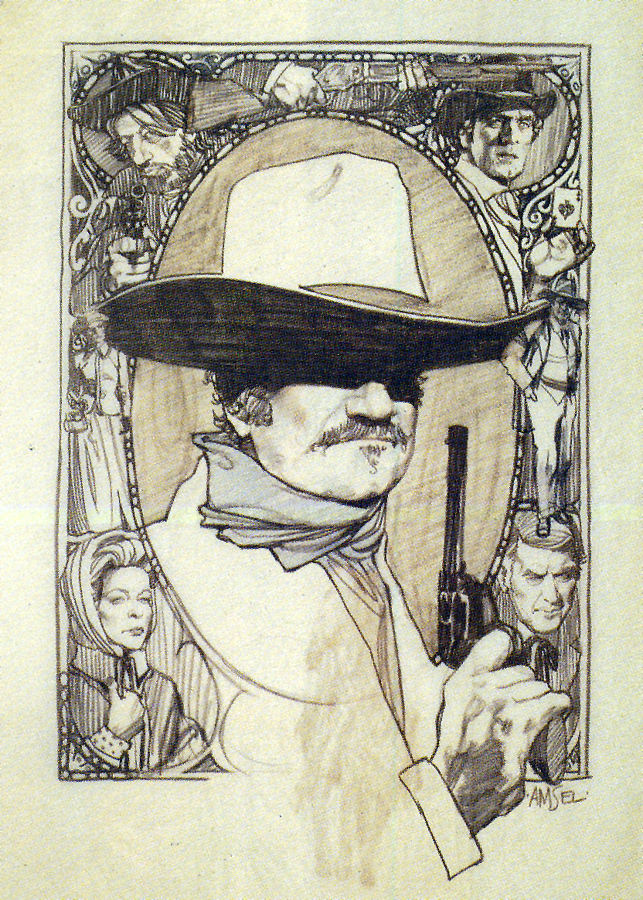
The Sons of Katie Elder

The Sons of Katie Elder
"First, we reunite, then find Ma and Pa's killer...then read some reviews."
Showing posts with label Bill McKinney. Show all posts

Saturday, July 23, 2011

Every Which Way But Loose

Clint Eastwood is one of the few people around in the movie business who deserves the honor and title 'screen legend.' Starting off as a TV star in the 1950s and 1960s, he made the jump to films with Sergio Leone's Dollars trilogy and then became a huge star back in America with the Dirty Harry series among many others. Not content with just starring in movies, he's made a name for himself as one of the best director/storytellers out there behind the camera. Read through his filmography, and you'll see countless classics and near-classics.  By all accounts, 1978's Every Which Way But Loose is not one of them.

As a huge Eastwood fan, I've done my best to try and view all his movies -- directing and/or starring.  This one just sounded too weird, too off the beaten track.  I'll go into more detail about this flick, but take away everything and anything else, and this movie is about one thing that can be summed up in one simple sentence...Clint Eastwood takes a road trip with an orangutan named Clyde. There you go, that's it. Yes, there is more to this movie, but that's the gist of it.  If just reading that sentence doesn't amuse you even a little bit, I'd wager you probably would not like this movie. For that reason -- among others -- I liked it as a prime example of what a quality 1970s movie can be.

A trucker and a bare-knuckle boxer, Philo Beddoe (Eastwood) is an all-around pretty easy-going guy. He works, he drinks, he hangs out with his best friend and promoter, Orville (Geoffrey Lewis), and lives at home with his aging mother (Ruth Gordon) and his orangutan, Clyde, who he won in a fight. He meets aspiring country singer Lynn Halsey-Taylor (Sondra Locke) and falls for her quickly, only to find a note one day that she's left. Packing up his things, Philo jumps in his truck and goes after her with Clyde, Orville and a woman named Echo (Beverly D'Angelo) along for the ride. He doesn't know where Lynn went, but he intends to find her. Also on his trail is a biker gang called the Black Widows and two police officers looking to exact some revenge on him.

By 1978, Eastwood had created a name for himself as quite the tough guy actor, one of the best around at the action and adventure flick. So a movie where he drives around with an orangutan seems natural, doesn't it? The script was originally intended for Burt Reynolds, but Eastwood read it, liked it and brushed aside studio concerns that it wasn't an appropriate movie for him. It was a movie that was panned critically, but audiences loved the movie as it grossed over $100 million in theaters. It is easy to see why moviegoers were drawn to this movie. It is an easy-going, fun story that as many IMDB reviewers point out is a good late night guilty pleasure or a rainy Sunday afternoon flick.

This is the type of movie that could only be made in the 1970s, and at that with the backing of one of the most bankable stars in Hollywood in Eastwood.  There isn't a plot as much as a series of bits and vignettes that keep things moving along. The soundtrack is mostly country -- with Eddie Rabbitt singing the theme 'Every Which Way But Loose,' listen HERE -- but also featuring performances from Charlie Rich, Cliff Crofford and even Locke singing a couple songs. The villains -- the Black Widows biker gang and two vengeful cops -- are there more for comedic relief than anything, and never really seem too intimidating or much of a challenge. The humor is pretty low-brow (at one point Eastwood seeks out a zoo to get Clyde some action), the boxing and fighting as brutal as they get, and through it all you can't help but enjoy it. Okay, I enjoyed it. I can't speak for you.

Playing against type, Eastwood looks to be having some fun with his part as Philo Beddoe. Yes, he's a fighter and tough guy, but this has to be one of his most human roles. He thinks he's found something with Locke's Lynn and doesn't know why she left. Philo just wants to be happy. Frequent co-star Locke has the chemistry she always had with Eastwood, delivering a solid twist at the end of the movie I didn't see coming. Lewis and D'Angelo similarly have a good chemistry together. Lewis is one of those faces you love to see in 1970s movies, a character actor who starred in countless classics, and Gordon is a scene-stealer as foul-mouthed Ma. The bikers include John Quade, Roy Jenson, Bill McKinney, Dan Vadis and William O'Connell while Gregory Walcott and James McEachin play the dimwitted cops.

Now onto the unquestioned star of the movie...Clyde the orangutan! The formula sounds so simple; throw Eastwood into a movie with a monkey and have him interact. It's criminally stupid, but somehow it works.  We're not talking intelligent humor here, but Clyde ends up being probably the most memorable character from the movie. You end up thinking of him as a person by the end of the movie. And come on, a monkey flipping off a bunch of angry bikers is hilarious however you cut it. This movie has a lot going for it when it really shouldn't, but Clyde the orangutan is maybe the best character ever. A guilty pleasure if there ever was one, but a good one...even if I'm not proud of how much I liked it.

Every Which Way But Loose <---trailer (1978): ***/****

Tuesday, December 14, 2010

The Life and Times of Judge Roy Bean

When people get more cynical, so do their movies.  In the 1930s, westerns portrayed good guys wearing white hats and bad guys in black duds.  By the time Clint Eastwood came along in the spaghetti westerns gunning down anything that would net him a buck, things were up for grabs.  Then in the late 1960s and 1970s, somebody decided to put a new spin on the old west, stories that were more cynical in nature that attempted to show what the west was really like.  Goodbye romantic, hello cynicism.  Say howdy to the revisionist western.

If you look at the list of westerns included in the Wikipedia entry, there are some good entries, but for the most part I don't necessarily like revisionist westerns.  They try much too hard to show you that what you've been watching all these years is garbage.  Take 1972's The Life and Times of Judge Roy Bean, directed by one of my favorites, John Huston.  In telling the story of real-life Roy Bean, this western blends some really awkward comedic moments, overlong sub-plots that go nowhere, some hypocritical views on just about everything (can't decide if that was intended), and in general a waste of a very strong cast.

Sometime around the turn of the century, "outlaw" Roy Bean (Paul Newman) rides into west Texas past the Pecos River, an area notorious for hiding bandits and criminals.  At one saloon, they turn on him and leave him for dead only to have the wounded man come back and gun them all down. Disgusted by what he's seen, Bean sets up shop as a judge, administering his unique brand of justice to anyone and everyone looking for trouble.  Word spreads and soon he even has deputies who help him out, all in the name of Texas and Lilly Langtry (Ava Gardner), a stage actress from the east, a woman Bean has always been in love with. But Bean's style of justice may catch up with him as civilization follows him around every corner, and his time may be running out.

I don't know where to start with this one because to be fair, Huston doesn't know where to start either.  Roy Bean was a real-life judge in west Texas who ended up becoming a legendary figure after he died.  So with this revisionist western instead of telling a story that showed what the actual man was like, Huston goes for the ridiculous legend.  At a run-time of 120 minutes (a very long 120 minutes), 'Life' is all over the place with no sense of where it's going.  The tone ranges from slapstick comedy that produces its fair share of groans -- it did from me at least -- to an oddly serious finale.  It tries to be funny while also delivering a hacked up message about the changing times and the last few years of the wild west.  Pick one or the other and go with it, but don't waver between the two.

A bright spot not surprisingly is Newman in the titular role, rising above materiel that at times is just beneath him.  Newman's parts in the 1970s typically covered a wide variety of movies, and this surely doesn't disappoint.  What works is that he commits so fully to this part.  His beliefs are ridiculously hypocritical, and he'll string anyone up at the drop of a hat if he disagrees with what's been said or done.  If you're loyal to him, he'll be loyal to you, but for heaven's sake don't turn on him.  This isn't a part on par with his best performances like Butch Cassidy or Lucas Jackson, but it's a quality one.  Even when the movie is dull to watch, it's worthwhile to check out Newman.

So with a story that is light on story and heavy on non-related vignettes, we get a chance to see a long list of actors play small parts (some being on-screen no more than a few seconds).  Gardner makes an appearance in the movie's final scene in a moving scene that comes along a little too late.  Anthony Perkins is a scene-stealer as a traveling preacher who realizes Newman's Bean may be a little off his rocker but doesn't want to get shot bringing the topic up. Ned Beatty, Matt Clark, Jim Burk, Bill McKinney, and Steve Kanaly are underused but all solid as Bean's loyal deputies. Also watch for Victoria Principal, Tab Hunter, Huston as a grizzled old mountain man, Stacy Keach as an albino gunman, Roddy McDowall, Anthony Zerbe, and Jacqueline Bisset in parts that range from bad to good, your decision on where they fall.

I will give Huston credit for trying new things.  Early on, we get narration from Perkins and Hunter, but instead of just hearing it, the camera is placed right in front of them as they ride into town. They're looking right at the audience, addressing us in a cool change of pace, a unique little technique.  But then the narration resorts to been there, done that voiceovers.  It's just an odd movie overall, one with plenty of flaws but enough positives to give it a mild recommendation.

The Life and Times of Judge Roy Bean <---trailer (1972): **/****

Friday, September 3, 2010

The Outfit

Organized crime, the mob, the Mafia, all the kingpins of the criminal underworld, and the movies reflect that.  Countless movies have been made about these different criminal organizations, but then of course there's the underdog.  What about the guys trying to take down any of the above?  A suicide mission for some revenge?  A guy with nothing to lose and because of that much more dangerous?  Makes for a good movie if you ask me, especially 1973's The Outfit.

The premise of a lone gunman going after the mob is nothing new and has been done several times since 1973, including Mel Gibson in Payback and Tom Hanks in Road to Perdition among others.  Payback is almost an exact reworking of the story here, but the original is still the best.  If you needed to explain to someone what a 1970s crime thriller was about, The Outfit could be a blueprint for everything that is good about that type of movies.  Perfect casting, exciting action, a cynical, very dark tone, a little black humor thrown in, and a gritty style that just can't be replicated.

Fresh out of prison, Earl Macklin (Robert Duvall) finds out his brother has been killed by two hit men, supposedly for a job the brothers pulled off years before on a mob bank. With a former girlfriend (Karen Black) along for the ride, Macklin survives a hit attempt on his own life and decides to go on the offensive.  He enlists the help of a former partner, Cody (Joe Don Baker), and the duo goes to work.  Macklin wants $250,000 for the trouble 'the outfit' has caused him, but when they don't pay up they start hitting backroom casinos and mob fronts, taking all the money in sight.  But as they go up the ladder, Macklin and Cody realize they'll have to go right to the top, the big-time mobster in charge, Mailer (Robert Ryan). The mobster's waiting for them though and nobody might get out alive.

This is everything that's good about a 1970s B-movie crime thriller.  No big budget, no huge scale, just two pissed off guys with nothing to lose going after the mob.  Director John Flynn shoots his movie in seedy motels, back room offices and dark alleys where a story like this would actually take place.  It was filmed in and around Los Angeles, the locations being one of the strong suits of the movie.  You feel like you're there with Macklin and Cody.  This isn't high class, high end mafiosos were talking about, just low-level thugs.  Everything from the 1970s boats of cars, the bad suits, the awful style, it all works to perfection here.

I've written before about my love of character actors, and Flynn goes all out here to round out his cast.  What was so great about 70s movies was that an actor would take a supporting role that might not require more than a scene or two.  They'd make a quick appearance and be gone, but that's just one scene.  There would be another and another until you've got all these great names filling out the story.  More on the leads later, but the support is as good as it gets.  Timothy Carey plays a mob go-between, Richard Jaeckel and Bill McKinney play mechanic brothers supplying cars for crooks with Sheree North along as McKinney's slutty wife, Felice Orlandi and Tom Reese as two hit men, film noir femme fatale Jane Greer as Macklin's sister-in-law, among many other recognizable faces you'll be watching out for.

Now there's the buddy cop movie, but here there is the buddy crook movie (mostly holding back on the humor). Duvall and Baker make this movie as Macklin and Cody.  Duvall is basically the anti-hero of all-time.  He didn't have classic good looks, he was a little pudgy, he was balding, but it all adds up nicely.  He's an all-around hardass who knows what he wants and doesn't care who gets hurt in the process as long as he gets it.  Baker's Cody is a little more laid back but equally capable of handling himself.  Like any buddy movie, there's a bond, a link between these two men who know their chances of survival are slim but go ahead anyways.  At one point, Macklin says Cody can walk out, no hard feelings.  Cody answers in typical tough guy fashion "I want to see how it turns out."  It doesn't get much cooler than that in true anti-hero form.

Making what amounts to an extended cameo, Robert Ryan's Mailer of course gets progressively pissed off at these two low-level hoods.  That leads to the equivalent of a suicide mission as Macklin and Cody go gunning for him at his heavily guarded estate.  The ending is full of tension and some great action, but there's a bit of a cop out in the last scene.  No spoilers here, and honestly, it doesn't ruin the movie but I could have thought of a better ending.  No DVD available, but if you stumble across this one, plant yourself in a seat, sit back and enjoy.

The Outfit <---TCM clip (1973): *** 1/2 /****

Tuesday, August 31, 2010

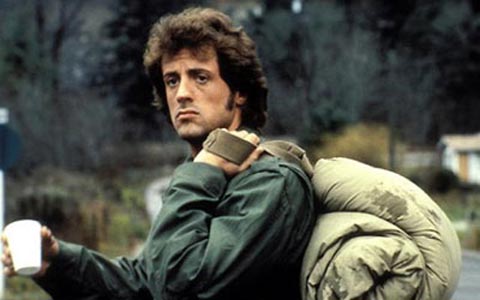
Rambo: First Blood

Unlike any war the United States had ever been in, the Vietnam War was something no one could have prepared for, both during and after the conflict.  American soldiers were welcomed home with cries of 'Baby killers' and much, much worse by an American public that probably had no idea what those soldiers went through.  And when they did get home, the soldiers began to struggle through post traumatic stress disorder on scales unlike any war had produced.  Movie studios embraced this concept, trying to show the plight of what so many soldiers were going through, including one of the best efforts, 1982's First Blood.

The more I see with Sylvester Stallone, the more I come away impressed of him as an actor, writer and director.  There is a perception with Sly that he's just a big galoot, that New Yorker who mumbles his words and doesn't know any better.  And maybe through his career, he wasn't a classic oriented filmmaker, but maybe most importantly he knows what audiences will plop down money for and go see his movies in theaters.  The guy is genuinely talented in front of the camera or behind it, but often enough that talent gets lost in a sea of bad, cheesy movies.  Co-writing the script and starring in First Blood, Stallone shows his ability on all fronts.

A small town sheriff in the Pacific Northwest, Sheriff Teasle (Brian Dennehy) picks up a drifter traveling through his town and orders him to move along, the population doesn't approve of his kind.  The drifter, a man named John Rambo (Stallone), is just looking for a bite to eat so when he's arrested for vagrancy and booked, he freaks out.  He runs for the hills with Teasle and a crew of deputies on his trail, but they had no idea what they were getting themselves into.  Rambo is a Vietnam vet, a Special Forces soldier, a Green Beret, and a Congressional Medal of Honor winner.  He toys with the deputies, wounding them all but killing none until Teasle is forced to call in the state police (led by Bill McKinney) and the National Guard, along with Rambo's former commander in Vietnam, Colonel Samuel Trautman (Richard Crenna). But as the manhunt continues, is Rambo even willing to surrender or is this one last blaze of glory?

Through all the parodies, spoofs and criticisms of Stallone as an actor, this is one of his finest performances, both as a physical action star and a dramatic actor.  For the first 80 minutes or so, Stallone has little in the way of lines at all.  It's his presence alone that keeps the movie interesting, letting his actions speak for themselves as he somewhat humanely takes out the sheriff's posse hunting him.  When he finally gets to deliver his lines, Sly hits a grand slam in the finale.  MILD SPOILERS Watch it HERE as Rambo just falls apart emotionally and physically, his memories from Vietnam finally becoming too much to handle. What he says is probably what most Vietnam vets felt like to one degree or another and shows that if you ever thought Stallone couldn't act, you'd be wrong.

Now we've got this heroic, very easy to like main character so you need someone equally evil to counter with.  Dennehy as small town Sheriff Teasle is the ideal bad guy to Rambo's good guy.  He's the type of power figure who gets off using all his power, all his might on this little world he controls.  Then when there's the slightest disturbance, he flips out.  He and his deputies treat Rambo like dirt for no obvious reason, but they do it because they can.  This is a character you love to hate almost from the first time you meet him.  Then there's the middle man, Crenna as Colonel Trautman, Rambo's commanding officer in Vietnam.  First, his entrance (watch HERE) is as bad-ass as they come in this character you probably shouldn't like but end up feeling that way regardless.  Trautman helped create the man that Rambo has turned into but knows it was a part of war.  Now, he has to balance out responsibility with what's right for the most people.  Two great supporting roles.

Okay, enough with the acting and all that good stuff.  Rightfully so, but this was one of the first great 1980s action movies.  From the moment Rambo escapes the sheriff's office it is almost non-stop action until the end.  This is aided by Stallone doing many of his own stunts, but the action is that fine line between implausible and realistic while still being ridiculously cool. The action is big and in your face, especially toward the end when everything in sight starts getting blown up.  There's chases, hand to hand fights, and shootouts galore so anyone seeking an action-packed flick will surely get what they paid for.

Also worth mentioning is the music from composer Jerry Goldsmith with a score reminiscent of his Von Ryan's Express score that balances the quieter, softer moments like THIS with the more action-oriented, like HERE. Goldsmith did a lot of great scores in his career, but this is one of his best.  The British Columbia locations are perfect, adding that sense of gloomy, dreary, always raining feeling of being closed in with nowhere to go.  As a CSI Miami fan, I have to point out this, look for a very young David Caruso as a deputy. The sequels are entertaining enough in their own ways, but as a movie this is the best one by far.  An action classic with the acting to back it up.

First Blood <---trailer (1982): *** 1/2 /**** 

Wednesday, July 14, 2010

The Shootist

As a movie star, you don't always pick how you get to ride into the sunset on the horizon.  For many, their days as a star are long past.  Others just never get that right role that allows you to end on a high note.  Well, there is an exception to every role, and that's John Wayne, one of the most iconic stars to come out of Hollywood's first 50 years with sound films. A star whose popularity went up and down some over a long career, Wayne was always in the public eye with his movies, his last part being one of his best all-time parts, 1976's The Shootist.

During the mid 1970s when Wayne was in the process of making his last few movies, The Duke was struggling with stomach cancer that would ultimately end up killing him in 1979.  More than any other time in his career, Wayne resorted to playing a version, a caricature of himself in the late 1960s and into the 1970s.  There was a comfort factor involved for both the actor and the audiences who still loved seeing him on-screen.  With an exception here and there, none of these later movies are classics, but they're all entertaining.  The Shootist is one of those few exceptions, a classic thanks almost exclusively to Wayne's performance in the title role.

It's 1901 and infamous gunfighter J.B. Books (Wayne) rides into Carson City to see an old friend of his, Doc Hostetler (James Stewart). Books has been feeling poorly, and the Doc confirms the bad news; he has cancer and only has a few months to live. The gunfighter takes a room at a boarding house run by a recent widow, Mrs. Rogers (Lauren Bacall) and her troublemaker son, Gillom (Ron Howard).  Books goes about wrapping certain things up with his life as he prepares to die, putting things in place and tying up some loose ends.  But the Doc warned him, letting the cancer kill him will be a long, drawn out and incredibly painful process.  If there was a way to quicken that death, he recommends Books do it.  So knowing what awaits him, the older, worn-out gunfighter puts together one last moment of glory.

Seven years earlier, Wayne won his first and only Academy Award for his performance as Rooster Cogburn in True Grit.  In a sense, it was a lifetime achievement award for all he had accomplished in his career.  But just on performance alone, his John Bernard Books ranks up there as one of his all-time top five.  It is a part that Wayne was born to play, plain and simple.  His Books is a dignified man with a reputation as a killer, a man who lives by certain principles and expects others to do the same.  He doesn't apologize for his past and to a certain point, is frustrated with the life he has led where every young punk with a gun wants to kill him to prove how good they are.  Easily one of the Duke's best parts, and a fitting end to a great career.

Directed by Don Siegel, 'Shootist' brings together an excellent cast, almost like a going away party for the Duke.  Having worked together 20 years before in 'Blood Alley,' Bacall and Wayne are perfect together with some of the best on-screen chemistry Wayne ever had with a female co-star.  Their scenes flow so easily, and it's just fun watching two pros show what they can do with good material.  The same for young Ron Howard who plays a different character than the viewer is used to considering his Andy Griffith and Happy Days roots.  Books becomes a bit of a father figure to Howard's Gillom and tries to teach him the lessons of how to be a man.  Along with Stewart as the doctor, there's Harry Morgan as the town sheriff, John Carradine as the undertaker, Sheree North as a lost love of Books, and Scatman Crothers as the livery stable owner.

The story builds to a certain point, and you dread where it is going -- even knowing it is where it has to go.  Books takes the Doc's advice and arranges a way so three men who would love nothing more than to put a bullet in him meet him at the same place.  If all goes well, he'll go out in one last blaze of glory, avoiding whatever the cancer can throw at him.  The trio include Richard Boone, Hugh O'Brian and Bill McKinney, all three waiting for him in a saloon. The ending is foreshadowed in a line delivered midway through the movie, but it still comes as a bit of a shock.  Of his 170 or so movies, John Wayne actually died in just eight movies, and few are as moving as this one. You can watch it HERE, obvious SPOILERS.

Beyond the sets, background and lack of gunplay, this is a movie entirely devoted to character, specifically John Bernard Books and the last few days of his life.  It is a western focusing on the changing times as the old west becomes a thing of the past, the U.S. advancing forward into a new time.  In that way, it's appropriate that the Wayne character wants no part of it.  As some characters point out, he is a relic from the previous times.  His exit then is only appropriate, going out as he came in.  One of Wayne's best and an underrated western overall.

The Shootist <----trailer (1976): ****/****

Wednesday, April 15, 2009

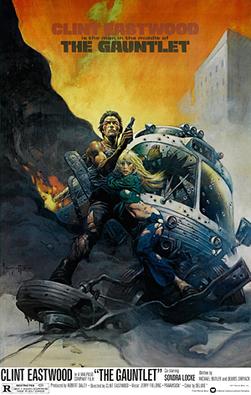
Netflix review #15: The Gauntlet

Thanks to a 'Statistics in Journalism' course I took at IU, I've only seen bits and pieces of 1977's The Gauntlet. And for those curious, 'statistics in journalism' is as exciting as it sounds. Working on some random project, I had it on in the background so I knew the basic storyline and liked it enough to add it to the 'ole Netflix queue.

Right at the top of his game in the late 70s and a Hollywood icon already, star and director Clint Eastwood plays Ben Shockley, a Phoenix police officer who joined the force for all the right reasons but he's been beaten down over the years as he waited for that big case to break. Then one day when it seems things can't get much worse Commissioner Blakelock (William Prince) sends Shockley to Las Vegas to extradite a prisoner named Gus Mally who's going to testify in a low-level trial, a nothing witness for a nothing case he'd told.

Nothing goes smoothly though as several surprises are thrown Shockley's way. For one, Mally is Augustina "Gus" Mally (Sondra Locke), a prostitute scheduled to testify in a mob trial. And two, the Vegas bookies have 50-1 odds she'll ever make it to Phoenix and those odds keep going up. What was a simple return flight with a low-level prisoner turns into a crosscountry chase as Shockley and Gus desperately attempt to get back to Phoenix with the mob and possibly even some crooked cops gunning for them.

With the Shockley character, Eastwood looks to be having some fun with his image, specifically Detective Harry Callahan. Shockley's introduction has him pulling up to City Hall and having an empty bottle of Jack Daniels fall from his lap. He's told he's been given the job because his superiors know "he will get the job done." It's only through Gus's help Ben realizes that he has been set up to fail and be the scapegoat.

The Gauntlet also gets points for having a strong, smart female character as a lead. Locke gives maybe her best performance as Mally, a less than typical hooker. She's not some drug-addict on a street corner looking for money for her next fix. Gus is college-educated and can put a man in his place in the blink of an eye. This character allows for some great exchanges with Shockley as the duo realizes they're not so different.

While Eastwood and Locke are the two leads and dominate much of the screen time, the supporting cast has several names worth mentioning. Pat Hingle reunites with Eastwood for the first time since Hang 'Em High as Josephson, Shockley's former partner who may be the only cop he can trust. Typically a villain, Bill McKinney plays a country sheriff who becomes an unlikely hostage. McKinney's part delivers much of the line's dirtier conversations as he questions Gus about what her job as a hooker entails. Michael Cavanaugh joins Prince as the men in charge as Feyderspiel, the crooked assistant D.A.

Slim on action other than an exciting motorcycle vs. helicopter chase, the movie is nonetheless entertaining, especially as certain twists in the storyline are revealed. The basic storyline has been used in other movies, like Midnight Run and 16 Blocks, but this one has some nice touches. It all builds to an absolutely ludicrous ending as Ben and Gus drive through a gauntlet of armed police officers set on stopping them. But it is in this craziness that makes the movie a lot of fun.

With a good but not great widescreen presentation, the DVD includes cast and crew information that's limited to an Eastwood filmography and a trailer narrated by Shaggy from Scooby Doo, Casey Kasem. Amazon has it for under $10 so buying it won't break the bank.

The Gauntlet (1977): ***/****

Sunday, March 8, 2009

Netflix review #9: The Outlaw Josey Wales

It would have been hard for Clint Eastwood to improve on his directorial debut in the genre that made him a star, High Plains Drifter. Three years later, he made an even better western with The Outlaw Josey Wales, a Civil War western that was one of the best to come out of the 1970s and genre as a whole.

The Squinty One plays title character Josey Wales, a Missouri farmer looking for revenge after his family is brutally murdered by a gang of Kansas Redlegs, renegade Union troopers, and his farm burned down. He joins a guerilla outfit of Confederate raiders, spending the war wreaking havoc on Union forces. But it's late in the war, and Robert E. Lee has surrendered. Convinced by their commander, Fletcher (a great part for John Vernon) to surrender they turn themselves in only to be massacred. The one man who didn't go? Josey Wales of course.

Now with a bounty of $5,000 on his head, Wales heads west into the Indian Nations and Texas to escape, building a quirky, motley crew of a family along the way of other people in equally troubling situations. All the while, a group of Redlegs is on his trail, and making it worse, the bounty has brought anyone who can handle a gun out looking for some easy money.

Eastwood's previous American westerns are all good in one way or another, but other than HPD I don't really consider them classics. Working as director and star here, Eastwood really puts everything together. The story is good, dealing with a subject most westerns don't deal with. There are very few Civil War movies and fewer that talk about the border wars of Kansas and Missouri. The location filming is dead on, including Arizona, Utah and California, giving the feeling that these characters are actually traveling. Jerry Fielding's score earned him an Oscar nomination, and it's a good one, certain parts reminiscent of The Wild Bunch score.

Action-wise, Eastwood's Josey Wales is a killer who racks up quite a kill count but is humane at the same time. He looks out for those around him, even if he may pretend to be the tough guy. The director packs plenty of gunplay in as Wales deals with Redlegs, Comanches, bandits, bounty hunters, and a ruthless gang of Comancheros. The finale is the most memorable as Wales single-handedly faces at least 20 Redlegs, getting some help after the initial showdown. Another couple of great exchanges, Wales talking with Comanche chief Ten Bears, and one of the best dialogue exchanges to ever come out of a western, watch it here.

Talking about the cast, it's about as dead-on as a western could be. Eastwood's a given, he's always great. Chief Dan George is perfectly cast as Lone Watie, an old Cherokee man Josey meets on the trail. An unlikely friendship develops between two men who have more in common than you'd originally think. Sondra Locke plays Laura Lee, a young woman traveling west with her family who Josey rescues from Comancheros. John Vernon is the quasi-villain as Fletcher, a man who tried to help his troopers surrender to Union forces only to see them massacred. Fletcher is ordered to hunt his old partner and kill him, even as his gut tells him otherwise. Super 70s villain Bill McKinney is Terrill, leader of the Redlegs hunting Wales. Was there a better villain than McKinney in the 70s? I can't think of one.

It's not just the leads that are strong, the whole supporting cast stands out. Paula Trueman, Sam Bottoms, and Geraldine Kearns are three people who join the outlaw on the trail, Trueman is Grandma Sarah, Bottoms is Jamie, a wounded guerilla fighter, and Kearns is Moonlight, a Navajo woman. Just some of the other supporting roles include Woodrow Parfrey, Sheb Wooley, Joyce Jameson, Matt Clark, Charles Tyner, John Davis Chandler, Royal Dano, Will Sampson, John Quade, Richard Farnsworth, and John Russell. You couldn't ask for a better cast.

The DVD is a steal at under $10. Widescreen presentation looks great and special features include a 30-minute making of documentary, "Hell Hath No Fury," with some great cast and crew interviews including Eastwood, an 8-minute featurette made during filming, a trailer, and three or four interactive menus about the cast, crew, and movie background. A western that is good on many levels, definitely give this one a try.

The Outlaw Josey Wales (1976): ****/****