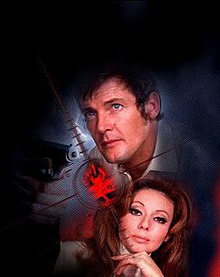
In 1952, British author Ian Fleming introduced the world to a character that would become one of the most famous, instantly recognizable characters in literature-film-pop culture history. That name....Bond, James Bond. Fleming would write 14 007 novels, starting with 1952's Casino Royale, but it took 10 years for the British super spy to make it to the big screen. It was worth the wait, and one of the most successful franchises in film history was born. It all started with 1962's Dr. No.
A station chief and his new secretary working for British intelligence in Jamaica has gone missing without a trace, leaving London scrambling to figure out what happened. The station chief, Strangways, had been investigating possible interference with American missiles but all his files have been stolen as well. In steps another agent, James Bond (Sean Connery), dispatched to Jamaica to investigate. He's quickly stone-walled wherever he goes, finally receiving some help from a CIA agent, Felix Leiter (Jack Lord), and a local fisherman, Quarrel (John Kitzmiller), who had worked with Strangways. What little evidence Bond can find -- among several attempts to kill him -- is an isolated, mysterious cove, Crab Key, owned by the equally mysterious, Dr. No., who no one knows much about. What's waiting out there? And is Dr. No behind these wayward American rockets? Maybe only Bond can find out.
All successful franchises have to start somewhere, right? This is an excellent jumping off point for my all-time favorite franchise. Producers debated over which Fleming novel to use as the first film, finally settling here on Dr. No. It immediately resonated with fans, propelling Connery to stardom basically instantaneously. It isn't one of the best 007 movies, but it's pretty damn good. You see all the groundwork being laid out for what was to come from the one-liners to the diabolical villains, the girls to the gadgets, the exotic locations and effortless style. And of course, that main theme, maybe the most famous movie theme of all-time. An excellent starting off point. Listen HERE to the theme but shame on you if you haven't heard it by now. No Bond song here, just Monty Norman and John Barry's perfect theme to play over the stylish 1960's credits.
When he was cast to play 007 himself, James Bond, Connery was a young actor who'd worked regularly in films and television but was far from a star. That kinda sorta changed with this film. Just a bit. This is a rare example of perfect casting. Connery was born to play Bond. It's the style, charisma, confidence, it all flows so effortlessly. Maybe not physically, but Connery brings Fleming's Bond to life as well as anyone with Daniel Craig knocking on the door in that department. He's a killer, brutally efficient with his license to kill, but he's also smooth and suave, an impeccably dressed ladies man. Connery finds a rhythm immediately with the character. There's no sense of an actor feeling out what works and what doesn't work. He just knows what he wants to do and goes for it. There were better Connery/Bond entries -- From Russia With Love, Goldfinger, Thunderball -- but Connery is and always will be 007. The maiden voyage with an iconic character, and the young Scottish actor hits a home run with ease.
The rest of the cast lacks huge star power, but that ends up being a positive. It's cool to see Lord in a pre-Hawaii Five-O part and he's got some good chemistry with Connery, as does Kitzmiller in their scenes together. But what about those Bond villains and Bond girls?!? The franchise is off to a good start with Joseph Wiseman as Dr. No and maybe the most iconic Bond girl of all-time, Ursula Andress, as Honey Ryder. Who hasn't seen the famous shot of her in a white bikini coming out of the water? She actually isn't introduced until the hour-mark, but her appearance is definitely an idea of things to come. The same for Wiseman's Dr. No, and he's not introduced until there is less than 25 minutes left in the movie! He's intelligent, foreboding and gets the franchise started off right. Now, if he had just killed Bond on the spot rather than let him waste away in a cell....oh, the possibilities.
Also look for Bernard Lee as M and Lois Maxwell as Moneypenny, introduced in the early goings. Anthony Dawson plays a potential lead for Bond once he arrives in Jamaica while Zena Marshall and Eunice Gayson play two more Bond girls.
I think what's most alarming about this first James Bond movie is how calm it is. It is self-assured and confident, hitting a groove pretty quick, but it barely resembles what the franchise would become (for good and bad). This is more of a detective story than a secret agent story. It isn't necessarily low-key because of all the chases, Bond girl-seducing, perfectly-timed one-liners and all, but it's certainly in that territory. Director Terence Young simply isn't trying too hard -- that would come later in the franchise -- in introducing 007. It's a good intro and not a great one, but it is an excellent film just the same. The next venture, From Russia With Love two years later, is a true classic and one of the series' best.
Dr. No. (1962): ***/****
The Sons of Katie Elder
"First, we reunite, then find Ma and Pa's killer...then read some reviews."
Showing posts with label Bernard Lee. Show all posts
Wednesday, October 7, 2015
Wednesday, May 8, 2013
Pursuit of the Graf Spee
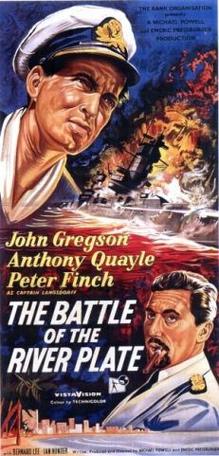
In the early years of World War II, Germany ruled the seas as its enemies jumped into a new age of naval warfare. The battleship Bismarck was the most infamous example of German firepower on the high seas, a ship that terrorized Allied shipping. Another example -- a significantly lesser-known one -- is the pocket battleship Graf Spee, a cruiser dubbed a battleship that caused an international sensation late in 1939, a story told in 1956's Pursuit of the Graf Spee.
As 1939 comes to a close, British merchant marine Captain Dove (Bernard Lee) sees his ship sunk by a German cruiser, the Graf Spee, that is gaining notoriety around the world for its ability to disrupt Allied shipping. On board the German cruiser, Dove meets its captain, Langsdorff (Peter Finch), who tells him that he will be kept with other prisoners until they can be dealt with. The days and weeks pass though and Dove is joined by countless other prisoners who tell him a rumor of coming trouble. The British are sending a three-cruiser convoy in pursuit to hunt down the infamous German warship. Outnumbered but not necessarily outgunned, the Graf Spee is ready for a battle, but the coming fight involves more than either side was planning for, including international negotiations and intrigue.
From directors Michael Powell and Emeric Pressburger, 'Pursuit' is an interesting movie, but for reasons I really didn't see coming. A forerunner of 1960s/1970s WWII movies like Midway, The Longest Day, A Bridge Too Far, Tora Tora Tora, this British-made film plays like a documentary at times. Big, expansive story telling a true historical battle and a big impressive cast set the backdrop. What I was most impressed with was the use of real ships that give the story a sense of authenticity and realism. There are some truly impressive shots of these immense, destructive warships at sea, and some equally enjoyable shots of cast and crew on-board these ships.
Beyond that though, the movie stays on a superficial for its first half of the 119-minute running time. It gets bogged down quickly in the details and the naval tactics of the history. It's apparently very accurate, but that doesn't make the story interesting to watch. The commander of the cruiser convoy (Anthony Quayle) sits down with his ship commanders and explains what their plan of attack is. Then we see the attack after an excruciatingly long segment of the ships scanning the horizons for the Graf Spee that plays in real-time (seemingly of course). The actual battle is ships miles away from each other just blasting away at each other. While we see the effects as the shells land and tear the ships apart, it is far from exciting to watch. I never felt emotionally or personally invested in the story that sticks to close to its quasi-documentary style.
After the slow-moving naval intro that never really caught my attention, 'Pursuit' finally picked up pace in the second half when it takes a surprising turn. Severely damaged in the battle, the Graf Spee makes a beeline for the neutral harbor of Montevideo with the British not far behind. What follows is an interesting twist of that international intrigue as the Uruguayan government (including minister Peter Illing) decides what to do with the situation as several foreign ministers (Anthony Bushell = British, Douglas Wilmer = French, John Chandos = German) try to get their two cents in. At the same time, intelligence agents (Michael Goodliffe and William Squire) attempt to decipher what the Germans will do. An American radio rep (Lionel Murton) for NBC describes the action from shore as huge crowds gather on the beaches and docks to see what happens. The story just plays differently, and it plays well with a change of pace.
The overall casting has its positives and negatives. 'Pursuit' features a lot of impressive names, but like the early goings in the story, it has a superficial feel to it. The naval battle is especially affected in negative fashion, faceless sailors in white yelling amidst smoke and chaos. The captains of the British cruisers include John Gregson, Ian Hunter and Jack Gwillim with Patrick Macnee as one of their subordinates. Also look for Christopher Lee as Manolo, a passionate Uruguayan bar owner who bothers Murton's radio man, with Donald Moffat as a signalman in his film debut, and Anthony Newley and Nigel Stock with small, uncredited supporting parts. I wanted to like this one more, but it's too uneven and missing that special something (energy is my final verdict) that brings a movie up a notch. The second half is considerably better so stick with it for the payoff.
Pursuit of the Graf Spee (1956): ** 1/2 /****
As 1939 comes to a close, British merchant marine Captain Dove (Bernard Lee) sees his ship sunk by a German cruiser, the Graf Spee, that is gaining notoriety around the world for its ability to disrupt Allied shipping. On board the German cruiser, Dove meets its captain, Langsdorff (Peter Finch), who tells him that he will be kept with other prisoners until they can be dealt with. The days and weeks pass though and Dove is joined by countless other prisoners who tell him a rumor of coming trouble. The British are sending a three-cruiser convoy in pursuit to hunt down the infamous German warship. Outnumbered but not necessarily outgunned, the Graf Spee is ready for a battle, but the coming fight involves more than either side was planning for, including international negotiations and intrigue.
From directors Michael Powell and Emeric Pressburger, 'Pursuit' is an interesting movie, but for reasons I really didn't see coming. A forerunner of 1960s/1970s WWII movies like Midway, The Longest Day, A Bridge Too Far, Tora Tora Tora, this British-made film plays like a documentary at times. Big, expansive story telling a true historical battle and a big impressive cast set the backdrop. What I was most impressed with was the use of real ships that give the story a sense of authenticity and realism. There are some truly impressive shots of these immense, destructive warships at sea, and some equally enjoyable shots of cast and crew on-board these ships.
Beyond that though, the movie stays on a superficial for its first half of the 119-minute running time. It gets bogged down quickly in the details and the naval tactics of the history. It's apparently very accurate, but that doesn't make the story interesting to watch. The commander of the cruiser convoy (Anthony Quayle) sits down with his ship commanders and explains what their plan of attack is. Then we see the attack after an excruciatingly long segment of the ships scanning the horizons for the Graf Spee that plays in real-time (seemingly of course). The actual battle is ships miles away from each other just blasting away at each other. While we see the effects as the shells land and tear the ships apart, it is far from exciting to watch. I never felt emotionally or personally invested in the story that sticks to close to its quasi-documentary style.
After the slow-moving naval intro that never really caught my attention, 'Pursuit' finally picked up pace in the second half when it takes a surprising turn. Severely damaged in the battle, the Graf Spee makes a beeline for the neutral harbor of Montevideo with the British not far behind. What follows is an interesting twist of that international intrigue as the Uruguayan government (including minister Peter Illing) decides what to do with the situation as several foreign ministers (Anthony Bushell = British, Douglas Wilmer = French, John Chandos = German) try to get their two cents in. At the same time, intelligence agents (Michael Goodliffe and William Squire) attempt to decipher what the Germans will do. An American radio rep (Lionel Murton) for NBC describes the action from shore as huge crowds gather on the beaches and docks to see what happens. The story just plays differently, and it plays well with a change of pace.
The overall casting has its positives and negatives. 'Pursuit' features a lot of impressive names, but like the early goings in the story, it has a superficial feel to it. The naval battle is especially affected in negative fashion, faceless sailors in white yelling amidst smoke and chaos. The captains of the British cruisers include John Gregson, Ian Hunter and Jack Gwillim with Patrick Macnee as one of their subordinates. Also look for Christopher Lee as Manolo, a passionate Uruguayan bar owner who bothers Murton's radio man, with Donald Moffat as a signalman in his film debut, and Anthony Newley and Nigel Stock with small, uncredited supporting parts. I wanted to like this one more, but it's too uneven and missing that special something (energy is my final verdict) that brings a movie up a notch. The second half is considerably better so stick with it for the payoff.
Pursuit of the Graf Spee (1956): ** 1/2 /****
Labels:
1950s,
Anthony Newley,
Anthony Quayle,
Bernard Lee,
Christopher Lee,
Peter Finch,
WWII
Friday, September 14, 2012
Morning Departure
To quote Seinfeld's George Costanza, "Can't I be a shore guy?" I watch movies about the Navy or the Coast Guard and give those gents a lot of credit. Big bodies of open water and me just don't agree, but silly me, I keep watching those movies. So as an individual who just don't like bodies of water, movies that show maritime disasters? Yeah, I'm fairly uncomfortable watching them, like the underrated 1950 movie, Morning Departure.
Several years removed from the end of WWII, Lt. Commander Armstrong (John Mills) has remained in command of the Trojan, a British sub crewed by veterans and youngsters alike. A 12-year veteran of the Navy, Armstrong is feeling pressure from his wife to leave that life behind and settle down with a not so dangerous job, but first he make take the Trojan out on an annual exercise. So with his first officer, Lt. Manson (Nigel Patrick), and crew, Armstrong takes the Trojan out only to strike disaster. The sub accidentally collides with a mine that's been drifting at sea for years and sinks to the ocean floor with 12 survivors. Armstrong holds out hope they will be found, but can he hold his crew together until then?
Based off a stage play, 'Departure' is a prime example of the quality British war movies made in the 15-20 years following the end of World War II. They typically lacked the immense scale and sheer size of many American movies, but they equaled that out with an emotional link. It isn't always impressive to the eye, but more on the personal level. We feel what these survivors are going through. Lt. Cmdr. Armstrong can send four men through one chute to the surface, four men through another, leaving four to sit on the ocean floor waiting to be salvaged in a process that could take a week. Uncomfortable much? The situation on its own is completely uncomfortable. When you're invested in the characters, it is that much worse.
Those individuals are somewhat borrowed from the War Movies Stock Characters list, but that's not necessarily a bad thing. Familiar can be okay when handled right. Mills is one of my favorite actors, and his lead performance as Armstrong -- solid, resolute, a calming effect on his men -- is perfect for the role. Patrick's Lt. Manson is the ladies man, but more importantly, he's a good officer standing at Armstrong's side. A past incident from WWII lingers on his mind, making an impact on their waiting rescue. A young 27-year old Richard Attenborough is given a chance to do his thing and doesn't disappoint playing Snipe, a young seaman with a wandering wife back home. Faced with a perilous situation in the definition of a claustrophobic situation, he finds out who he really is. Also look for Bernard Lee as Commander Gates, the high-ranking officer leading the rescue effort for his possibly lost ship, Kenneth More as his adjutant, Lt. James, and James Hayter as Higgins, the veteran submariner and cook for the Trojan.
Director Roy Ward Baker does a great job here not only setting up the story but also executing it successfully. It's clear early on that this "routine afternoon exercise" will no go smoothly (thanks for making me cynical, Gilligan's Island.), but seeing it happen is no less troubling to watch. Stories of survivors waiting to be rescued can be tricky then because basically we're watching people sit around waiting. It's here though we get to know some of these characters on a more personal level, making their struggles more personal to watch. The rescue effort on the high seas with weather and tides a factor is interesting to watch, building to an ending that I certainly didn't see coming. Moving, highly effective surprise ending at that.
One other thing worth mentioning, 'Departure' was made just months prior to an accident with a British submarine -- the HMS Truculent -- that cost the lives of some 60 people. The film had been made with Navy backing but was still almost withdrawn because of its similarities to the real-life incident. The movie was released though and was the better for it. There's some great footage of the Trojan and all the rescue ships, not to mention some cool underwater footage as some survivors make it to the surface and another scene where a diver heads down to get in contact with the Trojan. Underrated, not hugely well known movie, but an above average one worth seeking out.
Morning Departure <---Movie @ Youtube (1950): ***/****
Several years removed from the end of WWII, Lt. Commander Armstrong (John Mills) has remained in command of the Trojan, a British sub crewed by veterans and youngsters alike. A 12-year veteran of the Navy, Armstrong is feeling pressure from his wife to leave that life behind and settle down with a not so dangerous job, but first he make take the Trojan out on an annual exercise. So with his first officer, Lt. Manson (Nigel Patrick), and crew, Armstrong takes the Trojan out only to strike disaster. The sub accidentally collides with a mine that's been drifting at sea for years and sinks to the ocean floor with 12 survivors. Armstrong holds out hope they will be found, but can he hold his crew together until then?
Based off a stage play, 'Departure' is a prime example of the quality British war movies made in the 15-20 years following the end of World War II. They typically lacked the immense scale and sheer size of many American movies, but they equaled that out with an emotional link. It isn't always impressive to the eye, but more on the personal level. We feel what these survivors are going through. Lt. Cmdr. Armstrong can send four men through one chute to the surface, four men through another, leaving four to sit on the ocean floor waiting to be salvaged in a process that could take a week. Uncomfortable much? The situation on its own is completely uncomfortable. When you're invested in the characters, it is that much worse.
Those individuals are somewhat borrowed from the War Movies Stock Characters list, but that's not necessarily a bad thing. Familiar can be okay when handled right. Mills is one of my favorite actors, and his lead performance as Armstrong -- solid, resolute, a calming effect on his men -- is perfect for the role. Patrick's Lt. Manson is the ladies man, but more importantly, he's a good officer standing at Armstrong's side. A past incident from WWII lingers on his mind, making an impact on their waiting rescue. A young 27-year old Richard Attenborough is given a chance to do his thing and doesn't disappoint playing Snipe, a young seaman with a wandering wife back home. Faced with a perilous situation in the definition of a claustrophobic situation, he finds out who he really is. Also look for Bernard Lee as Commander Gates, the high-ranking officer leading the rescue effort for his possibly lost ship, Kenneth More as his adjutant, Lt. James, and James Hayter as Higgins, the veteran submariner and cook for the Trojan.
Director Roy Ward Baker does a great job here not only setting up the story but also executing it successfully. It's clear early on that this "routine afternoon exercise" will no go smoothly (thanks for making me cynical, Gilligan's Island.), but seeing it happen is no less troubling to watch. Stories of survivors waiting to be rescued can be tricky then because basically we're watching people sit around waiting. It's here though we get to know some of these characters on a more personal level, making their struggles more personal to watch. The rescue effort on the high seas with weather and tides a factor is interesting to watch, building to an ending that I certainly didn't see coming. Moving, highly effective surprise ending at that.
One other thing worth mentioning, 'Departure' was made just months prior to an accident with a British submarine -- the HMS Truculent -- that cost the lives of some 60 people. The film had been made with Navy backing but was still almost withdrawn because of its similarities to the real-life incident. The movie was released though and was the better for it. There's some great footage of the Trojan and all the rescue ships, not to mention some cool underwater footage as some survivors make it to the surface and another scene where a diver heads down to get in contact with the Trojan. Underrated, not hugely well known movie, but an above average one worth seeking out.
Morning Departure <---Movie @ Youtube (1950): ***/****
Labels:
1950s,
Bernard Lee,
John Mills,
Military,
Nigel Patrick,
Richard Attenborough
Saturday, August 4, 2012
The Ship That Died of Shame
The first and most lasting impression I have of British actor/director Richard Attenborough was his part in 1963's The Great Escape. He played a driven, almost obsessed P.O.W. leading a mass escape from a prison camp deep in Germany. A flawed character, but a heroic one nonetheless. As I discover more of Attenborough's parts though, I'm seeing he played far more sinister, much more flawed, and much darker characters, like in 1955's The Ship That Died of Shame.
Having lost his wife during WWII to a bombing raid and struggling to adjust to a post-war life, Bill Randall (George Baker) is waffling along through his day-to-day life. One day at a reunion of former sailors, Bill meets George Hoskins (Attenborough), a former member of his crew on a motorized and heavily armored patrol boat. Hoskins seems to be very well off, and Bill quickly finds out why. He's involved in smuggling actives through the English Channel, and Hoskins is offering him a job. He's even managed to track down their patrol boat -- the 1087 -- so they can use that in their activities. Smuggling some generally innocent items, Bill agrees, but the items start to change, and the boat starts to malfunction. What exactly is going on?
Another case of stumbling across a movie on Netflix, I wasn't sure what to expect of this 1955 British war film from director Basil Dearden. The plot synopsis sounded like a zany story of a boat with a heart who starts to act up against its owners and their actions. As a Disney fan, my first thought was that I stumbled into a prequel of sorts to The Love Bug. How could Herbie the VW Bug in a post-WWII story not be good?!? Well, I either misread it, misinterpreted it, or it was just a crappily written synopsis. It's straight drama, the boat's "objections" to the smuggling kept generally low-key (i.e.; the engine dying, the wheel refusing to turn) while avoiding too much in the way of heavy-handed symbolism or message.
On the whole, 'Ship' is surprisingly good because it manages to stay low-key. The World War II backdrop is a good jumping off point -- including an opening daring raid that introduces the crew of the 1087 -- but the focus is more on how the sailors and soldiers respond after the war and the fighting is done. We see through Bill's eyes that he's floundering along, unsure what to do with himself. Reunited with his old ship and part of its crew, Bill is rejuvenated, given a new lease on life. Hoskins is just the opposite, reveling in the black market business of smuggling. A third crew member, Bertie (Bill Owen), also jumps at the chance to get back to work in any way possible, only starting to question what they're actually doing when the cargo on-board gets far more sinister.
Playing George Hoskins, Attenborough does a great job in one of two starring parts. He isn't an out and out bad guy -- always the shades of gray -- but at the same time, you can't call him a hero either. His intentions are money as he undertakes the smuggling business. The cargo changes, and George, Bill and Bertie all begin to question what exactly all this trouble is worth. Attenborough does a great job portraying him down the middle. We're not always sure of his intentions, and the ride getting there is more fun because of it. Randall is okay as Bill, a one-note downer performance, while Owen as Bertie is similarly solid if not so memorable as Bertie. The dynamic among the three is more important than the individual here. Bernard Lee is a scene-stealer as a customs officer who cuts across the path of the refurbished 1087 a few times with Roland Culver playing the villainous Major Fordyce, Hoskins' source for jobs. Virginia McKenna has a small part as Helen, Bill's wife.
There isn't anything particularly new or innovative about 'Ship,' but there's something different I can't quite put my finger on. It is very British in its tension -- underplayed, low key and incredibly subtle whenever possible -- but that not so abrasive, not in your face style works for the better. I wasn't always sure where this one was going, but I ended up liking it after some early struggles. Worth a watch.
The Ship That Died of Shame (1955): ***/****
Having lost his wife during WWII to a bombing raid and struggling to adjust to a post-war life, Bill Randall (George Baker) is waffling along through his day-to-day life. One day at a reunion of former sailors, Bill meets George Hoskins (Attenborough), a former member of his crew on a motorized and heavily armored patrol boat. Hoskins seems to be very well off, and Bill quickly finds out why. He's involved in smuggling actives through the English Channel, and Hoskins is offering him a job. He's even managed to track down their patrol boat -- the 1087 -- so they can use that in their activities. Smuggling some generally innocent items, Bill agrees, but the items start to change, and the boat starts to malfunction. What exactly is going on?
Another case of stumbling across a movie on Netflix, I wasn't sure what to expect of this 1955 British war film from director Basil Dearden. The plot synopsis sounded like a zany story of a boat with a heart who starts to act up against its owners and their actions. As a Disney fan, my first thought was that I stumbled into a prequel of sorts to The Love Bug. How could Herbie the VW Bug in a post-WWII story not be good?!? Well, I either misread it, misinterpreted it, or it was just a crappily written synopsis. It's straight drama, the boat's "objections" to the smuggling kept generally low-key (i.e.; the engine dying, the wheel refusing to turn) while avoiding too much in the way of heavy-handed symbolism or message.
On the whole, 'Ship' is surprisingly good because it manages to stay low-key. The World War II backdrop is a good jumping off point -- including an opening daring raid that introduces the crew of the 1087 -- but the focus is more on how the sailors and soldiers respond after the war and the fighting is done. We see through Bill's eyes that he's floundering along, unsure what to do with himself. Reunited with his old ship and part of its crew, Bill is rejuvenated, given a new lease on life. Hoskins is just the opposite, reveling in the black market business of smuggling. A third crew member, Bertie (Bill Owen), also jumps at the chance to get back to work in any way possible, only starting to question what they're actually doing when the cargo on-board gets far more sinister.
Playing George Hoskins, Attenborough does a great job in one of two starring parts. He isn't an out and out bad guy -- always the shades of gray -- but at the same time, you can't call him a hero either. His intentions are money as he undertakes the smuggling business. The cargo changes, and George, Bill and Bertie all begin to question what exactly all this trouble is worth. Attenborough does a great job portraying him down the middle. We're not always sure of his intentions, and the ride getting there is more fun because of it. Randall is okay as Bill, a one-note downer performance, while Owen as Bertie is similarly solid if not so memorable as Bertie. The dynamic among the three is more important than the individual here. Bernard Lee is a scene-stealer as a customs officer who cuts across the path of the refurbished 1087 a few times with Roland Culver playing the villainous Major Fordyce, Hoskins' source for jobs. Virginia McKenna has a small part as Helen, Bill's wife.
There isn't anything particularly new or innovative about 'Ship,' but there's something different I can't quite put my finger on. It is very British in its tension -- underplayed, low key and incredibly subtle whenever possible -- but that not so abrasive, not in your face style works for the better. I wasn't always sure where this one was going, but I ended up liking it after some early struggles. Worth a watch.
The Ship That Died of Shame (1955): ***/****
Labels:
1950s,
Basil Dearden,
Bernard Lee,
Richard Attenborough,
WWII
Saturday, June 16, 2012
Crossplot
Before Roger Moore became universally known as James Bond, the British actor put his dues in. For seven successful years, he starred in TV's The Saint, making a name for himself. But after the show's run? Several years of a more hit-or-miss nature, including 1969's Crossplot, a major swing and a miss.
As a highly successful advertising executive, Gary Fenn (Moore) has stepped in it in a big way. With a major client breathing down his neck, Gary has committed to a model he's never seen before, much less heard of her. The model's name is Marla Kugash (Claudie Lange), a beautiful young Hungarian woman about to be deported because she hasn't been working enough. Gary manages to track her down only to step in it even more. Marla is on the run, assassins hunting her down after she accidentally overheard a secret plot. Now he not only has to save his job, but his neck and the girl too.
This is the type of story that sounds appealing just hearing about the plot. Accidental spies and secret agents have provided some solid movies over the years. But in the age of the spy movies -- the 1960s and 1970s -- this one is just bizarre. There are moments of actual drama and action with intensity and adrenaline. Mostly though, there are far too many moments of half-assed laughs, pitiful, overdone attempts at those laughs involving physical humor, and a general feeling of campiness that would have been more at home in an hour-long TV show. Physical humor has to be very precise to work and executed well. Crossplot has none of that. At one point, Moore and Lange are driving an old-timey car (dressed time appropriate) by a machine-gunning helicopter. How could that not be funny? The Keystone Cops would be pissed.
Instead, we get a 96-minute movie that feels much longer and does have the distinct feel of a TV show. Translated? It's cheap, and it doesn't hide the cheapness well. The sets appear very stagey and look like they were made for about $10 or so. Almost the entire movie was shot on indoor sets, although the ventures outside -- few that they are -- into 1969 London are pretty cool. Think the real life Austin Powers. That would be tolerable, but the use of greenscreens (inserting Moore and the cast "into" the action) looks about as ridiculous as you'd expect. The late 1960s lifestyle of drugs, psychedelic clothes, and grooviness in general adds to the camp factor. 'Crossplot' just doesn't have much going for it in any department.
Despite the almost uniformly negative reviews I read prior to watching, I forged on because I'm a Roger Moore fan. Even in his truly bad Bond movies (I'm looking at you Moonraker), he's a likable, entertaining star. Unfortunately here, the source material pulls him down in a big way. Moore got laughs by being smooth, by being suave and throwing one-liner one after another. Physical humor ain't his thing, especially forced, truly awkward physical humor. As for co-star Claudie Lange.....she sure is pretty. Acting? Eh, but she sure is nice to look at, and that's what the story runs with. She appears in various stages of undress, usually something draped over her chest. Lange does have a unnecessary but pleasant surprise of a nude scene late, randomly sitting in a tub and standing up. It is clearly an essential scene for development.
None of the cast manages to stand out, but there are some other recognizable faces around. Martha Hyer is Jo, Marla's supposedly sweet aunt looking out for her niece. She ends up being the bad guy, but it's such a stupid gimmick it makes no impact. Alexis Kanner is a relative bright spot as Tarquin, a hippie protester and friend of Marla's. In a cool link to the Connery and Moore 007 flicks, also look for Bernard Lee in a few scenes. Lee would co-star with Moore in four Bond movies. A movie that falls short on basically every level imaginable. Even Moore and Lange's.....talents? couldn't save this one.
Crossplot <---trailer (1969): */****
As a highly successful advertising executive, Gary Fenn (Moore) has stepped in it in a big way. With a major client breathing down his neck, Gary has committed to a model he's never seen before, much less heard of her. The model's name is Marla Kugash (Claudie Lange), a beautiful young Hungarian woman about to be deported because she hasn't been working enough. Gary manages to track her down only to step in it even more. Marla is on the run, assassins hunting her down after she accidentally overheard a secret plot. Now he not only has to save his job, but his neck and the girl too.
This is the type of story that sounds appealing just hearing about the plot. Accidental spies and secret agents have provided some solid movies over the years. But in the age of the spy movies -- the 1960s and 1970s -- this one is just bizarre. There are moments of actual drama and action with intensity and adrenaline. Mostly though, there are far too many moments of half-assed laughs, pitiful, overdone attempts at those laughs involving physical humor, and a general feeling of campiness that would have been more at home in an hour-long TV show. Physical humor has to be very precise to work and executed well. Crossplot has none of that. At one point, Moore and Lange are driving an old-timey car (dressed time appropriate) by a machine-gunning helicopter. How could that not be funny? The Keystone Cops would be pissed.
Instead, we get a 96-minute movie that feels much longer and does have the distinct feel of a TV show. Translated? It's cheap, and it doesn't hide the cheapness well. The sets appear very stagey and look like they were made for about $10 or so. Almost the entire movie was shot on indoor sets, although the ventures outside -- few that they are -- into 1969 London are pretty cool. Think the real life Austin Powers. That would be tolerable, but the use of greenscreens (inserting Moore and the cast "into" the action) looks about as ridiculous as you'd expect. The late 1960s lifestyle of drugs, psychedelic clothes, and grooviness in general adds to the camp factor. 'Crossplot' just doesn't have much going for it in any department.
Despite the almost uniformly negative reviews I read prior to watching, I forged on because I'm a Roger Moore fan. Even in his truly bad Bond movies (I'm looking at you Moonraker), he's a likable, entertaining star. Unfortunately here, the source material pulls him down in a big way. Moore got laughs by being smooth, by being suave and throwing one-liner one after another. Physical humor ain't his thing, especially forced, truly awkward physical humor. As for co-star Claudie Lange.....she sure is pretty. Acting? Eh, but she sure is nice to look at, and that's what the story runs with. She appears in various stages of undress, usually something draped over her chest. Lange does have a unnecessary but pleasant surprise of a nude scene late, randomly sitting in a tub and standing up. It is clearly an essential scene for development.
None of the cast manages to stand out, but there are some other recognizable faces around. Martha Hyer is Jo, Marla's supposedly sweet aunt looking out for her niece. She ends up being the bad guy, but it's such a stupid gimmick it makes no impact. Alexis Kanner is a relative bright spot as Tarquin, a hippie protester and friend of Marla's. In a cool link to the Connery and Moore 007 flicks, also look for Bernard Lee in a few scenes. Lee would co-star with Moore in four Bond movies. A movie that falls short on basically every level imaginable. Even Moore and Lange's.....talents? couldn't save this one.
Crossplot <---trailer (1969): */****
Thursday, May 10, 2012
The Key
As a movie lover, Turner Classic Movies has been invaluable to me over the years. I've been introduced to movie stars, unknown classics, American, English, French, Japanese and many more types of movies. But every so often, their website cracks me up. Take 1958's The Key for example. The plot description aptly and appropriately stated 'The key to a woman's apartment may hold bad luck for her lovers.' All true, but what did it leave out? That whole WWII backdrop thing....if that means anything.
More than just a World War II setting, this Carol Reed-directed story is a unique, different WWII setting. Little background heading into that ever-important plot description. It isn't on the battlefield or even the home front, but somewhere in between. It is early in the war (1940 and 1941) and the North Atlantic is full of ships, the German U-boats wreaking havoc on Allied shipping. Because of these attacks, many ships are unable to sail to port, often severely damaged and desperately needing assistance. Enter the basically defenseless tug boats who's job it is to bring them in, the U-boats waiting to strike again. And on with that plot thing....
An American who volunteered with the Canadian Army, Capt. David Ross (William Holden) has been reassigned and given a command in the British Navy. He will co-command a tugboat that rescues handicapped Allied ships, a dangerous task considering his boat has one ancient gun and no armor. Ross immediately meets Capt. Chris Ford (Trevor Howard), an old friend and commander of another tugboat in the outfit. They hit it off right away, the old friends reuniting. In passing though, Chris hands Ross a key to his flat, telling him that if anything happens to him, he can move into the apartment. The only issue? A young woman named Stella (Sophia Loren) lives there too. The situation strikes Ross as particularly odd. What isn't Chris telling him, if anything?
From the few Reed movies I've seen -- from his classic The Third Man to lesser known films like The Running Man -- it's easy to see the British director is so highly respected. As a filmmaker, he's a step above most other directors. Anyone can point a camera at the action and call it a day. He goes for more than that, and 'Key' is certainly an example of that. As I mentioned before, the WWII backdrop is an essential part of the story, but the TCM description is spot-on too without even mentioning the war. So in the end, this is a WWII story with a quasi-love triangle (and more) where death hovers above the characters waiting for a chance to strike. It refuses to be pigeon holed at any point, seemingly reveling in its different qualities. Hard to compare to anything else, but it's a movie I very much enjoyed.
SPOILERS STOP READING SPOILERS The "twist" of sorts is that Loren's Stella is apparently some sort of angel of death. Her husband was a tugboat captain but was killed at sea. Her apartment was up for grabs then -- exact details and background are fuzzy -- but another sailor/tugboat captain moved in. He was killed....as was the next one, and then Howard's Ford moves in. Can you see where this is going? Reed plays up this angle for all it's worth. Yes, it is a love story set in WWII England, but it is also much more than that. As I watched, I couldn't help but think this was an extended, feature length episode of The Twilight Zone. That was a compliment by the way. I love that show.
Reed builds up those creepier elements, all the little things coming together to work together perfectly. Much of composer Malcolm Arnold's score sounds exactly like his score from The Bridge on the River Kwai, but then he uses a soft, eerie score that will send shivers up your back in certain scenes. Loren plays Stella almost like an apparition, a ghost. She can sense when her lovers' time is up, asking if she can go to the dock to say goodbye to them. Because of the job of the captains and its inherent risk, death is prevalent, but she knows when it's coming. Reed uses his camera here as a mood-setting, tilting it off to one way or another, aggressively zooming in and out at the action and dialogue. They are just little things that don't drastically affect anything about the story, but at the same time, it is subtle in its effectiveness.
From his spot behind the camera, Reed almost always had impressive casts to work with, and 'Key' is no different. This was Holden at the top of his game, and he doesn't disappoint. It isn't smooth, charming William Holden. This is an underrated acting performance for him. He's scared, angry and upset at the futility of what they do, finding a friend in Chris and possibly more in Stella. Howard plays against type to a point, getting a chance to ham it up a bit. It is a dark part (his "None of us will make it out alive" line speaking volumes), but it is a character that intends to take advantage of whatever time he has left. This is also the first Loren part I've seen that didn't glam her up. She's a beautiful woman, but that's not the focus of the part. She is traumatized, depressed and confused with what the world has thrown at her. Loren does a great job with the part, showing off her dramatic ability when given a chance to be only an actress with eye candy possibility.
Also look for Kieron Moore as Kane, Chris' weary second-in-command, Oskar Homolka as Capt. Van Dam, Ross' fellow commander of the tugboat they share, switching off missions back and forth, Bernard Lee as Commander Wadlow, the officer in charge of his unlikely fleet of tugboats, and Bryan Forbes as Weaver, Ross' second-in-command trying to help out in whatever way he can.
I don't want to give the impression that I liked this movie solely because it was different although that certainly helped. It is a genuinely good story and film, aided by Reed's direction and the acting performances from a very talented cast. Different? Yes, but for all the right reasons.
The Key <---TCM trailer/clips (1958): ***/****
More than just a World War II setting, this Carol Reed-directed story is a unique, different WWII setting. Little background heading into that ever-important plot description. It isn't on the battlefield or even the home front, but somewhere in between. It is early in the war (1940 and 1941) and the North Atlantic is full of ships, the German U-boats wreaking havoc on Allied shipping. Because of these attacks, many ships are unable to sail to port, often severely damaged and desperately needing assistance. Enter the basically defenseless tug boats who's job it is to bring them in, the U-boats waiting to strike again. And on with that plot thing....
An American who volunteered with the Canadian Army, Capt. David Ross (William Holden) has been reassigned and given a command in the British Navy. He will co-command a tugboat that rescues handicapped Allied ships, a dangerous task considering his boat has one ancient gun and no armor. Ross immediately meets Capt. Chris Ford (Trevor Howard), an old friend and commander of another tugboat in the outfit. They hit it off right away, the old friends reuniting. In passing though, Chris hands Ross a key to his flat, telling him that if anything happens to him, he can move into the apartment. The only issue? A young woman named Stella (Sophia Loren) lives there too. The situation strikes Ross as particularly odd. What isn't Chris telling him, if anything?
From the few Reed movies I've seen -- from his classic The Third Man to lesser known films like The Running Man -- it's easy to see the British director is so highly respected. As a filmmaker, he's a step above most other directors. Anyone can point a camera at the action and call it a day. He goes for more than that, and 'Key' is certainly an example of that. As I mentioned before, the WWII backdrop is an essential part of the story, but the TCM description is spot-on too without even mentioning the war. So in the end, this is a WWII story with a quasi-love triangle (and more) where death hovers above the characters waiting for a chance to strike. It refuses to be pigeon holed at any point, seemingly reveling in its different qualities. Hard to compare to anything else, but it's a movie I very much enjoyed.
SPOILERS STOP READING SPOILERS The "twist" of sorts is that Loren's Stella is apparently some sort of angel of death. Her husband was a tugboat captain but was killed at sea. Her apartment was up for grabs then -- exact details and background are fuzzy -- but another sailor/tugboat captain moved in. He was killed....as was the next one, and then Howard's Ford moves in. Can you see where this is going? Reed plays up this angle for all it's worth. Yes, it is a love story set in WWII England, but it is also much more than that. As I watched, I couldn't help but think this was an extended, feature length episode of The Twilight Zone. That was a compliment by the way. I love that show.
Reed builds up those creepier elements, all the little things coming together to work together perfectly. Much of composer Malcolm Arnold's score sounds exactly like his score from The Bridge on the River Kwai, but then he uses a soft, eerie score that will send shivers up your back in certain scenes. Loren plays Stella almost like an apparition, a ghost. She can sense when her lovers' time is up, asking if she can go to the dock to say goodbye to them. Because of the job of the captains and its inherent risk, death is prevalent, but she knows when it's coming. Reed uses his camera here as a mood-setting, tilting it off to one way or another, aggressively zooming in and out at the action and dialogue. They are just little things that don't drastically affect anything about the story, but at the same time, it is subtle in its effectiveness.
From his spot behind the camera, Reed almost always had impressive casts to work with, and 'Key' is no different. This was Holden at the top of his game, and he doesn't disappoint. It isn't smooth, charming William Holden. This is an underrated acting performance for him. He's scared, angry and upset at the futility of what they do, finding a friend in Chris and possibly more in Stella. Howard plays against type to a point, getting a chance to ham it up a bit. It is a dark part (his "None of us will make it out alive" line speaking volumes), but it is a character that intends to take advantage of whatever time he has left. This is also the first Loren part I've seen that didn't glam her up. She's a beautiful woman, but that's not the focus of the part. She is traumatized, depressed and confused with what the world has thrown at her. Loren does a great job with the part, showing off her dramatic ability when given a chance to be only an actress with eye candy possibility.
Also look for Kieron Moore as Kane, Chris' weary second-in-command, Oskar Homolka as Capt. Van Dam, Ross' fellow commander of the tugboat they share, switching off missions back and forth, Bernard Lee as Commander Wadlow, the officer in charge of his unlikely fleet of tugboats, and Bryan Forbes as Weaver, Ross' second-in-command trying to help out in whatever way he can.
I don't want to give the impression that I liked this movie solely because it was different although that certainly helped. It is a genuinely good story and film, aided by Reed's direction and the acting performances from a very talented cast. Different? Yes, but for all the right reasons.
The Key <---TCM trailer/clips (1958): ***/****
Labels:
1950s,
Bernard Lee,
Bryan Forbes,
Carol Reed,
Kieron Moore,
Sophia Loren,
Trevor Howard,
William Holden,
WWII
Saturday, March 10, 2012
You Only Live Twice
While in orbit around Earth, an American space shuttle suddenly disappears, swallowed up by another large spacecraft. Just weeks after, a Russian space shuttle suffers the same fate, and both world powers seem on the brink of a nuclear war. In hopes of investigating the disappearances without being hunted down, MI6 agent James Bond (Connery) fakes his own death and goes to work. The last reports of the "abducting" spacecraft were somewhere near Japan so Bond heads there to investigate. The only problem? The spacecraft genuinely seem to have disappeared. There is little to no trace of them, but everything manages to find points to Spectre's involvement. With another American spacecraft launch fast approaching, time is running out for 007.
As a huge fan of movies, James Bond films are like westerns for me. I'm going to find something to like even in the bad ones. A bad Bond movie is still a Bond movie, and therefore better than many spy/espionage flicks. From director Lewis Gilbert, this is one of those middle of the road entries, not a classic and not a complete bomb, just somewhere in between. The franchise visits Japan for the first time, and the locations don't disappoint. Nancy Sinatra's theme -- listen HERE to 'You Only Live Twice' -- is one of the better Bond songs, and was sampled years later by Robbie Williams in Millenium. John Barry's score is as spot-on perfect as always. Even that impossible to duplicate 1960s style is there so what's missing? A franchise for the first time leaning toward a caricature of itself.
Of his six official Bond films and one unofficial (Never Say Never Again), I've always thought this was Connery's weakest effort. He had already stated he wouldn't be back for another film, and the same energy isn't there, both in his performance and the movie on a whole. It's not entirely his fault to be fair. The story has Bond "becoming" Japanese, going through several plastic surgery-like procedures and learning how to be a ninja in two or three days. It's one of the bigger stretches the Bond franchise has taken, and that's saying something. He isn't aided by some of the weaker Bond girls in any of the movies including Aki (Akiko Wakabayashi), a Japanese agent working at his side, Kissy (Mie Hama), his fake wife turned fellow agent, and Helga (Karin Dor), a Spectre assassin.
Filling out the cast are some oppositely pretty cool performances that help balance out the weaknesses. Japanese actor Tetsuro Tamba plays Tiger Tanaka, Bond's Japanese counterpart who works with him in the investigation. Where some fans had an objection to a black Felix Leiter in Casino Royale, think of this one; an Asian Felix Leiter equivalent. Cool performance, an agent with ninja skills. Donald Pleasence makes a short but effective performance as Ernst Blofeld, the head of Spectre dead-set on taking over the world after the U.S. and Russia destroy themselves. Teru Shimada plays Mr. Osato, a business owner who's a front for Spectre's activities. Before playing Blofeld two films later in Diamonds Are Forever, Charles Gray makes a quick appearance as Henderson, a source Bond uses. And what would a 007 movie be without M (Bernard Lee), Miss Moneypenny (Lois Maxwell) and Q (Desmond Llewelyn)?
What does make 'Twice' memorable is the action, shot on a grand scale that few other Bond films can rival. The most obvious is the finale, Bond, Tiger, Kissy and a small army of ninja agents descending into a Spectre fortress hidden away in a dead volcano. Production designer Ken Adams designed and built a gigantic set that is a sight to behold. The finale is appropriately epic -- making up for some of the lower parts earlier -- as ninjas battle Spectre henchmen. How could that not be cool? An earlier aerial sequence is just as impressive, Bond in a mini-helicopter dueling with four full-size and heavily armed helicopters with some amazing aerial footage. Watch it HERE. There's also a car chase with a memorable payoff featuring the disposal of the nameless baddies, and in the originality department, Gilbert shoots an action chase on foot by helicopter, Bond running and fighting from Spectre henchmen on the top of a wharf warehouse.
Through it all, the problem is that is becomes a caricature of it all. 'Twice' provided much of the ammo for all the Austin Powers spoofs, and produced one of the great Simpsons episodes of all-time in You Only Move Twice featuring super-villain Hank Scorpio. Over the top is a valid description. It's still good, just not as good as the other more classic Connery-Bond pairings.
You Only Live Twice <---trailer (1967): ** 1/2 /****
Labels:
1960s,
Bernard Lee,
Donald Pleasence,
Espionage,
James Bond,
Sean Connery,
Tetsuro Tanba
Sunday, September 12, 2010
Dunkirk
Nothing personal here, but just in case, I'm sorry to any Brits reading this. I didn't intend to do multiple reviews so closely about British military disasters, but here goes. After reviewing Zulu Dawn a few weeks back, we jump ahead in time to the early part of WWII when those cocky Brits were up to it again. There really needs to be a sarcasm font is all I can think of as I write this. One part epic disaster and one part heroism to the nth degree, the battle of Dunkirk was a history changer and if it had ended differently, could have been the final straw in Adolf Hitler completely taking over Europe. In movie form, the focus is more on the heroism in 1958's aptly titled Dunkirk.
It's late spring in 1940, and English and French forces are perched on the Belgium border across from the waiting German armies. No one seems overly concerned at the build-up of German troops, and then the attack comes, waves of soldiers pushing the English and French back across France. The troops in mass retreat are just trying to stay one step ahead of the Germans on their heels. As the attack continues and the lines continue to collapse, a small sector near the port city of Dunkirk is all that remains for the Allied forces. Their backs against the sea, hundreds of thousands of troops wait for their ultimate destruction while back in England the home front attempts to organize a rescue. Hundreds of non-military boat and ship owners sail across the English Channel hoping to rescue as many troops as possible, but can they be rescued in time before the Germans overwhelm them?
Just on pure bravery and heroism, this is one of the most amazing stories to come out of WWII. Thousands of Allied soldiers were on the verge of being wiped out, and the home front organized this massive effort to save those troops. The beaches around Dunkirk were packed with troops and therefore wide open to air attacks by the German Luftwaffe. The ships coming to save them? Even more wide open and completely exposed to attack. Casualties were enormous among these heroic Englishmen and over 70 years later it is a story that is hard to comprehend in the simplicity of the bravery involved. Odds against them, these men and women risked it all to save others. If there's a better way to put it, I can't think of it.
This disastrous WWII campaign is told from two different perspectives. One is a British corporal, Cpl. Tubby Bins (John Mills), who finds himself in charge of a motley squad of British soldiers after the highest ranking officer around is killed. Two is the effort from private British citizens back in England organizing the rescue effort, seen through the eyes of a British newspaper reporter (Bernard Lee) and a factory owner (Richard Attenborough) who must balance out his fears with his desire to do what's right. It's a great balance because one or the other would have been effective, but combining the two gives a much bigger perspective of the scale involved. Thousands of soldiers were lost in the shuffle of the retreat, but seeing one man and a handful of soldiers puts it all in a very personal light.
I grew up watching John Mills as Father Robinson in Swiss Family Robinson so I've always been a fan. But the more I see him in dramatic roles, the more I like him as an actor, not just a great memory from growing up. His Corporal Bins is another great character for him. Slight in stature, Mills is no super-soldier gunning down legions of German troops. He's a regular guy thrust into an unlikely leadership position. Robert Urquhart plays Pvt. Mike along with Ray Jackson and Meredith Edwards as some of the soldiers under Bin's command. The 'lost patrol' aspect of the story was my favorite part as Bins' squad makes their way back across France dodging Luftwaffe strafes and roaming German patrols.
Still strong but not quite as strong is the build-up to the sea rescue. Lee and Attenborough balance each other out, Lee willingly to volunteer to commit his small boat to the effort, Attenborough not so sure about committing so much. Now this is a British-made movie about a British disaster so you can figure out that in the end everyone gets a chance to redeem themselves. That said, the performances from these two class-act actors are top notch. Subtle in their effectiveness without any big theatrics, both characters let their actions speak louder than any words could.
What was most impressive was the depiction of the Dunkirk beaches packed to the gills with waiting British troops. Thousands of extras were used to show just how crowded this long stretch of beach really was. The problem is that the last 30 or 40 minutes get a little tedious in showing how hopeless the situation is. At a certain point it's just beating us over the head. The end is an uplifting one though, especially knowing that the heroism displayed by soldier and civilian alike ends up helping turn the tide of war. Also worth pointing out, Malcolm Arnold's musical score seems like a rehash of his 'River Kwai' score. Minor complaint in an above average look at a military disaster that could have been a debacle.
Dunkirk <---trailer (1958): ***/****
It's late spring in 1940, and English and French forces are perched on the Belgium border across from the waiting German armies. No one seems overly concerned at the build-up of German troops, and then the attack comes, waves of soldiers pushing the English and French back across France. The troops in mass retreat are just trying to stay one step ahead of the Germans on their heels. As the attack continues and the lines continue to collapse, a small sector near the port city of Dunkirk is all that remains for the Allied forces. Their backs against the sea, hundreds of thousands of troops wait for their ultimate destruction while back in England the home front attempts to organize a rescue. Hundreds of non-military boat and ship owners sail across the English Channel hoping to rescue as many troops as possible, but can they be rescued in time before the Germans overwhelm them?
Just on pure bravery and heroism, this is one of the most amazing stories to come out of WWII. Thousands of Allied soldiers were on the verge of being wiped out, and the home front organized this massive effort to save those troops. The beaches around Dunkirk were packed with troops and therefore wide open to air attacks by the German Luftwaffe. The ships coming to save them? Even more wide open and completely exposed to attack. Casualties were enormous among these heroic Englishmen and over 70 years later it is a story that is hard to comprehend in the simplicity of the bravery involved. Odds against them, these men and women risked it all to save others. If there's a better way to put it, I can't think of it.
This disastrous WWII campaign is told from two different perspectives. One is a British corporal, Cpl. Tubby Bins (John Mills), who finds himself in charge of a motley squad of British soldiers after the highest ranking officer around is killed. Two is the effort from private British citizens back in England organizing the rescue effort, seen through the eyes of a British newspaper reporter (Bernard Lee) and a factory owner (Richard Attenborough) who must balance out his fears with his desire to do what's right. It's a great balance because one or the other would have been effective, but combining the two gives a much bigger perspective of the scale involved. Thousands of soldiers were lost in the shuffle of the retreat, but seeing one man and a handful of soldiers puts it all in a very personal light.
I grew up watching John Mills as Father Robinson in Swiss Family Robinson so I've always been a fan. But the more I see him in dramatic roles, the more I like him as an actor, not just a great memory from growing up. His Corporal Bins is another great character for him. Slight in stature, Mills is no super-soldier gunning down legions of German troops. He's a regular guy thrust into an unlikely leadership position. Robert Urquhart plays Pvt. Mike along with Ray Jackson and Meredith Edwards as some of the soldiers under Bin's command. The 'lost patrol' aspect of the story was my favorite part as Bins' squad makes their way back across France dodging Luftwaffe strafes and roaming German patrols.
Still strong but not quite as strong is the build-up to the sea rescue. Lee and Attenborough balance each other out, Lee willingly to volunteer to commit his small boat to the effort, Attenborough not so sure about committing so much. Now this is a British-made movie about a British disaster so you can figure out that in the end everyone gets a chance to redeem themselves. That said, the performances from these two class-act actors are top notch. Subtle in their effectiveness without any big theatrics, both characters let their actions speak louder than any words could.
What was most impressive was the depiction of the Dunkirk beaches packed to the gills with waiting British troops. Thousands of extras were used to show just how crowded this long stretch of beach really was. The problem is that the last 30 or 40 minutes get a little tedious in showing how hopeless the situation is. At a certain point it's just beating us over the head. The end is an uplifting one though, especially knowing that the heroism displayed by soldier and civilian alike ends up helping turn the tide of war. Also worth pointing out, Malcolm Arnold's musical score seems like a rehash of his 'River Kwai' score. Minor complaint in an above average look at a military disaster that could have been a debacle.
Dunkirk <---trailer (1958): ***/****
Labels:
1950s,
Bernard Lee,
John Mills,
Richard Attenborough,
WWII
Thursday, August 26, 2010
Thunderball
This would be Connery's fourth movie in the franchise and also the first one after the hugely successful and still very popular Goldfinger, regarded by many as the best movie in the entire franchise. So right away, the stakes are raised. Director Terence Young does not disappoint here with that perfect mix of action and humor, exotic locations, gorgeous Bond girls, and crazy gadgets. It is an underrated Connery Bond movie, often lost in the shadow of Goldfinger, but it is a strong example of what the Bond movies were before Moore came along and turned it into a more cartoonish series. It is certainly better than the next two Connery entries and remains one of my favorites.
A NATO plane transporting two nuclear bombs has gone off the radar and disappeared, and it's not long before SPECTRE has delivered an ultimatum to the world; deliver $280 million dollars in a week or both bombs will be detonated, one in an American city, the other in Europe. MI6 calls in all their 00 agents to investigate with James Bond (Connery) sent to scenic Nassau in the Bahamas. He's following a hunch that the sister of the pilot of the missing plane may know something. The girl's name is Domino (Claudine Auger), the mistress of a mysteriously rich man, Emilio Largo (Adolfo Celi), who owns a luxurious seaside villa where the missing bombs may have been hidden. But with time running out, can Bond find the bombs' location and save thousands of lives in the process?
Besides the obvious positive of Connery playing Bond, the earliest entries into the Bond franchise -- mainly the 1960s movies -- are just better movies overall. They have that great retro feel to them, giving a window into a past decade that just can't be duplicated. Of course, the Nassau locations don't hurt in the least too. If a plan to take over the world can be feasible, these earlier movies buy into that. The Connery movies are serious without taking themselves too seriously. There is that humor throughout with some great one-liners, but never too many of them. Add in John Barry's phenomenal Bond theme and an all-around great soundtrack (genuinely one of the series' best) with Tom Jones' title song (listen HERE) and you've got a winner all around.
With any series where multiple actors have played the same role, you're going to get varying opinions on who was the best. A majority seems to agree that Connery was the best Bond, myself included. If possible, you could take bits and pieces from Lazenby, Moore, Dalton, Brosnan and Craig to make the perfect Bond. On his own, Connery does a fine job. He's tough as hell, able to fight his way out of any situation he gets himself into. He's funny, able to throw one-liners whenever needed like 'I think he got the point' after killing a henchman with a harpoon. And because he is the original ladies man, Connery is smooth with the ladies. By Thunderball, he's got the character down to an art and knows what works and doesn't work. And through all the craziness Bond movies offer, that lead has to be good, and Connery's the best.
For his supporting cast, it's one of the more underrated ones. The SPECTRE villains were always great, and Celi's Largo certainly qualifies. Unlike later Bond villains, he's not a lunatic, just a mastermind able to coordinate highly-involved plans with split second timing. As for the Bond girls, Thunderball has quite the trio, starting with Auger as the very sexy Domino (she should just wear the black and white bikini at all times) and continuing with another Italian beauty Luciana Paluzzi as Fiona Volpe, a curvy SPECTRE assassin, and Martine Beswick as Paula, Bond's Nassau assistant. And what would a 007 movie be without the support staff including Bernard Lee as M, Lois Maxwell as Moneypenny, Desmond Llewelyn as Q, and Rik Van Nutter as Felix Leiter, CIA agent and Bond accomplice. A typically solid supporting cast for James Bond.
Where Goldfinger started the trend of the slam-bang finish, Thunderball kicks the door wide open with its finale, an extended underwater sequence as Largo's henchmen fend off the attacks from American/MI6 agents, harpoons, knives and weapons galore available. Watch the whole thing HERE if interested. There is some great stuntwork on display in the underwater battle, and it provides one of the better endings for a Bond movie. Not quite Goldfinger overall, but Thunderball is still one of the best.
Thunderball <---trailer (1965): ****/****
Sunday, August 8, 2010
The Purple Plains
In 1945 Burma in the closing months of WWII, Canadian fighter pilot Bill Forrester (Gregory Peck) is battling with some inner demons on a daily basis. Early in the war his newlywed bride was killed in a bombing raid in London and ever since he's been looking and trying to die in combat with no luck, instead earning medals and citations. Forrester meets a young Burmese woman, Anna (Win Min Than in her only movie) working with the missionaries and falls in love with her, giving him a reason to live. But just when things are looking up him, a routine flight goes awry, and Bill is forced to crash land in the Burmese jungle with a passenger and a navigator. They land safely, but they're 30 miles into Japanese territory with little supplies. Do they attempt to march out or wait and hope help is coming?
'Plain' is divided fairly evenly between the two different stories, one is Forrester and his background and his personal struggles as he meets and gets to know Anna, and two his efforts to survive with an obnoxious whiny doctor (Maurice Denham) and an inexperienced navigator (Lyndon Brook) in the jungle. Director Robert Parrish doesn't go overboard with a sappy love story -- thankfully -- and also doesn't overhype the second half survival story. He finds a good mix in between because that first half is necessary if the second half is supposed to do anything to the viewer emotionally. We've seen where Forrester is coming from, and now we get a chance to see what he's like when his mind is all there.
I've always been a Gregory Peck fan, but the more I see of him the bigger a fan I become. I've yet to see a performance of his that isn't a solid one. Some obviously work better than others, but he's almost always trying something new. His Bill Forrester is a tortured individual, a man who wants nothing more than to die so he can be reunited with his dead wife. While still fighting the war, he is clearly going through some post-traumatic stress disorder as he deals with his past. The performance is a strong one for Peck, especially the second half as the character arc comes full circle. Forced to improvise and become a leader or lay back and die, Peck's Forrester steps up to the plate and does what he has to to survive.
The survival aspect of the story is clearly the one that appealed to me more. The on-location shooting was done in Sri Lanka where The Bridge on the River Kwai would be filmed three years later. It's a funny thing, but the jungles look like real jungles. Who would have thought that? By the time Forrester and Co. crash, there's a real feeling of claustrophobia as if the jungle is closing in on you. In a wise choice, Parrish never has the trio run into a Japanese patrol, much less see any trace of a single Japanese soldier. The threat is enough, their ever lurking presence. Besides, the real threat is among the group as Forrester and Blore try to decide what to do, make their own luck or wait for a rescue?
This isn't going to be a particularly long review. I liked the movie, and that's about it. It's not a great movie, but it is a different story and I'm always up for that. Also in the cast look for a pre-James Bond Bernard Lee as Dr. Harris, a physician interested in helping Forrester out, and Brenda De Banzie as Mrs. McNabb, a missionary working in Burma who is like a mother to young Anna. The movie is available to watch via Youtube starting with Part 1.
The Purple Plain <---TCM clips (1954): ***/****
Labels:
1950s,
Bernard Lee,
Gregory Peck,
Robert Parrish,
WWII
Friday, October 23, 2009
The Third Man
The IMDB Top 250 can provide a funny way of looking at movies. Any big budget new release almost automatically jumps onto the list -- only now is The Dark Knight starting to drop some -- while other above average but not classic movies, like The Shawshank Redemption reside in the No. 1 spot. Make a point some time and cruise through the list which does have it's fair share of classic movies which actually deserve their spots, like 1949's The Third Man which I'm still wavering about.Before I start, I will say I don't know if there's a way to review this movie without giving away key plot twists and revelations. Sooooooo, if you haven't seen The Third Man and don't want the ending spoiled for you, I'd stop reading pretty soon. It is a tricky movie to review to start off with a lot in the good and a few things in the bad.
It's 1948 post-war Vienna where the city is still feeling the effects of WWII with the city cordoned off into four sections (U.S., French, Russian, British) and piles of rubbles from bombings still dotting the streets. Holly Martins (Joseph Cotten), an American pulp fiction writer with a drinking problem, travels to Vienna to take a job offered by his best friend, Harry Lime, who he has not seen since 1939. Upon arriving, Holly finds out that Harry was killed in a car accident right outside his apartment. Talking to the people involved, including Harry's girlfriend Anna (Alida Valli) and several people who were at the scene, Holly starts to question the story with several inconsistencies arising.
Also involved and seemingly with a lot of information they're not willing to give out are Major Calloway (Trevor Howard) and Sergeant Paine (pre-James Bond Bernard Lee), police officers on the Lime case. Apparently Harry Lime was a low-level racketeer taking part in some shady dealings, but Holly doesn't believe that his best friend could be capable of the things being pegged on him. Could it all be true? The issue off the bat for me is with the cast lis
ting. Orson Welles gets third billing right from the start but doesn't appear in the movie for quite a long time. So the obvious connection, Welles is Harry Lime and this good old boy sure ain't dead. Was it supposed to trick people? Who knows, but the reveal doesn't come as much of a surprise.Welle's star-power aside, the reveal that Harry is alive is one of the coolest character entrances in movie history with Welles delivering that smart-ass smile that only he could deliver. That scene is just one example of the movie's incredible cinematography from Robert Krasker. Director Carol Reed opted to shoot the movie on location in Vienna and using black and white photography creates a shadowy underworld full of dark alleys and eeriely empty streets. Story and characters are one thing, but you could watch The Third Man on mute and still take something away from it. The ending is a highlight especially with SPOILERS Harry being chased through the sewers underneath Vienna, and then the final shot is one that lingers on and on.
Welles makes the most of his part, mostly an extended cameo because he isn't introduced until well over an hour into the story. His scene on a Ferris wheel with Cotten's Martins is one of the better scenes in the movie, full of quick, snappy dialogue that's punctuated with one of my new favorite lines. Cotten is all right as Holly, but his character doesn't come across well and I found myself disliking him more and more as the movie moved along, especially his blooming love with Valli's Anna. Howard and Lee are perfectly cast as the stiff upper lip Englishmen, both aiding and slowing down Martins' investigation.
On to my complaints, starting with the sountrack. No orchestra or band playing, just a zither providing the musical score. Sounding at times like a ukelele, it just doesn't fit in certain scenes and is overused to the point where I'd cringe every time the same tune kept playing over and over again. Here's the main theme that is used in several variations throughout. It just doesn't fit the tone and suspense of the movie, which is incredibly dark with it's subject matter especially for a movie released in 1949. Otherwise, I really enjoyed this movie after some early concerns through the first 45-60 minutes or so. Definitely watch The Third Man, even if it's just for the on-location Vienna B&W shooting.
The Third Man <----trailer (1949): ***/**** Part 1 of 12 on Youtube
Labels:
1940s,
Bernard Lee,
Carol Reed,
Joseph Cotten,
Orson Welles,
Trevor Howard
Subscribe to:
Posts (Atom)