The Sons of Katie Elder

The Sons of Katie Elder
"First, we reunite, then find Ma and Pa's killer...then read some reviews."

Wednesday, June 25, 2014

Mr. 3000

Maybe more than any other sport, baseball loves its numbers, records and milestones. Cal Ripken's streak of games played, Hank Aaron's home run record, Cy Young's wins total, Nolan Ryan's strikeouts, Pete Rose's hits total. There are certain milestones that if you reach during your MLB career, you become a legend, an icon, and usually, a Hall of Famer. It is the driving force behind this 2004 comedy, Mr. 3000.

It's the 1995 MLB season and the Milwaukee Brewers are in the midst of a pennant race. Their star player, first baseman Stan Ross (Bernie Mac), though is focused on bigger and better, or at least more personal things. He's edging ever closer to getting his 3,000th career hit, a mark that will put him in an elite club in baseball history. When Ross gets that historic hit, he shocks everyone, retiring in the middle of the season with the Brewers poised to make a big playoff run. Some nine years pass, and Ross is edging closer and closer to being voted into the Hall of Fame, just a few votes needed to put him over the top. Not so fast though, a clerical error is found in his stats. Stan doesn't have 3,000 hits. He has 2,997 career hits, putting his Hall of Fame status in serious doubt. His only alternative? Almost a decade out of baseball, Stan signs with the Brewers late in the season -- a disappointing season at that -- with hopes of chalking up three more hits, getting him back to 3,000 and back into the Hall of Fame conversation.

I love baseball. Love just about everything about it. So baseball movies? Yeah, I'm already in line with everything from Field of Dreams to Major League, The Sandlot to Bull Durham. Even the bad movies can be good in a guilty pleasure sort of way. And that's where Mr. 3000 falls. From director Charles Stone III (he also created and starred in the Budweiser 'Whassup?' commercials), '3000' just isn't a good movie. Is it mildly entertaining? Yes. But as a quality story, nope, no way. It's an easy movie to sit back and kinda turn your brain off. As a baseball fan, it has a handful of good moments but mostly drifts along. I'll give it credit where it's due. The ending provides a twist of sorts, but it is definitely hinted at so if you're paying attention early, you should see what's coming. That said, it still works for the characters and story.

You know what I like in movies? A likable character. No, not 4 or 8 or 15. I settle for one likable character, and this movie has N-O-N-E. The Stan Ross character is a crossbreed between Barry Bonds (a lovable, cuddly player if there ever was) and Charles Barkley (who's become a fan favorite and very likable after retiring courtesy of his TV gig) so we're intentionally not supposed to like him but come on. Give us something here. Bernie Mac was a very funny comedian, but talk about an awful character. All about himself to the point of being stereotypically over the top -- he actually rips his 3,000th hit ball away from a little kid -- that even when he goes through a character "arc" you're not really rooting for him. He tries to get back together with a past love (Angela Bassett), an ESPN reporter who blatantly roots for him in the press box, but even that can't humanize him too much. His more redeeming moments come when Stan realizes how much he's done wrong, but the script requires him to quickly punt on that thought when Jay Leno wants him to come onto his show. Screw practice, let's go talk to Jay Leno!!!

So unlikable main character? Check. Let's flesh things out with more unlikable characters! Chris Noth is the slimy Brewers GM who sees a chance for some $ while Michael Rispoli plays Stan's only friend, Boca, a former teammate who now works as a bartender at Ross' bar. Why are they friends? Because....yeah, that's never illustrated. His Brewers teammates include T-Rex Pennebaker (Brian White), a preening, me-first slugging outfielder, Fukuda (Ian Anthony Dale), a Japanese pitcher learning to curse in English, Fryman (Evan Jones), the likable catcher, and Minadeo (Amaury Nolasco) and Skillet (Dondre Whitfield), the bickering middle infielders who compete over everything. Paul Sorvino is silent for 89 minutes of a 104-minute movie, not speaking until almost 90 minutes in, as the Brewers' old school manager.

Not a truly bad movie, but pretty close. It is mildly entertaining, and that's all. The baseball scenes don't scream out authenticity, and Bernie Mac doesn't exactly look like a baseball player at any point. You're not really rooting for anyone, and even the ending provides a cop-out after that semi-decent twist in the final game of the season. A pretty meh movie overall.

Mr. 3000 (2004): * 1/2 /****

Tuesday, June 24, 2014

Stagecoach

The western genre is all but dead, it has been for most of 30-plus years if not more. It is the genre I've always been drawn to, making it that much harder to say that it is in fact, dead. Over three decades though, the 1940s, 1950s and 1960s though, the success of the western was astronomical, both in film and later on television. What was the first truly great western though? From one of Hollywood's strongest years as a whole, here's 1939's Stagecoach.

In Tonto, Arizona in 1880, a stagecoach is preparing to hit the trail, making several stops along the way before reaching its ultimate destination, the town of Lordsburg in the New Mexico territory. The trip will be anything but easy though, rumors of Apache chief Geronimo on the warpath burning ranches and killing everyone they ride across. With a full load of passengers, including a prostitute, Dallas (Claire Trevor), being kicked out of town, as well as a drunken doctor, Doc Boone (Thomas Mitchell), in a similar situation, the stagecoach leaves the town into the wilderness. Before they can even reach their first stop, they pick up another passenger, the Ringo Kid (John Wayne), an outlaw who's escaped from prison and is looking for some revenge on certain people in Lordsburg. Can Ringo make it? Can the stagecoach make it through or will they run into an Apache war party?

In Hollywood history, it's hard to dispute a stronger year than 1939 with Gone With the Wind, The Wizard of Oz, Wuthering Heights, Mr. Smith Goes to Washington and today's review, Stagecoach just some of the classics released that year. From director John Ford (a man with a few decent movies to his name), this is the first true classic western. What sets this western apart? Well, for starters, it is a straightforward, brutally well-told story. It is crisp, fast-moving without being rushed, and packs a whole lot of excitement, development and action in a quick 96-minute running time. You take for granted what a movie like this can be. It won't blow you away, and the formula has been attempted countless times in the years since, but the original is still the best. From the debut of Monument Valley as the backdrop for more than a few Ford/Wayne westerns to the story and the characters, we've got a real classic on our hands.

Above all else -- including its status as a great western -- is that this Ford-directed western helped propel John Wayne, the Duke himself, into stardom. Relegated to B-westerns/serials for almost 10 years after The Big Trail bombed, Wayne does not disappoint here. In his first starring role in a so-called 'A-film' in almost a decade, he shows off that natural, easygoing charm that audiences would come to love about Wayne. He never looked like he was forcing anything, just going with it. His entrance is a classic in itself, a sequence that screams "Look at me, big things are on the horizon!" as Ford's camera zooms in on the Ringo Kid as the stagecoach approaches. Wayne would deliver better performances but the 31-year old actor is a scene-stealer here. Hollywood, say hello again to John Wayne. He isn't going anywhere for quite awhile.

Trivia time. Wayne actually wasn't the top-credited actor in Stagecoach, that honor going to Claire Trevor at the head of a very solid ensemble cast. Ford is very subtle in giving Trevor's Dallas' background, i.e. that she's a prostitute. It was 1939, and that sorta thing was frowned upon in film. I love the character and more than that, I love her chemistry with Wayne's Ringo. These are two people living almost as outcasts, drawn together in a hellish situation. Just two solid performances as is Mitchell -- who won Best Supporting Actor -- in a part that treads that fine line between overacting and just chewing the scenery some. As for the rest of the passengers look for Buck (Andy Devine), the worrisome driver,  Hatfield (John Carradine), a gambler with a reputation, traveling to look out for the very pregnant Lucy Mallory (Louise Platt) who's traveling west to meet her husband, Curley (George Bancroft), the sheriff riding shotgun for Buck, Peacock (Donald Meek), a whiskey salesman, and Gatewood (Berton Churchill), a banker running away with his own money.

Ford was a director of characters, visuals and straightforward stories (for the most part). His films aren't necessarily known for their action scenes. If anything, his bigger set pieces are often underplayed. That's the case here showcasing a shootout between the Ringo Kid and three rivals. Ford actually cuts away from the action right as the guns go off, and instead we see other characters' reactions around town to the shootout. It's an inspired, gutsy choice that is frustrating but stylistically, it works. As for the more visual aspect, an Indian war party roaring after the stagecoach across the smooth desert sand is amazing to watch, featuring some of the most impressive stunts I've ever seen. It's the both of best worlds.

Just a great movie. Monument Valley is absolutely stunning, visually setting the rhythm of the film as a tiny stagecoach travels across the wide expanses of the American west. What awaits them? In that wilderness, anything could. An uncredited musical score from Gerard Carbonara is perfectly suited to the story as well in a film that doesn't have a weakness. It influenced just about every western that came along after it, not to mention other films from countless other genres. It is a classic for a reason for any number of reasons to Ford's directing to the appearance of Monument Valley to the iconic, star-making performance from star John Wayne. All movie fans should see this one.

Stagecoach (1939): ****/****

Monday, June 23, 2014

North Dallas Forty

Football at all levels, everything from the NFL to NCAA to high school and Pop Warner, is at an all-time high in terms of popularity. Over the last few years, football has been in the news for an ever-increasing amount of negative news, much of it related to the dangers of the sport. This isn't anything new, but the purely impressive numbers are mounting at dangerous levels. Years ahead of its time and based on a bestselling novel, here's 1979's North Dallas Forty.

A wide receiver for the North Dallas Bulls, Phil Elliott (Nick Nolte) is past but his prime but still a very reliable player who the team counts on in go-to situations seemingly week in and week out. He's coming off an especially strong performance, hauling in the game-winning catch, but football is a week to week sport. With his friend and the team's quarterback, Seth Maxwell (Mac Davis), Phil has come to rely on painkillers to survive from game to game, not to mention the recreational drugs, increasing drinking and meaningless sexual encounters. It's becoming a lot to handle for Elliott, the receiver questioning his career choice, the business behind it, and the possibility of that career coming to an end quicker than he would have liked. The next game is fast approaching, and the Bulls need a win more than ever. Can Phil pull it together again?

Yowza, what a good movie, a sports movie that isn't often mentioned as one of the genre's best. It certainly deserves to be mentioned in the conversation. Based off the bestselling novel from Peter Gent (a former wide receiver), 'North' is a not-so thinly veiled dig at the Dallas Cowboys of the late 1960s when Gent was with the team. It is a hell of a story, a damning, indicting look at something fans take for granted at times. What goes on in this 1979 could be shocking for audiences currently, much less 30-plus years ago. This is honest, uncomfortable, funny, depressing and one of those brutally underrated movies -- kudos director Ted Kotcheff -- that has an air of authenticity that could only come from someone who's been in the locker rooms, the practice fields, the training room and the postgame parties. You feel like you're getting a window into something dark and disturbing. It's not just something we watch as fans on the weekend, but a cutthroat business with money as the bottom line.

With Nolte leading a strong ensemble cast, 'North' offers more than a few memorable moments. The opener sets the tone immediately, Nolte's Elliott waking up and going through his morning routine. He can barely make it to the tub to soak in the water. Yeah, the game-winning catch is glamorous, but at what cost? I loved the excesses of the postgame party, the Bulls celebrating with a raucous, out of control blowout. As big and crazy as the party is, the pregame moments in the locker room are just as effective. We run the gamut of preparations, some quietly readying themselves, others psyching themselves up for the game. None of these moments feel overdone or forced, and it would have been easy for the story to take that extra step forward to over-the-top. In ways that just watching the games never do, you get a sense as a viewer what it means to survive as a professional football player through the ups and the downs.

Who better to play the gravely-voiced veteran wide receiver who's hanging on to what he loves -- playing football -- better than Nick Nolte? I submit that no one is better. Nolte delivers a great performance as Phil Elliott, a skilled receiver who doesn't have the most ability but works at it religiously, relying on some of the best hands in football. It's great seeing his development (the story takes place over a little week) as he weighs the pros and cons of what he does for a living. His friendship and working relationship with Davis' Seth provides some great human moments as well as some that just make you cringe. We see the difference too between the star quarterback (Davis, a singer, holding his own as a character if not a football player) who the team so desperately depends on, and the far-more replaceable wide receiver. This is a business, a lesson we learn all too harshly.

Who else to look for? A very strong ensemble as we see the players, coaching staff of the Bulls, the owner and management, anyone and everyone. Playing a variation on legendary Cowboys coach Tom Landry, G.D. Spradlin plays Bulls head coach B.A. Strothers, an authoritarian leader, with Charles Durning as his rah-rah, get in your face coordinator. Steve Forrest is slimy and smooth as Conrad Hunter, the Bulls' owner who wants a championship for Dallas, Dabney Coleman as his brother and general manager. Dayle Haddon plays Charlotte, a woman removed from the sport Phil falls for while Savannah Smith Boucher is a far-more casual sexual acquaintance. Bo Svenson and John Matuszak are terrifying as two of the Bulls offensive linemen, embodying the concept of football players as modern-day gladiators.

As the movie develops though, it's the business of the sport and football that takes the spotlight. We see snippets of a game, just a few plays on one drive in a key game between Dallas and Chicago, the plays shot almost in complete darkness so we can't see the stands (and fans, probably cheaper this way). It's quick and effective without overstaying its welcome. I was genuinely surprised by where the story went in the final 15 minutes, an appropriately dark finale that works on basically all levels to show how ridiculous the sport and the business can be. A classic sports movie that deserves far more of a reputation. Now if Nolte's Phil would just stop wearing that stupid cap....

North Dallas Forty (1979): ***/****

Friday, June 20, 2014

The Day the Earth Stood Still (1951)

So the Cold War was pretty freaking scary, huh? I'm going on word of mouth here. I was born in 1985 and am trusting history to tell me the truth. I kid of course, the fear of the Cold War was very, very real. Especially in the 1950s and 1960s, the constant threat of mutually assured destruction was a very real threat, both the United States and the U.S.S.R. having the ability to wipe the other off the face of the Earth with the push of a button. The science fiction genre of the time had several movies that tried to subtly warn us of our impending doom, like 1957's The Day the Earth Stood Still.

All over the world, reports are bouncing from country to country of a U.F.O. flying at an alarming rate in the atmosphere. No one knows what it is or who or what is piloting it, and then to the world's astonishment, the unidentified spacecraft lands in the National Mall in Washington D.C.. A few hours pass and nothing happens as a crowd gathers to see what happens next. To the crowd's astonishment, the ship opens and a man steps out, identifying himself as Klaatu (Michael Rennie), a humanoid who says he comes in peace. With him, he identifies Gort, an immense robot with a special power he won't reveal. As he approaches the crowd, the military opens fire, wounding Klaatu who is sent to Walter Reed Hospital. The humanoid requests to speak to all the world's leaders but it is a request that is quickly shot down. With no alternative, Klaatu puts his own plan into action. First step? Escaping from the hospital.

As I've mentioned in some recent reviews, I've hit a rut at times finding new movies I haven't seen that are....well, good. I found myself deleting movies off the DVR, fast-forwarding through Netflix rentals, all that fun stuff. I tried to get back to the basics, looking for so-called "classic films" that I hadn't seen for any number of reasons. High up on that list are a whole lot of Academy Award winning and nominated movies and countless other well-received flicks and fan favorites. This sci-fi flick from director Robert Wise is all of those things and here we sit. I liked it, didn't love it though unfortunately. 

More than anything else, I liked the idea here, the message. 'Day' works as a smart, kinda subtle (but not so really) warning and message to not only the U.S., but the entire world and a 1951 audience. Semi-SPOILERS ahead semi-SPOILERS What is Klaatu's objective? It is both a threat, a request and a warning. Klaatu comes from a planet somewhere in the universe that serves almost as a watchguard to make sure things go on as they should. And Earth? They're causing some problems with the Cold War threat proposing not only a problem for our planet but for the universe as well. Klaatu's message is simple. Get in line...or get destroyed. His "assistant" of sorts, Gort, has the ability to disintegrate weapons with a death-like ray that comes from his eye visor. That's just the start though, more doom coming in the future should Earthlings not get in line. Pretty cool, premise, huh? I thought so.

Simply put, the message is appropriate, but the movie itself is....well, dull. After Klaatu escapes from the hospital, he poses as any old Joe America, staying at a boarding house under the name 'Mr. Carpenter.' He watches, he observes and he listens, taking it all in. There are some cool, interesting scenes as Klaatu/Carpenter walks around Washington with Bobby (Billy Gray), the son of the owner of the boarding house. He asks questions, trying to get a better read on mankind. Who better to ask for an honest answer than a young boy, an innocent of sorts. We also meet Bobby's mom, Helen (Patricia Neal), a single mom who's now dating an overbearing boyfriend (Hugh Marlowe) who's suspicious of Mr. Carpenter (as he should be). Also look for Sam Jaffe as a quirky intellectual Klaatu contacts on how to proceed about delivering his message, a cool supporting part.

I watched this science fiction flick about a week ago, and I took my time writing the review. While the reviews are uniformly positive, I came away with a cold feeling. An interesting, thought-provoking message is one thing, but delivering that message in an interesting fashion is another thing. Rennie is excellent in the lead role, but beyond that, nothing really jumped off the screen for me. A disappointing negative review.

The Day the Earth Stood Still (1951): **/****

Thursday, June 19, 2014

Witness for the Prosecution

It's easy to take the Internet for granted because it's so prevalent in day-to-day life. Think about it when new movies come out. If said movie has an epic twist in the finale, it takes minutes, hours and if things are going really slow, about a day for word of that twist to spread like wildfire. That wasn't always the case, movie studios doing their best to keep the surprises and twists under wraps so audiences could head into the movies surprised. Some movies even requested audiences don't reveal the twists as the credits rolled, movies like 1961's Homicidal, 1960's Psycho, and for today's reading, 1957's Witness for the Prosecution.

Coming off some serious health issues, barrister (a lawyer for our American readers) named Sir Wilfrid Robarts (Charles Laughton) returns to his office with orders to take it easy as he recovers. Naturally, Sir Wilfrid does just the opposite. Instead, he takes a high-profile case when he meets Leonard Vole (Tyrone Power), a WWII veteran who's been accused of murder. The victim was an older woman with plenty of money and no family, Leonard a recent addition to the woman's will. Wilfrid goes about preparing his case -- while dealing with his medical issues -- trying to work around the only alibi Leonard has, an alibi provided by Leonard's wife, Christine (Marlene Dietrich), but he would prefer not to call the cold Christine to the stand. Wilfrid believes Leonard to be genuinely innocent, but the amount of circumstantial evidence against him is daunting, and it continues to mount. A veteran of cases like this, even Wilfrid can't imagine how this case will develop.

Is there anything director Billy Wilder can't do? I submit that the answer there is a big N-O. His career filmography includes everything from comedies like Some Like it Hot to film noir-esque thrillers like Sunset Boulevard and darker social commentaries like Ace in the Hole. I guess it is only natural for him to check another sub-genre off the list, here at the helm of a courtroom drama. 'Witness' is based off a stage play from Agatha Christie who had adapted her own short story. The style plays like a stage-based play, long scenes of dialogue and exchanges going back and forth among characters, an impressive set even being built to stand in for the Old Bailey, a famous English courthouse in London, a very cool, claustrophobic set as the courtroom scenes develop, the black and white filming adding a minimalist touch. This is a movie considered a classic -- an 8.5 rating on IMDB, a 100% mark at Rotten Tomatoes -- but is it that good? I had some issues with it.

When I see ratings that high, I'm thinking we're talking about a perfect movie, or one pretty dang close to perfect. I liked 'Witness' -- it gets stronger near the halfway point -- but it slow-going early-on. Laughton's Wilfrid returns to his office in a scene that tries to play up the comedy as the medically-challenged Wilfrid deals with his nurse, Miss Plimsoll (Elsa Lanchester, Laughton's wife in real-life). Did we need that bit of humor? The dynamic continues throughout the case, and yes, they've got chemistry but these attempts at humor seem out of place. As for the acting, Powers overacts to the point it is almost painful to watch. His reactions while other people testify is just rough, his Leonard screaming and grabbing the wall, pulling at his hair. Dietrich is both good and bad, at her best when she underplays it. Her performance over the last 30 minutes helps leave the viewer with a big positive as to the strength of her performance.

Much of the first hour focuses on the background, from Wilfrid's health issues, to meeting Leonard to several unnecessary flashbacks. We see him meet the old, rich Mrs. French (Norma Varden), in scenes more suited to a 1950s screwball comedy. We see him meet Christine in a bombed-out city in WWII, all scenes that feel forced in an effort to draw out the running time. Where the movie hits its stride is in the courtroom scenes, Laughton showing off that acting ability that appears effortless scene-in and scene-out. He underplays it to the point you take for granted what he's doing. Laughton makes a go of it, but these scenes are hurt by Power's efforts at some sort of method acting. Still, Laughton is a powerhouse (picking up an Oscar nomination for Best Actor), playing nicely off the prosecuting lawyer, Mr. Myers (Torin Thatcher). More negative/flaws than a classic should have, but Laughton rights the ship as much as he can.

Also look for John Williams as Brogan-Moore, Wilfrid's assistant in court, Henry Daniell as Vole's representative who brings the case to Wilfrid, Ian Wolfe as Carter, Wilfrid's assistant and office clerk, Una O'Connor as a key witness (possibly), and Francis Compton as the judge presiding over the case.

And then there's that ending. I had it spoiled for me years ago because a Boston Legal episode used that same catch, but even knowing it's coming up, that finale still works. The entire back and forth dynamic in the court sequences are the movie's strongest scenes, the last 20 minutes delivering three different twists that I would consider a genuinely good and legitimate twist. It's best you don't know any of them going into the movie so deal with it. You ain't getting any spoilers here. So while I struggled through the first 45-60 minutes, the last hour is pretty perfect. Loved Wilder's direction, and I especially liked Laughton's Oscar-nominated performance.

Witness for the Prosecution (1957): ***/****

Wednesday, June 18, 2014

22 Jump Street

Going in the way back machine all the way to the ancient times of.....2012, 21 Jump Street was one of the biggest, most pleasant surprises I can remember in theaters in recent years. It was genuinely funny, mixing smart and stupid humor. Raking in over $200 million in theaters, the flick ended on a positive note, even hinting at a tweaked sequel. And here we sit, the much-anticipated 2014 sequel, 22 Jump Street.

Having pulled off a successful bust with the 21 Jump Street program, Schmidt (Jonah Hill) and Jenko (Channing Tatum) have been thrown into another undercover program, but it's far from what they thought they'd be moving onto.  After one particularly badly executed drug bust at the Port of L.A., they're called in for another transfer. The quasi-bumbling duo is being sent back to school, Metro State College, where a student who was high on a new synthetic drug fell off the roof of a building on campus. The drug is still relatively contained on the campus though, but the police aren't sure where it is coming from or who the dealers and suppliers are. Enter Schmidt and Jenko enrolling as students to investigate and see what they can find. They both remember though how rough the 21 Jump Street program was at times. Can they work together to get the job done....again?

Okay, now don't judge me here too harshly. From directors Phil Lord and Christopher Miller, '22' is very, very smart (and stupid at the same time) because of its self-conscious qualities. Theaters seem to be overwhelmed with sequels, movies that become inherently generic and at times, painful to watch. The potential is certainly here for those qualities, but all those pratfalls are mostly avoided. As Schmidt and Jenko head to the new program offices -- not a Korean church anymore, but a Vietnamese church -- they see the construction of a new building at 23 Jump Street. They banter back and forth, saying "We'll probably be there next year at this rate." It's little things like this that go a long way. This is a comedy that seems to know exactly what's it is doing and intends to stick to the formula.

Two scenes with that premise especially stand out. Given their mission by Deputy Chief Hardy (the always hilarious and underplayed Nick Offerman), Schmidt and Jenko are told to literally do the same thing they did the first time around. Jenko hints they should try and burst through personal ceilings, but Hardy isn't having it. Do The Same Thing. In other words, don't mess with the winning formula that worked so well. The same for Ice Cube, returning as Captain Dickson and given more to do this time around with a great twist near the halfway point. Dickson implores his clueless duo with increasing frustration "Find the dealer. Find the supplier." If you're going to make a sequel, follow the formula, throw in a tweak here and there and let the talented cast do their thing. In that sense, '22' is able to effortlessly blend that stupid and physical humor with some subtle, underplayed and smart jabs at the film industry.

Enough so-called "analysis" though, the movie rides on the shoulders of stars Channing Tatum and Jonah Hill, one of those perfect Odd Couple pairings that just works. The original Jump Street went a long way to bringing me around concerning Tatum, and that continues here. He's shown he can act in a role here and there, but this guy is meant to do comedy. He brings a natural, likable quality to the screen. Tatum and Hill pick things up where they left it with ease, a star pairing that screams on-screen chemistry. They have a great give and take, back and forth that carries '22' through some of its dumber moments. Their friendship is genuine, and it's put to the test here. Tatum's Jenko falls right in with the football/frat crowd, embracing all the craziness of college while Schmidt struggles to fit in, kinda finding a group with the more artsy crowd, enjoying sitting around, discussing social issues while drinking wine. It's just hard to beat these two stars, making it look easy again.

As for the supporting parts, Offerman makes the most of his appearance while Ice Cube NAILS his far-bigger part as the increasingly frustrated Capt. Dickson. Peter Stormare plays Ghost, a high-profile drug supplier Jenko and Schmidt keep running into. As for the students in question as possible suspects/dealers, look for Wyatt Russell, Amber Stevens, Jillian Bell, the Lucas Brothers (several good running bits for the twins) and Jimmy Tantro. There are also uncredited cameos from Dave Franco and Rob Riggle, both reprising their roles from 21 Jump Street.

I didn't love this comedy sequel, but I did like it a lot. The story isn't as pointed here, losing its rhythm at times in the second half as the boys head to Spring Break to save the day. It gets a little more action-heavy which isn't the issue, just that it comes out of nowhere so we can see some Spring Break hijinks. Still, the movie itself is a winner, entertaining throughout as Jenko and Schmidt find all college hast to offer. Their scene where they show us their dorm possessions especially rings true, again in self-conscious, stylish fashion. And while the high movie is good, the funniest parts come in the credits as the potential what-ifs of the series are presented, Seth Rogen and Bill Hader making worthwhile cameos.

Look, it's a funny movie. If you liked the first one, you're going to like this one. Channing Tatum is dreamy....um, I mean...really funny, and Jonah Hill and Tatum are meant for each other. An easy, entertaining movie to recommend.

22 Jump Street (2014): ***/****

Tuesday, June 17, 2014

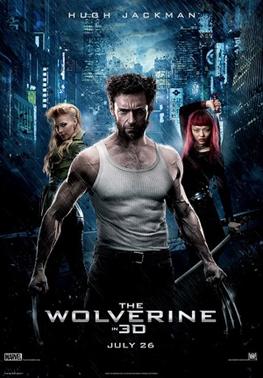
The Wolverine

Those X-Men, they sure can make a lot of money. With seven movies to the franchise's name, the X-Men have earned almost $3 billion and that promises to go up with the recent entry currently doing quite well in theaters. But without a doubt, one character has risen above the rest, and that would be Wolverine himself, a star in the first three movies and given his own feature with X-Men Origin: Wolverine. Well, stick with what works, hence 2013's The Wolverine.

Living in isolation somewhere in the Yukon, Logan (Hugh Jackman) is approached during a barroom brawl with an offer from a mysterious woman. Her name is Yukio (Rila Fukushima), and she has an offer from her employee, Yashida (Hal Yamanouchi), a dying Japanese businessman with a huge empire at his fingertips. Yashida knows Logan from when he was a younger man dating back to 1945 World War II and wants to know now if he would be giving up his ability to heal even the most traumatic injuries at an alarmingly fast rate. Having traveled all the way to Japan to see the old man, Logan can't believe he traveled that far for such a ridiculous offer. He declines, but his timing was spot-on, Yashida passing away in the night. It's only at the business magnate's funeral that Logan realizes he has already been thrust into a high-stakes game with Yashida's impressive business empire on the line. Making it worse? Logan is starting to feel weak, his wounds not healing nearly as quickly. What's going on?

So that Logan/Wolverine character is pretty popular, huh? And that Hugh Jackman fella, he's seems pretty popular too. I think? This most recent Wolverine entry received generally positive reviews and earned a boatload of cash in theaters, some $414 million as I write this review. I have never been a diehard X-Men fan, missing out on the animated TV show and comic books as a kid, but I enjoyed the most recent sequels a lot. This one? Meh, I wasn't dying to see it. I came away mildly disappointed only because it left me somewhat cold about the whole thing. As a movie and story, it is professionally done with some pretty cool action sequences, some characters with a ton of potential, but mostly it never rises above a generic sequel. A whole lot of people seemed to disagree with me -- $414 million?!? -- but this sequel was disappointing, even dull.

Okay, there is one saving grace, and it doesn't take a genius to figure it out. Movie audiences, meet Hugh Jackman as Wolverine. This is one cool, badass character, an anti-hero to end all anti-heroes. His body built up to the point he is almost impossible to defeat, Logan is now weakened by another mutant, but he's not sure exactly what's going on or what started it. A huge physical presence in the action scenes, Jackman more than anything looks like a superhero. This guy is insanely ripped. It's more than that though because we delve deeper into the character, and you don't always get that with superhero movies. He's haunted by the death of his love, Jean Grey (Famke Janssen), the guilt weighing on him on a daily basis. He walks the Earth knowing he is fated to walk alone. Talk about a tortured anti-hero, Jackman's Logan is brimming with intensity. The violence he produces is surprisingly violent -- adamantium claws tend to do that -- and the character itself is a gem.

As for the rest of the cast, I didn't come away with that similarly positive reaction.While Wolverine is a very cool anti-hero to lead the way, I can't say I was too invested in the situation he finds himself in. Wolverine exploring Japan isn't exactly a page-turner for me. Logan ends up on the run with Mariko (Tao Okamoto), Yashida's daughter who stands to inherit her father's empire. There's also a mysterious ninja, Harada (Will Yun Lee), who may or may not be protecting Mariko. Who are the bad guys? Hiroyuki Sanada plays Shingen, Mariko's father, while Brian Tee is Noburo, Mariko's fiance. Then there's Viper (Svetlana Khodchenkova), Yashida's doctor who also happens to be a murdering mutant so she's got that going for her. These characters are means to an end and nothing more. We either know they're immediately evil or they're certainly gonna be.

A tad long at 126 minutes, the action scenes are the saving grace here. The highlight is Logan fending off Yakuza attacks on a bullet train traveling through a congested city. By the time he's on top of the bullet train, his claws imbedded in the train, well, let's just say it's all pretty crazy. Logan tearing folks up with his claws does get to be a bit tedious though, especially with a PG-13 rating. If this was an R-movie, it would be horrifically violent. So what are we left with? Jackman is exceptionally cool, as is Fukushima as Yukio, an especially talented fighter who's realizing she may be a mutant just like Logan. The rest falls somewhat short though, going for all style and no substance. A generally cold action sequel. That said, there's a nice set-up for the most recent X-Men movie, now raking in the cash in theaters.

The Wolverine (2013): **/****

Monday, June 16, 2014

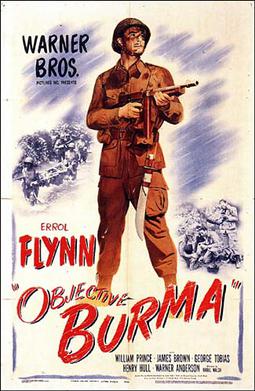
Objective, Burma!

With any actor or actress with a devoted fan following, that following is going to have differing opinions. What is your favorite film? This one or that one? All of them? When we're talking about an actor who worked over multiple decades, it gets that much tougher. Take Errol Flynn who started working in the 1930s and stayed in films through the 1950s. He's got more than a few gems to his name, but my favorite is and always will be 1945's Objective, Burma!

It's 1944 in Burma and Allied forces are preparing to invade the country they were kicked out of by Japanese forces two years earlier. The men across the branches are just waiting for their orders. Among the forces waiting to unleash the attack is Capt. Nelson (Flynn), an officer in command of a platoon of paratroopers. With his friend and second-in-command, Lt. Sid Jacobs (William Prince), Nelson will lead a behind the lines mission into Burma, his men tasked with finding and destroying a key radar station used by the Japanese forces. A 2,000 man garrison isn't too far away from the radar station, meaning Nelson's paratroopers must drop in miles away and find the hidden radar station, all the while avoiding thick Japanese patrols. With a newspaper reporter, Mark Williams (Henry Hull), along to report on the mission, the paratroopers take off from their base with a dangerous mission ahead of them. As prepared as they are though, nothing can really prepare them for what awaits.


What a great movie, one that qualifies in the overused at times but appropriate 'They don't make them like that anymore' category. As far as pure action/adventure movies go, this 1945 WWII flick from director Raoul Walsh is simply hard to beat. It was released in theaters in early 1945, the war winding down but the fighting still very much going on both in the Pacific and Europe. It was a movie ahead of its time, patriotic but not flag-waving and propaganda thankfully. With an Oscar-nominated score from composer Franz Waxman (one that would be used again in the similarly-themed Merrill's Marauders), the action in the 142-minute movie is always on the go, never really slowing down. You feel like you're there with the soldiers, seeing their exhaustion, beards and facial hair appearing as the mission goes awry. It's the perfect popcorn movie, but there are other layers and levels to appreciate. A war movie that still resonates almost 70 years later.

At the tail end of his heyday in terms of popularity, Flynn is the without a doubt, no question star here. I love his performance, especially because he switches things up a bit. Flynn was Robin Hood, a pirate, a swashbuckler, a ladies man, but here, he is just a very capable, very tough and well-liked officer. His Captain Charlie Nelson has been tasked with a dangerous mission that will prove essential to the Allied war effort. Is he rattled, even nervous? Yes, every minute, but he embraces it, hides the feeling away and shows that confidence and even a little bit of a swagger so his men need to see. Flynn was an underrated actor -- for me at least -- but that's one of his biggest attributes. He was confident. He was cool, smooth, and he looked like he belonged on-screen. If it looks like he's not acting, that's the work of an actor who could make it look effortless. At one point with the mission in doubt, one of Nelson's men encourages the other men with "I'd follow him down the barrel of a cannon." Little schmaltzy? Sure, but it works in context, and you see why. I'd follow Errol Flynn into battle too!

Take a look at the cast and you see some names and faces you recognize, but this is Flynn's movie. The rest of the cast becomes part of the unit picture, men brought together from disparate backgrounds forced to work together to get the job done. I liked Hull's journalist, a crotchety old writer trying to tell the story of the soldiers. Nelson's friendship with Prince's Jacobs certainly adds another layer to the story as well. As for Nelson's paratroopers, look for James Brown, George Tobias, John Alvin, Richard Erdman, Joel Allen, and uncredited parts for Anthony Caruso and George Tyne in uncredited parts. Warner Anderson and Hugh Beaumont (Beaver Cleaver's Dad) play higher-ranking officers while Mark Stevens gives a solid supporting part as Lt. Barker, a pilot with the closest ties to Nelson's paratroopers. I liked Tobias, and there's another paratrooper I can't identify by name who has a great bit with a Japanese soldier.

There's so much good going on here, things I picked up on during a recent viewing. It is that perfect war action movie, but it's more. There are a handful of scenes that really resonate, giving an eye into the eyes and thoughts of the paratroopers. Prior to jumping into Burma, the camera moves along a row of faces, the men reacting differently to their upcoming jump and mission. When the mission goes awry, we see the looks on their faces when they have to adjust on the fly. I thought the highlight though was when Nelson and his men come across the mutilated bodies of the paratroopers who didn't make it, the result of a Japanese ambush. One soldier remains, Walsh filming only the man in a door frame so we can't see what's been done to him. We only know he's been cut up, shot up, and he's bleeding out. Over the course of the movie, we see the exhaustion set in, the frustration weighing on all their shoulders. An epically exciting action movie? Yes, and much more.

That is one of the huge appeals for 'Burma.' The action is everywhere, and it doesn't disappoint. The attack on the radar station is the biggest set piece, the rest of the shooting all about the tension and the chase. We don't see the Japanese in frame a lot, but their off-screen presence is a menacing, intimidating cloud hanging over the paratroopers just waiting to strike. The final sequence is especially effective, the pursuing Japanese trying to infiltrate the paratroopers' position on a lonely isolated hill marked by trenches and foxholes. Filmed in the dark with little music, it is a doozy of a success. The whole movie is, one of the great war movies around.

Objective, Burma! (1945): ****/****

Friday, June 13, 2014

The Siege of Firebase Gloria

If you don't recognize the name, you will surely recognize the voice and that face. Known as the tough as nails drill sergeant in 1987's Full Metal Jacket, R. Lee Ermey has been one of those perfect character actors over the years, even starring in a History Channel show that answered all sorts of questions about the military. His performance in Full Metal Jacket is the one he will always be known for, but he delivers another excellent performance in a far lesser known but very high quality film about the Vietnam War, 1989's The Siege of Firebase Gloria.

It's early in 1968 and a long range Marine recon patrol led by Master Sergeant Hafner (Ermey) keeps coming across signs of increased North Vietnamese and Viet Cong activity. With his second-in-command, Corporal DiNardo (Wings Hauser), and a six-man patrol, Hafner leads the small group of Marines onto a small firebase named Gloria deep in the Vietnamese jungle. They find a poorly constructed, undermanned and under-supplied defensive position that's just waiting to be overrun should the Viet Cong attack. Hafner takes command, DiNardo helping at every turn, but their time is running out. As the Marines work to build up the firebase, the Viet Cong unleash the Tet offensive all over the country, American positions fighting back against waves of attacking guerrilla fighters. With no real hope of getting reinforcements, ammunition or supplies, can Gloria hold out or is it already too late?

Where do you go for a very solid movie about the front line fighting in the Vietnam War? Why, Australia of course with the Philippines providing the filming locations. From Australian director Brian Trenchard-Smith, 'Siege' is one of those hidden gems you're glad you stumble across. I caught it a couple times on TV during Memorial Day marathons and found it recently during just such a marathon on MGM-HD. Why are there so few movies about Vietnam? More specifically, about the fighting in Vietnam? My first thought is because America lost. My second is that this was a particularly nasty war with fighting unlike anything the world had seen. Trenchard-Smith's film doesn't shy away from that nastiness. At different points, it shows American soldiers "fragging" their own officers, American soldiers killing wounded Viet Cong soldiers, among other things. We also see the particularly brutal remnants of a Vietnamese massacre of a peaceful village, decapitations, rapes, a pile of murdered children's corpses. Not exactly uplifting stuff.

Limited somewhat by a smallish budget, 'Siege' makes up for it with that hard-edged, in-your-face authenticity. At no point does this feel forced. Though two screenwriters are listed in the credits, Trenchard-Smith has stated in interviews that Ermey wrote the screenplay. Whoever wrote it...it's good in a brutal, straightforward fashion. We get a bigger picture of what's going on with the Tet Offensive, but this is a story with its focus far more on the foot soldiers, the infantry, the grunts. We follow a single engagement (over 3 or 4 days) as a small garrison tries to defend a remote outpost against overwhelming odds. There are some stiff moments, and the characters are from the War Movies Handbook 101, but the movie is always interesting. The realism and authenticity does an excellent job in that department.

No big names here, Ermey and Hauser carrying the heavy lifting. Ermey was a Vietnam vet who served multiple tours before being sent home with his wounds. His narration is that no-frills type of voiceover that would come from a lifelong Marine, a soldier who's seen all that war has to offer. He's tired, worn down but loves the Marines and loves the fight. Hauser's DiNardo is his close friend who's struggling with some personal demons but remains an incredibly capable soldier in his own right, a soldier Hafner trusts with his life. Who else to look for? There's Murphy (Mark Neely), a young soldier figuring out the ins and outs of Vietnam, Coates (Clyde Jones) the radioman -- who's called Short Waves) who's also on short time on his tour, and Jones (Albert Popwell), an Army sergeant who bristles at the Marines' commands but knows ultimately it's their call.

There's other parts, some more worthwhile than others that include an on-base nurse, a war photographer thrust into action, a wounded officer who survived Viet Cong torture, and a very strong part for Gary Hershberger as Moran, a gung-ho chopper pilot who continuously risks his life to bring Gloria any supplies and ammunition he can. His brief interactions with Ermey's Hafner on an under-fire landing zone are perfect, the no-nonsense Marine lifer vs. the free-spirited helicopter pilot who doesn't have much use for rules or authority. Also look for Robert Arevalo as Cao Van, the commander of the attacking Viet Cong forces, presented as a human being, not a stereotypically evil villain. Not much in star power or name recognition, but some solid supporting parts across the board.

Wasting little time in its 95-minute running time, 'Siege' is action-heavy and never lets up. The violence is brutal and uncomfortable but while it is particularly graphic, the camera doesn't linger on the violence. War, killing and death is quick and hard-hitting, brutal and unceremonious. We see the lines all along the firebase up in the air, Viet Cong pushing forward as Americans fall back and then the other way when the outnumbered American infantry push back. There are brief respites but they're quick breaks, and it is never too long before the attack continues. Is this a groundbreaking war movie? No, but it is very effective on multiple levels. It succeeds as a war story and as an action movie. It has little in the way of a reputation or cult following, but it deserves far more. A difficult movie to watch, but one that is worthwhile in the end.

The Siege of Firebase Gloria (1989): ***/****