I started a new job in April and just haven't had as much free time as I used to. Meaning? I haven't gotten to watch as many movies as I'd like. So now, when I do grab a couple hours here and there, I find myself revisiting westerns I've seen, my favorite genre that always puts me at ease (basically no matter the quality). I was psyched when I saw a new western was available to watch, one that earned uniformly positive reviews. Here's 2015's Slow West.
It's the 1870s and a teenage Scottish boy, Jay Cavendish (Kodi Smit-McPhee), is traveling across the American west on a mission. He's searching and on the trail of the girl he loves, a girl a few years older than Jay named Rose (Caren Pistorious), who had to flee Scotland and is now on the run with her father. To say the least, Jay is inexperienced in surviving in the wilderness, and he has no real idea of where he's going, only that he'll keep on looking for Rose -- the love of his life -- for as long as it takes. It is on the trail though he meets Silas Selleck (Michael Fassbender), an experienced bounty hunter who offers to be Jay's guide...for a price. Suspicious but desperate, Jay agrees so both he and Silas ride west, following what little evidence the Scottish teenager has. The trail behind him has been rough enough, but he has little idea of what awaits.
Though it pains me to say it, I can admit the truth. It's something I've known for years, but man, it does suck. The western genre has gone the way of the dodo bird. The big, extravagant, epic westerns of the 1950's and 1960's are long gone, as are the bigger than life stars like John Wayne, Clint Eastwood, Jimmy Stewart, Randolph Scott and so many others. What are we left with? The occasional western that gets a big theatrical release, but more likely, a smaller, indie western like this 2015 effort from director John McLean. Small scale, almost minimalist at times, and most definitely in revisionist mode, it's an interesting movie but not one I necessarily enjoyed unfortunately.
The late 1960's started the trend, and the 1970's kicked the door in with the concept of revisionist westerns. These were movies that tried to look at the American wild west with a more honest, brutal, graphic and dirty vision. There were some great westerns released, but often times, the finished product was so bleak, no one wanted to see any more westerns. 'Slow' is in the revisionist vein 100 percent. The portrayal of the wild west in the 1870's is violent, startling, survival-based and any one who gets in your way....you've a right to kill them. Bbbbbut, my goodness it is bleak to the point it is hard to just sit and appreciate the movie that definitely had a ton of potential. It clocks in at just 85 minutes and is painfully drawn out at times (taking its title incredibly seriously) with very little actually happening. That becomes a bit of an issue.
The positive is obvious. His name is Michael Fassbender. Maybe you've heard of him. One of the most talented actors working currently in film, Fassbender's Silas is a presence that's both comforting and intimidating at the same time. He's looking out for Jay (for a price), but with something else in mind too. Fascinating to watch an extremely talented actor do his thing, and his scenes with Smit-McPhee are excellent as they find a rhythm, almost an unlikely friendship but not quite. The 85-minute running time comes into play there. I never really felt like I knew much about either character. Therefore when things get sticky and the bullets start flying, I didn't have much in the way of an emotional investment. Interesting performances, but I would have liked some more depth to the script.
The only other recognizable face -- who's quickly becoming one of my favorites -- is Ben Mendelsohn as Payne, an outlaw and leader of a gang who has some history with Silas. The physical appearance here is amazingly perfect for Mendelsohn, a wide-brimmed hat and an IMMENSE coat made of buffalo to the point you can barely make out his face. Now that said...he's in about three scenes and is criminally underused to the point it feels like a waste. His presence alone, his cold glare often says more than any line of dialogue could. Along with Pistorious as Rose, also look for Edwin Wright, Andrew Robertt and Rory McCann in small but important supporting parts.
Something is missing though. The on-location shooting in New Zealand is stunningly good-looking. One shot after another could be freeze-framed and hung on a wall like a painting. The mostly low-key musical score isn't too folksy and one main theme resonates throughout the story. Even the message in general of a brutal, bullet-riddled American west is strong....but it doesn't make the movie good as much as it pains me to say it. The ending packs quite a wallop, or should have, but I had checked out already. A disappointing misfire unfortunately, a western with a ton of potential that spends too much time on style and its revisionist roots over characters and developing characters.
Very disappointing unfortunately.
Slow West (2015): **/****
The Sons of Katie Elder
"First, we reunite, then find Ma and Pa's killer...then read some reviews."
Showing posts with label Ben Mendelsohn. Show all posts
Wednesday, August 5, 2015
Friday, May 22, 2015
Exodus: Gods and Kings
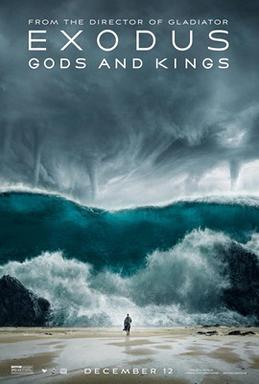
Like the western, the historical epic has seemingly gone the way of the dodo bird. The genre was at its most popular in the 1950s and 1960s, turning out gigantic epics like The Ten Commandments, Ben-Hur, El Cid, Spartacus, The Greatest Story Ever Told, and that's just some of the biblical epics. About a year ago, I was naturally curious when I read that director Ridley Scott was at the helm of a new epic about Moses and the Hebrews' escape from Egypt. Reviews were mixed to negative, but it managed to make decent money in theaters. So where does 2014's Exodus: Gods and Kings fall? Let's see.
In ancient Egypt, a new pharaoh, Ramses II (Joel Edgerton), has been appointed after his father dies. The fiery new pharaoh has help at his side in the form of his stepbrother, Moses (Christian Bale). Many years before, an orphaned infant Moses was picked up in the Nile River and taken into the home and temple of the then pharaoh, Ramses' father. The Hebrew man grew up somewhat knowing his past, his blood, but he's moved on...until now. Seeing his stepbrother as a potential threat to his throne, Ramses exiles his brother. Moses survives though, starts a family in a far-off, isolated village and moves on. Years pass though and he continues to hear the plight of the Hebrew people working as slaves under Egyptian rule, still the cruel Ramses. There has long been rumors and teachings that someone will save the Hebrews, and that man may just be Moses himself. Can he realize it? Can he go back to Egypt and convince his brother to peacefully let the slaves go?
So basically everyone knows the story of Moses, of the Hebrew slaves in Egypt, the plagues one after another, the parting of the Red Sea and the eventual 40 years of wandering in the desert. I read about it a ton as a kid growing up, at home and in school, and then I saw the 1956 epic The Ten Commandments, still shown on ABC every Easter. That's both a good and bad thing for Scott's epic. It's familiar...but it's familiar. I liked it but didn't love it. There's the necessary spectacle and scale you need in a biblical/historical epic and a solid cast, but there are equal part flaws and misses that handicap the movie's potential.
There seems to be a trend going on in history books, on history documentaries, miniseries, all of the above. I think it's a good trend, one I've enjoyed watching as it develops. It's pretty simple. Look at history with a questioning eye. Did the Exodus story happen just as the Old Testament said it did? No, probably not, and that's where Scott steps in. In the movie's strongest moments, he's able to blend that Old Testament story with a fresh eye, a clean look at the story. In a different sense (and a necessary one), he tries to distance himself from The Ten Commandments, many viewers most familiar connection to the story. What was Moses like? What was Ramses like? What was the world they lived in throughout ancient Egypt? It provides a fascinating jumping off point into a dark, dirty, violent and particularly nasty world that we thought we knew.
Christian Bale is one of my favorites. I thought he was the best thing going by far in American Hustle, his Batman movies are great, and if he's in a cast, I'm pretty likely to at least give the movie a chance. In a cast that features quite a cast but not much in the term of characters, Bale is the one to get out unscathed and represent himself quite well. His Moses is a three-dimensional person, a man struggling with what may be his destiny, his fate, the thing he's supposed to do with his life. Is it going to be easy? Not in the least, and that's what he's grappling with. When it comes right down to it, will he make that difficult decision? Bale isn't great, but he's pretty good in a cool leading role. Edgerton too is one of my favorites, a budding star looking for those great roles that will propel him into stardom, but this isn't it. The script does him no favors, an old school, power-hungry villain who comes across as more cliched than a real person. Too bad because Bale and Edgerton's scenes together are a high point. I just wish there was more of them.
The rest of the cast is given little to nothing to do. The names are impressive but any sense of character development was left by the wayside. Look for John Turturro, Sigourney Weaver, Aaron Paul, Maria Valverde, Andrew Tarbet and Ben Kingsley in smaller parts. Two solid smaller parts go to Ben Mendelsohn as a cruel district commander who couldn't care less about the slaves he rules over and young Isaac Andrews as Malak, a child who is God's human representation on Earth, communicating with Moses about what's to come. A scary, intense performance from a talented young actor. I especially liked Bale and Andrews together in their scenes, especially when Paul's Joshua looks on, not seeing Bale talk to anything at all. What he sees is a man seemingly talking to himself in the middle of the desert. Uh-oh, here we go with some faith-based questions again!
Now if the focus isn't on character development, it's gotta be somewhere else, right? You would be correct. 'Exodus' embraces the moment in terms of scale and gigantic qualities you'd come to expect from a historical and Biblical epic. The plaques and plights an angry, violent Old Testament God sends down upon Ramses and Egypt are a sight to behold from the locusts, frogs, blood in the water, to the diseases, and most frighteningly, the killing of all the first born sons of Egyptians, these scenes are the movie at its best, strongest and most comfortable. But by far, the most exhilarating scene is the chase across the Red Sea, Moses and thousands of fleeing Hebrews pursued by Ramses and his chariot army as the receding sea charges back at them, the waves growing ever-higher. An incredible sequence, one of those great uses of computer-generated imagery. So in epic terms, this movie is a huge success and well worth seeking out.
I just wish there was more heart somewhere mixed in with the scale and spectacle. It's a pretty decent movie with some great moments. Still worth recommending -- especially to fans of biblical and historical epics -- but it's good. It could have been much more.
Exodus: Gods and Kings (2014): ** 1/2 /****
In ancient Egypt, a new pharaoh, Ramses II (Joel Edgerton), has been appointed after his father dies. The fiery new pharaoh has help at his side in the form of his stepbrother, Moses (Christian Bale). Many years before, an orphaned infant Moses was picked up in the Nile River and taken into the home and temple of the then pharaoh, Ramses' father. The Hebrew man grew up somewhat knowing his past, his blood, but he's moved on...until now. Seeing his stepbrother as a potential threat to his throne, Ramses exiles his brother. Moses survives though, starts a family in a far-off, isolated village and moves on. Years pass though and he continues to hear the plight of the Hebrew people working as slaves under Egyptian rule, still the cruel Ramses. There has long been rumors and teachings that someone will save the Hebrews, and that man may just be Moses himself. Can he realize it? Can he go back to Egypt and convince his brother to peacefully let the slaves go?
So basically everyone knows the story of Moses, of the Hebrew slaves in Egypt, the plagues one after another, the parting of the Red Sea and the eventual 40 years of wandering in the desert. I read about it a ton as a kid growing up, at home and in school, and then I saw the 1956 epic The Ten Commandments, still shown on ABC every Easter. That's both a good and bad thing for Scott's epic. It's familiar...but it's familiar. I liked it but didn't love it. There's the necessary spectacle and scale you need in a biblical/historical epic and a solid cast, but there are equal part flaws and misses that handicap the movie's potential.
There seems to be a trend going on in history books, on history documentaries, miniseries, all of the above. I think it's a good trend, one I've enjoyed watching as it develops. It's pretty simple. Look at history with a questioning eye. Did the Exodus story happen just as the Old Testament said it did? No, probably not, and that's where Scott steps in. In the movie's strongest moments, he's able to blend that Old Testament story with a fresh eye, a clean look at the story. In a different sense (and a necessary one), he tries to distance himself from The Ten Commandments, many viewers most familiar connection to the story. What was Moses like? What was Ramses like? What was the world they lived in throughout ancient Egypt? It provides a fascinating jumping off point into a dark, dirty, violent and particularly nasty world that we thought we knew.
Christian Bale is one of my favorites. I thought he was the best thing going by far in American Hustle, his Batman movies are great, and if he's in a cast, I'm pretty likely to at least give the movie a chance. In a cast that features quite a cast but not much in the term of characters, Bale is the one to get out unscathed and represent himself quite well. His Moses is a three-dimensional person, a man struggling with what may be his destiny, his fate, the thing he's supposed to do with his life. Is it going to be easy? Not in the least, and that's what he's grappling with. When it comes right down to it, will he make that difficult decision? Bale isn't great, but he's pretty good in a cool leading role. Edgerton too is one of my favorites, a budding star looking for those great roles that will propel him into stardom, but this isn't it. The script does him no favors, an old school, power-hungry villain who comes across as more cliched than a real person. Too bad because Bale and Edgerton's scenes together are a high point. I just wish there was more of them.
The rest of the cast is given little to nothing to do. The names are impressive but any sense of character development was left by the wayside. Look for John Turturro, Sigourney Weaver, Aaron Paul, Maria Valverde, Andrew Tarbet and Ben Kingsley in smaller parts. Two solid smaller parts go to Ben Mendelsohn as a cruel district commander who couldn't care less about the slaves he rules over and young Isaac Andrews as Malak, a child who is God's human representation on Earth, communicating with Moses about what's to come. A scary, intense performance from a talented young actor. I especially liked Bale and Andrews together in their scenes, especially when Paul's Joshua looks on, not seeing Bale talk to anything at all. What he sees is a man seemingly talking to himself in the middle of the desert. Uh-oh, here we go with some faith-based questions again!
Now if the focus isn't on character development, it's gotta be somewhere else, right? You would be correct. 'Exodus' embraces the moment in terms of scale and gigantic qualities you'd come to expect from a historical and Biblical epic. The plaques and plights an angry, violent Old Testament God sends down upon Ramses and Egypt are a sight to behold from the locusts, frogs, blood in the water, to the diseases, and most frighteningly, the killing of all the first born sons of Egyptians, these scenes are the movie at its best, strongest and most comfortable. But by far, the most exhilarating scene is the chase across the Red Sea, Moses and thousands of fleeing Hebrews pursued by Ramses and his chariot army as the receding sea charges back at them, the waves growing ever-higher. An incredible sequence, one of those great uses of computer-generated imagery. So in epic terms, this movie is a huge success and well worth seeking out.
I just wish there was more heart somewhere mixed in with the scale and spectacle. It's a pretty decent movie with some great moments. Still worth recommending -- especially to fans of biblical and historical epics -- but it's good. It could have been much more.
Exodus: Gods and Kings (2014): ** 1/2 /****
Wednesday, July 3, 2013
Killing Them Softly
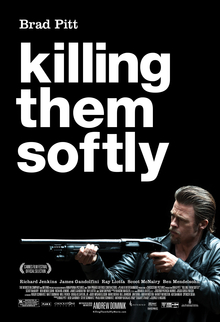
As an author, the name George V. Higgins doesn't set off trip wires and alarms about all the classics he's written. His fans love him though, love him for his bestselling crime novels that brought the darkness, reality and extreme violence and betrayals of the criminal underworld to life. I'd seen -- but haven't read -- The Friends of Eddie Coyle and liked it. One of Higgins' novels, Cogan's Trade, received a big screen adaptation last year, 2012's Killing Them Softly.
With the help of a businessman, Squirrel (Vincent Curatola), an ex-con, Frankie (Scott McNairy) and a drug addict acquaintance, Russell (Ben Mendelsohn), have a plan to net some easy money. Frankie and Russell will rob an illegal high stakes poker game run by Markie Trattman (Ray Liotta), the owner of a ring of illegal games. In his past, Markie secretly took down one of his own games, and Squirrel intends to set him up as the fall guy for his upcoming job. The actual robbery goes down pretty smoothly, but the fall-out is severe. With mob ties to the card game, a feared enforcer, Jackie Cogan (Brad Pitt) is called in to handle the situation. He's got to find out who was involved, who was behind it, and who's lying to him. Brutality, intimidation, straight murder, Jackie isn't afraid to pull out all the stops to find out what he needs to know and get paid in the process.
What I liked most about this film noir-like crime flick is simple. Based off a novel Higgins wrote in the 1970s, 'Killing' feels like those down and dirty crime dramas of the 1970s. There is a throwback feel to it that works on an effortless level. Some of the style, especially Pitt with his slicked back hair and duded up look, has that retro feel. Mostly though, it's that ever-present sense of doom. In this criminal world as the movie presents, there is no hope, no light, no potential for happiness in the end. Anyone and everyone is trying to look out for No. 1. Betrayals, murder, backstabbing, all are fair if it helps you get somewhere or something. That ultra-dark cynicism plays well. We know from the start that none of what we are about to see will go down smoothly. Blood will be spilled and money will be made, but at what cost?
That sounds like it's right up my alley, doesn't it? An almost artsy feel of a 1960s/1970s French crime drama mixed with the tones of a barebones American crime drama from the 1970s? That's got to be good, right? Well, it never amounts to much. This movie plays like a dirtier, far more foul-mouthed version of something Aaron Sorkin would have written. 'Killing' is absolutely obsessed with dialogue. When written well, that can be enough to carry a movie, but the dialogue here gets tedious and serves no real purpose at a certain point. How many times can we hear Frankie and Russell talk about their sexual preferences before we just become numb to it all? I appreciate a slower, more character driven story that doesn't focus exclusively on action, but it's got to go somewhere. We get a long dialogue scene.........and another.........and another. An already short movie (in running time at least) at 97 minutes, it feels far longer, and I was using the fast forward option liberally.
What ends up being the biggest waste here is the cast. There's lots of dialogue here, but it feels like actors showing off but without any substance. Pitt is a bright spot (not a surprise) as brutal, quiet and effective Jackie, a man who has a special skill -- enforcing/killing -- and puts it to his advantage. McNairy and Mendelsohn are appropriately slimy while Liotta isn't given much to do unfortunately as Trattman, a marked man. James Gandolfini plays Mickey, a down on his luck hit man who Jackie recruits for another job, hamming, whoring and drinking it up. Richard Jenkins is maligned and beaten down as Driver, Jackie's link to the mob. Sam Shepard makes a bizarrely quick one-scene cameo as Dillon, an older enforcer with the biggest reputation around.
The story itself has some flaws, but I think director/writer Andrew Dominik makes a really bad style decision. Any transition scene -- car driving, men walking, whatever -- has a voiceover being played over the visual. We hear George W. Bush and Barack Obama talking about the economic crisis, country unity, working together. It all comes together in the end in the final scene, but it's not worth the payoff we get. Instead, it comes across as a heavy-handed, obnoxious stylish storytelling device that handicaps the movie. As a film, it just can't quite figure out what's going on. Is it darkly funny? Just dark? A metaphor for something bigger, more profound? All of the above, none of it? If you're going to tell a crime story, do it. Don't get all mixed up in a message about America's current economic state.
Too bad overall. Lots of potential, and when it works in small snippets, it reminds me of a mix between The Departed and No Country for Old Men. Too often though it doesn't do enough to give it a recommendation (even a mild one). Sorry to report I came away disappointed in a big way.
Killing Them Softly (2012): **/****
With the help of a businessman, Squirrel (Vincent Curatola), an ex-con, Frankie (Scott McNairy) and a drug addict acquaintance, Russell (Ben Mendelsohn), have a plan to net some easy money. Frankie and Russell will rob an illegal high stakes poker game run by Markie Trattman (Ray Liotta), the owner of a ring of illegal games. In his past, Markie secretly took down one of his own games, and Squirrel intends to set him up as the fall guy for his upcoming job. The actual robbery goes down pretty smoothly, but the fall-out is severe. With mob ties to the card game, a feared enforcer, Jackie Cogan (Brad Pitt) is called in to handle the situation. He's got to find out who was involved, who was behind it, and who's lying to him. Brutality, intimidation, straight murder, Jackie isn't afraid to pull out all the stops to find out what he needs to know and get paid in the process.
What I liked most about this film noir-like crime flick is simple. Based off a novel Higgins wrote in the 1970s, 'Killing' feels like those down and dirty crime dramas of the 1970s. There is a throwback feel to it that works on an effortless level. Some of the style, especially Pitt with his slicked back hair and duded up look, has that retro feel. Mostly though, it's that ever-present sense of doom. In this criminal world as the movie presents, there is no hope, no light, no potential for happiness in the end. Anyone and everyone is trying to look out for No. 1. Betrayals, murder, backstabbing, all are fair if it helps you get somewhere or something. That ultra-dark cynicism plays well. We know from the start that none of what we are about to see will go down smoothly. Blood will be spilled and money will be made, but at what cost?
That sounds like it's right up my alley, doesn't it? An almost artsy feel of a 1960s/1970s French crime drama mixed with the tones of a barebones American crime drama from the 1970s? That's got to be good, right? Well, it never amounts to much. This movie plays like a dirtier, far more foul-mouthed version of something Aaron Sorkin would have written. 'Killing' is absolutely obsessed with dialogue. When written well, that can be enough to carry a movie, but the dialogue here gets tedious and serves no real purpose at a certain point. How many times can we hear Frankie and Russell talk about their sexual preferences before we just become numb to it all? I appreciate a slower, more character driven story that doesn't focus exclusively on action, but it's got to go somewhere. We get a long dialogue scene.........and another.........and another. An already short movie (in running time at least) at 97 minutes, it feels far longer, and I was using the fast forward option liberally.
What ends up being the biggest waste here is the cast. There's lots of dialogue here, but it feels like actors showing off but without any substance. Pitt is a bright spot (not a surprise) as brutal, quiet and effective Jackie, a man who has a special skill -- enforcing/killing -- and puts it to his advantage. McNairy and Mendelsohn are appropriately slimy while Liotta isn't given much to do unfortunately as Trattman, a marked man. James Gandolfini plays Mickey, a down on his luck hit man who Jackie recruits for another job, hamming, whoring and drinking it up. Richard Jenkins is maligned and beaten down as Driver, Jackie's link to the mob. Sam Shepard makes a bizarrely quick one-scene cameo as Dillon, an older enforcer with the biggest reputation around.
The story itself has some flaws, but I think director/writer Andrew Dominik makes a really bad style decision. Any transition scene -- car driving, men walking, whatever -- has a voiceover being played over the visual. We hear George W. Bush and Barack Obama talking about the economic crisis, country unity, working together. It all comes together in the end in the final scene, but it's not worth the payoff we get. Instead, it comes across as a heavy-handed, obnoxious stylish storytelling device that handicaps the movie. As a film, it just can't quite figure out what's going on. Is it darkly funny? Just dark? A metaphor for something bigger, more profound? All of the above, none of it? If you're going to tell a crime story, do it. Don't get all mixed up in a message about America's current economic state.
Too bad overall. Lots of potential, and when it works in small snippets, it reminds me of a mix between The Departed and No Country for Old Men. Too often though it doesn't do enough to give it a recommendation (even a mild one). Sorry to report I came away disappointed in a big way.
Killing Them Softly (2012): **/****
Thursday, May 2, 2013
The Place Beyond the Pines
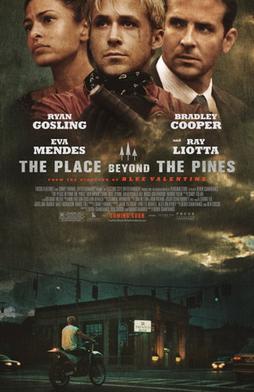
It's been about 24 hours since I saw 2013's The Place Beyond the Pines in theaters, and I'm still processing the film. Reviews were uniformly positive, the trailer instantly hooked me as did the cast, and my first thought was that it resembled an art-house crime drama like a Melville film or a moody 1970s American flick like The Driver. So yeah, I'm still processing it, but in a good way for a change. I liked it a lot, just deciding if maybe I loved it too.
A stunt motorcycle rider at a traveling carnival, Luke Glanton (Ryan Gosling) meets Romina (Eva Mendes) as the carnival returns to towns it visited the summer before. She has a shock for him; she had a baby, and it's his, the product of their one night together the year before. Romina has moved on, but Luke wants to help raise his son. He starts work as a mechanic, hoping to provide for his boy, but the money just isn't there. With a co-worker, he starts to rob banks, netting more than enough money to give Romina and his son everything they need. The plan can only work for so long though, and Luke's actions have put him on a path that will have him cross ways with Aaron (Bradley Cooper), a talented if inexperienced cop dealing with his own issues in the department.
I don't usually do this, but here goes. This is a review that's going to be somewhat difficult to write without giving some spoilers away. I won't be giving away any MAJOR SPOILERS -- and there are some surprising twists -- but be forewarned. There are some storytelling twists that I will have to talk about to be even remotely coherent.
Director Derek Cianfrance's follow-up to his uniquely interesting -- some would say odd -- 2010 film Blue Valentine, 'Pines' is a gem of a film. I fell for it the second I watched the trailer. It is an artsy, well-told and unique story that doesn't settle for any semblance of the status quo. The developing story has a lyrical feel to it, based in this world but in an almost ethereal feel to it. Cianfrance filmed on location in Schenectady (where the story takes place), a city in eastern New York that feels removed from the congestion and business of everyday life. It's a town that looks like any number of small towns across the country. Maybe the best thing adding to the mood and tone is the soundtrack from composer Mike Patton. It is a perfect mix of trance, subtle electronica, choirs, and quasi-religious church hymns. The score is perfect, giving it an authentic sense of the ethereal, the other worldly. Give it a listen HERE for the best track.
Here comes the semi-spoilers so again, be forewarned. At 140 minutes, 'Pines' is broken down into three separate segments. The first has Gosling's Luke trying to provide for his son in desperate fashion, turning to robbing banks. The second has Cooper's Aaron trying to carve a name out for himself as a young police officer dealing with quite a legacy. The third actually fast-forwards 15 years as Luke's son, Jason (Dane DeHaan), meets Aaron's son, A.J. (Emory Cohen), at high school, the two teenagers not knowing that they're somehow connected through their fathers. Each segment is given equal time, about 45 minutes, each given a chance to breathe and develop without feeling forced. Don't be confused. They are connected, one part of the story transitioning seamlessly into the next. It's rare to see a story develop like that, and 'Pines' does it well. It's different from most films which isn't necessarily a good thing, but this one is a huge positive.
The unifying link among the three segments is the relationships between fathers and their sons, a story arc used in everything from Field of Dreams to The Godfather and countless others. Luke sees he's made a mistake and wants to right those mistakes. He's so driven to do that, he turns to crime. Aaron similarly wants to care for his infant son, but he doesn't know if the career he's chosen is actually the right one. Cianfrance's script shows how one decision affects another, one action leads to another. The relationship between a father and son is a simple and complicated relationship at the same time. Without sounding pretentious, the artsy story uses the notion that the universe is connected, people who are supposed to meet will meet. Some paths and individuals are destined to cross no matter what happens.
There isn't a weak performance in the bunch. Semi-channeling his part from the equally impressive Drive, Gosling is a gem. His part as Luke is the perfect doomed, moody anti-hero. We know from when we meet him his path will not be a smooth one. Luke's scenes with his baby boy are perfection, including one silent scene after some startling violence. He continues to impress me as an actor. Arriving about the 45-minute mark, Cooper takes a familiar part -- young cop dealing with corrupt police force -- and makes it his own. He's a hero on the force and struggling to deal with his newfound fame. Relative newcomers DeHaan and Cohen more than handle themselves well in the final act. The high point of the story was Gosling's portion, but I enjoyed it all from beginning to end.
Playing a key supporting part, Mendes too is very solid as Romina, the mother of Luke's child who has moved on, moving in with Kofi (scene-stealing Mahershala Ali). Without being obvious in her part, Mendes does a good job making Romina human without being obnoxious or hamming it up. Ben Mendelsohn is similarly a scene-stealer as Robin, Luke's boss at a fix-it shop who turns him onto bank robbery. Rose Byrne plays Aaron's worrying wife while Harris Yulin plays his famous father. Bruce Greenwood makes an effective, quick appearance as a district attorney while Ray Liotta plays (GASP!) a dirty cop recruiting Aaron. All solid parts supporting the leads.
I'm liking this film more and more as I write the review. The third part drags a little bit, and I would have liked a more definite ending, but it works just the same. Cianfrance's script has everything coming full circle (well, almost), wrapping up everything in a moving, at times heartbreaking finale. The title comes from the Mohawk translation of Schenectady by the way. I loved this movie. It starts with a worthy start, an impressive tracking shot following Luke as he walks through the carnival, and never really lets up. Well worth seeking out, and definitely a change of pace from most movies.
The Place Beyond the Pines (2013): ****/****
A stunt motorcycle rider at a traveling carnival, Luke Glanton (Ryan Gosling) meets Romina (Eva Mendes) as the carnival returns to towns it visited the summer before. She has a shock for him; she had a baby, and it's his, the product of their one night together the year before. Romina has moved on, but Luke wants to help raise his son. He starts work as a mechanic, hoping to provide for his boy, but the money just isn't there. With a co-worker, he starts to rob banks, netting more than enough money to give Romina and his son everything they need. The plan can only work for so long though, and Luke's actions have put him on a path that will have him cross ways with Aaron (Bradley Cooper), a talented if inexperienced cop dealing with his own issues in the department.
I don't usually do this, but here goes. This is a review that's going to be somewhat difficult to write without giving some spoilers away. I won't be giving away any MAJOR SPOILERS -- and there are some surprising twists -- but be forewarned. There are some storytelling twists that I will have to talk about to be even remotely coherent.
Director Derek Cianfrance's follow-up to his uniquely interesting -- some would say odd -- 2010 film Blue Valentine, 'Pines' is a gem of a film. I fell for it the second I watched the trailer. It is an artsy, well-told and unique story that doesn't settle for any semblance of the status quo. The developing story has a lyrical feel to it, based in this world but in an almost ethereal feel to it. Cianfrance filmed on location in Schenectady (where the story takes place), a city in eastern New York that feels removed from the congestion and business of everyday life. It's a town that looks like any number of small towns across the country. Maybe the best thing adding to the mood and tone is the soundtrack from composer Mike Patton. It is a perfect mix of trance, subtle electronica, choirs, and quasi-religious church hymns. The score is perfect, giving it an authentic sense of the ethereal, the other worldly. Give it a listen HERE for the best track.
Here comes the semi-spoilers so again, be forewarned. At 140 minutes, 'Pines' is broken down into three separate segments. The first has Gosling's Luke trying to provide for his son in desperate fashion, turning to robbing banks. The second has Cooper's Aaron trying to carve a name out for himself as a young police officer dealing with quite a legacy. The third actually fast-forwards 15 years as Luke's son, Jason (Dane DeHaan), meets Aaron's son, A.J. (Emory Cohen), at high school, the two teenagers not knowing that they're somehow connected through their fathers. Each segment is given equal time, about 45 minutes, each given a chance to breathe and develop without feeling forced. Don't be confused. They are connected, one part of the story transitioning seamlessly into the next. It's rare to see a story develop like that, and 'Pines' does it well. It's different from most films which isn't necessarily a good thing, but this one is a huge positive.
The unifying link among the three segments is the relationships between fathers and their sons, a story arc used in everything from Field of Dreams to The Godfather and countless others. Luke sees he's made a mistake and wants to right those mistakes. He's so driven to do that, he turns to crime. Aaron similarly wants to care for his infant son, but he doesn't know if the career he's chosen is actually the right one. Cianfrance's script shows how one decision affects another, one action leads to another. The relationship between a father and son is a simple and complicated relationship at the same time. Without sounding pretentious, the artsy story uses the notion that the universe is connected, people who are supposed to meet will meet. Some paths and individuals are destined to cross no matter what happens.
There isn't a weak performance in the bunch. Semi-channeling his part from the equally impressive Drive, Gosling is a gem. His part as Luke is the perfect doomed, moody anti-hero. We know from when we meet him his path will not be a smooth one. Luke's scenes with his baby boy are perfection, including one silent scene after some startling violence. He continues to impress me as an actor. Arriving about the 45-minute mark, Cooper takes a familiar part -- young cop dealing with corrupt police force -- and makes it his own. He's a hero on the force and struggling to deal with his newfound fame. Relative newcomers DeHaan and Cohen more than handle themselves well in the final act. The high point of the story was Gosling's portion, but I enjoyed it all from beginning to end.
Playing a key supporting part, Mendes too is very solid as Romina, the mother of Luke's child who has moved on, moving in with Kofi (scene-stealing Mahershala Ali). Without being obvious in her part, Mendes does a good job making Romina human without being obnoxious or hamming it up. Ben Mendelsohn is similarly a scene-stealer as Robin, Luke's boss at a fix-it shop who turns him onto bank robbery. Rose Byrne plays Aaron's worrying wife while Harris Yulin plays his famous father. Bruce Greenwood makes an effective, quick appearance as a district attorney while Ray Liotta plays (GASP!) a dirty cop recruiting Aaron. All solid parts supporting the leads.
I'm liking this film more and more as I write the review. The third part drags a little bit, and I would have liked a more definite ending, but it works just the same. Cianfrance's script has everything coming full circle (well, almost), wrapping up everything in a moving, at times heartbreaking finale. The title comes from the Mohawk translation of Schenectady by the way. I loved this movie. It starts with a worthy start, an impressive tracking shot following Luke as he walks through the carnival, and never really lets up. Well worth seeking out, and definitely a change of pace from most movies.
The Place Beyond the Pines (2013): ****/****
Subscribe to:
Posts (Atom)