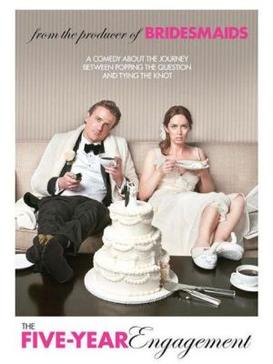
There are romantic comedies -- good and bad -- and relationship dramas. While they may deal with similar subjects, the approach to them is basically just the opposite. Laughs as opposed to some sort of real drama, right? So while I liked parts of 2012's The Five-Year Engagement, I have trouble reviewing. It tries to be both, but handicaps itself in the process.
Having been dating for a year now, Tom (Jason Segel) and Violet (Emily Blunt) are deeply in love. Nearing their year anniversary, Tom proposes to Violet, and she accepts, setting off a whirlwind series of events all geared toward their wedding (obviously, duh? I'm struggling here). Soon after the proposal though, different detours start getting thrown at the soon-to-be married couple. Violet's sister gets pregnant with Tom's best friend's baby -- they get married -- and Violet is offered a position in the psych department at the University of Michigan. Tom, leaving his job, and Violet decide to put their wedding on hold for now, pulling up their roots and moving. But upon moving, one detour becomes another and that wedding seems a long way off all of the sudden.
This is a funny movie. It is. When I laughed, I laughed a lot. This is also a movie that tries to be realistic and dramatic and somewhat true to life. So which is it? 'Engagement' can't decide. It tries to be both and fails in both measures. Director Nicholas Stoller -- co-writing with Segel -- can't make up his mind. There are some really odd, out of place attempts at physical humor (a car door opens and smashes Violet in the face, Violet gets shot in the leg with a crossbow, Tom lands on a snow-covered fire hydrant, Tom loses a toe to frostbite) that just don't mesh with the rest of the story. We see these attempts at laughs work in some cases and fall epically short in others, and then we do a 180 into the drama as the couple tries to work through their problems. A movie that picked one route would have been better.
My biggest reason for giving this flick a shot was the Segel and Blunt casting. As actors on-screen, I've liked both of them in just about anything I've seen them in. For the most part, they have a believable, at times lovable on-screen chemistry. Tom is a successful chef at a San Francisco restaurant while Violet is seeking her doctorate, Tom deciding he's willing to sacrifice his job to see that Violet can pursue her dreams. That not surprisingly produces some fireworks as Tom begins to hate their new arrangement while Violet doesn't know what to say to fix things. What starts off as a loving relationship quickly deteriorates, and 'Engagement' is driven to the point where neither character is particularly likable. The success no doubt depends on how much you are or aren't rooting for this couple, but by the end, it just gets tedious.
A saving grace from the tedium is the very funny supporting cast. Our engaged couple meets a whole lot of people over the course of 5 years, some of them very funny. Look for Chris Pratt as Alex, Tom's best friend, and Alison Brie as Suzie, Violet's sister who ends up with Alex. Pratt especially is a scene-stealer, the inappropriately honest best friend turned responsible father. Rhys Ifans has some fun as Winton, Violet's psych professor and co-worker, with Mindy Kaling, Kevin Hart and Randall Park as her fellow doctorate students. Providing some of the film's best laughs, Brian Posehn plays Tarquin, Tom's deli co-worker and friend in Ann Arbor, while SNL alum Chris Parnell plays Bill, the knitting, hunting friend.
Maybe the worst thing going for 'Engagement' is that at 124 minutes, it is just too long. It has the same problem Bridesmaid did last year. It is funny in snippets but gets bogged down in too many characters, situations and developing detours. Yes, it's five years for the engagement, but maybe 25 minutes could be cut away. We see the problems Tom and Violet are having again and again and again. Cut some of those scenes out, especially when it becomes increasingly easier to not like these two. As for the funny scenes, they're great, especially Tom's first hunting trip with Bill, Tarquin's rehearsal dinner toast, Alex's engagement party slide show to Billy Joel's We Didn't Start the Fire, and a montage of wedding preparing done by the guys. Unfortunately, the funny is held down by the much longer portions that just ain't funny. There's a good movie somewhere in there.
The Five-Year Engagement (2012): ** 1/2 /****
The Sons of Katie Elder
"First, we reunite, then find Ma and Pa's killer...then read some reviews."
Sunday, December 9, 2012
Friday, December 7, 2012
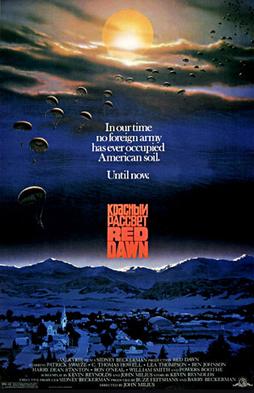
Red Dawn (1984)
Just about any movie can -- and most likely will -- be remade at some point. After a debacle of a free screening of the new Red Dawn movie (I missed it, didn't get there early enough), I consoled myself with the original, a 1980s classic that is still as good as ever. Guilty pleasure? Eh, maybe, I maintain it's just a good movie. Enter 1984's Red Dawn.
It's an October day like any other in the town of Calumet, Colorado. As classes start at the local high school though, parachutes appear in the sky, hundreds of them. What exactly is going on? It's Russian and Cuban paratroopers dropping in as an advance element of the invasion of the U.S. The school and town gets shot up in the process with many casualties, but a group of teenagers including Jed (Patrick Swayze), a former jock working with his Dad, and his younger brother, Matt (Charlie Sheen), manage to escape the town and head for the Rockies where they'll be relatively safe. A month goes by though as they hide, and then the news hits. The invasion was a success -- to a point -- but the fighting has now gone stagnant. Well behind Russian/enemy lines, Jed, Matt and their friends decide to take the attack to their invaders, becoming a partisan group of resistance fighters.
From tough guy writer/director John Milius, 'Dawn' is definitely a product of the times, but in good ways. With the Cold War still very much alive between the U.S. and Russia, this potential invasion story hits home. People had wondered and questioned for years if this was where the conflict was heading. In the years since, 'Dawn' has gained a reputation as a so bad it's good movie, even a guilty pleasure. Yes, I suppose it qualifies, but I tend to disagree. The acting is over the top at times, the ultra-patriotism evident everywhere, and some scenes do produce some unintentional laughs, but I maintain this is just a good movie. If it is a little heavy-handed at times, so be it. It is entertaining as hell from the start, and that doesn't change by the end.
The screenplay from Milius and Kevin Reynolds wastes no time setting the stage. Less than two minutes into the movie, parachutes are descending on Colorado, sending Calumet into chaos. People are running for their lives as paratroopers start shooting anything that moves. Talk about a tone-setter. As an opening, it's hard to beat. 'Dawn' has its fair share of memorable moments, probably most famously the teenagers yelling 'Wolverines!' after successful attacks on invading forces (Wolverines was the school mascot). Aided by Basil Poledouris' score, the action scenes -- of which there are plenty -- and dramatic scenes are balanced out perfectly. Listen to the main theme HERE. The film was shot on location in New Mexico in the mountains, giving it a hard-edged look that benefits the ever-darkening story as well.
It is an 80s movie, and the cast certainly reflects that. I have a theory about Swayze in 1980s movies. He's in every great movie from the decade. If you can't find him, you're not looking hard enough. A 32-year old playing a recent high school graduate? Right. But who cares?!? It's Patrick Swayze, and he's ridiculously cool! Along with Sheen, the Wolverines include Lea Thompson, C. Thomas Howell, Jennifer Grey, Darren Dalton, Brad Savage and Doug Toby. Swayze and Sheen as brothers stand out, as does Howell as Robert, the Wolverine so bent on revenge for his parent's death he becomes a hardened killer. Also look for Powers Boothe as Col. Andy Tanner, a downed fighter pilot who fights with the Wolveines, in a scene-stealing part. In smaller parts, old pros Ben Johnson and Harry Dean Stanton (as Jed and Matt's imprisoned Dad) certainly make positive impressions too.
On repeated viewings, I've come to like this movie more and more. I think you can chalk that up to the darkness of the story. Yes, there's a fair share of fantasy here; school kids getting guns and taking on invading forces, becoming heroes in the process. But actually considering the story, it's incredibly dark. Case in point? The Wolverines start getting picked off one-by-one. The Russian invaders call in a specialist, a hunter, Strelnikov (William Smith), to brutally hunt them down, using any tactics he has at his disposal. We see the war from basically the opposite side of how the U.S. has fought in any conflict. We're being attacked. We're defending. When the Wolverines kill Russians, Americans are killed in retaliation, but on we fight. In a sympathetic part, Ron O'Neal plays Colonel Bella, a former revolutionary now fighting from the opposite perspective, an officer trying to quell an uprising.
This darkness comes through in the final 45 minutes, building to a surprising but highly effective ending. I love Swayze and Sheen's conversations they have in between fights. Swayze's Jed puts it best as these two friends/brothers plan their line of attack, knowing their odds are slim. He states "It's not easy being brothers, huh?" Shakespeare? No, but it works. As the Russians turns the tables on the Wolverines, that is 'Dawn' at its best. I love the ending as well, Jed and Matt taking the attack to the Russian base. It's a great ending, and not surprisingly, a patriotic one. Heavy-handed guilty pleasure? Maybe, but I think it's just a really good movie.
Red Dawn (1984): *** 1/2 /****
It's an October day like any other in the town of Calumet, Colorado. As classes start at the local high school though, parachutes appear in the sky, hundreds of them. What exactly is going on? It's Russian and Cuban paratroopers dropping in as an advance element of the invasion of the U.S. The school and town gets shot up in the process with many casualties, but a group of teenagers including Jed (Patrick Swayze), a former jock working with his Dad, and his younger brother, Matt (Charlie Sheen), manage to escape the town and head for the Rockies where they'll be relatively safe. A month goes by though as they hide, and then the news hits. The invasion was a success -- to a point -- but the fighting has now gone stagnant. Well behind Russian/enemy lines, Jed, Matt and their friends decide to take the attack to their invaders, becoming a partisan group of resistance fighters.
From tough guy writer/director John Milius, 'Dawn' is definitely a product of the times, but in good ways. With the Cold War still very much alive between the U.S. and Russia, this potential invasion story hits home. People had wondered and questioned for years if this was where the conflict was heading. In the years since, 'Dawn' has gained a reputation as a so bad it's good movie, even a guilty pleasure. Yes, I suppose it qualifies, but I tend to disagree. The acting is over the top at times, the ultra-patriotism evident everywhere, and some scenes do produce some unintentional laughs, but I maintain this is just a good movie. If it is a little heavy-handed at times, so be it. It is entertaining as hell from the start, and that doesn't change by the end.
The screenplay from Milius and Kevin Reynolds wastes no time setting the stage. Less than two minutes into the movie, parachutes are descending on Colorado, sending Calumet into chaos. People are running for their lives as paratroopers start shooting anything that moves. Talk about a tone-setter. As an opening, it's hard to beat. 'Dawn' has its fair share of memorable moments, probably most famously the teenagers yelling 'Wolverines!' after successful attacks on invading forces (Wolverines was the school mascot). Aided by Basil Poledouris' score, the action scenes -- of which there are plenty -- and dramatic scenes are balanced out perfectly. Listen to the main theme HERE. The film was shot on location in New Mexico in the mountains, giving it a hard-edged look that benefits the ever-darkening story as well.
It is an 80s movie, and the cast certainly reflects that. I have a theory about Swayze in 1980s movies. He's in every great movie from the decade. If you can't find him, you're not looking hard enough. A 32-year old playing a recent high school graduate? Right. But who cares?!? It's Patrick Swayze, and he's ridiculously cool! Along with Sheen, the Wolverines include Lea Thompson, C. Thomas Howell, Jennifer Grey, Darren Dalton, Brad Savage and Doug Toby. Swayze and Sheen as brothers stand out, as does Howell as Robert, the Wolverine so bent on revenge for his parent's death he becomes a hardened killer. Also look for Powers Boothe as Col. Andy Tanner, a downed fighter pilot who fights with the Wolveines, in a scene-stealing part. In smaller parts, old pros Ben Johnson and Harry Dean Stanton (as Jed and Matt's imprisoned Dad) certainly make positive impressions too.
On repeated viewings, I've come to like this movie more and more. I think you can chalk that up to the darkness of the story. Yes, there's a fair share of fantasy here; school kids getting guns and taking on invading forces, becoming heroes in the process. But actually considering the story, it's incredibly dark. Case in point? The Wolverines start getting picked off one-by-one. The Russian invaders call in a specialist, a hunter, Strelnikov (William Smith), to brutally hunt them down, using any tactics he has at his disposal. We see the war from basically the opposite side of how the U.S. has fought in any conflict. We're being attacked. We're defending. When the Wolverines kill Russians, Americans are killed in retaliation, but on we fight. In a sympathetic part, Ron O'Neal plays Colonel Bella, a former revolutionary now fighting from the opposite perspective, an officer trying to quell an uprising.
This darkness comes through in the final 45 minutes, building to a surprising but highly effective ending. I love Swayze and Sheen's conversations they have in between fights. Swayze's Jed puts it best as these two friends/brothers plan their line of attack, knowing their odds are slim. He states "It's not easy being brothers, huh?" Shakespeare? No, but it works. As the Russians turns the tables on the Wolverines, that is 'Dawn' at its best. I love the ending as well, Jed and Matt taking the attack to the Russian base. It's a great ending, and not surprisingly, a patriotic one. Heavy-handed guilty pleasure? Maybe, but I think it's just a really good movie.
Red Dawn (1984): *** 1/2 /****
Thursday, December 6, 2012
The Furies
Having helped make a name for himself in the late 1940s with film noirs like Border Incident, Side Street, Raw Deal, director Anthony Mann spun that success into a string of his best films over a span of about four years, including an interesting, adult-themed western from 1950, The Furies.
Running his cattle ranch, the Furies, with an iron fist, T.C. Jeffords (Walter Huston) has created an empire unto himself. He doesn't tolerate weakness in those around him and is always looking out for his own well-being no matter the cost/expense to others. At his side and helping him run the ranch is his fiery daughter, Vance (Barbara Stanwyck), who looks up to her father in every way and adopted his brutality as her own. As Vance decides she wants a husband who can keep up with her, the Furies falls on tough times with T.C. looking for any sort of income. Making matters worse is that T.C. proposes to Flo Burnett (Judith Anderson), a rich Easterner, a decision that does not sit well with Vance.
As I've written about before, the late 1940s and early 1950s were a key period in the transitioning of the wild west on film. Gone were the singing cowboys, straight-laced good guys and so obviously evil bad guys. The westerns became more adult-oriented. There weren't good guys and bad guys, just not-so-nice good guys and less evil bad guys. In other words? More realistic. These significantly darker stories have allusions from everything to Greek mythology to Shakespeare and everything in between. Hints of incest are there (incredibly subtle, but there) with countless more betrayals, back-stabbings and murders lurking in the corners.
Blending his film noir roots with the western makes for an easy transition for Mann in the director's chair. Picked up by the Criterion Collection, it's easy to see why. The film lives in both the film noir world and the western world, making for a great combination. All the film noir elements are there -- shadowy, smoky settings, the femme fatale, the conniving shady businessman and so many more -- and 'Furies' is certainly benefited from the black and white photography. Westerns can look beautiful in color, especially late 1940s ventures like She Wore a Yellow Ribbon, but there is an effective simplicity to the black and white. It was filmed on-location in the Arizona desert, the starkness and isolated feeling hanging over the ever-darkening developing story. Franz Waxman's score is worthwhile too.
One of my issues reading Greek mythology in high school and college was simple; too many characters. 'Furies' has a lot of characters, all of them looking out for themselves. A film noir star herself, Stanwyck seems at ease in the western. A tough female star is always a welcome addition to the genre, throwing away the notion of the damsel in distress. Huston gets to ham it up a bit as T.C., but he does a great job. Wendell Corey is the conniving Rip Darrow, a banker and saloon owner looking for revenge who also takes a shine to Stanwyck's Vance. Gilbert Roland makes the most of a supporting part as Juan Herrera who with his family is about to be kicked off the Jeffords' land, including his mother (Blanche Yurka), who's believed to be an old witch. Thomas Gomez as some fun as El Tigre, Jeffords' cattle boss, leading a supporting cast that includes Beulah Bondi, Albert Dekker, John Bromfield, and Wallace Ford.
With a 109-minute running time, I wasn't always sure where 'Furies' was heading. Well, check that. You know it won't be a happy ending, but it takes an interesting route getting there. All the back-stabbing and betrayals are present as anyone and everyone starts to turn on each other. Always pay attention though, it is the 1940s and karma, she is a....well, you know. Past transgressions must be paid for. The final scene is a little too hunky-dory, a little too sweet for my liking, but the build-up is solid enough to not be ruined by the cop-out finale at the Jeffords' ranch. Credit to Mann for combining film noir and an adult western so smoothly. It's missing that special something that keeps it from classic status, but it's an above average western.
The Furies (1950): ***/****
Running his cattle ranch, the Furies, with an iron fist, T.C. Jeffords (Walter Huston) has created an empire unto himself. He doesn't tolerate weakness in those around him and is always looking out for his own well-being no matter the cost/expense to others. At his side and helping him run the ranch is his fiery daughter, Vance (Barbara Stanwyck), who looks up to her father in every way and adopted his brutality as her own. As Vance decides she wants a husband who can keep up with her, the Furies falls on tough times with T.C. looking for any sort of income. Making matters worse is that T.C. proposes to Flo Burnett (Judith Anderson), a rich Easterner, a decision that does not sit well with Vance.
As I've written about before, the late 1940s and early 1950s were a key period in the transitioning of the wild west on film. Gone were the singing cowboys, straight-laced good guys and so obviously evil bad guys. The westerns became more adult-oriented. There weren't good guys and bad guys, just not-so-nice good guys and less evil bad guys. In other words? More realistic. These significantly darker stories have allusions from everything to Greek mythology to Shakespeare and everything in between. Hints of incest are there (incredibly subtle, but there) with countless more betrayals, back-stabbings and murders lurking in the corners.
Blending his film noir roots with the western makes for an easy transition for Mann in the director's chair. Picked up by the Criterion Collection, it's easy to see why. The film lives in both the film noir world and the western world, making for a great combination. All the film noir elements are there -- shadowy, smoky settings, the femme fatale, the conniving shady businessman and so many more -- and 'Furies' is certainly benefited from the black and white photography. Westerns can look beautiful in color, especially late 1940s ventures like She Wore a Yellow Ribbon, but there is an effective simplicity to the black and white. It was filmed on-location in the Arizona desert, the starkness and isolated feeling hanging over the ever-darkening developing story. Franz Waxman's score is worthwhile too.
One of my issues reading Greek mythology in high school and college was simple; too many characters. 'Furies' has a lot of characters, all of them looking out for themselves. A film noir star herself, Stanwyck seems at ease in the western. A tough female star is always a welcome addition to the genre, throwing away the notion of the damsel in distress. Huston gets to ham it up a bit as T.C., but he does a great job. Wendell Corey is the conniving Rip Darrow, a banker and saloon owner looking for revenge who also takes a shine to Stanwyck's Vance. Gilbert Roland makes the most of a supporting part as Juan Herrera who with his family is about to be kicked off the Jeffords' land, including his mother (Blanche Yurka), who's believed to be an old witch. Thomas Gomez as some fun as El Tigre, Jeffords' cattle boss, leading a supporting cast that includes Beulah Bondi, Albert Dekker, John Bromfield, and Wallace Ford.
With a 109-minute running time, I wasn't always sure where 'Furies' was heading. Well, check that. You know it won't be a happy ending, but it takes an interesting route getting there. All the back-stabbing and betrayals are present as anyone and everyone starts to turn on each other. Always pay attention though, it is the 1940s and karma, she is a....well, you know. Past transgressions must be paid for. The final scene is a little too hunky-dory, a little too sweet for my liking, but the build-up is solid enough to not be ruined by the cop-out finale at the Jeffords' ranch. Credit to Mann for combining film noir and an adult western so smoothly. It's missing that special something that keeps it from classic status, but it's an above average western.
The Furies (1950): ***/****
Wednesday, December 5, 2012
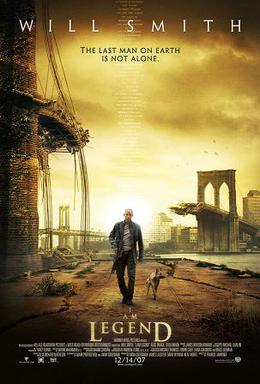
I Am Legend
First written by author Richard Matheson in 1954, 'I Am Legend' is a gem of a book, a story that genuinely creeped me out and sent shivers up and down my back. Movie studios saw potential, and they've gone to the well a handful of times, including the most recent effort, 2007's I Am Legend.
It's been three years since a genetically-mutated medicine reversed its positives and wiped out some 94% of the world's population. Like a disease, it spread, turning normal human beings into mutants, Darkseekers who cannot step into any sort of light. In a silent, completely alone Manhattan in New York City, Dr. Robert Neville (Will Smith) fears he is the last man on Earth. Neville is somehow immune to the disease that affected so many, and now lives on his own, his dog, Sam, a German shepherd, his only companion. They travel through NYC looking for supplies, for help of any sort. All the while, Robert keeps working at a cure, hoping that his blood holds the key to stopping the disease spread.
As bankable a star as Hollywood currently has, Will Smith is the main reason to go see this 2007 science fiction-horror-apocalyptic story. At times, it's easy to think of him as a movie star and not an actor, but he's shown on multiple occasions he is truly an actor. As the last man on Earth, the focus in on Smith's Neville and no one else. He dominates the screen. Dropping into this story some 3 years since the disease, we see Neville's routine from day-to-day. Survive, supply, search and get back home to a fortified house on Washington Square before the Darkseekers come out from their daylight hiding places. In quick flashbacks, we see Robert's involvement in the evacuation of Manhattan, adding another layer to the character. It has to be an actor's dream to have a role like this, and Smith doesn't disappoint.
Most importantly, Smith's performance feels very real. Yes, it's a movie. Yes, he's working off a script, but it feels like a human being would react. Imagine being alone with no one to talk to for three years, but a loving dog that rarely leaves your side. Neville has set up mannequins around NYC and named them, talking to them every day, wondering if he should flirt with a "cute girl" at the video store. He goes to that video store and picks up a different movie everyday (he's working his way through the 'G Section'). Neville hunts -- for food and Darkseekers -- and waits at a specific point each day in case anyone listens to his radio broadcasts. The pressure becomes almost unbearable for him, and rightfully so. The spotlight is on Will Smith, and he certainly embraces it here in a sympathetic, heartfelt, and emotional role.
So what else? The look of this film from director Francis Lawrence is a lynchpin to everything working. The opening sequence is startling especially, laying out the groundwork for the story to come. Driving a souped-up Mustang, Neville and Sam drive through an empty NYC. They're hunting for deer, passing completely isolated, empty streets. Cars line the curbs where they were left. Buildings tower over them, no one inside at all...no one human at least. Seeing New York City like this provides some truly amazing shots. I especially liked composer James Newton Howard's score, his main them in particular. Listen HERE. It is underplayed in a perfect way. Everything about the movie could have been big, loud and obvious, but Lawrence's direction, Howard's music and Smith's acting keep things grounded.
All those positives aside, there are some negatives. The first 60-70 minutes are pretty perfect. The last 30-40 minutes aren't. SPOILERS from here on in SPOILERS We learn that Neville isn't alone when he is rescued one night by Anna (Alice Braga), a woman in her late 20s/early 30s, and Ethan (Charlie Tahan), a young boy, who have similarly managed to survive. Maybe it's just because the focus isn't entirely on Neville anymore, but there's just little interest in seeing Anna and Ethan's plight. The pacing up to this point is perfect, doing a great job of building tension and keeping you guessing, but the last 30 minutes (especially the ending) feels rushed. It ain't a happy ending either, but that wasn't an issue. It works in a big way, tweaking Matheson's original ending, but that's to be expected. It would have been hard to sustain the momentum throughout, but 'Legend' gets close.
An incredibly creepy, well-acted sci-fi horror flick. There are flaws, but the positives outweigh the negatives. I loved Smith's performance, and that rises above any other issues I have.
I Am Legend (2007): *** 1/2 /****
It's been three years since a genetically-mutated medicine reversed its positives and wiped out some 94% of the world's population. Like a disease, it spread, turning normal human beings into mutants, Darkseekers who cannot step into any sort of light. In a silent, completely alone Manhattan in New York City, Dr. Robert Neville (Will Smith) fears he is the last man on Earth. Neville is somehow immune to the disease that affected so many, and now lives on his own, his dog, Sam, a German shepherd, his only companion. They travel through NYC looking for supplies, for help of any sort. All the while, Robert keeps working at a cure, hoping that his blood holds the key to stopping the disease spread.
As bankable a star as Hollywood currently has, Will Smith is the main reason to go see this 2007 science fiction-horror-apocalyptic story. At times, it's easy to think of him as a movie star and not an actor, but he's shown on multiple occasions he is truly an actor. As the last man on Earth, the focus in on Smith's Neville and no one else. He dominates the screen. Dropping into this story some 3 years since the disease, we see Neville's routine from day-to-day. Survive, supply, search and get back home to a fortified house on Washington Square before the Darkseekers come out from their daylight hiding places. In quick flashbacks, we see Robert's involvement in the evacuation of Manhattan, adding another layer to the character. It has to be an actor's dream to have a role like this, and Smith doesn't disappoint.
Most importantly, Smith's performance feels very real. Yes, it's a movie. Yes, he's working off a script, but it feels like a human being would react. Imagine being alone with no one to talk to for three years, but a loving dog that rarely leaves your side. Neville has set up mannequins around NYC and named them, talking to them every day, wondering if he should flirt with a "cute girl" at the video store. He goes to that video store and picks up a different movie everyday (he's working his way through the 'G Section'). Neville hunts -- for food and Darkseekers -- and waits at a specific point each day in case anyone listens to his radio broadcasts. The pressure becomes almost unbearable for him, and rightfully so. The spotlight is on Will Smith, and he certainly embraces it here in a sympathetic, heartfelt, and emotional role.
So what else? The look of this film from director Francis Lawrence is a lynchpin to everything working. The opening sequence is startling especially, laying out the groundwork for the story to come. Driving a souped-up Mustang, Neville and Sam drive through an empty NYC. They're hunting for deer, passing completely isolated, empty streets. Cars line the curbs where they were left. Buildings tower over them, no one inside at all...no one human at least. Seeing New York City like this provides some truly amazing shots. I especially liked composer James Newton Howard's score, his main them in particular. Listen HERE. It is underplayed in a perfect way. Everything about the movie could have been big, loud and obvious, but Lawrence's direction, Howard's music and Smith's acting keep things grounded.
All those positives aside, there are some negatives. The first 60-70 minutes are pretty perfect. The last 30-40 minutes aren't. SPOILERS from here on in SPOILERS We learn that Neville isn't alone when he is rescued one night by Anna (Alice Braga), a woman in her late 20s/early 30s, and Ethan (Charlie Tahan), a young boy, who have similarly managed to survive. Maybe it's just because the focus isn't entirely on Neville anymore, but there's just little interest in seeing Anna and Ethan's plight. The pacing up to this point is perfect, doing a great job of building tension and keeping you guessing, but the last 30 minutes (especially the ending) feels rushed. It ain't a happy ending either, but that wasn't an issue. It works in a big way, tweaking Matheson's original ending, but that's to be expected. It would have been hard to sustain the momentum throughout, but 'Legend' gets close.
An incredibly creepy, well-acted sci-fi horror flick. There are flaws, but the positives outweigh the negatives. I loved Smith's performance, and that rises above any other issues I have.
I Am Legend (2007): *** 1/2 /****
Labels:
2000s,
Alice Braga,
Apocalyptic,
Horror,
Sci-Fi,
Will Smith
Tuesday, December 4, 2012
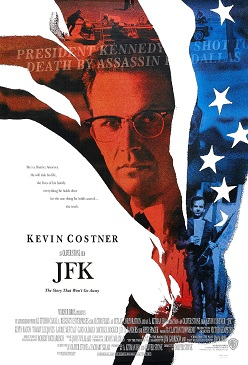
JFK
On November 22, 1963, President John F. Kennedy was traveling by motorcade in Dallas when he was shot and killed by Lee Harvey Oswald. Or so some think at least. One of the most tragic events in U.S. history, Kennedy's assassination has sparked hundreds and thousands of theories. Was Oswald working alone? Was it a government conspiracy to kill Kennedy? Maybe no one will ever know for sure, but the conspiracy theories abound. Enter stage right, 1991's JFK.
The district attorney in New Orleans, Jim Garrison (Kevin Costner) is stunned like so many Americans when news of President Kennedy's death hits the airwaves. He watches with morbid curiosity and a desire for answers as Lee Harvey Oswald (Gary Oldman) is arrested for the murder and summarily shot by Jack Ruby two days later. Several years pass, but by 1966, Garrison is bothered more and more by the details of the assassination. With help from his staff, Garrison begins to do his own investigation, and the results are startling. What exactly happened in the days and months leading up to Nov. 22, 1963? More importantly, what happened after? The more they find out, the more Garrison smells a government cover-up.
From director Oliver Stone, this is quite the ambitious project. For starters, because it involves such a touchy subject as the JFK assassination, everyone has at least somewhat of an opinion on the subject. More than just viewer opinions, the amount of info, theories and evidence involving the assassination is endless. Type in 'JFK Conspiracy' at Google, and see how many results you get. So walking through a virtual filming minefield, Stone takes on a gargantuan task. The end result is a thought-provoking, somewhat meandering (at 206 minutes) story that throws a lot at the viewer, but if you pay attention, it's not a difficult movie to keep up with.
The goal from the beginning is simple; Stone intends to put that bug in your head that the lone shooter theory -- Oswald shooting Kennedy -- just isn't the way it happened. Recent studies show that some 60% of Americans believe there was a conspiracy involving the shooting. Stone has always had an aggressive shooting style, but it's a positive here. The entire movie is basically one interview after another -- quick cuts, fast editing, flashbacks galore -- as one piece of evidence piles up one on top of the other through Garrison and Co.'s investigation. The story is based on the true-to-life efforts of Garrison and his staff (with some tweaks here and there), but it plays like All the President's Men or any number of other films detailing an investigative report.
Ready to be impressed? This is one doozy of a cast, starting with Costner who delivers a likable, human performance as the D.A. driven to obsession to find out the truth. The subplot with his family (including wife Sissy Spacek) is one of the few weak points the movie has. Seeing him only in flashback, Oldman is frighteningly good as Oswald, and a dead ringer physically to boot. Garrison's investigative staff includes Jay O. Sanders, Laurie Metcalf, Wayne Knight, Michael Rooker and Gary Grubbs. Don't go anywhere. I'm not to the halfway point yet. There's also Ed Asner, Jack Lemmon, Brian Doyle-Murray (as Jack Ruby), Walther Matthau, John Candy, Tommy Lee Jones, Donald Sutherland, Kevin Bacon, Joe Pesci, and Tomas Milian. Some are nothing more than a scene or two cameo, but their presence alone legitimizes their scenes. Jones, Sutherland, Bacon and Pesci are the most memorable of the group.
Presenting all sorts of what ifs and could bes, the movie builds to a courtroom scene where Garrison puts someone on trial for conspiring to kill JFK. The scene is a gem, capping off all we've heard, sene and learned through their investigation. Costner is highly effective in this scene, both pointing out the flaws in the lone shooter theory (later referenced famously in Seinfeld with the Magic Loogie, watch HERE) but also addressing the jury for what they should do. It shows one man's frustration at what he believes the government has been up to, doing something for extraordinary amounts of money rather than what's good for the country. The whole movie is enjoyable and extremely polished, but the court scene (about 35 minutes at the end) is the best thing going.
So did Oswald shoot Kennedy? Were there other shooters? We'll probably never know. But I have to give Stone's film credit. Say what you want about your own thoughts on the assassination, but Stone cleanly lays out the potential for at least one possibility. Maybe Oswald was a patsy, one man set up by larger forces at work. It's something you will have to think about yourself, but as a director, Stone does an admirable job at least making us question what really happened.
JFK (1991): ***/****
The district attorney in New Orleans, Jim Garrison (Kevin Costner) is stunned like so many Americans when news of President Kennedy's death hits the airwaves. He watches with morbid curiosity and a desire for answers as Lee Harvey Oswald (Gary Oldman) is arrested for the murder and summarily shot by Jack Ruby two days later. Several years pass, but by 1966, Garrison is bothered more and more by the details of the assassination. With help from his staff, Garrison begins to do his own investigation, and the results are startling. What exactly happened in the days and months leading up to Nov. 22, 1963? More importantly, what happened after? The more they find out, the more Garrison smells a government cover-up.
From director Oliver Stone, this is quite the ambitious project. For starters, because it involves such a touchy subject as the JFK assassination, everyone has at least somewhat of an opinion on the subject. More than just viewer opinions, the amount of info, theories and evidence involving the assassination is endless. Type in 'JFK Conspiracy' at Google, and see how many results you get. So walking through a virtual filming minefield, Stone takes on a gargantuan task. The end result is a thought-provoking, somewhat meandering (at 206 minutes) story that throws a lot at the viewer, but if you pay attention, it's not a difficult movie to keep up with.
The goal from the beginning is simple; Stone intends to put that bug in your head that the lone shooter theory -- Oswald shooting Kennedy -- just isn't the way it happened. Recent studies show that some 60% of Americans believe there was a conspiracy involving the shooting. Stone has always had an aggressive shooting style, but it's a positive here. The entire movie is basically one interview after another -- quick cuts, fast editing, flashbacks galore -- as one piece of evidence piles up one on top of the other through Garrison and Co.'s investigation. The story is based on the true-to-life efforts of Garrison and his staff (with some tweaks here and there), but it plays like All the President's Men or any number of other films detailing an investigative report.
Ready to be impressed? This is one doozy of a cast, starting with Costner who delivers a likable, human performance as the D.A. driven to obsession to find out the truth. The subplot with his family (including wife Sissy Spacek) is one of the few weak points the movie has. Seeing him only in flashback, Oldman is frighteningly good as Oswald, and a dead ringer physically to boot. Garrison's investigative staff includes Jay O. Sanders, Laurie Metcalf, Wayne Knight, Michael Rooker and Gary Grubbs. Don't go anywhere. I'm not to the halfway point yet. There's also Ed Asner, Jack Lemmon, Brian Doyle-Murray (as Jack Ruby), Walther Matthau, John Candy, Tommy Lee Jones, Donald Sutherland, Kevin Bacon, Joe Pesci, and Tomas Milian. Some are nothing more than a scene or two cameo, but their presence alone legitimizes their scenes. Jones, Sutherland, Bacon and Pesci are the most memorable of the group.
Presenting all sorts of what ifs and could bes, the movie builds to a courtroom scene where Garrison puts someone on trial for conspiring to kill JFK. The scene is a gem, capping off all we've heard, sene and learned through their investigation. Costner is highly effective in this scene, both pointing out the flaws in the lone shooter theory (later referenced famously in Seinfeld with the Magic Loogie, watch HERE) but also addressing the jury for what they should do. It shows one man's frustration at what he believes the government has been up to, doing something for extraordinary amounts of money rather than what's good for the country. The whole movie is enjoyable and extremely polished, but the court scene (about 35 minutes at the end) is the best thing going.
So did Oswald shoot Kennedy? Were there other shooters? We'll probably never know. But I have to give Stone's film credit. Say what you want about your own thoughts on the assassination, but Stone cleanly lays out the potential for at least one possibility. Maybe Oswald was a patsy, one man set up by larger forces at work. It's something you will have to think about yourself, but as a director, Stone does an admirable job at least making us question what really happened.
JFK (1991): ***/****
Sunday, December 2, 2012
Bright Victory
Some of my favorite war movies focus almost exclusively on the actual combat and fighting in war. Some of the best focus on the post-war lives of the soldiers. What about the soldiers who were wounded and/or traumatized by what they saw and experienced? The most obvious choices include The Best Years of Our Lives, The Men, Born on the 4th of July, but 1951's Bright Victory belongs in that grouping.
Working with a forward artillery unit laying telephone wire in 1943 North Africa, Larry Nevins (Arthur Kennedy) is struck in the side of the head by a German sniper's bullet. His optic nerves are destroyed, and doctors don't believe that surgery will ever restore his sight. Back in the states at a rehab facility, Nevins goes about the slow work of learning how to live as a blind individual. In a weird way, he has to re-learn how to be a regular person, relying on his other senses, using a walking stick. He has help along the way from other wounded vets (similarly blinded) and one girl, Judy (Peggy Dow), who he hits it off with immediately. All the while though Larry is worried about the reaction he'll get back home, especially from fiance, Chris (Julie Adams).
Released in 1951 from director Mark Robson, 'Bright' is an impressive, well-made movie. Filmed in black and white, it's a meat and potatoes kind of movie. The focus is more on the personal level than any sort of large-scale action. This is Larry's story as he learns how to live as a blind person. We sees his reactions and how he copes; anger, frustration (even attempting suicide once), acceptance and finally a desire to work at it and move on with his life. It was filmed on location at Valley Forge Medical Center -- a nice touch for authenticity -- and detours once or twice to some cool Philadelphia locations. Why focus on the bigger picture when the smaller, more focused picture is more effective?
One of the best things going for 'Bright' comes from its honesty in exploring Larry's plight. He's born and raised in Florida, and living in the deep South, he's developed a racist streak right up his back. However, if you're blind.....Yeah, exactly. Voice inflections aside, how can you tell if someone is black or white? Working through his therapy, Larry strikes up a fast friendship with similarly wounded black soldier, Joe Morgan (James Edwards). Larry doesn't realize it though, one day making a statement about 'n***ers' being moved into the ward. And let the fireworks fly. The developing feeling in Larry is highly effective in its simplicity. It takes a life-altering incident to change his mind, but he starts to realize 'what difference does skin color make?' For a movie in 1951 years ahead of the Civil Rights movement, that's a profound message.
Casting Kennedy as Larry is a match made in heaven. Arthur Kennedy could be a despicable villain like nobody's business. More than that though, he's a great actor, and this is a part that allows him to show off his range. He's more than believable in the part, and when he's going through the life of a blinded veteran, it doesn't feel forced. His relationship with Dow's Judy is interesting without being too cute, and the dilemma he feels about what he said to Joe and also what awaits at home helps develop the character. The racist aspect gives an added dimension to the character too, all for the positive in a great part for Kennedy.
Also look for Will Geer and Nana Bryant as Larry's parents waiting back home in Florida, Joan Banks and a pre-Mr. Howell Jim Backus as Judy's sister and brother-in-law, and Richard Egan and Murray Hamilton as two blinded vets Larry meets in the rehab ward with John Hudson play Cpl. Flagg, a non-com working with the wounded vets. If you watch early, you can also see Rock Hudson in a bit part as one of Larry's repair crew working in North Africa.
An underrated WWII movie that deserves more of a following. Moments like Egan's soldier meeting his wife and son (who's he never seen/met) are perfection in their honesty. That's the feeling the whole movie gives off. It isn't aggressively shoving a story and message in its face. It's content to be what it is. An effective, well-told and well-acted story with some great performances. You can watch the entire movie HERE at Youtube.
Bright Victory <---Youtube clip (1951): *** 1/2 /****
Working with a forward artillery unit laying telephone wire in 1943 North Africa, Larry Nevins (Arthur Kennedy) is struck in the side of the head by a German sniper's bullet. His optic nerves are destroyed, and doctors don't believe that surgery will ever restore his sight. Back in the states at a rehab facility, Nevins goes about the slow work of learning how to live as a blind individual. In a weird way, he has to re-learn how to be a regular person, relying on his other senses, using a walking stick. He has help along the way from other wounded vets (similarly blinded) and one girl, Judy (Peggy Dow), who he hits it off with immediately. All the while though Larry is worried about the reaction he'll get back home, especially from fiance, Chris (Julie Adams).
Released in 1951 from director Mark Robson, 'Bright' is an impressive, well-made movie. Filmed in black and white, it's a meat and potatoes kind of movie. The focus is more on the personal level than any sort of large-scale action. This is Larry's story as he learns how to live as a blind person. We sees his reactions and how he copes; anger, frustration (even attempting suicide once), acceptance and finally a desire to work at it and move on with his life. It was filmed on location at Valley Forge Medical Center -- a nice touch for authenticity -- and detours once or twice to some cool Philadelphia locations. Why focus on the bigger picture when the smaller, more focused picture is more effective?
One of the best things going for 'Bright' comes from its honesty in exploring Larry's plight. He's born and raised in Florida, and living in the deep South, he's developed a racist streak right up his back. However, if you're blind.....Yeah, exactly. Voice inflections aside, how can you tell if someone is black or white? Working through his therapy, Larry strikes up a fast friendship with similarly wounded black soldier, Joe Morgan (James Edwards). Larry doesn't realize it though, one day making a statement about 'n***ers' being moved into the ward. And let the fireworks fly. The developing feeling in Larry is highly effective in its simplicity. It takes a life-altering incident to change his mind, but he starts to realize 'what difference does skin color make?' For a movie in 1951 years ahead of the Civil Rights movement, that's a profound message.
Casting Kennedy as Larry is a match made in heaven. Arthur Kennedy could be a despicable villain like nobody's business. More than that though, he's a great actor, and this is a part that allows him to show off his range. He's more than believable in the part, and when he's going through the life of a blinded veteran, it doesn't feel forced. His relationship with Dow's Judy is interesting without being too cute, and the dilemma he feels about what he said to Joe and also what awaits at home helps develop the character. The racist aspect gives an added dimension to the character too, all for the positive in a great part for Kennedy.
Also look for Will Geer and Nana Bryant as Larry's parents waiting back home in Florida, Joan Banks and a pre-Mr. Howell Jim Backus as Judy's sister and brother-in-law, and Richard Egan and Murray Hamilton as two blinded vets Larry meets in the rehab ward with John Hudson play Cpl. Flagg, a non-com working with the wounded vets. If you watch early, you can also see Rock Hudson in a bit part as one of Larry's repair crew working in North Africa.
An underrated WWII movie that deserves more of a following. Moments like Egan's soldier meeting his wife and son (who's he never seen/met) are perfection in their honesty. That's the feeling the whole movie gives off. It isn't aggressively shoving a story and message in its face. It's content to be what it is. An effective, well-told and well-acted story with some great performances. You can watch the entire movie HERE at Youtube.
Bright Victory <---Youtube clip (1951): *** 1/2 /****
Labels:
1950s,
Arthur Kennedy,
Julie Adams,
Mark Robson,
Murray Hamilton,
Richard Egan,
Rock Hudson,
Will Geer,
WWII
Saturday, December 1, 2012
The Mighty Ducks
This next statement is going to sound ridiculous to anyone who in 1992 was not between the ages of 5 and 15, but here goes just the same. Released in 1992, The Mighty Ducks is one of those perfect movies. No, it's not a classic to stand up against Hollywood's all-time best. As an entertaining kid-oriented movie though? It has few rivals.
A hotshot lawyer in Minneapolis, Gordon Bombay (Emilio Estevez) is celebrating a win in court when he's pulled over by the police. He's charged with driving with an open container and sentenced to do 500 hours of community service. A hockey player growing up, Gordon is assigned to coach the District 5 Youth hockey team. While other district teams have some backing, District 5 is from a poorer section of town, and the kids to say the least, are a bunch of misfits. They don't have even remotely current equipment, and their skill level is average at best. Can disgruntled, frustrated Gordon put aside his ego enough to work with this bunch of underdogs?
I'm going to step up on my soap box here for a second so forgive me in advance. I was born in 1985 and grew up in the 1990s with movies like this. Not to get too preachy, but studios just don't make movies like this anymore. It seems all movies aimed at kids/families are either animated or so mind-blowingly stupid that I just don't see the appeal. Disney in the 1990s was different, specializing movies like this (and it's two sequels), Angels in the Outfield, The Big Green, Heavyweights. On a bigger level, there was Rookie of the Year, The Sandlot, Little Giants, Little Big League and so many more. These weren't classic, immaculate movies. They were aimed at kids, and you know what? Kids loved them. Maybe I just miss these movies (or maybe I'm onto something), but I don't think I'm off-base here. End of soap box rant. On with the Ducks.
This movie was made before, and it's been made since. It's the classic underdog story, borrowing from previous movies like the classic original Bad News Bears. There's something familiar about it, but in a good way. Oh no, the screwball, misfit kids against the highly-skilled, expertly trained kids from the good side of the tracks?!? How will it end? I would wager you can tell me how this movie ends right now, but it's a fun movie getting there. Throw some goofy, cute kids together, have them do a couple bonding montages, and then throw a do-or-die game at them. Oh, and you need some Queen songs, preferable We Are the Champions or We Will Rock You. I'm really not intending this to be as negative as it sounds. It's a sports underdog story. If you can't get behind that, go back to your Communist home. Just kidding of course.
A star of the 1980s (thanks John Hughes and the Young Gun flicks), Estevez wouldn't seem like an obvious choice for this story, but go figure, he's perfectly cast. As an actor with the right role, Estevez is an above average actor, like in The Breakfast Club. He's best suited for the more fun roles, like Billy the Kid in Young Guns I and II. This leans more toward the fun side. Estevez gets to have some fun as Gordon, a former hockey star who never quite lived up to his potential as a player because of a game gone wrong. As for the rest of the adult cast, Joss Ackland plays Hans, an old friend of Gordon's and a hockey supplier, Lane Smith as the evil rival coach of the rich, thuggish team, Heidi Kling as a single mom of one of Gordon's players, M.C. Gainey as Gordon's appointed driver, and Josef Sommer as Gordon's upper class tool of a boss.
Enough with that. Onto the Ducks! Many of the child actors would return for the later Might Ducks ventures as well. Everyone has their favorites of course. A 14-year old Joshua Jackson plays Charlie, the talented player who's struggling with some issues at home, Elden Henson is Fulton, the kid with a wicked slap shot who can't skate, Shaun Weiss as terrified goalie Goldberg, Matt Doherty as Averman, the motor-mouth, Brandon Quintin Adams as tough-talking Jesse, J.D. Daniels as Peter, the group runt, Aaron Schwartz as Karp, the necessary chubby kid, Marguerite Moreau as Connie, the also necessary girl on the team, and Vincent Laurusso as Adam, the ringer from a rival district team. Also look for young Danny Tamberelli (later of Pete and Pete) as one of the Ducks in a smaller part.
No point in analyzing this one too much. It's a great movie, one kids and families should both enjoy a ton.
The Mighty Ducks <---clip (1992): ***/****
A hotshot lawyer in Minneapolis, Gordon Bombay (Emilio Estevez) is celebrating a win in court when he's pulled over by the police. He's charged with driving with an open container and sentenced to do 500 hours of community service. A hockey player growing up, Gordon is assigned to coach the District 5 Youth hockey team. While other district teams have some backing, District 5 is from a poorer section of town, and the kids to say the least, are a bunch of misfits. They don't have even remotely current equipment, and their skill level is average at best. Can disgruntled, frustrated Gordon put aside his ego enough to work with this bunch of underdogs?
I'm going to step up on my soap box here for a second so forgive me in advance. I was born in 1985 and grew up in the 1990s with movies like this. Not to get too preachy, but studios just don't make movies like this anymore. It seems all movies aimed at kids/families are either animated or so mind-blowingly stupid that I just don't see the appeal. Disney in the 1990s was different, specializing movies like this (and it's two sequels), Angels in the Outfield, The Big Green, Heavyweights. On a bigger level, there was Rookie of the Year, The Sandlot, Little Giants, Little Big League and so many more. These weren't classic, immaculate movies. They were aimed at kids, and you know what? Kids loved them. Maybe I just miss these movies (or maybe I'm onto something), but I don't think I'm off-base here. End of soap box rant. On with the Ducks.
This movie was made before, and it's been made since. It's the classic underdog story, borrowing from previous movies like the classic original Bad News Bears. There's something familiar about it, but in a good way. Oh no, the screwball, misfit kids against the highly-skilled, expertly trained kids from the good side of the tracks?!? How will it end? I would wager you can tell me how this movie ends right now, but it's a fun movie getting there. Throw some goofy, cute kids together, have them do a couple bonding montages, and then throw a do-or-die game at them. Oh, and you need some Queen songs, preferable We Are the Champions or We Will Rock You. I'm really not intending this to be as negative as it sounds. It's a sports underdog story. If you can't get behind that, go back to your Communist home. Just kidding of course.
A star of the 1980s (thanks John Hughes and the Young Gun flicks), Estevez wouldn't seem like an obvious choice for this story, but go figure, he's perfectly cast. As an actor with the right role, Estevez is an above average actor, like in The Breakfast Club. He's best suited for the more fun roles, like Billy the Kid in Young Guns I and II. This leans more toward the fun side. Estevez gets to have some fun as Gordon, a former hockey star who never quite lived up to his potential as a player because of a game gone wrong. As for the rest of the adult cast, Joss Ackland plays Hans, an old friend of Gordon's and a hockey supplier, Lane Smith as the evil rival coach of the rich, thuggish team, Heidi Kling as a single mom of one of Gordon's players, M.C. Gainey as Gordon's appointed driver, and Josef Sommer as Gordon's upper class tool of a boss.
Enough with that. Onto the Ducks! Many of the child actors would return for the later Might Ducks ventures as well. Everyone has their favorites of course. A 14-year old Joshua Jackson plays Charlie, the talented player who's struggling with some issues at home, Elden Henson is Fulton, the kid with a wicked slap shot who can't skate, Shaun Weiss as terrified goalie Goldberg, Matt Doherty as Averman, the motor-mouth, Brandon Quintin Adams as tough-talking Jesse, J.D. Daniels as Peter, the group runt, Aaron Schwartz as Karp, the necessary chubby kid, Marguerite Moreau as Connie, the also necessary girl on the team, and Vincent Laurusso as Adam, the ringer from a rival district team. Also look for young Danny Tamberelli (later of Pete and Pete) as one of the Ducks in a smaller part.
No point in analyzing this one too much. It's a great movie, one kids and families should both enjoy a ton.
The Mighty Ducks <---clip (1992): ***/****
Friday, November 30, 2012
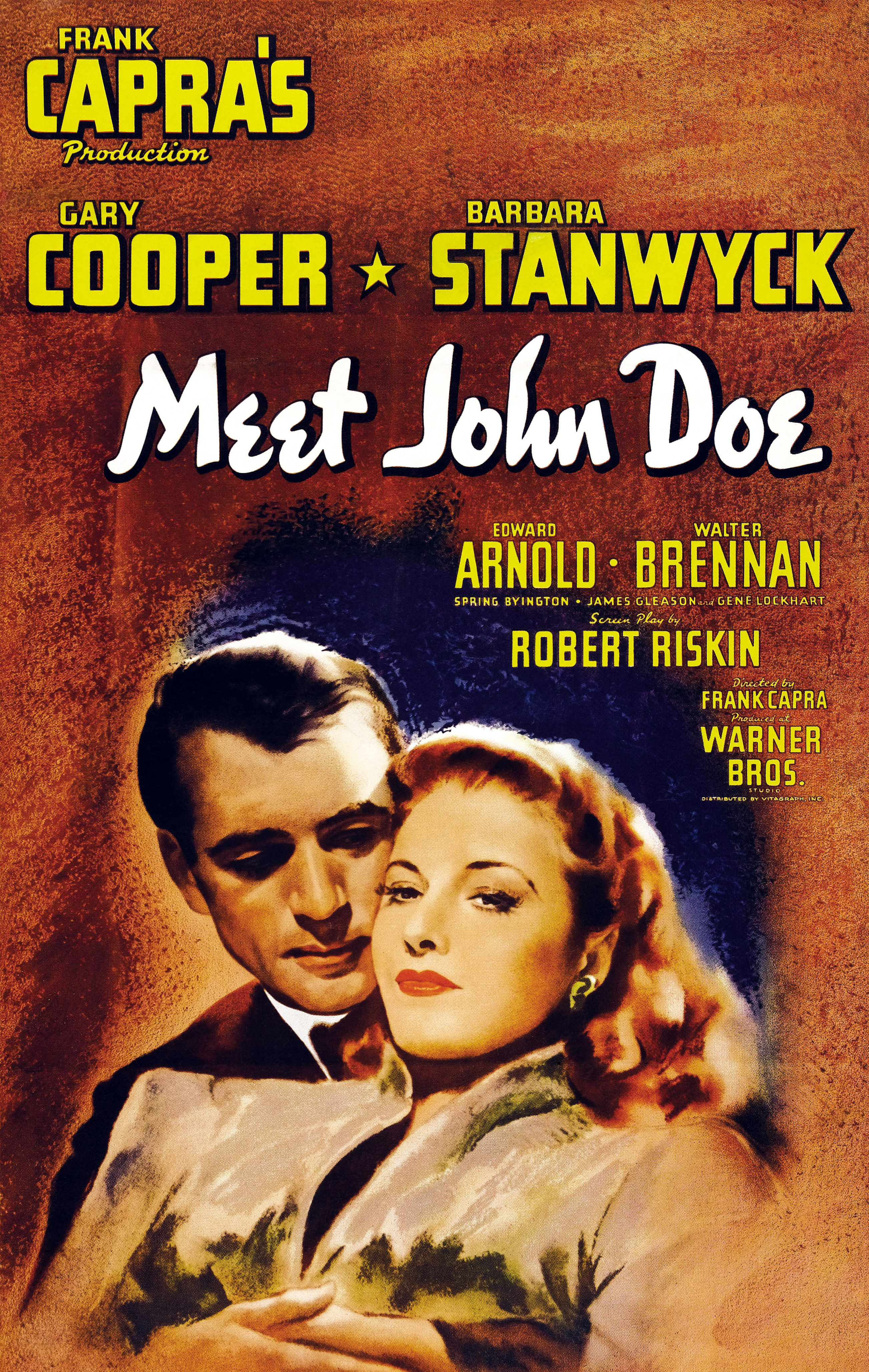
Meet John Doe
Released in the U.S. in spring of 1941, Meet John Doe is a successful movie that can chalk up at least part of its success to its release timing. At the tail end of the Great Depression and watching the world fall into WWII, the U.S. was at one of its historical low points. So how about a movie with a positive message that encourages the individual to work with others? Sounds simple, right?
Squeezed out of a job when a new owner takes over at her newspaper, columnist Ann Mitchell (Barbara Stanwyck) goes out guns blazing. She writes a column from "John Doe," a reader who's become disillusioned and frustrated with humanity and civilization, vowing to kill himself by jumping off City Hall on Christmas Eve. Uh-oh, we've got a problem. Readers are curious, wanting to save John Doe. Where to find a reader who never existed? Ann and the paper hire John Willoughby (Gary Cooper), an ex-baseball player turned drifter, to pose as John Doe. The response is tremendous though across America, but even Ann could not have planned what John Doe becomes as certain parties become involved with the grassroots movement.
In his last film before making almost a dozen WWII documentaries, director Frank Capra does not disappoint here. His films have a certain style to them, and not just in the visual sense. Maybe not in a visual sense at all. At their base, these are good-hearted stories that want to believe there's genuine good in people. There are those that are inherently good and those that are inherently bad with little to no middle ground. You're either one or the other. Watch enough of his movies, and you see those traits pop up in countless stories and characters.
As a story, this 1941 Capra film is a forerunner of later classics A Face in the Crowd and Network. It shows the rise -- and the inevitable and eventual fall -- of an individual, a person who inspires charity, faith and belief in the masses. Here, Cooper's John Doe is just looking for a meal, a place to sleep at night with a roof over his head. He has no ulterior motives. It's Ann who sees the potential for good, and there's a plenty. The John Doe movement -- help thy neighbor, be friendly, be helpful to all -- takes the country by storm. The ulterior motive comes from Ann's boss, D.B. Norton (Edward Arnold, doing what he does best, being BAD), who sees the power that can be manipulated with the John Doe movement. For a country struggling to get back on the right track, the message was simple (and appealing); work together, work to help and good things will happen.
Capra's films in general had a great sense of the Everyman, the normal guy. Obviously here, the focus is entirely on that individual in all his different forms. Who better to play the face of the Everyman than all-American actor Gary Cooper? In a career of iconic roles, this is certainly up there as one of his best.He does a fine job representing the average American. The shady nature of his business deal with Ann quickly hits hard, but he sees there's certainly potential for good too on an immense scale. He has a great believable chemistry with Stanwyck, the brow-beaten journalist who similarly sees the chance to do something in the country if people would just try. In addition to Arnold's snaky D.B. Norton, the cast includes Walter Brennan as the Colonel, John's questioning drifting partner who hates the system, and for the most part, people, and James Gleason as Connell, Ann's boss who sees what Norton is up to.
A sucker for anything in the dark, realist mode in films, I didn't always love 'Doe.' The sugary sweet outlook on life gets to be a little much at times, and the pacing can be a tad slow. One scene introducing the John Doe clubs goes on forever, Regis Toomey's Bert character explaining in expansive detail how the club came to be in his little town. The story is at its strongest at its darkest points. Norton's plan is hinted at -- uh-oh, sense of doom! -- and when it's revealed, the rug is pulled out from under John, Ann, and millions of Americans. As sweet as Capra's outlook can be at times, it's equally dark in these instances and equally effective. There are scenes where the symbolism is far too heavy-handed (portraying John as a martyr...a la Jesus), but what makes it bearable is the message of goodness. Well worth checking out. You can watch the movie in its public domain format HERE at Youtube.
Meet John Doe <---trailer (1941): ***/****
Squeezed out of a job when a new owner takes over at her newspaper, columnist Ann Mitchell (Barbara Stanwyck) goes out guns blazing. She writes a column from "John Doe," a reader who's become disillusioned and frustrated with humanity and civilization, vowing to kill himself by jumping off City Hall on Christmas Eve. Uh-oh, we've got a problem. Readers are curious, wanting to save John Doe. Where to find a reader who never existed? Ann and the paper hire John Willoughby (Gary Cooper), an ex-baseball player turned drifter, to pose as John Doe. The response is tremendous though across America, but even Ann could not have planned what John Doe becomes as certain parties become involved with the grassroots movement.
In his last film before making almost a dozen WWII documentaries, director Frank Capra does not disappoint here. His films have a certain style to them, and not just in the visual sense. Maybe not in a visual sense at all. At their base, these are good-hearted stories that want to believe there's genuine good in people. There are those that are inherently good and those that are inherently bad with little to no middle ground. You're either one or the other. Watch enough of his movies, and you see those traits pop up in countless stories and characters.
As a story, this 1941 Capra film is a forerunner of later classics A Face in the Crowd and Network. It shows the rise -- and the inevitable and eventual fall -- of an individual, a person who inspires charity, faith and belief in the masses. Here, Cooper's John Doe is just looking for a meal, a place to sleep at night with a roof over his head. He has no ulterior motives. It's Ann who sees the potential for good, and there's a plenty. The John Doe movement -- help thy neighbor, be friendly, be helpful to all -- takes the country by storm. The ulterior motive comes from Ann's boss, D.B. Norton (Edward Arnold, doing what he does best, being BAD), who sees the power that can be manipulated with the John Doe movement. For a country struggling to get back on the right track, the message was simple (and appealing); work together, work to help and good things will happen.
Capra's films in general had a great sense of the Everyman, the normal guy. Obviously here, the focus is entirely on that individual in all his different forms. Who better to play the face of the Everyman than all-American actor Gary Cooper? In a career of iconic roles, this is certainly up there as one of his best.He does a fine job representing the average American. The shady nature of his business deal with Ann quickly hits hard, but he sees there's certainly potential for good too on an immense scale. He has a great believable chemistry with Stanwyck, the brow-beaten journalist who similarly sees the chance to do something in the country if people would just try. In addition to Arnold's snaky D.B. Norton, the cast includes Walter Brennan as the Colonel, John's questioning drifting partner who hates the system, and for the most part, people, and James Gleason as Connell, Ann's boss who sees what Norton is up to.
A sucker for anything in the dark, realist mode in films, I didn't always love 'Doe.' The sugary sweet outlook on life gets to be a little much at times, and the pacing can be a tad slow. One scene introducing the John Doe clubs goes on forever, Regis Toomey's Bert character explaining in expansive detail how the club came to be in his little town. The story is at its strongest at its darkest points. Norton's plan is hinted at -- uh-oh, sense of doom! -- and when it's revealed, the rug is pulled out from under John, Ann, and millions of Americans. As sweet as Capra's outlook can be at times, it's equally dark in these instances and equally effective. There are scenes where the symbolism is far too heavy-handed (portraying John as a martyr...a la Jesus), but what makes it bearable is the message of goodness. Well worth checking out. You can watch the movie in its public domain format HERE at Youtube.
Meet John Doe <---trailer (1941): ***/****
Labels:
1940s,
Barbara Stanwyck,
Frank Capra,
Gary Cooper,
Walter Brennan
Tuesday, November 27, 2012
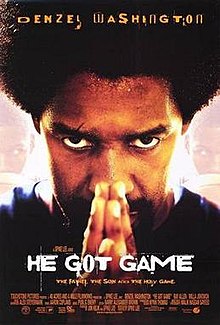
He Got Game
As a director, producer, New York Knicks fan, and writer, Spike Lee is one of the most dividing names currently working in films. Just about everyone has an opinion on Lee -- for good or bad -- but somewhere in there around the strong opinions and controversial comments is a very talented director. One of his best was obviously an important film for the diehard basketball fan, 1998's He Got Game.
A high school senior living in Brooklyn and caring for his sister (Zelda Harris), Jesus Shuttlesworth (NBA star Ray Allen) is a basketball star and the No. 1 recruit in the country. The world is smothering Jesus as he makes his future plans. Does he forgo his college eligibility and declare for the NBA Draft or does he decide on a university to attend? It's a decision that could cost or produce millions depending on how it works out. It's a decision that the Governor -- an alum of Big State University -- is interested in. He cuts a deal with Jesus' father, Jake (Denzel Washington), currently wasting away in Attica. Jake will be "released" for a week with one goal; get Jesus to commit to Big State, and his sentence will be severely shortened.
I'm a fan of Spike Lee, not a diehard fan, but his films are always interesting. Now whether you take them as good or bad interesting, that's a different story, but I typically enjoy his films. However you feel about Lee, I think this is a film where you have to give him credit. 'Game' tries to accomplish a lot in its storytelling, and for the most part, it accomplishes that. It's frightening in Lee's ability to make a film that so accurately predicts the future, in this case the business of sports. Jesus' decision in theory just effects him, but that's a naive way to look at it. Everyone in the world and business of sports will be dramatically affected by his plans. Look at 'Game' in 2012, and the things we see are familiar, normal, everyday things we'd see on ESPN. Not so much in 1998. Think LeBron James, and you've got this movie.
One of Lee's trademarks as a director is his style, and that's evident here. The opening montage shows basketball (and sports on a bigger level) at its purest, kids and teenagers playing from a wide variety of backgrounds and locations. They play out of love because they want to. Watch it HERE starting at :30. A monologue later from one shady guy (Roger Guenveur Smith) who claims to have Jesus' best intentions at heart is frightening in its accuracy. Everyone Jesus has ever met is about to become his best friend. What should be a pure, innocent and personal decision -- a 17, 18 year old kid picking his college choice -- becomes something dirty. Everyone involved starts to see the $ all over Jesus. It's sad that this is where sports has gone, but it's the truth of the business.
When this movie is clicking on all cylinders, it's that cynical nature that works. The most effective dramatic, emotional moments come from the interaction and completely shattered relationship between Jake and Jesus. We learn why Jake is in Attica, and more importantly why Jesus despises him. The performances from Washington and Allen are the best things going for 'Game.' When has Washington ever not delivered a worthy performance? None I can think of. His Jake is not an easy character to like, but that's the beauty of it. He knows he made mistakes, but he also did certain things the right way. The best thing going is we're not sure of his intentions. Does he want Jesus to go to Big State because it's what is best for him or because it will get him a reduced sentence? Playing Jesus, Allen (a Milwaukee Bucks star at the time) delivers a natural, heartfelt performance, better than just about 99% of all athletes' performances in a movie. Oh, and his jump shot is disgustingly beautiful to watch.
There are moments of perfection in this father-son relationship. The movie is at its strongest when focusing on this reconnecting, but certain scenes ring truer than others. The best scenes are those of Jake and Jesus on a basketball court. In quick, little snippets, we see Jake pushing Jesus as a little boy to get better. Later, we see an encounter where maybe Jake pushes too far, and a 12-year old Jesus responding with frustration like a 12-year old should. The best scene -- and one of my all-time favorites -- is a one-on-one game between Jake and Jesus as time runs out on Jake's "mission." Jesus is a significantly more skilled player now, but it's still a battle, Jake giving him nothing. Watch it in its entirety HERE. Stylized, message, story, I think it's one of those rare perfect scenes.
Before I forget, there are some other halfway decent actors/actresses around. Milla Jovovich plays Dakota, a prostitute Jake meets, while Rosario Dawson is particularly memorable as LaLa, Jesus' girlfriend who is up to something. 32-year old Hill Harper is effective playing Booger, Jesus' cousin and teammate. Jim Brown and Joseph Lyle Taylor have some fun as Jake's ever-present parole officers with Ned Beatty playing the warden at Attica cutting a deal with Jake. Bill Nunn is a slimy scene-stealer as Jesus' money-grubbing uncle with Michelle Shay as his more thoughtful aunt. Also look for Lee favorite John Turturro as a coach pulling out all the stops to recruit Jesus. Sports fans should also look for countless cameos from Michael Jordan to Shaq to Reggie Miller with countless coaches and TV personalities making an appearance.
Say what you want about Spike Lee, but he's a talented director, and this is one of his best. Give it a shot. I don't know how long this link will stay up there, but check out the full movie HERE at Youtube.
He Got Game <---trailer (1998): *** 1/2 /****
A high school senior living in Brooklyn and caring for his sister (Zelda Harris), Jesus Shuttlesworth (NBA star Ray Allen) is a basketball star and the No. 1 recruit in the country. The world is smothering Jesus as he makes his future plans. Does he forgo his college eligibility and declare for the NBA Draft or does he decide on a university to attend? It's a decision that could cost or produce millions depending on how it works out. It's a decision that the Governor -- an alum of Big State University -- is interested in. He cuts a deal with Jesus' father, Jake (Denzel Washington), currently wasting away in Attica. Jake will be "released" for a week with one goal; get Jesus to commit to Big State, and his sentence will be severely shortened.
I'm a fan of Spike Lee, not a diehard fan, but his films are always interesting. Now whether you take them as good or bad interesting, that's a different story, but I typically enjoy his films. However you feel about Lee, I think this is a film where you have to give him credit. 'Game' tries to accomplish a lot in its storytelling, and for the most part, it accomplishes that. It's frightening in Lee's ability to make a film that so accurately predicts the future, in this case the business of sports. Jesus' decision in theory just effects him, but that's a naive way to look at it. Everyone in the world and business of sports will be dramatically affected by his plans. Look at 'Game' in 2012, and the things we see are familiar, normal, everyday things we'd see on ESPN. Not so much in 1998. Think LeBron James, and you've got this movie.
One of Lee's trademarks as a director is his style, and that's evident here. The opening montage shows basketball (and sports on a bigger level) at its purest, kids and teenagers playing from a wide variety of backgrounds and locations. They play out of love because they want to. Watch it HERE starting at :30. A monologue later from one shady guy (Roger Guenveur Smith) who claims to have Jesus' best intentions at heart is frightening in its accuracy. Everyone Jesus has ever met is about to become his best friend. What should be a pure, innocent and personal decision -- a 17, 18 year old kid picking his college choice -- becomes something dirty. Everyone involved starts to see the $ all over Jesus. It's sad that this is where sports has gone, but it's the truth of the business.
When this movie is clicking on all cylinders, it's that cynical nature that works. The most effective dramatic, emotional moments come from the interaction and completely shattered relationship between Jake and Jesus. We learn why Jake is in Attica, and more importantly why Jesus despises him. The performances from Washington and Allen are the best things going for 'Game.' When has Washington ever not delivered a worthy performance? None I can think of. His Jake is not an easy character to like, but that's the beauty of it. He knows he made mistakes, but he also did certain things the right way. The best thing going is we're not sure of his intentions. Does he want Jesus to go to Big State because it's what is best for him or because it will get him a reduced sentence? Playing Jesus, Allen (a Milwaukee Bucks star at the time) delivers a natural, heartfelt performance, better than just about 99% of all athletes' performances in a movie. Oh, and his jump shot is disgustingly beautiful to watch.
There are moments of perfection in this father-son relationship. The movie is at its strongest when focusing on this reconnecting, but certain scenes ring truer than others. The best scenes are those of Jake and Jesus on a basketball court. In quick, little snippets, we see Jake pushing Jesus as a little boy to get better. Later, we see an encounter where maybe Jake pushes too far, and a 12-year old Jesus responding with frustration like a 12-year old should. The best scene -- and one of my all-time favorites -- is a one-on-one game between Jake and Jesus as time runs out on Jake's "mission." Jesus is a significantly more skilled player now, but it's still a battle, Jake giving him nothing. Watch it in its entirety HERE. Stylized, message, story, I think it's one of those rare perfect scenes.
Before I forget, there are some other halfway decent actors/actresses around. Milla Jovovich plays Dakota, a prostitute Jake meets, while Rosario Dawson is particularly memorable as LaLa, Jesus' girlfriend who is up to something. 32-year old Hill Harper is effective playing Booger, Jesus' cousin and teammate. Jim Brown and Joseph Lyle Taylor have some fun as Jake's ever-present parole officers with Ned Beatty playing the warden at Attica cutting a deal with Jake. Bill Nunn is a slimy scene-stealer as Jesus' money-grubbing uncle with Michelle Shay as his more thoughtful aunt. Also look for Lee favorite John Turturro as a coach pulling out all the stops to recruit Jesus. Sports fans should also look for countless cameos from Michael Jordan to Shaq to Reggie Miller with countless coaches and TV personalities making an appearance.
Say what you want about Spike Lee, but he's a talented director, and this is one of his best. Give it a shot. I don't know how long this link will stay up there, but check out the full movie HERE at Youtube.
He Got Game <---trailer (1998): *** 1/2 /****
Labels:
1990s,
Denzel Washington,
Jim Brown,
John Turturro,
Ned Beatty,
Rosario Dawson,
Spike Lee,
Sports
Subscribe to:
Posts (Atom)